Artwork
Rouen, quay of Paris
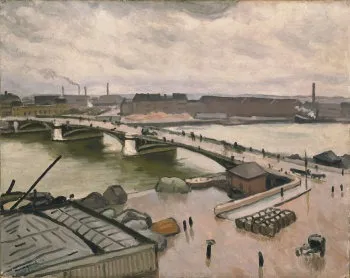
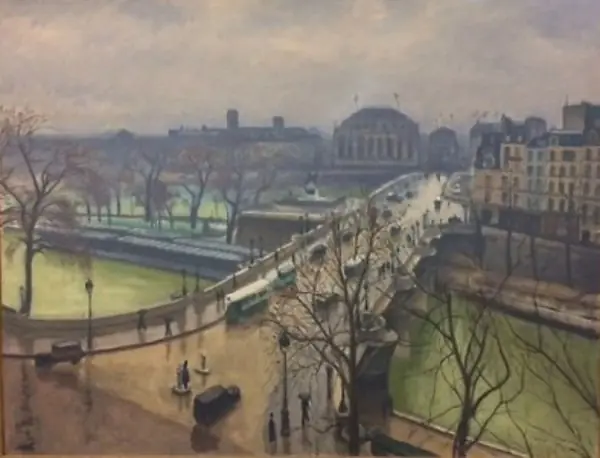
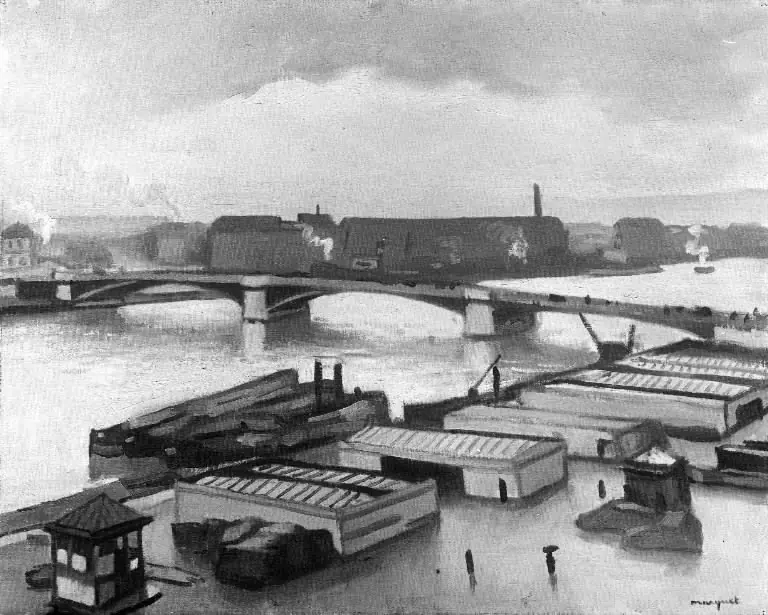
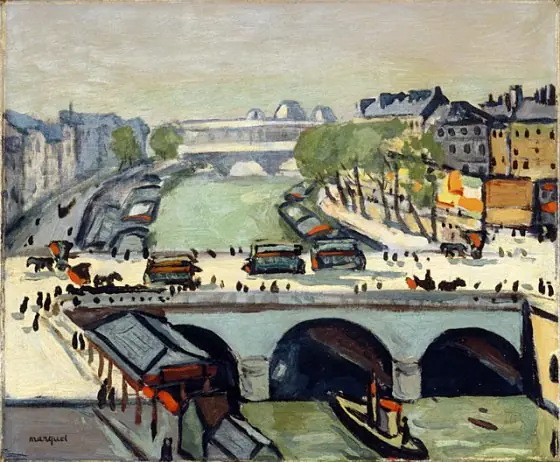
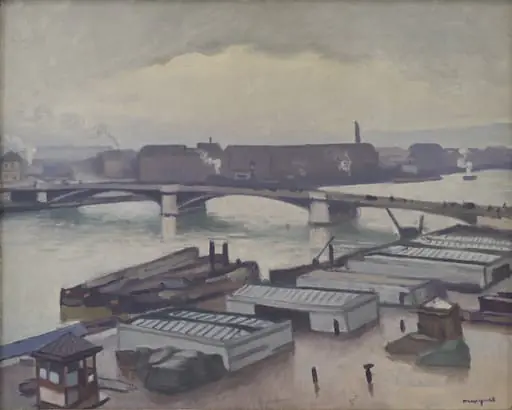
Rouen, quay of Paris is an oil painting by the Fauvist artist Albert Marquet. It dates from 1912 and is held in the collection of the Museum of Fine Arts of Lyon.
About this work
Overview
Albert Marquet painted Rouen, quay of Paris in 1912 using oil on canvas. Though early in his career he aligned with the Fauves, this work reflects his mature shift toward restrained tonal harmony and observational precision. The scene captures a working riverside in Rouen, emphasizing everyday life rather than dramatic expression. It is held in the collection of the Museum of Fine Arts of Lyon.
Subject & Meaning
Stacked crates and barrels suggest routine trade, while the absence of grandeur underscores Marquet’s interest in unembellished urban rhythms.
The painting portrays a quiet commercial waterfront along the Seine, with a bridge arching overhead and moored vessels lining the quay. Figures move subtly along the edge, walkers, observers, laborers, without focal drama. Stacked crates and barrels suggest routine trade, while the absence of grandeur underscores Marquet’s interest in unembellished urban rhythms. The scene is neither nostalgic nor celebratory, but quietly attentive to the rhythm of daily activity.
Technique & Style
Marquet employed a muted palette of grays, soft blues, and earth tones, avoiding bold contrasts. Brushwork is deliberate but fluid, with thin layers of paint building form through subtle shifts in value rather than line or texture. The sky and water are rendered with delicate gradations, creating a sense of atmospheric cohesion. His approach prioritizes tonal balance over chromatic intensity, aligning with a refined Impressionist sensibility.
History & Provenance
Created during a period when Marquet was distancing himself from Fauvist experimentation, the painting reflects his growing focus on observed reality. It entered the Museum of Fine Arts of Lyon’s collection in the 20th century, likely through acquisition or donation following its exhibition in French salons. No record of prior private ownership is widely documented, suggesting it remained within institutional or artist-circle circles after completion.
Context
In 1912, Rouen was a working port city still shaped by 19th-century industry, its quays active with river trade. Marquet, like many of his contemporaries, turned to urban and riverside scenes as subjects of modern life. His choice of Rouen, rather than Paris, reflects a broader interest in provincial French cities, where the pace of change was slower and the character of daily labor more visible.
Legacy
Marquet’s work from this period influenced later generations of realist painters who valued understated observation over expressive gesture. Rouen, quay of Paris exemplifies his commitment to capturing the quiet dignity of ordinary places. Though not widely exhibited outside France, it remains a key example of early 20th-century French tonal painting, representing a quiet but persistent alternative to avant-garde abstraction.
Artist & collection
Artist
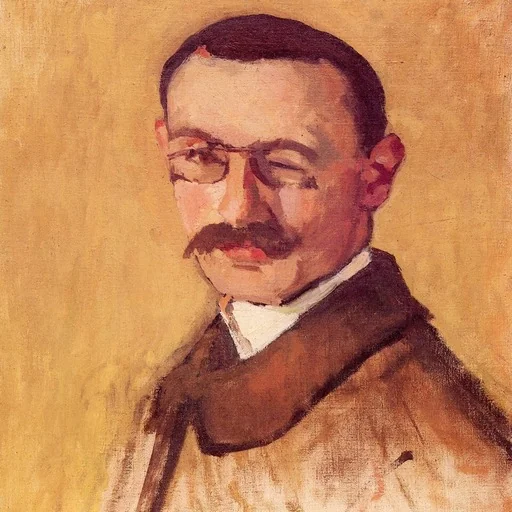
Albert Marquet (French pronunciation:; 27 March 1875 – 14 June 1947) was a French painter.