Artwork
Curfew Hour
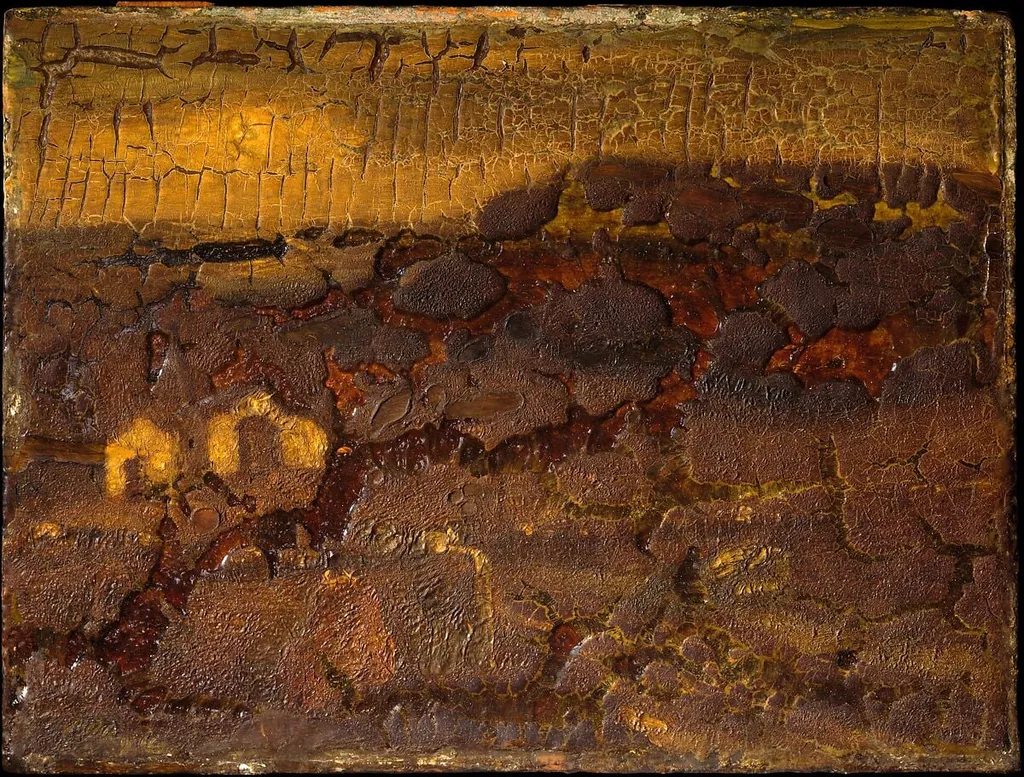
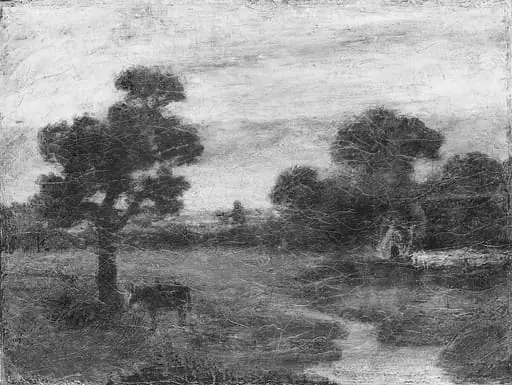
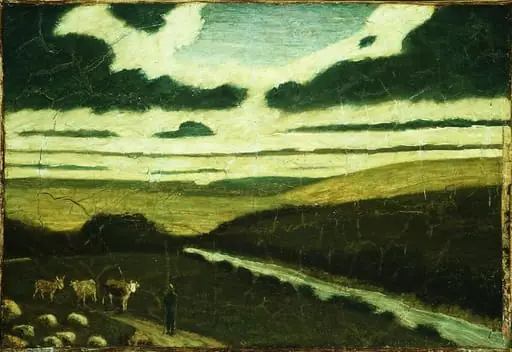
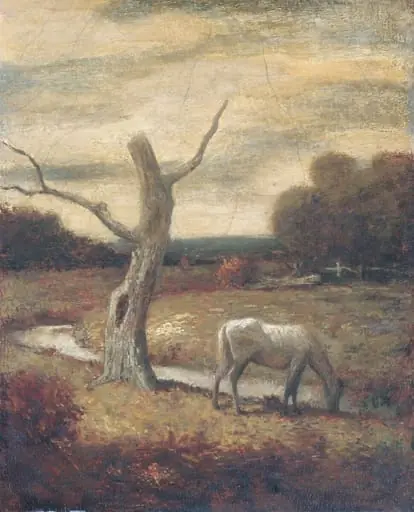
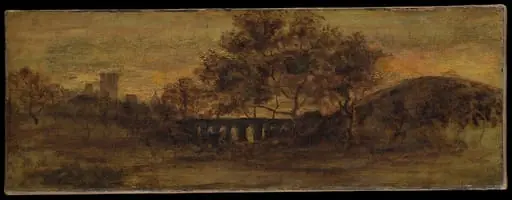
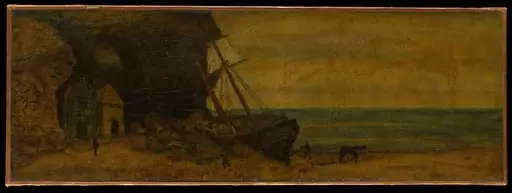
Curfew Hour is an oil painting by the American Impressionist artist Albert Pinkham Ryder. It dates from 1882 and is held in the collection of the Metropolitan Museum of Art.
About this work
Technique & Style
Albert Pinkham Ryder created Curfew Hour in 1882 using oil paint applied to a wood panel support.
Albert Pinkham Ryder created Curfew Hour in 1882 using oil paint applied to a wood panel support. The work measures 19.1 centimeters in height and 25.4 centimeters in width, characteristic of the artist's preference for small-scale formats. Classified as a landscape, the piece exhibits the formal qualities typical of Ryder's genre, focusing on atmospheric and naturalistic elements rendered through his distinctive handling of oil media.
The physical construction relies on a rigid panel rather than canvas, a common choice for the artist to ensure stability and control over his thick, textured brushwork. The painting remains part of the Metropolitan Museum of Art's collection within The American Wing, preserving its original material integrity as an oil-on-panel landscape from the late nineteenth century.
History & Provenance
Albert Pinkham Ryder’s Curfew Hour is dated to 1882 based on internal records of The Metropolitan Museum of Art, which holds the work. The painting entered the museum’s collection in 1929 as a gift of Abby Aldrich Rockefeller, placing it within a major philanthropic tradition of American art acquisition. Prior to this, the work was in private hands, though no documented ownership chain before its 1929 donation is recorded in available sources.
There is no evidence in these sources to indicate a formal commission; instead, it appears to have been created as part of Ryder’s independent practice during a period marked by his experimentation with poetic, nocturnal landscapes.
The work is held by the Metropolitan Museum of Art, New York, with accession number 14.64. It was first recorded in the museum’s holdings by 1914. The painting has been exhibited in the museum’s galleries dedicated to American art in multiple reinstallations of The American Wing since at least the mid-20th century.
Overview
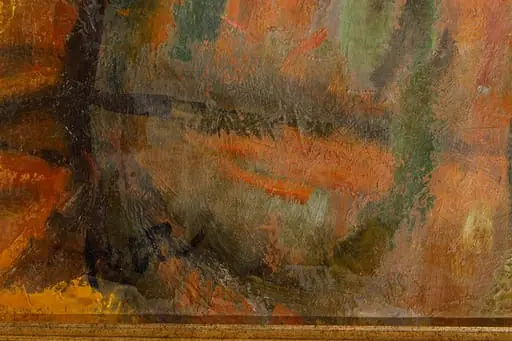
Curfew Hour (1882) by Albert Pinkham Ryder depicts a solitary rider on horseback traversing a rural landscape at twilight. The composition is dominated by a dark, swirling sky that presses down upon a quiet village, creating a sense of atmospheric weight and isolation. Ryder executed the work on a small wood panel, applying thick, buttery layers of oil paint that build a textured, almost sculptural surface.
This technique, characteristic of his mature style, obscures fine detail in favor of evoking a heavy, dreamlike mood. The rider serves as a focal point for the narrative but remains secondary to the overwhelming presence of the environment and the encroaching night. Painted during a period when Ryder was moving away from literal representation toward poetic abstraction, the work exemplifies his unique approach to the American landscape.
It reflects his fascination with literary themes and the sublime power of nature, prioritizing emotional resonance over topographical accuracy. The painting stands as a significant example of 19th-century American art that bridges realism and early modernism through its expressive handling of light and shadow.
Subject & Meaning
The painting depicts a solitary rider traversing a path through a hushed village as twilight descends, framed by a dramatically swirling, dark sky. Rather than focusing on narrative detail, Ryder prioritized the creation of a profound, introspective mood. The scene's ambiguous nature leaves open whether it represents a specific location or an internal vision.
Artist & collection

Artist
Albert Pinkham Ryder was an American painter best known for his poetic and moody allegorical works and seascapes, as well as his eccentric personality.