Artwork
The Forest of Arden
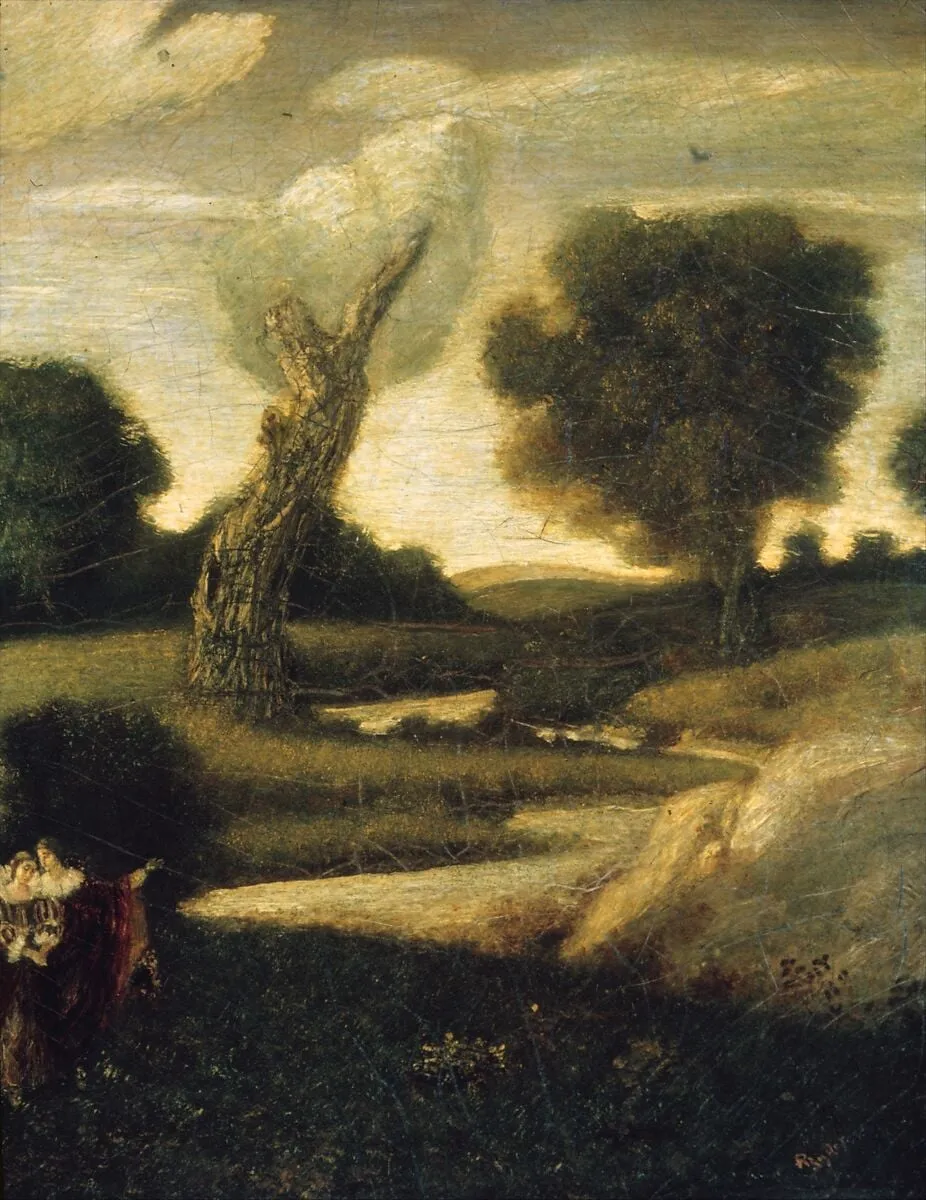
The Forest of Arden is an oil painting by the American Impressionist artist Albert Pinkham Ryder. It dates from 1892 and is held in the collection of the Metropolitan Museum of Art.
About this work
Subject & Meaning
The painting's iconography is defined by its emphasis on the tree as the primary visual element, establishing a mood of quiet isolation within the woodland.
The Forest of Arden is a landscape painting by Albert Pinkham Ryder that depicts a scene dominated by trees. Created in 1890, the work presents a natural setting rather than a literal narrative illustration of Shakespeare's play, focusing instead on the atmospheric presence of the forest itself. As a landscape, the subject matter centers on the interplay of trees and the surrounding environment, rendered in oil on canvas.
The painting's iconography is defined by its emphasis on the tree as the primary visual element, establishing a mood of quiet isolation within the woodland. While the title references a specific literary location, the artwork functions primarily as a meditation on nature, where the forest serves as the singular representational focus without additional symbolic figures or explicit storytelling elements.
Technique & Style
The Forest of Arden is an oil painting on canvas measuring roughly 48.3 × 38.1 cm, as recorded in the Metropolitan Museum of Art’s catalog. Ryder’s technique employed traditional oil pigments applied to a stretched canvas support, a method typical of late‑19th‑century American landscape practice. The work depicts a wooded scene dominated by a solitary tree, emphasizing atmospheric depth and a muted palette characteristic of his romantic idiom.
Classified within The American Wing as a landscape, the painting’s formal qualities include layered brushwork that suggests foliage and a composition that balances foreground vegetation with background space.
History & Provenance
Albert Pinkham Ryder painted The Forest of Arden in 1890, employing oil on canvas to render a landscape dominated by trees; the work is classified within The American Wing as a landscape painting. It entered the collection of the Metropolitan Museum of Art, where it remains on view, and is recorded in the museum’s catalogue as part of the institution’s holdings. The painting’s dimensions measure 48.3 cm by 38.1 cm, and its creation is dated to the year 1890, as documented in both the museum’s internal entry and the artist’s Wikidata entry. No earlier ownership records are provided in the available sources.
Overview
Albert Pinkham Ryder's The Forest of Arden, executed in 1892, is a moody landscape inspired by Shakespeare's As You Like It. The composition features a dense, dark woodland where gnarled trees twist upward like smoke against a heavy, oppressive sky. A pale moon filters through the tangled branches, casting a faint, melancholic light that barely penetrates the gloom.
Ryder applied oil paint in thick, sculptural layers, often scraping back and repainting the surface over several years to achieve a dense, almost tactile texture. This technique creates a sense of timeless mystery and psychological depth rather than literal topography. The work exemplifies Ryder's mature style, characterized by his rejection of detailed realism in favor of evocative, dreamlike atmospheres.
It stands as a significant example of American Symbolism, reflecting the artist's unique ability to transform literary themes into deeply personal, visual meditations on nature and the sublime.

Artist & collection

Artist
Albert Pinkham Ryder was an American painter best known for his poetic and moody allegorical works and seascapes, as well as his eccentric personality.



 Road at the Edge of the Forest
 Landschaft mit Hirten und Schafen
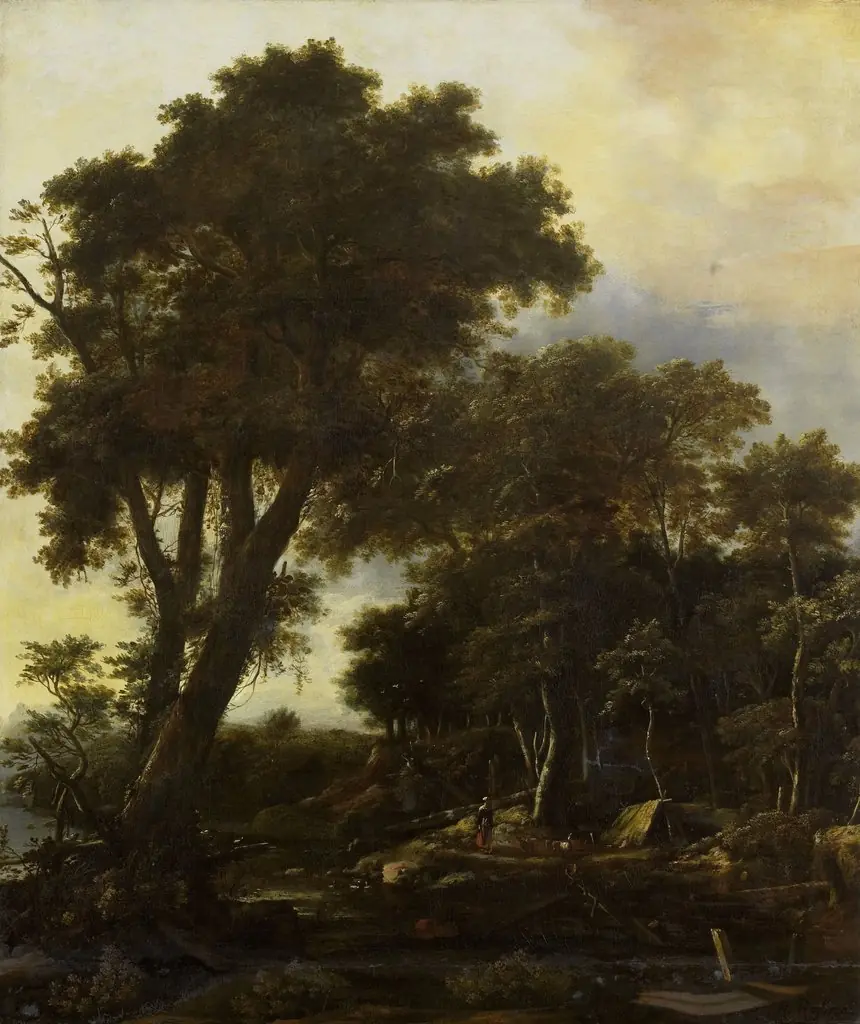 Forest landscape with lean-to
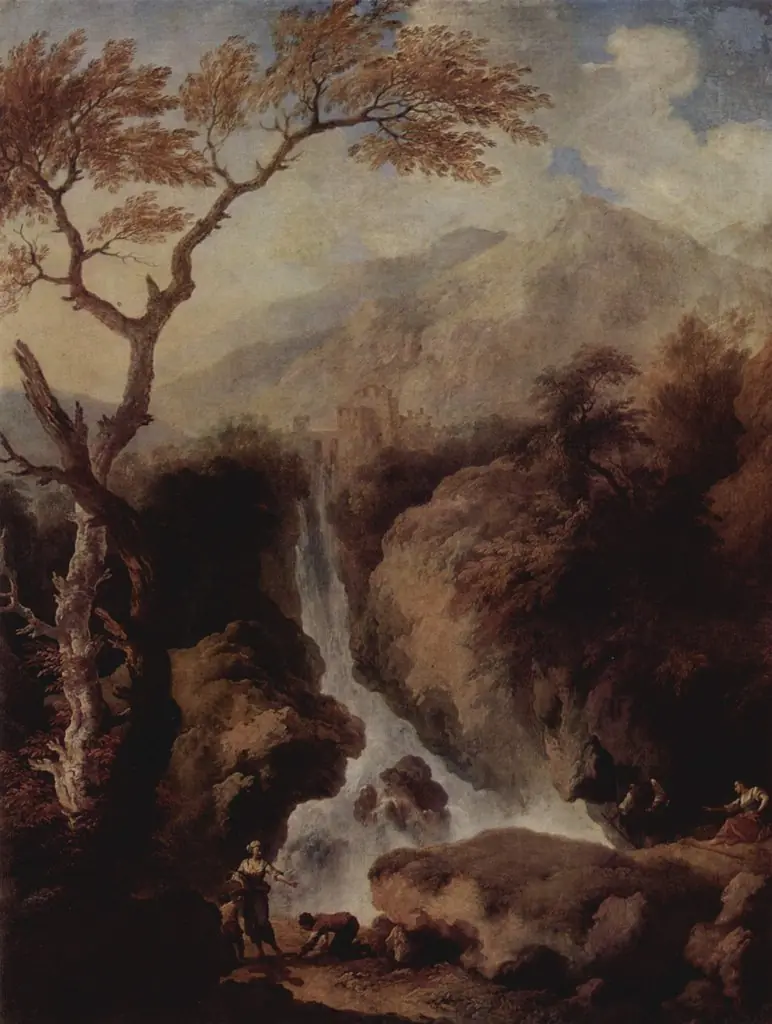 Waterfalls in the Environs of Rome
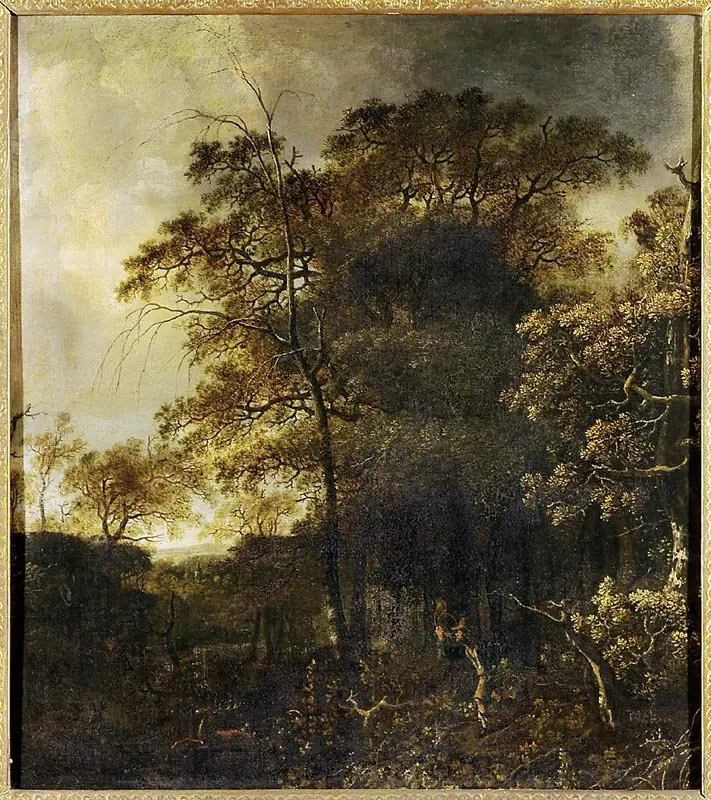 Forest landscape with huntsmen
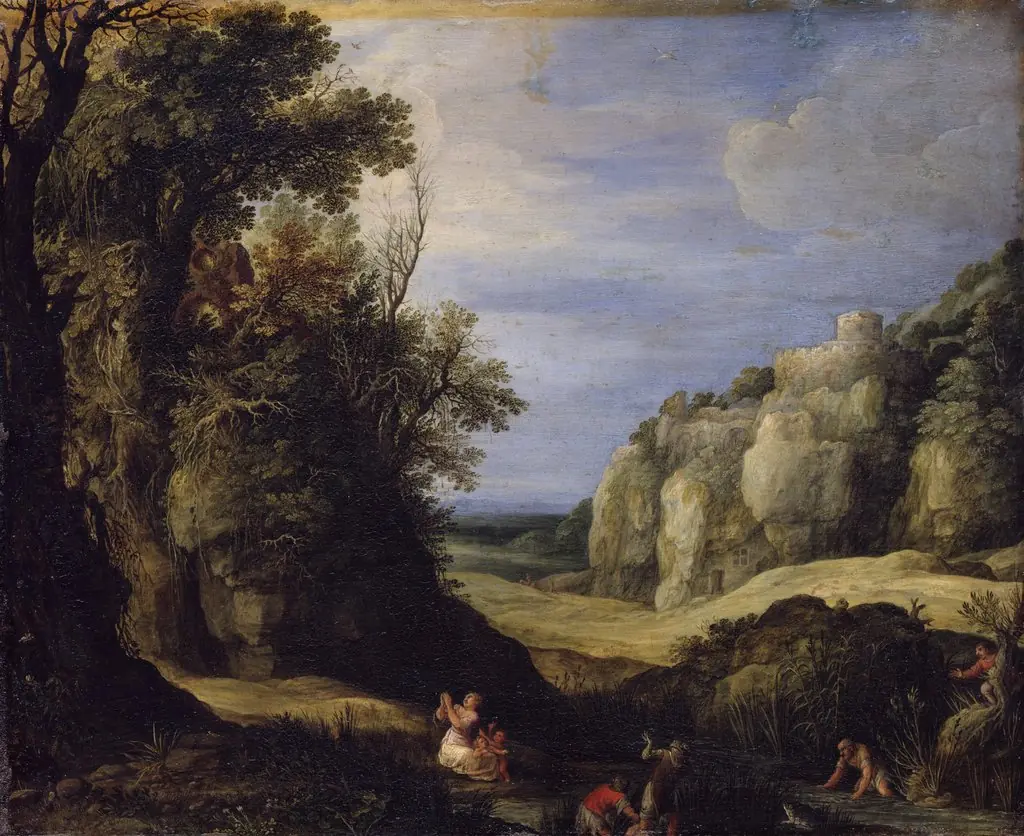 Landscape with Latona and the Lycian Peasants
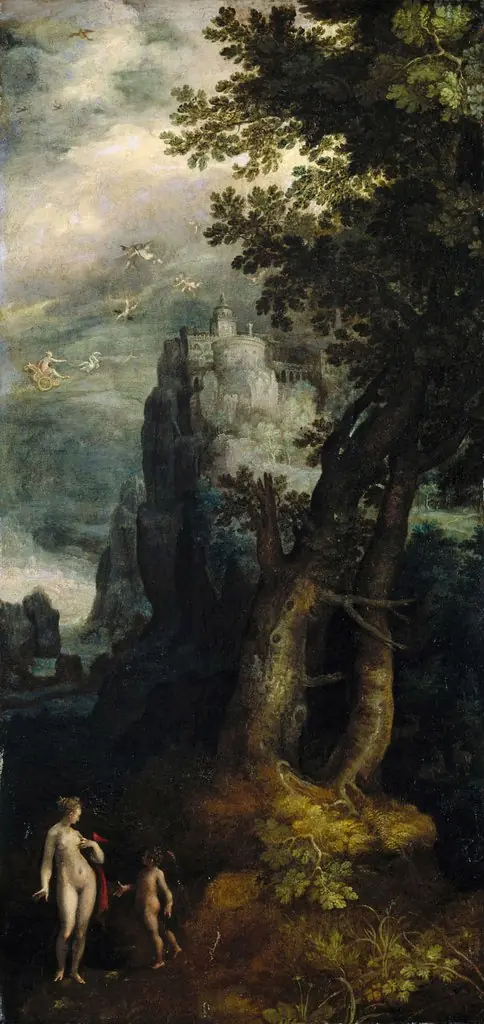 Venus and Amor and the Castle of Love
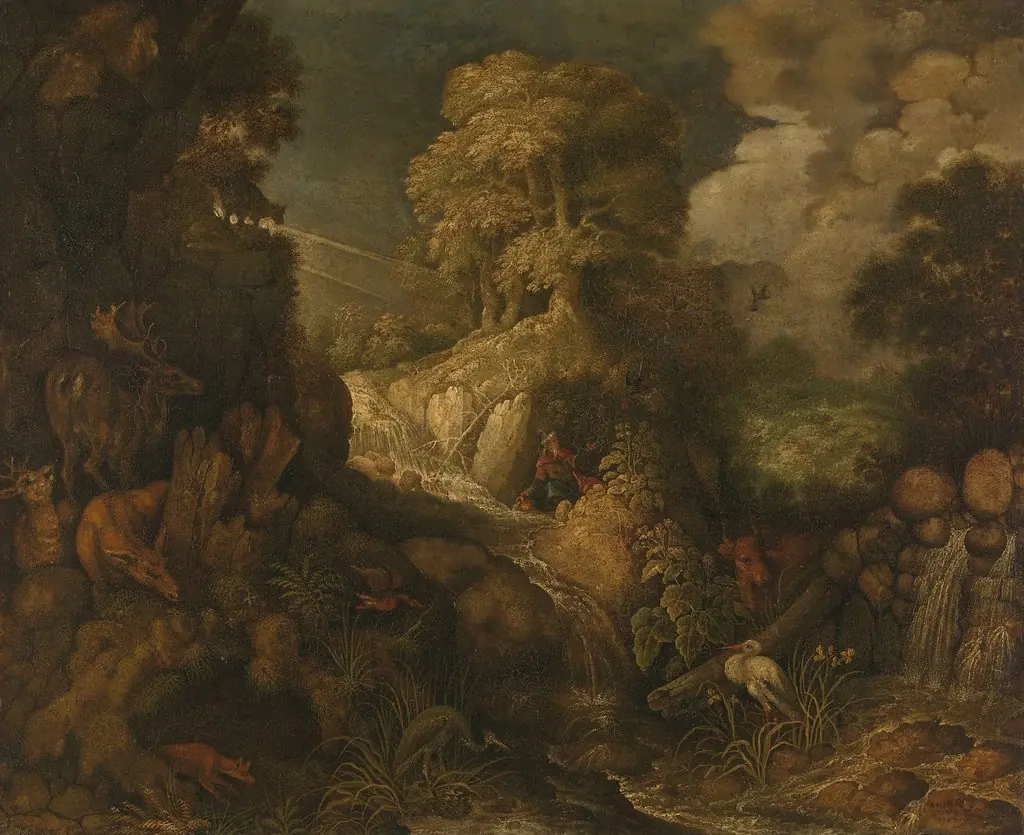 Elijah fed by the ravens
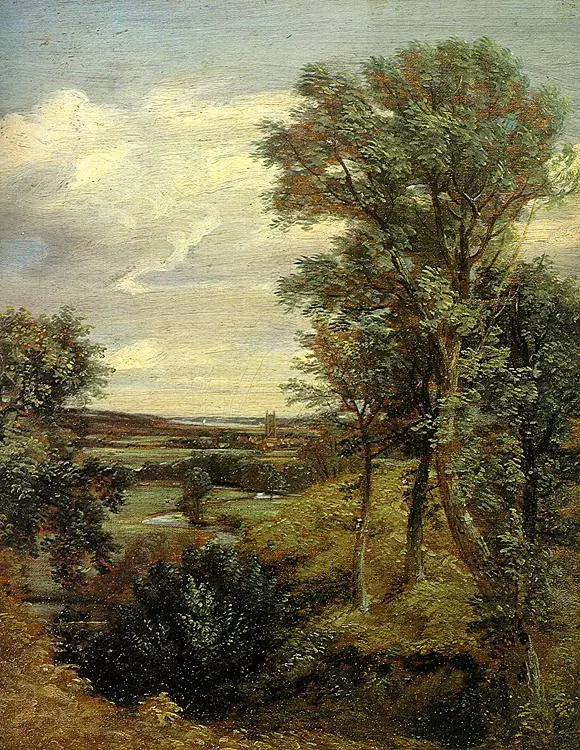 Dedham Vale
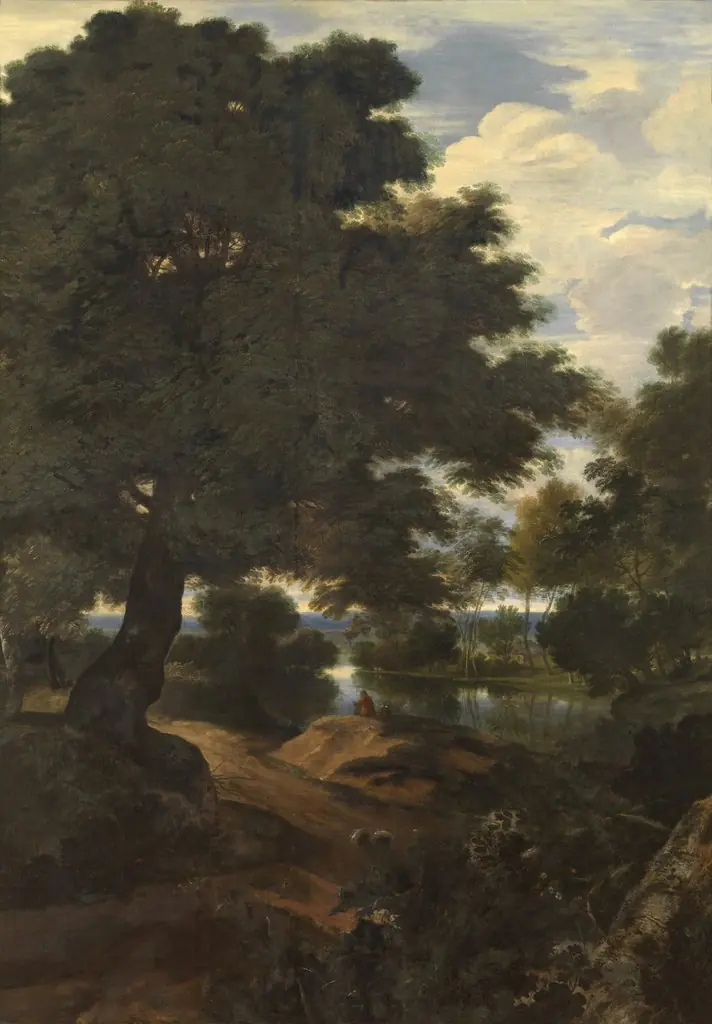 Landscape
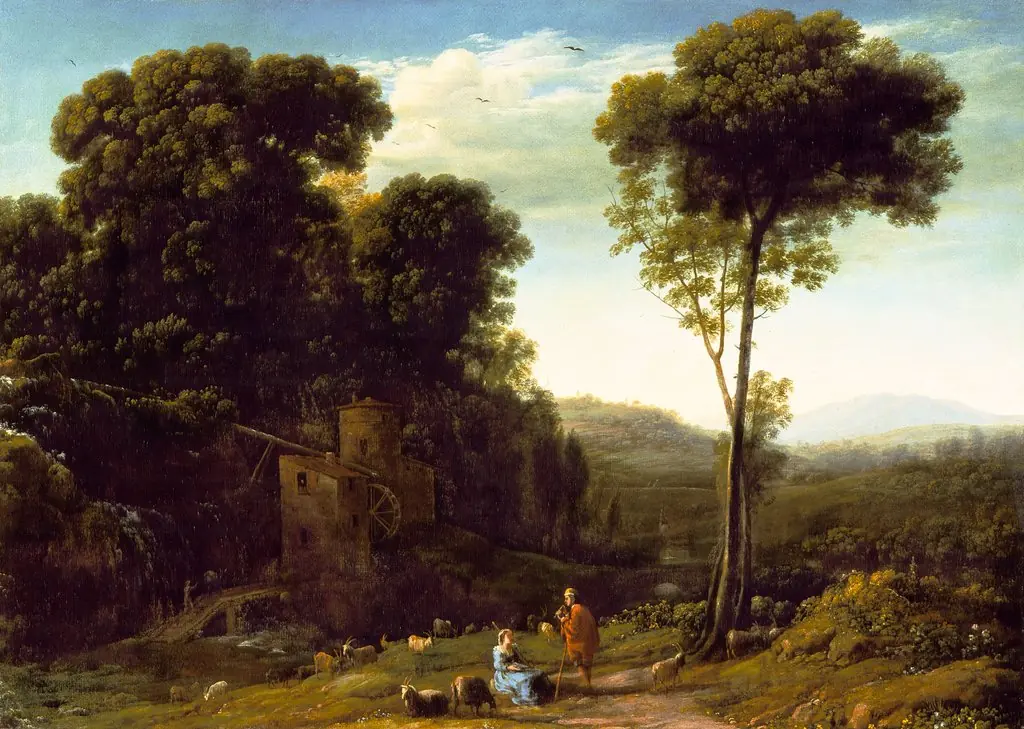 Pastoral Landscape with a Mill
- Forest