Artwork
The Smugglers' Cove
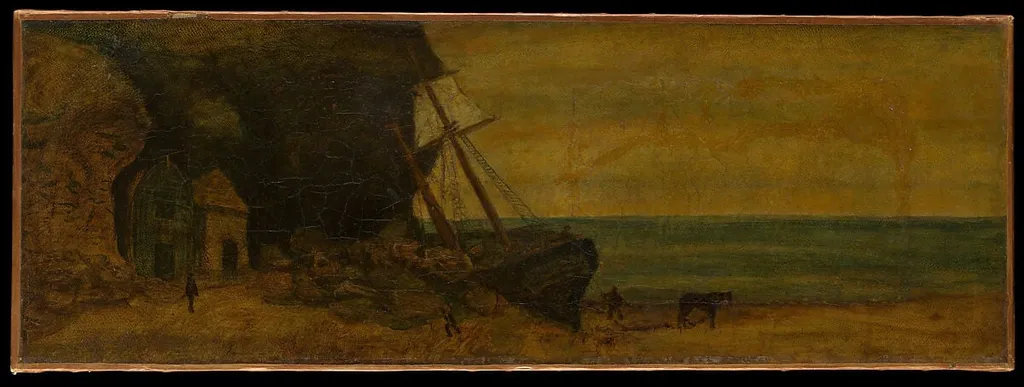
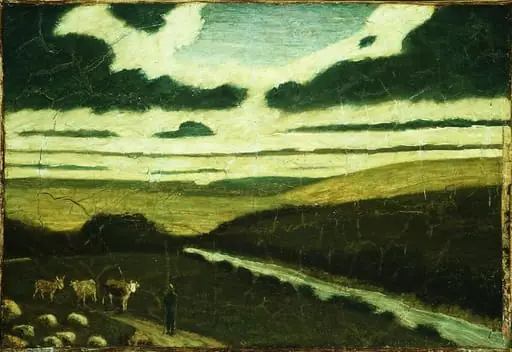
The Smugglers' Cove is an oil painting by the American Impressionist artist Albert Pinkham Ryder. It dates from 1880 and is held in the collection of the Metropolitan Museum of Art.
About this work
History & Provenance
It is currently held within the collection of the Metropolitan Museum of Art, where it is classified under The American Wing.
The Smugglers' Cove is an oil painting on gilt leather created by Albert Pinkham Ryder in 1880. The work measures 25.7 centimeters in height and 70.5 centimeters in width. It is currently held within the collection of the Metropolitan Museum of Art, where it is classified under The American Wing.
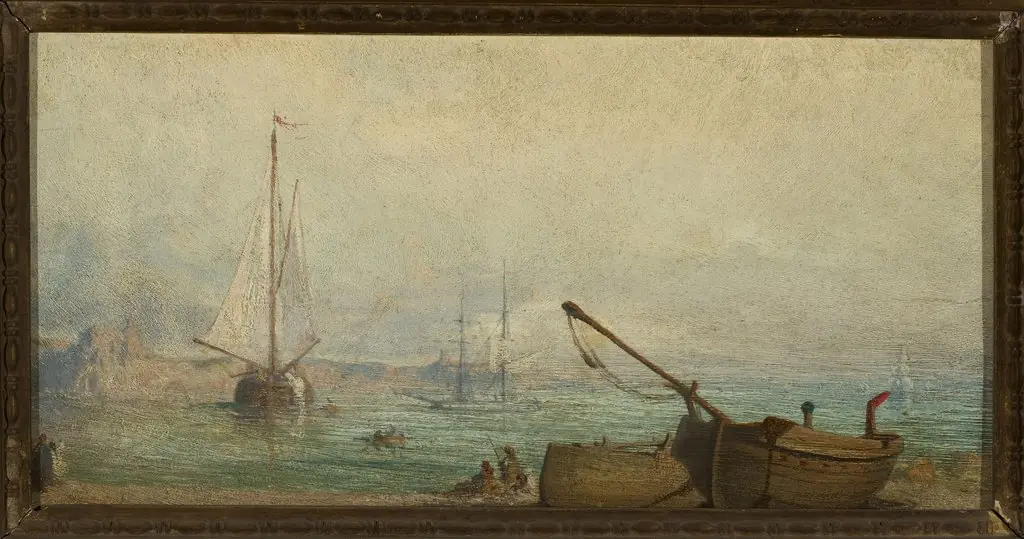
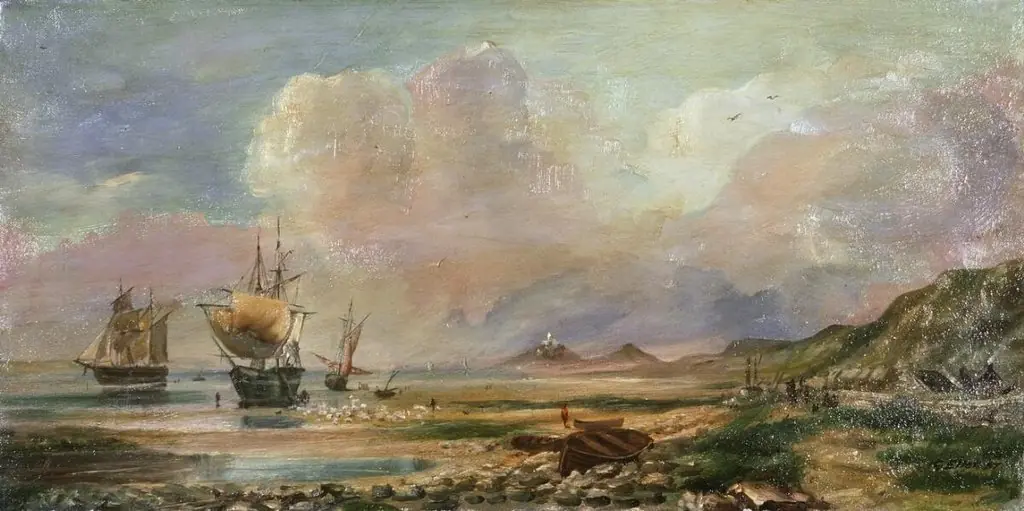
The painting depicts marine subjects, specifically featuring ships and horses. While the specific commission details and the full chain of ownership prior to its museum acquisition are not detailed in the available records, the work's creation date is firmly established as 1880. The piece remains a significant example of Ryder's landscape and marine art output from that period.
Context
The Smugglers' Cove (1880) is an oil on gilt leather landscape measuring 25.7 × 70.5 cm, listed in the Metropolitan Museum of Art's American Wing collection. The painting portrays a horse together with a ship and other marine-art elements, aligning with Ryder's recurring maritime themes. Its classification as a landscape and its placement within the American Wing illustrate its role in the museum's narrative of 19th-century American art.
Overview
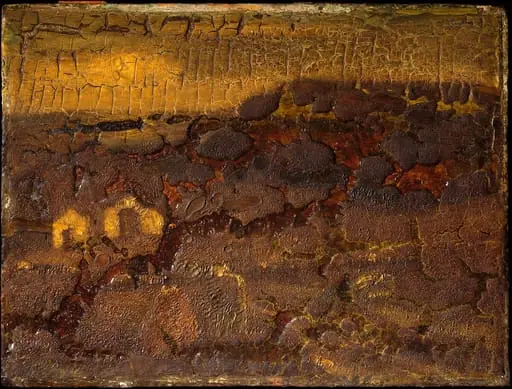
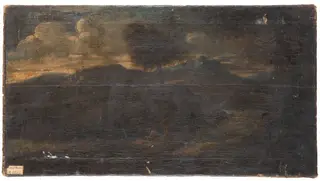
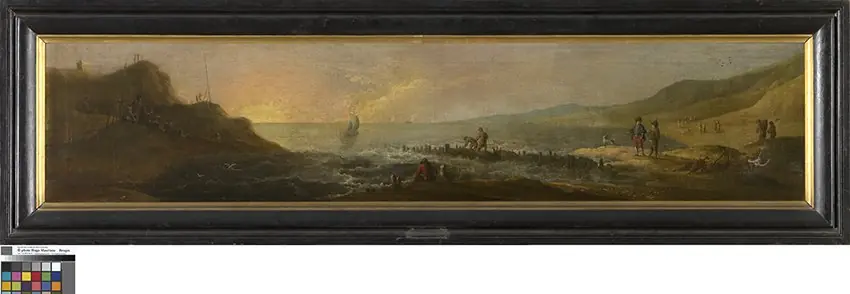
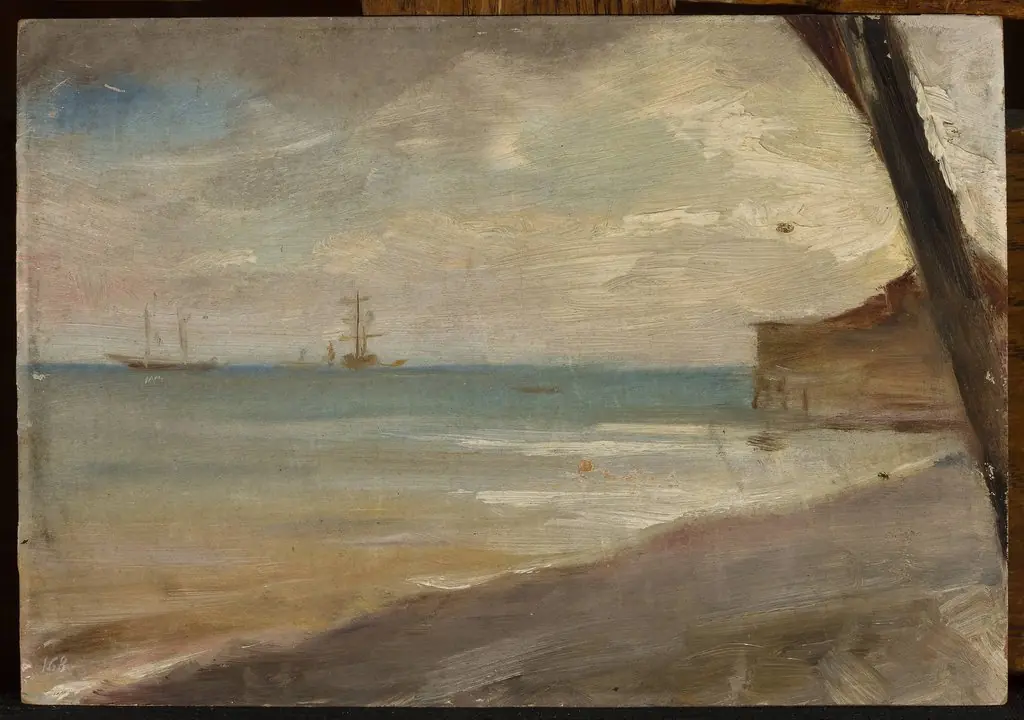
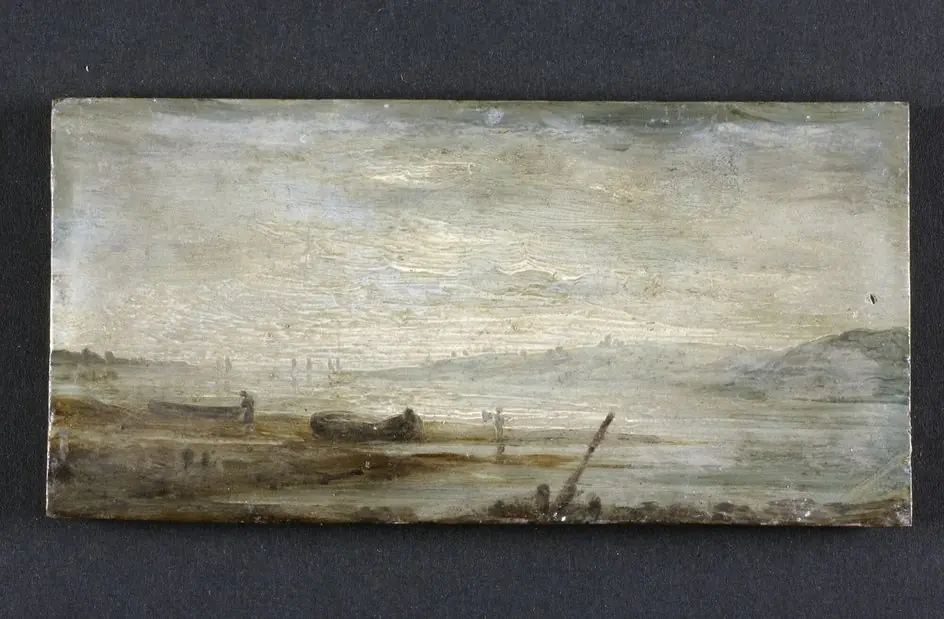
Albert Pinkham Ryder's The Smugglers' Cove, executed in 1880, depicts a nocturnal coastal scene characterized by the artist's signature moody atmosphere. The composition centers on a dark cove at dusk where curling waves surround a small boat, while two horses stand motionless on the shore. Ryder constructed this work on an unusual support of gilt leather, a technique involving thin sheets of leather covered in gold leaf.
As the oil paint ages and develops a network of fine cracks, the underlying gold leaf becomes visible, causing the water to shimmer with an internal luminosity that distinguishes the surface from traditional canvas paintings. This piece exemplifies Ryder's mature style, which prioritizes poetic suggestion and tonal harmony over topographical accuracy. Created during a period when the artist was fully developing his unique approach to marine subjects, the work reflects his fascination with the mysterious power of nature and the sea.
The specific use of gilt leather demonstrates Ryder's experimental approach to materials, aiming to achieve a mystical quality that aligns with the romantic and somewhat melancholic narrative of the smugglers' setting.
Subject & Meaning
The artwork portrays a somber, moonlit vista within a dark cove. Waves gently break around a small vessel, while two horses are positioned on the shoreline, their silhouettes defined against the fading light. Ryder's composition evokes a sense of quiet drama and isolation, transforming the landscape into a contemplative study of nature's mysterious and powerful presence.
Technique & Style
Ryder utilized an unconventional medium for this piece: oil paint applied to gilt leather, a material typically reserved for decorative arts. The gold leaf beneath the paint layer is subtly revealed through cracks and the artist's thick impasto application, imparting a unique shimmering effect to the water, as if lit from behind. This experimental choice highlights Ryder's innovative engagement with materials and surface texture.
Artist & collection

Artist
Albert Pinkham Ryder was an American painter best known for his poetic and moody allegorical works and seascapes, as well as his eccentric personality.