Artwork
Autumn Meadows
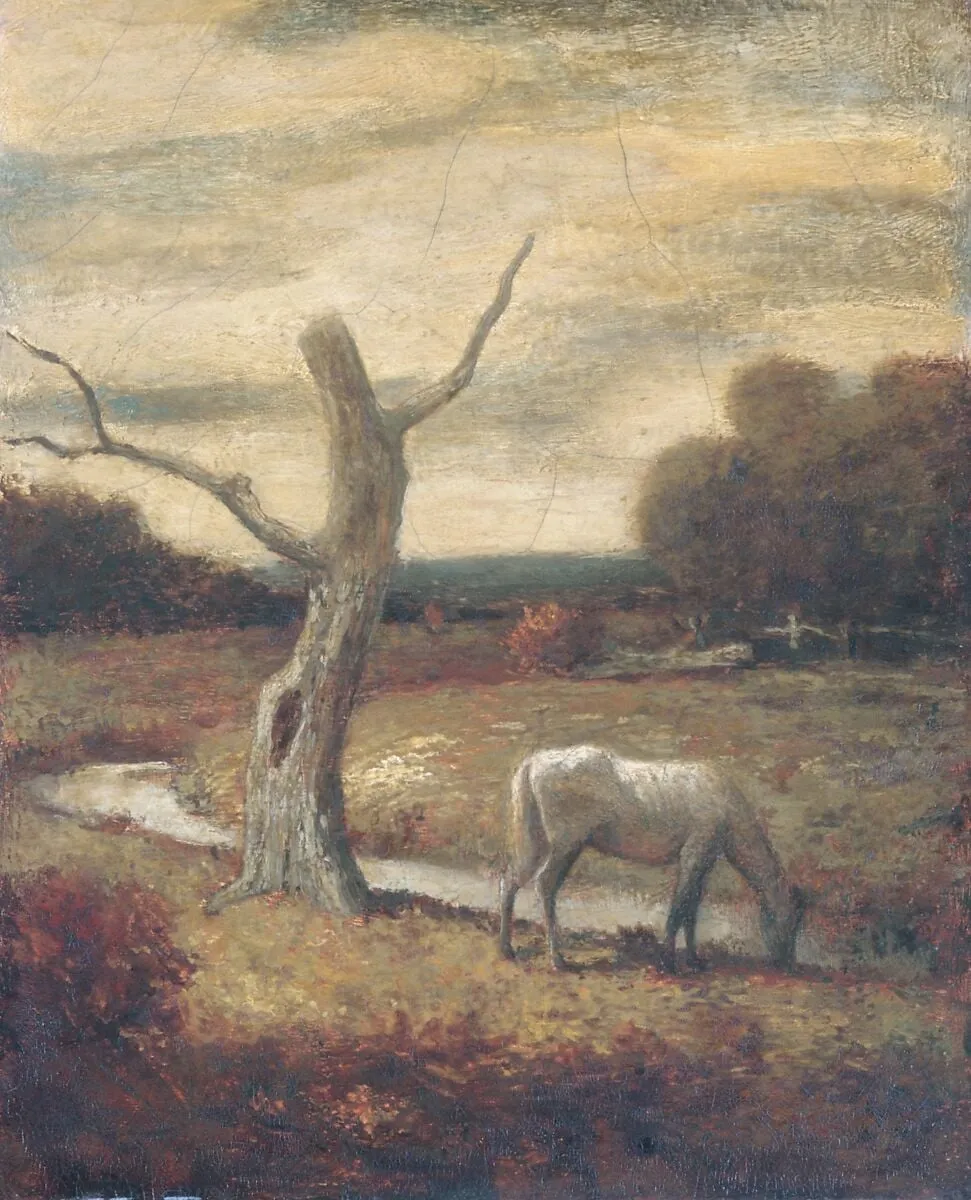
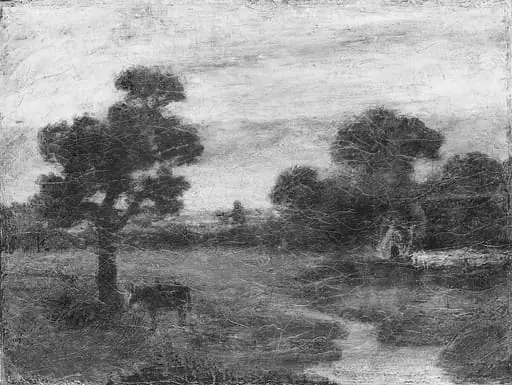
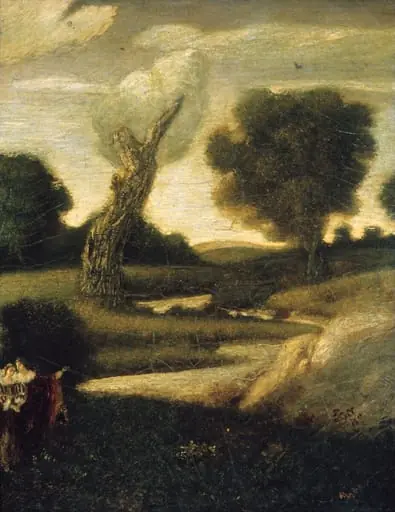
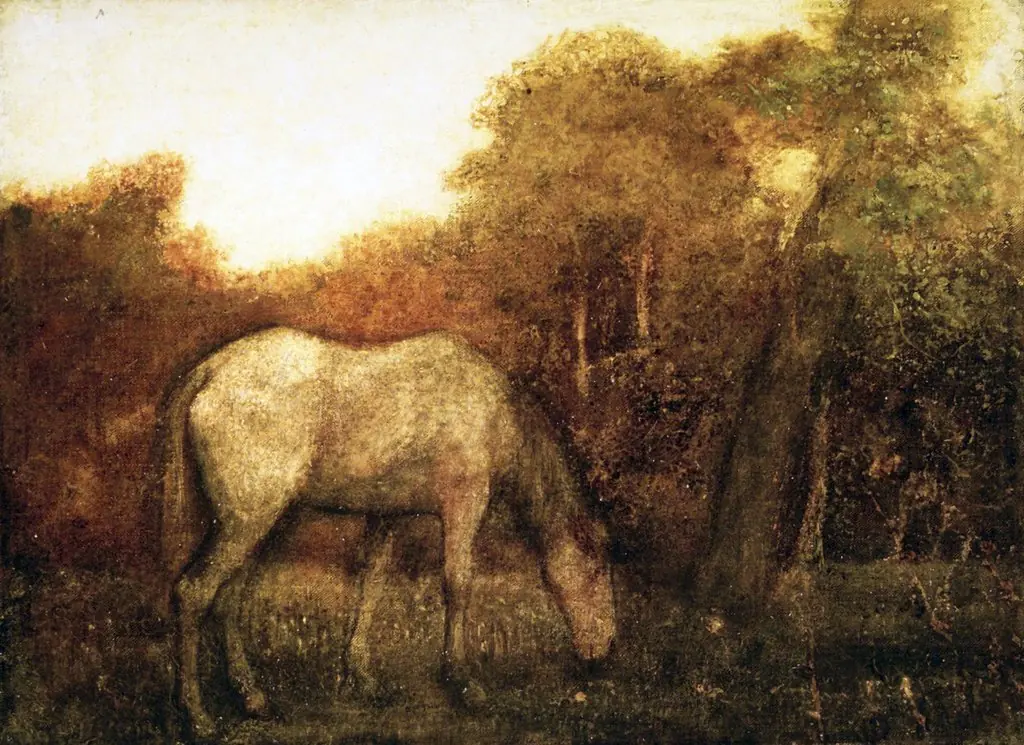
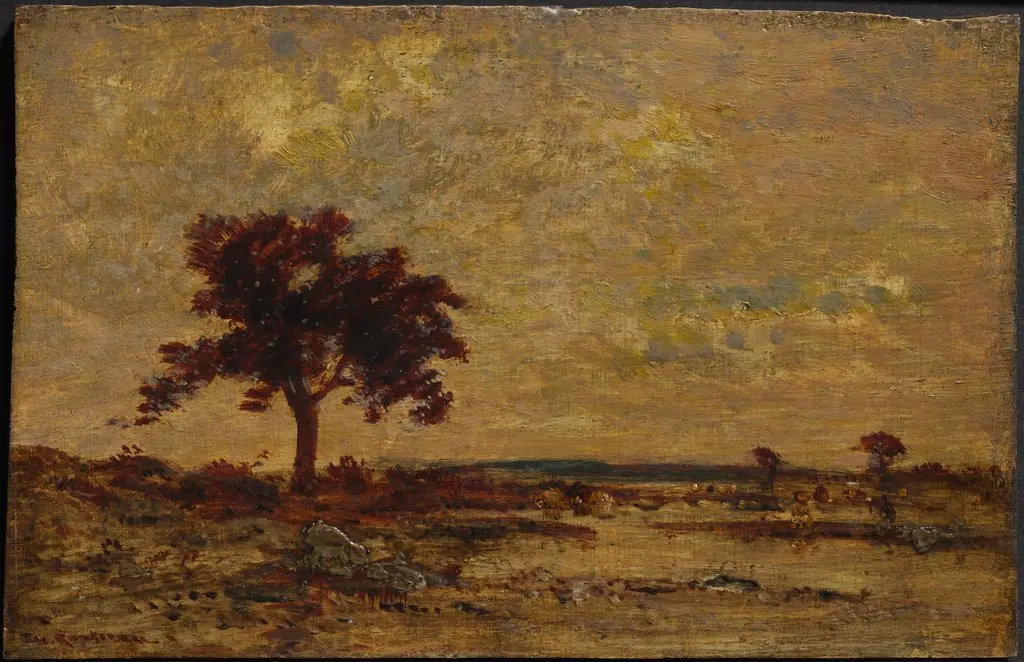
Autumn Meadows is an oil painting by the American Impressionist artist Albert Pinkham Ryder. It dates from 1914 and is held in the collection of the Metropolitan Museum of Art.
- Accession no.
- 32.67.1
- Credit line
- Morris K. Jesup Fund, 1932
About this work
Subject & Meaning
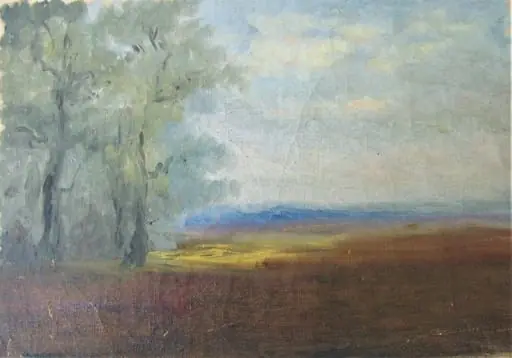
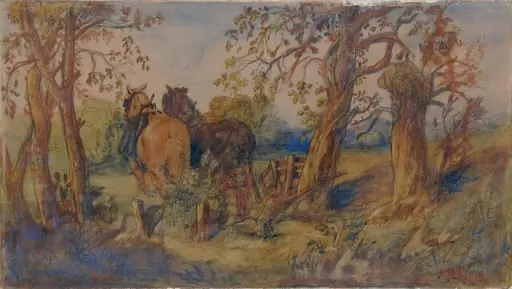
Created in 1912, Autumn Meadows is a landscape painting that visually presents a natural scene featuring trees and a horse.
Created in 1912, Autumn Meadows is a landscape painting that visually presents a natural scene featuring trees and a horse. The work's title and depicted elements combine to evoke the specific atmosphere of a meadow during the autumn season. While the piece functions primarily as a representation of the physical environment, the inclusion of the solitary animal within the wooded setting establishes the core iconography of the composition.
The painting is executed in oil on canvas mounted on wood, a material choice that supports its classification within the American Wing's collection of landscape genres. Although formerly attributed to Albert Pinkham Ryder, the work remains defined by its straightforward depiction of these rural subjects without additional allegorical layers explicitly detailed in available records.
Technique & Style
Created in 1912, Autumn Meadows is executed in oil paint on a canvas support that has been mounted onto wood. The work measures approximately 53.3 by 43.8 centimeters. Stylistically classified as a landscape, the composition features naturalistic elements including trees and a horse.
While historically linked to Albert Pinkham Ryder, modern records note the piece was formerly attributed to him rather than definitively by him. The painting is held within the collection of the Metropolitan Museum of Art, specifically categorized under The American Wing.
History & Provenance
Autumn Meadows is dated to 1912 based on institutional records and cataloguing. The work entered the collection of The Metropolitan Museum of Art with dimensions recorded as 53.3 cm in height and 43.8 cm in width, confirming its presence in the museum’s holdings by the time of documentation. The painting’s subject aligns with landscape imagery associated with Ryder’s late period, featuring a horse within a tree-dotted expanse. No documented commission or early provenance prior to museum accession is recorded in available sources.
The painting Autumn Meadows, dated 1912, is held within the collection of the Metropolitan Museum of Art. Previously attributed to Albert Pinkham Ryder, the work is classified under the American Wing and executed in oil on canvas. The piece measures 53.3 cm in height and 43.8 cm in width.
While the provided records confirm its current location at the Metropolitan Museum of Art and its 1912 inception, the available sources do not list a specific inventory or accession number, nor do they document any past or future exhibition history for this specific work.
Overview
Autumn Meadows (1914) by Albert Pinkham Ryder is a landscape depicting two dark horses standing in a field beneath a swirling, moonlit sky. The composition is dominated by the atmospheric tension of the night, where trees lean dynamically under the wind, their branches rendered with thick, heavy impasto that resembles clay. Ryder constructed the scene through a complex layering process, applying thin oil glazes over rough, substantial strokes to achieve a sense of depth and texture.
The artist worked on this canvas for five years, a duration characteristic of his meticulous and often obsessive approach to painting. As a late work created near the end of his life, Autumn Meadows exemplifies Ryder's mature style, which prioritizes emotional resonance and poetic mood over strict naturalism. The painting reflects his unique position in American art history as a visionary who bridged 19th-century romanticism and early modernism, focusing on the spiritual and mysterious qualities of the natural world rather than its literal appearance.
Artist & collection

Artist
Albert Pinkham Ryder was an American painter best known for his poetic and moody allegorical works and seascapes, as well as his eccentric personality.