Artwork
George Washington
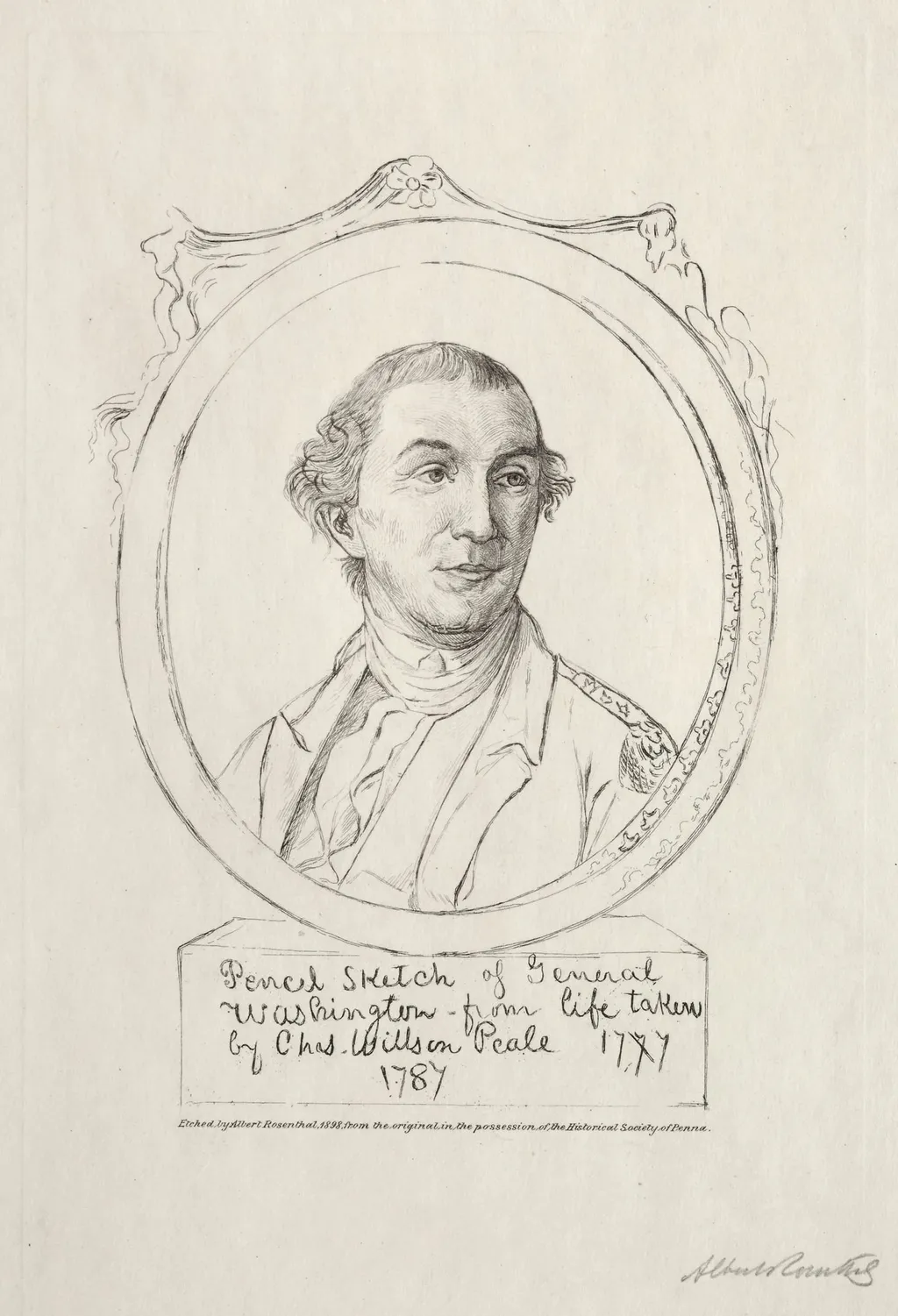
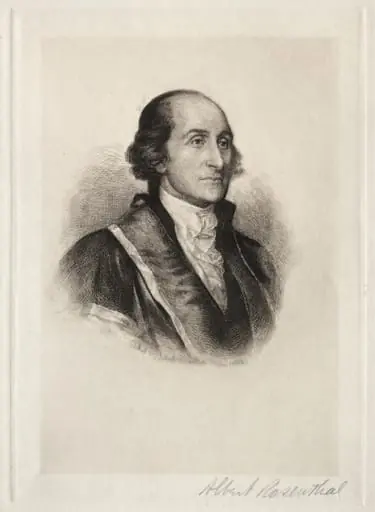
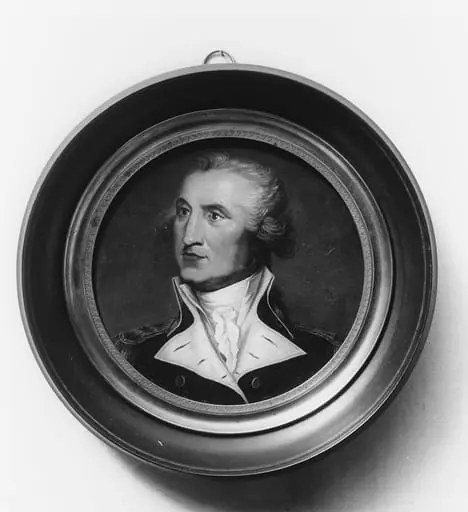
George Washington is a print by the Impressionist artist Albert Rosenthal. It dates from 1898 and is held in the collection of the Cleveland Museum of Art.
- Accession no.
- 1917.704
- Credit line
- Gift of Albert Rosenthal
About this work
Below the image, there’s handwritten text that reads “Penciled Sketch of General Washington, from life taken by Chas.
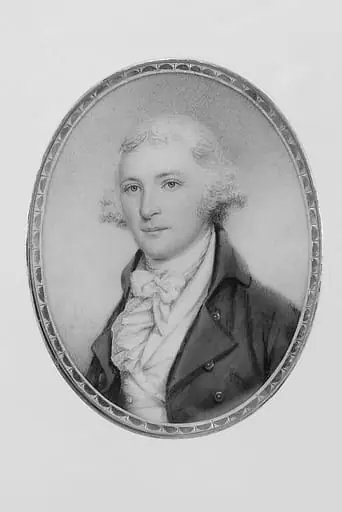
This is a black-and-white sketch of a man in a military jacket with a high collar. His face is serious, and he’s framed by a decorative oval border. Below the image, there’s handwritten text that reads “Penciled Sketch of General Washington, from life taken by Chas. Willson Peale 1787.”
The artist later copied this sketch in 1898, turning it into this etched version. Notice how the lines are simple but precise, focusing on the man’s strong features.
If you like this style, check out Realism for more portraits that prioritize truthful details over fancy effects.
Overview
Created in 1898 by Albert Rosenthal, this black-and-white etching presents a portrait of George Washington. Rosenthal, a Philadelphia-based artist and collector, reproduced a previously drawn sketch attributed to Charles Willson Peale. The work is part of The Cleveland Museum of Art’s collection and reflects a deliberate engagement with historical imagery through the medium of printmaking.
Subject & Meaning
The portrait depicts George Washington in military attire, his expression composed and solemn. The inclusion of handwritten text identifies the original sketch as taken from life by Charles Willson Peale in 1787, anchoring the image in historical authenticity. Rosenthal’s reproduction emphasizes Washington’s presence as a figure of quiet authority, rooted in documented observation rather than idealization.
Technique & Style
Rosenthal rendered the image as a precise etching, using fine, controlled lines to define Washington’s features and the ornate oval frame. The monochromatic palette and minimalist approach prioritize clarity and structure over decorative flourish. The technique mirrors the directness of the original pencil sketch, preserving its observational quality while adapting it to the demands of print reproduction.
History & Provenance
The image originates from a 1787 pencil sketch by Charles Willson Peale, one of Washington’s contemporaries and portraitists. Rosenthal encountered this drawing in his collection and chose to translate it into an etching over a century later. The work entered The Cleveland Museum of Art’s holdings as part of its broader commitment to American historical prints and portraiture.
Context
In the late 19th century, American artists and collectors increasingly turned to historical subjects to reinforce national identity. Rosenthal’s reproduction of Peale’s sketch aligns with this trend, reflecting a scholarly interest in preserving early visual records of founding figures. The practice of re-engaging with 18th-century portraits through printmaking was both archival and culturally resonant.
Legacy
Rosenthal’s etching endures as a faithful intermediary between Peale’s original observation and later historical memory. It exemplifies how 19th-century printmakers served as curators of early American imagery, ensuring accessibility to foundational portraits without altering their essential character. The work remains a quiet testament to the continuity of visual documentation across generations.
Own this work as a print
Artist & collection
Artist
Albert Rosenthal (January 30, 1863 – December 20, 1939) was an American portrait artist, printmaker, writer, and collector from Philadelphia.