Artwork
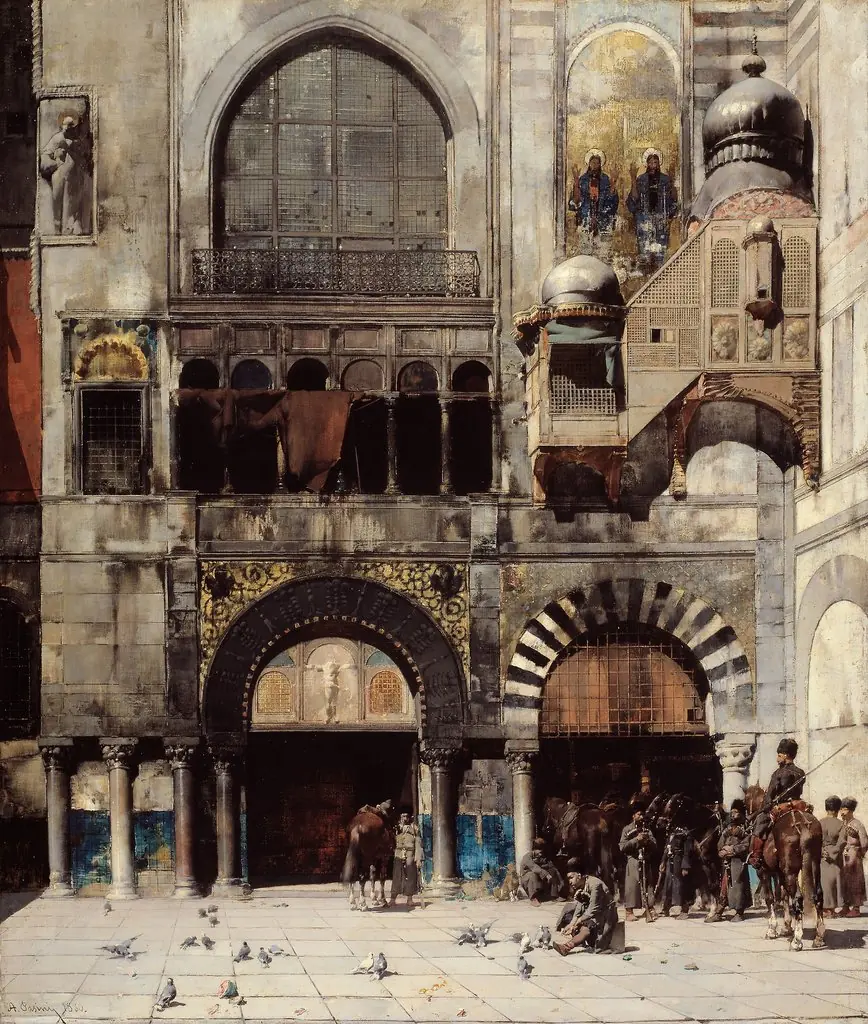
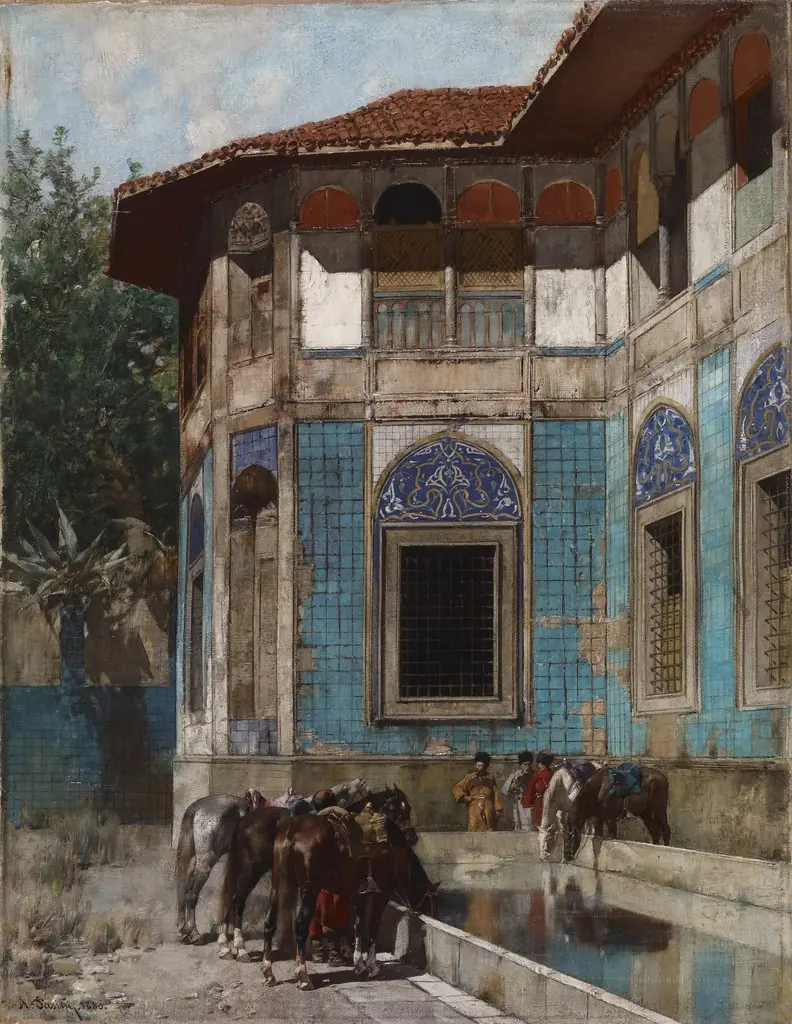
Courtyard in Constantinople
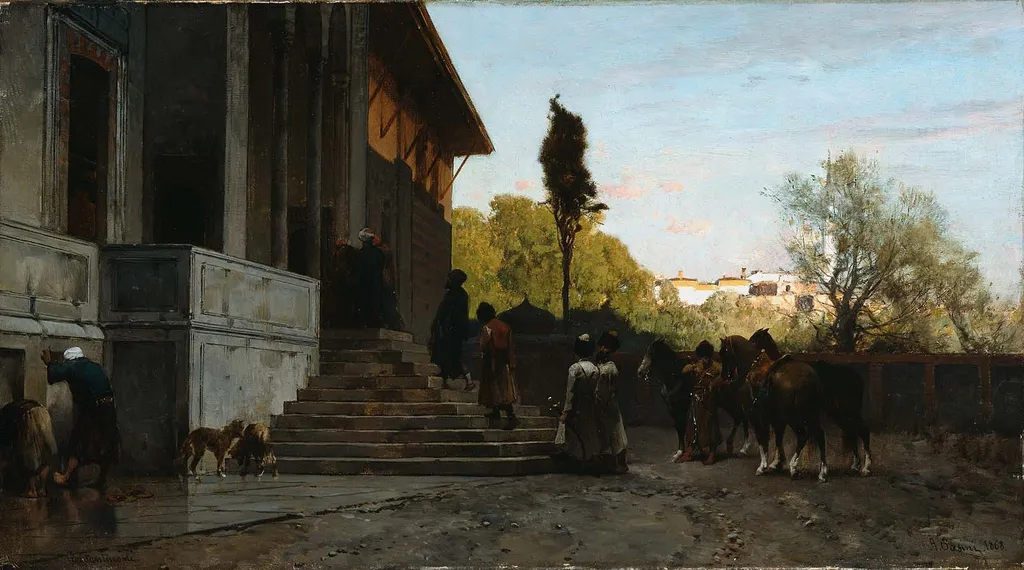
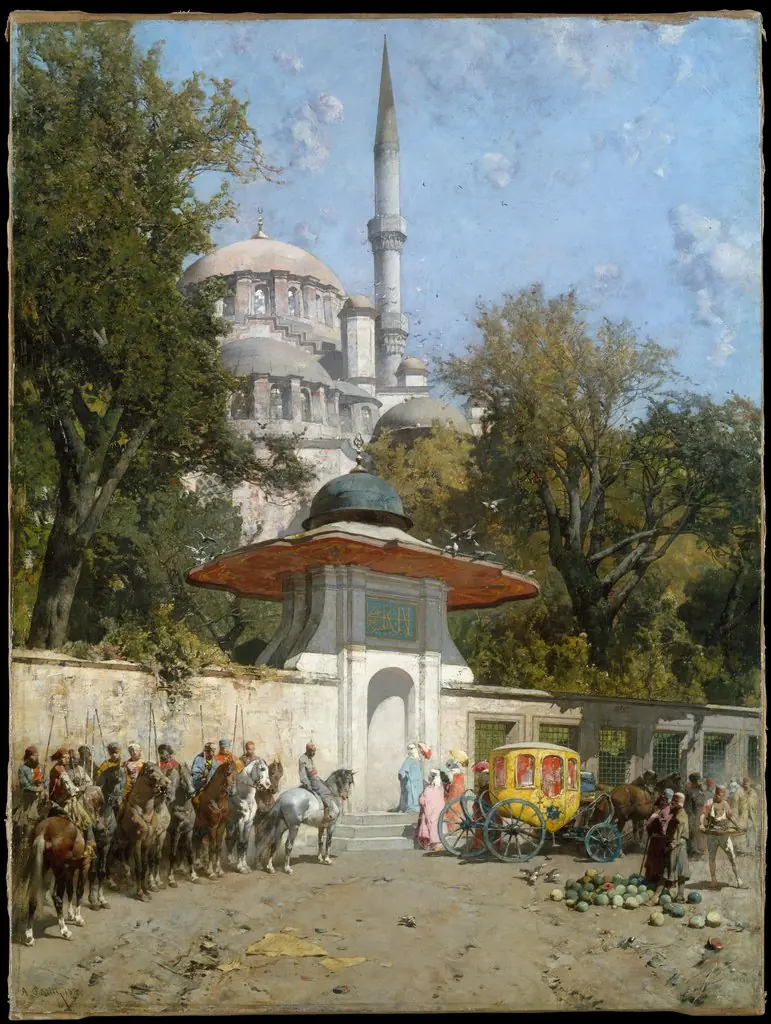
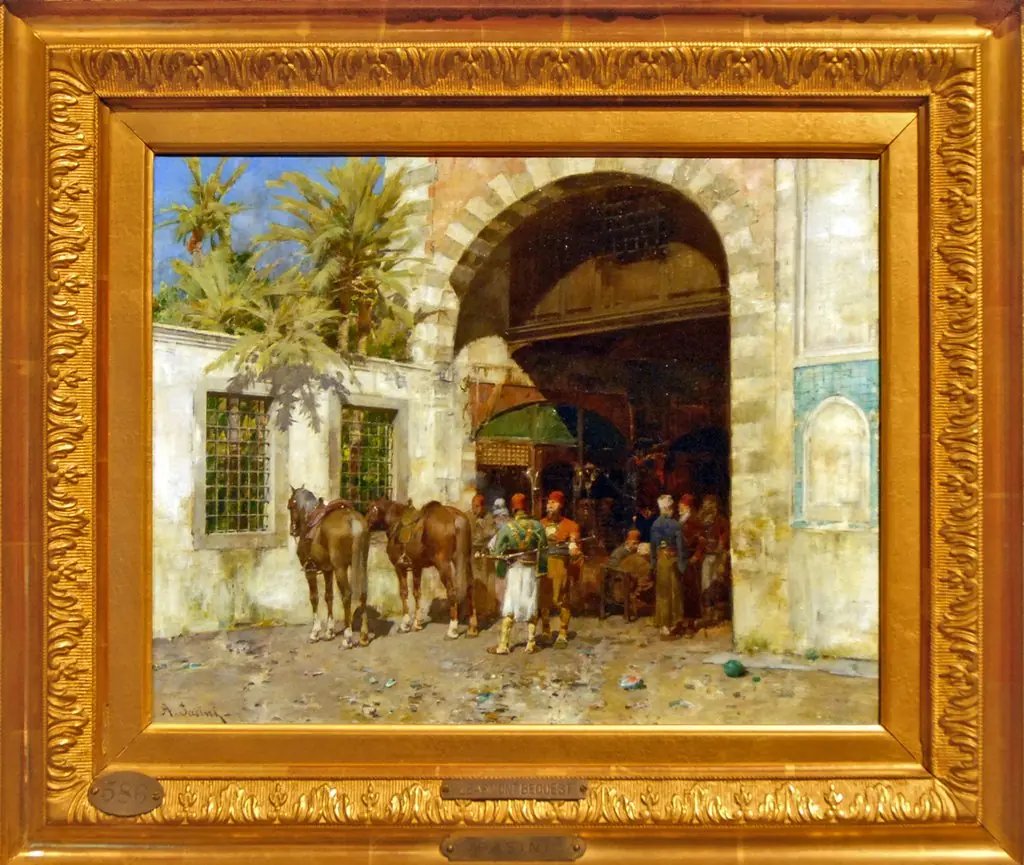
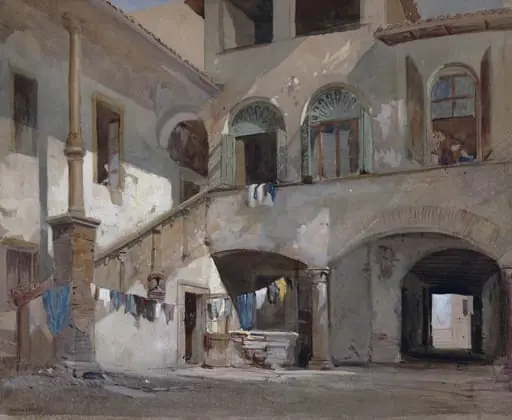
Courtyard in Constantinople is an oil painting by the Orientalist artist Alberto Pasini. It dates from 1868 and is held in the collection of the Museum of Fine Arts Boston.
About this work
Overview
The composition captures a moment of daily life, with figures in long coats and hats navigating the steps, horses being led, and small dogs roaming nearby.
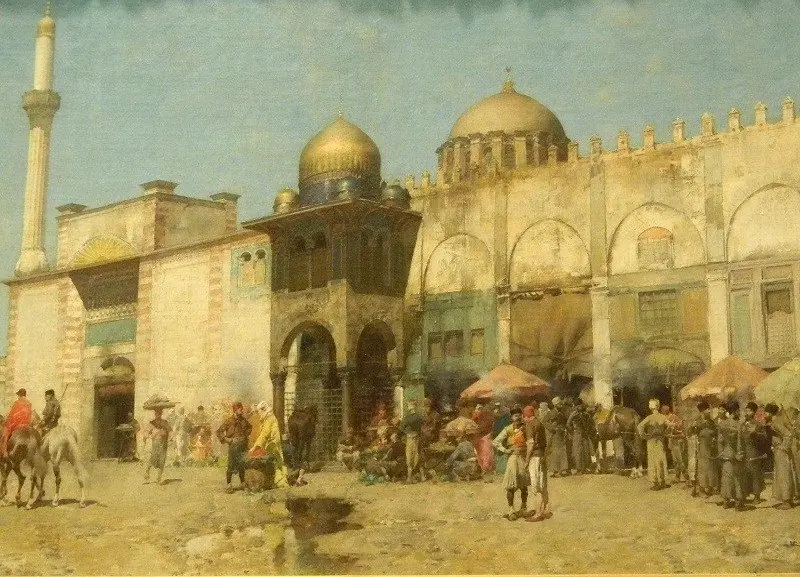
Alberto Pasini’s 1868 oil on canvas, titled Courtyard in Constantinople, presents a bustling open space set before an aging stone structure. The composition captures a moment of daily life, with figures in long coats and hats navigating the steps, horses being led, and small dogs roaming nearby. The scene is framed by distant buildings and a pale sky, emphasizing the courtyard’s role as a transitional zone between interior and urban surroundings.
Subject & Meaning
The work portrays a typical Ottoman courtyard, a communal area where social interaction, commerce, and travel converge. By depicting a mixture of pedestrians, equine traffic, and domestic animals, Pasini highlights the rhythm of everyday activity in 19th‑century Constantinople, suggesting a lived environment rather than an idealized landscape. The weathered façade and peeling paint hint at the passage of time and the layered history of the city’s architecture.
Technique & Style
Executed in oil, the painting employs a nuanced handling of light and shadow that creates depth across the stone steps and walls. Variations in illumination produce a subtle chiaroscuro effect, rendering certain surfaces luminous while others recede into darker tones. Pasini’s brushwork balances detailed figuration with broader atmospheric washes, allowing the architecture and figures to coexist within a cohesive visual field.
History & Provenance
Created in 1868, Courtyard in Constantinople entered the collection of the Museum of Fine Arts, Boston, where it remains on display. The painting’s acquisition reflects the museum’s interest in 19th‑century European depictions of exotic locales, a genre that appealed to Western audiences fascinated by the Ottoman Empire’s cultural landscape.
Context
Pasini, an Italian painter known for Orientalist subjects, traveled extensively in the Near East, gathering sketches that informed his studio work. This canvas exemplifies his approach of combining on‑site observation with studio composition, offering Western viewers a glimpse of Ottoman urban life while adhering to the aesthetic conventions of European academic painting of the period.
Artist & collection

Artist
Alberto Pasini was an Italian painter. He is best known for depicting Orientalist subjects in a late-Romantic style.