Artwork
Interior of St Wolfgang's Church in Rothenburg
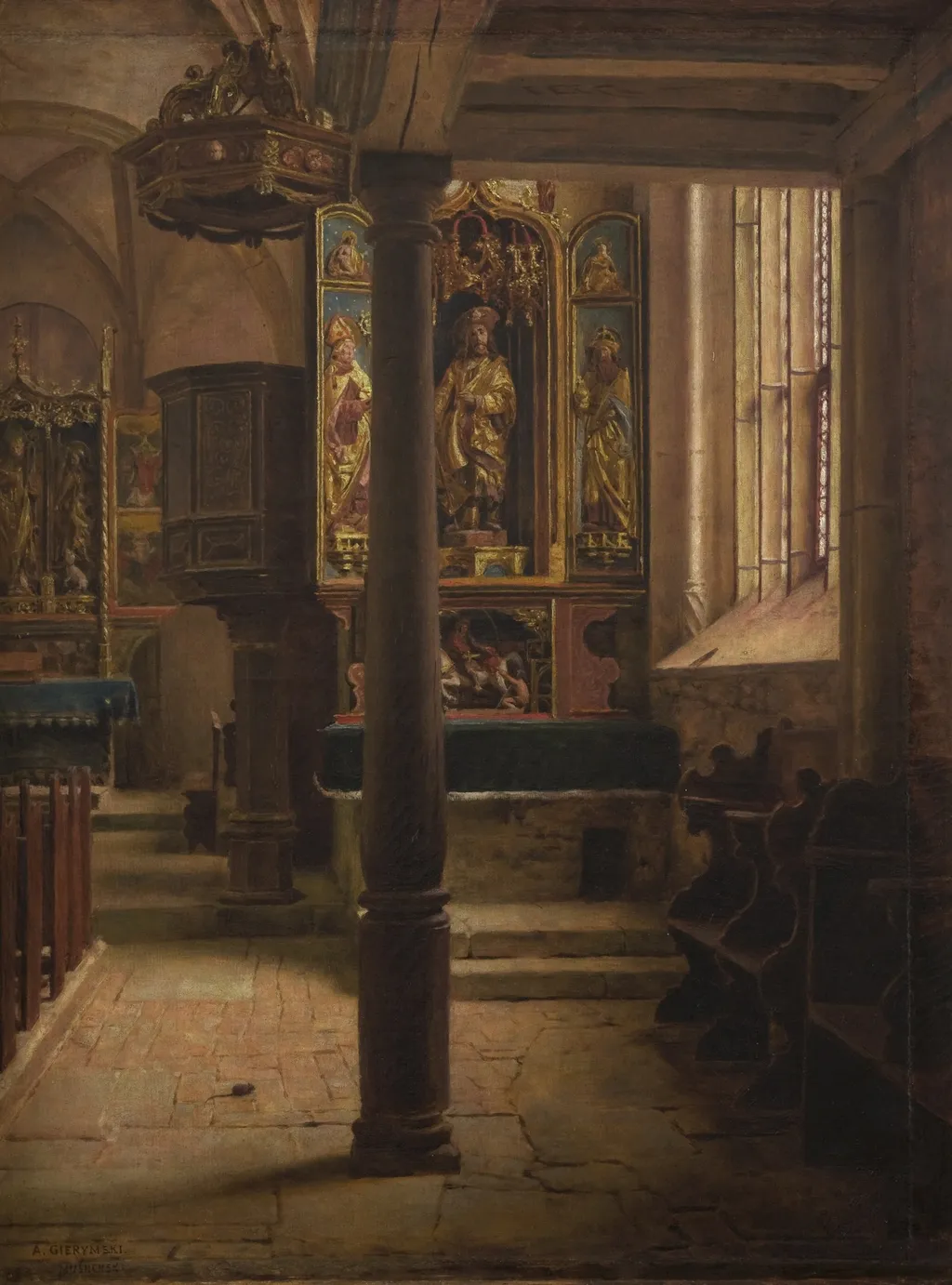
Interior of St Wolfgang's Church in Rothenburg is an oil painting by the Impressionist artist Aleksander Gierymski. It dates from 1898 and is held in the collection of the National Museum in Kraków.
About this work
Overview
Interior of St Wolfgang's Church in Rothenburg is an oil-on-canvas painting by the Polish artist Aleksander Gierymski, executed in 1896 and measuring 86 by 64 centimetres. The work depicts the interior of St Wolfgang's Church in the Bavarian town of Rothenburg ob der Tauber, Germany, and is held in the collection of the National Museum in Kraków, Poland, in the Department of Modern Polish Painting and Sculpture. Signed "A. GIERYMSKI" and "MÜNCHEN" in the lower left corner, the painting belongs to the artist's late period, when he produced numerous architectural and landscape subjects during his extended residence in Germany. It exemplifies Gierymski's sustained engagement with the effects of natural and artificial light on interior spaces, a concern that runs throughout his mature career and connects his realist roots with impressionist tendencies.
Subject & Meaning
Tall arched windows to the right admit pale light that streams onto the stone floor in bright vertical bands, contrasting with the shadowed walls.
The painting presents a view from behind a substantial cylindrical column that bisects the composition vertically, creating a natural division between the ornate wooden pulpit on the left and the luminous window wall on the right. At the centre background rises a gilded altarpiece with multiple painted and sculpted panels depicting robed religious figures in gold, blue, and red garments, while a dark green cloth covers the altar table below. Tall arched windows to the right admit pale light that streams onto the stone floor in bright vertical bands, contrasting with the shadowed walls. Wooden pews occupy the lower right corner. The absence of human figures is notable, transforming the church interior into a meditation on space, light, and architectural form rather than narrative or devotion. The selective illumination, with much of the foreground and right side plunged in deep shadow while the altarpiece and window wall glow, suggests a contemplative, almost theatrical atmosphere. The choice of St Wolfgang's, a historic church in a well-preserved medieval town, reflects Gierymski's broader interest in European architectural heritage during his expatriate years.
Technique & Style
Executed in oil on canvas, the painting displays relatively smooth brushwork in the architectural elements, with more textured handling in the floor and shadowed areas. The palette consists of warm browns, muted golds, and cool gray stone tones, modulated by the selective penetration of light. Gierymski's technique here demonstrates his characteristic synthesis of realist precision in architectural detail with an impressionist sensitivity to atmospheric effects and transient light conditions. The signature and "MÜNCHEN" inscription indicate execution during his Munich period, when he had access to the Bavarian capital's rich artistic traditions and technical resources. The handling of light filtering through the tall windows, creating sharp vertical bands against the darker recesses of the nave, shows particular attention to the contrast between illuminated and shadowed zones. The painting's modest dimensions, 86 by 64 centimetres, suggest an intimate, carefully studied composition rather than a grand monumental statement.
History & Provenance
The painting is dated to 1896, with some sources suggesting a possible range of 1896-1897. This places it during Gierymski's extended residence in Germany, which began in 1888 after his departure from Warsaw and continued with only intermittent returns to Poland. The artist's presence in Munich is confirmed by the inscription on the canvas. The work entered the collection of the National Museum in Kraków, where it is now held in the Department of Modern Polish Painting and Sculpture under accession number MNK II-a-435. The museum's online catalogue provides the definitive record of its current location and status. The painting was digitised by the museum's photographic studio in 2008 and subsequently made available through a GLAM-Wiki partnership between the National Museum in Kraków and Wikimedia Polska, reflecting its status as a significant work in the Polish national patrimony.
Context
Aleksander Gierymski (1850-1901) was a pivotal figure in Polish art, trained at the Academy of Fine Arts in Munich where he graduated with a gold medal in 1872. His early career in Rome and Warsaw established him as a realist painter of urban and rural life, with works like Jewish Women Selling Oranges and The Feast of Trumpets addressing the social conditions of Warsaw's poor districts. His departure from Poland in 1888 marked a significant shift in subject matter, as he turned increasingly to landscapes, nocturnal urban views, and architectural subjects painted in Germany, France, and eventually Italy. The Rothenburg interior belongs to this period of expatriate production, when Gierymski painted subjects that, in the assessment of later scholars, were "not so personal" as his Warsaw period works. Nevertheless, his technical preoccupations remained consistent, particularly his fascination with artificial and natural light effects. Despite his achievements, Gierymski faced persistent neglect in his homeland during his lifetime, a circumstance that contributed to his psychological decline and eventual death in a Roman mental hospital in 1901. His posthumous reputation, however, has grown substantially, and he is now recognised as both a major realist and an important precursor of Impressionism in Poland.
Legacy
Interior of St Wolfgang's Church in Rothenburg occupies a significant place in Gierymski's oeuvre as a representative example of his late architectural interiors, a genre that also includes the Interior of Basilica of San Marco in Venice from his final Italian period. These works demonstrate the breadth of his artistic range beyond the social realist subjects for which he was initially known. The painting's preservation in the National Museum in Kraków ensures its accessibility to scholars and the public, and its digitisation has facilitated wider appreciation beyond Poland. While less frequently cited than his Warsaw period masterpieces, the Rothenburg interior contributes to the understanding of Gierymski's development as a painter of light and atmosphere, connecting his practice to broader European trends in late nineteenth-century painting. The work also documents the appearance of St Wolfgang's Church at a specific historical moment, adding art-historical value to its aesthetic qualities. Gierymski's broader legacy as a pioneer of modern Polish painting, bridging Realism and Impressionism while maintaining a distinctive personal vision, continues to be reassessed through works such as this that illuminate the full scope of his career.
Own this work as a print
Artist & collection
Artist
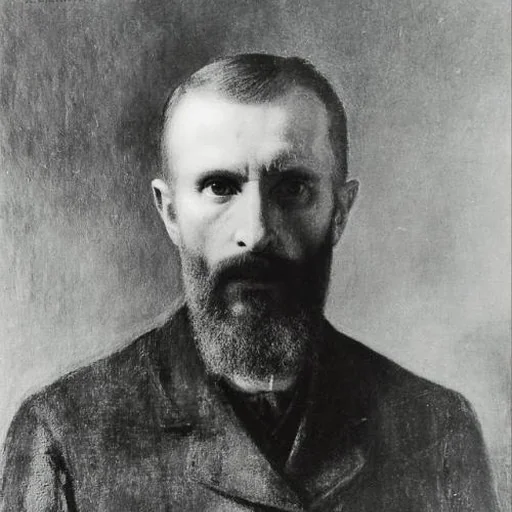
Ignacy Aleksander Gierymski (30 January 1850, Warsaw – d. 6–8 March 1901, Rome) was a Polish painter of the late 19th century, the younger brother of Maksymilian Gierymski. He was a representative of Realism as well as…

 Interior of the Parish Church in Krosno
 Interior of Saint Mary’s Basilica in Kraków
 Interior of the Wawel Cathedral
 Interior of a Chapel at the Parish Church in Krosno
 Interior of St. John’s Cathedral in Warsaw
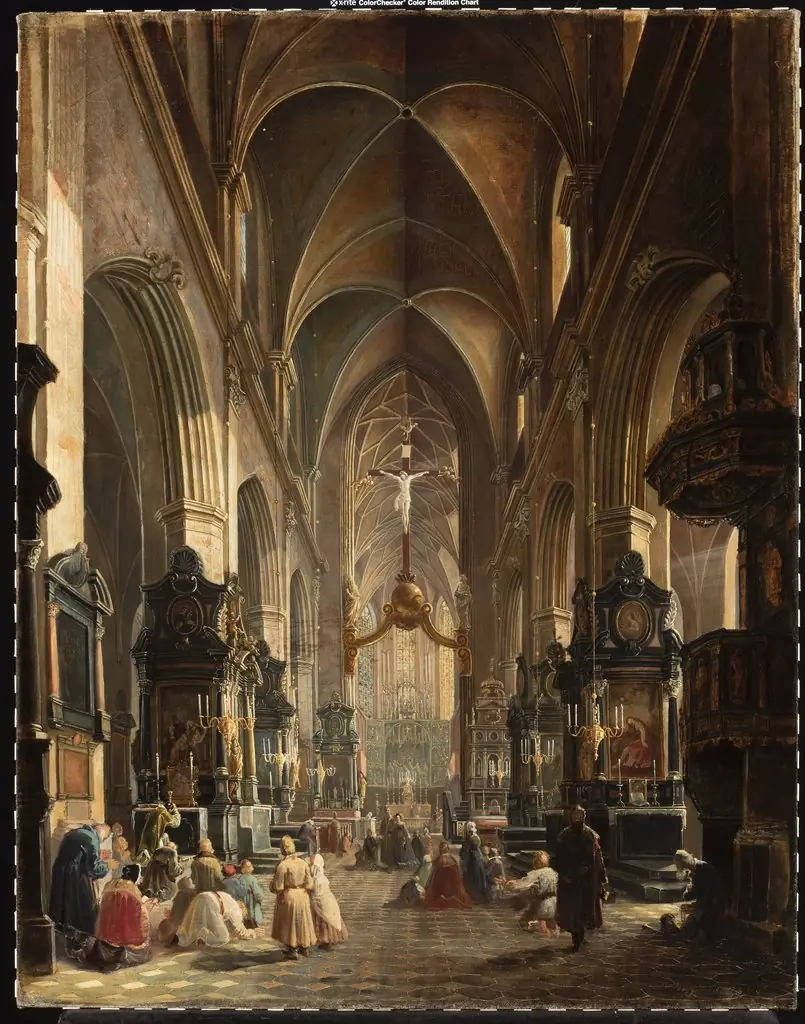 Interior of the Church of Virgin Mary in Kraków
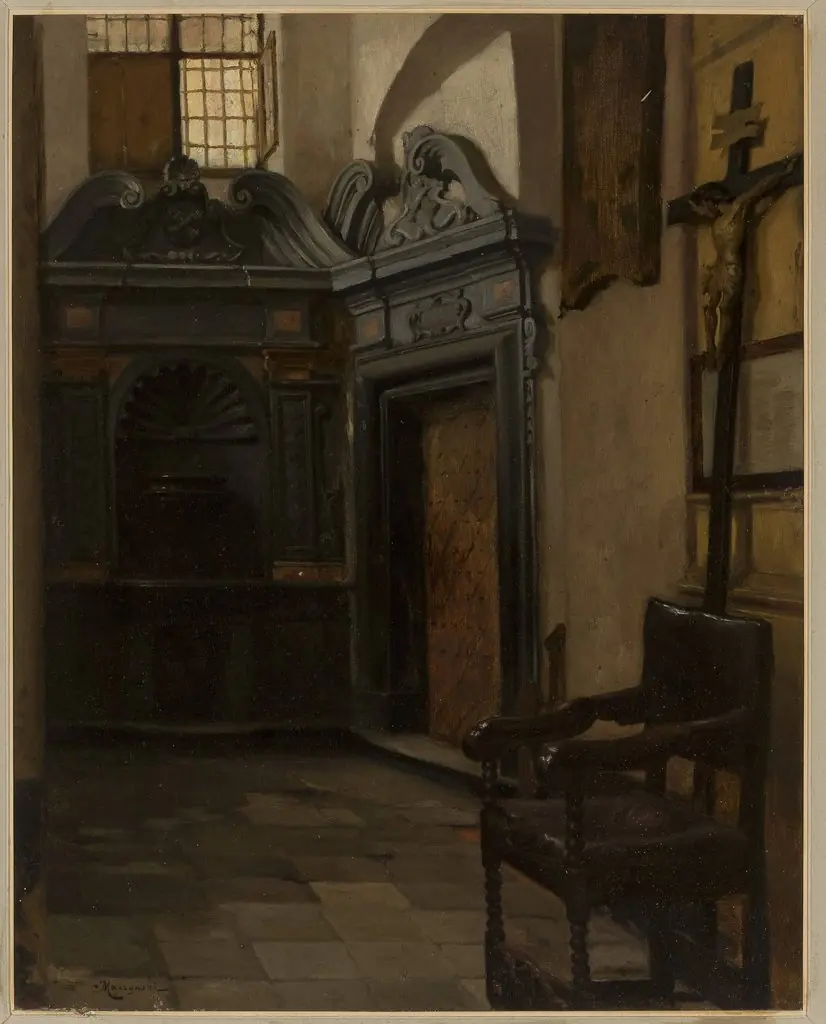 Sacristy
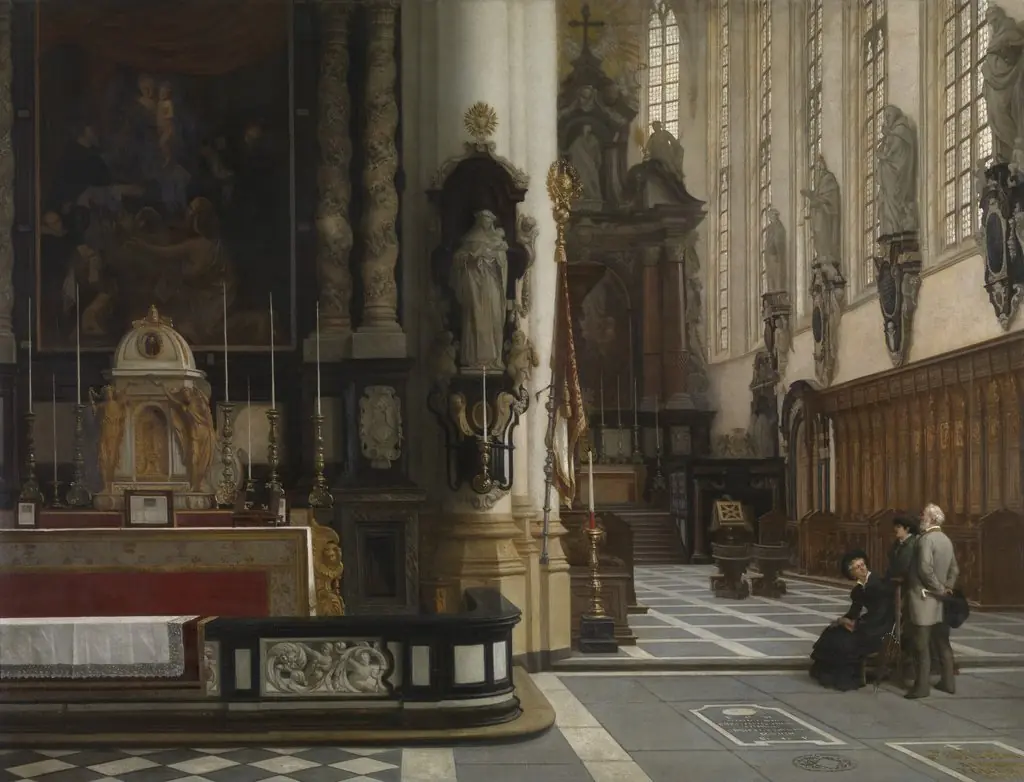 Interior of the Church of Saint Paul in Antwerp
 The Chapel of St Eucharius, Nuremberg