Artwork
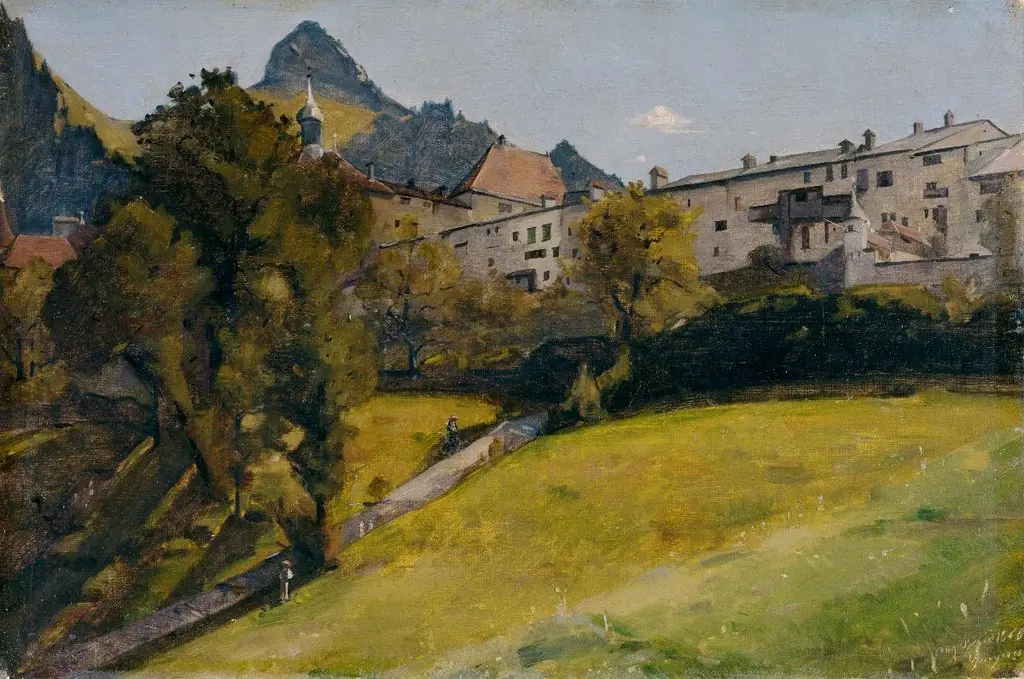
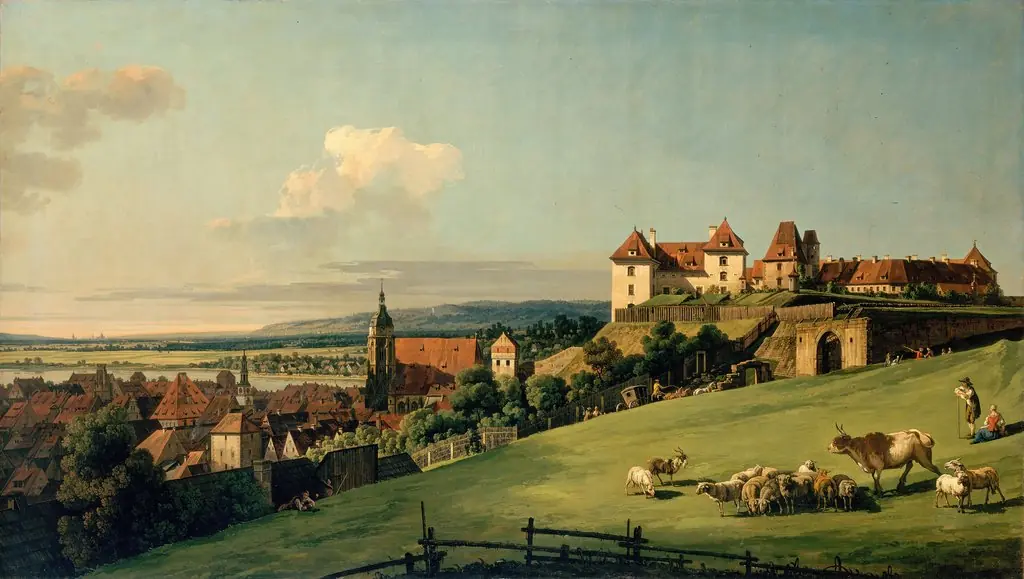
View of the Kufstein Fortress vicinity
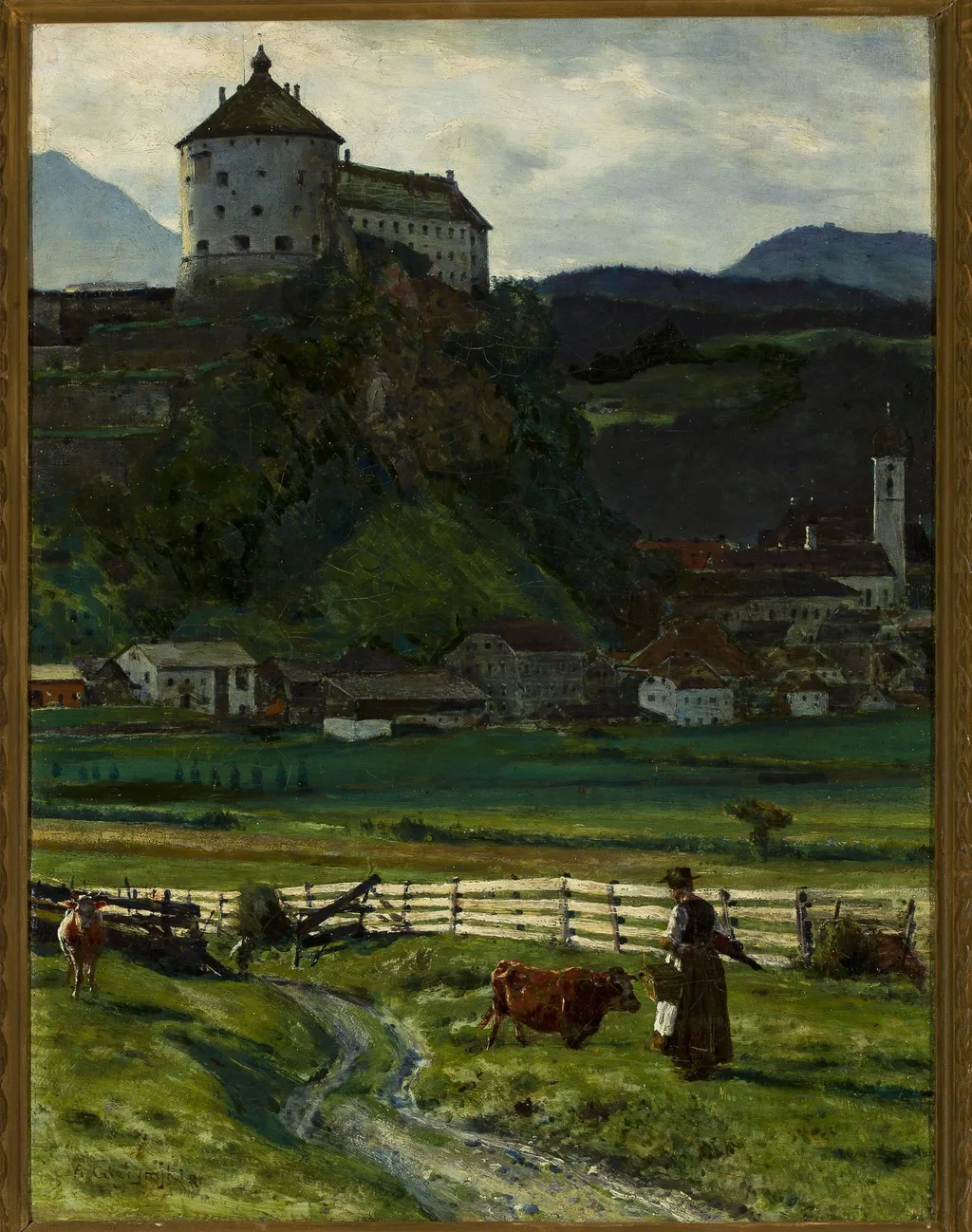
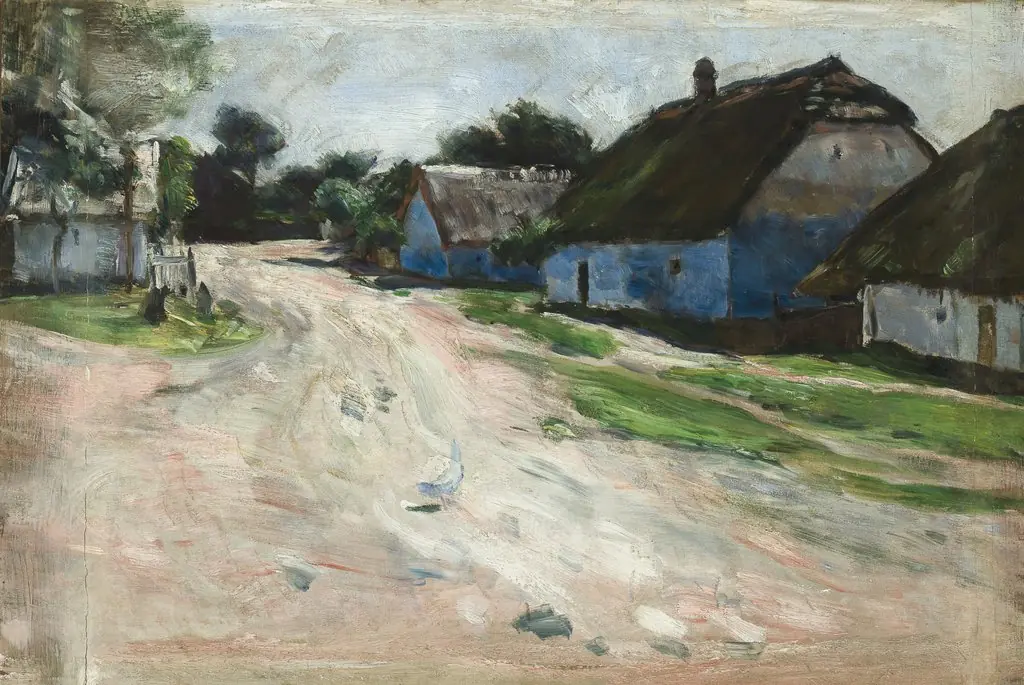
View of the Kufstein Fortress vicinity is an oil painting by the Impressionist artist Aleksander Gierymski. It dates from 1895 and is held in the collection of the National Museum in Warsaw.
About this work
Overview
The painting is currently held in the collection of the National Museum in Warsaw, where it carries the accession number 72593.
View of the Kufstein Fortress vicinity is an 1889 landscape painting by the Polish artist Aleksander Gierymski. Executed in oil on canvas, the work measures 46.5 cm in height and 35 cm in width. It is classified within the landscape genre and depicts the Austrian mountain fortress and its surrounding valley. The painting is currently held in the collection of the National Museum in Warsaw, where it carries the accession number 72593.
Subject & Meaning
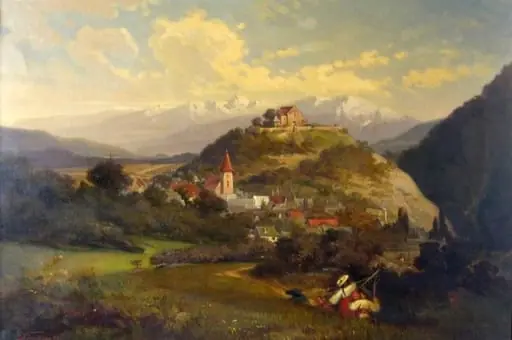
The composition captures a panoramic view of the Kufstein Fortress, which sits atop a rocky hill in the upper left, dominating the valley below. A small town clusters around a church with a tall white tower and red roofs in the middle ground. In the foreground, a woman in dark clothing and a hat stands beside a brown cow on a grassy field, near a dirt path that curves toward a wooden fence where another figure sits. Layered green fields, dark trees, and distant blue mountains rise under a pale, cloudy sky. The inclusion of rural figures and the fortress town reflects Gierymski's realist focus on everyday scenery rather than grand historical or mythological narratives.
Technique & Style
Gierymski employed oil paint on canvas to render the scene, utilizing a palette of deep greens, earthy browns, muted blues, and soft whites. Light falls from the upper left, casting shadows across the terrain and modeling the topography. The brushwork is visible and textured, featuring loose strokes in the foliage and sky, while the architecture and figures receive more defined handling. The painting's surface shows fine craquelure throughout. The artist signed the work in the lower left corner. This stylistic approach aligns with Gierymski's role as a representative of European Realism, combined with atmospheric qualities that anticipate Impressionist concerns with light and color.
History & Provenance
Created in 1889, the painting dates to the period after Gierymski left Warsaw in 1888 due to a lack of professional recognition in his homeland. During this time, he lived mostly in Germany and France, shifting his focus from urban genre scenes to less personal landscape subjects. The provenance of the painting includes a donation by Abe Gutnajer to the National Museum in Warsaw in 1927. The work was referenced in the museum's 1962 publication on Polish painting from the 16th to the early 20th century. It is currently not on view at the museum.
Context
Aleksander Gierymski was a Polish painter of the late 19th century and the younger brother of Maksymilian Gierymski. After studying at the Academy of Fine Arts in Munich and spending formative years in Italy, he developed a style that merged Realism with an early exploration of Impressionist light and color. His most acclaimed period, spent in Warsaw from 1879 to 1888, focused on the lives of the urban poor. Unappreciated in Poland, he moved abroad in 1888, producing landscapes like this one. Despite his lack of contemporary recognition, critics like Stanisław Witkiewicz championed his work, and he is now considered an important precursor of Impressionism in Poland.
Own this work as a print
Artist & collection
Artist
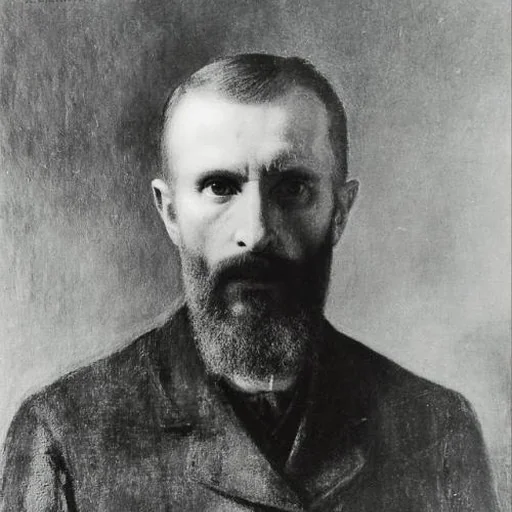
Ignacy Aleksander Gierymski (30 January 1850, Warsaw – d. 6–8 March 1901, Rome) was a Polish painter of the late 19th century, the younger brother of Maksymilian Gierymski. He was a representative of Realism as well as…