Artwork
An Allegory with Bacchus, Ceres, Flora and Apollo
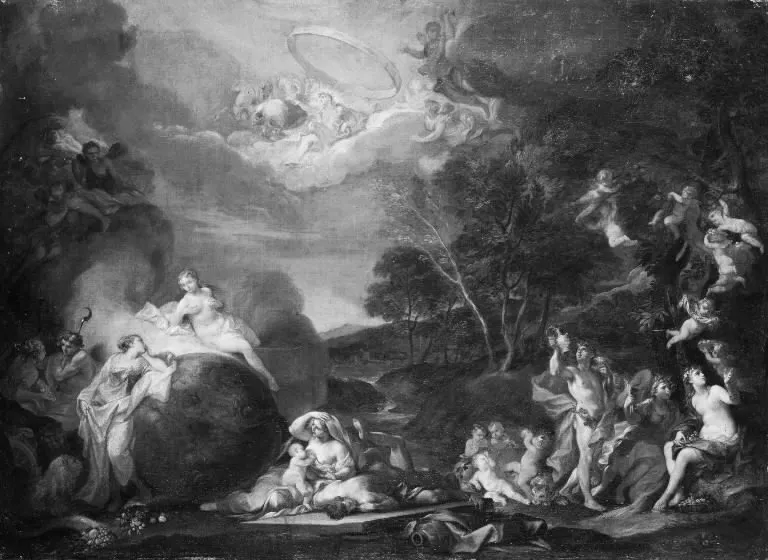
An Allegory with Bacchus, Ceres, Flora and Apollo is an oil painting by the Rococo painting artist Alessandro Marchesini. It dates from 1708 and is held in the collection of the Statens Museum for Kunst.
About this work
Subject & Meaning
The painting presents an allegorical gathering of the mythic figures Bacchus, Ceres, Flora, and Apollo.
The painting presents an allegorical gathering of the mythic figures Bacchus, Ceres, Flora, and Apollo. In classical tradition Bacchus signifies wine, Ceres denotes agriculture, Flora represents spring and blossoming, while Apollo is associated with music, poetry, and light; together they suggest a celebration of natural abundance and artistic inspiration. As an allegory the composition reflects the interconnectedness of earthly cycles and divine favor, conveying a harmonious vision of the world's fertility and cultural vitality.
Technique & Style
Created in 1708, An Allegory with Bacchus, Ceres, Flora and Apollo is an oil painting executed on canvas by Alessandro Marchesini. The work belongs to the allegorical and mythological genres, depicting the figures of Bacchus, Ceres, Flora, and Apollo. As a canvas support, the medium allows for the fluid application of oil paint characteristic of the period's allegorical traditions.
History & Provenance
The work was painted by Alessandro Marchesini in 1708, as recorded by the artist and corroborated by the Statens Museum for Kunst's records.
It entered the collection of the Statens Museum for Kunst in Copenhagen, where it has been held since at least the early twentieth century. No earlier provenance links or commission details are documented in the accessible sources.
Overview
Alessandro Marchesini’s 1708 oil on canvas, titled An Allegory with Bacchus, Ceres, Flora and Apollo, belongs to the Rococo period. The work is part of the Statens Museum for Kunst’s collection. It arranges several mythological figures in a single, dynamic scene that balances narrative content with decorative flourish.
Context
Marchesini worked at the transition between the late Baroque and Rococo, a time when allegorical subjects were popular among aristocratic patrons. By combining multiple deities in a single scene, the work reflects contemporary tastes for mythological symbolism that conveyed moral and cultural ideals in an elegant, decorative format.
Artist & collection
Artist
Alessandro Marchesini (30 April 1664 – 27 January 1738) was an Italian painter and art merchant of the late-Baroque and Rococo, active in Northern Italy and Venice.

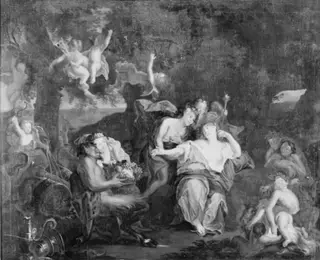 Bacchus og Ariadne sidder sammen i et landskab omgivne af amoriner, bacchantinder og satyrer
 Bacchus og Ariadne sidder sammen i et landskab omgivne af amoriner, bacchantinder og satyrer
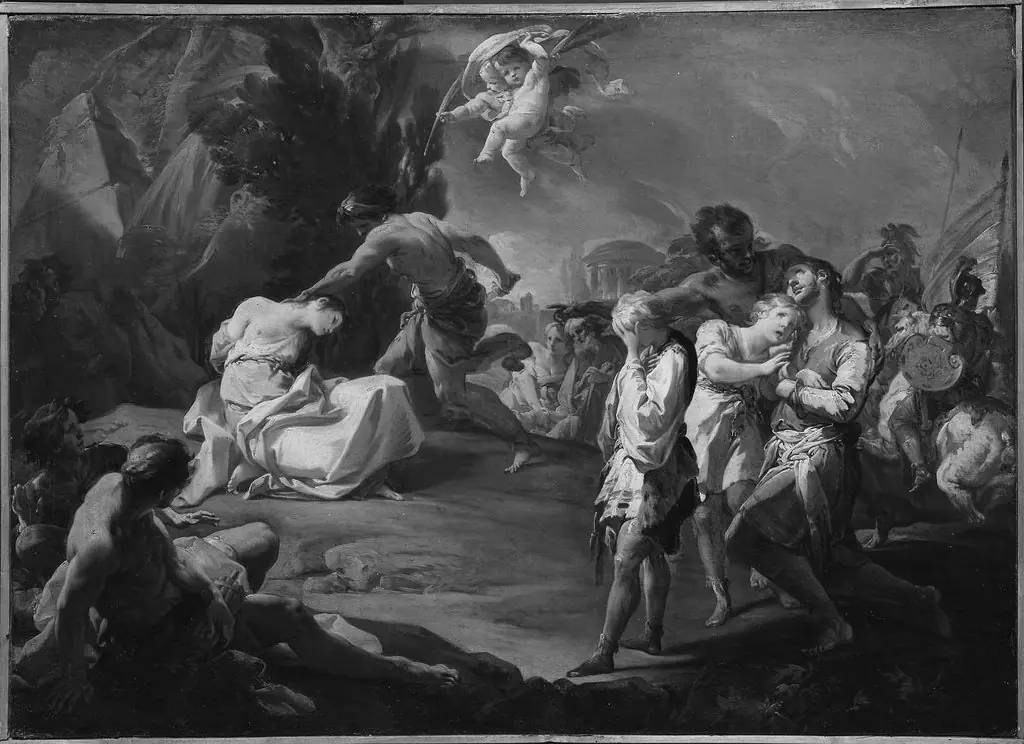 Martyrdom of Saint Marta
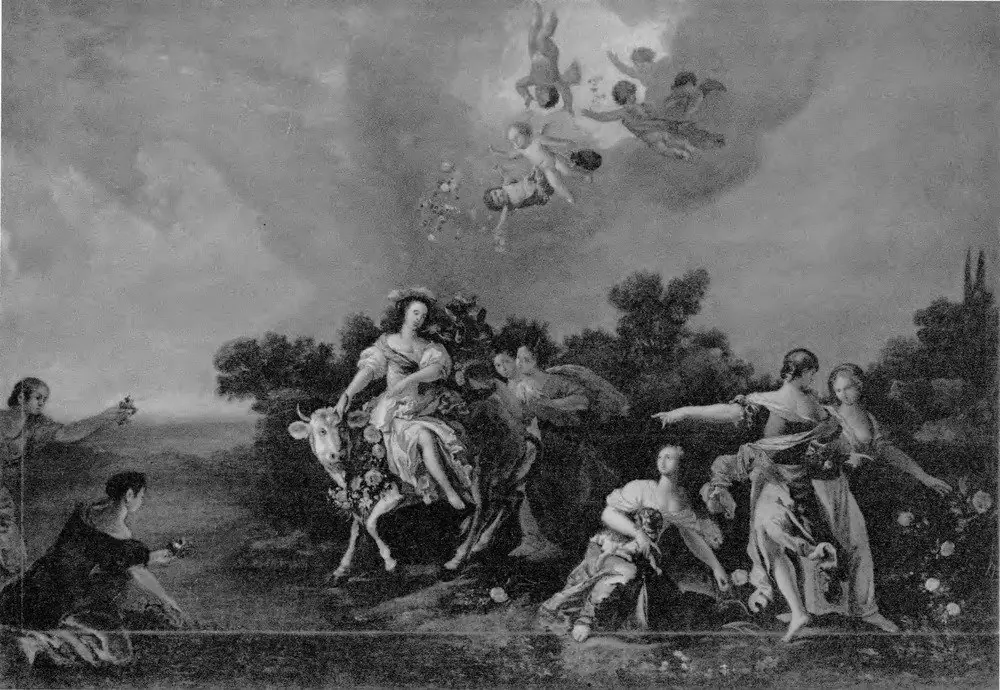 The Rape of Europa
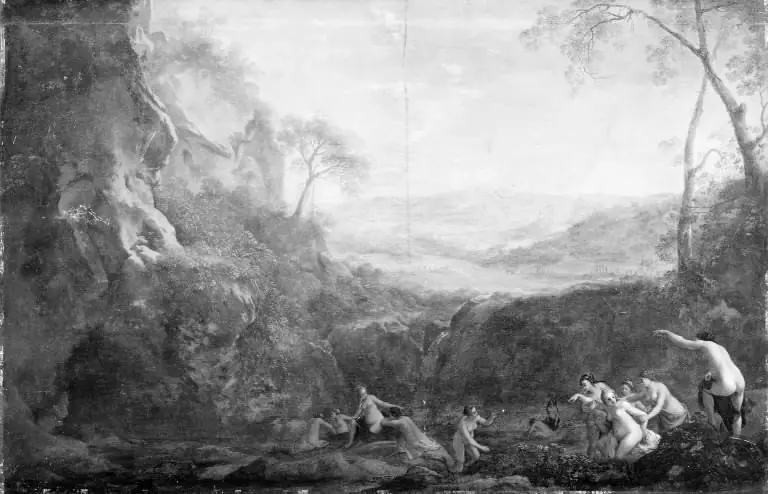 Landscape with Diana and Nymphs
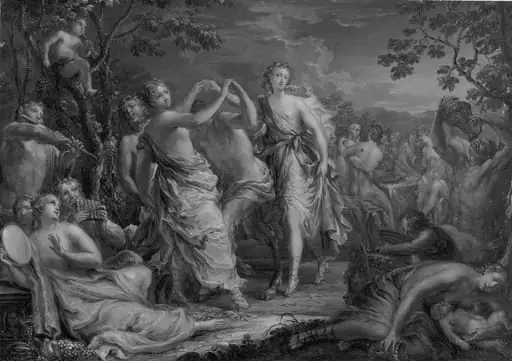 Bacchic Revels
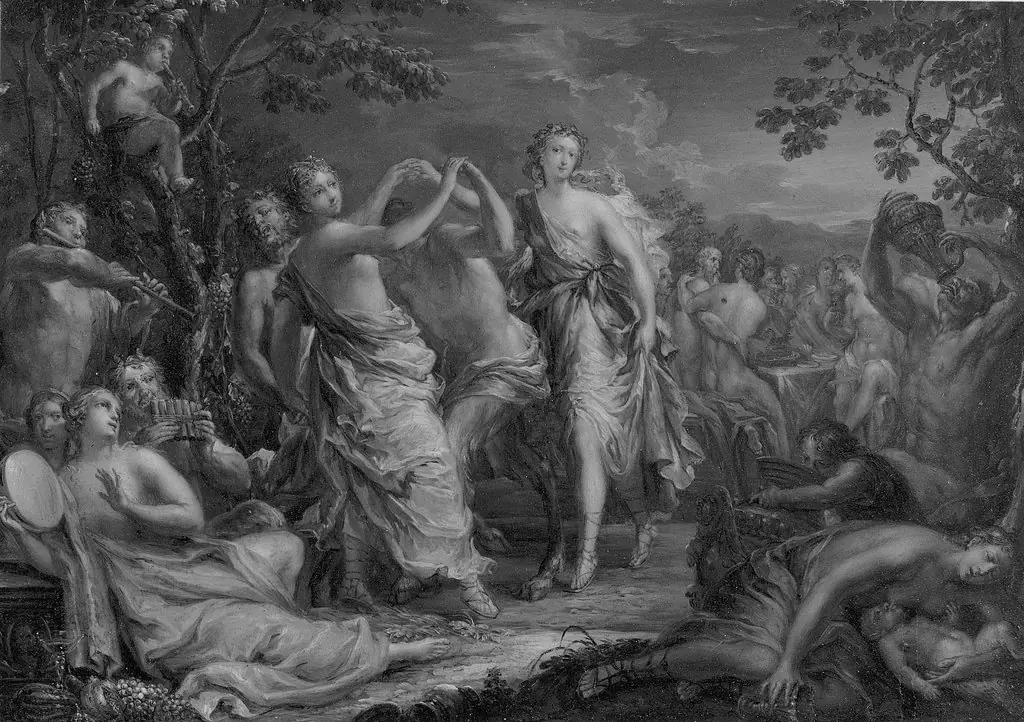 Bacchic Revels
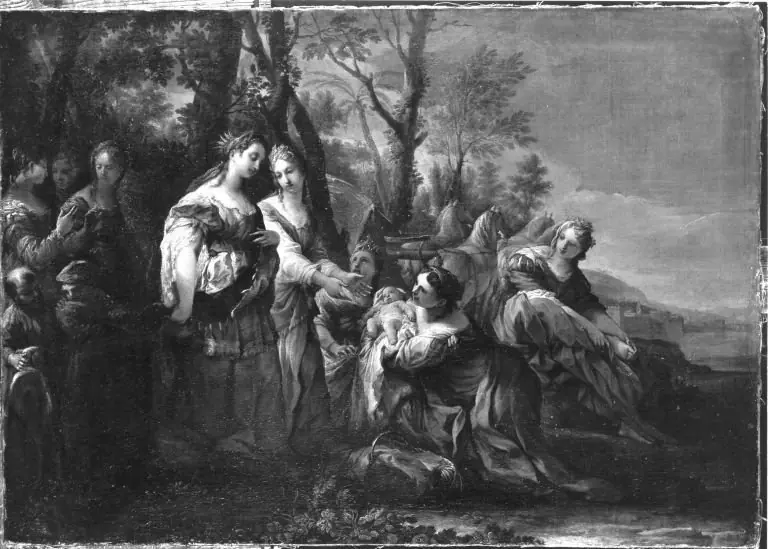 Die Auffindung Moses
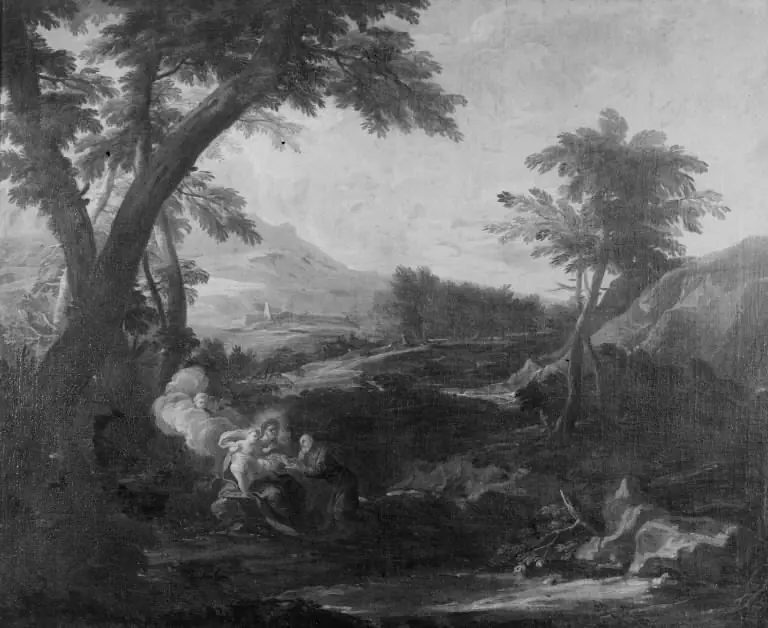 The Rest on the Flight into Egypt
 Mythologische Szene (Schule)
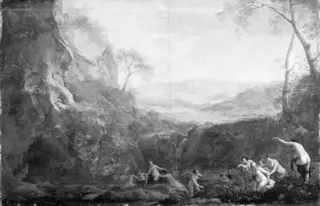 Landscape with Diana and Nymphs
- An Allegory with Bacchus, Ceres, Flora and Apollo