Artwork
Landscape with Diana and Nymphs
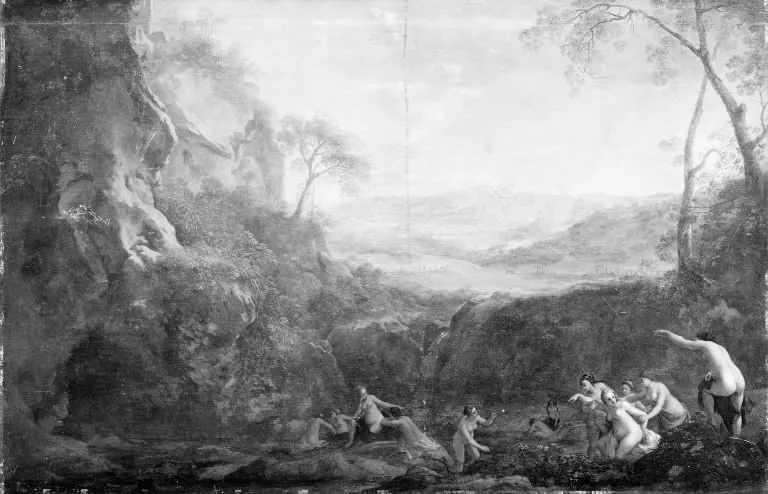
Landscape with Diana and Nymphs is an unspecified painting by the Dutch Golden Age artist Dirck van der Lisse. It dates from 1642 and is held in the collection of the Statens Museum for Kunst.
About this work
Subject & Meaning
The painting depicts the Roman goddess Diana accompanied by nymphs within a naturalistic landscape setting.
The painting depicts the Roman goddess Diana accompanied by nymphs within a naturalistic landscape setting. As a work classified under the landscape genre, the composition integrates these mythological figures into the surrounding environment rather than presenting them in isolation. The presence of Diana, traditionally the goddess of the hunt and the moon, alongside her attendants suggests a representation of classical mythology situated in an idealized outdoor space.
The iconography centers on the interaction between the divine figures and the wooded terrain, characteristic of seventeenth-century interpretations of mythological subjects within landscape painting.
History & Provenance
The work titled Landscape with Diana and Nymphs was created by Dirck van der Lisse in 1642. It is an oil painting depicting the mythological scene of Diana with nymphs, measuring 445 centimeters in height and 680 centimeters in width. The artwork entered the collection of the Statens Museum for Kunst, where it remains on display.
The painting was produced during van der Lisse's mature period, reflecting his specialization in classical landscape subjects. Its creation history is documented through stylistic analysis and archival records indicating a commission likely related to decorative projects of the Dutch Golden Age. The work has been part of the Statens Museum for Kunst's holdings since its acquisition, maintaining continuous ownership by the institution.
Dirck van der Lisse's Landscape with Diana and Nymphs is held in the collection of the Statens Museum for Kunst. The painting, created in 1642, is cataloged within the museum's holdings as a landscape work depicting Diana and nymphs. While specific accession numbers are not detailed in the provided records, the work remains a part of the institution's permanent collection in Copenhagen.
The piece has not been documented in the available sources as having a specific exhibition history beyond its current institutional residence.
Context
The painting was created in 1642 by Dirck van der Lisse, a Dutch artist associated with the classical landscape tradition, and exemplifies the genre through its idealized scenery and mythological narrative. Critical reception of the work has been shaped by its compositional balance and the subtle interplay of light, qualities that scholars note align with broader trends in 17th-century Dutch landscape painting. Its placement in the collection of the Statens Museum for Kunst situates it within a curated lineage of landscape works, reinforcing its significance within the artist's oeuvre and the evolving appreciation of the genre in art history.
Legacy
Dirck van der Lisse's 1642 painting Landscape with Diana and Nymphs entered the collection of the Statens Museum for Kunst, where its depiction of mythological themes within a naturalistic landscape contributed to the evolution of Dutch Golden Age pastoral scenes. The work's compositional treatment of figures in outdoor settings influenced later 17th-century landscape painters who adapted mythological narratives into topographical frameworks, particularly in Northern European genre painting. Its presence in a national collection established a precedent for integrating literary subjects into public art institutions, shaping curatorial practices for mythological art in museum displays.
The painting's attribution and dimensions recorded in institutional records provided a canonical reference for scholars analyzing Dutch landscape development, though its reception history remains sparsely documented in early exhibition catalogues. Current scholarship cites its compositional influence on artists such as Jacob van Ruisdael, particularly in approaches to atmospheric perspective and figure placement within wooded settings.
Overview
Created in 1642 by Dutch painter Dirck van der Lisse, this oil work presents a tranquil woodland setting where the goddess Diana and a companion nymph are gathered beside a rocky stream. The composition balances a small human group against a mist‑filled forest, drawing the viewer’s eye to the figures illuminated in the foreground while the surrounding trees recede into atmospheric haze.
Technique & Style
Van der Lisse employs a chiaroscuro effect, using strong contrasts of light and dark to separate the luminous skin tones of the figures from the deep, muted foliage. The foreground is rendered with crisp detail, while the background recedes through softened, fog‑laden trees and cliffs, creating depth and a sense of atmospheric perspective characteristic of mid‑17th‑century Dutch landscape painting.
Artist & collection

 Italienisch-klassische Landschaft
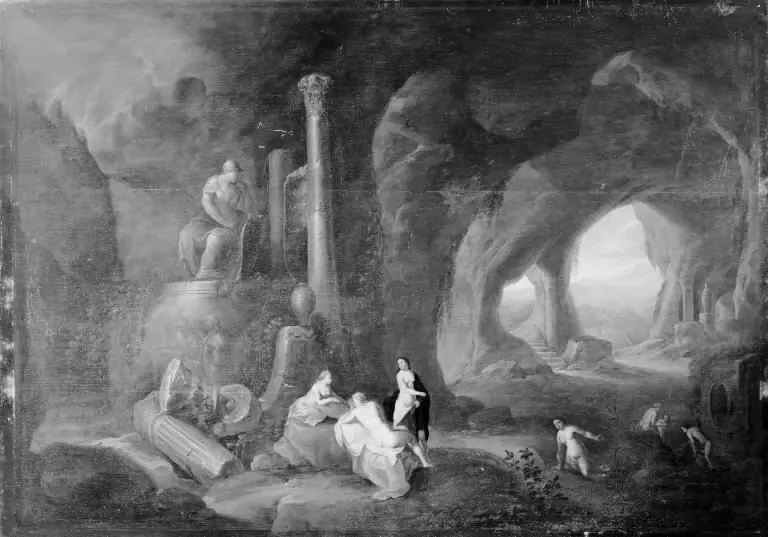 Seven Nymphs in a Grotto
 Seven Nymphs in a Grotto
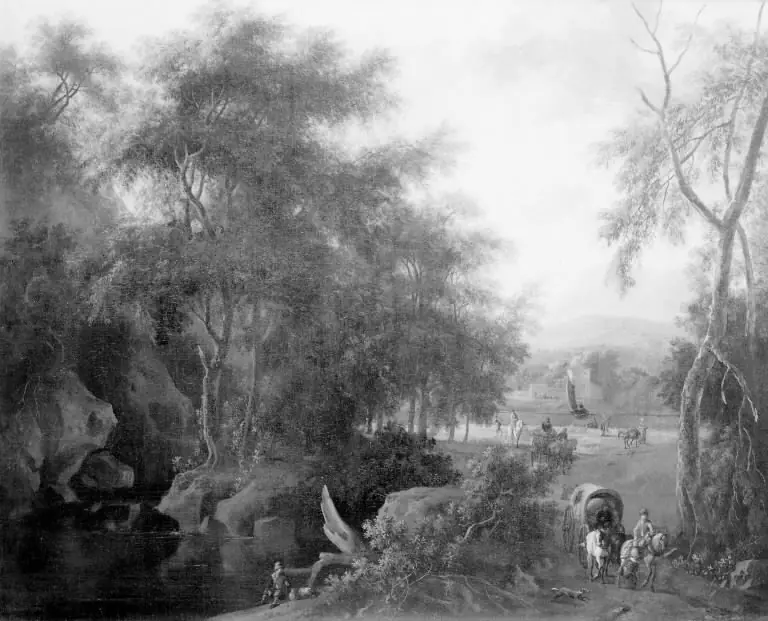 Skovlandskab
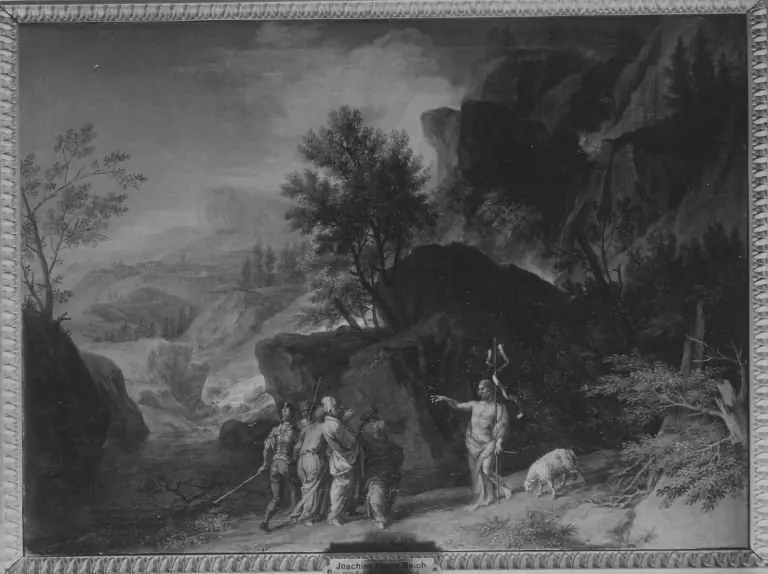 Fierce mountainous landscape with Saint John the Baptist preaching
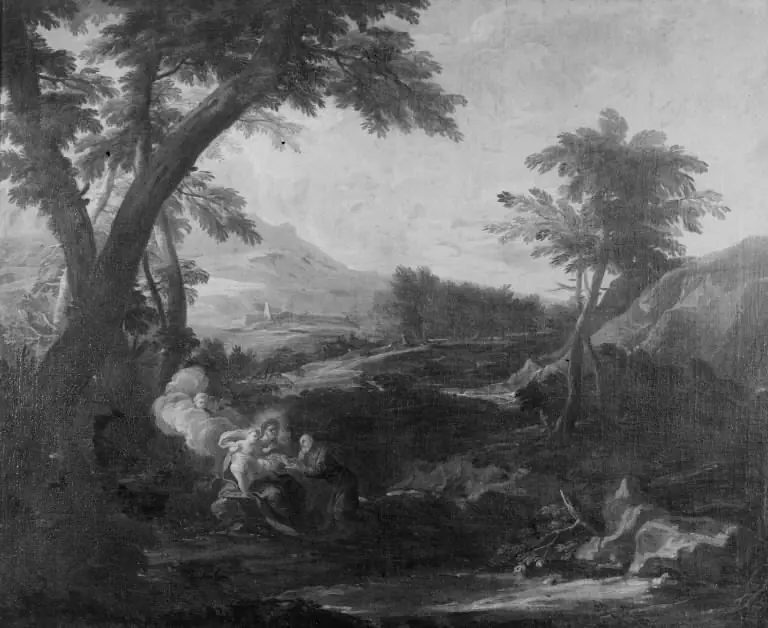 The Rest on the Flight into Egypt
 Et landskab med bjerge, en flod og et stort monument
 Et skovrigt landskab med udsigt mod bjergene
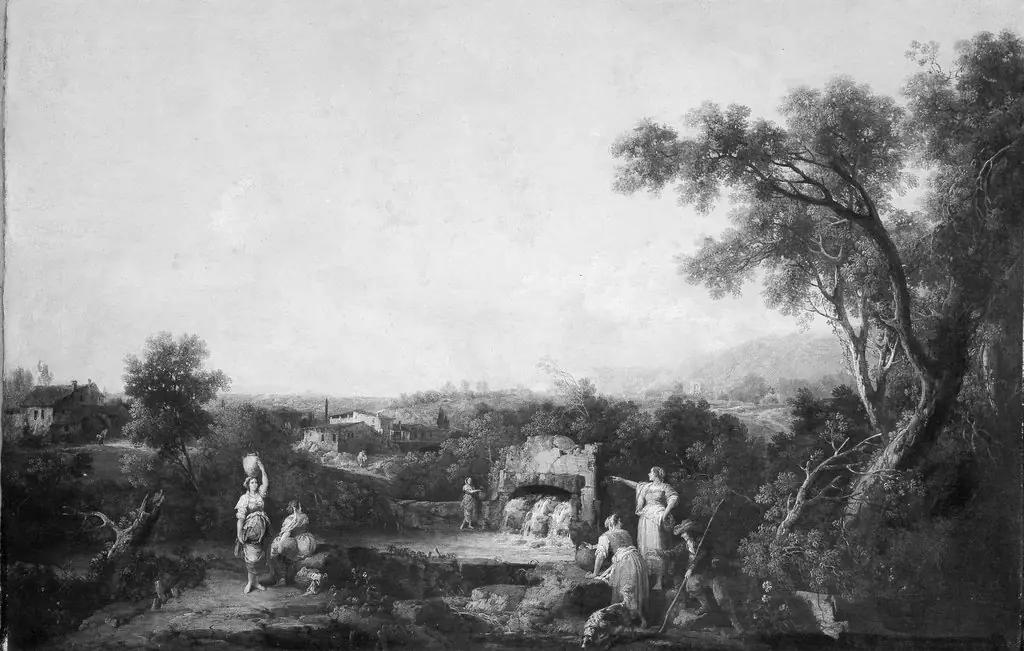 Landscape with Peasants at a Fountain
 Landscape with Bird-Catching
 Rast am Waldrand
- Landscape with Diana and Nymphs