Artwork
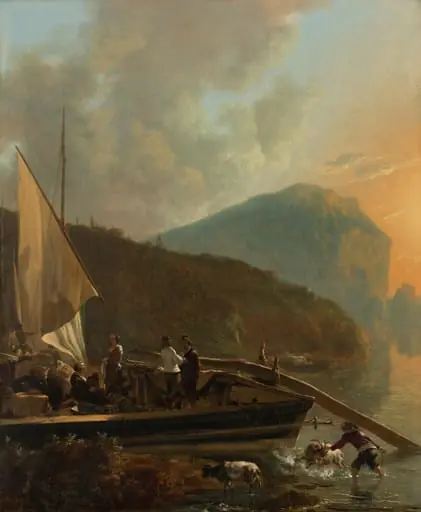
On the Coast of Genoa
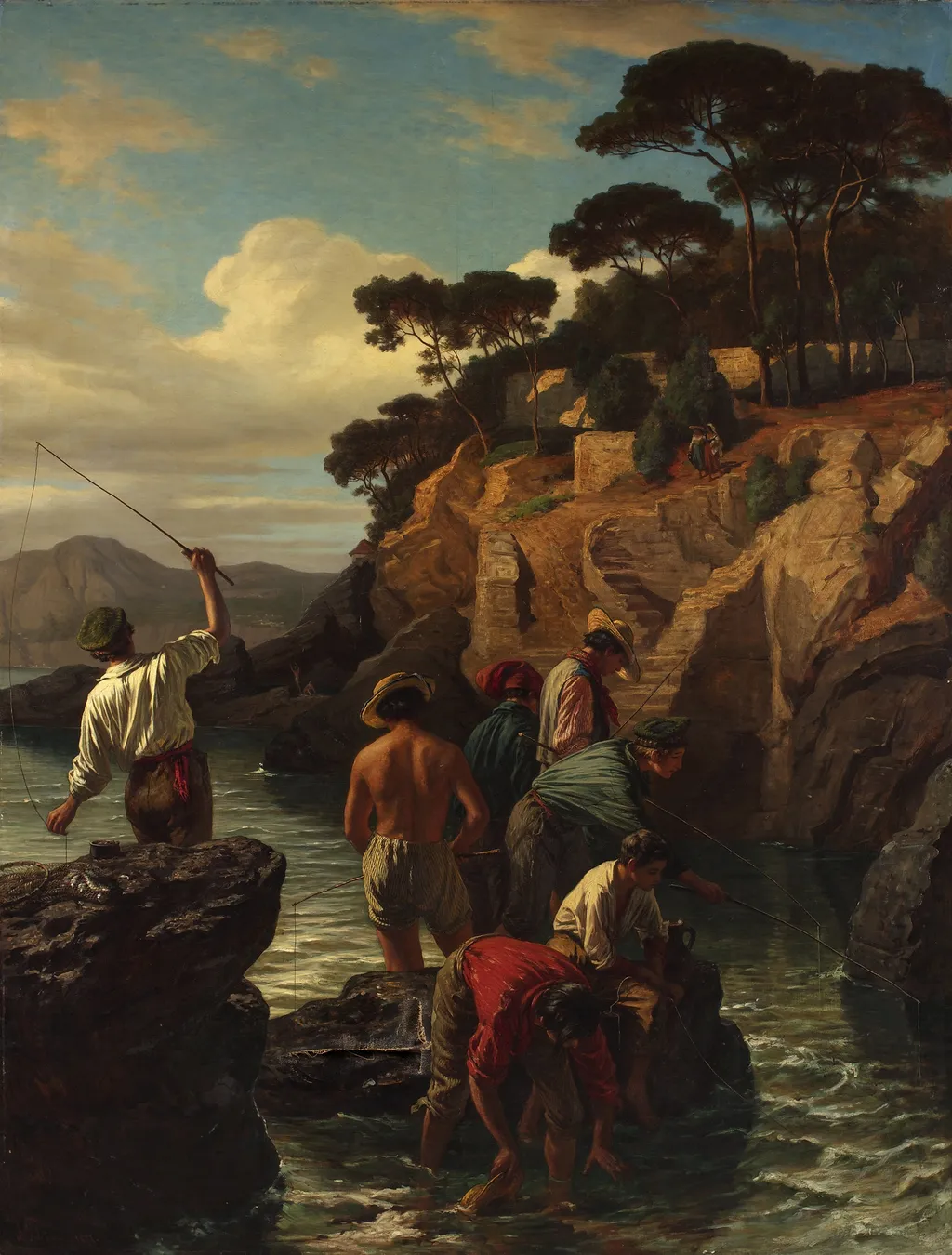
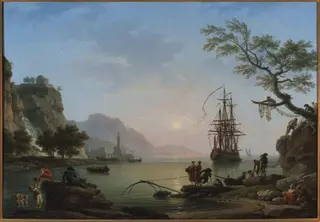
On the Coast of Genoa is an oil painting by the Plein Air artist Alois Schönn. It dates from 1873 and is held in the collection of the Kunsthistorisches Museum.
About this work
Overview
Painted in 1873 by Alois Schönn, this oil work depicts a quiet coastal scene near Genoa. It captures laborers engaged in fishing along rocky shorelines, rendered with careful observation and restrained color. The painting resides in the Kunsthistorisches Museum in Vienna, where it is preserved as an example of late 19th-century European genre painting focused on everyday coastal life.
Subject & Meaning
The scene portrays local fishermen at work, some standing on rocks, others wading in shallow water. Their casual attire, hats, bare chests, rolled sleeves, suggests routine labor rather than ceremonial activity. The absence of dramatic action or emotional intensity conveys a sense of quiet endurance, reflecting the unglamorous rhythm of seaside livelihoods without idealization.
Technique & Style
Schönn employs a realistic approach with precise rendering of textures: wet rock surfaces, fabric folds, and the play of light on water. The palette is subdued, dominated by earthy grays, browns, and muted blues, avoiding vivid contrasts. Brushwork is controlled, favoring clarity over expressive gesture, aligning with academic traditions of the period while avoiding theatricality.
History & Provenance
Created in 1873, the painting entered the collection of the Kunsthistorisches Museum shortly after its completion. Its acquisition reflects the museum’s interest in documenting regional European life during the 19th century. No significant changes in ownership or restoration are documented, and it has remained in the museum’s permanent holdings since the late 1800s.
Context
In the 1870s, European art increasingly turned to scenes of ordinary life, influenced by realism and the decline of grand historical narratives. Schönn’s depiction of Genoese fishermen aligns with this trend, offering a quiet counterpoint to Romanticized landscapes. The painting reflects broader cultural interest in regional identities and the dignity of manual labor during industrialization.
Legacy
Though not widely exhibited beyond Vienna, the painting remains a representative example of Austrian genre painting from the late 19th century. It contributes to the historical record of coastal labor in the Ligurian region and illustrates how regional artists documented everyday life with restrained, observational precision rather than narrative drama.
Own this work as a print
Artist & collection