Artwork
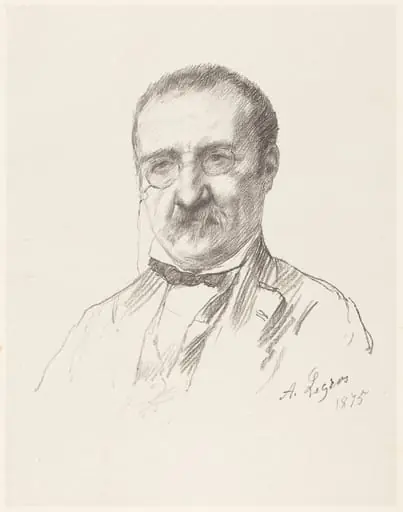
Mr. Champfleury
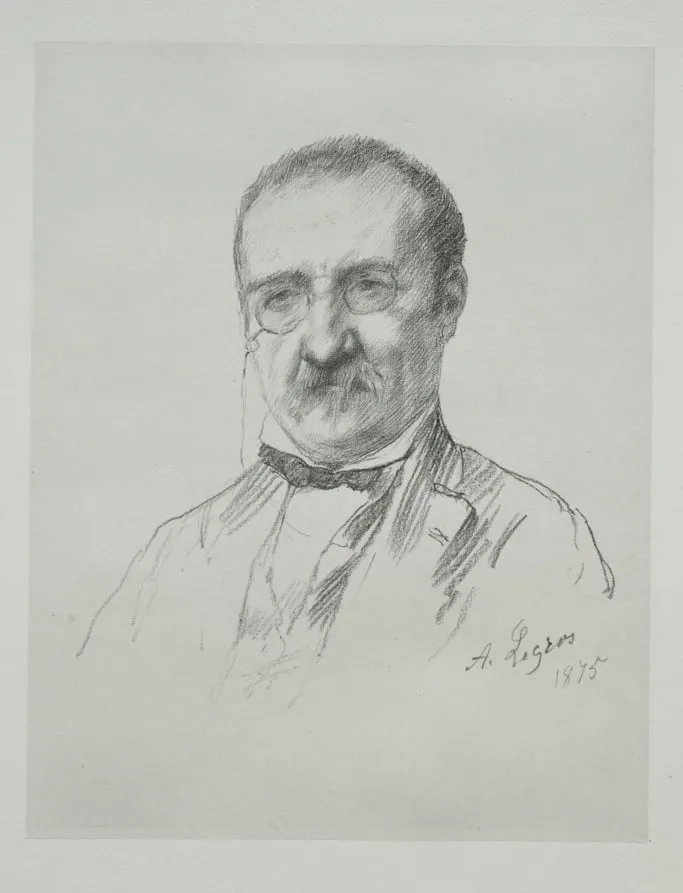
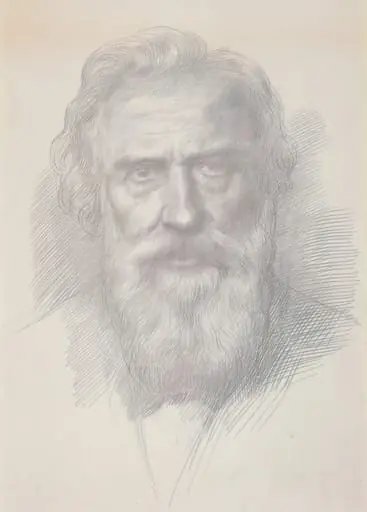
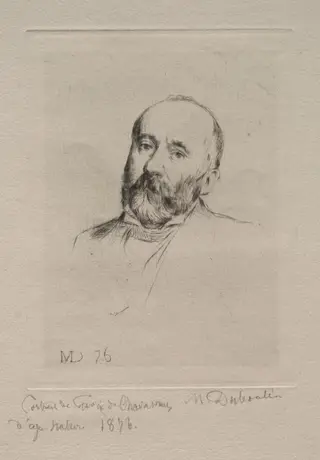
Mr. Champfleury is a print by the Impressionist artist Alphonse Legros. It dates from 1875 and is held in the collection of the Cleveland Museum of Art.
- Accession no.
- 1944.382
- Credit line
- Mr. and Mrs. Lewis B. Williams Collection
About this work
If you like this style, check out Realism next, it’s all about plain, true-to-life images like this one.
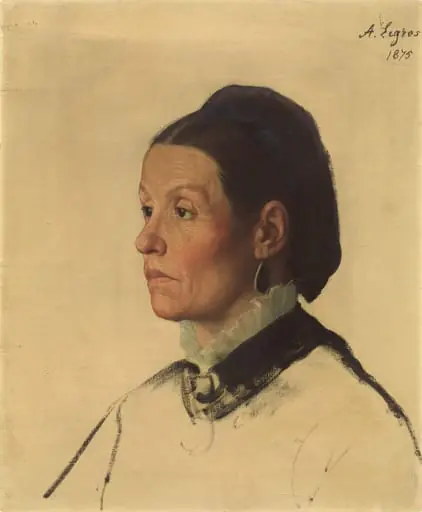
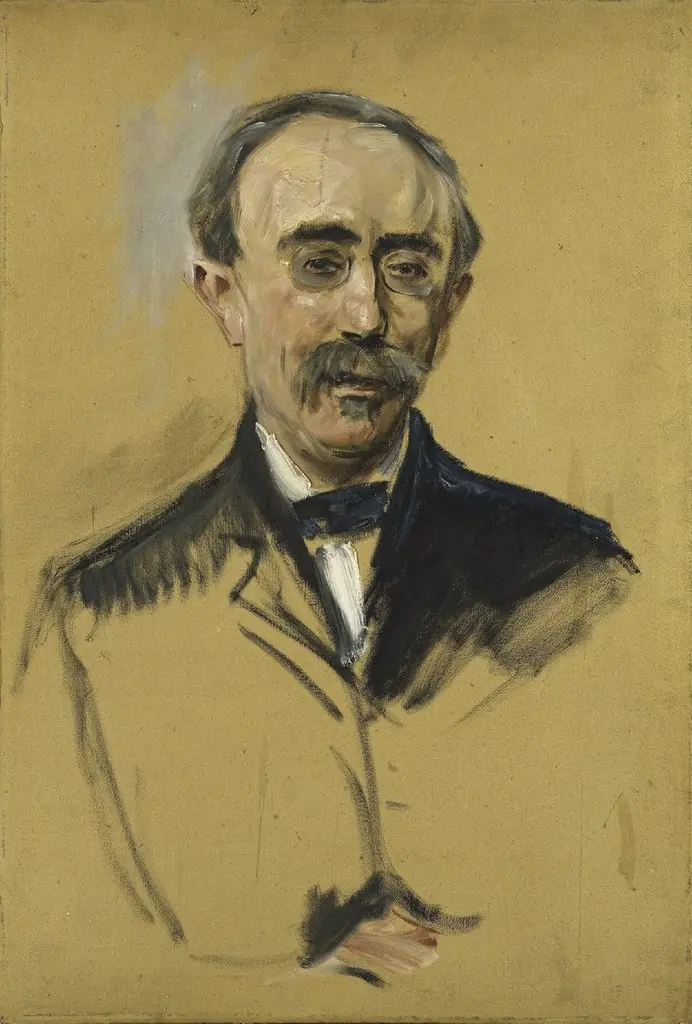
This sketch shows a man in a suit and bow tie, looking straight ahead. His face is drawn with quick, loose lines, and his hair and mustache are sketchy but clear. The background is plain white, so all focus stays on him.
The artist signed it in the corner with the year 1875. The drawing feels fast, like it was done in one go.
If you like this style, check out Realism next, it’s all about plain, true-to-life images like this one.
Overview
Created in 1875 by Alphonse Legros, this ink drawing depicts the French writer and art critic Jules Champfleury. Executed with swift, economical strokes, the portrait captures the subject’s likeness without embellishment. The plain white background isolates the figure, emphasizing the immediacy of the sketch.
Legros signed and dated the work in the lower corner, affirming its completion in that year. It resides today in The Cleveland Museum of Art.
Subject & Meaning
The subject, Jules Champfleury, was a prominent advocate for Realism in 19th-century French art and literature. His direct gaze and formal attire reflect his public persona as a serious intellectual. The portrait does not idealize; instead, it presents him with unadorned clarity, aligning with the Realist ethos of depicting individuals as they are, without romanticization or theatricality.
Technique & Style
Legros employed loose, confident ink lines to define Champfleury’s features, his mustache, hair, and facial structure rendered with minimal but precise strokes. The absence of shading or detail in the background directs attention entirely to the face. The drawing’s rapid execution suggests a spontaneous, on-the-spot study, characteristic of Legros’s interest in capturing transient presence rather than polished finish.
History & Provenance
The drawing was made in 1875 during Legros’s time in Paris, where he was closely associated with Realist circles. Champfleury, a key figure in those circles, likely sat for the sketch as a personal or professional gesture. It entered The Cleveland Museum of Art’s collection through documented acquisition, preserving its connection to the artist and his intellectual milieu.
Context
This portrait emerged during a period when artists and writers sought to reject academic idealism in favor of truthful representation. Legros, influenced by Courbet and the Realist movement, used direct observation to convey character. The sketch reflects a broader cultural shift toward valuing authenticity over ornamentation in both visual art and literary criticism.
Legacy
The drawing stands as a quiet testament to Legros’s skill in conveying personality through economy of line. It exemplifies how portraiture could serve intellectual and aesthetic ends without grandeur. Though modest in scale, it remains a significant record of the Realist network in France and Legros’s role within it.
Artist & collection

Artist
Alphonse Legros (French pronunciation:; 8 May 1837 – 8 December 1911) was a French, later British, painter, etcher, sculptor, and medallist.