Subject
Glasses
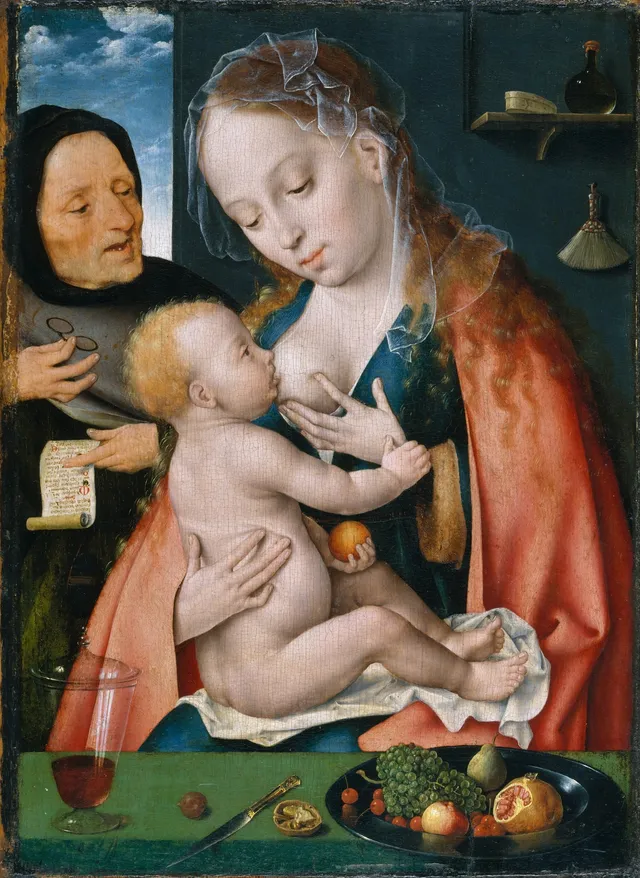
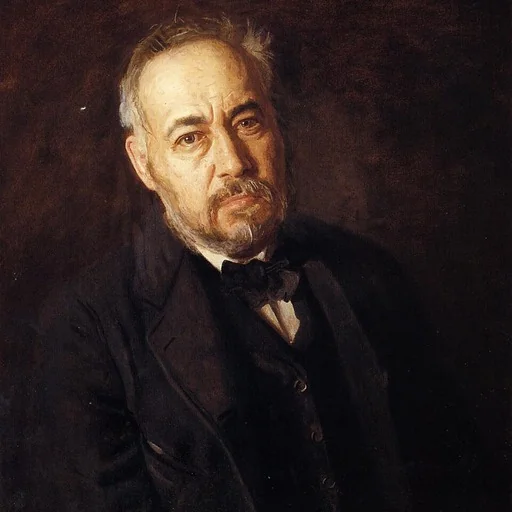
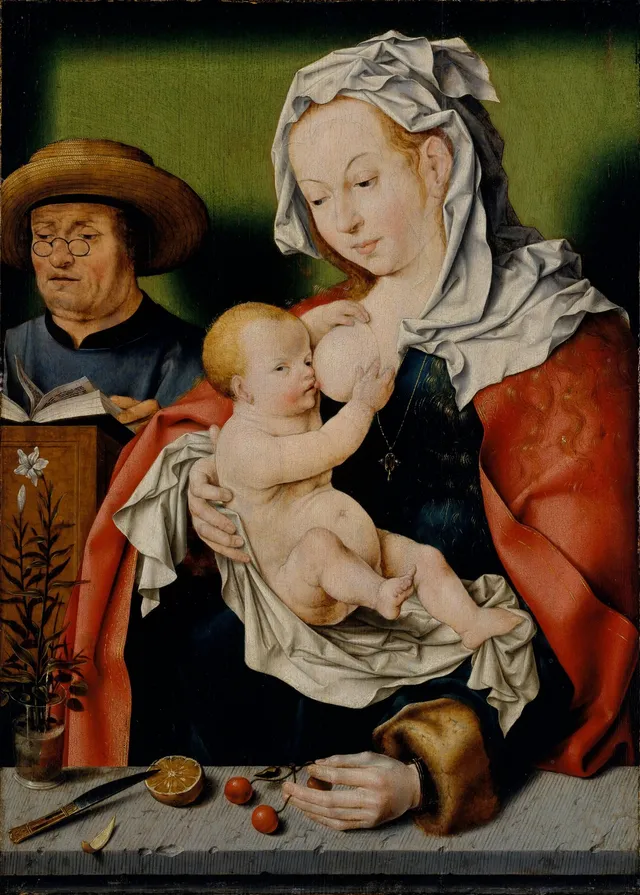
Glasses is a subject in art. The gallery holds 60 works in this subject in art, including works by Thomas Eakins, Francis William Edmonds and Joos van Cleve.
Glasses, also known as eyeglasses, spectacles, or colloquially as specs, are vision eyewear with clear or tinted lenses mounted in a frame that holds them in front of a person's eyes, typically utilizing a bridge over the nose and hinged arms, known as temples or temple pieces, that rest over the ears for support. Glasses are typically used for vision correction, such as with reading glasses and glasses used for nearsightedness; however, without the specialized lenses, they are also at times used for cosmetic purposes.
Key artists


Overview
Glasses, also known as eyeglasses or spectacles, are vision eyewear consisting of clear or tinted lenses mounted in a frame that rests on the bridge of the nose and is secured by hinged arms, or temples, hooked over the ears. While primarily used for vision correction, such as for nearsightedness or farsightedness, they also serve protective, therapeutic, and cosmetic functions. The earliest ancestors of modern eyeglasses were 13th-century Italian reading stones, which lacked arms and had to be held directly over text. The familiar temple arms that hook over the ears were not invented until the 1700s. Over their roughly 700-year history, glasses have evolved from rudimentary magnifying spheres into diverse forms including safety glasses, sunglasses, and specialized lenses, becoming a recurring motif in visual art that signals identity, intellect, and social status.
Iconography & meaning
In art history, glasses have carried shifting symbolic weight, functioning as a shorthand for wisdom, vanity, mortality, and identity. Their earliest artistic associations were overwhelmingly positive, linking the wearer to religious scholarship and intellect. However, by the 17th century, glasses had also acquired negative connotations. In Dutch genre painting, nose spectacles often signified greed, stinginess, or culturally disdained professions like tax collecting, as seen in paintings of misers weighing coins. In vanitas still lifes, such as Jan Davidsz. de Heem's Memento Mori, spectacles placed alongside skulls and wilting flowers represented the pursuit of knowledge, suggesting either the folly of intellectual endeavor in the face of inevitable death, or, conversely, a subversion implying that intellectual legacy allows one to cheat death. By the 19th century, glasses became fashion and status symbols, sometimes used to conceal illness or blindness, reflecting what Neil Handley, curator of the British Optical Association Museum, termed the psychology and social stigma of wearing spectacles.
Across movements & periods
The artistic treatment of glasses reflects their technological and social evolution. In late medieval and Renaissance art, glasses appeared as anachronistic attributes of scholarly saints, lacking temple arms and perched precariously on the nose. During the 17th century, as trade expanded to cities like Nuremberg, nose spectacles became common in Dutch genre and vanitas paintings, carrying moralizing and often negative symbolism. A major shift occurred in the 18th century with the invention of temple arms and C-shaped bridges, likely spurred by the rise of newspaper reading. By the 19th century, the age of dandyism produced elaborately designed frames, and tinted glasses with side visors became fashionable, serving as status symbols while sometimes concealing ocular disease. In modern and contemporary art, glasses are no longer mere accessories but markers of individual identity, depicted as integrated with the wearer's face or worn down by time, reflecting both the enduring association with intellect and the personal reality of the wearer.
Notable depictions
The first depiction of glasses in European art is found in a series of 1352 frescoes by Tommaso da Modena in the Church of San Nicolò in Treviso. One panel portrays Cardinal Hugh of Saint-Cher wearing spectacles perched high on his nose while writing. Although anachronistic, as the Cardinal died before glasses were invented, this depiction cemented the association between spectacles and religious scholarship. Saint Jerome, who translated the Bible into Latin, was another frequent subject; artists regularly placed glasses on or near his desk as an instrument of the scholar, leading to his adoption as the patron saint of spectacle makers. In the 17th century, the style of David Ryckaert III utilized nose spectacles to depict greed in The Misers, while Jan Davidsz. de Heem's Memento Mori used them to question the value of knowledge against mortality. Later notable works include José Buzo Cáceres' Portrait of a Gentleman with tinted side visors, John Howard Jephcott's Portrait of an Intellectual, and Charles William Brown's 1958 self-portrait Me, 76, where scratched lenses obscure rather than aid vision.
Legacy
The cultural afterlife of glasses extends from their early anachronistic appearances in Renaissance frescoes to their complex status in modern society as both medical tools and fashion statements. The dual symbolism observed in historical art, oscillating between artificial eminence and genuine intellect, persists today. While 21st-century innovations like laser eye surgery and advanced lens coatings have transformed the functionality of eyewear, the fundamental psychology of wearing glasses remains. Museums such as the British Optical Association Museum, the Zeiss Museum of Optics, and the Eyewear Museum in Pieve di Cadore preserve this legacy, housing thousands of artifacts that trace the object's evolution from early reading stones to modern designer frames. The artistic tradition of using glasses to tell a story about the wearer, whether signifying vanity, wisdom, or individuality, continues to define how spectacles are perceived and represented in visual culture.
Works
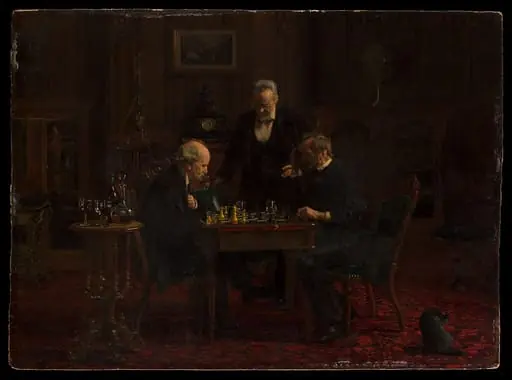 The Chess Players
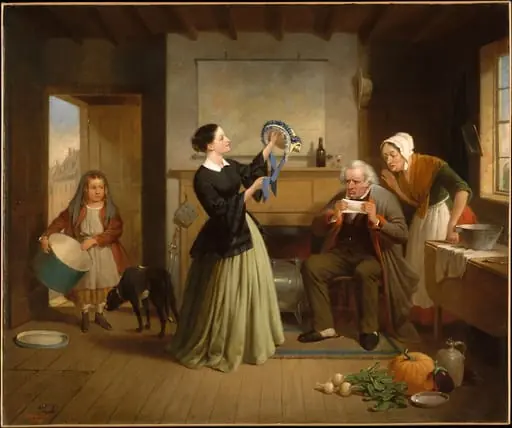 The New Bonnet
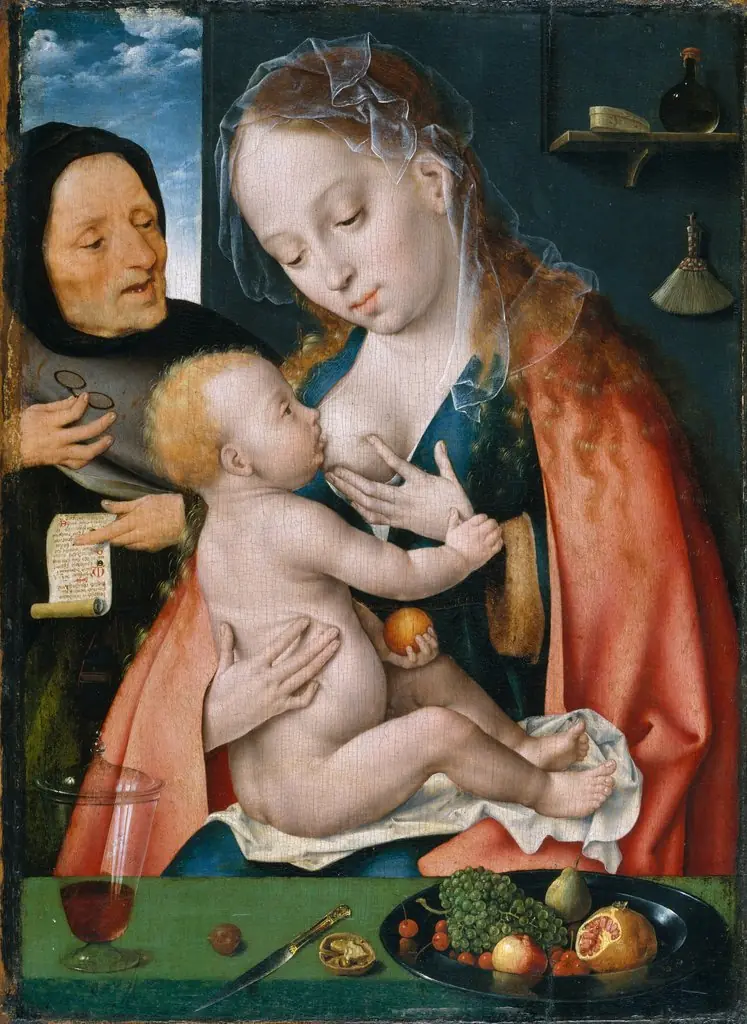 The Holy Family
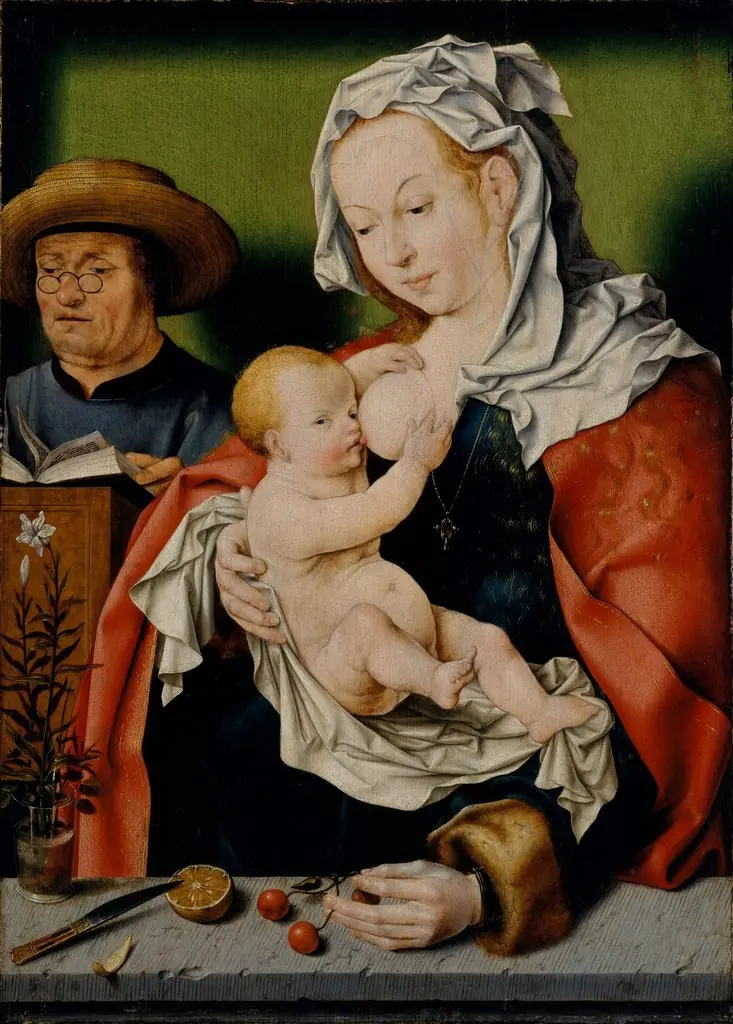 The Holy Family
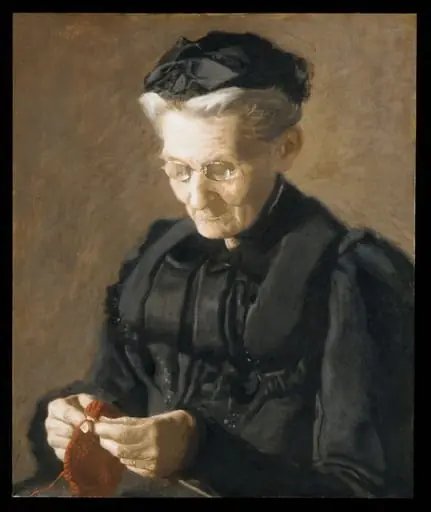 Mrs. Mary Arthur
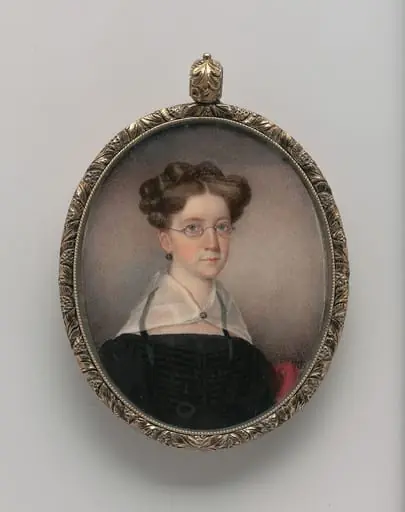 Portrait of a Lady
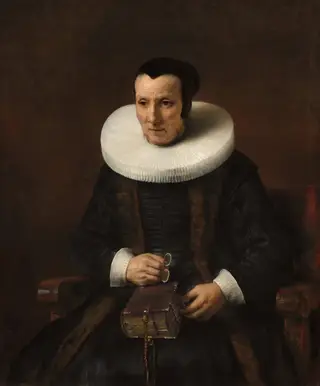 An Old Lady with a Book
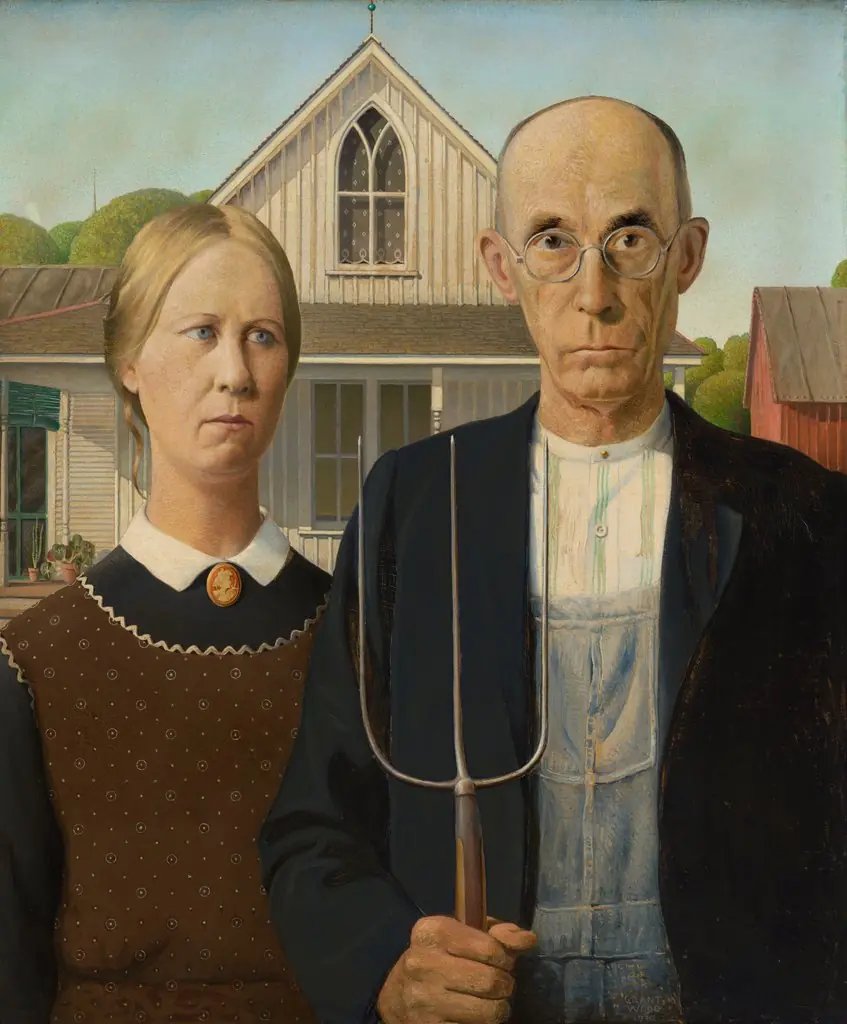 American Gothic
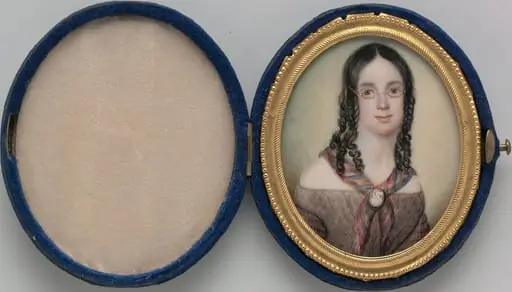 Portrait of a Lady
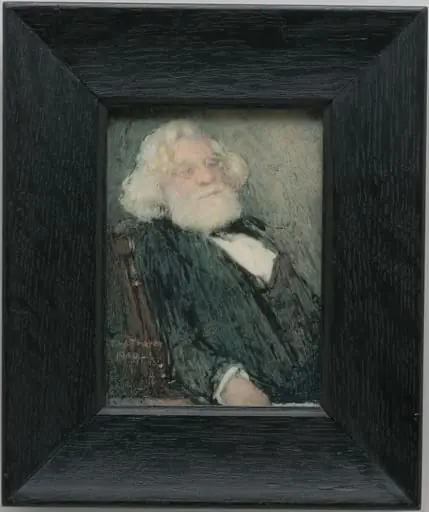 Parke Godwin
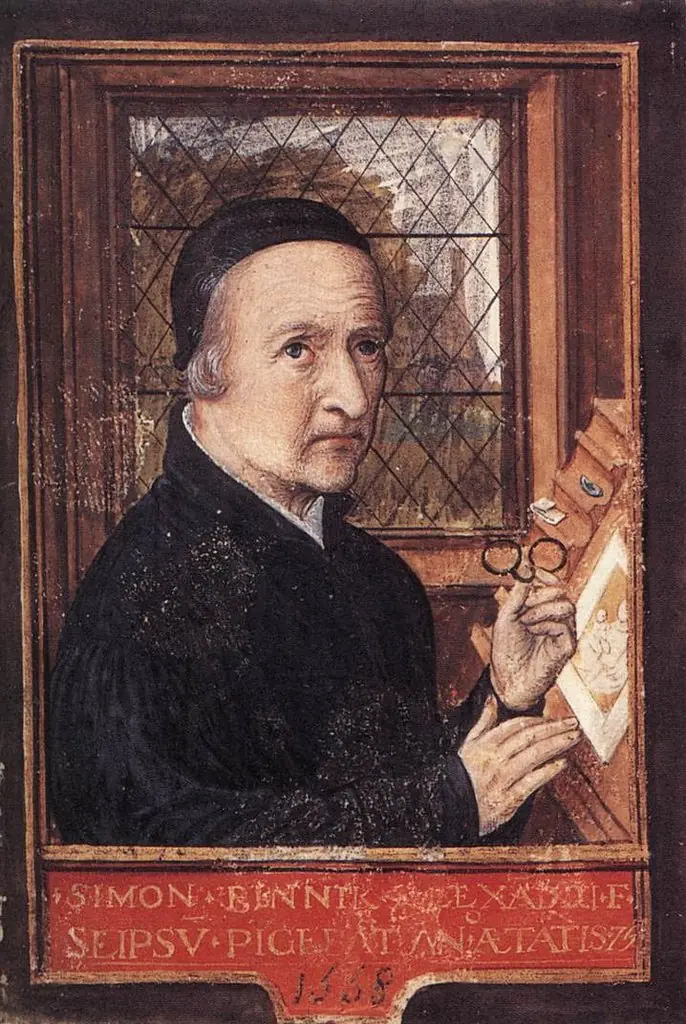 Self-portrait
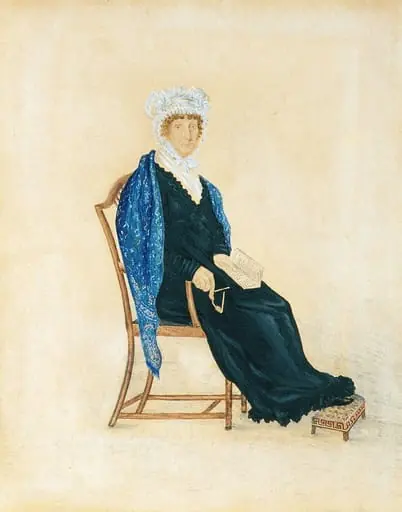 Portrait of Mrs. Crofts
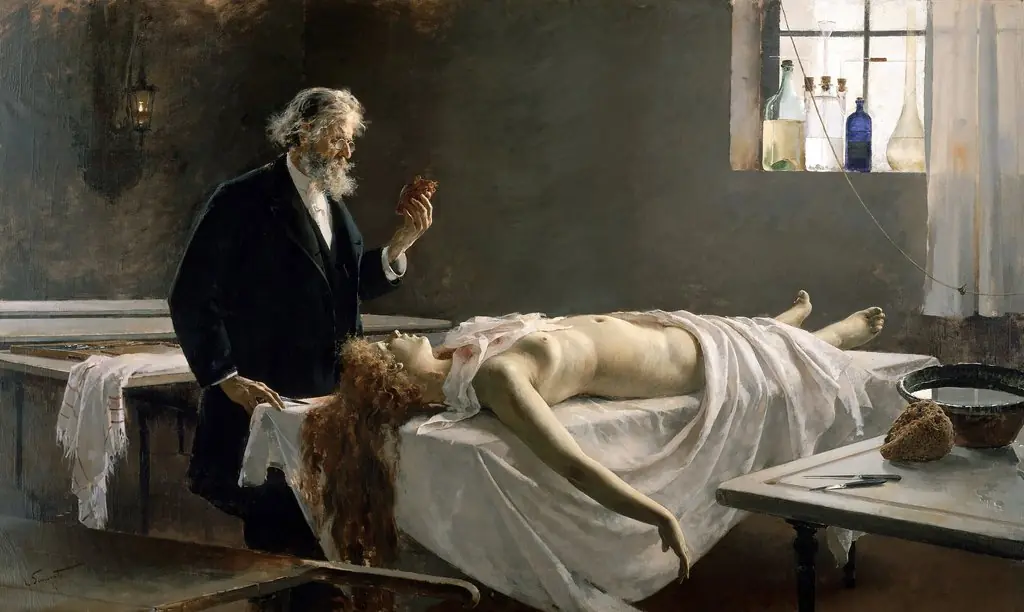 Autopsy
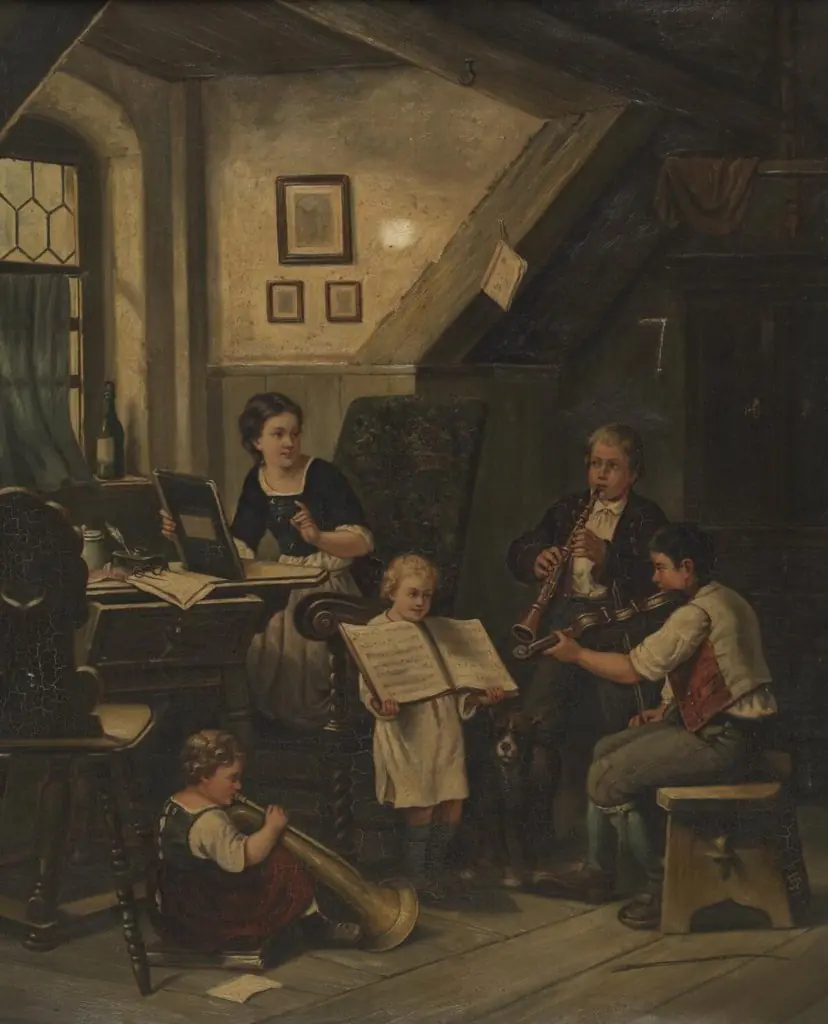 musical party
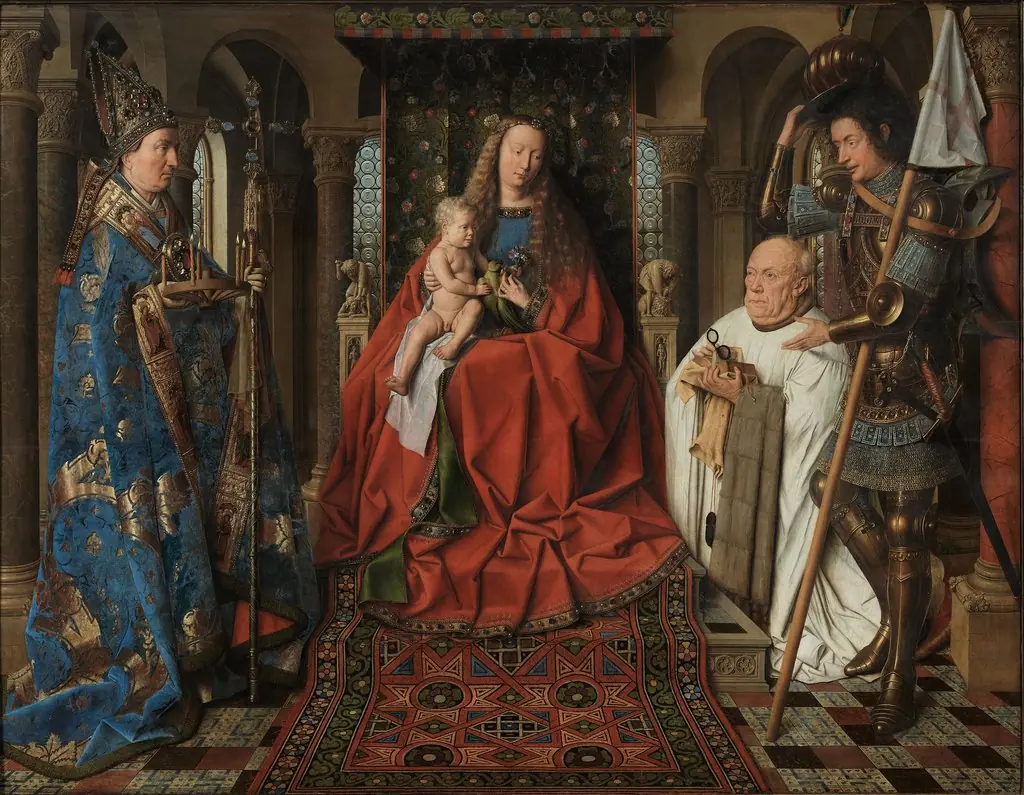 Madonna with Canon Joris van der Paele
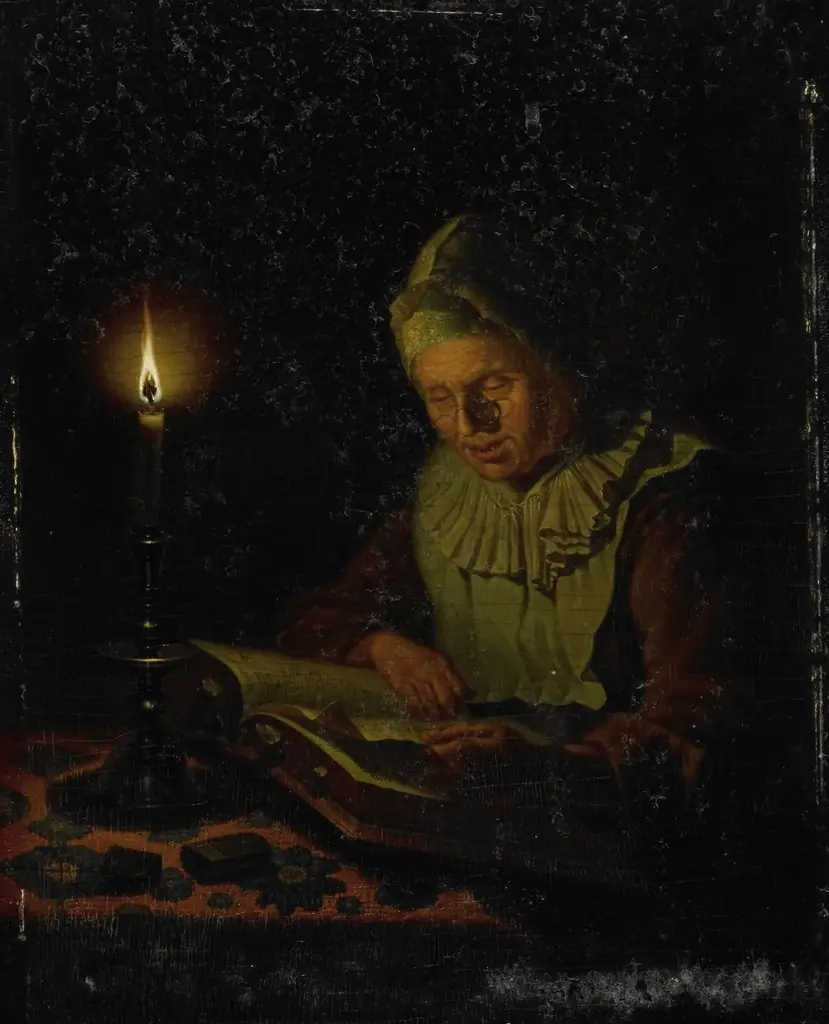 Old Woman Reading
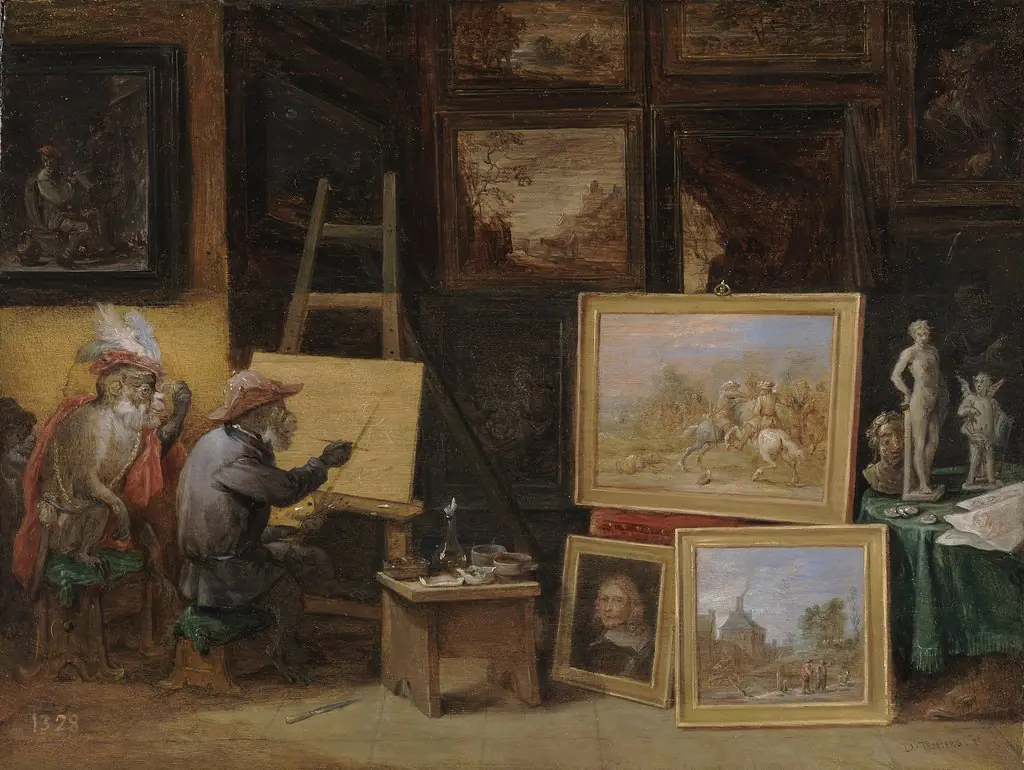 The Monkey Painter
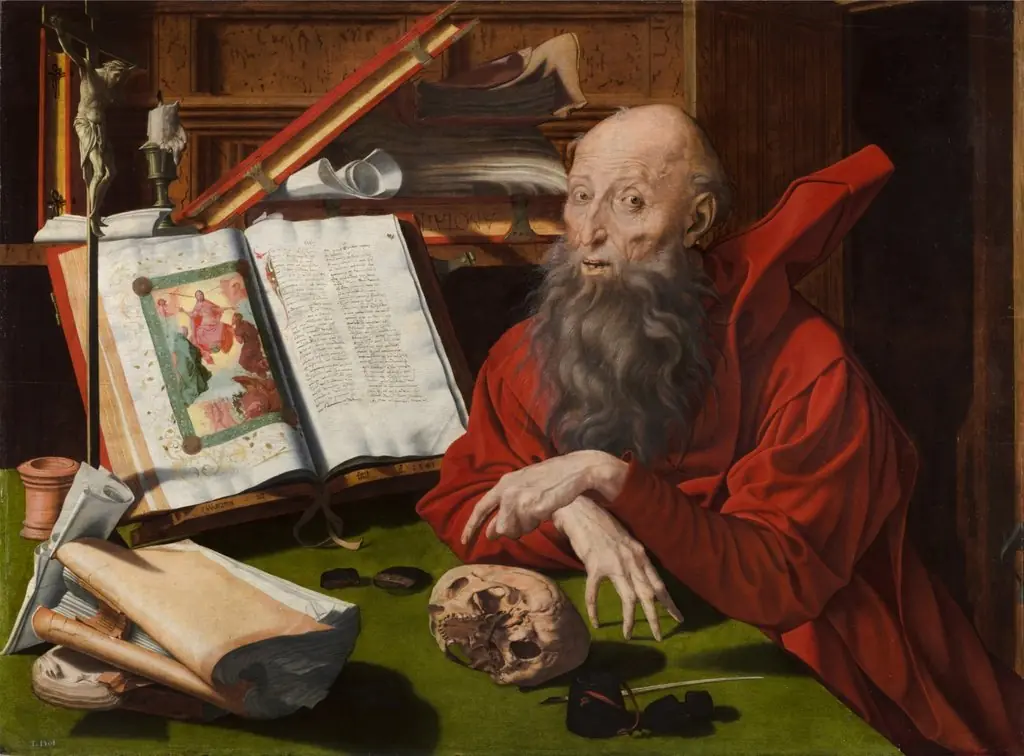 Saint Jerome in his study
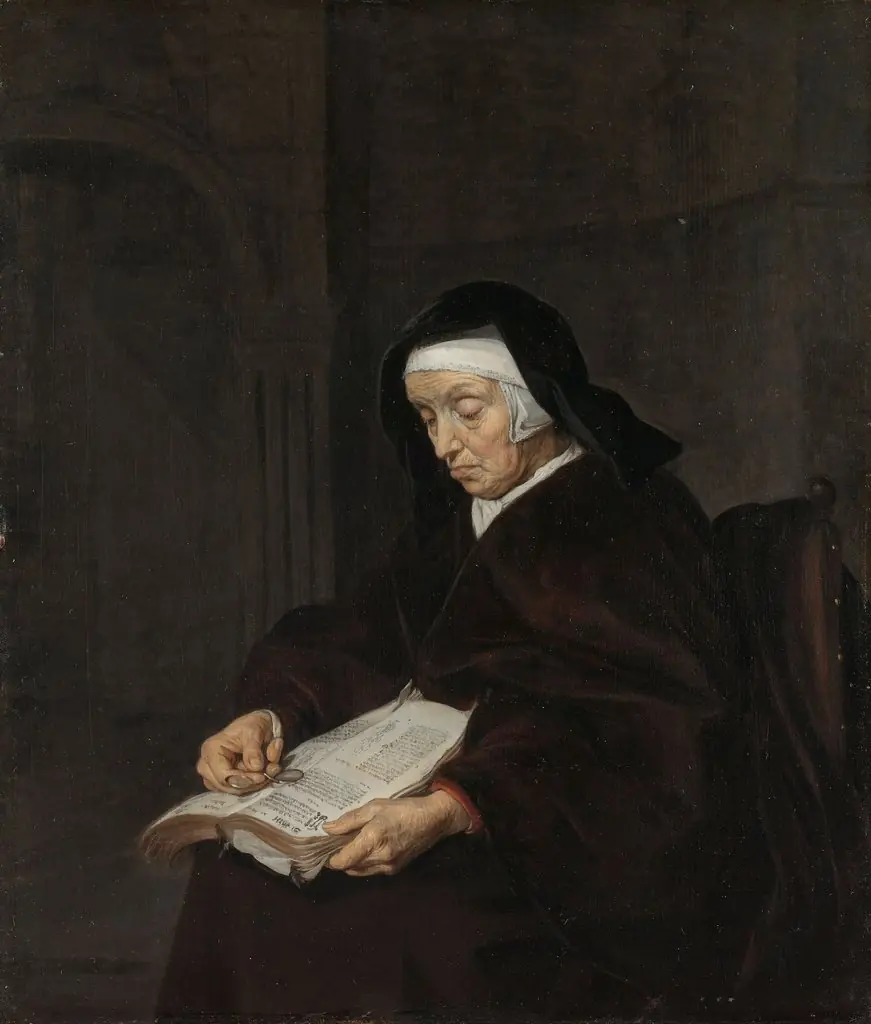 Old Woman Meditating
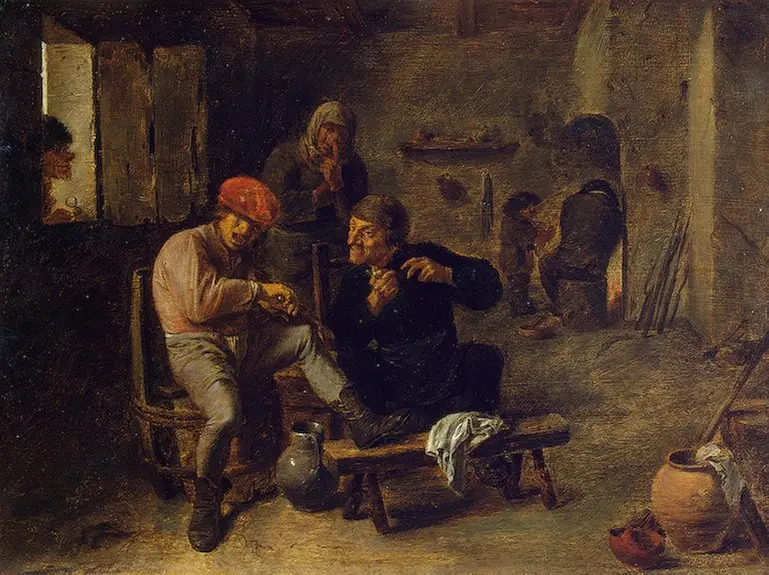 Tavern Scene (The Village Fiddler)
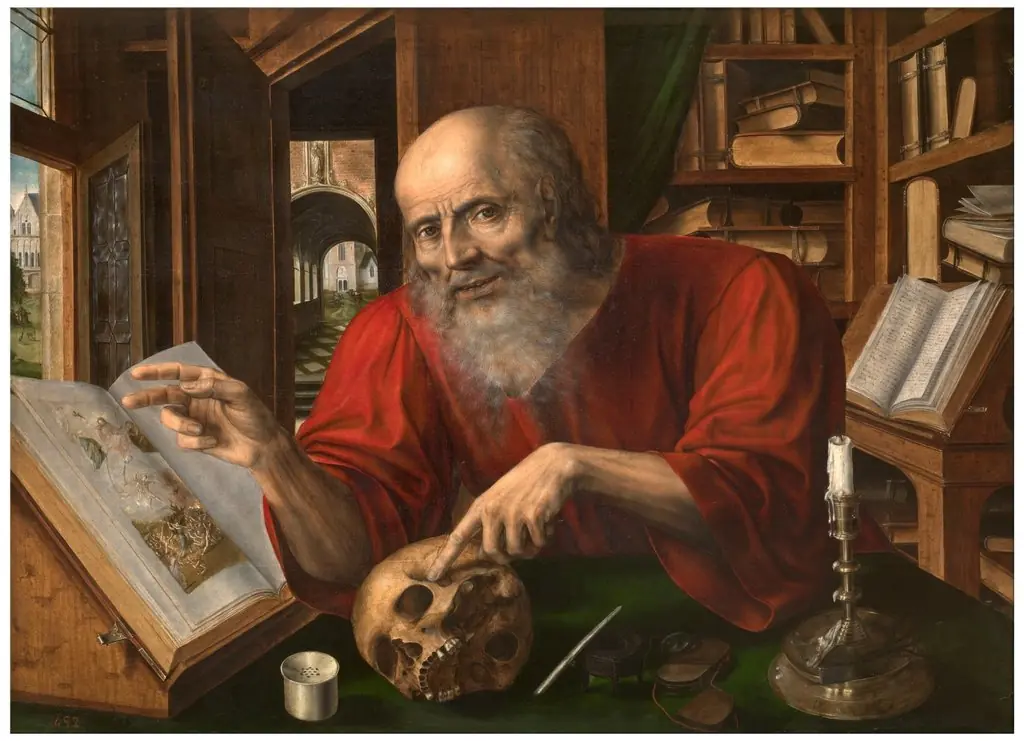 Saint Jerome
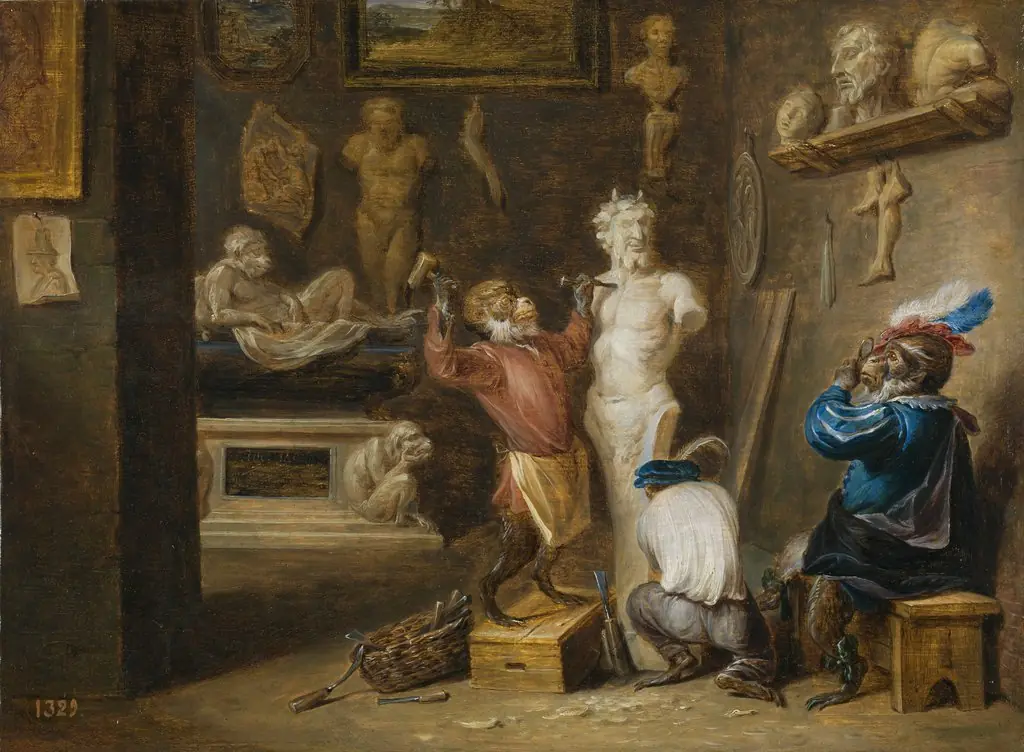 The Monkey Sculptor
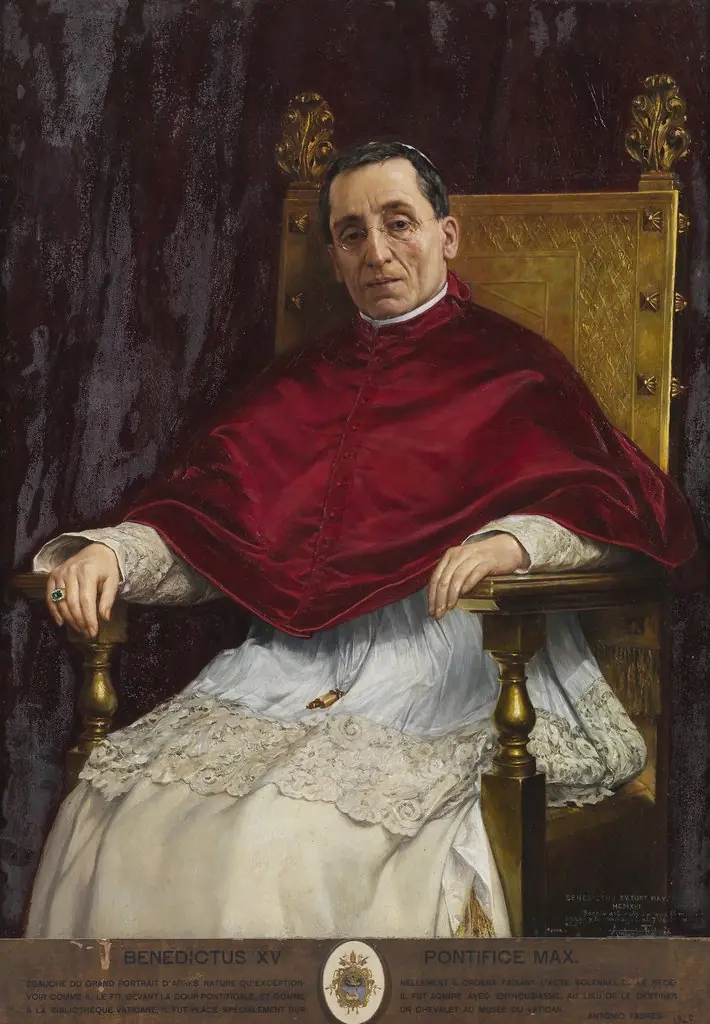 Pope Benedict XV
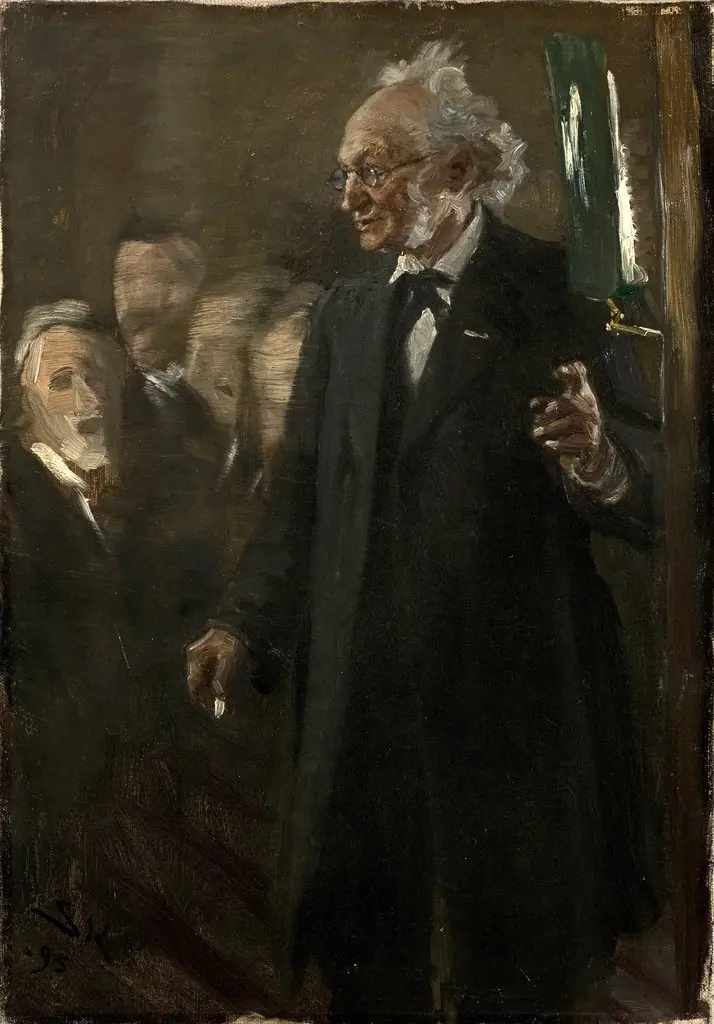 Professor i zoologi, Japetus Steenstrup holder foredrag
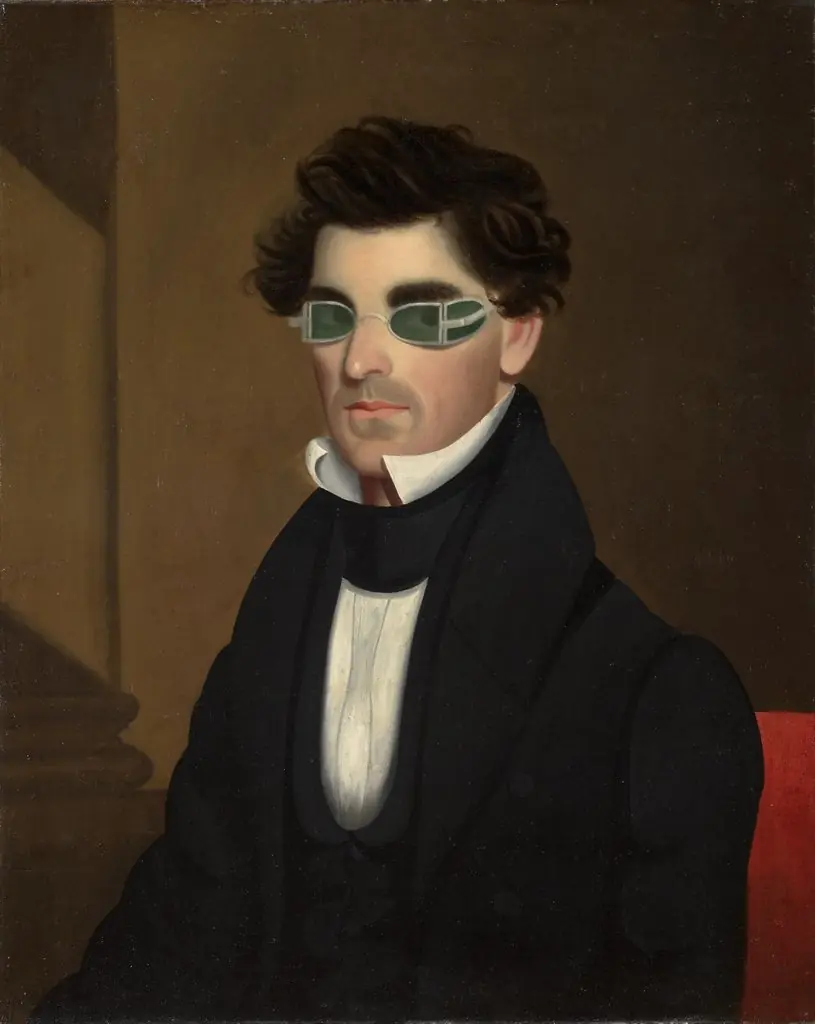 Nathaniel Olds
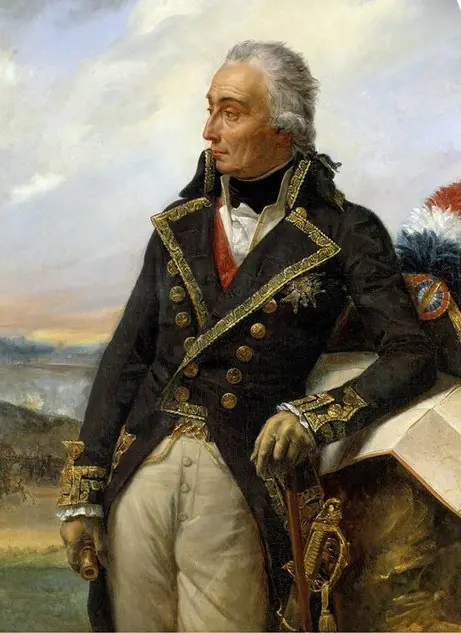 Nicolas, Baron de Luckner, Marshal of France
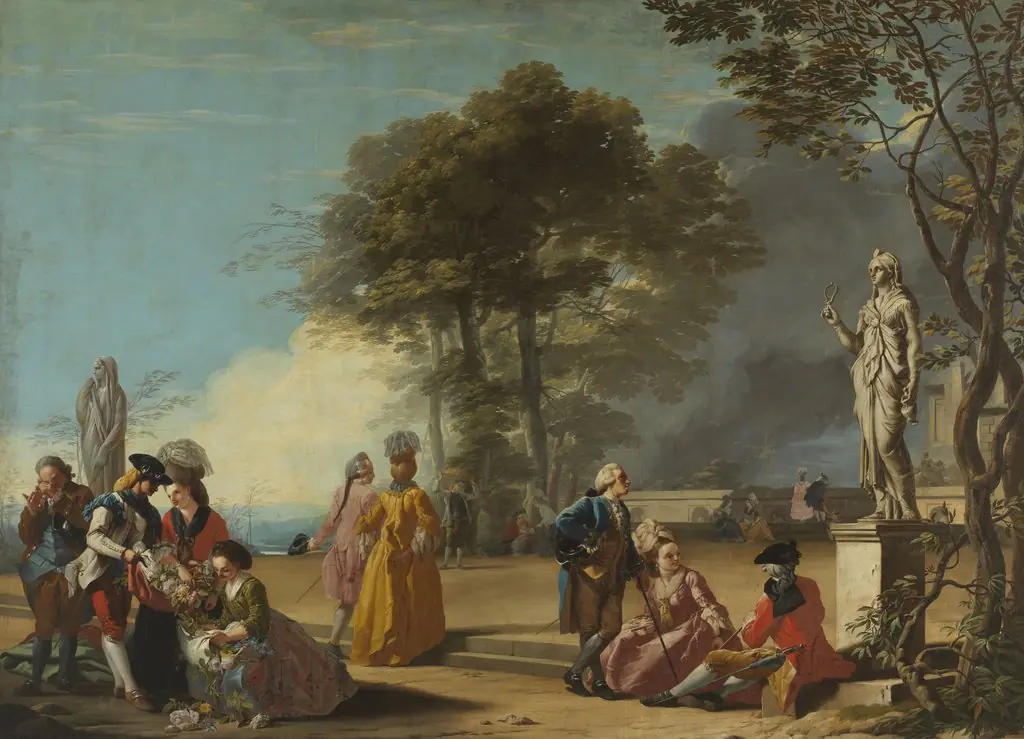 El parque del Retiro con paseantes
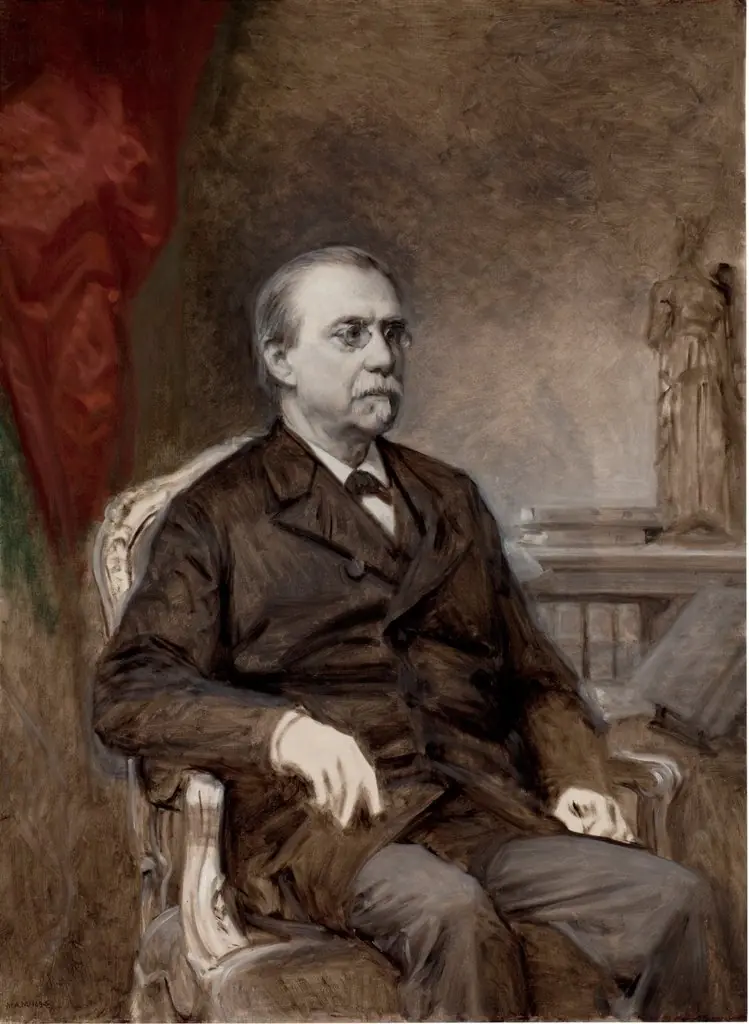 Antonio Cánovas del Castillo
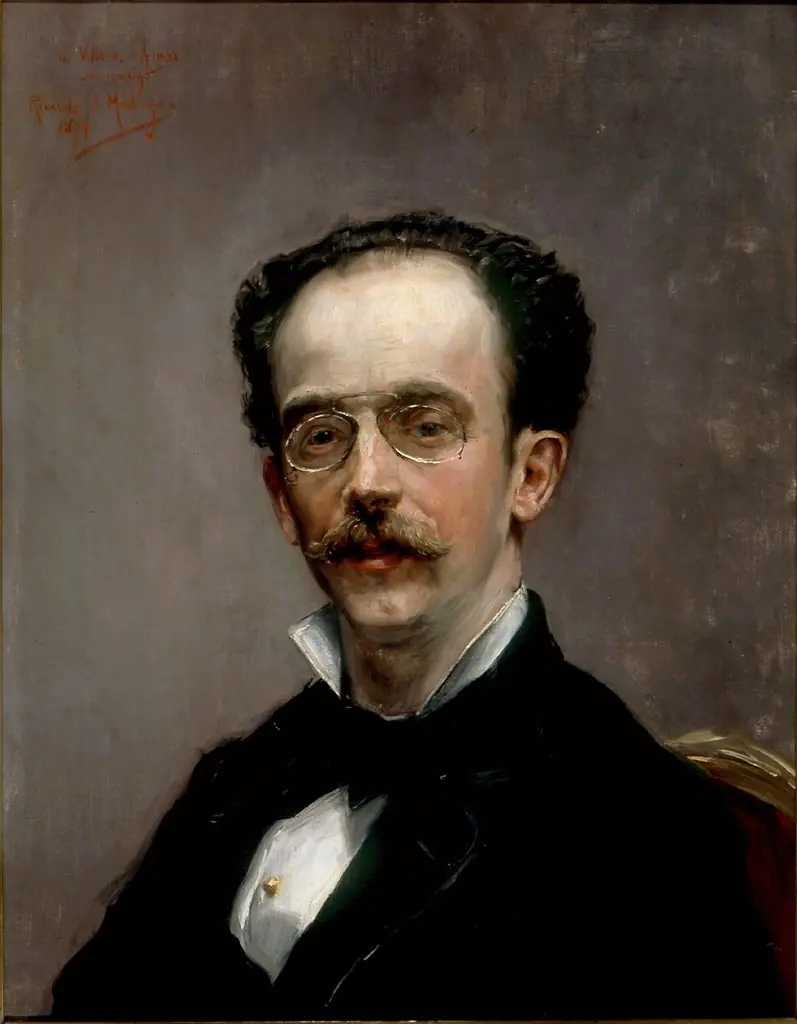 Fernando de los Villares Amor
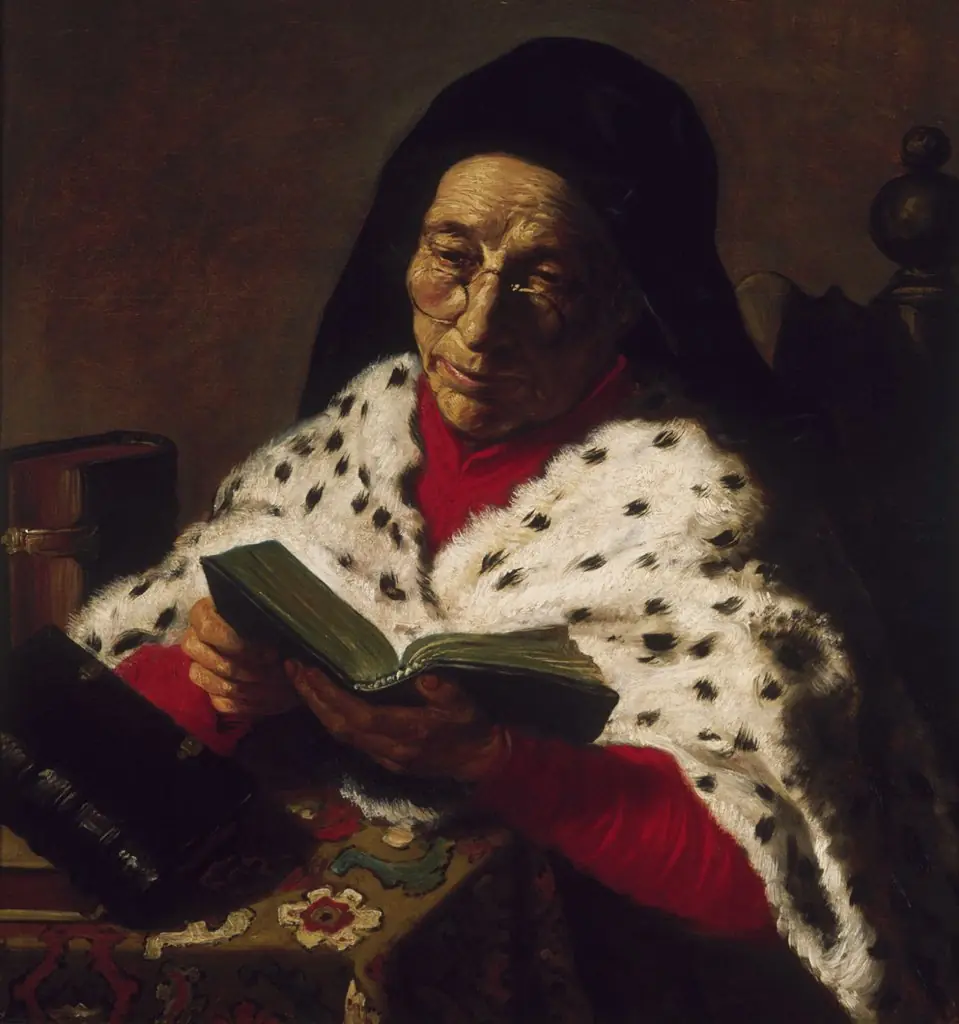 Old Woman Reading
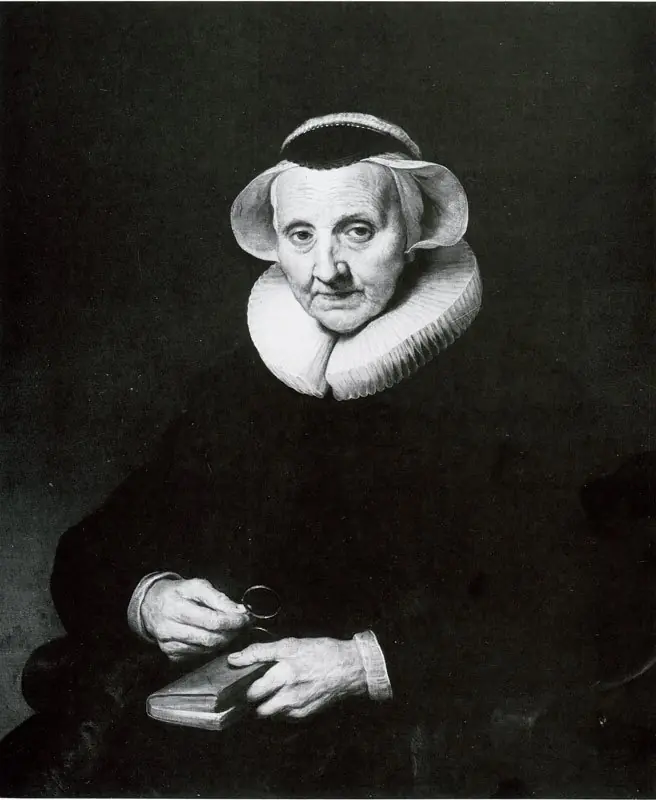 Portrait of a Woman holding a Book
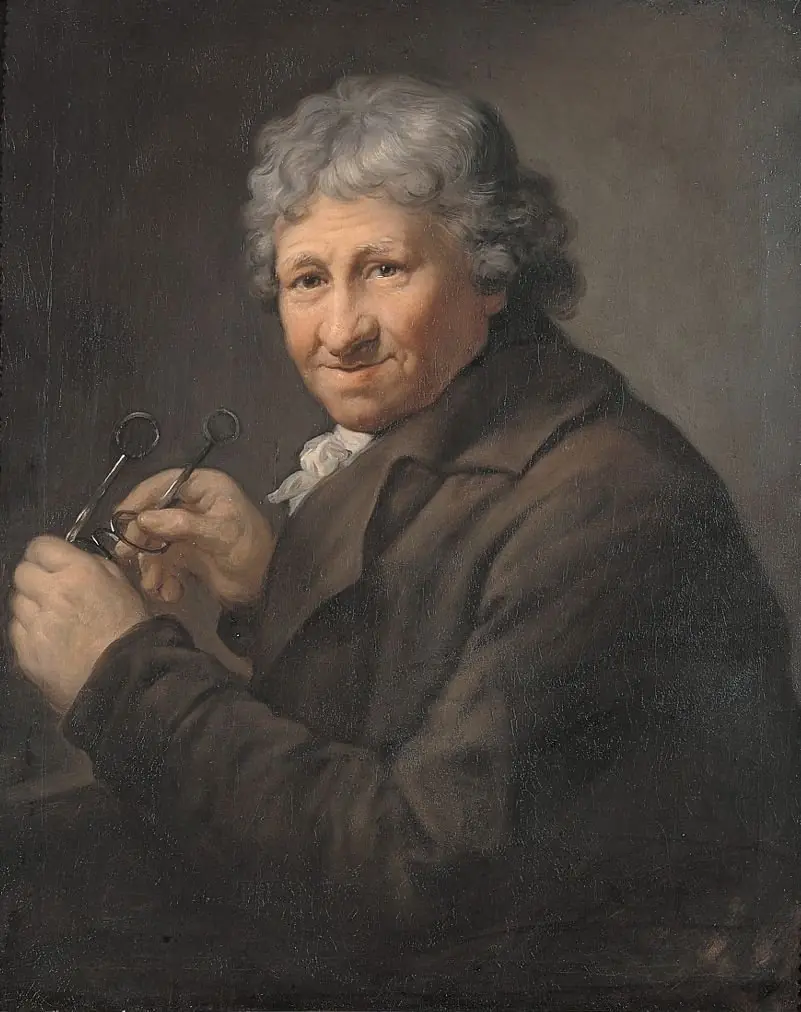 Daniel Chodowiecki
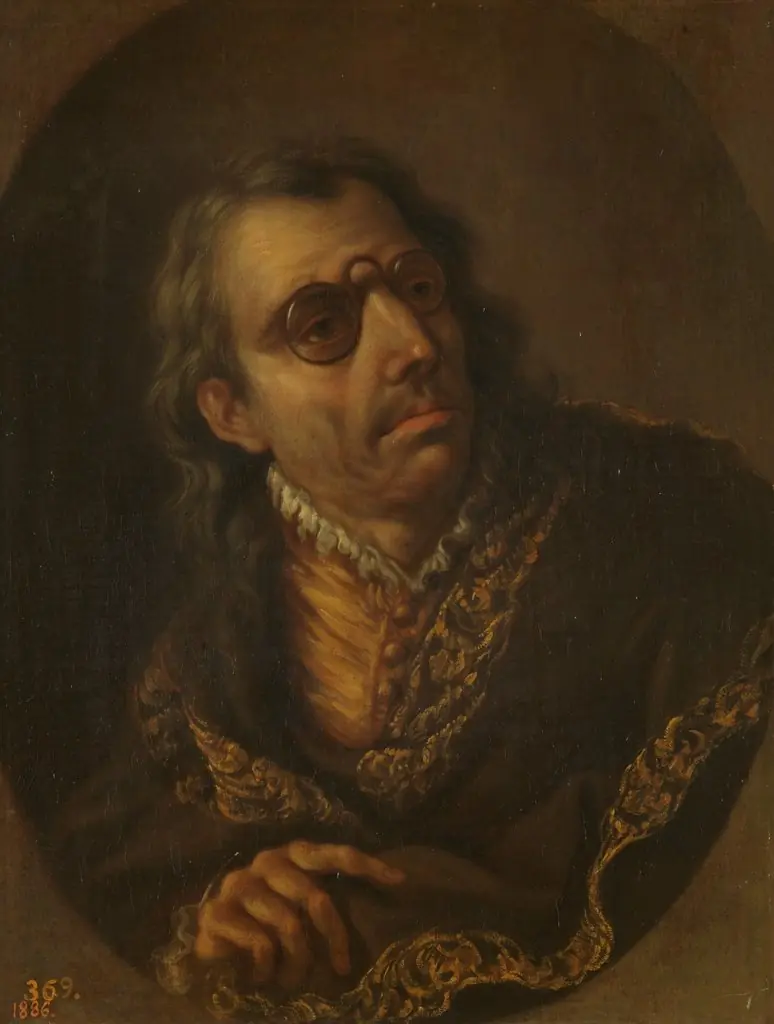 Self-portrait
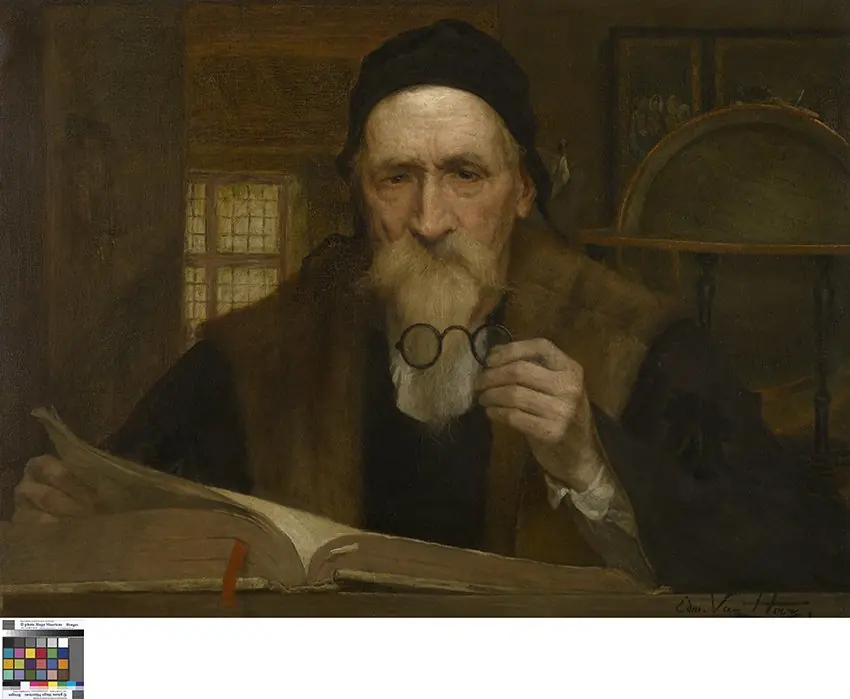 Philosopher
 Old Man holding a Pair of Spectacles
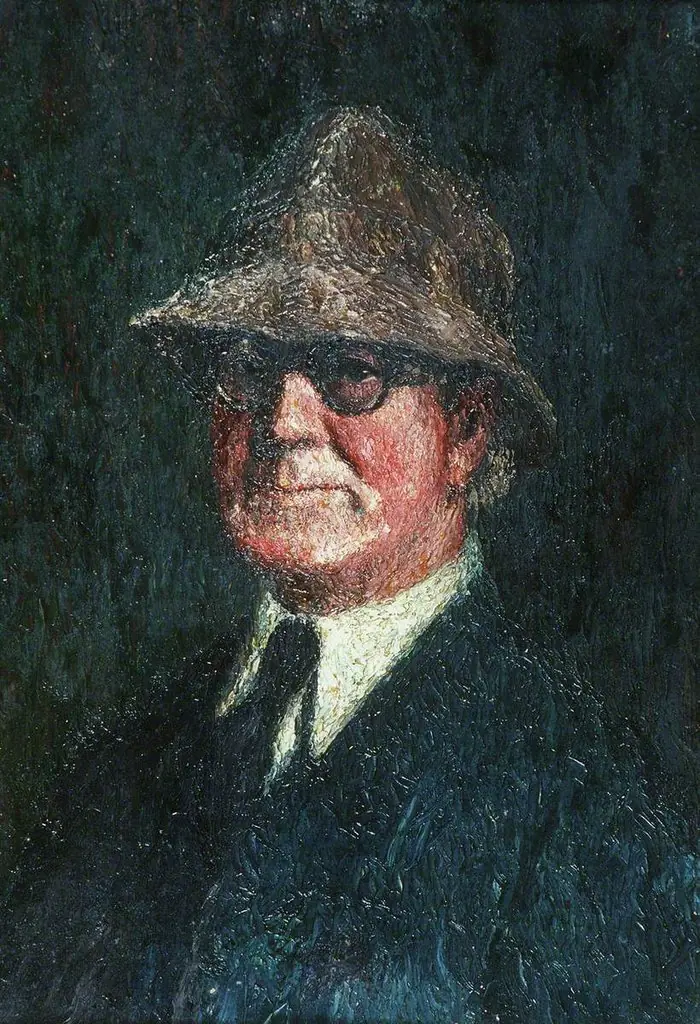 Self Portrait
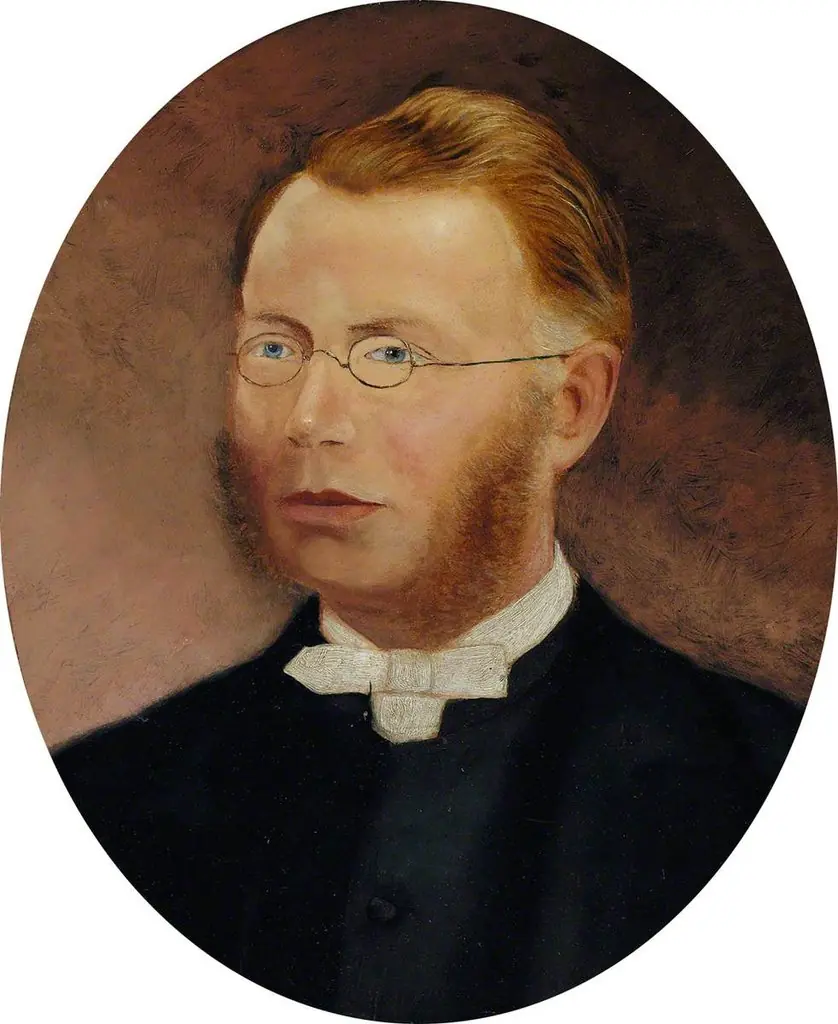 Reverend Thomas Charles Edwards (1837–1900)
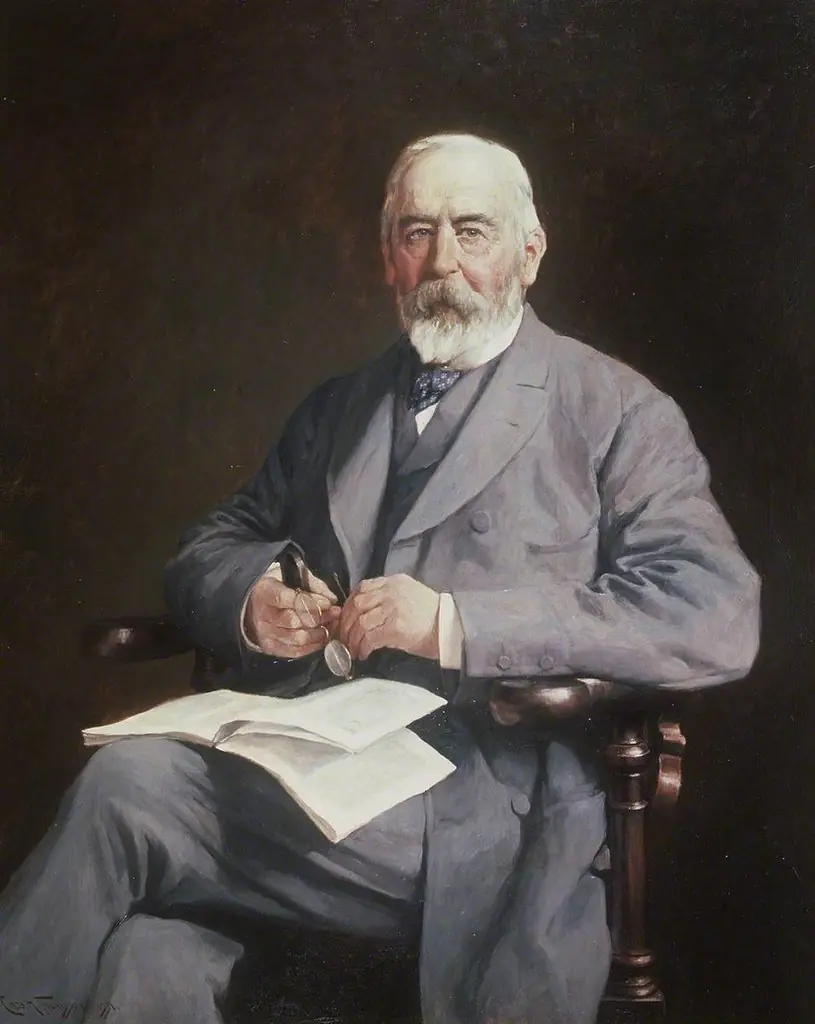 The Right Honourable Stuart Rendel (1834–1913), 1st Baron Rendel
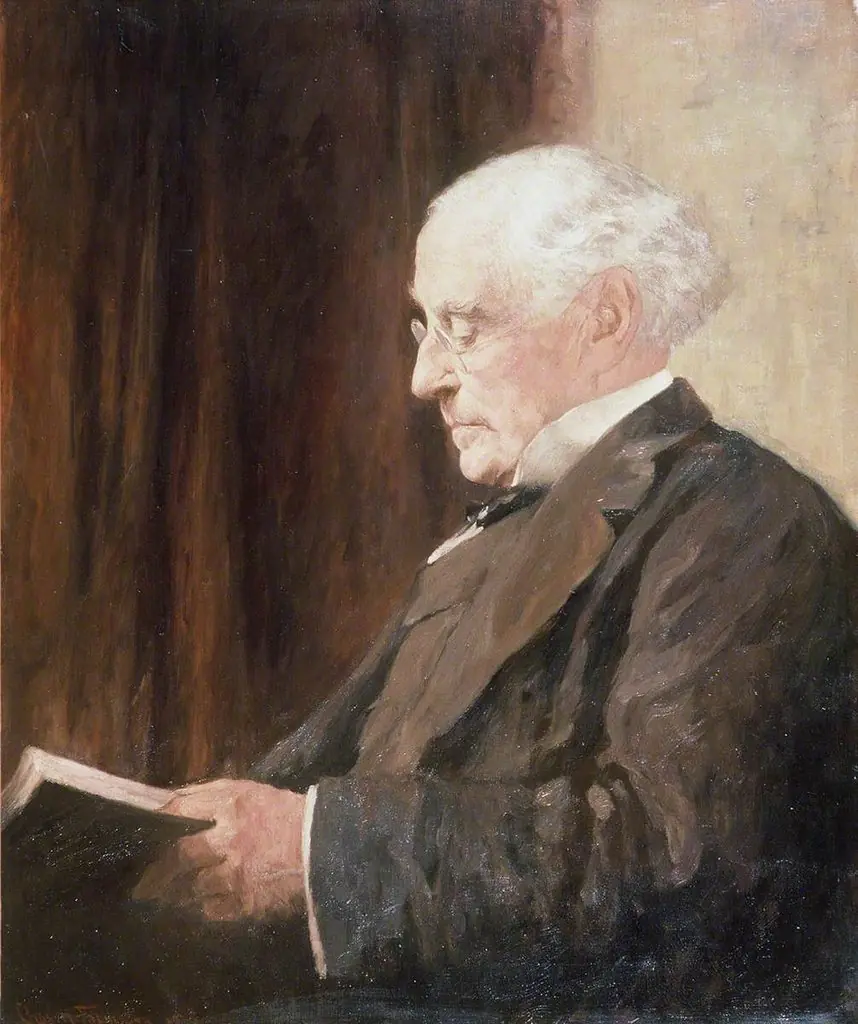 William Ewart Gladstone (1809–1898)
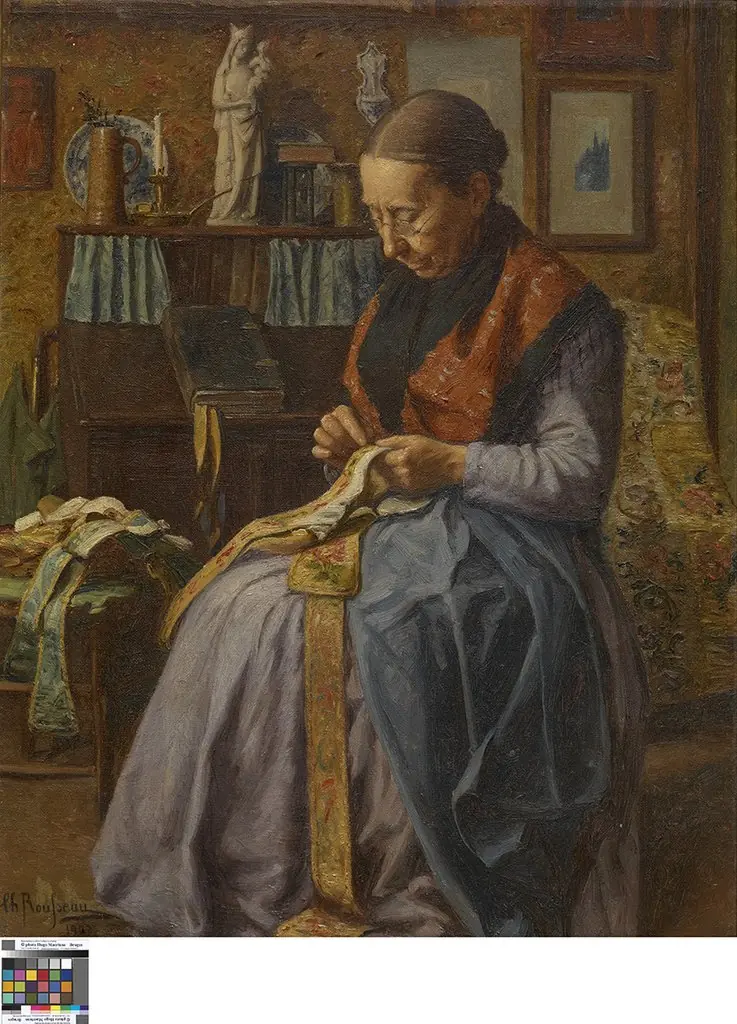 Binnenzicht
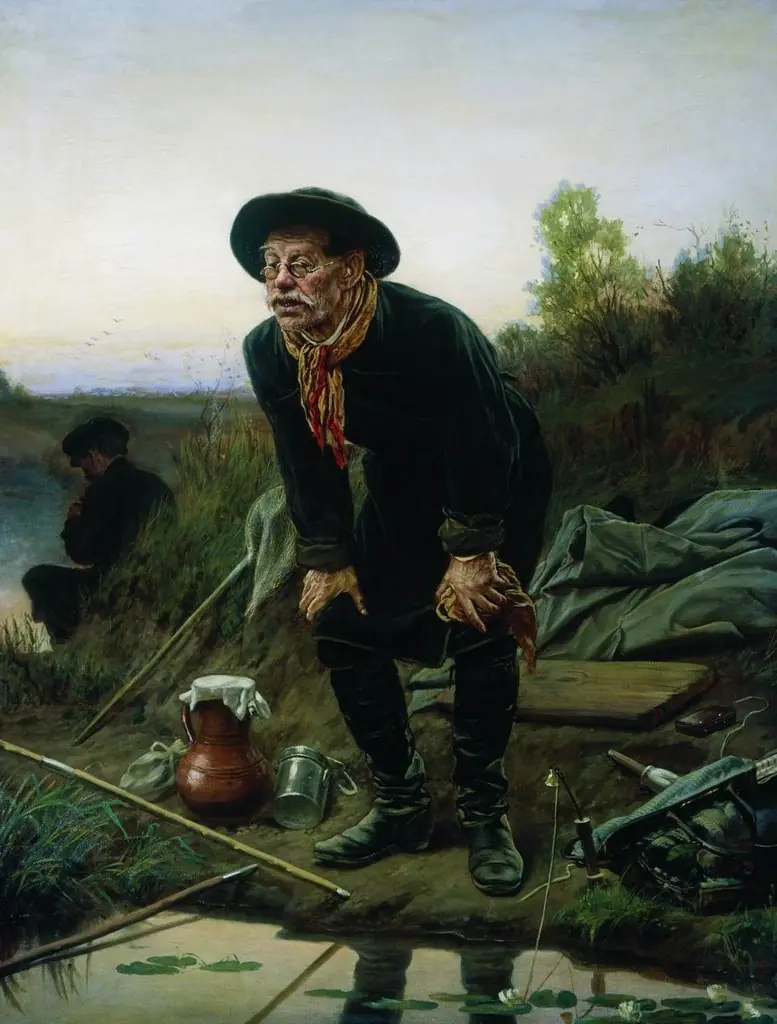 Рыболов
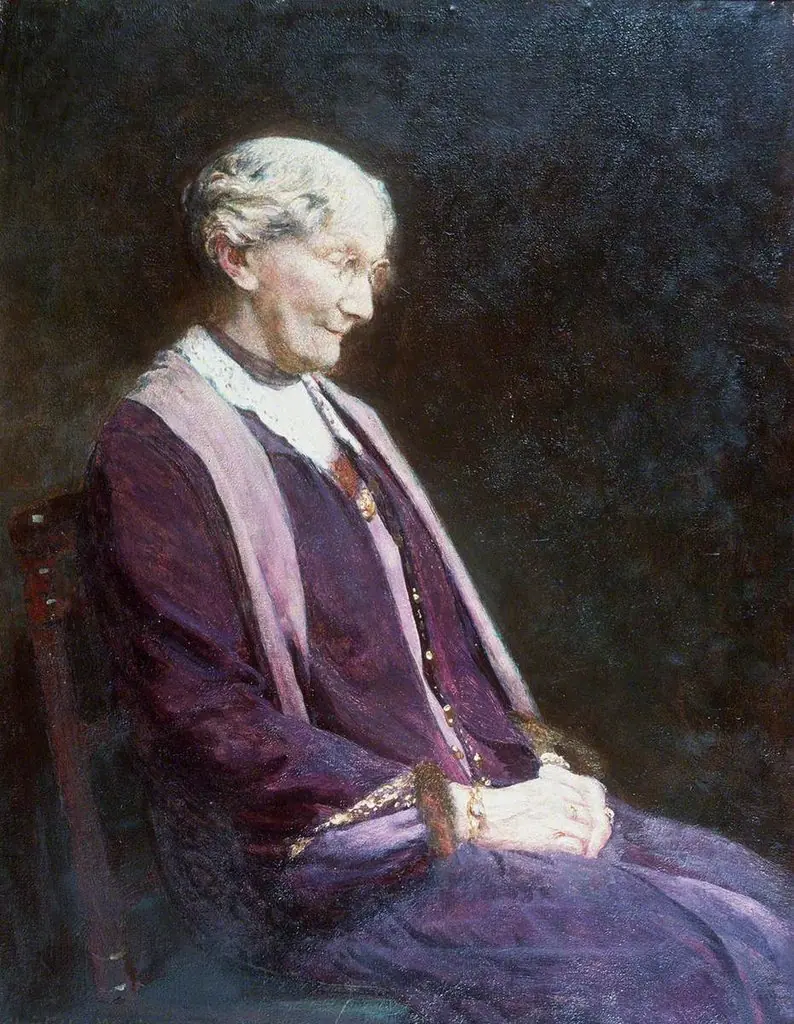 Mrs Parry Jones
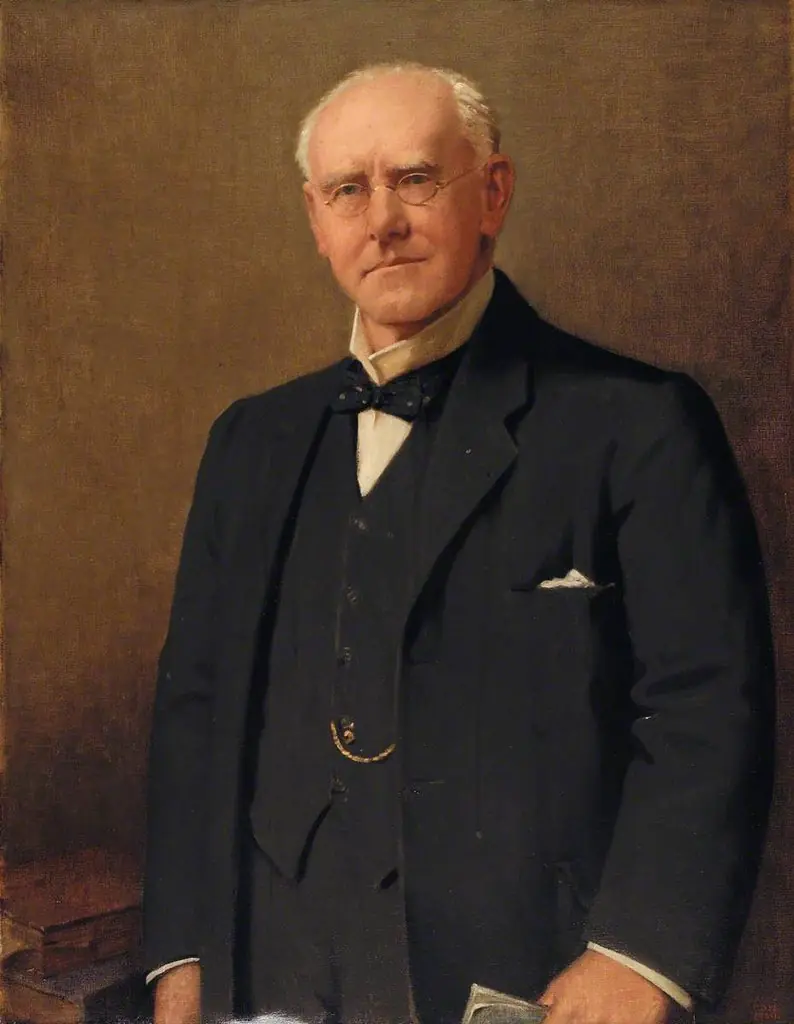 Professor John Owen Thomas
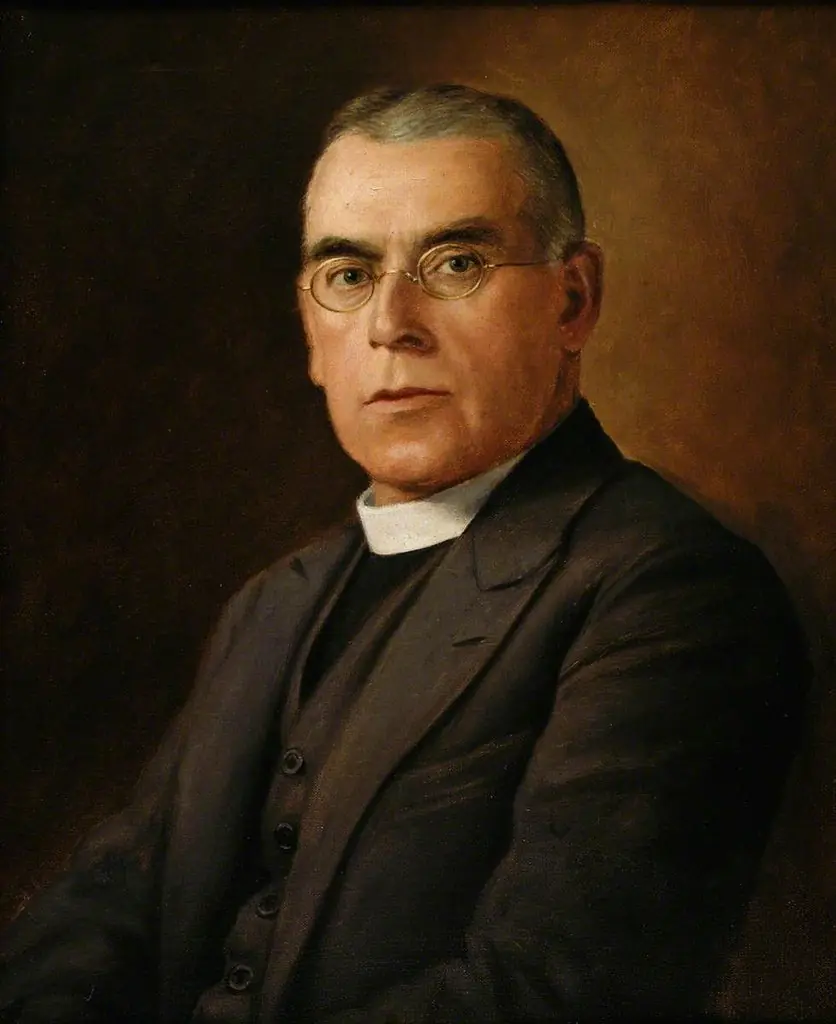 Parchedig Gwilym Arthur Edwards, MA, DD, Athro yng Ngholeg y Bala (1929–1939), Prifathro yng Ngholeg Diwinyddol Aberystwyth (1939–1949)
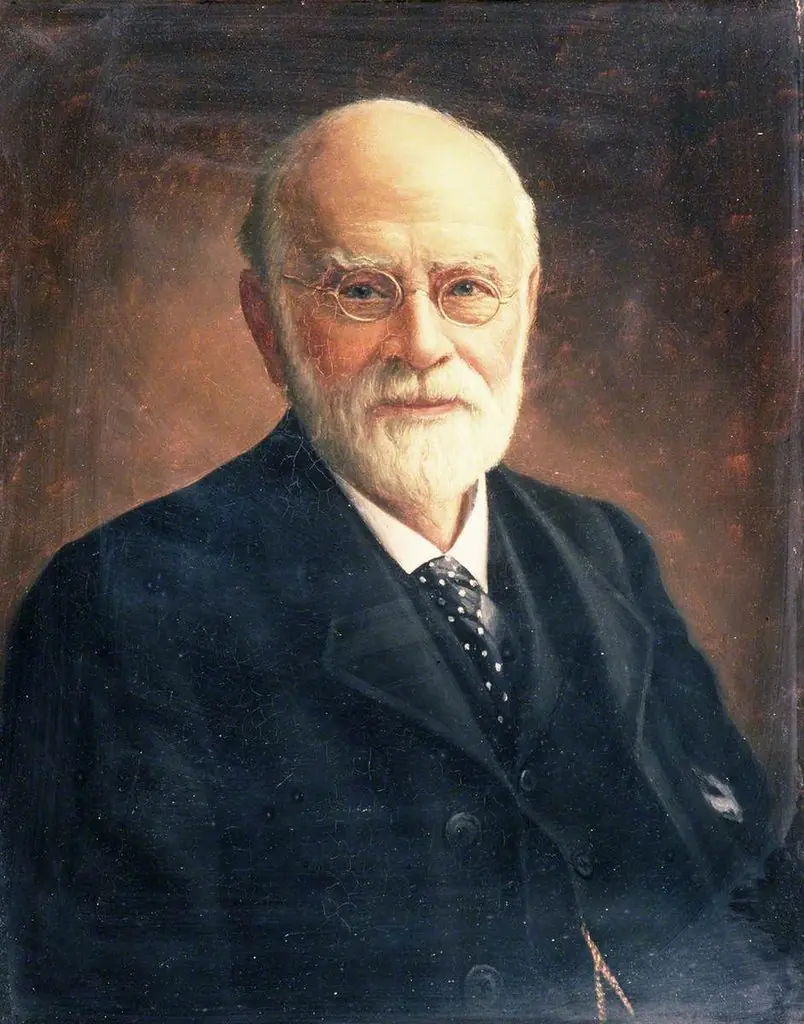 Professor David Jenkins (1848–1915)
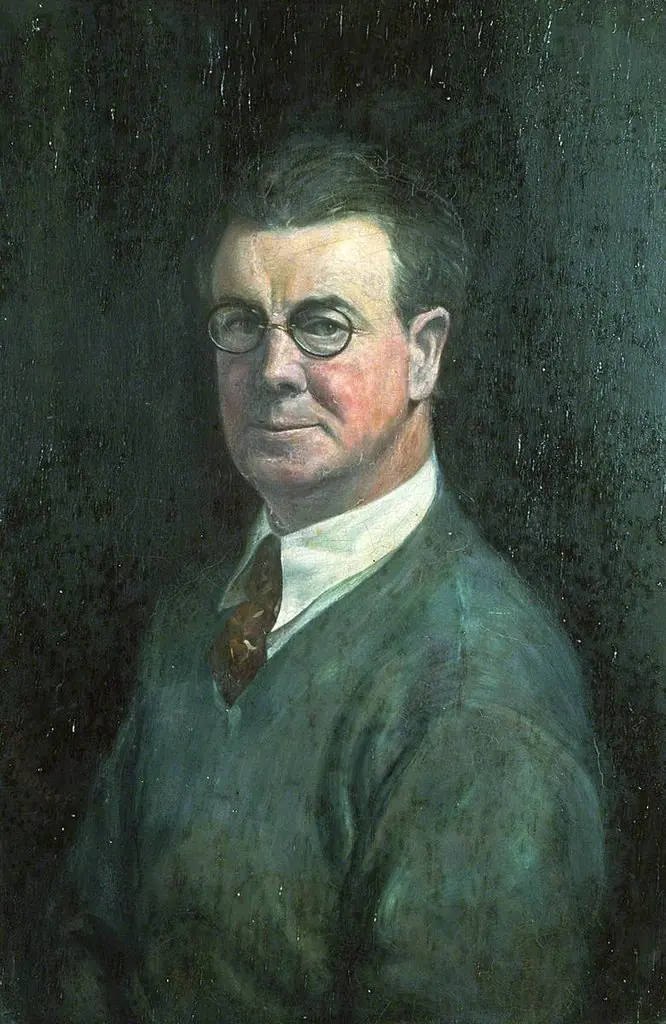 Self Portrait
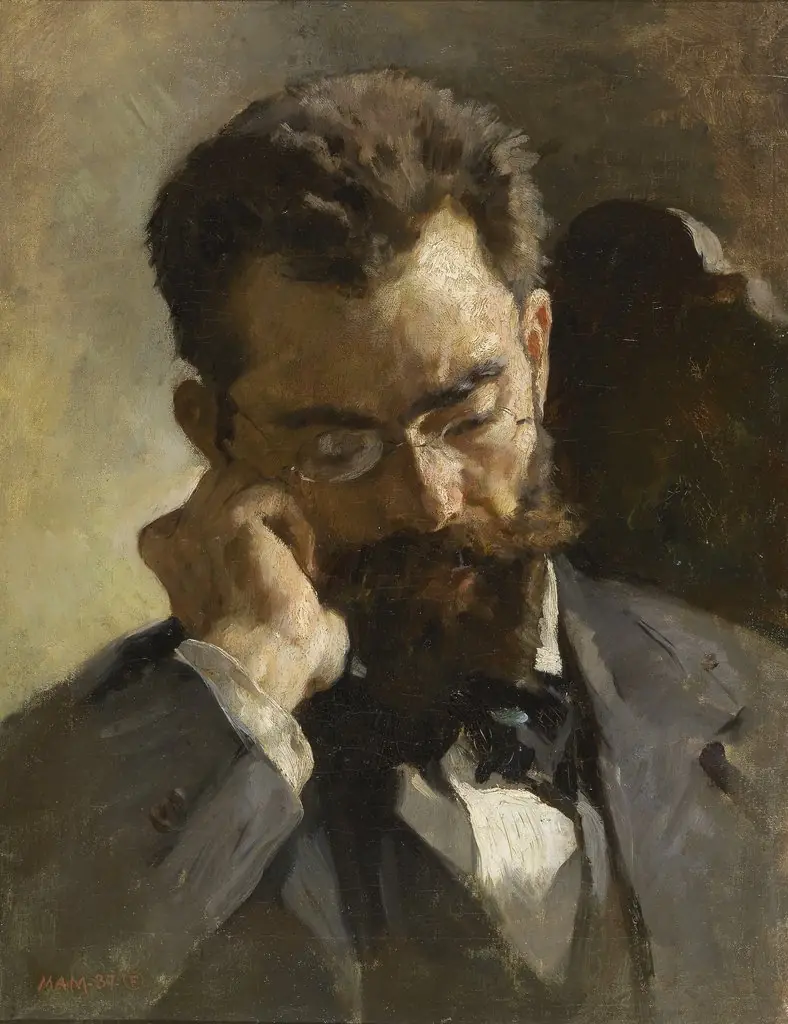 El pintor Francisco Pradilla
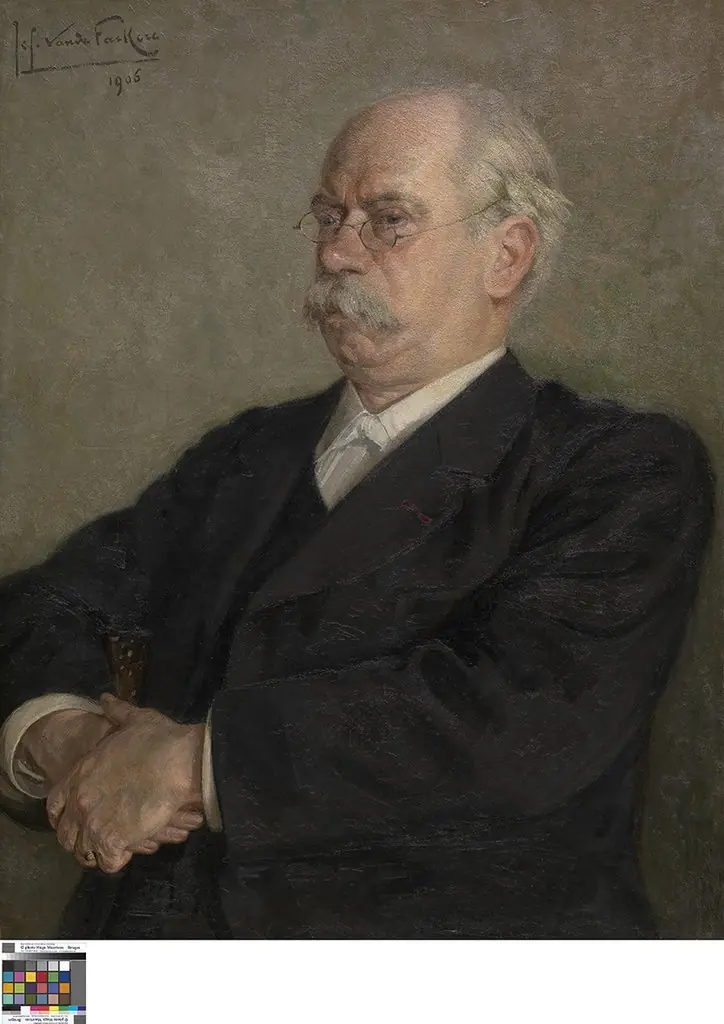 Portrait of Julius Sabbe
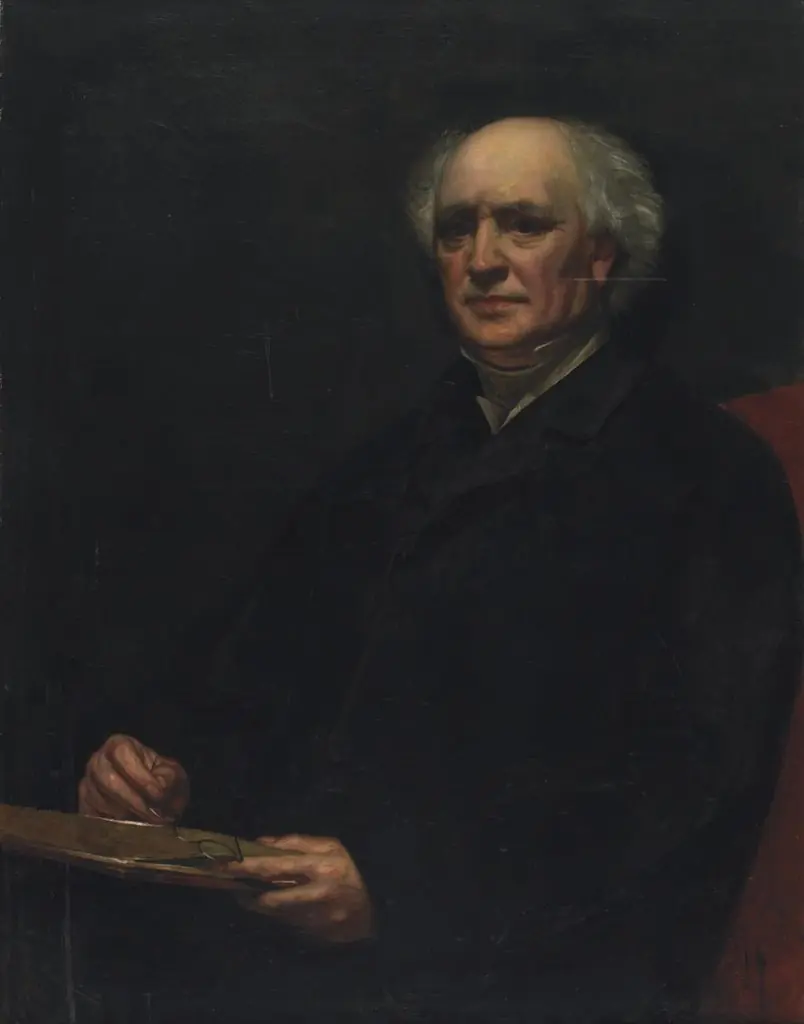 Rev.Henry Rees
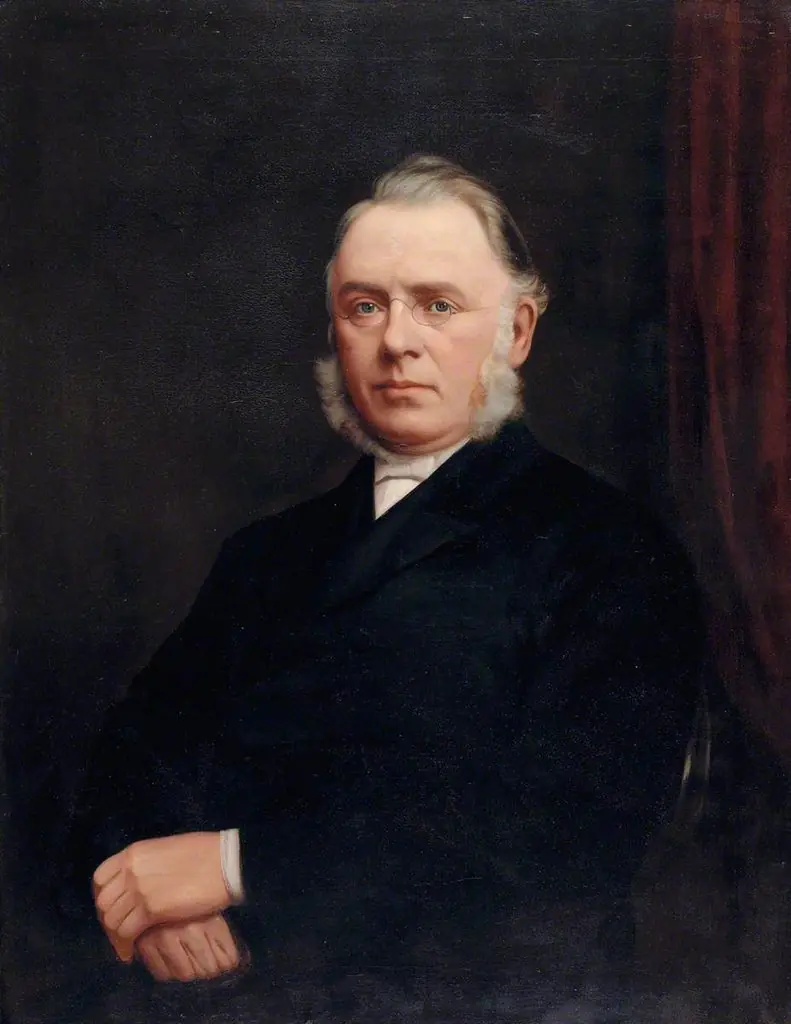 Dr Thomas Charles Edwards (1837–1900)
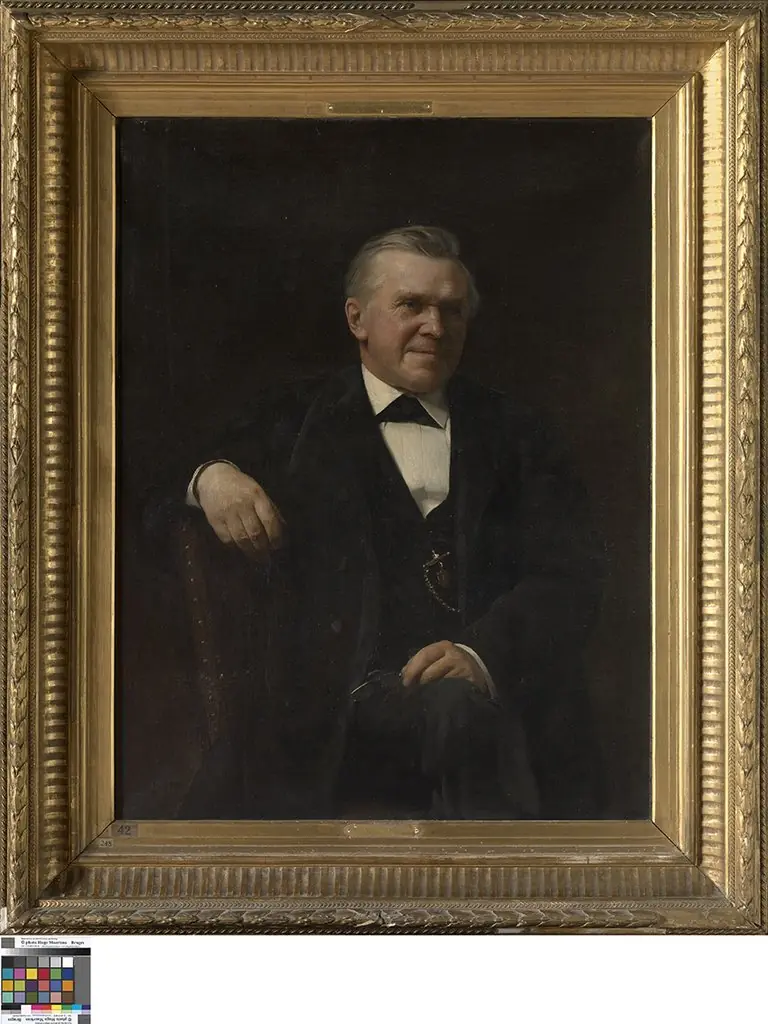 Portret van Eugeen Lefébure
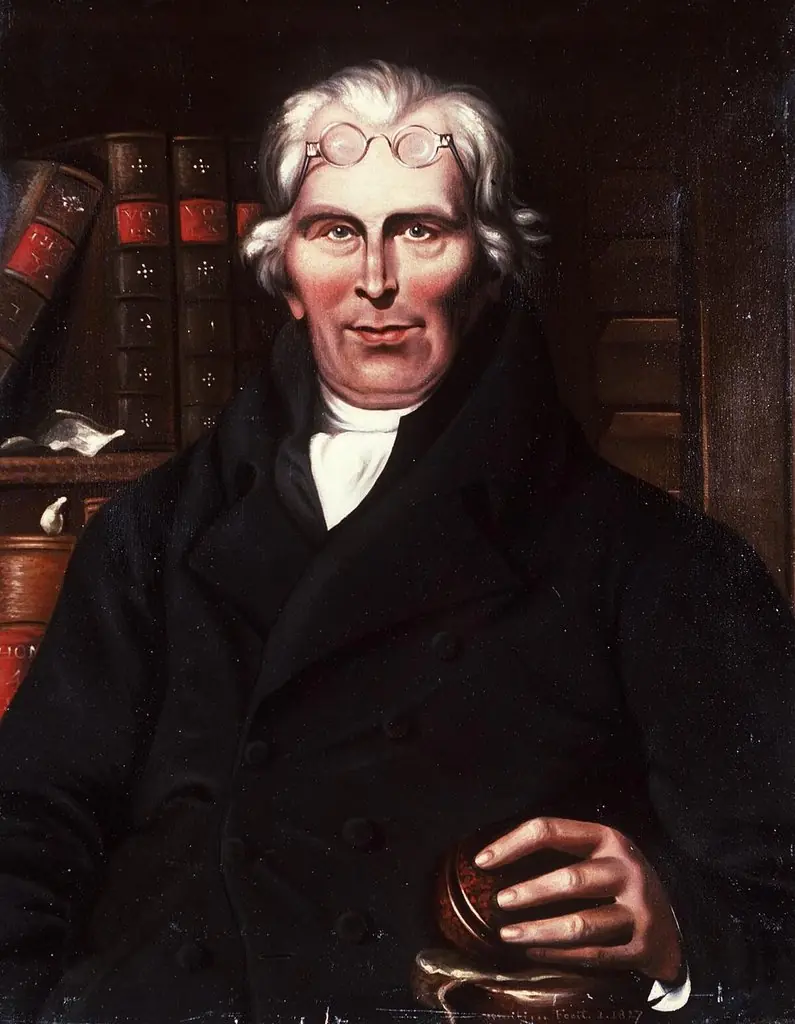 Revd John Williams, 'Yr Hen Syr'
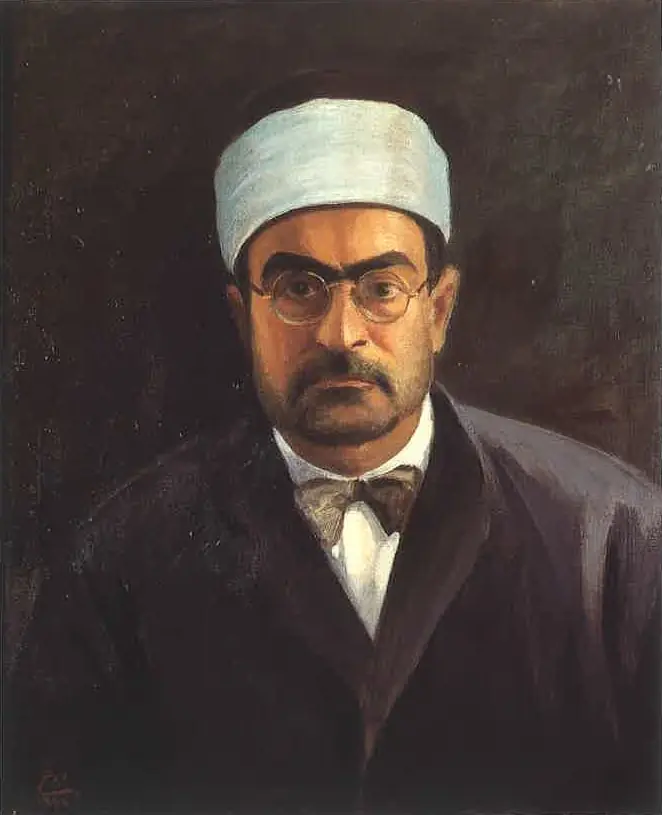 Portrait of Sheikh Mustafa Al-Ghalayini (1885 - 1944)
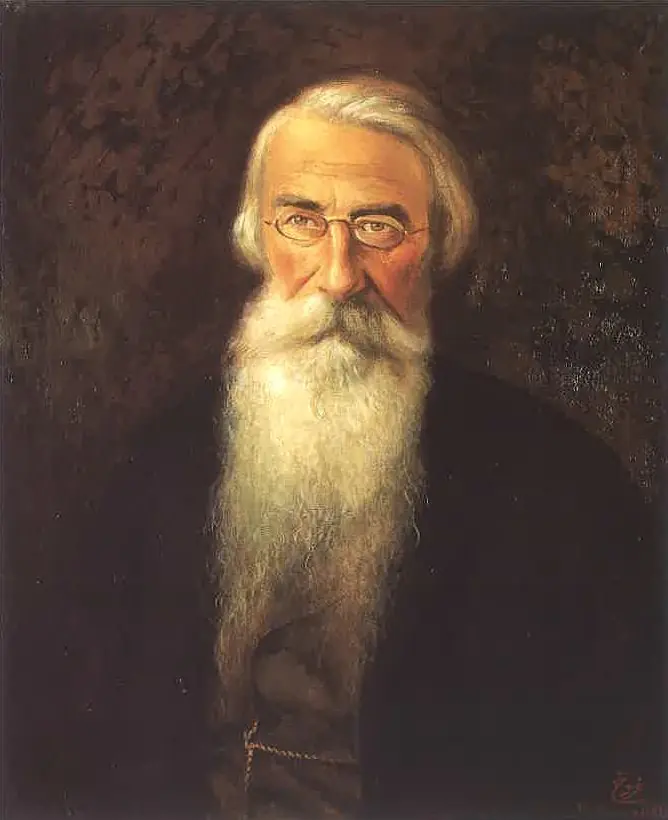 Portrait of Cornelius Van Dyck (1818 - 1896)
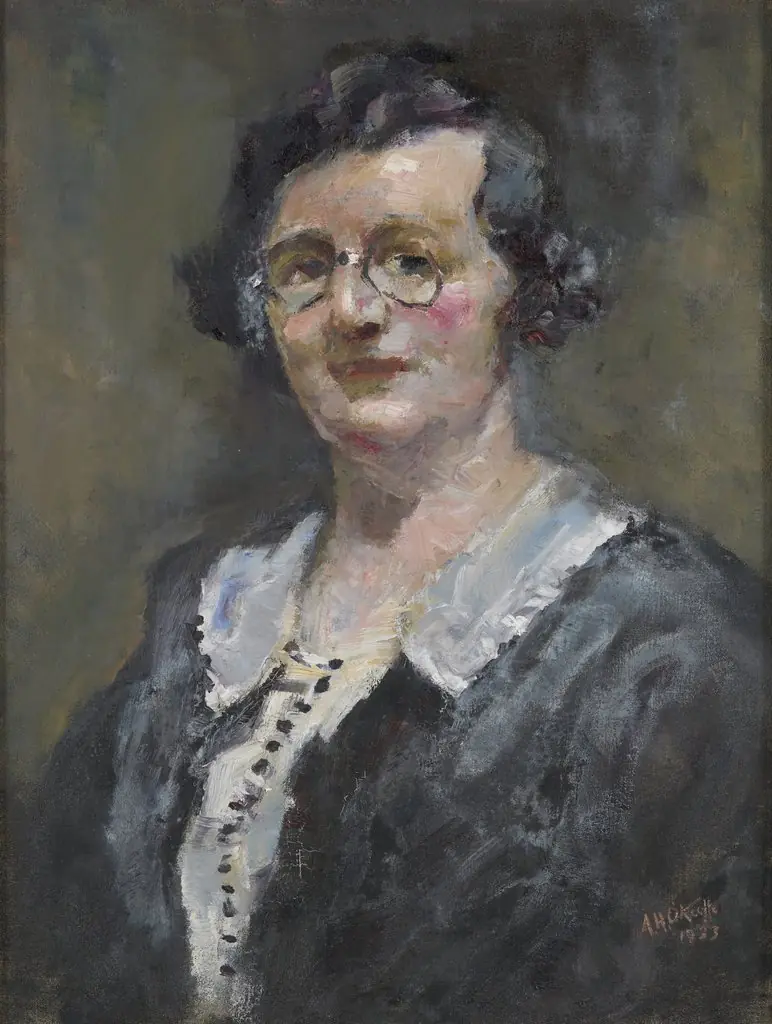 Portrait of Miss I. Robertson
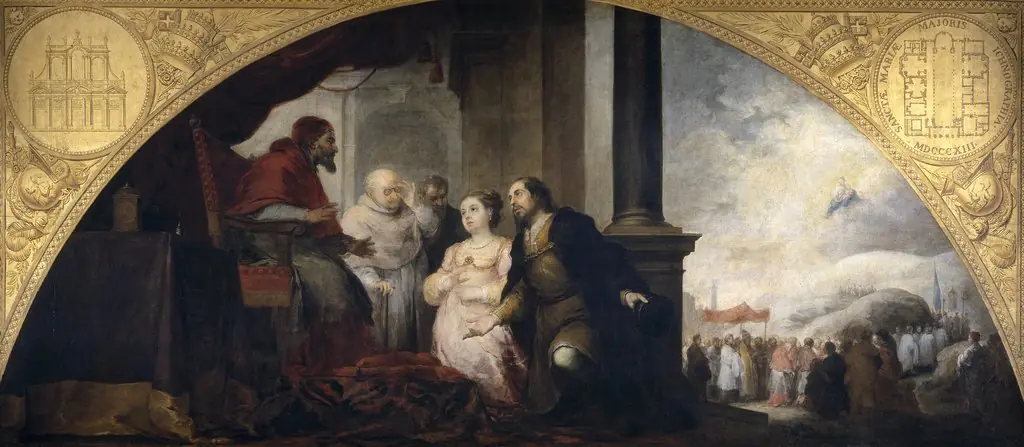 The Foundation of Santa Maria Maggiore in Rome. The Patrician recounts his Dream to the Pope
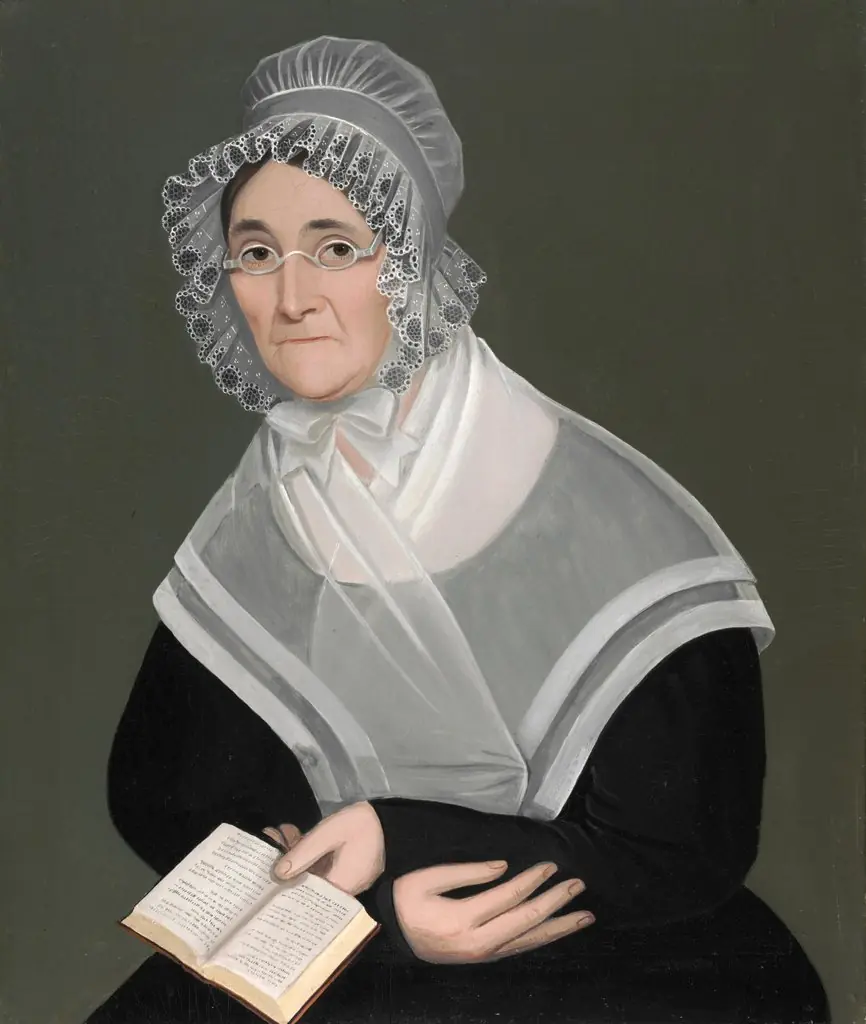 Portrait of Lois Belding Ketcham
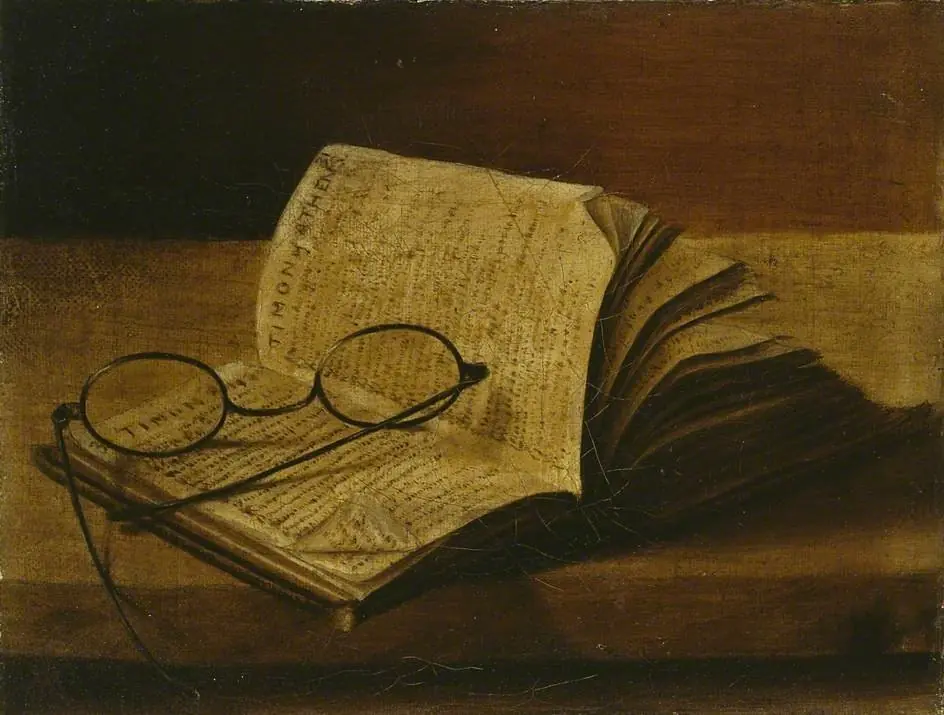 Still Life with an open Book and Spectacles
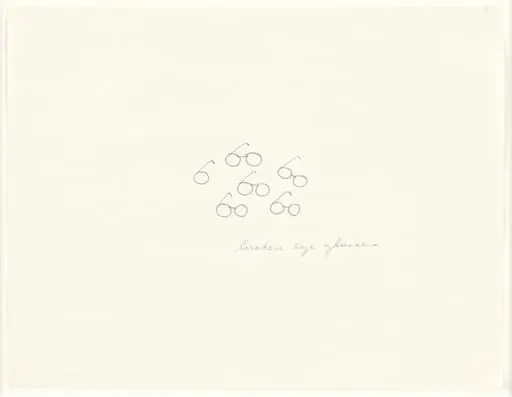 Untitled
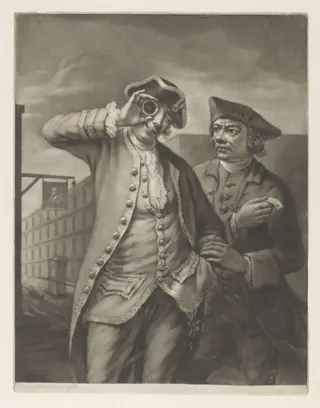 H Beard Print Collection
Frequently asked questions
What is Glasses?
Glasses, also known as eyeglasses, spectacles, or colloquially as specs, are vision eyewear with clear or tinted lenses mounted in a frame that holds them in front of a person's eyes, typically utilizing a bridge over the nose and hinged arms, known as temples or temple pieces,…
How many Glasses works does Artifact World Gallery have?
Artifact World Gallery holds 60 public-domain Glasses works, all free to view and download.
Who are the key Glasses artists?
Key Glasses artists in the collection include Thomas Eakins, Francis William Edmonds and Joos van Cleve.
Where can I see Glasses works?
Glasses works in the collection are held by National Library of Wales, Museo del Prado and Metropolitan Museum of Art.