Artwork
Little Miss Wyckoff
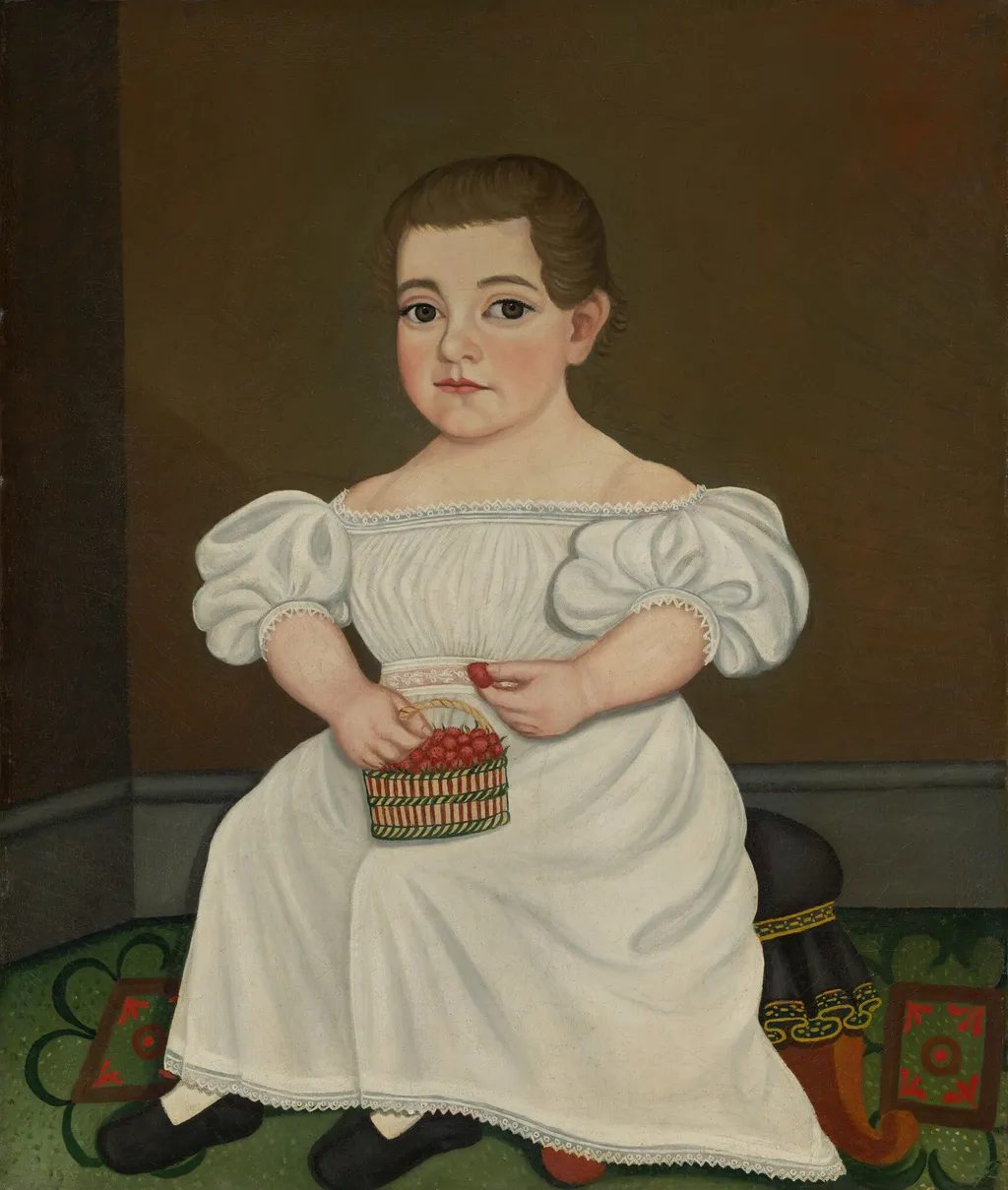
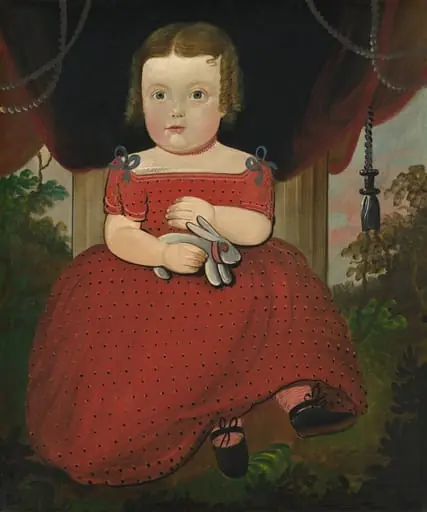
Little Miss Wyckoff is an oil painting. It dates from 1830 and is held in the collection of the National Gallery of Art.
About this work
Technique & Style
Little Miss Wyckoff is an oil painting executed on canvas, a standard support for nineteenth-century American portraiture.
Little Miss Wyckoff is an oil painting executed on canvas, a standard support for nineteenth-century American portraiture. The work measures 75.8 cm in height by 64.2 cm in width, a modest upright format well suited to a half-length or three-quarter-length likeness of a child. Painted in 1830, it belongs to the tradition of small-scale, intimate portraits produced for private family settings, with the oil medium allowing for the layered handling and subtle tonal blending typical of the period.
The painting is held in the collection of the National Gallery of Art in Washington, D.C., where it has been preserved since its 1953 gift by Edgar William and Bernice Chrysler Garbisch.
History & Provenance
The work was painted in 1830 by an unidentified American artist of the 19th century. It was later recorded as having descended in a New Jersey context before entering the art market.
In 1948 the painting was purchased by collectors Edgar William and Bernice Chrysler Garbisch, who subsequently donated it to the National Gallery of Art, Washington, D.C., in 1953, where it remains in the permanent collection. No specific inventory or accession number is provided in the available records, though the work is cataloged as an 1830 oil on canvas portrait by an American artist of the 19th century.
Overview
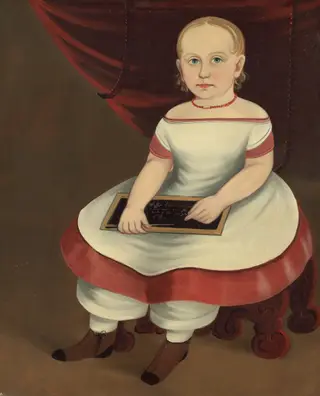
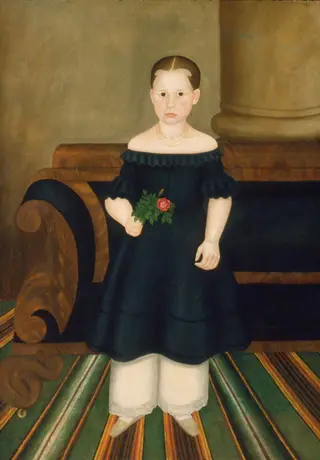
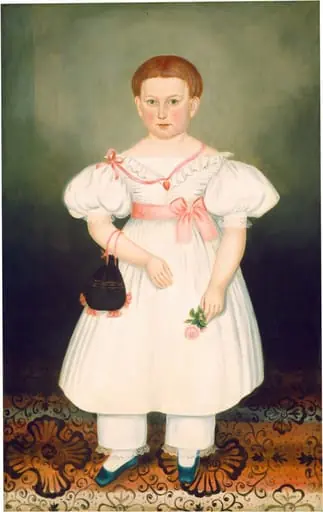
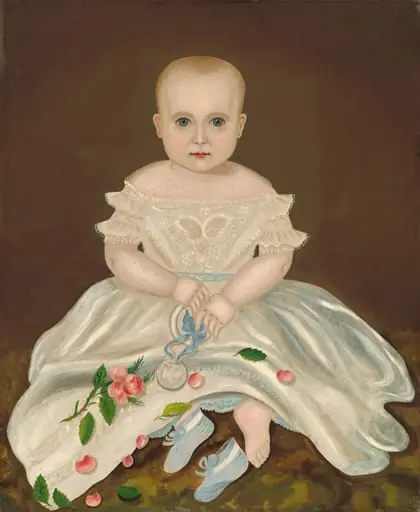
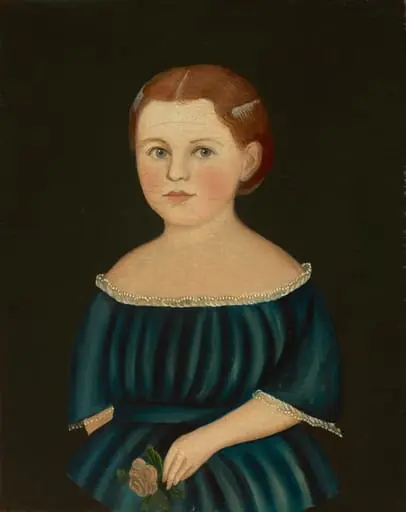
Little Miss Wyckoff is an oil painting on canvas depicting a young girl seated against an unadorned dark backdrop. The work measures modestly in size, yet it draws attention through the quiet intimacy of the sitter’s pose and the restrained palette. The portrait is part of the collection at the National Gallery of Art in Washington, D.C.
Subject & Meaning
The figure is a girl dressed in a plain gray gown, her expression calm and slightly withdrawn. She rests a small book on her lap, suggesting a moment of quiet study or contemplation. The composition’s simplicity emphasizes the personal, perhaps domestic, atmosphere rather than any overt narrative.
Context
Created during a period when intimate portraiture of children was common among middle‑class families, the work aligns with contemporary trends that favored modest settings and subdued color schemes. The emphasis on personal demeanor over elaborate surroundings reflects broader cultural values of modesty and domestic virtue prevalent at the time.
Artist & collection