Artwork
Madame G
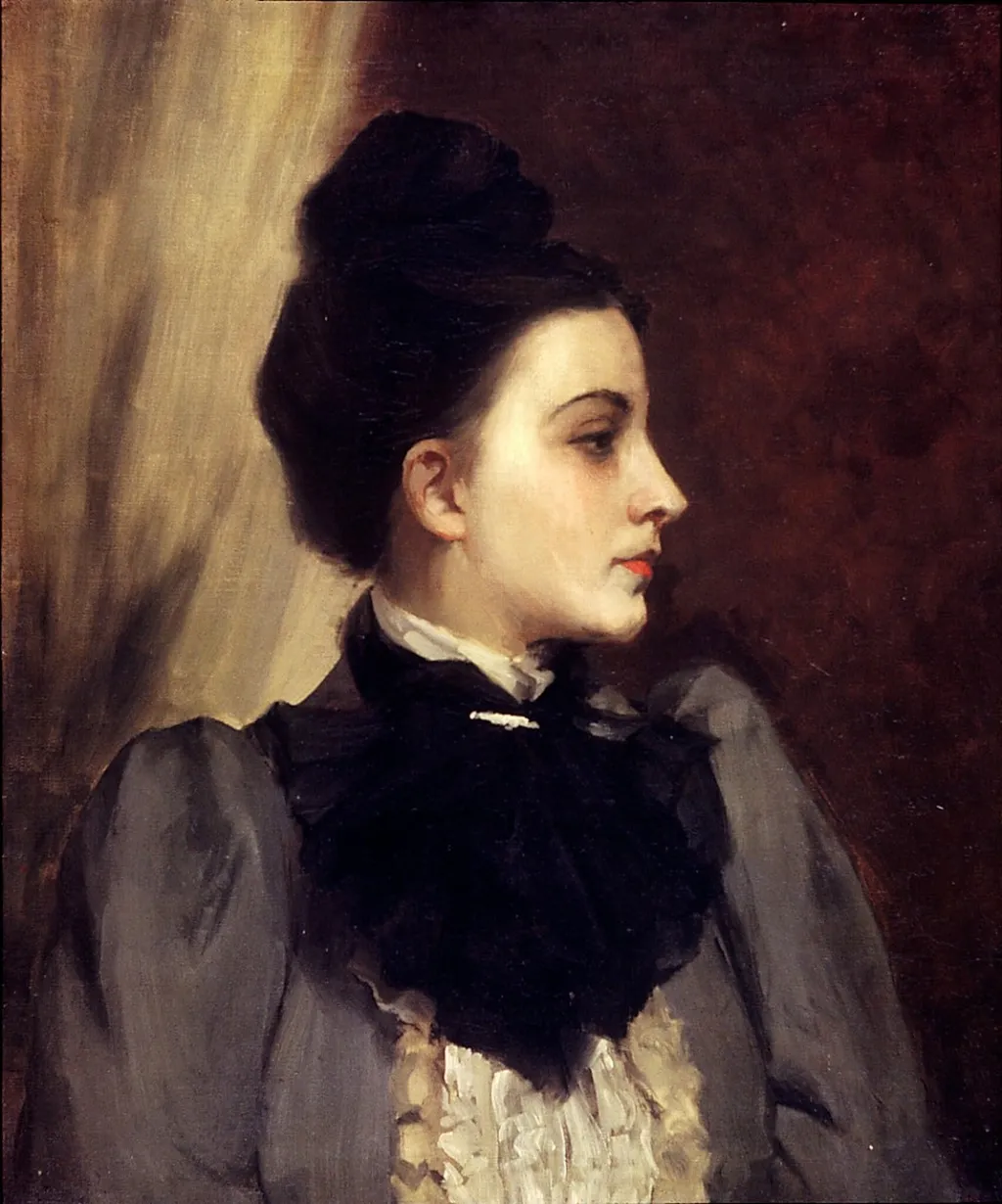
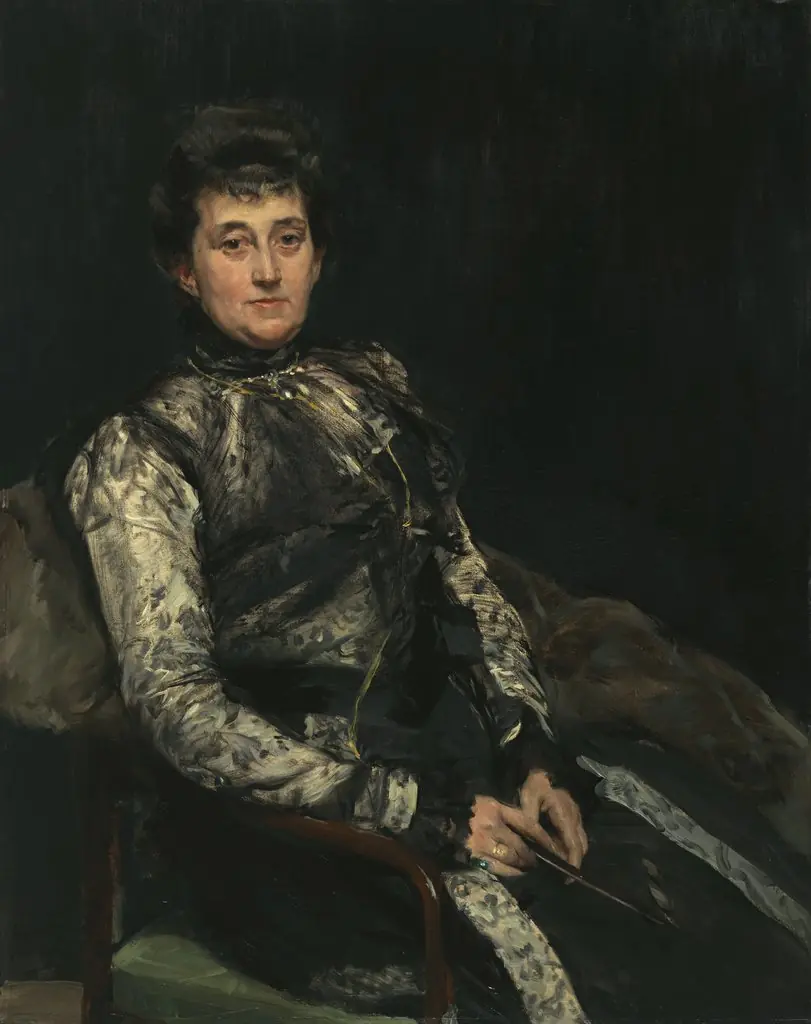
Madame G is an oil painting. It dates from 1900 and is held in the collection of the National Gallery of Art.
About this work
Technique & Style
The work’s stylistic qualities align with academic portraiture of the era, emphasizing clarity and dignity over expressive distortion or painterly bravura.
The painting is executed in oil on canvas, measuring 61.3 cm in height by 50.8 cm in width. Its handling reflects the portrait conventions of late 19th-century American painting, with careful attention to facial modeling and subdued palette. The composition centers on a frontal bust-length figure, rendered with smooth transitions in light and shadow to articulate volume.
The brushwork remains restrained, avoiding visible impasto or textural effects, and the overall finish suggests a polished studio practice typical of the period’s commissioned portraits.
The work’s stylistic qualities align with academic portraiture of the era, emphasizing clarity and dignity over expressive distortion or painterly bravura.
History & Provenance
The work entered the art market via Robinson, Fisher & Harding in London on 3 March 1927 (no. 104) and was subsequently owned by Rita de Acosta Lydig, later known as Mrs. Philip M. Lydig, in New York. Following her death, the piece was sold at an estate auction held by Plaza Art Galleries in New York on 27 February 1931 (no. 44), after which Chester Dale acquired it. Dale bequeathed the painting to the National Gallery of Art in Washington, D.C., in 1963, where it remains in the collection today.
The painting is dated to 1900 based on cataloguing information, and its creation is documented as an oil on canvas portrait produced by an American artist of the 19th century, with dimensions recorded as 61.3 cm in height and 50.8 cm in width.
The provenance chain reflects a clear transfer of ownership from a London gallery to a New York collector, then to a dealer, and finally to the National Gallery of Art through bequest.
Madame G is held in the collection of the National Gallery of Art in Washington, D.C. The work was acquired by the museum through a bequest in 1963. Its provenance includes sales in London (Robinson, Fisher & Harding, 3 March 1927, no. 104), New York (Rita de Acosta Lydig's estate sale at Plaza Art Galleries, 27 February 1931, no. 44), and Chester Dale, before entering the National Gallery of Art. The painting measures 61.3 cm in height and 50.8 cm in width.
Legacy
Madame G exerted significant influence on portraiture through its adoption of psychological depth and compositional balance, shaping the work of subsequent American portraitists who emulated its nuanced rendering of subjectivity. Its presence in the National Gallery of Art's collection since 1963 cemented its status as a touchstone for scholars examining transatlantic portrait traditions, with frequent inclusion in exhibitions that highlighted its role in bridging 19th-century British techniques with emerging American sensibilities. The painting's provenance, tracing from private collections to public stewardship, underscored its recognized artistic merit and institutional value.
Overview
Madame G is an oil painting that presents a woman’s head and shoulders turned toward the viewer’s right. She is depicted with dark hair gathered in a bun, wearing a dark dress accented by a white collar and a black ruffle at the neck. The composition is set against a background of mixed light and dark tones, punctuated by a vertical strip of illumination on the left.
Subject & Meaning
The portrait captures a solemn, introspective expression on the sitter’s face, suggesting a dignified or contemplative character. The restrained palette and modest attire focus attention on the facial features and the psychological presence of the woman rather than on decorative elements.
Context
While specific details about the painting’s creation and provenance are not provided, the stylistic choices align with European academic portrait traditions, where emphasis on precise likeness and controlled lighting were common. The vertical light band on the left recalls compositional devices used to guide the viewer’s eye toward the subject’s face.
Artist & collection

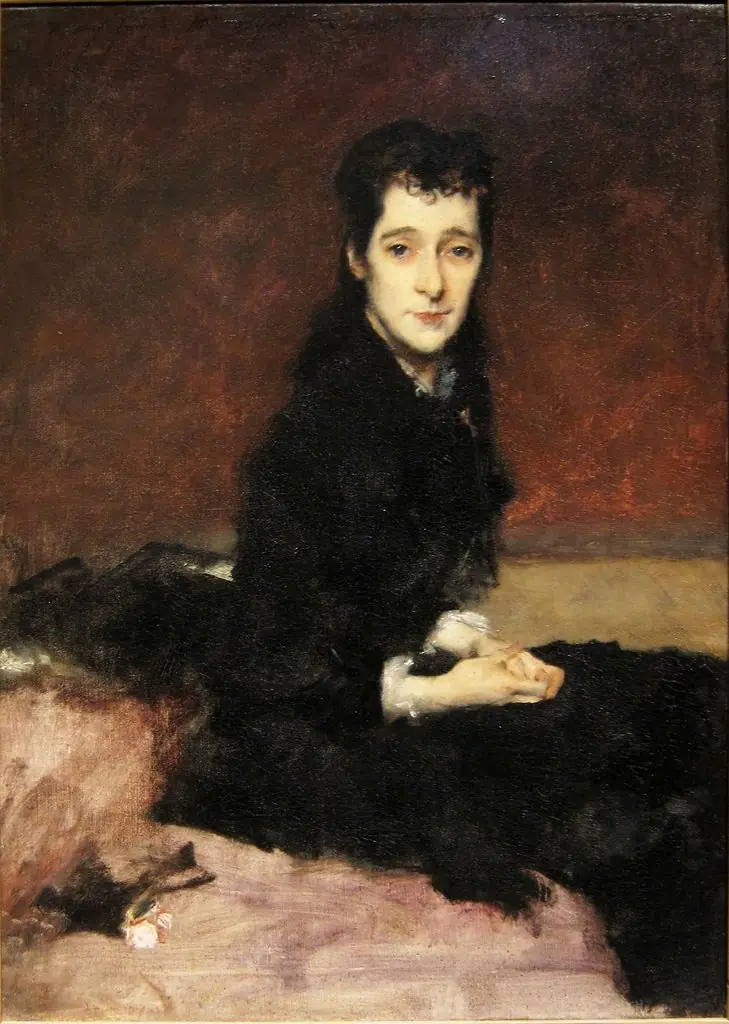
- Mrs. Charles Gifford Dyer (Mary Anthony)
 Mrs. Charles Gifford Dyer (Mary Anthony)
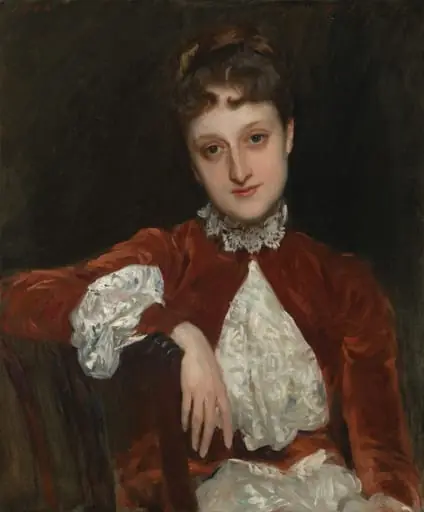 Mrs. Charles Deering (Marion Denison Whipple)
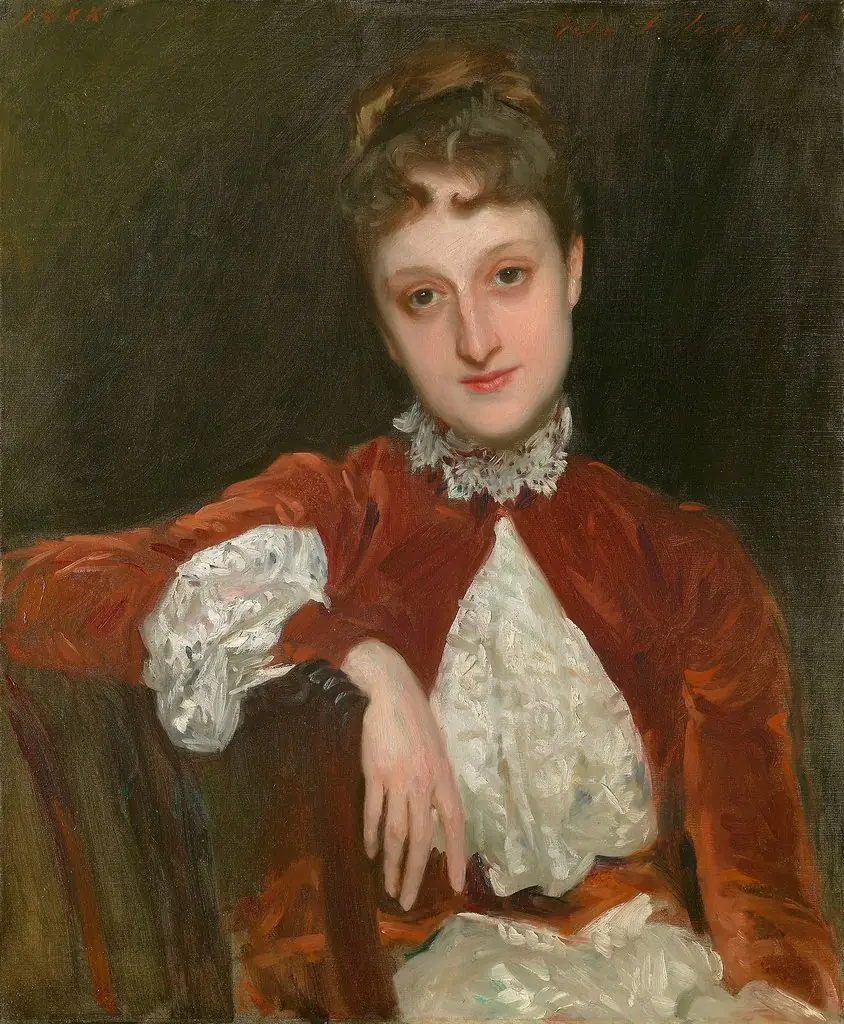 Mrs. Charles Deering (Marion Denison Whipple)
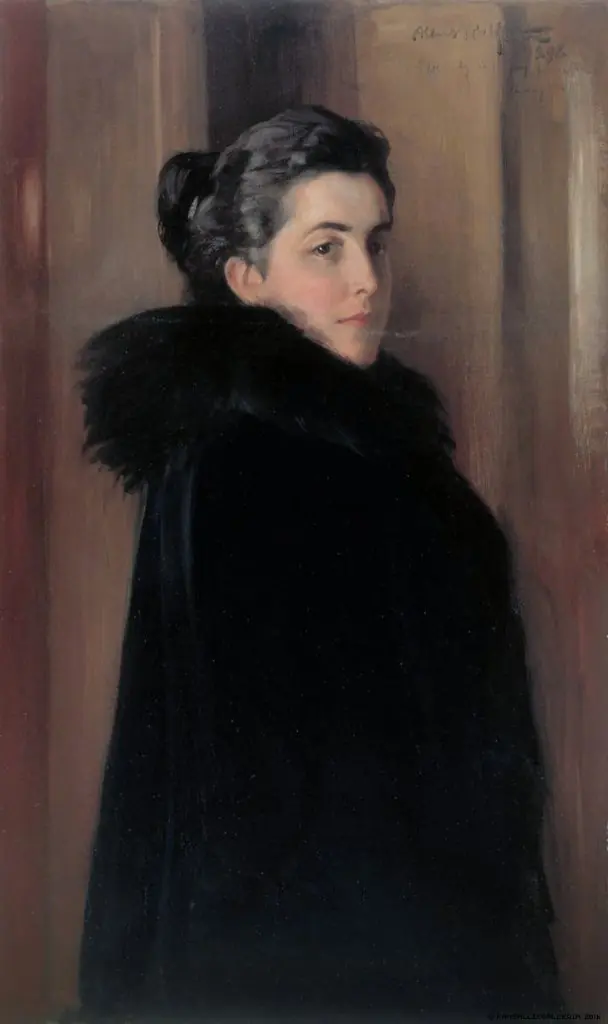 Portrait of the Artist's Wife Ellan Edelfelt
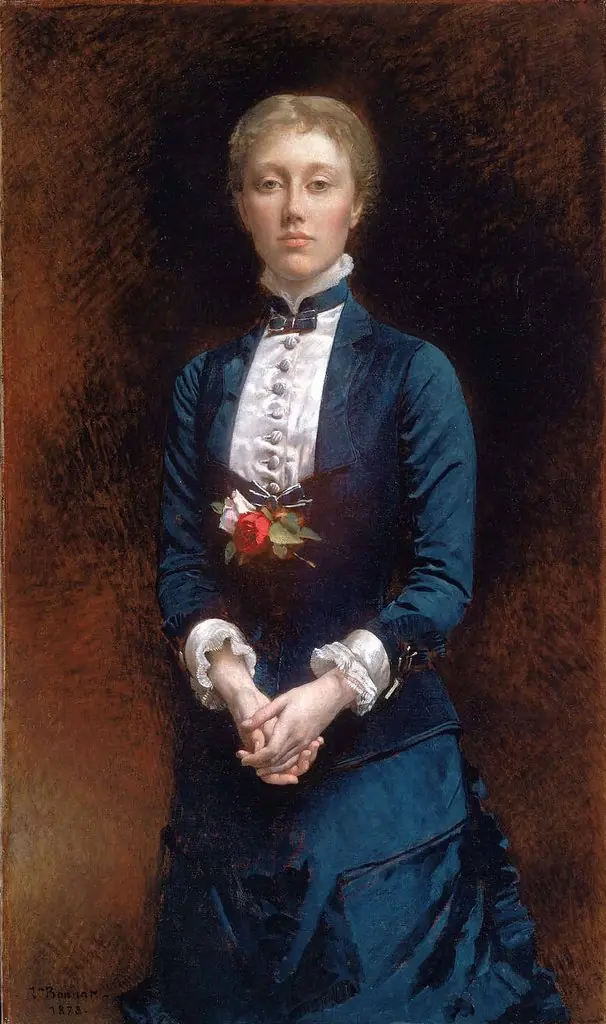 Mary Sears (later Mrs. Francis Shaw)
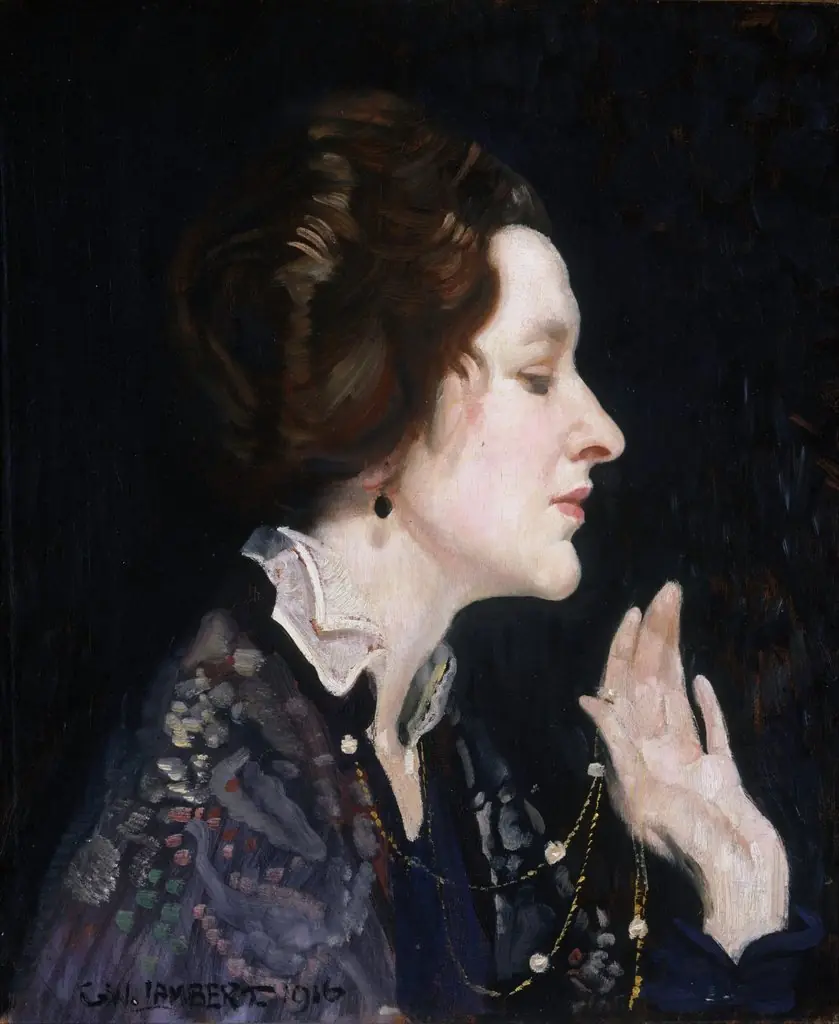 Portrait of a lady (Thea Proctor)
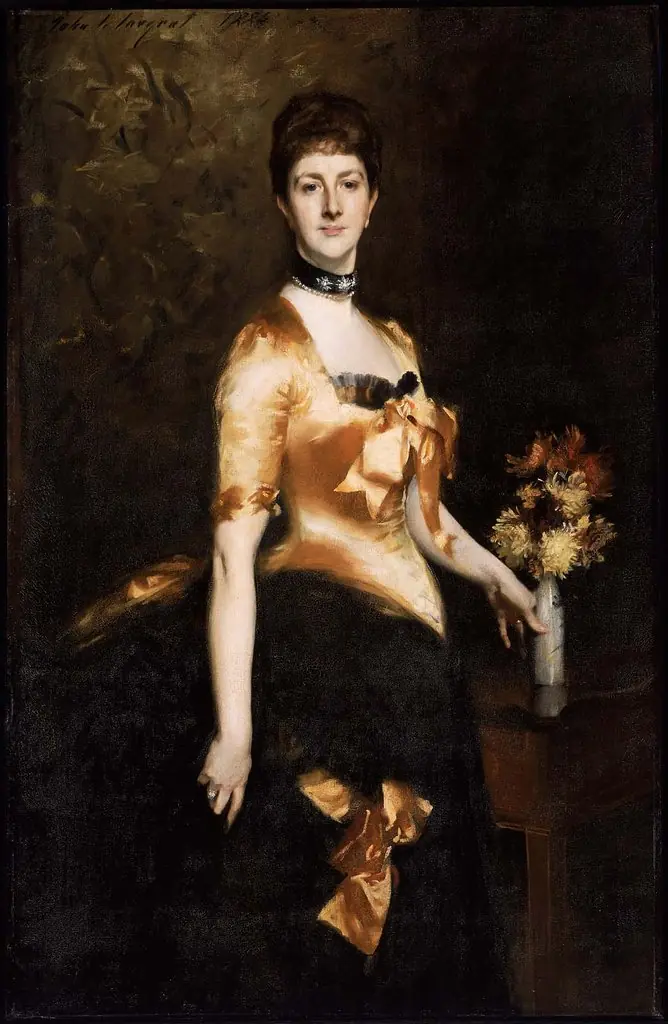 Edith, Lady Playfair (Edith Russell)
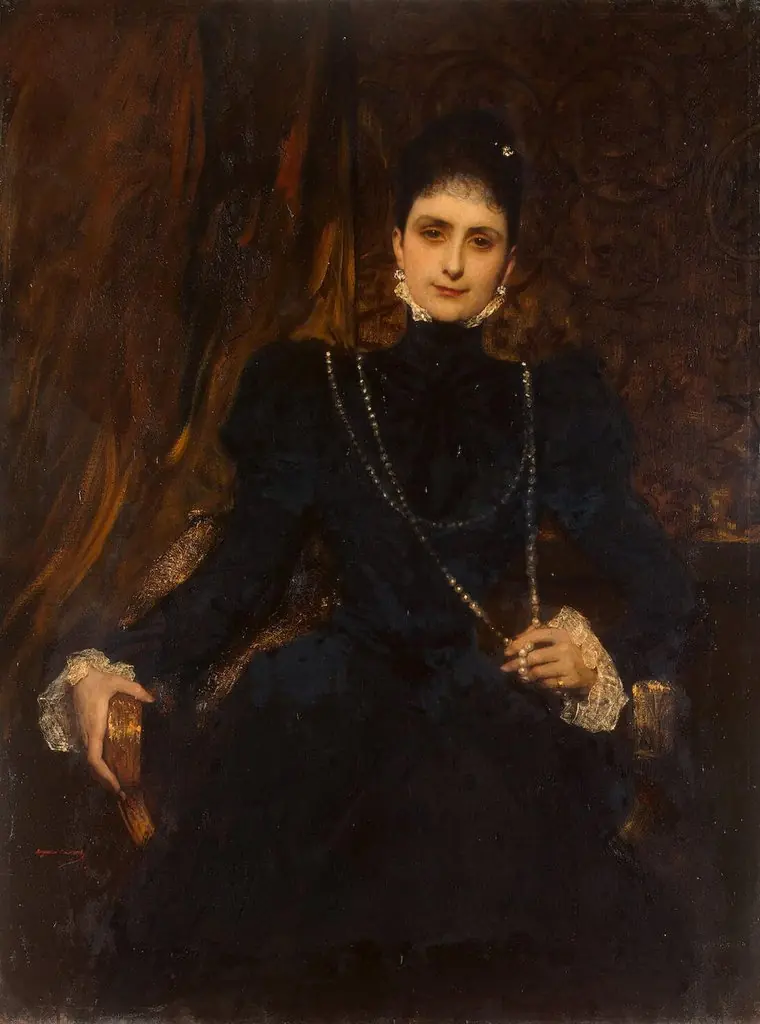 Portrait of Marina Derviz
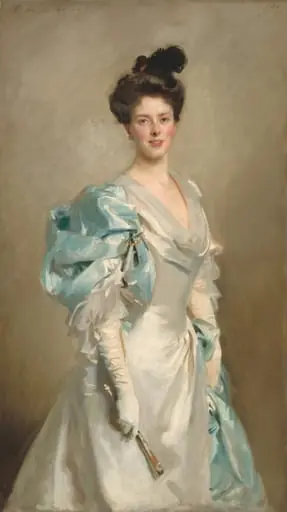 Mary Crowninshield Endicott Chamberlain (Mrs. Joseph Chamberlain)
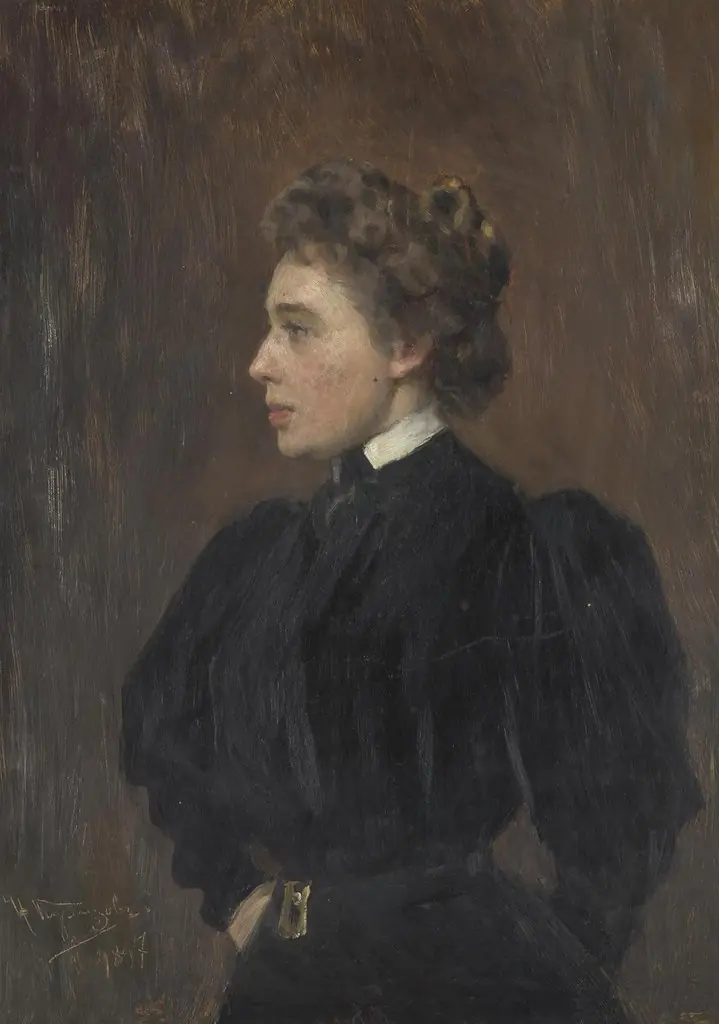 Aleksandra Botkina
 María Teresa Moret