Artwork
Schooner
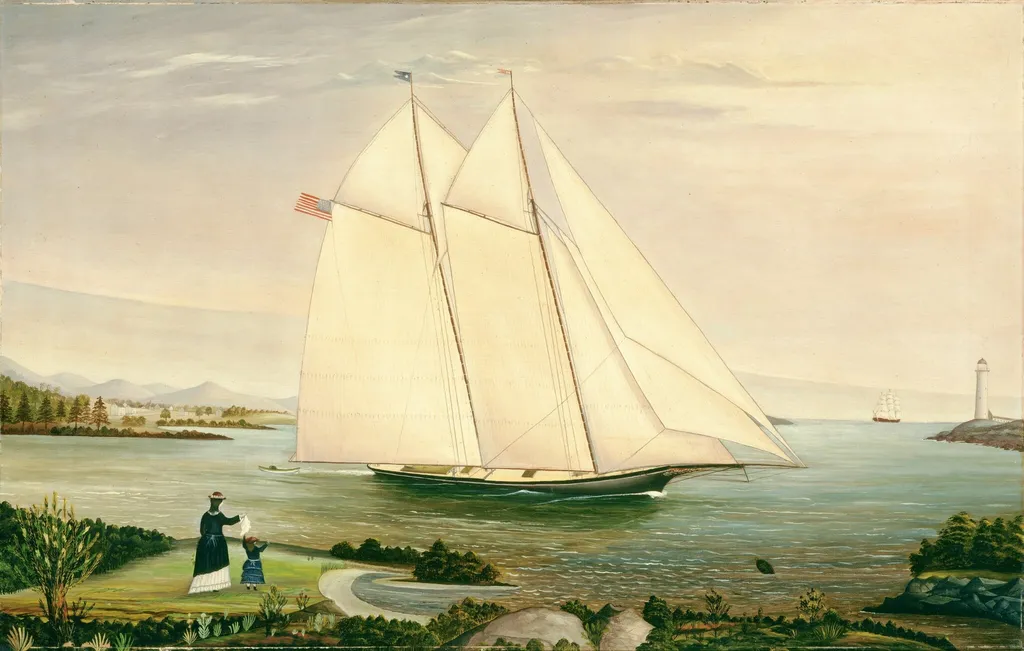
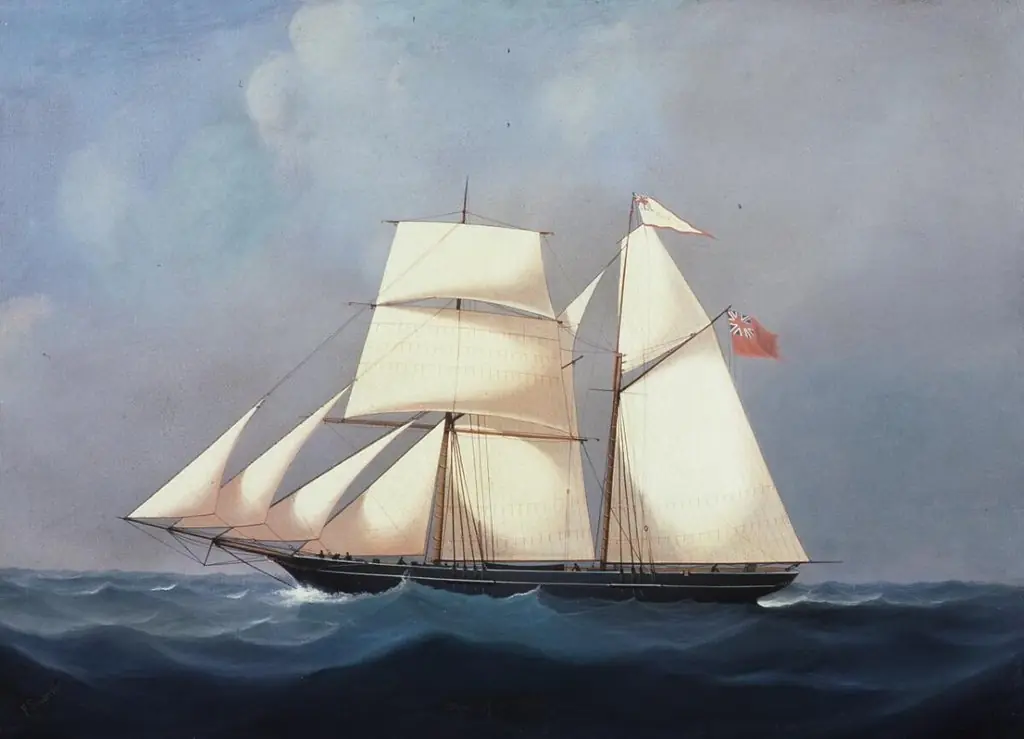
Schooner is an oil painting. It dates from 1850 and is held in the collection of the National Gallery of Art.
About this work
Notice how the wake ripples behind the boat, it tricks your eye into feeling the motion.
Paintings of ships in the 1800s weren’t just pretty pictures. They showed America’s growing power on the water. This one captures a sleek schooner cutting through calm waves. The white sails pop against the dark hull. The artist used thin, see-through glazes for the sky so light feels real.
Back then, schooners carried goods and news up the coast. The flags hint at trade routes. Notice how the wake ripples behind the boat, it tricks your eye into feeling the motion.
Try this at home: stand close to a screen and blur your eyes. The colors blur like the artist’s glazes did. See it next to other American 19th Century works.
Subject & Meaning
Schooner is a marine subject painting whose depicted subject is a boat. The work belongs to a tradition of 19th-century American maritime imagery, presenting the schooner, a multi-masted sailing vessel commonly used for coastal trade and fishing, as its central focus. The painting offers a straightforward visual record of the vessel itself rather than a documented allegorical or symbolic program, with its meaning rooted in the maritime culture of mid-19th-century America.
The horizontal canvas format (91.4 cm wide by 58.7 cm tall) suits the broad profile of a sailing ship on the water, a compositional choice typical of vessel portraits of the period.
Technique & Style
The work is an oil painting on canvas, created in 1850 by an American artist of the 19th century. It employs oil paint applied to a stretched canvas support, a common medium for easel works of the period.
Measuring 58.7 cm in height and 91.4 cm in width, the composition depicts a solitary boat, emphasizing the vessel’s rigging and the surrounding sky. The horizontal format and careful rendering of marine detail reflect the conventions of American maritime painting in the mid‑nineteenth century.
History & Provenance
The painting Schooner, an oil on canvas work attributed to an American 19th‑century artist, was created in 1850 as recorded in its catalogue entry. It entered the collection of Lucy Galpin, known as Mrs. William S. Moorhead of Washington, D.C., who later gifted the piece to the National Gallery of Art in 1991. The work remains in the National Gallery of Art’s collection in Washington, D.C., where it is displayed as part of the museum’s American paintings holdings. Its dimensions measure 58.7 cm by 91.4 cm, consistent with the recorded size.
Overview
This oil on canvas painting, titled "Schooner," depicts a graceful sailing vessel navigating tranquil waters. The artwork highlights the schooner's streamlined form as it glides across the surface. The contrast between the bright white sails and the vessel's dark hull is prominent, capturing a moment of serene maritime activity.
The composition emphasizes the boat's elegant silhouette and its interaction with the calm sea, offering a focused view of the ship itself.
Artist & collection

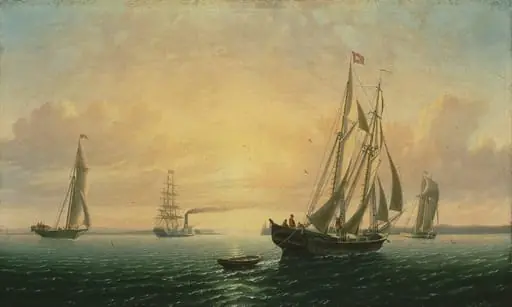 The Schooner Jane of Bath, Maine
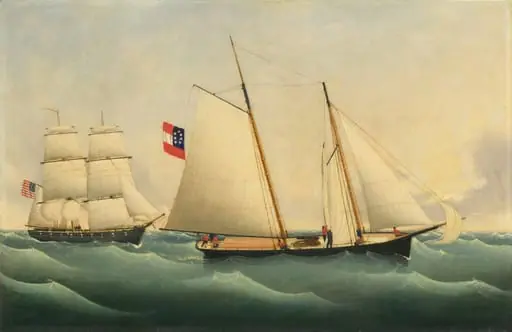 Capture of the "Savannah" by the "U.S.S. Perry"
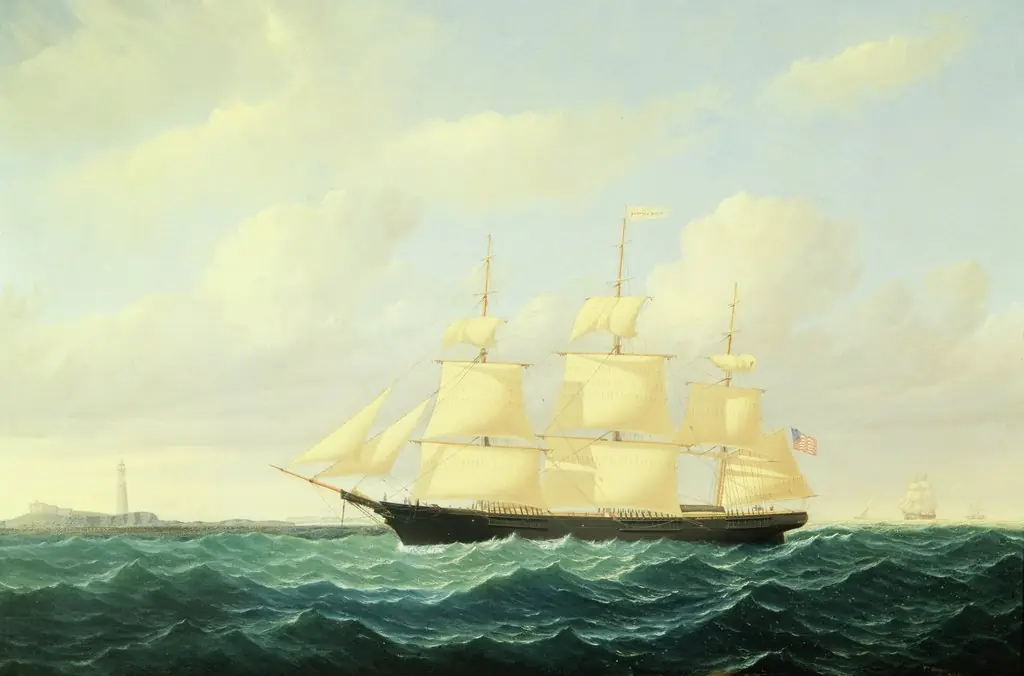 Dashing Wave Clipper Ship off Boston Light
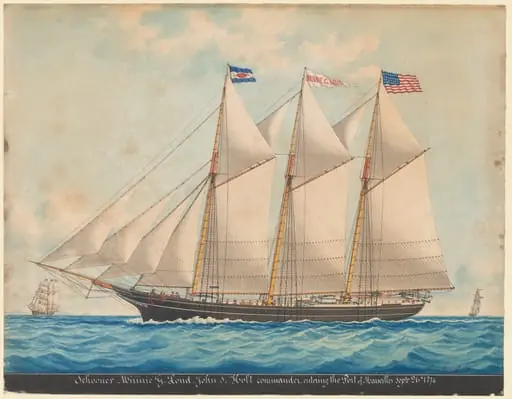 The Tern Schooner "Minnie G. Loud"
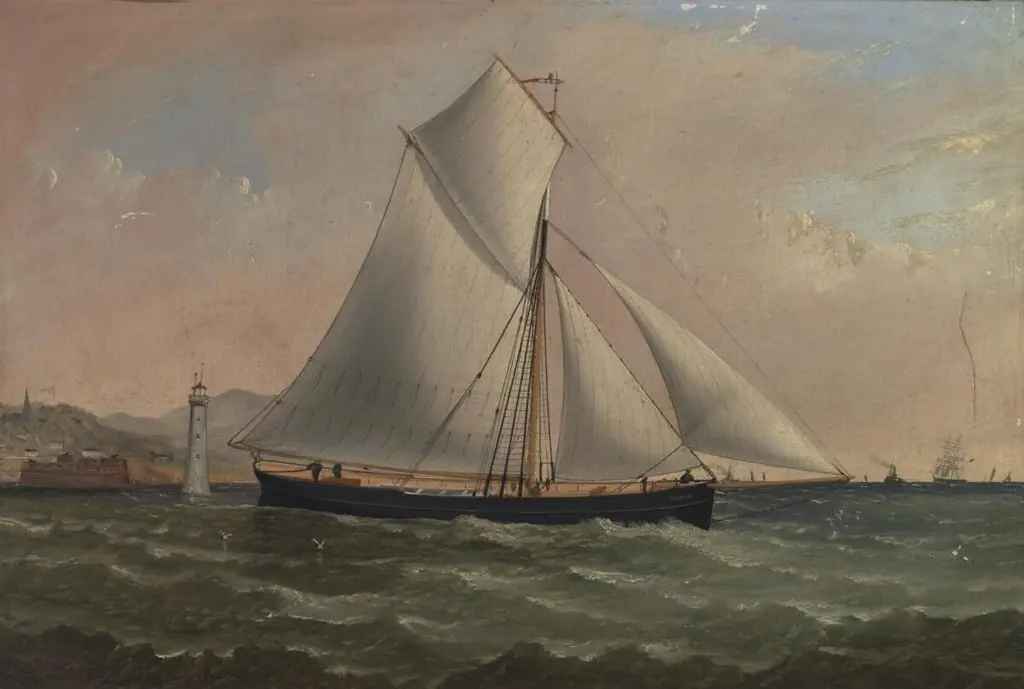 Pilgrim
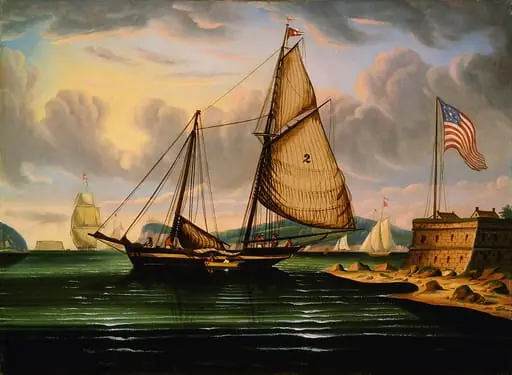 New York Harbor with Pilot Boat "George Washington"
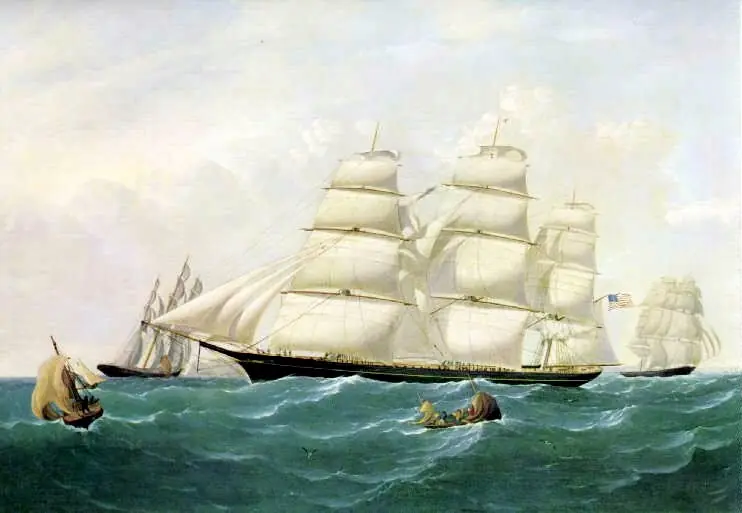 Clipper Ship HURRICANE in the English Channel
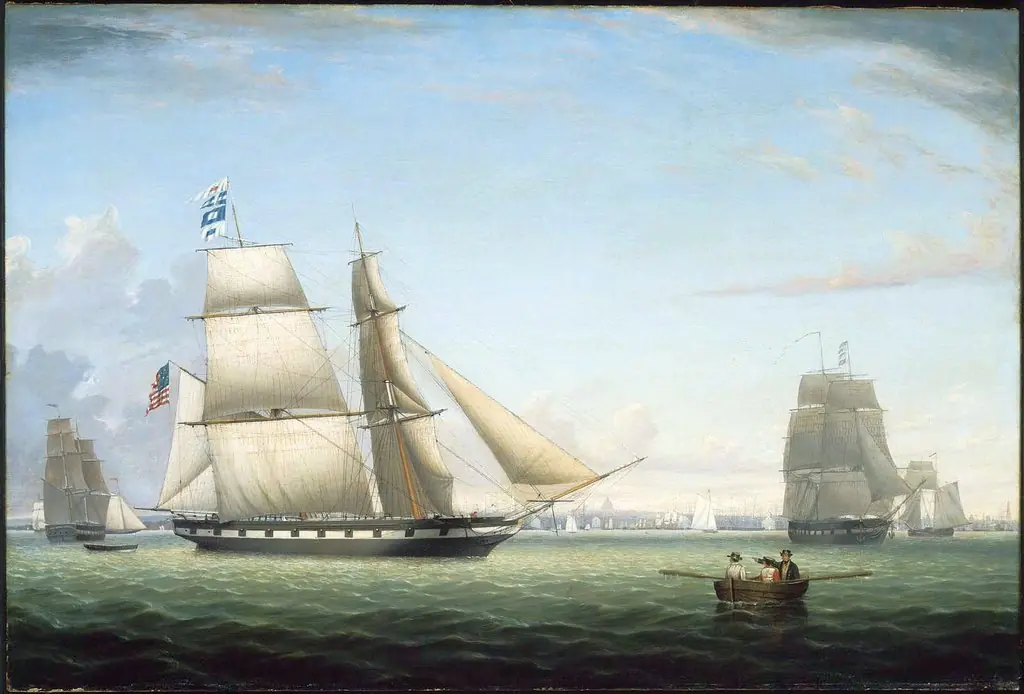 Brig "Antelope" in Boston Harbor
 Bell of Plymouth