Artwork
The Schooner Jane of Bath, Maine
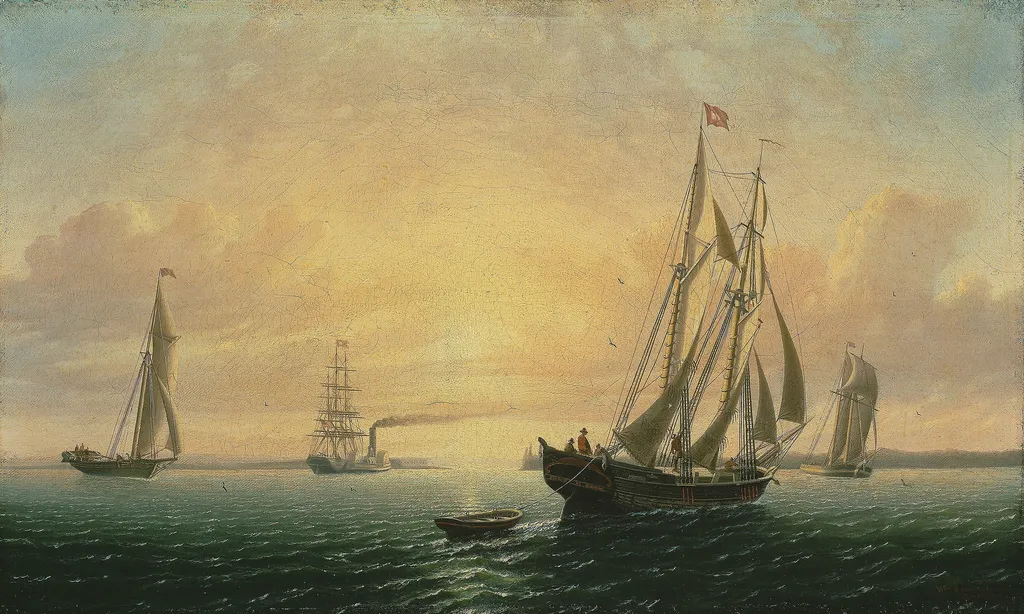
The Schooner Jane of Bath, Maine is an oil painting by the American Folk Art artist William Bradford. It dates from 1857 and is held in the collection of the Art Institute of Chicago.
About this work
Overview
The work depicts a tranquil maritime scene featuring the titular schooner and several other vessels under the warm glow of a low sun.
The Schooner Jane of Bath, Maine is an 1857 oil on canvas painting by the American artist William Bradford. The work depicts a tranquil maritime scene featuring the titular schooner and several other vessels under the warm glow of a low sun. Signed and inscribed lower right as painted in Fairhaven in 1857, the canvas measures 30.8 by 51.1 cm. It is held in the collection of the Art Institute of Chicago, where it carries the accession number 1960.826.
Subject & Meaning
The composition centers on the large schooner Jane, its dark hull cutting through green water with sails fully unfurled and a red flag at the masthead. Several small figures occupy the deck, and a tethered rowboat bobs nearby. To the left, a sailing vessel with a single visible sail moves across the water, while a steamship with twin smokestacks emitting dark smoke occupies the middle distance, and a fourth sailboat appears on the far right. The scene is bathed in the warm yellow, peach, and pale blue tones of a low sun sitting on the horizon, casting a golden path across gentle swells. The depiction of Bath, Maine, a major nineteenth-century American shipbuilding center, connects the work to the commercial and cultural heritage of the era's maritime commerce.
Technique & Style
Bradford employed oil paint on canvas to achieve a smooth, detailed finish with precise rendering of the intricate rigging and atmospheric effects. The paint surface displays fine craquelure throughout. Stylistically, the work aligns with Romanticism and the marina genre, emphasizing natural beauty and emotional depth. Bradford treated the vessels with the careful observation of a portraitist, capturing the precise geometry of the rigging and how a hull sits in relation to the horizon. Influenced by the luminism spreading through American landscape painting, he achieved a distinct stillness, capturing the cool northern light and the quiet dignity of working sail.
History & Provenance
The painting was created in 1857 in Fairhaven, as indicated by the artist's inscription. It later entered the collection of the Art Institute of Chicago as a gift from Dr. John J. Ireland, receiving the reference number 1960.826. The work has been included in several exhibitions, notably the traveling exhibition Nineteenth-Century American Paintings, a Collection of the Art Institute of Chicago, which visited the Illinois State Museum in Springfield from March 5 to April 24, 1966, the Davenport Municipal Art Gallery in Iowa from May 19 to June 5, 1966, the Laura Musser Art Gallery and Museum in Muscatine, Iowa, from July 24 to October 2, 1966, and the Lakeview Center for the Arts and Sciences in Peoria, Illinois, from November 30, 1966, to January 8, 1967. It was also exhibited at the New Bedford Whaling Museum in Massachusetts from June 1 to October 26, 2003.
Context
Painted in 1857, this work represents an early stage in Bradford's career, prior to the celebrated Arctic expeditions that would later define his reputation. At this point, he was refining his eye for ships as living objects, attentive to the way rigging catches wind. Trained in the realist tradition, he focused on maritime subjects at a time when steam was beginning to displace sail. By treating working vessels as subjects worthy of the same careful observation traditionally reserved for portraiture, Bradford established his adeptness in maritime artistry and positioned himself within the broader American landscape and Romantic traditions of the mid-nineteenth century.
Legacy
The painting endures as a quiet masterwork of American maritime painting, valued as a study in light on water and the dignity of working sail. It serves as a visual document of American merchant maritime heritage and the sailing ship commerce that connected Bath, Maine, with international trade routes during the nineteenth century. By preserving the Jane in paint, Bradford captured a transitional moment in nautical history before the widespread displacement of sail by steam, cementing the artwork's cultural and historical significance.
Artist & collection

Artist
William Bradford (April 30, 1823 – April 25, 1892) was an American romanticist painter, photographer and explorer, originally from Fairhaven, Massachusetts, near New Bedford.


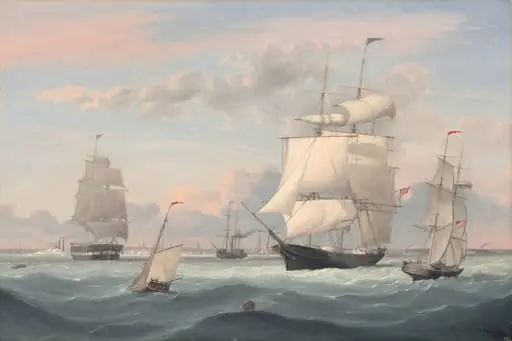 New York Harbor
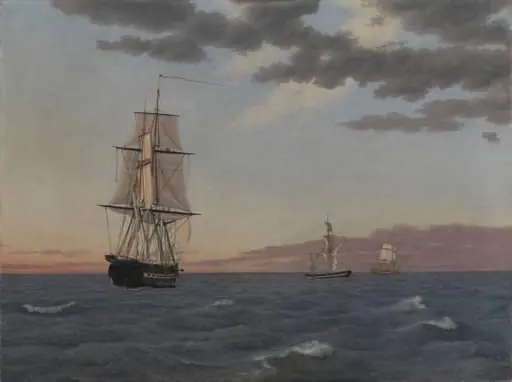 The Corvette "Galathea" Lying to in order to Send Help to the Brig "St Jean"
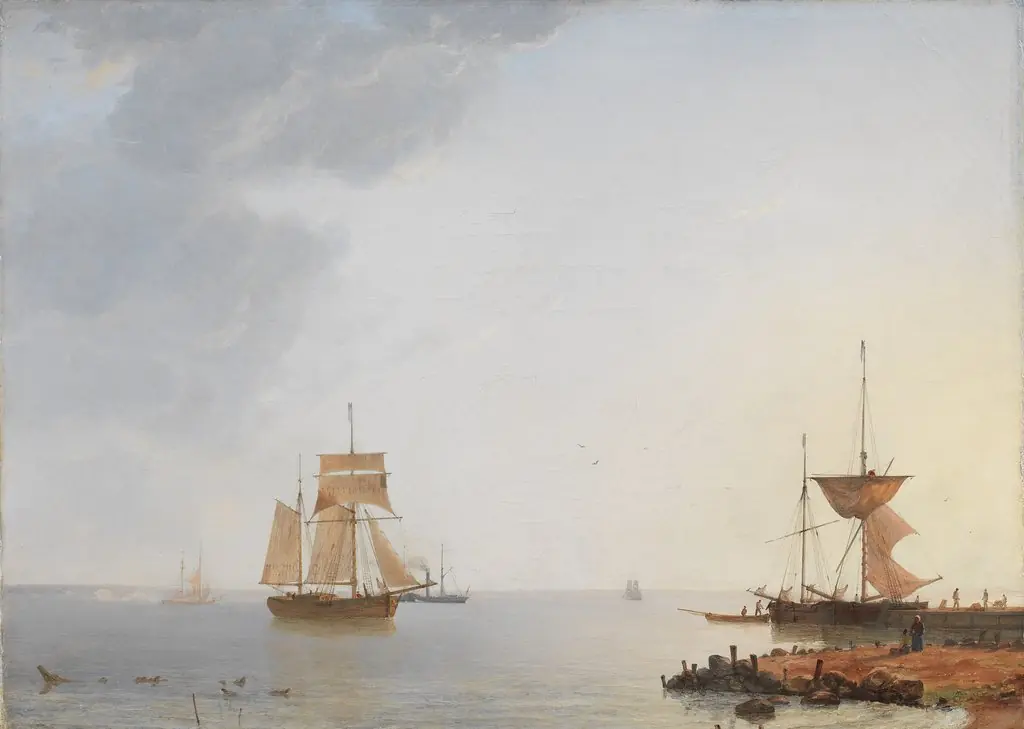 Ships Off the Coast of Zealand. Morning
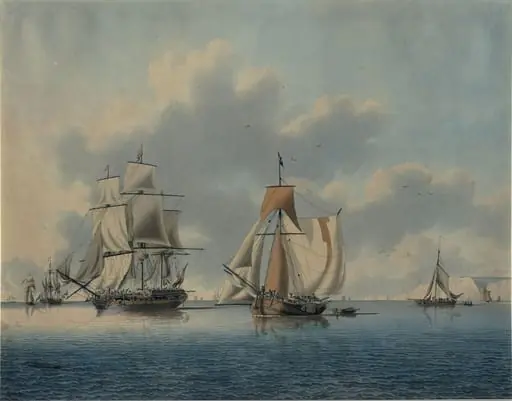 A frigate and Dutch fishing boats off the Isle of Wight
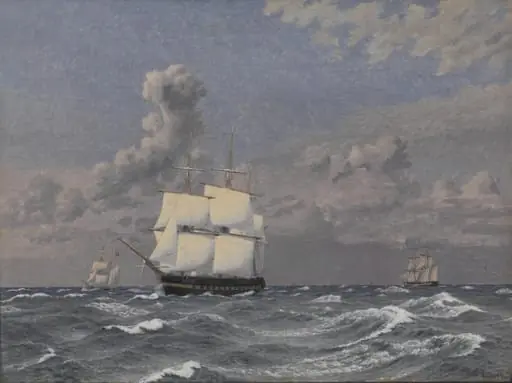 A Frigate and some other Ships Cruising
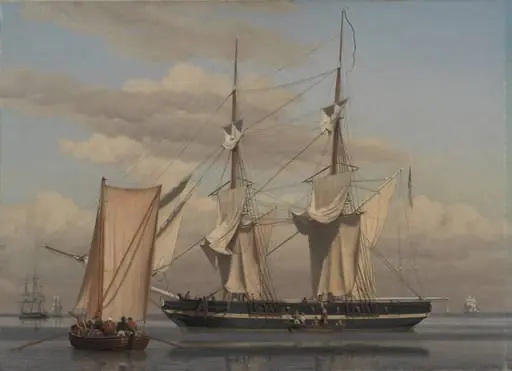 An American Naval Brig Lying at Anchor while Her Sails Are Drying
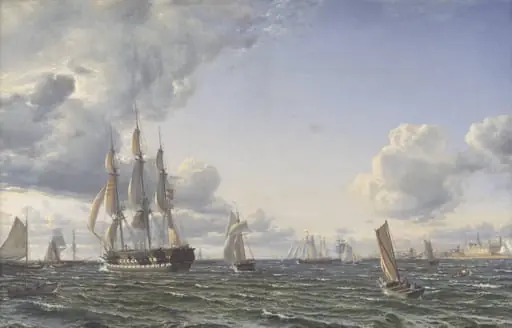 Linieskibet "Valdemar" krydser Sundet ind for en frisk bramsejlskuling
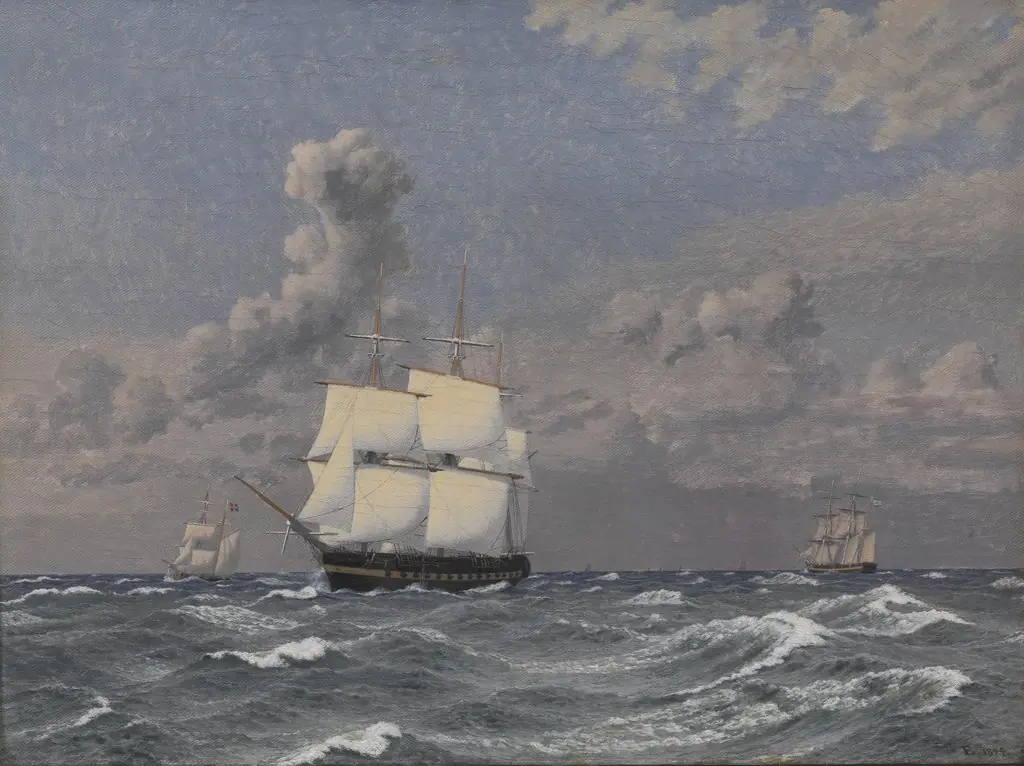 A Frigate and some other Ships Cruising
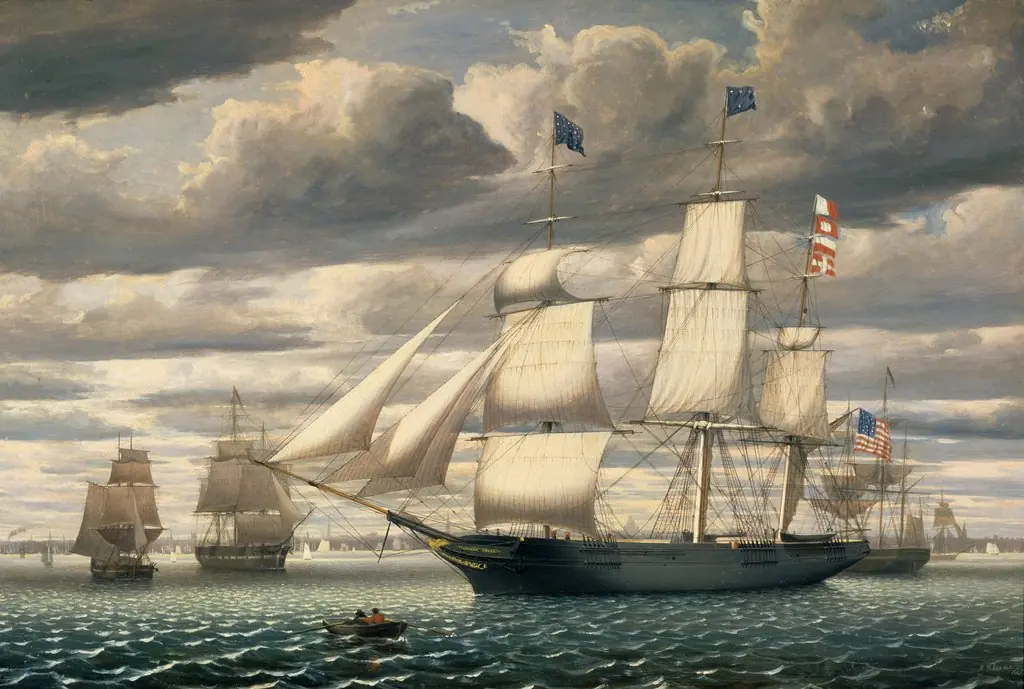 Ship Southern Cross in Boston Harbor, 1851
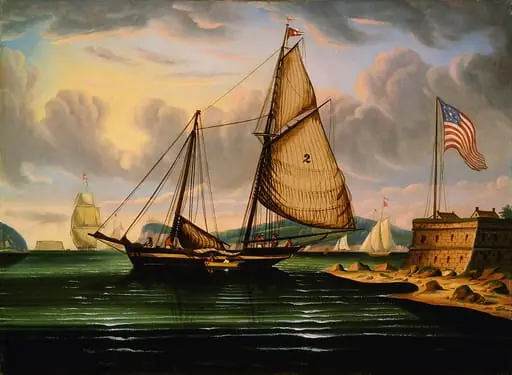 New York Harbor with Pilot Boat "George Washington"