Artwork
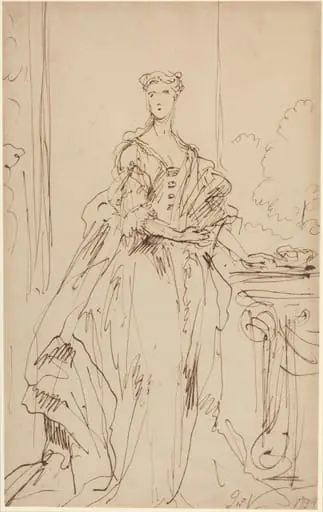
Portrait of a Lady
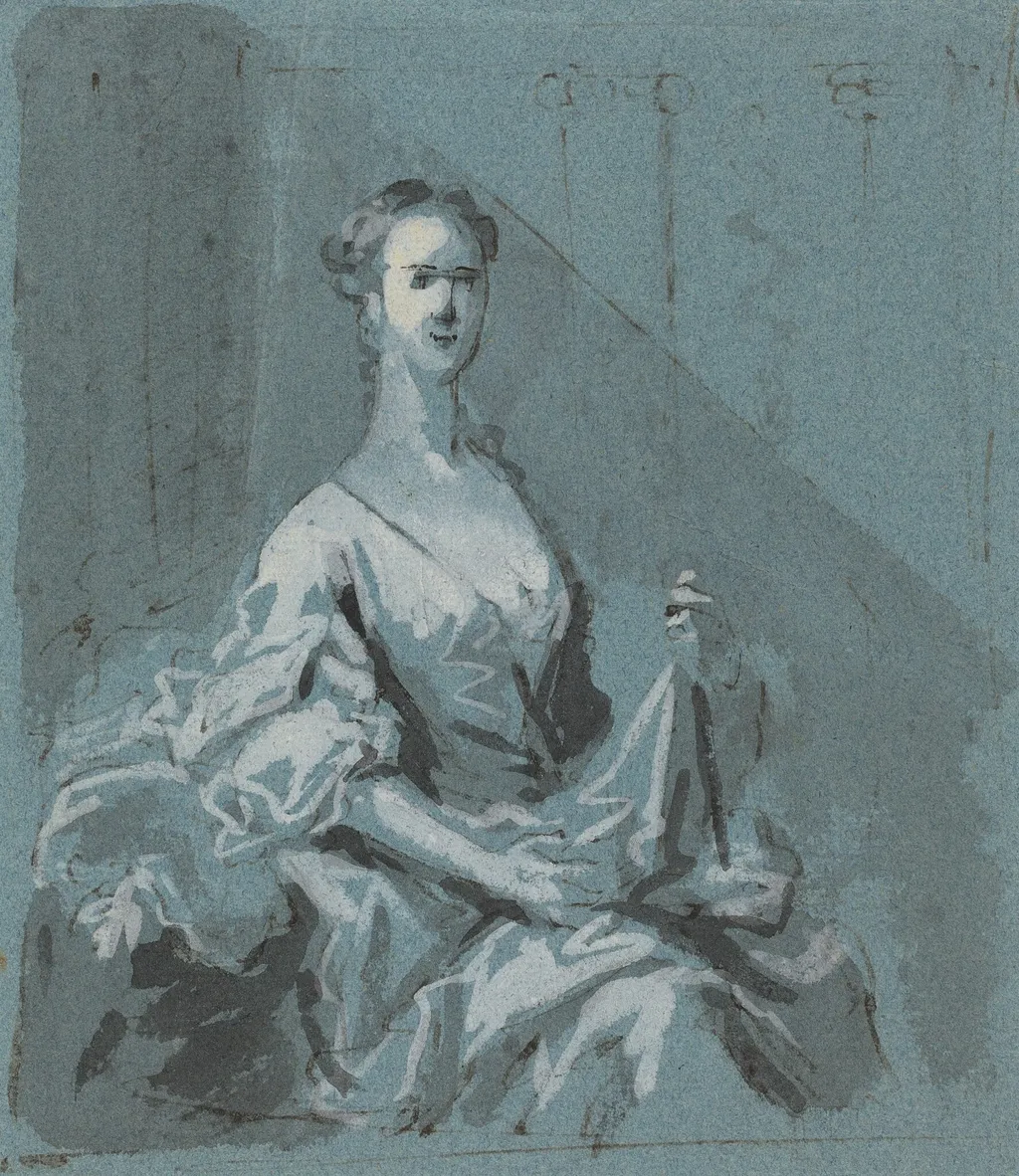
Portrait of a Lady is an ink drawing by the Baroque artist Jacopo Amigoni. It is held in the collection of the National Gallery of Art.
- Inscription
- Inscribed:lower left verso in graphite: T Hudsons 28/M; lower center verso in graphite: D.150 Jacopo Amigoni Mea[...] 1926.
About this work
Overview
) and is held in the collection of the National Gallery of Art in Washington, D.
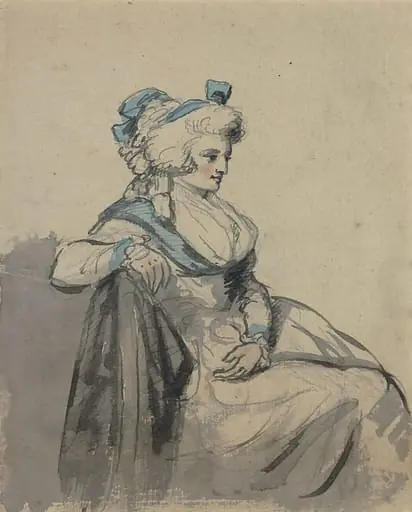
Portrait of a Lady is a drawing by the Venetian Rococo artist Jacopo Amigoni (1682-1752), executed in pen, brush, and black ink with gray wash and graphite on blue paper. The work measures 24.4 x 26.5 cm (9 5/8 x 10 7/16 in.) and is held in the collection of the National Gallery of Art in Washington, D.C., under accession number 1985.1.2. The sheet is dated to 1800 in the museum's corpus records, though this date falls after Amigoni's death in 1752 and likely reflects a cataloguing convention or later inscription rather than the moment of execution. The drawing represents an unidentified woman and exemplifies Amigoni's skill in informal portraiture, combining fluid brushwork with delicate ink handling to produce a work of preparatory character that nonetheless conveys aristocratic presence.
Subject & Meaning
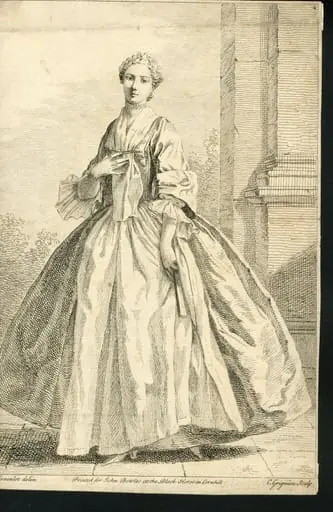
The sitter is an unidentified woman, presented in a seated pose turned slightly toward the viewer with her head facing forward. She wears a low-cut dress with voluminous sleeves and layered skirts, garments that signal upper-class status within the conventions of eighteenth-century European portraiture. Her left hand holds a fan, an accessory that carried associations of social refinement and performative femininity in Rococo culture, while her right hand rests in her lap. A dark veil or mantle drapes behind her head and shoulders, adding a note of dignity and perhaps suggesting modesty or mourning, though its precise significance remains open. The sitter's direct frontal gaze and informal posture create an impression of immediacy and psychological accessibility that contrasts with the more rigid conventions of formal state portraiture. The overall iconography emphasizes aristocratic grace and the cultivated leisure of the privileged class, themes central to Amigoni's portrait practice across his European career.
Technique & Style
The medium combines pen, brush, and black ink with gray wash and graphite on blue paper, a support that provides a unified cool tonality throughout the composition. The palette is restricted to blues, grays, and white, with dark brown or black ink outlines defining forms and creating spatial depth. Light falls from the left, illuminating the sitter's face, chest, and the folds of fabric, a consistent lighting scheme that models volume and directs attention toward the figure. The technique merges fluid brushwork with sketchy, visible strokes and areas of opaque white heightening applied over translucent washes, a layered approach that creates luminosity and textural variety. The overall finish is informal and preparatory, suggesting the sheet may have served as a study or modello rather than a final presentation piece. The ruled lines visible in the background indicate a drawn frame, perhaps indicating the artist's consideration of the work's eventual format or boundaries. This handling aligns with Amigoni's broader reputation for luminous color and fluid, elegant composition that helped shape the international Rococo aesthetic.
History & Provenance
The provenance of the drawing is documented through several distinguished collectors. It was owned by Dan Fellows Platt (1873-1938) of Englewood, New Jersey, whose collection mark (Lugt 750a) appears on the sheet. The work subsequently passed to Julius S. Held (1905-2002), the renowned art historian and specialist in Northern European and Venetian art. Held gifted the drawing to the National Gallery of Art in 1985. The verso bears two graphite inscriptions: at lower left, 'T Hudsons 28/M'; and at lower center, 'D.150 Jacopo Amigoni Mea[...] 1926,' the latter recording an attribution and dating that may correspond to its passage through the art market or a dealer's inventory. The National Gallery of Art acquired the work as a gift from Julius S. Held in 1985, assigning it accession number 1985.1.2.
Context
Jacopo Amigoni was born in Venice in 1682 and died in Madrid in 1752, spending his career working across Europe including periods in Venice, Munich, London, and Madrid. He was renowned throughout the continent for his portraits and allegorical scenes, occupying a significant position in the dissemination of Rococo style beyond its French origins. The National Gallery of Art drawing belongs to a broader corpus of Amigoni's graphic works, though it must be distinguished from other similarly titled works: the Metropolitan Museum of Art holds a Portrait of a Lady in black, white, and red chalk with pastel on brownish paper (1975.1.263), dated 1729-39, while auction records and private collections preserve additional oil paintings bearing comparable titles and attributions. The informal, preparatory character of the Washington sheet suggests it emerged from Amigoni's workshop practice, perhaps as a study for a more finished portrait or as an independent drawing intended for a collector's cabinet. Scholarly attention to Amigoni's drawings has historically lagged behind study of his paintings, though the graphic works offer essential evidence for understanding his working methods and the circulation of his compositions.
Legacy
The drawing's afterlife is inseparable from its distinguished provenance through American collections. Dan Fellows Platt was a significant early twentieth-century collector whose holdings, marked with his distinctive stamp, contributed to the formation of major American museum collections. Julius S. Held's ownership and subsequent gift to the National Gallery of Art ensured the work's permanent place in a public collection and reflects the scholarly interest in Amigoni's graphic oeuvre that emerged among specialist historians of Venetian art in the mid-twentieth century. The work now forms part of the National Gallery of Art's holdings of Italian drawings, accessible for study alongside related sheets by Amigoni and his contemporaries. Its presence in Washington contributes to the understanding of Amigoni's international reputation and the geographic range of his posthumous collection history, from Venetian workshops through European and American private hands to institutional preservation. The drawing remains a representative example of Amigoni's draftsmanship for scholars studying the material techniques and social functions of Rococo portraiture.
Own this work as a print
Artist & collection
Artist
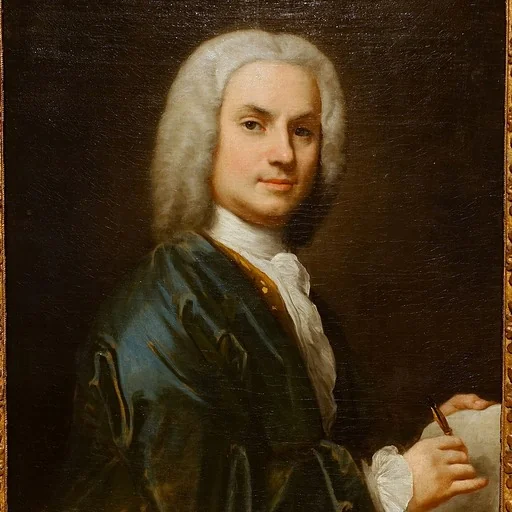
Jacopo Amigoni (born Giacomo Amiconi; 1682 – September 1752), was an Italian painter of the late-Baroque or Rococo period, who began his career in Venice, but traveled and was prolific throughout Europe, where his sumptuous portraits were…