Artwork
Flora and Zephyr
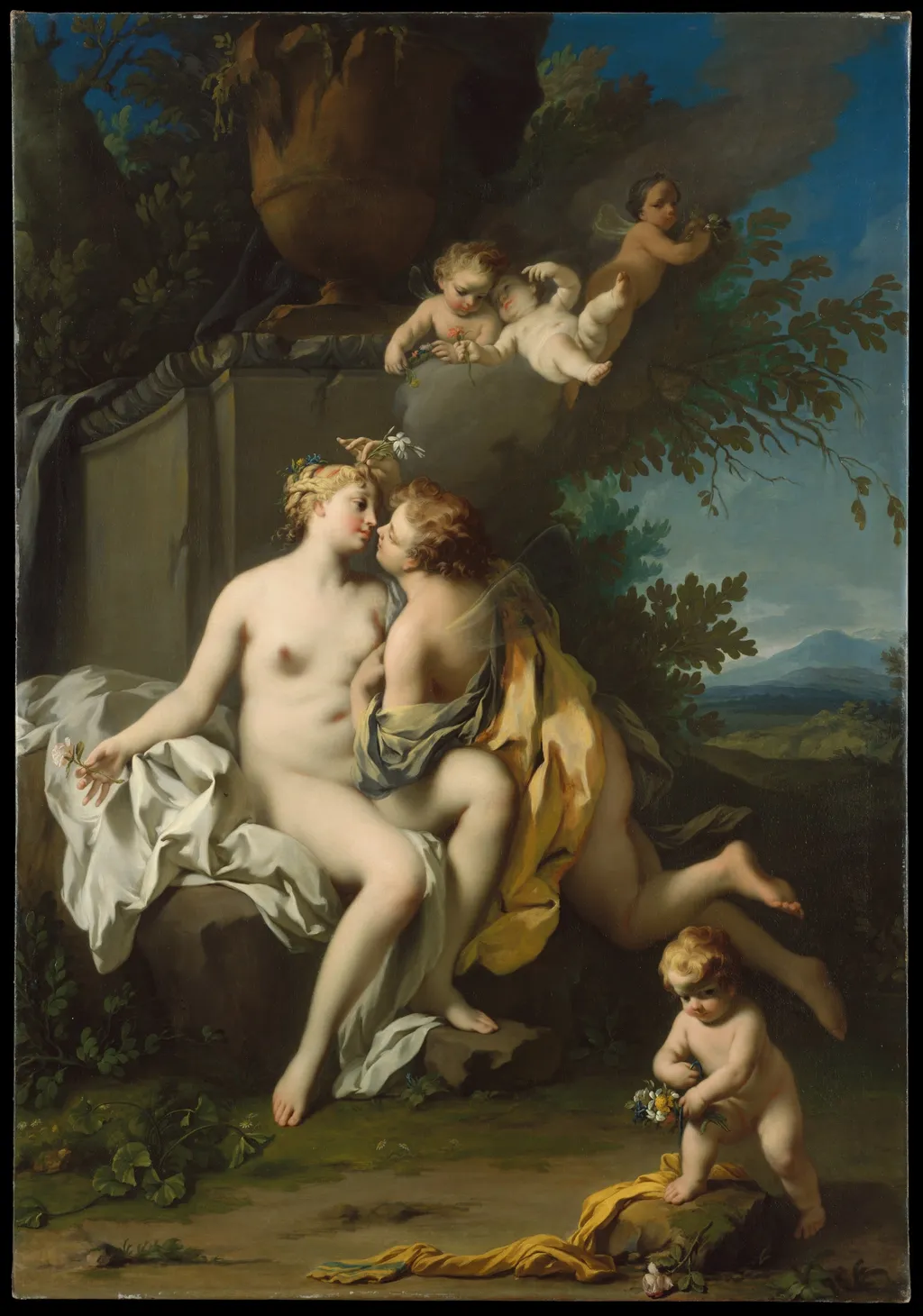
Flora and Zephyr is an oil painting by the Rococo painting artist Jacopo Amigoni. It dates from 1730 and is held in the collection of the Metropolitan Museum of Art.
About this work
Subject & Meaning
As a landscape painting, the work situates these figures in an idyllic outdoor environment, emphasizing the harmony between divine beings and the natural world.
The painting portrays the mythological figures Flora and Zephyrus accompanied by a putto and floral motifs within a landscape setting. Flora, identified as the goddess of flowers, and Zephyrus, the personification of the west wind, are central to the composition, while the putto and blossoms reinforce the association with springtime and natural renewal. As a landscape painting, the work situates these figures in an idyllic outdoor environment, emphasizing the harmony between divine beings and the natural world.
Technique & Style
Flora and Zephyr is executed in oil paint on canvas, a support consistent with Amigoni's practice for large-scale decorative compositions of the period. The work measures 213.4 by 147.3 cm, an upright format suited to its figural landscape arrangement. Its classification as a painting and its genre designation as a landscape situate the handling within the painterly tradition of Venetian-influenced eighteenth-century easel work, in which oil glazes are used to render both atmospheric landscape passages and the flesh tones of the depicted goddess and putto.
The medium of oil paint on canvas provides the smooth, blended surface needed for the soft transitions characteristic of the Rococo idiom associated with Amigoni's mature output.
History & Provenance
Flora and Zephyr, an oil-on-canvas landscape by Jacopo Amigoni, was created in 1730. The painting subsequently entered the holdings of the Metropolitan Museum of Art, where it remains part of the institution's collection. The sources do not record a prior ownership chain, commission history, or intermediate provenance prior to its accession at the Metropolitan Museum of Art, nor do they document specific circumstances surrounding its creation beyond the 1730 date.
Overview
Flora and Zephyr is an oil painting that captures a tender moment between two mythological figures amidst a lush natural setting. The composition centers on Flora, adorned with a floral crown, as she is embraced by Zephyr, the god of the west wind. The background features playful putti, distant mountains, and a serene sky, all rendered with a soft, tranquil color palette.
Own this work as a print
Artist & collection

Artist
Jacopo Amigoni (born Giacomo Amiconi; 1682 – September 1752), was an Italian painter of the late-Baroque or Rococo period, who began his career in Venice, but traveled and was prolific throughout Europe, where his sumptuous portraits were…

- Cupid and Psyche
 Cupid and Psyche
 A Couple Making Love in a Park Spied on by Children
 Venus and Adonis
 Jupiter and Antiope
 Diana and Callisto
 Jupiter, in the Guise of Diana, and Callisto
 Selene and Endymion
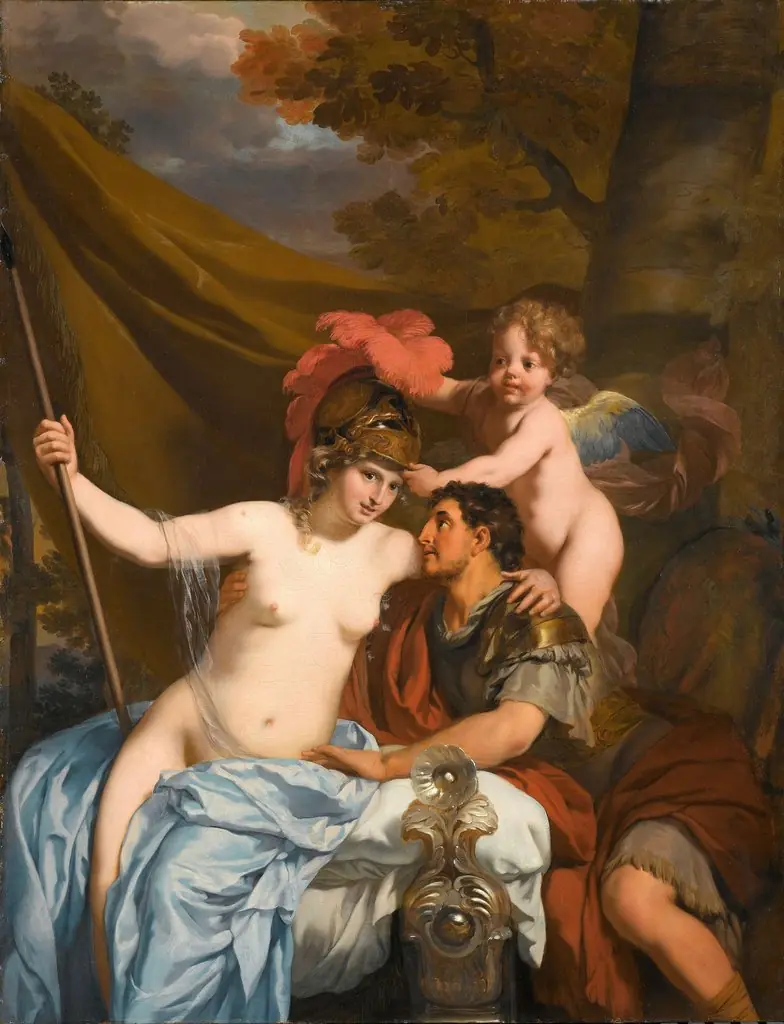 Odysseus and Calypso
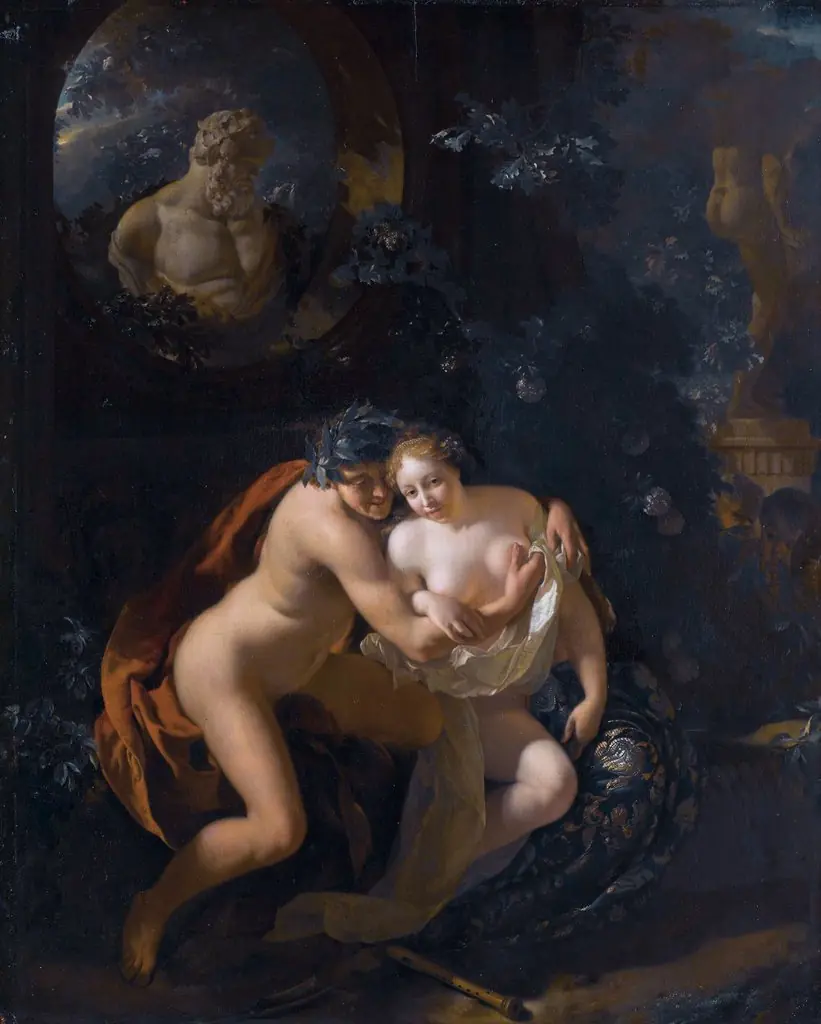 A Couple Making Love in a Park Spied on by Children
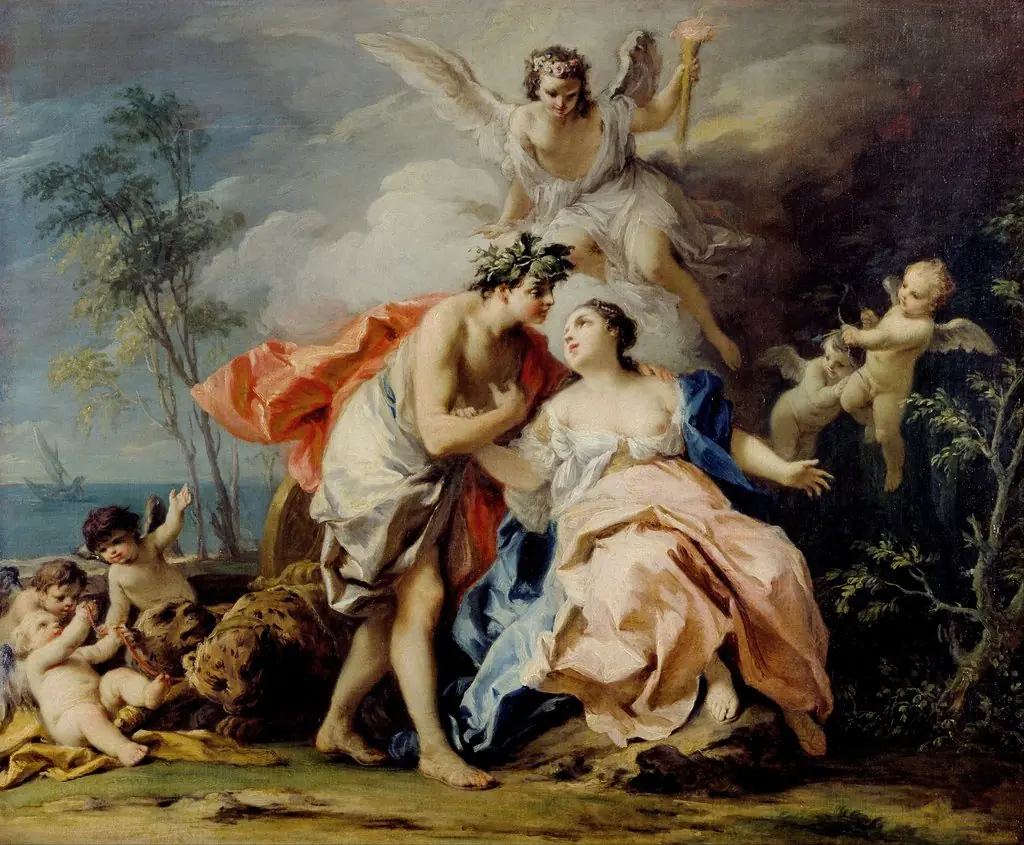 Bacchus and Ariadne
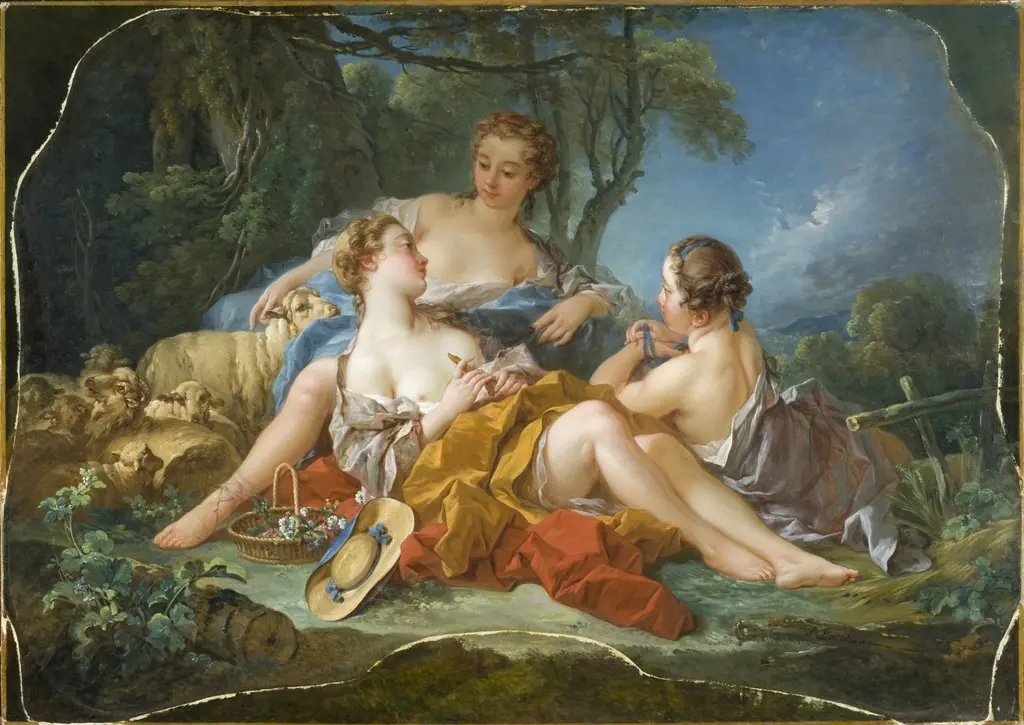 Les Confidences Pastorales