Artwork
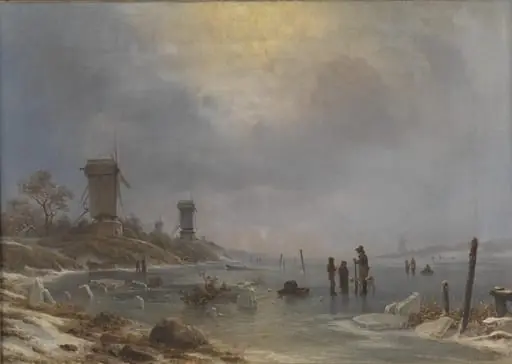
Shore of the Frozen Sea (Winter Landscape)
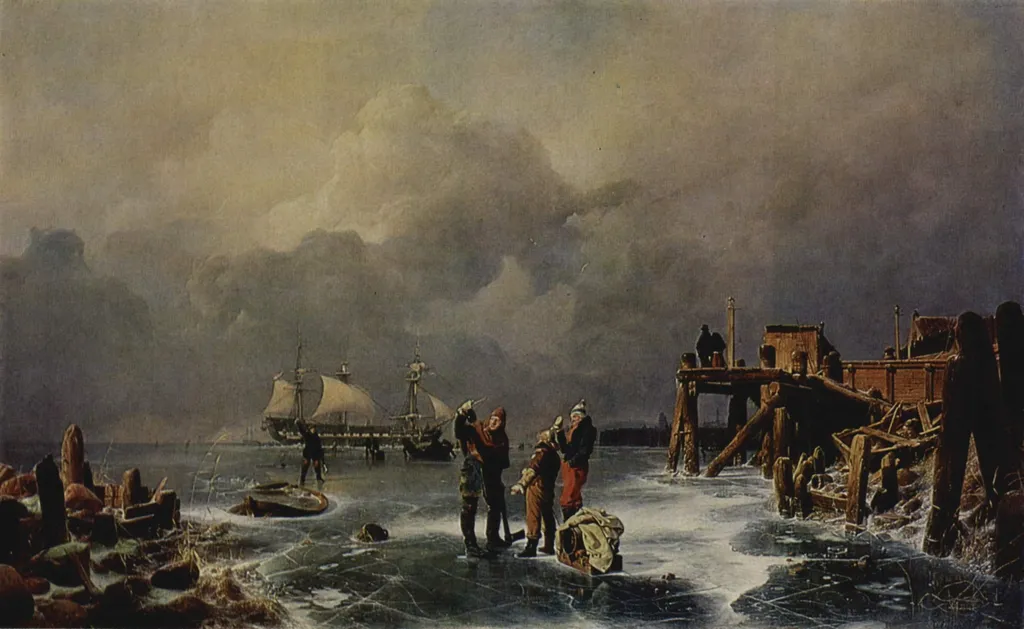
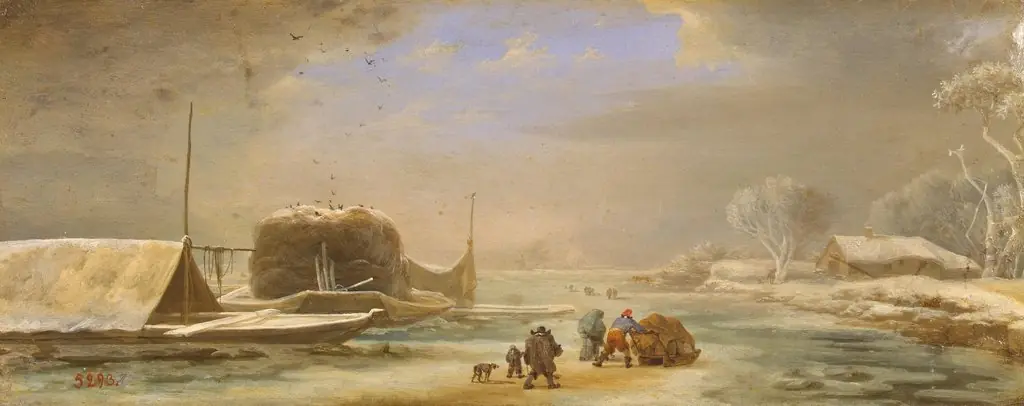
Shore of the Frozen Sea (Winter Landscape) is an oil painting by the German Romanticist artist Andreas Achenbach. It dates from 1839 and is held in the collection of the Hermitage Museum.
About this work
Overview
The work is held in the collection of the Hermitage Museum in Saint Petersburg, where it is catalogued under inventory number ГЭ-6976.
Shore of the Frozen Sea (Winter Landscape) is an oil on canvas painting by the German artist Andreas Achenbach, completed in 1839. Measuring 138 by 225 centimeters, it is one of the most significant early works by an artist who would become a foundational figure of the Düsseldorf School and a leading exponent of German Romantic landscape painting. The work is held in the collection of the Hermitage Museum in Saint Petersburg, where it is catalogued under inventory number ГЭ-6976. Painted when Achenbach was just twenty-four years old, the canvas already demonstrates the technical sophistication and dramatic atmospheric effects that would define his career, while its ambitious scale and subject matter signal the young artist's emergent ambition to capture nature's sublime power.
Subject & Meaning
The painting depicts a stark winter seascape along a frozen shoreline beneath a heavy, overcast sky. In the foreground, a cluster of figures bundled in thick clothing suggests both activity and vulnerability against the elements; one individual appears engaged in labor or repair while others observe with quiet stoicism. Their small scale within the vast frozen landscape underscores humanity's precarious relationship with nature's power. Further out on the ice, two sailing vessels with skeletal masts rise from the frozen surface, appearing stranded or awaiting thaw, while to the right a rudimentary wooden structure built on stilts offers fragile shelter. The composition's low horizon allows the brooding sky to dominate, creating an atmosphere of isolation and hardship. The restrained palette of grays, blues, and whites captures the cold reflection of light off ice and snow. Beyond its immediate dramatic impact, the painting engages with Romantic-era preoccupations with the sublime, human endurance, and the fragility of existence, while more recent readings have explored underlying social dimensions including labor, resource access, and the human costs of commerce in hostile environments.
Technique & Style
Achenbach executed the work in oil on canvas, employing techniques characteristic of the Düsseldorf School's approach to landscape painting. The surface shows meticulous attention to textural detail, particularly in the rendering of ice formations where cracks and fissures are visible, hinting at instability beneath the frozen surface. The artist's handling of paint creates atmospheric depth through layered applications that capture the nuanced reflection of light across snow and ice. The subdued, muted color palette, dominated by cool tones with subtle earth accents, achieves its effects through controlled tonal relationships rather than chromatic intensity. This method aligns with the Düsseldorf School's preference for atmospheric depth and narrative resonance over high-keyed color. The brushwork varies across the canvas, from precise detailing in the foreground ice and figures to broader, more atmospheric treatment in the sky, demonstrating Achenbach's early mastery of scale and focus within a unified pictorial field. The overall effect conveys what contemporaries and later critics recognized as a distinctive ability to evoke the physical sensation of cold and the emotional weight of winter desolation.
History & Provenance
The painting was created in 1839, early in Achenbach's long career. Its provenance and acquisition history are not fully documented in the available sources, though it is now firmly established in the collection of the Hermitage Museum in Saint Petersburg. The work entered the museum's holdings as inventory number ГЭ-6976, under the title Frozen Sea Shore. No specific exhibition history is recorded in the provided sources, though the painting's presence in one of's major encyclopedic museums has ensured its visibility in the broader context of European Romantic painting. The canvas has survived in good condition, allowing modern viewers to appreciate its technical qualities and atmospheric effects as originally intended.
Context
Andreas Achenbach was born in Kassel in 1815 and trained at the Academy of Fine Arts in Düsseldorf, where he became a central figure in what would be recognized as the Düsseldorf School of painting. This milieu emphasized finely detailed landscapes that often carried narrative or allegorical dimensions, and Achenbach emerged as one of its most accomplished practitioners in the genre of marine and coastal painting. Shore of the Frozen Sea belongs to a period when German Romantic landscape painting was flourishing, with artists seeking to capture the emotional and sublime aspects of nature. While Achenbach's approach has been distinguished from that of Caspar David Friedrich, his contemporary, by a greater emphasis on naturalistic detail and atmospheric observation rather than mystical symbolism, both artists shared an investment in nature as a site of profound human significance. The painting's date of 1839 places it within a decade when Achenbach was establishing his reputation and developing the marine subjects that would become his signature. Critical reception has consistently noted the work's power to evoke emotional response through its depiction of hostile nature, and its place in scholarship reflects broader interest in how Romantic landscape painting negotiated between documentation and drama, observation and imagination.
Legacy
Shore of the Frozen Sea occupies an important position in Achenbach's oeuvre as an early statement of the themes and techniques that would characterize his subsequent career. The painting demonstrates the young artist's capacity for large-scale composition and his emerging mastery of the winter marine subject, a genre in which he would produce numerous significant works over the following decades. Its survival and continued display at the Hermitage Museum has preserved it as an accessible example of German Romantic landscape painting for international audiences. The work has attracted sustained critical attention for its atmospheric effects and its engagement with the sublime, and more recent scholarly and curatorial interest has explored its potential to open discussions about labor, environment, and social structure within Romantic landscape representation. As an object of study, it offers insight into the formation of Achenbach's artistic identity before his full maturity, while its technical accomplishment confirms the precocity that allowed him to become one of the most successful German painters of the nineteenth century. The painting endures as a significant document of the Düsseldorf School's aesthetic priorities and of the broader European Romantic engagement with nature's power and human vulnerability.
Artist & collection
Artist
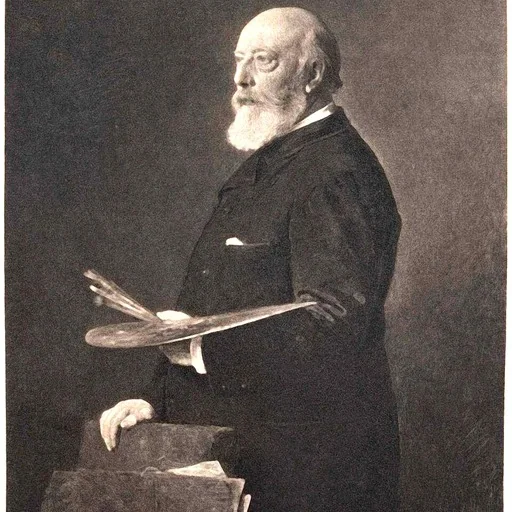
Andreas Achenbach (29 September 1815 – 1 April 1910) was a German landscape and seascape painter in the Romantic style.