Artwork
Ascension of Christ with the Hetoimasia
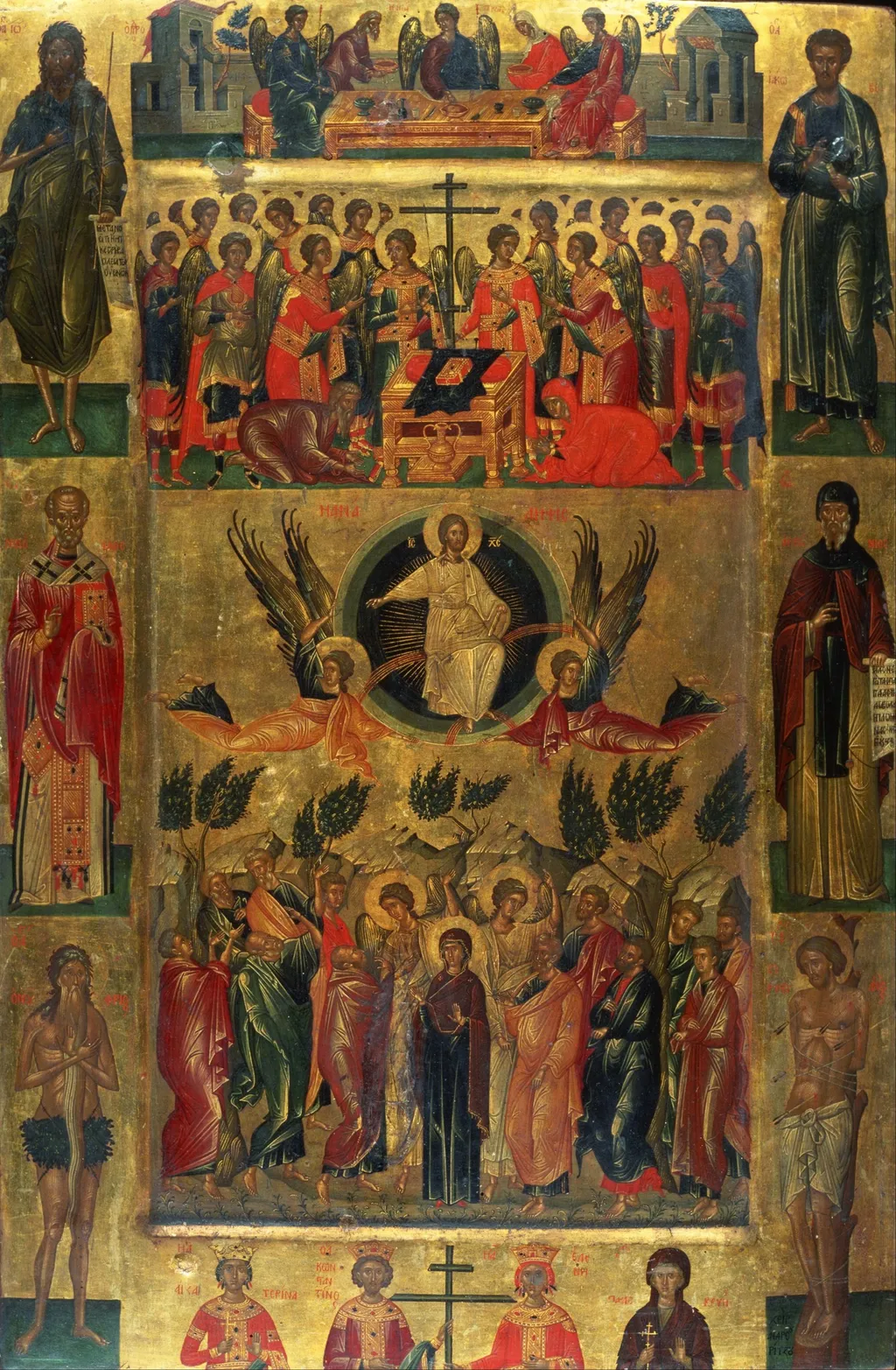
Ascension of Christ with the Hetoimasia is a tempera painting by the Byzantine icon painting artist Andreas Ritzos. It dates from 1450 and is held in the collection of the National Museum of Western Art.
About this work
Subject & Meaning
The lower zone presents the Divine Liturgy, with Mary and additional saints receiving communion, reinforcing themes of intercession and eschatological hope.
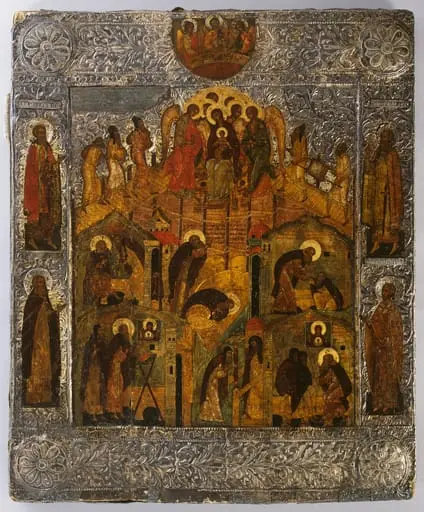
This panel depicts the Ascension of Christ in the upper zone, where Christ appears above a mountainous landscape amid clouds, flanked by angels and the twelve apostles gathered below. Beneath, the Hetoimasia, the empty throne prepared for the Second Coming, is shown centrally, flanked by standing figures of saints and hierarchs, including John the Baptist, Saint James the Elder, Nicholas, Anthony the Great, Onuphrius, Sebastian, Catherine, Constantine and Helena, Paraskevi, and Anne with Joseph, arranged symmetrically around the throne. The lower zone presents the Divine Liturgy, with Mary and additional saints receiving communion, reinforcing themes of intercession and eschatological hope.
The composition integrates the Ascension’s promise of Christ’s return with the Hetoimasia’s symbol of judgment and preparation, while the surrounding saints represent the heavenly and earthly church, mediating between the temporal and the divine.
Technique & Style
The work is executed in egg tempera on a wooden panel, with extensive use of gold leaf applied in the background and in the nimbi of the figures, following Byzantine conventions of the period.
Handling is typical of Cretan School practice: fine, layered brushwork in tempera for flesh and drapery, with delicate hatching to model volume; gold leaf is burnished and tooled to create striated patterns that articulate folds and halos. The composition arranges the ascending Christ above a tiered landscape, framed by a mandorla of radiant gold, while the apostles below are grouped symmetrically in attitudes of astonishment and prayer.
No condition details are provided in the sources; the panel is recorded at 71 cm in height and 47.5 cm in width for the primary scene, with a secondary panel measuring 28 cm by 18.7 cm, suggesting a diptych or a work with appended sections.
History & Provenance
Andreas Ritzos created the tempera panel painting Ascension of Christ with the Hetoimasia in 1450. Executed on a wooden support incorporating gold leaf, the work belongs to the Cretan School movement and depicts religious subjects including the Ascension of Jesus. The painting is currently held in the collection of the National Museum of Western Art in Tokyo.
Overview
Created circa 1450 by the Cretan iconographer Andreas Ritzos, this tempera panel presents a complex religious tableau that combines the Ascension of Christ with the symbolic Hetoimasia, or prepared throne. The work exemplifies the Cretan School’s adherence to the Byzantine visual language, employing a gold ground and vivid pigments to convey sacred narrative.
Context
The inclusion of imperial and monastic saints reflects the 15th‑century Byzantine practice of linking theological themes with contemporary political authority. By portraying Constantine alongside ascendant Christ, the work underscores the perceived continuity between the founding emperor’s Christian legacy and the divine narrative of salvation.
Own this work as a print
Artist & collection
Artist
Andreas Ritzos (Greek: Ανδρέας Ρίτζος; 1421-1492; also spelled Rico, Ricio or Rizo) was a Greek icon painter from Crete.

- Synaxis of All Saints
 Untitled
 The Creation of the World
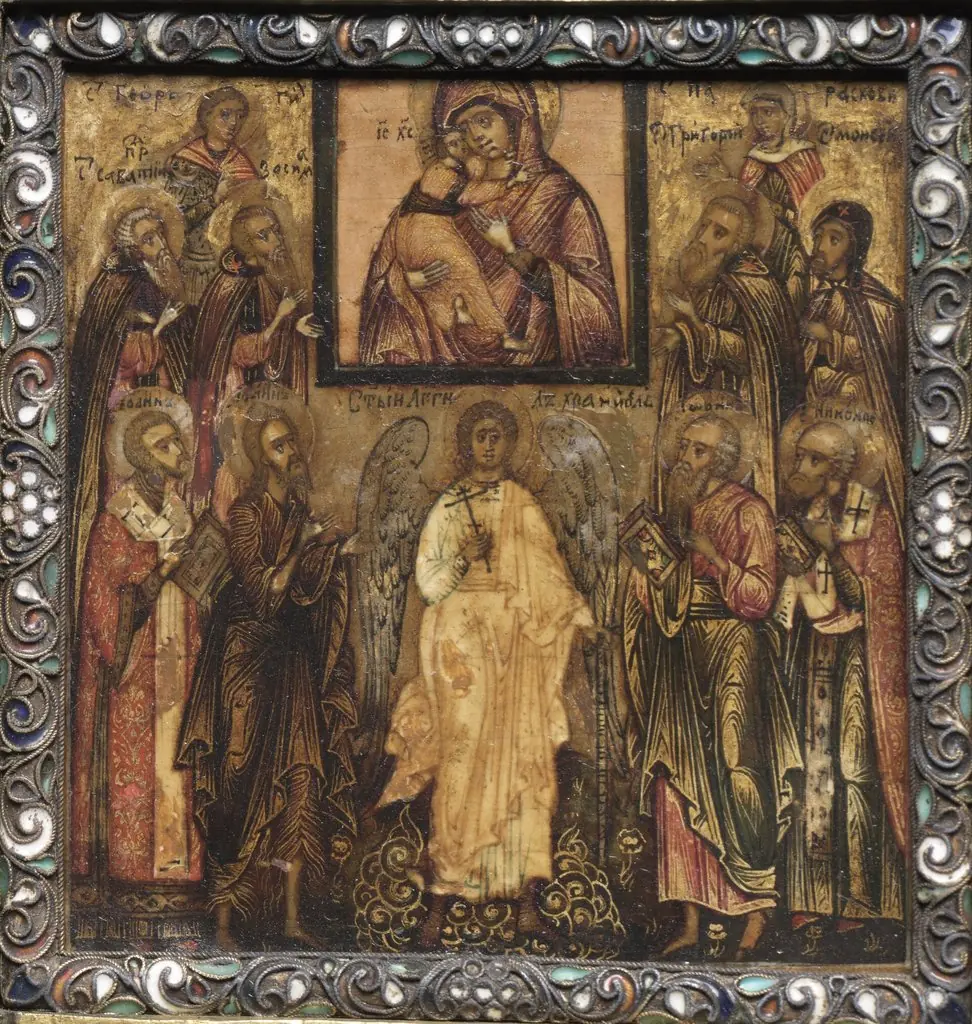 Portable Triptych Icon: Adoration of the Miracle-Working Icon of the Vladimir Mother of God
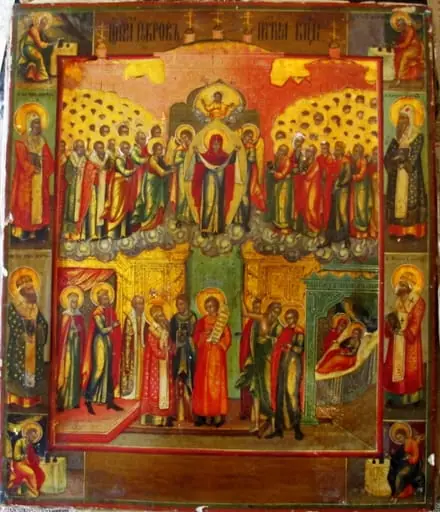 Acoperământul Maicii Domnului, înconjurată de cetele Sfinților Părinți și ale Prorocilor
 Pääsiäinen ja kirkkovuoden juhlia, venäläinen ikoni
 Portable Triptych Icon: Adoration of the Miracle-Working Icon of the Vladimir Mother of God
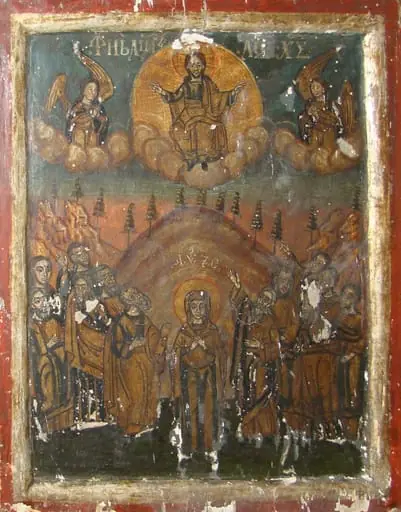 Înălțarea Domnului
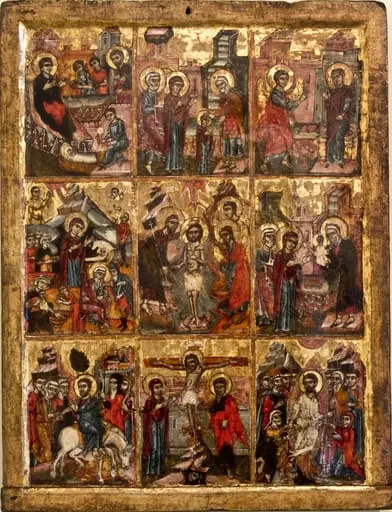 Scene din viața lui Iisus și a Maicii Domnului
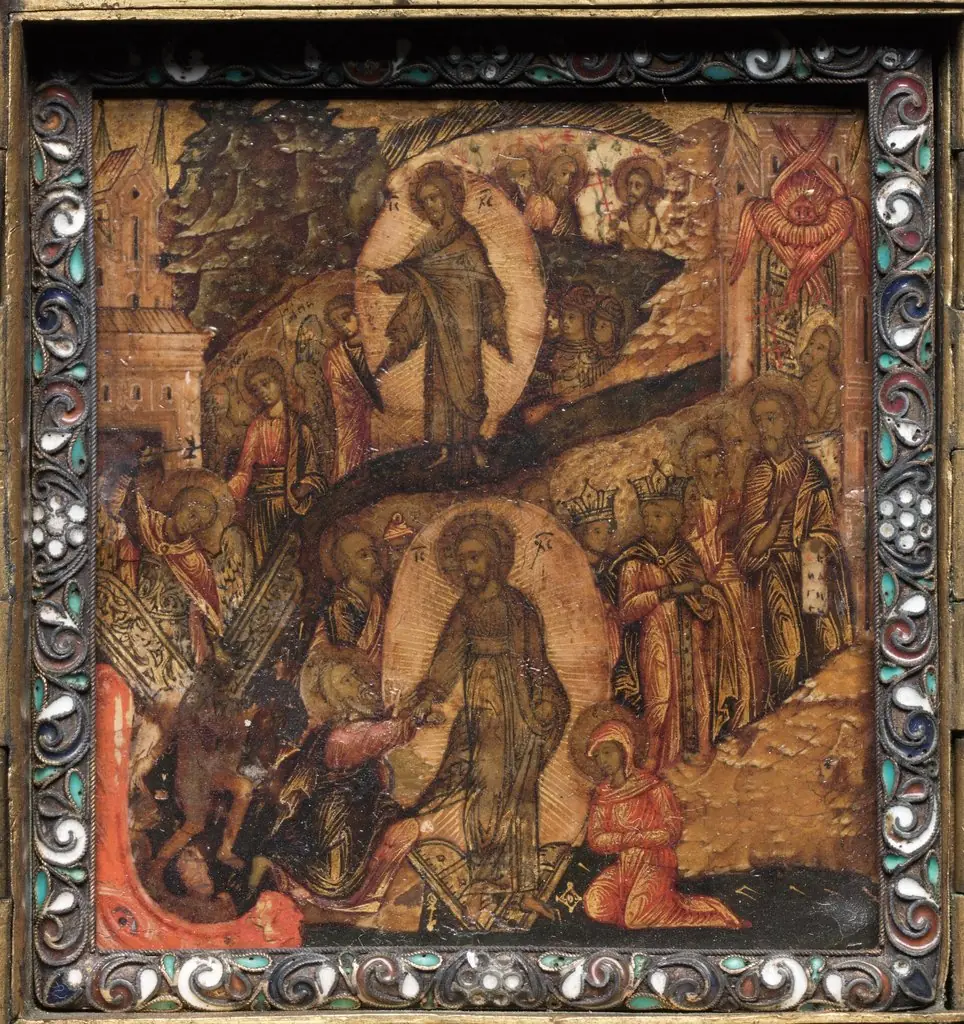 Portable Triptych Icon
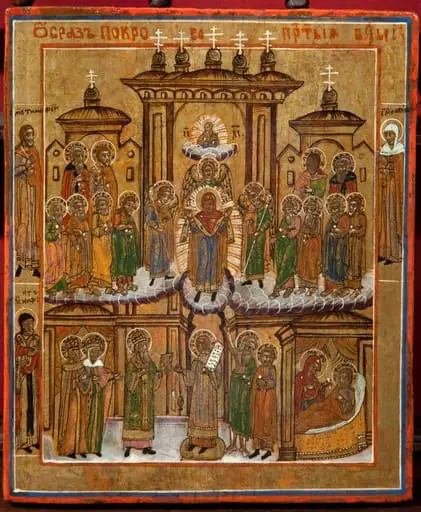 Acoperământul Maicii Domnului; Pocrovul
 Neitsyt Marian ilmestyminen pyhittäjä Aleksanteri Syväriläiselle kirkon perustuksella