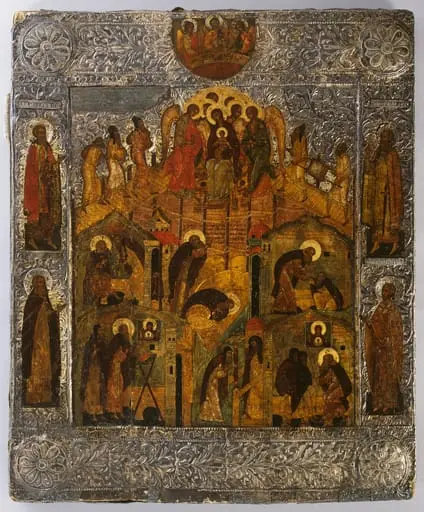
Artwork
Portable Triptych Icon
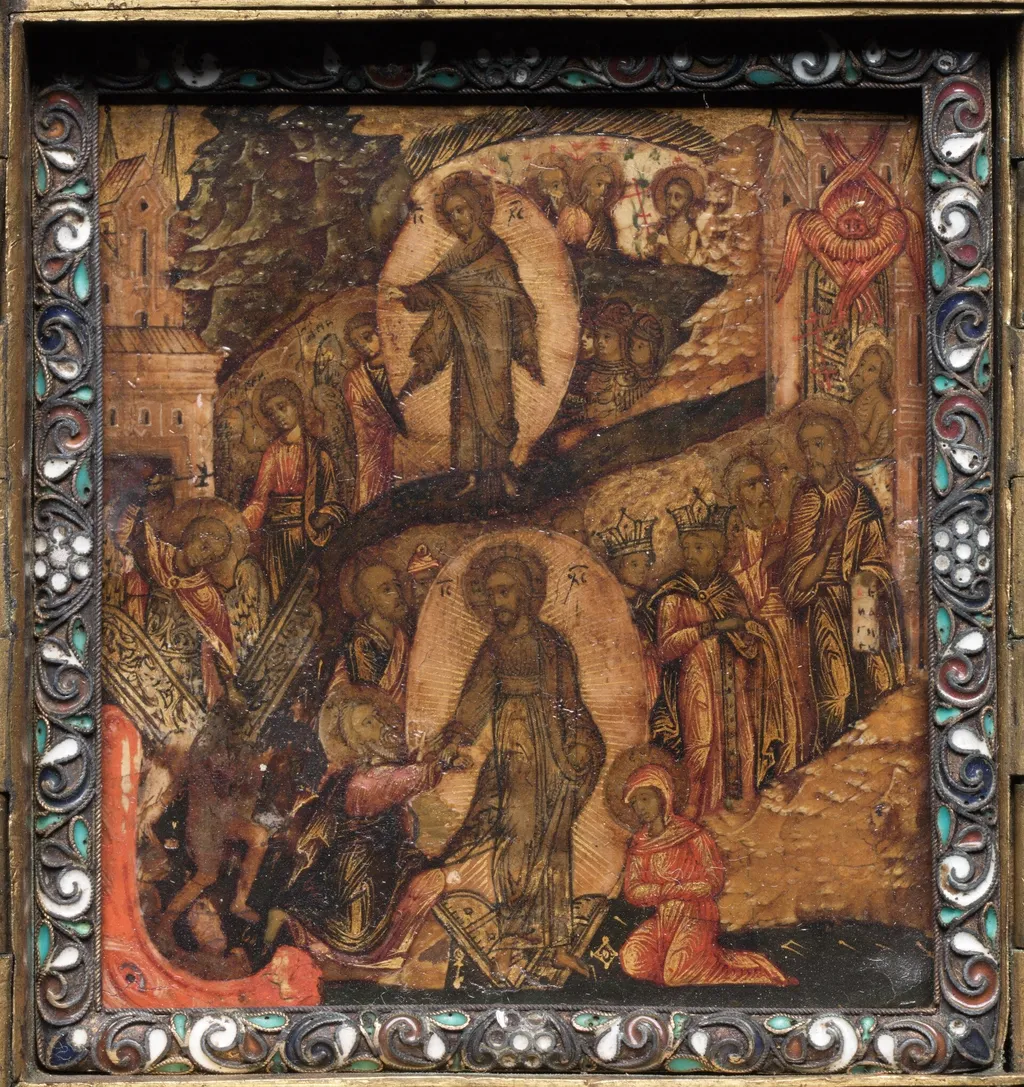
Portable Triptych Icon is an unspecified painting. It dates from 1649 and is held in the collection of the Cleveland Museum of Art. The work is a compact, three‑panel painted icon, framed and bordered with metal ornamentation studded with tiny beads.
About this work
History & Provenance
The Portable Triptych Icon is housed in the Cleveland Museum of Art, where it is catalogued under the accession number 1961.
The Portable Triptych Icon dates to 1649, as indicated by its inception year. The work is attributed to an unknown artist and is currently held in the collection of the Cleveland Museum of Art, where it has been catalogued since at least 1961. The icon measures approximately 6.5 centimeters in height and 6.0 centimeters in width. No earlier provenance, ownership transfers, or commission details are documented in the available sources.
The Portable Triptych Icon is housed in the Cleveland Museum of Art, where it is catalogued under the accession number 1961.35. Painted in 1649, the work measures 6.5 cm in height and 6.0 cm in width. It has been displayed in the museum’s European Paintings galleries as part of rotating exhibitions of early modern art.
Context
The Portable Triptych Icon was created in 1649 and is housed in the Cleveland Museum of Art, where it is catalogued as part of their collection (1961.35). Scholars have examined its stylistic features to situate it within 17th-century religious art traditions, though the artist remains unidentified. The work’s iconographic program reflects Counter-Reformation influences, as documented in its provenance and stylistic analysis within major art historical surveys.
Its dimensions of 6.5 cm in height and 6.0 cm in width are noted in the museum’s collection records.
Overview
The work is a compact, three‑panel painted icon, framed and bordered with metal ornamentation studded with tiny beads. Its surface is dominated by muted gold, red and brown tones, and the central panel features a haloed figure flanked by a congregation of similarly rendered saints and angels, many in kneeling or standing poses.
Subject & Meaning
At the heart of the composition stands a sanctified individual, identified by a luminous halo, suggesting a Christological or saintly focus. The surrounding figures, rendered with uniform, solemn expressions and large eyes, convey a communal act of veneration, typical of devotional icons intended for personal or portable worship.
Technique & Style
The painting employs a flattened, hierarchical arrangement characteristic of Byzantine‑influenced icons, with faces sharing stylized features and a limited palette. The background is rendered as a rough, rocky terrain, while the use of subtle shading hints at chiaroscuro, creating modest depth without abandoning the iconic flatness.
Artist & collection

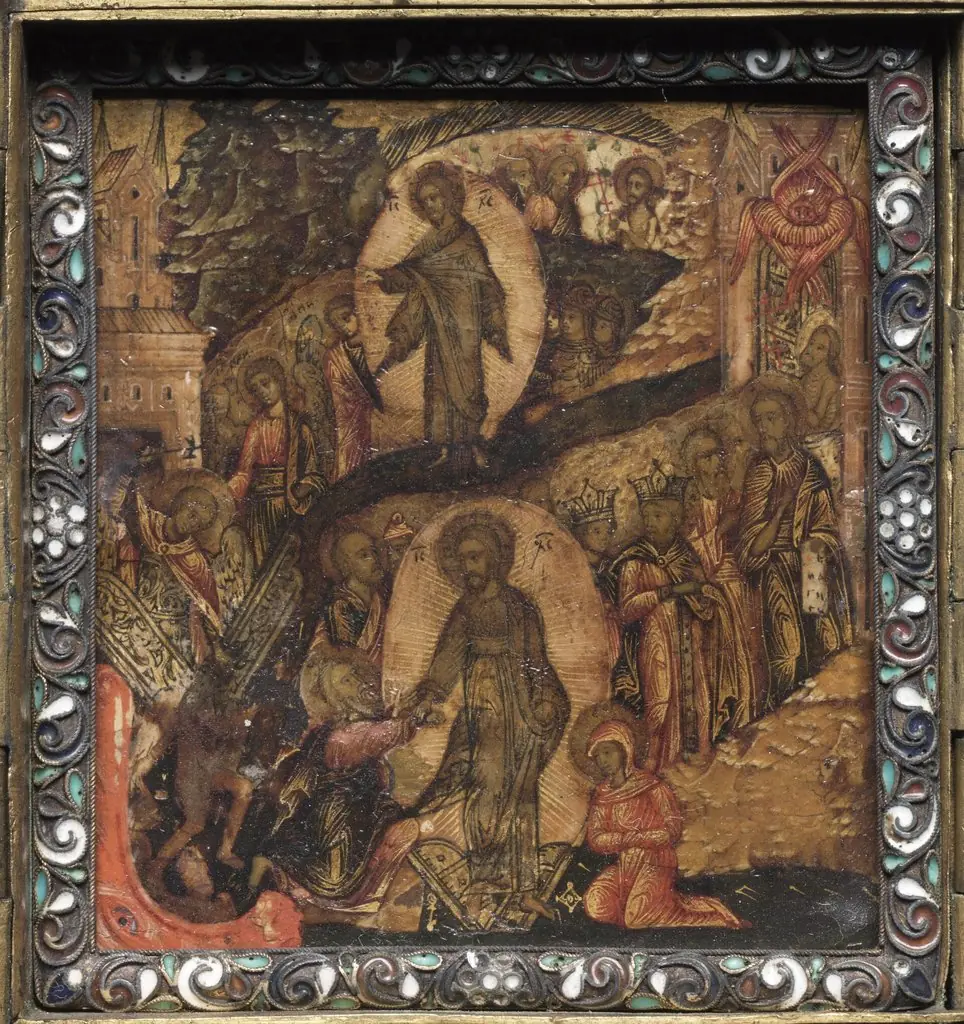
- Portable Triptych Icon: The Resurrection and Anastasis
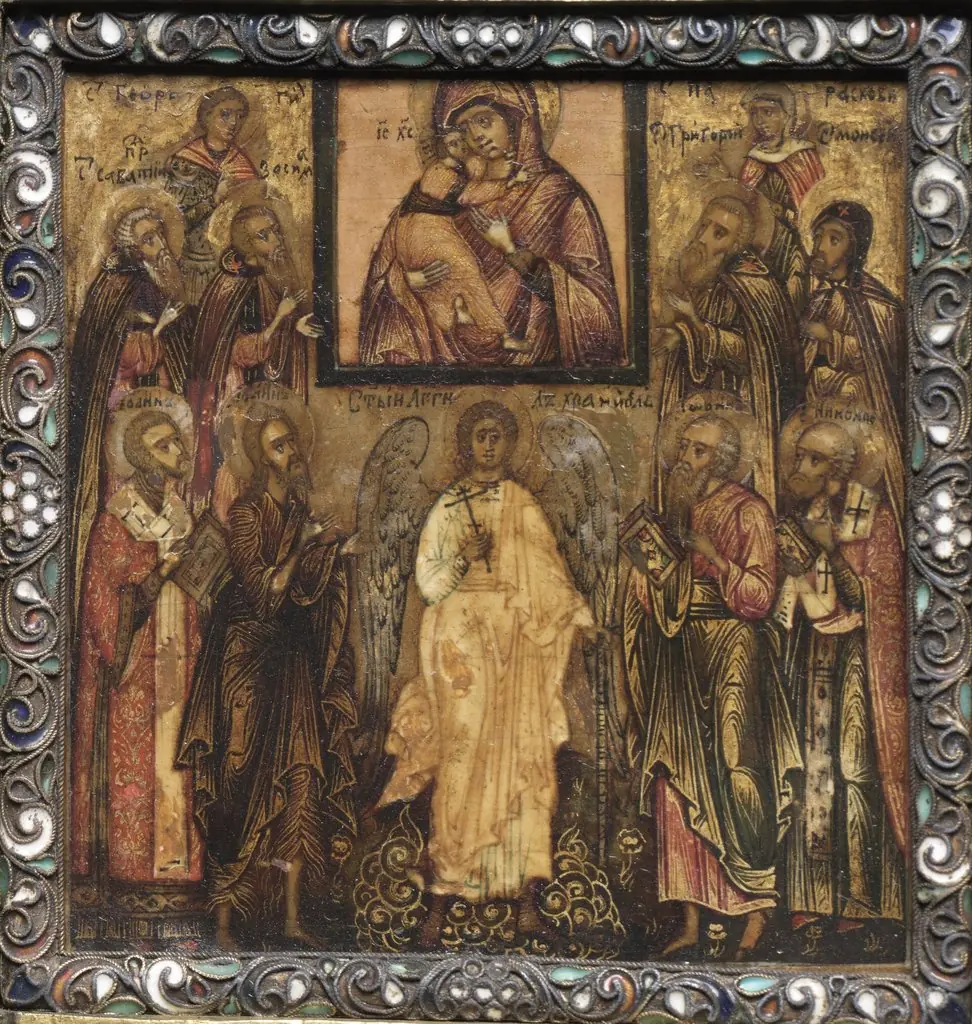 Portable Triptych Icon: Adoration of the Miracle-Working Icon of the Vladimir Mother of God
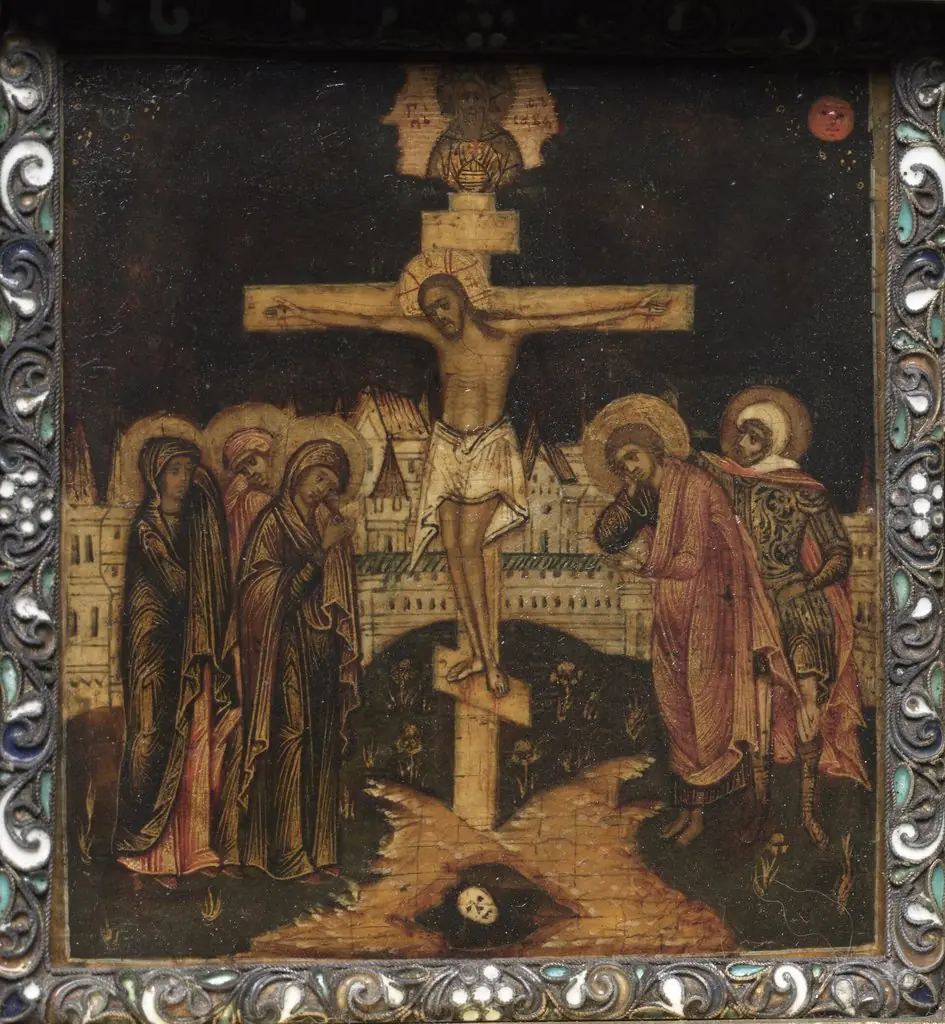 Portable Triptych Icon: The Crucifixion
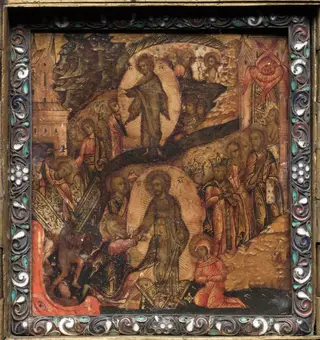 Portable Triptych Icon: The Resurrection and Anastasis
 Portable Triptych Icon: The Crucifixion
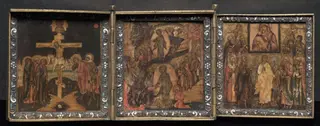 Portable Triptych Icon
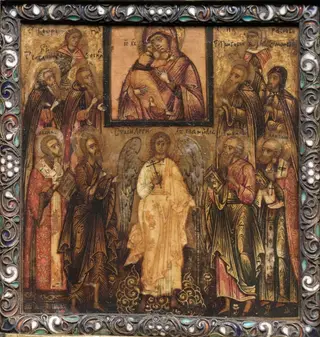 Portable Triptych Icon: Adoration of the Miracle-Working Icon of the Vladimir Mother of God