Artwork
Portable Triptych Icon: Adoration of the Miracle-Working Icon of the Vladimir Mother of God
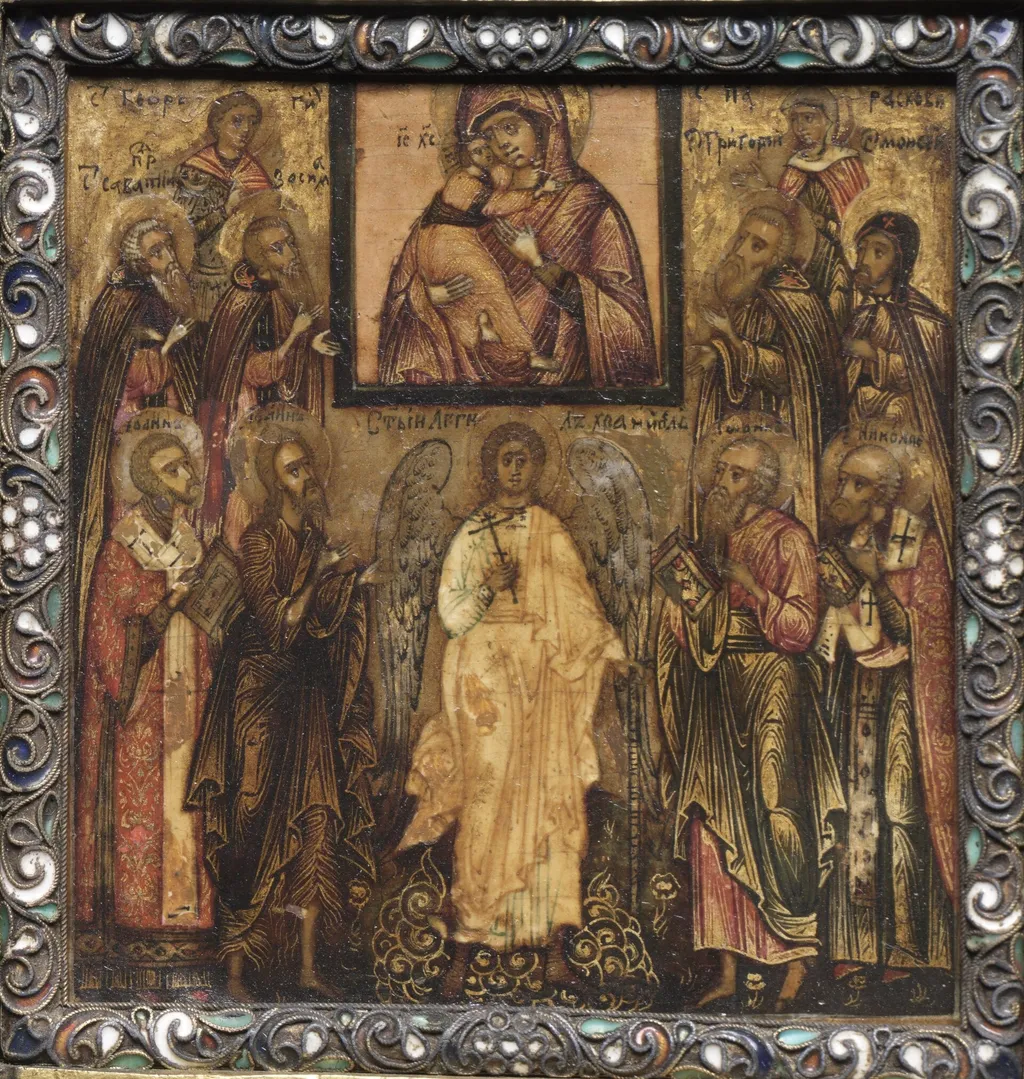
Portable Triptych Icon: Adoration of the Miracle-Working Icon of the Vladimir Mother of God is an unspecified painting. It dates from 1649 and is held in the collection of the Cleveland Museum of Art.
About this work
Subject & Meaning
The flanking wings of the triptych present additional saints and holy figures, arranged symmetrically to frame the central scene.
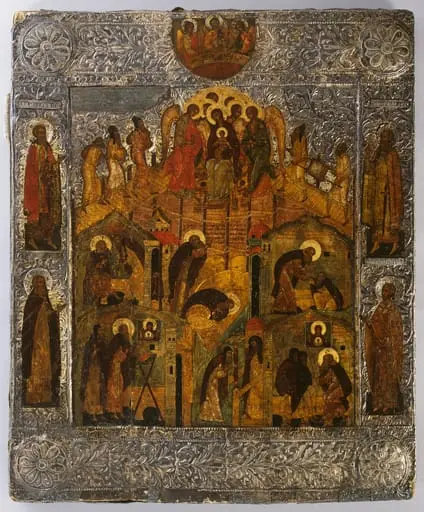
The central panel depicts the Adoration of the Vladimir Mother of God, showing the Virgin and Child flanked by two kneeling figures who gaze upward in reverence.
The flanking wings of the triptych present additional saints and holy figures, arranged symmetrically to frame the central scene. The iconography emphasizes the Vladimir icon’s reputed miracle-working power, reinforcing the devotional context of the object as a portable aid to private worship.
The triptych’s small scale and folding format suggest its use for personal or domestic veneration, underscoring the intimate relationship between the faithful and the sacred image.
History & Provenance
The Portable Triptych Icon depicting the Adoration of the Miracle-Working Icon of the Vladimir Mother of God was created in 1649. The work is attributed to an unknown artist and falls within the genre of religious art. Physically, the painting measures 6.2 cm in height and 6.0 cm in width.
It is currently held in the collection of the Cleveland Museum of Art, where it is cataloged under the accession number 1961.35.c.
Overview
This small painting, titled Portable Triptych Icon: Adoration of the Miracle-Working Icon of the Vladimir Mother of God, depicts a gathering of figures within a luminous, flat golden setting. As an icon, it serves a devotional purpose, presenting a sacred scene intended for contemplation. Its compact size suggests it was designed for personal use or travel, allowing its owner to engage with the revered imagery wherever they went.
Technique & Style
The artwork employs a distinct visual language characterized by sharp outlines and minimal use of shadow, contributing to its two-dimensional appearance. A dominant gold background, alongside a palette of dark red and faded brown, enhances the ethereal quality of the scene. The figures are rendered with a certain rigidity in their postures, a stylistic choice that imbues the image with a sense of solemnity and timeless sacredness, typical of icon painting traditions.
Context
Titled a "Portable Triptych Icon," this painting's small, framed format indicates its function as a personal devotional object. Such icons were often designed to be easily transported, allowing individuals to carry their faith with them. The sacred imagery, combined with its compact dimensions, suggests it was used for private prayer or as a focal point for spiritual reflection outside of a church setting.
Artist & collection

- Portable Triptych Icon: Adoration of the Miracle-Working Icon of the Vladimir Mother of God
 Portable Triptych Icon
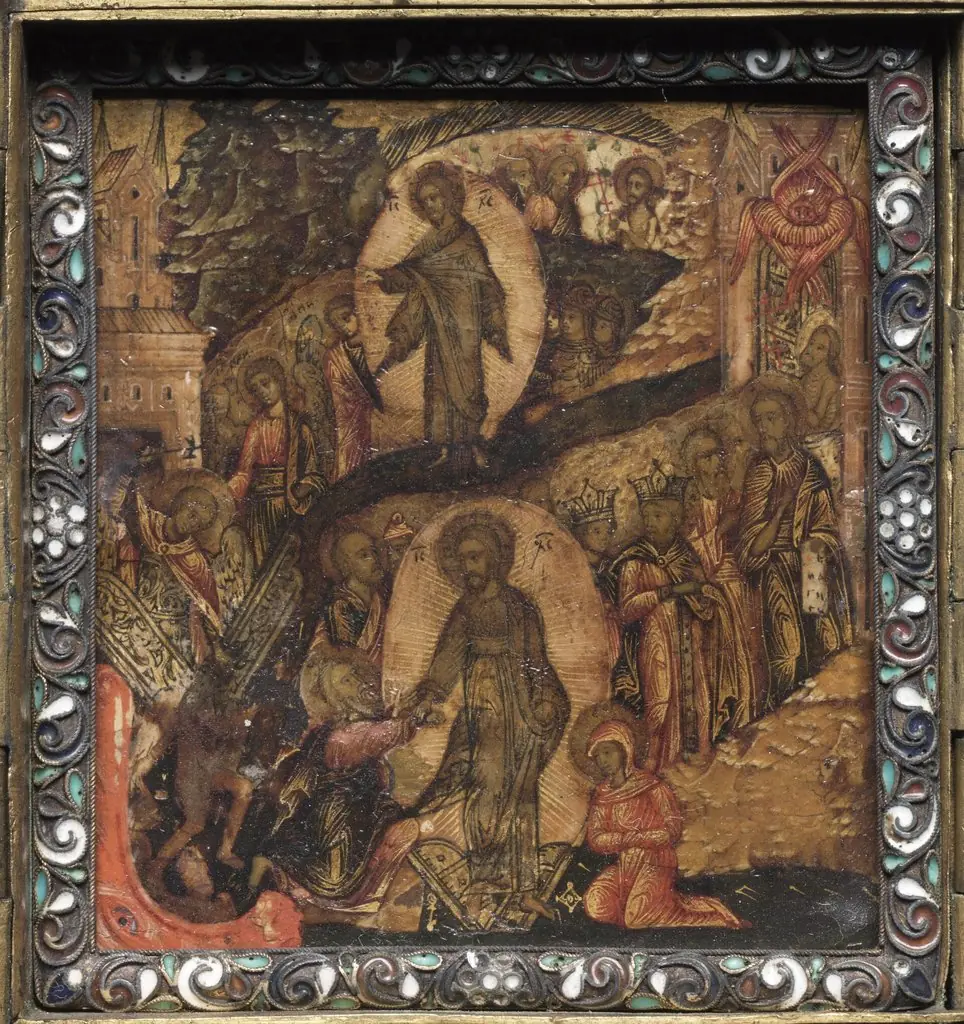 Portable Triptych Icon: The Resurrection and Anastasis
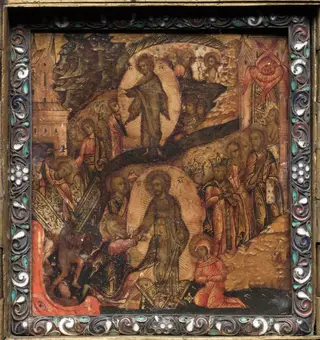 Portable Triptych Icon: The Resurrection and Anastasis
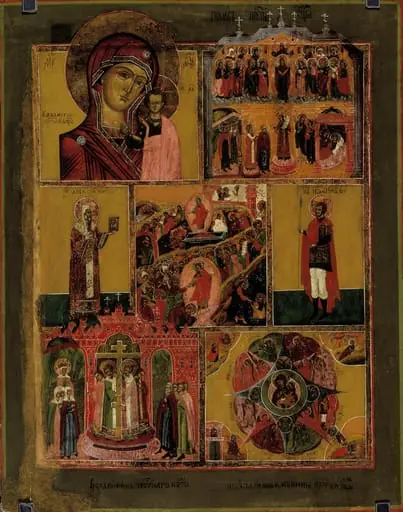 Pääsiäinen ja kirkkovuoden juhlia, venäläinen ikoni
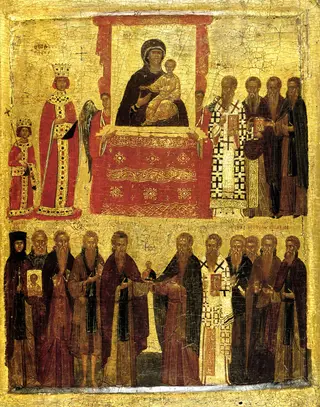 Icon of the Triumph of Orthodoxy
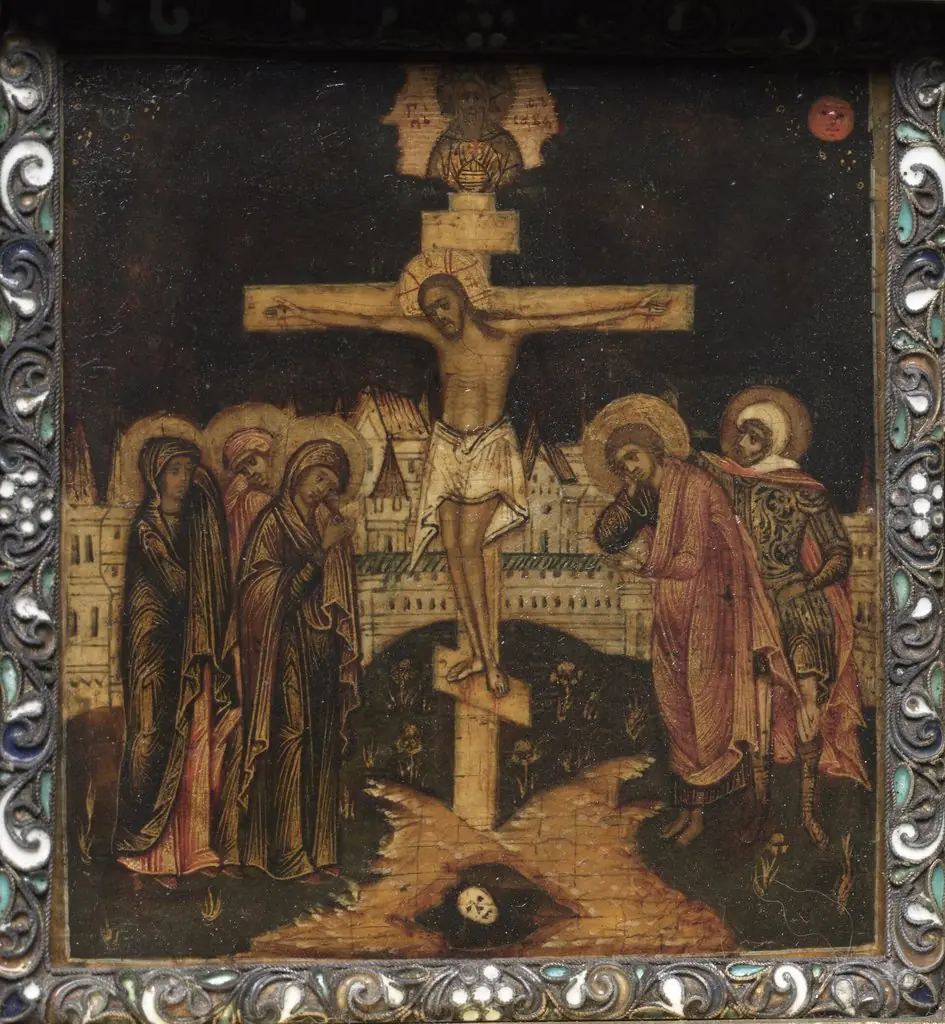 Portable Triptych Icon: The Crucifixion
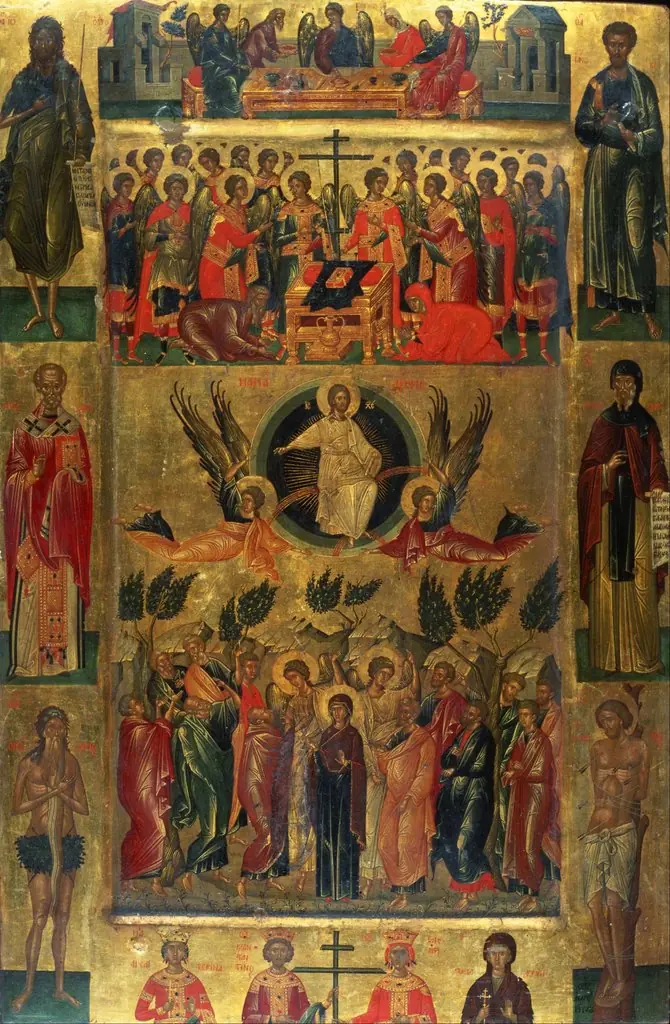 Ascension of Christ with the Hetoimasia
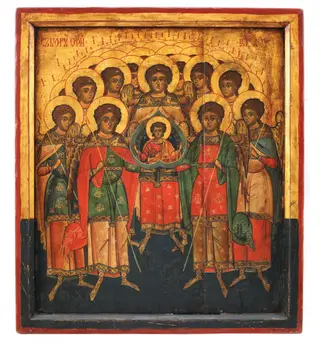 Soborul Sfinților Arhangheli
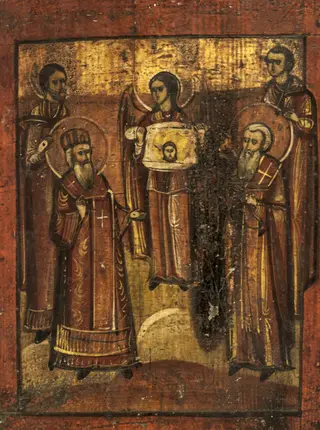 Sfânta Mahramă este, conform sfintei Tradiții, cea mai veche icoană a lui Hristos, nefăcută de mâna omului. Sfântul Ioan Damaschin(filozof, teolog și iconograf din sec VIII) descrie originea acesteia în Dogmatica ortodoxă: Se știe din tradiție că pe când Avgar era regele Edessei, a trimnis un pictor să picteze chipul Domnului, dar din pricină că pictorul nu a putut să -l picteze din cauza luminii strălucitoare a feței, Domnul Însuși , punând haina pe obrazul Lui dumnezeiesc și de viață făcător, s-a imprimat pe haină chipul Lui și astfel a trimis-o lui Avgar, care îl dorea. Deși inscripțiile nu mai ajută la identificarea exactă a momentului ilustrat, icoana ilustrează momentul în care sfânta Mahramă este adusă regelui Avgar. Un înger plasat în centrul compoziției arată mahrama cu chipul lui Iisus înconjurat de nimbul cruciger. De o parte și de alta, plasați simetric, un episcop și un preot în vârstă, binecuvântând, în spatele lor regele, în pandant un personaj fără nimb, toți privind către chipul lui Hristos imprimat pe țesătură. Conform unei legende, chipul lui Hristos s-a imprimat și pe mahrama cu care Veronica i-a șters chipul în timpul patimilor. Compoziția este narativă, echilibrată, chipurile expresive. Cromatica specifică icoanelor de tip krasnushka, tonuri de pământ în combinație cu fondul foiței aurii(fond -1/4 superior). Bordura brun roșcată, lată, delimitat prin linii negre.Icoana prezintă urme de arsură.
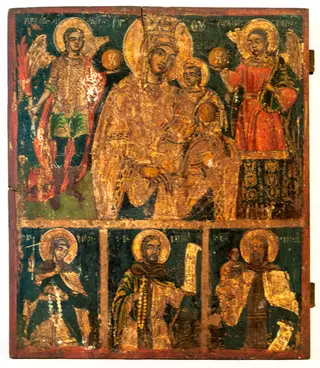 Icoașat
 Neitsyt Marian ilmestyminen pyhittäjä Aleksanteri Syväriläiselle kirkon perustuksella