Artwork
Fată în iarbă
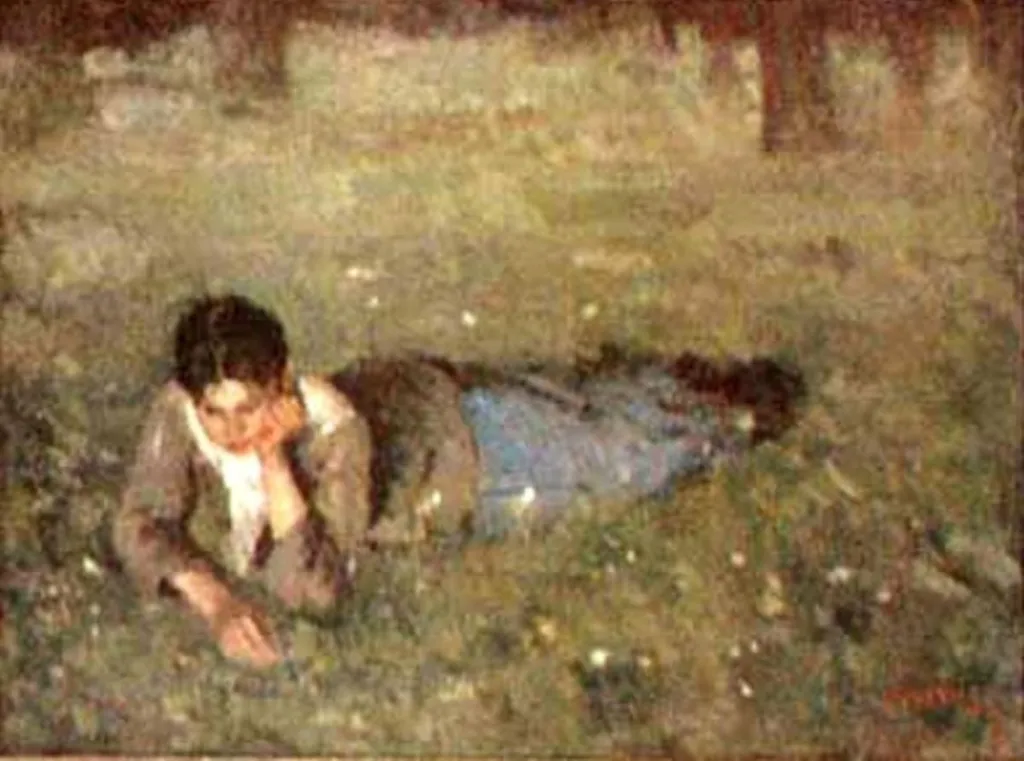
Fată în iarbă is an unspecified painting by Ion Andreescu. It dates from 1850 and is held in the collection of the National Museum of Art of Romania.
About this work
Overview
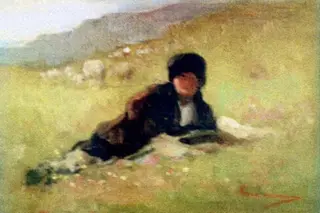
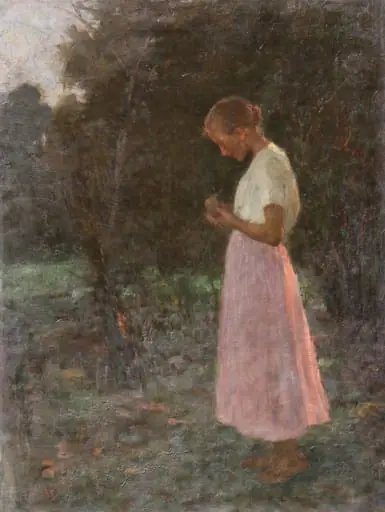
Fată în iarbă, created around 1850 by Ion Andreescu, captures a serene outdoor moment. A child sits in tall, uneven grass, accompanied by a resting dark-haired dog. The composition conveys calmness, with the child's face partially averted, suggesting shyness or absorption.
Subject & Meaning
The subject is a quiet, natural scene of a child in a grassy field with a dog. The child’s averted face may imply shyness or focus on their surroundings, while the dog, blending into the earth tones, symbolizes harmony with nature.
Technique & Style
The use of chiaroscuro is evident in the interplay of light and shadow, creating depth in the scene. The contrast between the child’s light clothing and the dark dog, set against the varied grass tones and small white flowers, enhances the visual depth and tranquility.
History & Provenance
Created circa 1850 by Ion Andreescu, specific details on the work’s history and ownership prior to its current status are not provided in the available information.
Context
Painted in the mid-19th century, Fată în iarbă reflects a romanticized view of nature and simplicity, common in the era’s art, emphasizing the beauty of everyday, peaceful moments.
Legacy
The legacy of Fată în iarbă is not extensively detailed in the provided information, though it contributes to Ion Andreescu’s body of work capturing serene, natural scenes of his time.
Artist & collection