Artwork
Pomi înfloriți
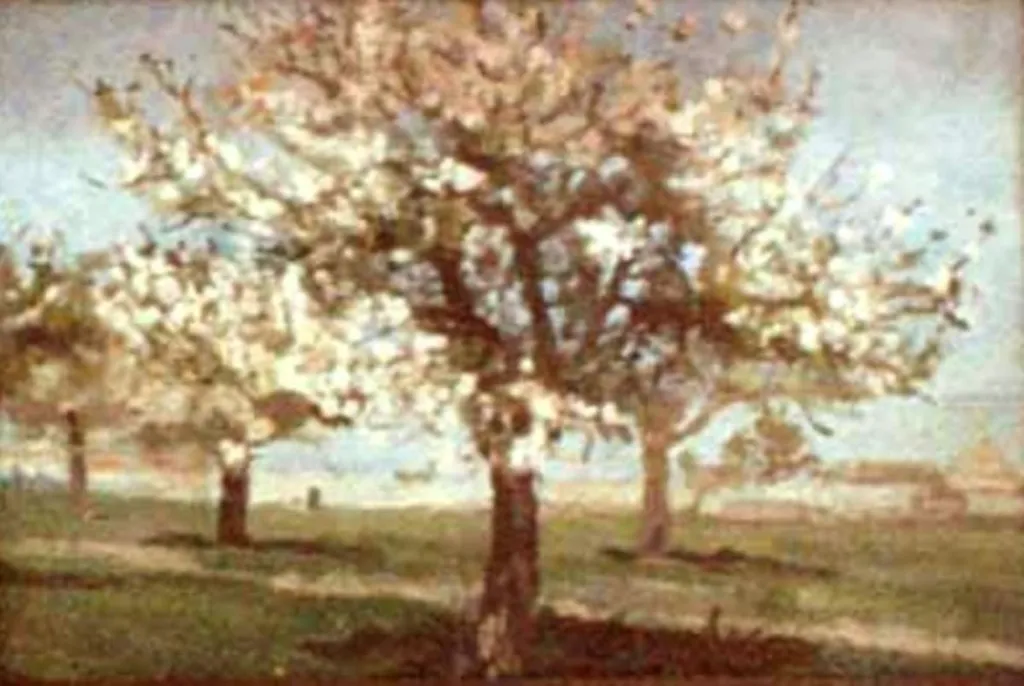
Pomi înfloriți is an unspecified painting by Ion Andreescu. It dates from 1850 and is held in the collection of the National Museum of Art of Romania.
About this work
Overview
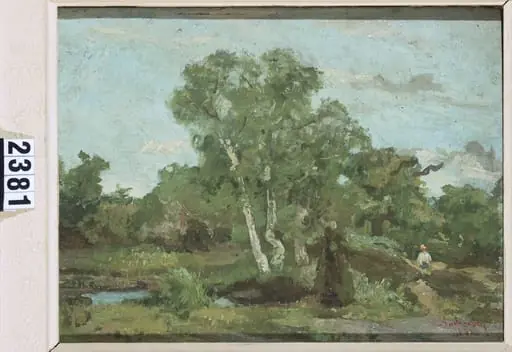
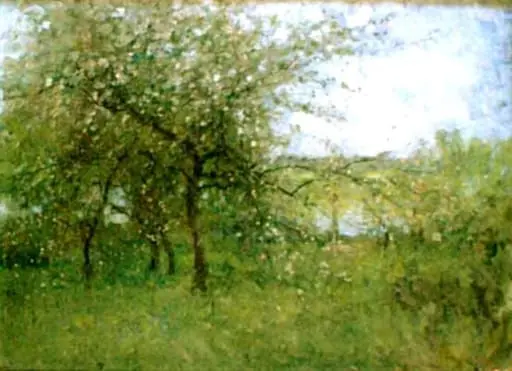
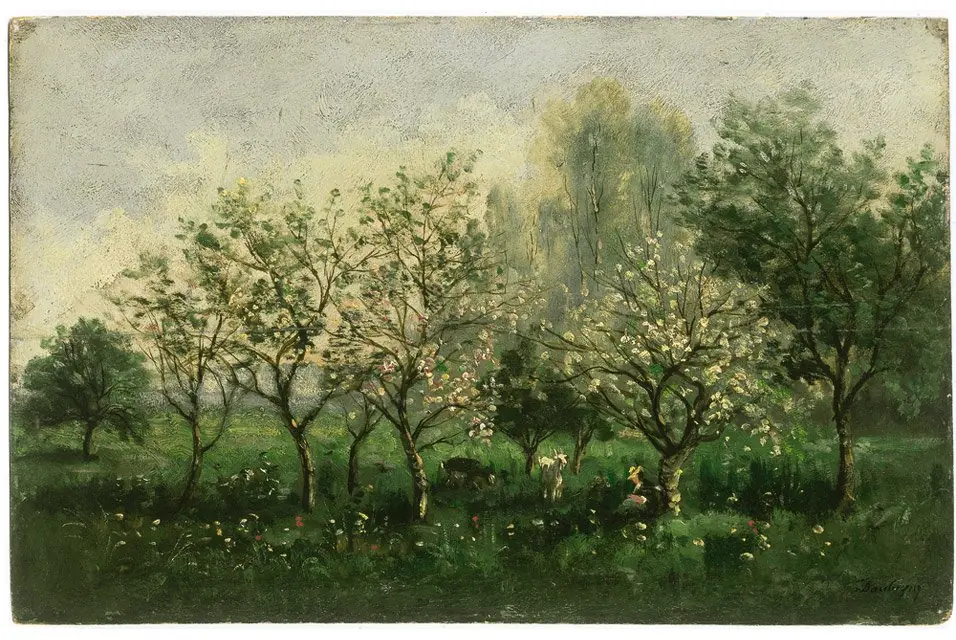
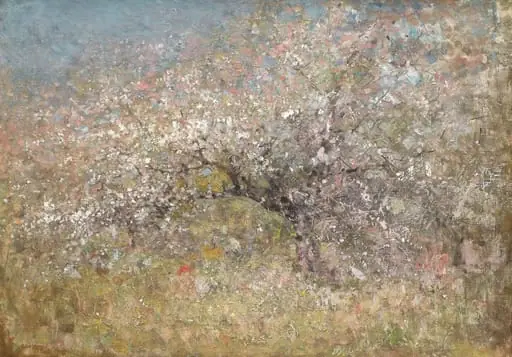
"Pomi înfloriţi" is an image attributed to the Romanian painter Ion Andreescu, dated approximately to the mid‑19th century. The composition presents a linear arrangement of stark trunks set against an open field, their branches adorned with delicate white blossoms. A muted sky and speckled ground complete the scene, conveying a quiet moment of seasonal transition.
Subject & Meaning
The work depicts a row of leafless trees whose twisted limbs are suddenly covered in small, pale flowers, suggesting the onset of early spring. The contrast between the gnarled bark and the fragile blooms may allude to themes of renewal and the cyclical nature of growth within a landscape that is both barren and hopeful.
Technique & Style
Andreescu employs rapid, loosely applied brushstrokes to render the luminous quality of the blossoms and the texture of the trunks. The handling of paint emphasizes the play of light on the flower clusters, while the overall approach remains painterly, capturing a fleeting atmospheric moment rather than detailed realism.
History & Provenance
The piece is catalogued as an image rather than a traditional canvas, and its precise creation date is approximated to around 1850, aligning with the early period of Andreescu’s artistic development. Documentation of its ownership trail is limited, and it currently resides within a digital archive of Romanian art.
Context
Created during a time when Romanian artists were increasingly engaging with naturalist observation, the painting reflects Andreescu’s interest in plein‑air studies of the countryside. The emphasis on light and seasonal change aligns with broader European trends of the mid‑19th century, where landscape painters sought to capture transient atmospheric effects.
Artist & collection