Artwork
Annunciate Angel, the Apostle Andrew, a Bishop Saint (Savinus?), and Saints Dominic and Francis of Assisi [left]; Virgin Annunciate and Saints Bartholomew, Lawrence, Lucy, and Agatha [right]
![Annunciate Angel, the Apostle Andrew, a Bishop Saint (Savinus?), and Saints Dominic and Francis of Assisi [left]; Virgin Annunciate and Saints Bartholomew, Lawrence, Lucy, and Agatha [right], by Bartolomeo Bulgarini, unspecified, 1360](https://artifactworldgallery.com/img/bartolomeo-bulgarini--annunciate-angel-the-apostle-andrew-a-bishop-saint-savinus-a--941c87c7443f3f1e-w1024.webp)
Annunciate Angel, the Apostle Andrew, a Bishop Saint (Savinus?), and Saints Dominic and Francis of Assisi [left]; Virgin Annunciate and Saints Bartholomew, Lawrence, Lucy, and Agatha [right] is an unspecified painting by the Sienese School artist Bartolomeo Bulgarini. It dates from 1360 and is held in the collection of the Philadelphia Museum of Art.
About this work
Overview
Created in 1360 by the Sienese painter Bartolomeo Bulgarini, this wooden polyptych presents eight saints arranged in four horizontal registers. The work exemplifies the devotional focus of the Trecento in Siena, employing a gold ground that highlights the vivid blues and reds of the figures' garments. It is part of the Philadelphia Museum of Art’s collection.
Subject & Meaning
The upper left panel shows a kneeling woman receiving a message from a hovering angel, while the upper right depicts a seated woman in blue listening to a standing male figure. Below, two bishops bearing crosses stand beside a pair holding books or other attributes, and the lowest register includes two monks in dark habits flanked by lay figures dressed in orange and red. The selection of saints, among them Andrew, Dominic, Francis of Assisi, Bartholomew, Lawrence, Lucy, and Agatha, reflects a composite program of intercessory prayer.
Technique & Style
Bulgarini employs the characteristic Sienese approach of flat, linear modeling and bright, unshaded color fields against a gilded background. The figures are rendered with a formal stiffness, emphasizing their iconic status rather than naturalistic depth. The use of small, framed compartments creates a polyptych structure that guides the viewer’s eye across the narrative sequence.
History & Provenance
Active before and after the 1348 Black Death, Bulgarini’s career spanned a period of significant social upheaval in Siena. The panel remained in private or ecclesiastical hands until it entered the Philadelphia Museum of Art, where it is now displayed as an example of mid‑fourteenth‑century Sienese painting.
Context
The work belongs to the broader tradition of Sienese devotional panels that combined multiple saints in a single composition for private or communal worship. Its iconography aligns with the Trecento’s emphasis on individual saints as intercessors, while the gold background reflects the period’s liturgical aesthetics.
Own this work as a print
Artist & collection
Artist
Bartolomeo Bulgarini (c. 1300/1310–1378), also known as Bulgarino or Bologhini, was an Italian painter of the Trecento in Siena, active both before and after the Black Death of 1348. Bulgarini's name came into popular…

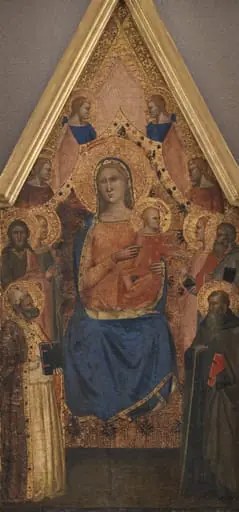 The Virgin and Child with Saints and Angels
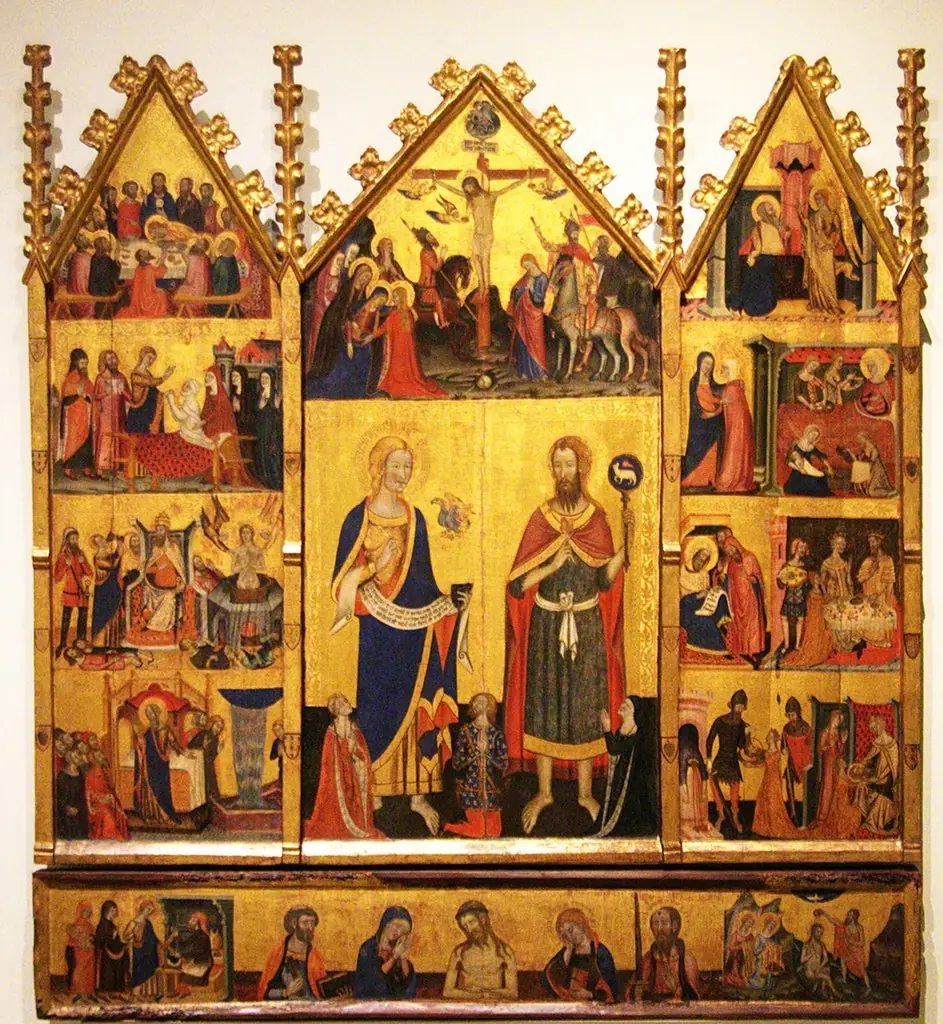 Altarpiece of the Saints John
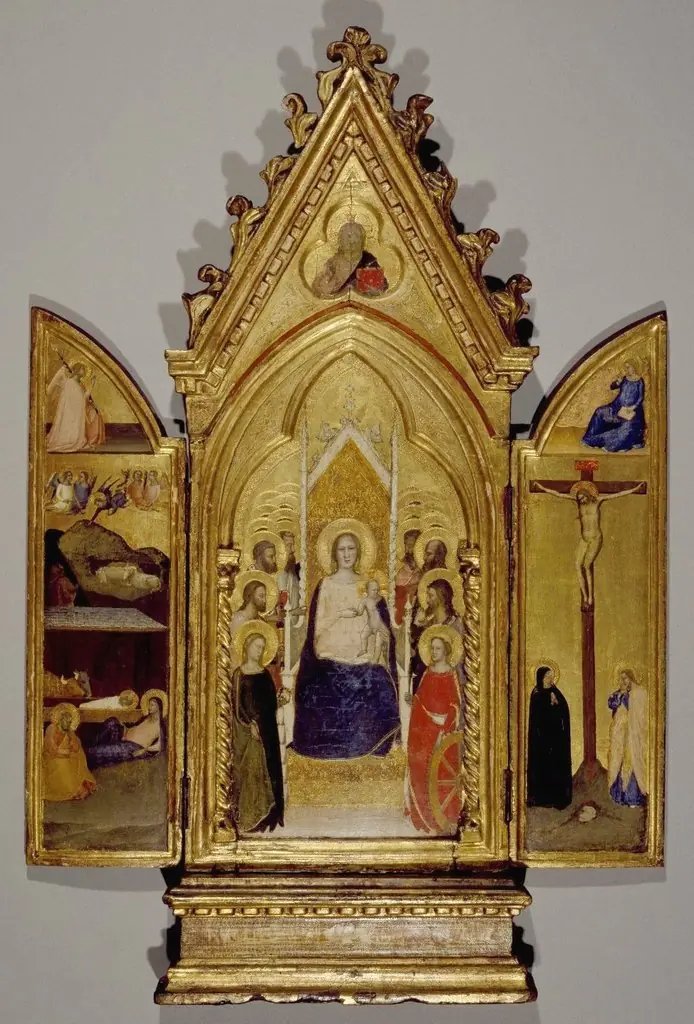 Triptych: Madonna with Saints and Christ Blessing (Center); The Nativity and the Annunciate Angel (Left Wing); Crucifixion and the Virgin Annunciate (Right Wing)
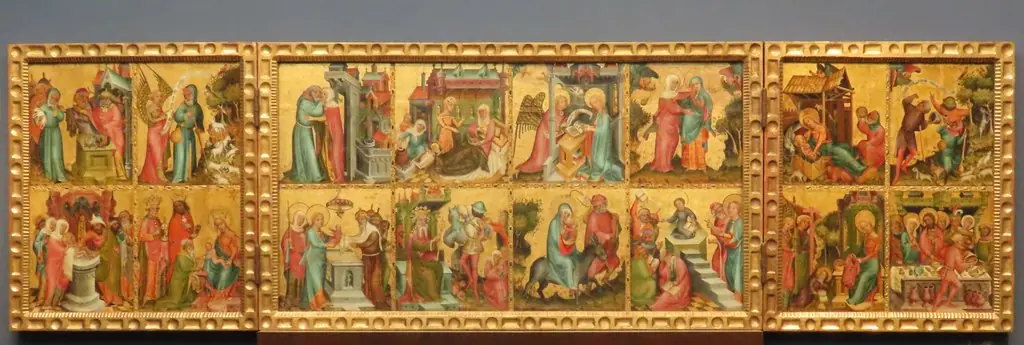 The Buxtehude Altar
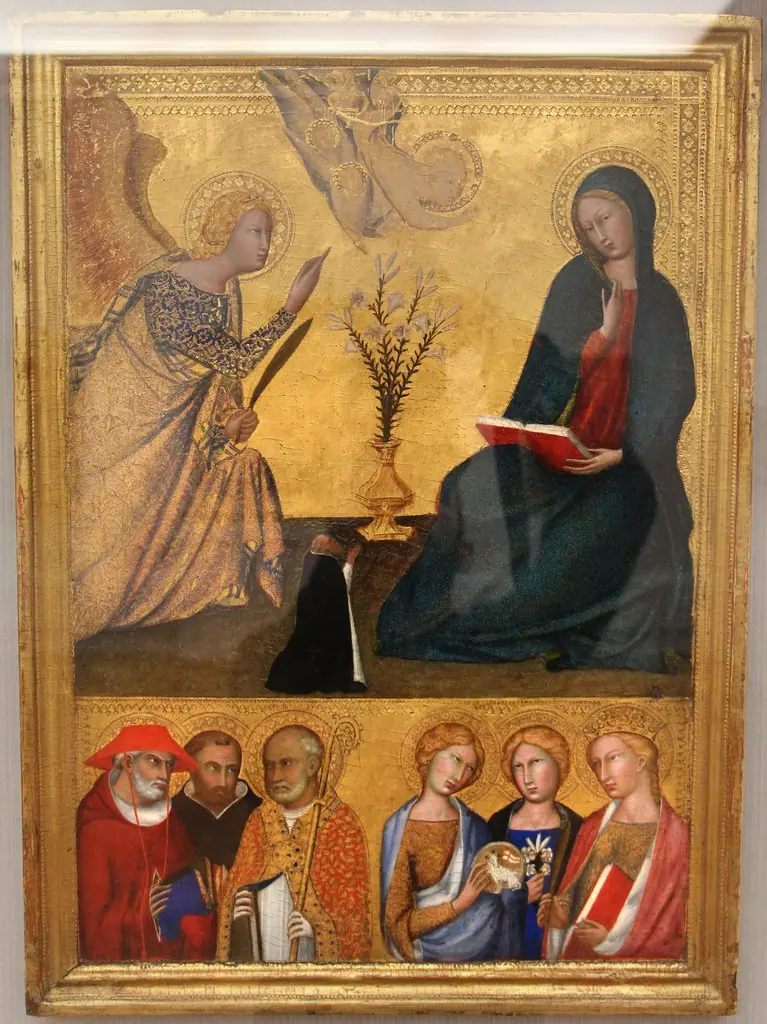 Die Verkündigung an Maria und sechs Heilige
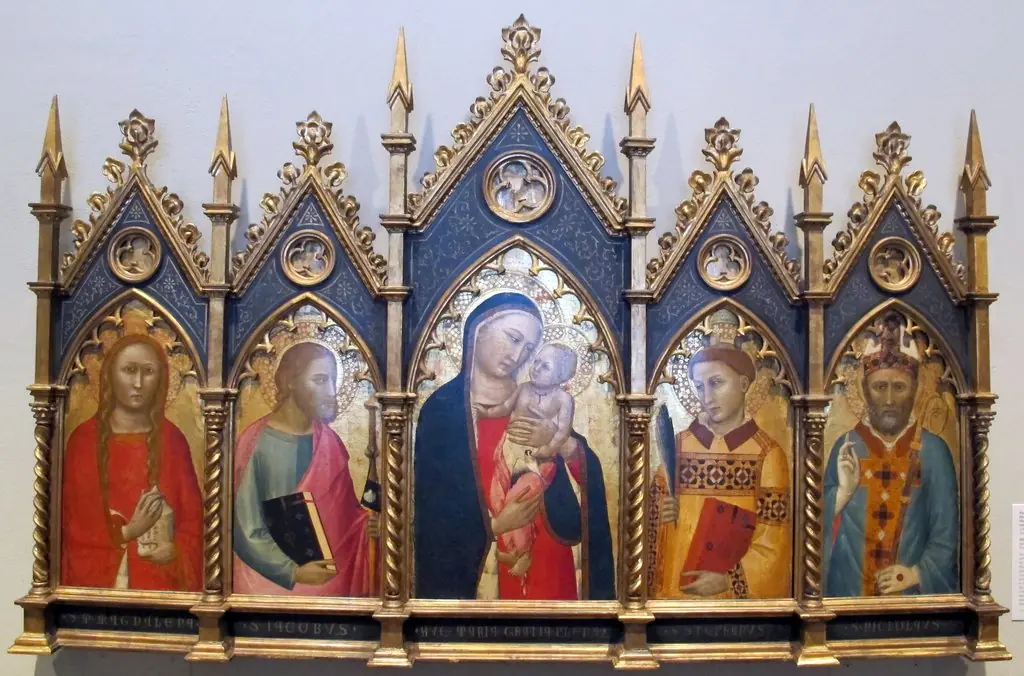 Virgin and Child, with Saints Mary Magdalene, James Major, Stephen, and a Bishop Saint
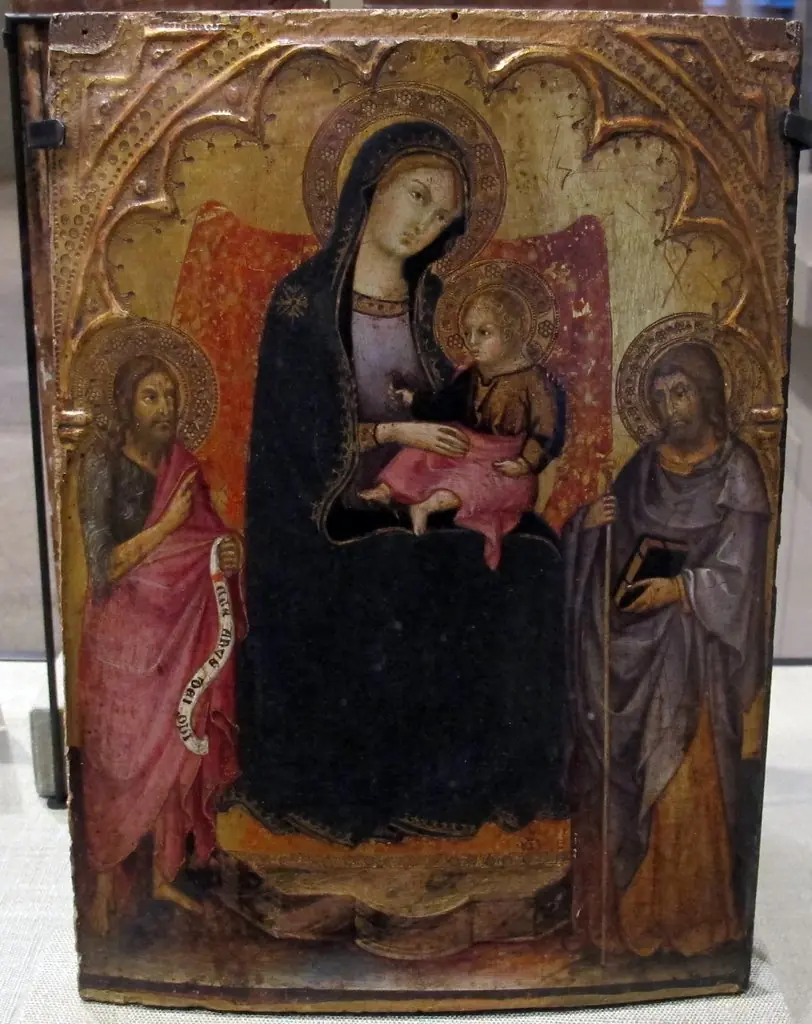 maestà coi santi g.battista e jacopo
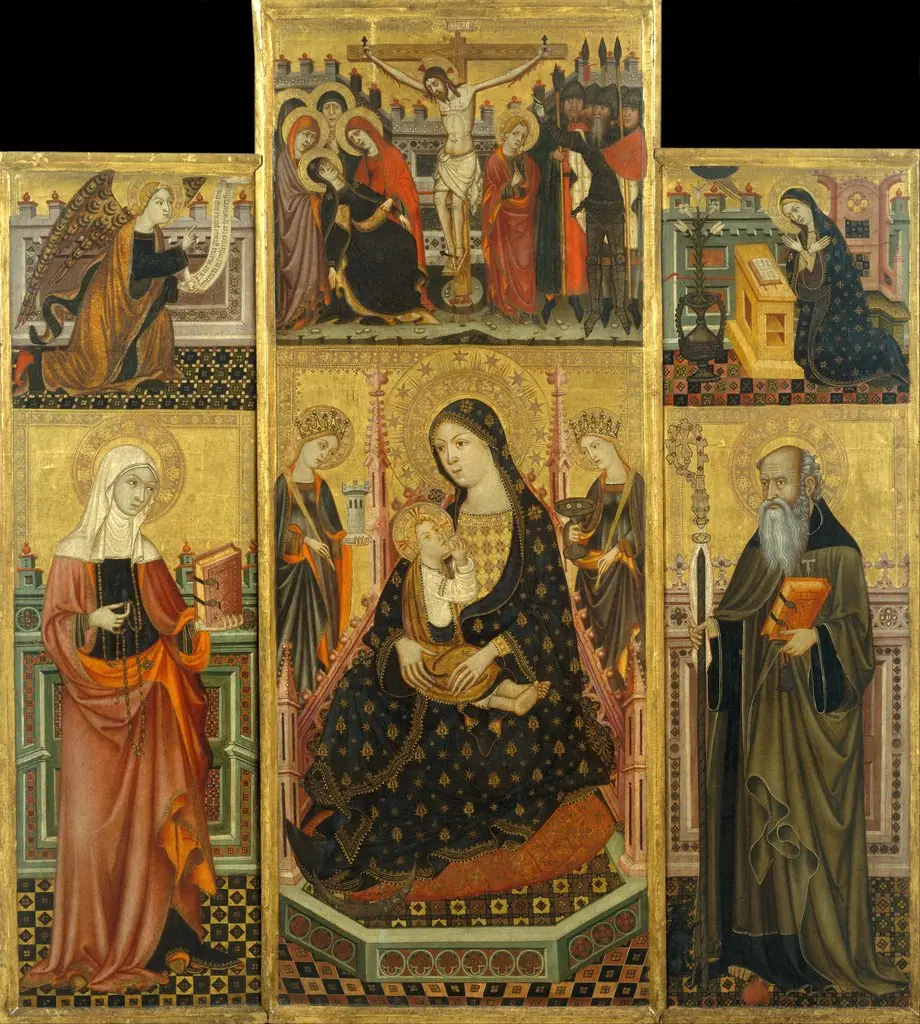 Altarpiece of the Virgin Suckling the Child, Saint Clare and Saint Anthony the Abbott
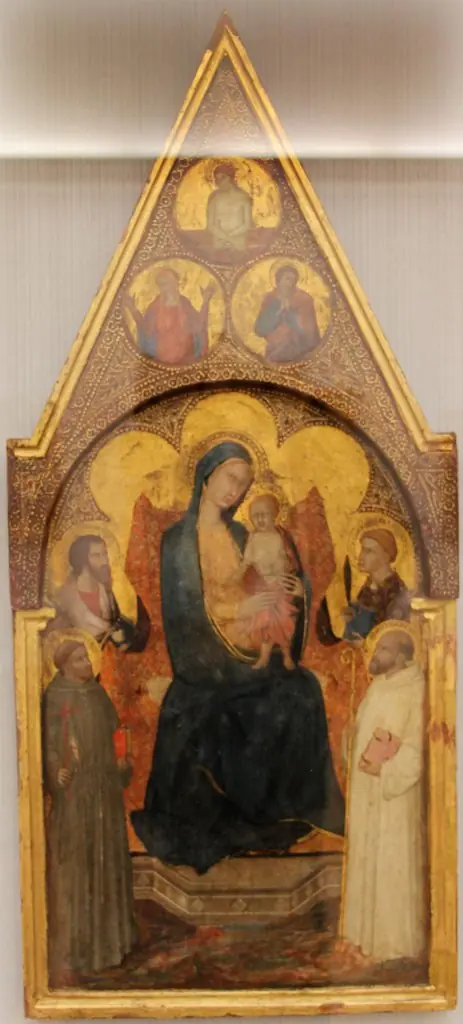 Thronende Maria mit dem Kind und vier Heiligen
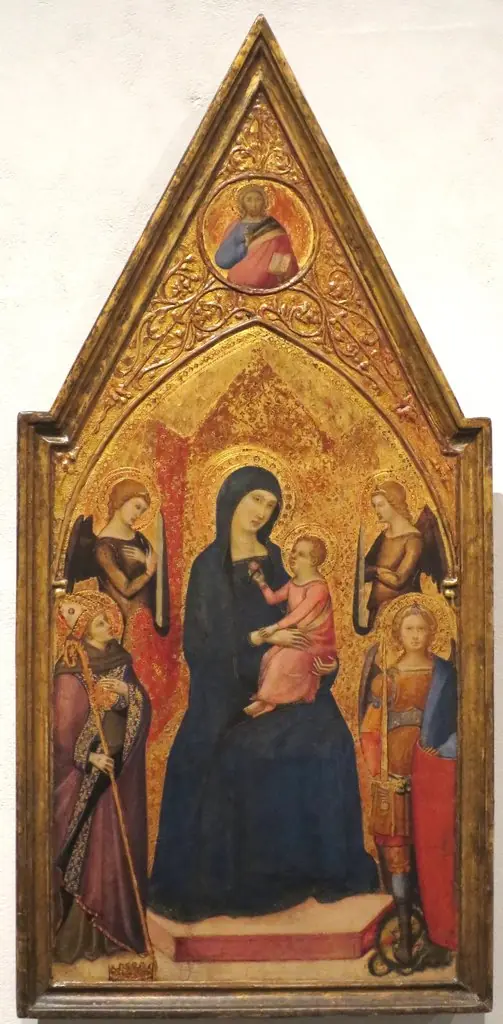 Virgin and Child with Sts. Louis of Toulouse and Michael