Artwork
Moonlight

Moonlight is an oil painting by the Impressionist artist Imitator of Ralph Albert Blakelock. It dates from 1950 and is held in the collection of the National Gallery of Art.
About this work
Subject & Meaning
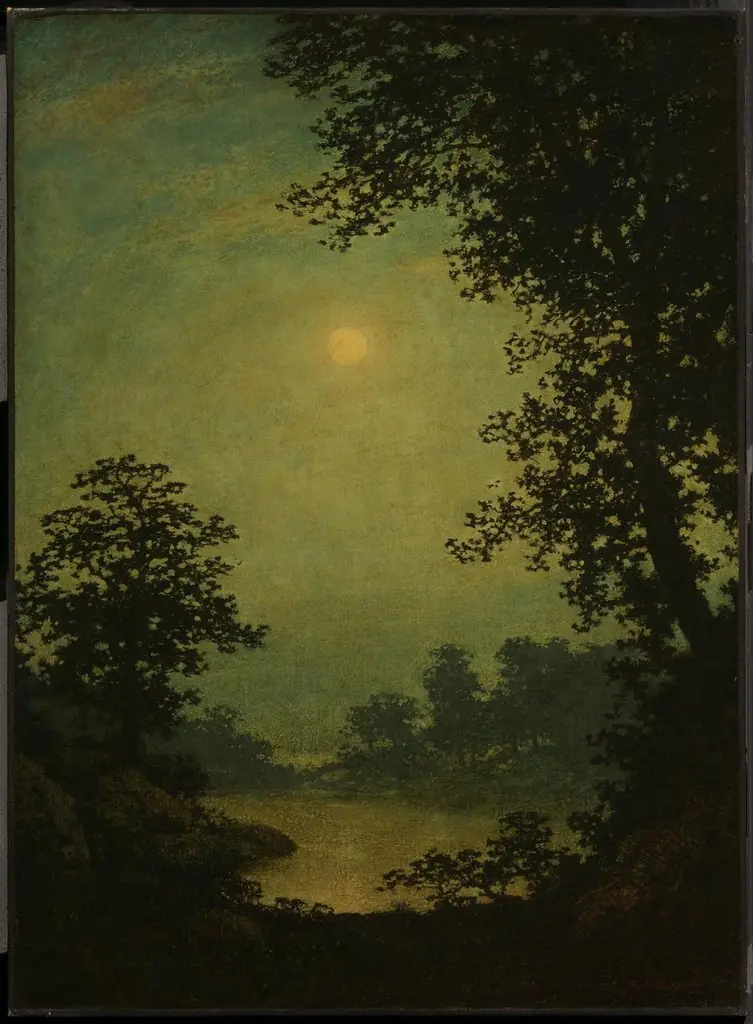
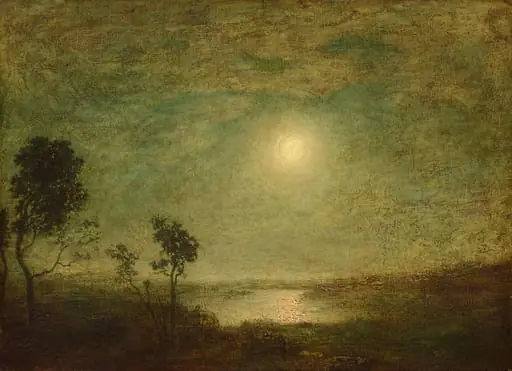
Moonlight portrays a nocturnal landscape suffused with silvered luminescence, evoking the quiet mystery of night through its delicate tonal gradations.
Moonlight portrays a nocturnal landscape suffused with silvered luminescence, evoking the quiet mystery of night through its delicate tonal gradations. The work’s subject, a moonlit scene rendered in soft blues and grays, conveys a contemplative mood that suggests both serenity and an undercurrent of melancholy. Symbolically, the moon functions as a solitary beacon, while the surrounding darkness hints at the unknown, inviting viewers to reflect on the interplay between light and shadow.
The painting’s atmosphere is often interpreted as a meditation on solitude and the fleeting nature of perception, resonating with the emotional resonance of night in American modernist art.
The composition emphasizes the expansive sky and reflective water, reinforcing themes of transcendence and introspection.
Technique & Style
Created in 1950, Moonlight is an oil painting executed on canvas. The work measures 75.6 cm in height and 101.3 cm in width. Attributed to an anonymous artist, with some associations to Ralph Albert Blakelock, the piece utilizes standard oil paints applied to a woven fabric support.
The composition reflects mid-20th-century painting practices through its material construction, though specific stylistic handling details beyond the medium and dimensions are not extensively documented in the available records.
History & Provenance
The painting Moonlight is dated to 1950, although its creator is listed as an unknown artist or Anonymous Artist. Its earliest recorded ownership traces to the Kussner collection. The work was subsequently offered for sale at the American Art Association and Anderson Galleries, Inc. in New York on February 4–5, 1932, as lot number 81.
Following this auction, it entered the collection of Chester Dale in New York. In 1943, Dale gifted the painting to the National Gallery of Art in Washington, D.C., where it remains part of the permanent collection.
The painting Moonlight is held by the National Gallery of Art in Washington, D.C. It entered the museum's collection in 1943 as a gift from Chester Dale (1883–1962) of New York. Prior to this donation, the work was part of the Kussner collection and was sold at the American Art Association and Anderson Galleries, Inc. in New York on February 4–5, 1932, as lot number 81. The provided sources do not contain information regarding specific exhibitions of this work.
Overview
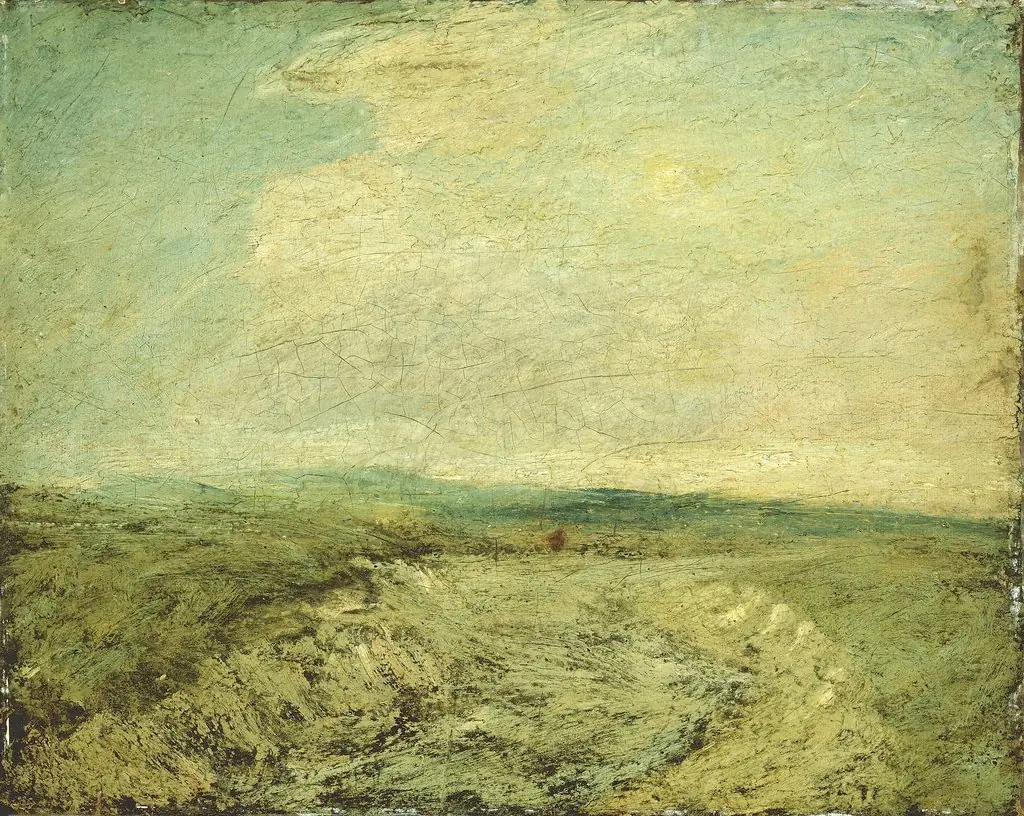
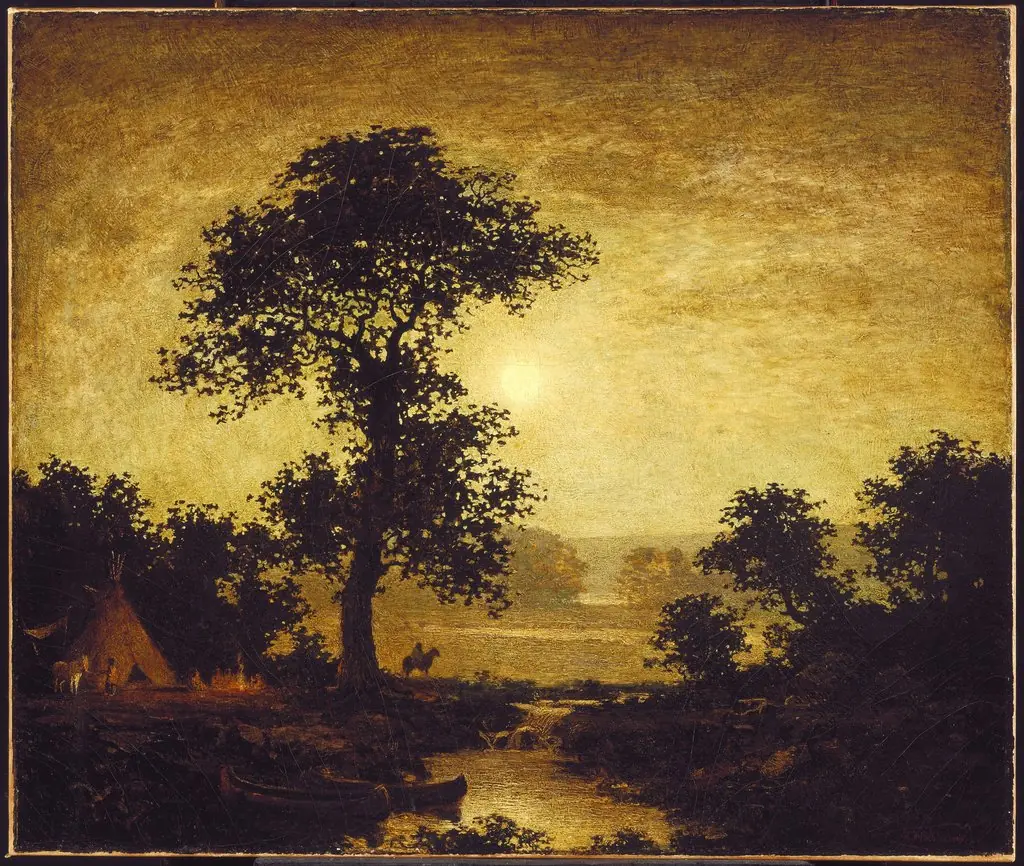
Moonlight is an oil on canvas work that presents a tranquil landscape. A body of water occupies the foreground, flanked by trees, while a luminous yellow disc, interpreted as either sun or moon, dominates the sky. The palette is dominated by greens and yellows, establishing a serene atmosphere that emphasizes the interplay of natural elements.
Context
While specific details about the artist and date are not provided, the work aligns with a tradition of landscape painting that emphasizes atmospheric light effects. Such pieces often explore the relationship between natural illumination and the environment, a concern shared by many 19th‑ and 20th‑century painters who studied the visual impact of moonlight or sunrise on scenery.
Artist & collection