Artwork
Güres, or a greased wrestling match in the gardens of the Sultan's Palace
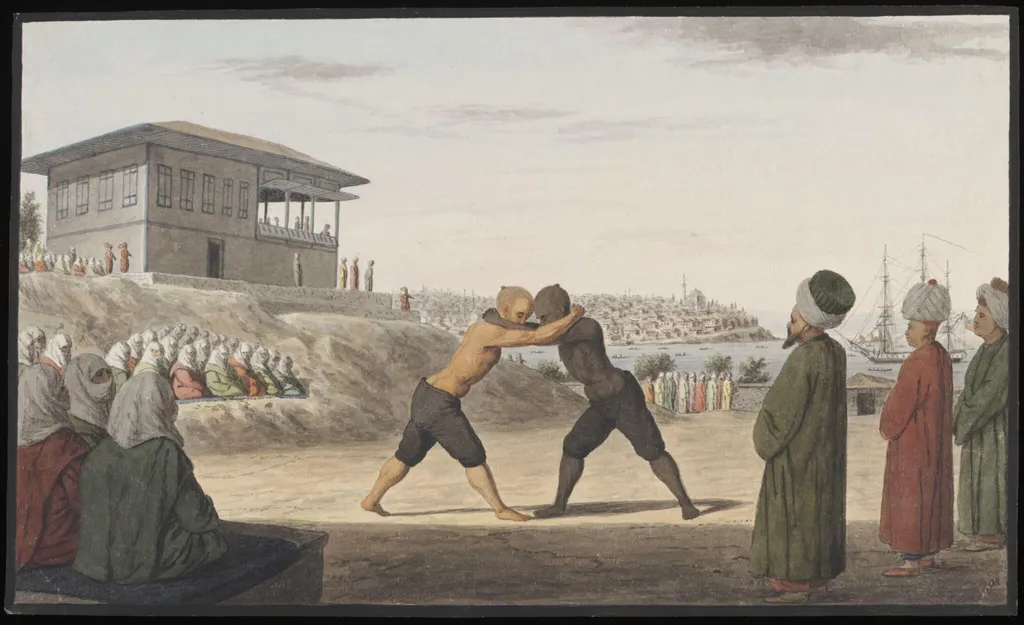
Güres, or a greased wrestling match in the gardens of the Sultan's Palace is a watercolor work on paper by the Orientalist artist Anonymous Greek artist. It dates from 1809 and is held in the collection of the Victoria and Albert Museum. This watercolour depicts a traditional güres wrestling match held in the gardens of Topkapi Palace, likely painted around 1809.
About this work
The scene mixes sport and spectacle: young wrestlers slip on oil while veiled women watch from silk cushions.
This watercolor shows a greased wrestling match in the Sultan’s gardens. Anonymous Greek artists painted it around 1809 as part of a series for British diplomat Stratford Canning.
The scene mixes sport and spectacle: young wrestlers slip on oil while veiled women watch from silk cushions. A palace kiosk looms in the background, giving English the word we use today.
Check out the Victoria and Albert Museum for more Ottoman scenes.
Overview
This watercolour depicts a traditional güres wrestling match held in the gardens of Topkapi Palace, likely painted around 1809. Commissioned by British diplomat Stratford Canning, it forms part of a larger visual record of Ottoman life. The work was created by an anonymous Greek artist, possibly associated with Konstantin Kapidagli’s circle, blending Ottoman watercolour techniques with European spatial conventions. The scene captures a moment of public ritual within the imperial enclosure.
Subject & Meaning
The painting portrays male wrestlers, oiled and clad in leather shorts, locked in physical contest, while veiled female spectators observe from shaded seating. The event, rooted in Ottoman tradition, served both as athletic competition and ceremonial display. The presence of a referee and the palace setting underscore its official character.
The inclusion of women as viewers, though secluded, reflects the complex social dynamics of courtly life, where public spectacle and private observation coexisted.
Technique & Style
The artist employed dense, luminous watercolour and bodycolour, characteristic of Ottoman miniaturist practice, while incorporating Western linear perspective and naturalistic detail. Figures are rendered with careful attention to texture, oil-slicked skin, woven cushions, architectural relief, yet retain a flattened, decorative quality. The composition balances intimate human activity with the distant, elevated form of the kiosk, creating a layered visual rhythm that bridges local and European artistic traditions.
History & Provenance
Commissioned by Stratford Canning during his tenure as British first secretary in Istanbul (from 1808), the watercolour was part of a systematic visual documentation of Ottoman customs and architecture. Canning, known for his scholarly interest in the empire, employed local artists to record scenes he encountered. The artist remains unidentified, though stylistic analysis suggests ties to the studio of Konstantin Kapidagli. The work later entered British collections, eventually finding a home in the Victoria and Albert Museum.
Context
In the early 19th century, European diplomats in Istanbul sought to understand Ottoman society through direct observation and commissioned art. Canning’s project reflected a broader trend of cultural documentation during a period of diplomatic engagement and imperial transition. The güres match, though ancient in origin, remained a living tradition, and its depiction here captures a moment of cultural exchange, where Ottoman practice was recorded for a Western audience through a hybrid artistic lens.
Legacy
This watercolour contributes to a rare visual archive of Ottoman daily life as seen through the eyes of both participants and foreign observers. Its blend of local technique and European framing offers insight into cross-cultural artistic collaboration. Though the artist’s name is lost, the work preserves a specific moment in Istanbul’s social fabric, serving as a historical record of sport, gendered space, and imperial aesthetics during the late Ottoman era.
Artist & collection

![A Pasha travelling with his escort[?], by Anonymous Greek artist](https://artifactworldgallery.com/img/anonymous-greek-artist--a-pasha-travelling-with-his-escort--01de32b8fcf30843-w320.webp)
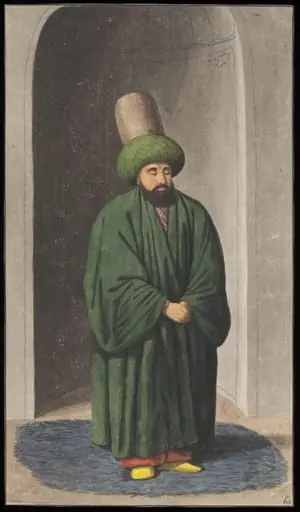
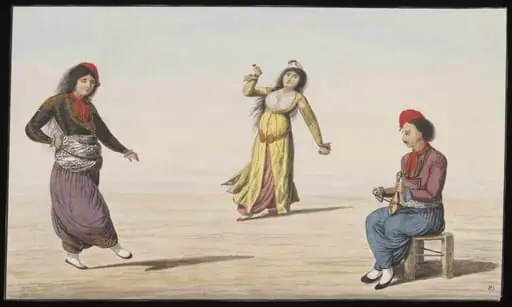
- A scene of Gypsies dancing
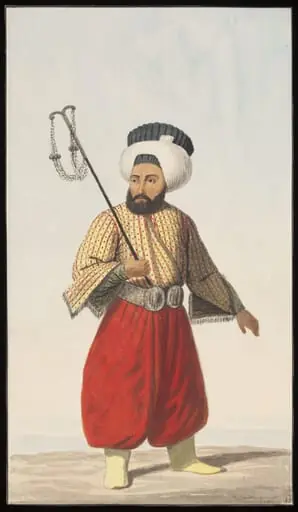
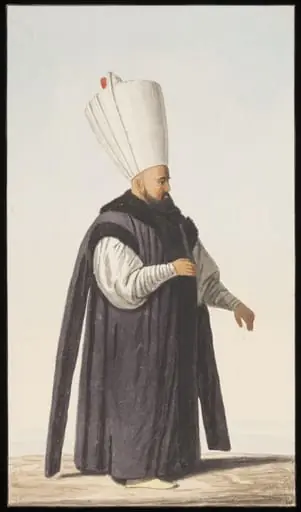
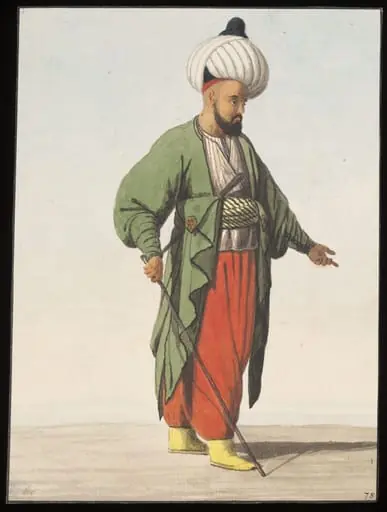 A Turkish official
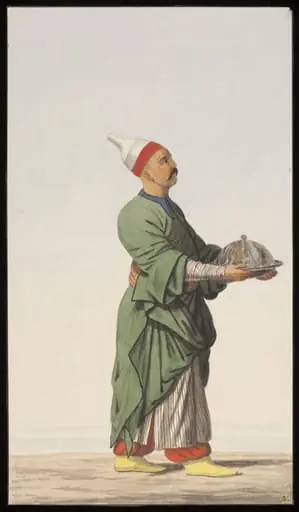 Saray Ekmekcisi, or Palace confectioner
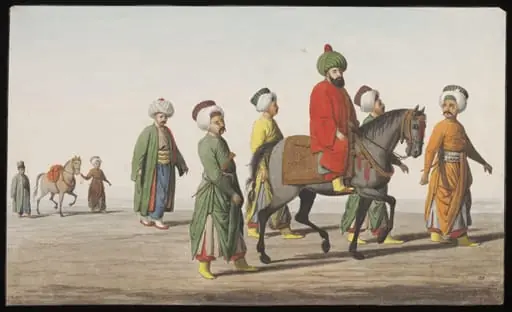 Kaymakam, or Govenor of Istanbul
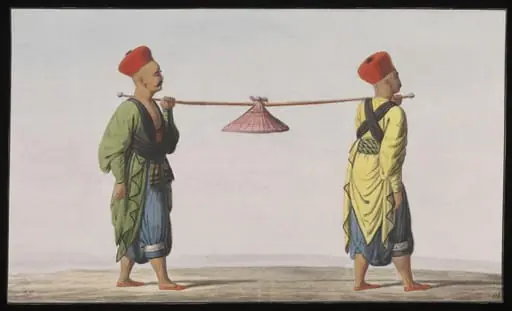 Asciler, or cooks carrying food
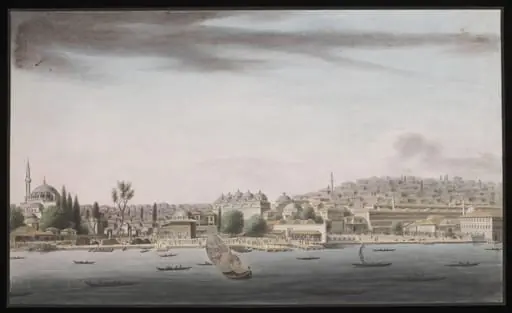 Panoramic view of the buildings on the shore at Tophane
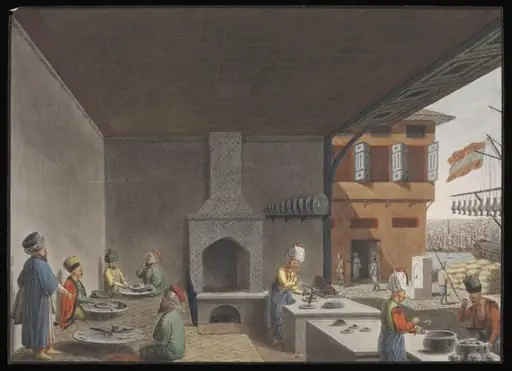 A kebab shop near the Yeni Cami
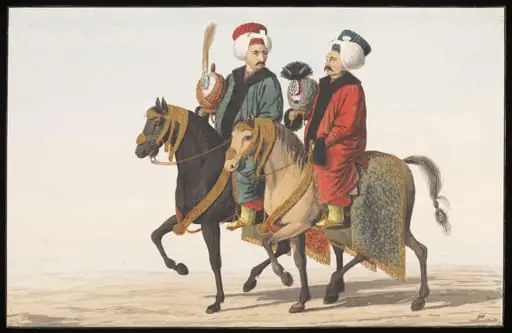 Two Royal Turban-Bearers on horseback
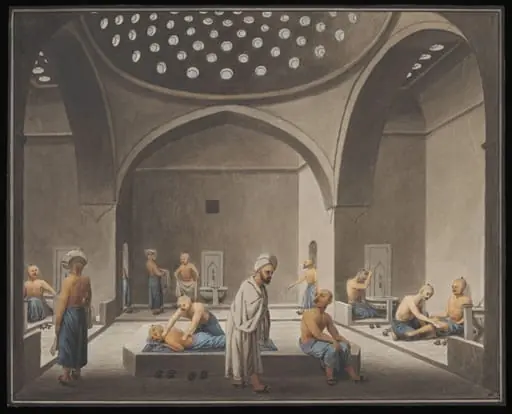 Hamam, or Turkish bath
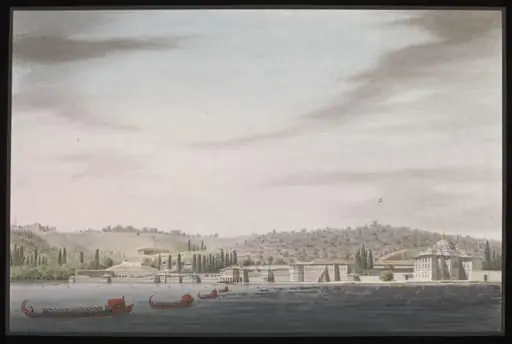 Besiktas on the Bosphorus