Artwork
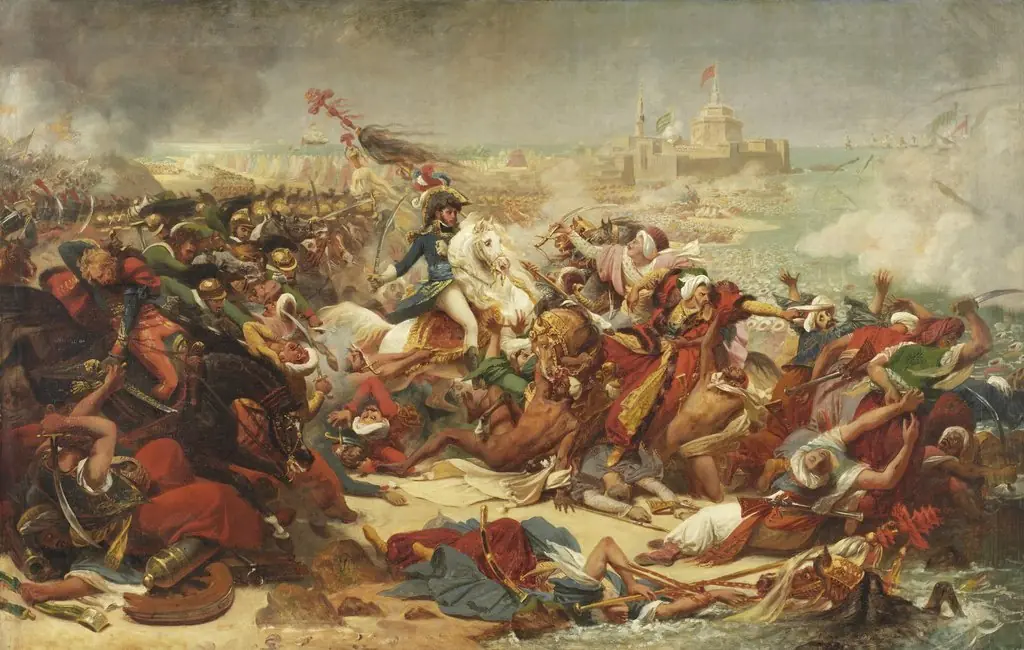
Bataille d'Aboukir, 25 Juillet 1799
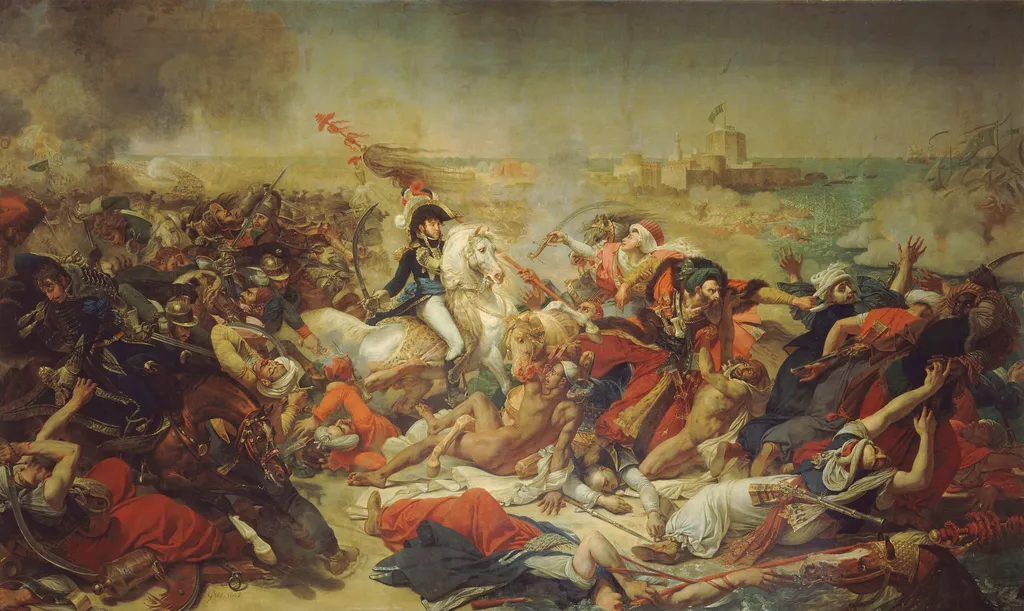
Bataille d'Aboukir, 25 Juillet 1799 is an oil painting by Antoine-Jean Gros. It dates from 1806 and is held in the collection of the Palace of Versailles. Antoine‑Jean Gros painted the Battle of Aboukir in oil on canvas between 1805 and 1806, fulfilling a commission from Joachim Murat.
About this work
Subject & Meaning
Central to the iconography is Murat, illuminated and mounted, accepting the surrender of Mustafa Pasha while trampling an enemy beneath his horse.
The painting depicts the Battle of Aboukir on July 25, 1799, focusing on the decisive cavalry charge led by General Joachim Murat against retreating Ottoman forces. The composition contrasts the organized, blue-uniformed French troops on the left with the scattered, exoticized Ottomans on the right, who are shown committing atrocities such as beheading fallen soldiers. Central to the iconography is Murat, illuminated and mounted, accepting the surrender of Mustafa Pasha while trampling an enemy beneath his horse.
Functioning as Napoleonic propaganda, the work glorifies French heroism and discipline while dehumanizing the opposition through exaggerated turbans and chaotic postures. Although Napoleon is absent from the scene, the victory serves to celebrate his leadership and restore French morale following naval losses, framing the event as a pivotal moment preceding his return to power.
Technique & Style
The work is an oil on canvas painting created in 1806 by Antoine-Jean Gros. It depicts the Battle of Aboukir on 25 July 1799, showing General Murat on horseback leading a charge against Ottoman forces, with dramatic use of dark red, blue, yellow, and brown tones to convey motion and intensity. The composition emphasizes French heroism and Ottoman disarray through contrasting colors and dynamic poses of cavalry and soldiers.
The painting serves as Napoleonic propaganda, glorifying French military valor while portraying the enemy as foreign and brutal.
The canvas measures 578 cm in height and 968 cm in width, reflecting its large-scale format typical of history paintings. It was commissioned by Joachim Murat, completed for the Salon of 1806, and has been part of the Palace of Versailles collection since 1835, displayed in the Salle du Sacre. The work exemplifies Romantic-era emphasis on emotion and dramatic lighting, with swirling dust and smoke enhancing the chaotic atmosphere of battle.
History & Provenance
Antoine-Jean Gros painted Bataille d'Aboukir, 25 Juillet 1799, in 1806 as a commission by Joachim Murat for Napoleonic propaganda celebrating the French victory at Aboukir Bay on 25 July 1799. The work was first displayed at the Salon of 1806, entered the National Palace of Naples in 1808, was acquired by the Musée du Luxembourg in 1833, and has been in the collection of the Palace of Versailles since 1835. Its provenance includes the original preparatory sketch now held by the Detroit Institute of Arts, and it remains displayed in the Salle du Sacre at Versailles, a gallery created in 1834 to honor Napoleon's military legacy.
Bataille d'Aboukir, painted in 1806 by Antoine-Jean Gros, is housed in the Salle du Sacre at the Palace of Versailles. Its inventory numbers are MV 2276 and INV 5065, reflecting its accession into the collections of the Musée national des châteaux de Versailles et de Trianon. The work entered the Musée du Luxembourg in 1833 and has remained in Versailles since 1835, forming part of the gallery’s Napoleonic propaganda program.
The painting was exhibited at the Salon of 1806, marking its first public presentation. It was commissioned by Joachim Murat, later acquired for the Musée du Luxembourg, and has been displayed continuously in the Salle du Sacre since the gallery’s creation in 1834.
Context
Antoine-Jean Gros painted Bataille d'Aboukir in 1806 as a commissioned work celebrating French military triumphs, particularly the 1799 victory over Ottoman forces in Egypt. The painting, housed in the Salle du Sacre at Versailles since 1835, embodies Napoleonic propaganda through its dramatic composition and emphasis on heroism, focusing on General Murat's charge amid scenes of Ottoman defeat and French valor. Gros employed a Romantic style marked by dynamic movement, a muted palette of red, blue, yellow, and brown, and meticulous historical detail, including symbolic beheadings reflecting Ottoman practices that outraged French troops.
The work aligns with the broader 19th-century effort to memorialize Napoleon’s legacy, situating the battle as a pivotal moment in his rise despite the campaign’s overall stalemate. Its placement in the Sacre gallery underscores its role in mythologizing Napoleon’s leadership, even as the artwork itself omits his direct presence, instead channeling his influence through Murat and the triumphant narrative of French exceptionalism.
Legacy
The Battle of Aboukir has been recognized as a classic example of Napoleonic propaganda art, noted for its attention to historical detail and emotional intensity, and for its role in glorifying French heroism while brutalizing the image of the Ottomans. Its influence extends through an original preparatory sketch, Murat Defeating the Turkish Army at Aboukir, which survives and is now displayed at the Detroit Institute of Arts, allowing the composition to be studied alongside the final canvas. The work also holds a place in art-historical scholarship through its inclusion in Claire Constans's catalogue of the Musée national du château de Versailles (1995), where it is recorded under inventory number MV 2276.
Displayed in the Salle du Sacre at Versailles since 1835, it remains part of a gallery originally built under Louis Philippe I to celebrate Napoleonic military and political achievement, securing the painting's enduring presence within the visual memory of the Napoleonic era.
Overview
Antoine‑Jean Gros painted the Battle of Aboukir in oil on canvas between 1805 and 1806, fulfilling a commission from Joachim Murat. The work was presented at the Salon of 1806 and later entered the collections of the Musée du Luxembourg, before being transferred to the Palace of Versailles, where it remains.
Own this work as a print
Artist & collection
Artist
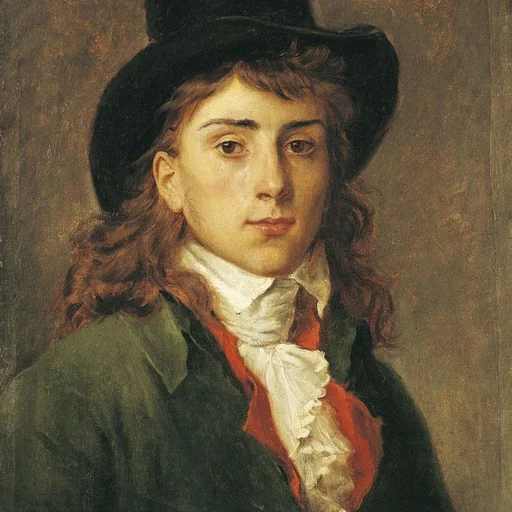
Antoine-Jean Gros (French pronunciation:; 16 March 1771 – 25 June 1835) was a French painter of historical subjects.

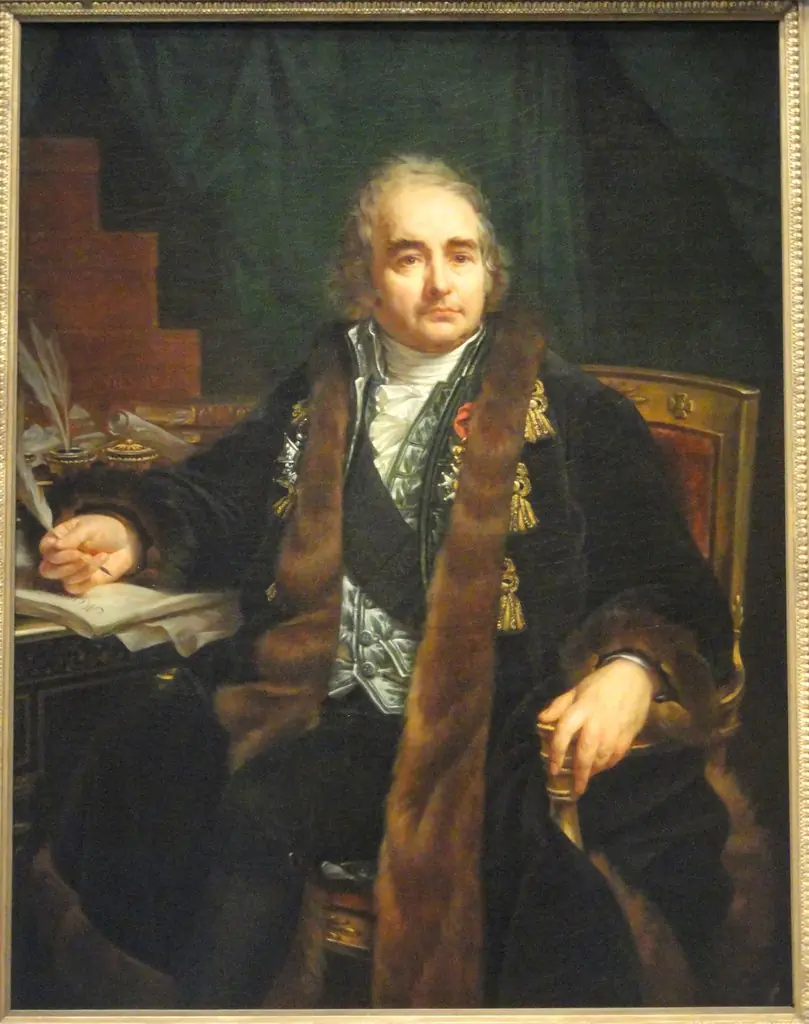
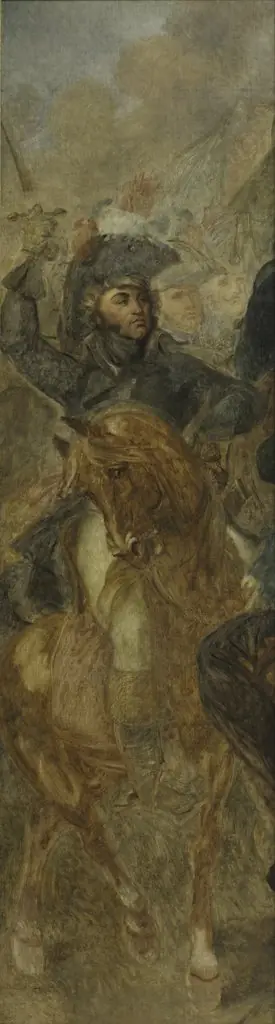
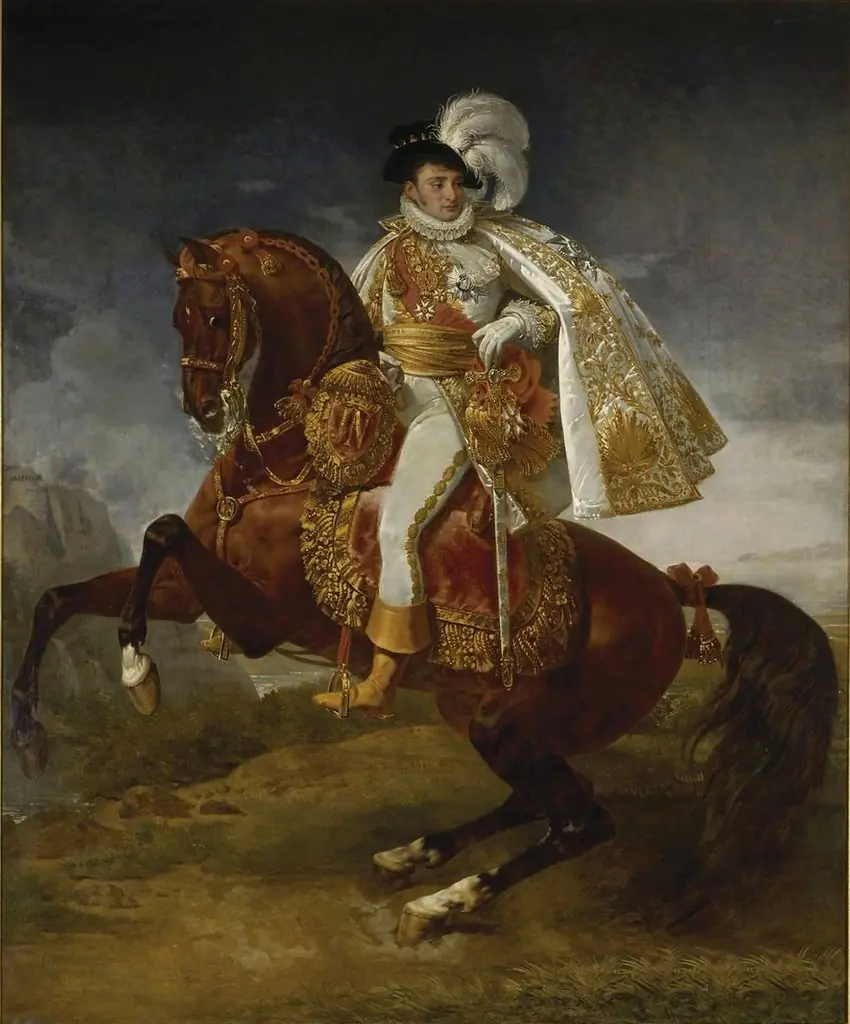
- Napoleon dismounting with an injured foot at Regensburg, aided by the Surgeon, Yvan, April 23, 1809
 Battle on a Bridge
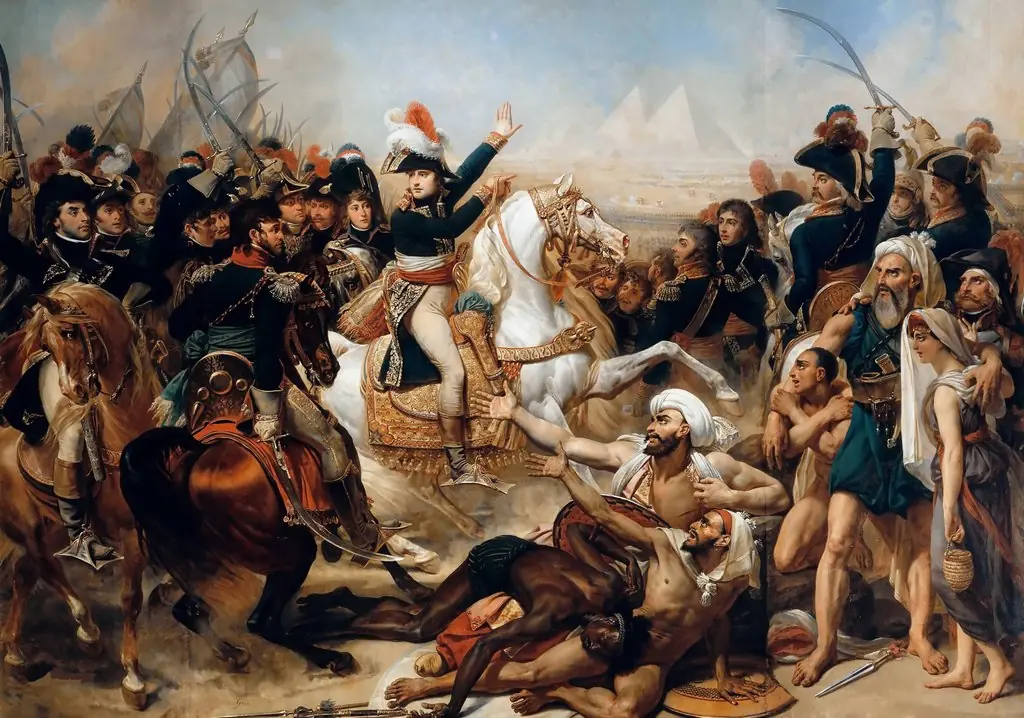 The Battle of the Pyramids
 Murat Defeating the Turkish Army at Aboukir
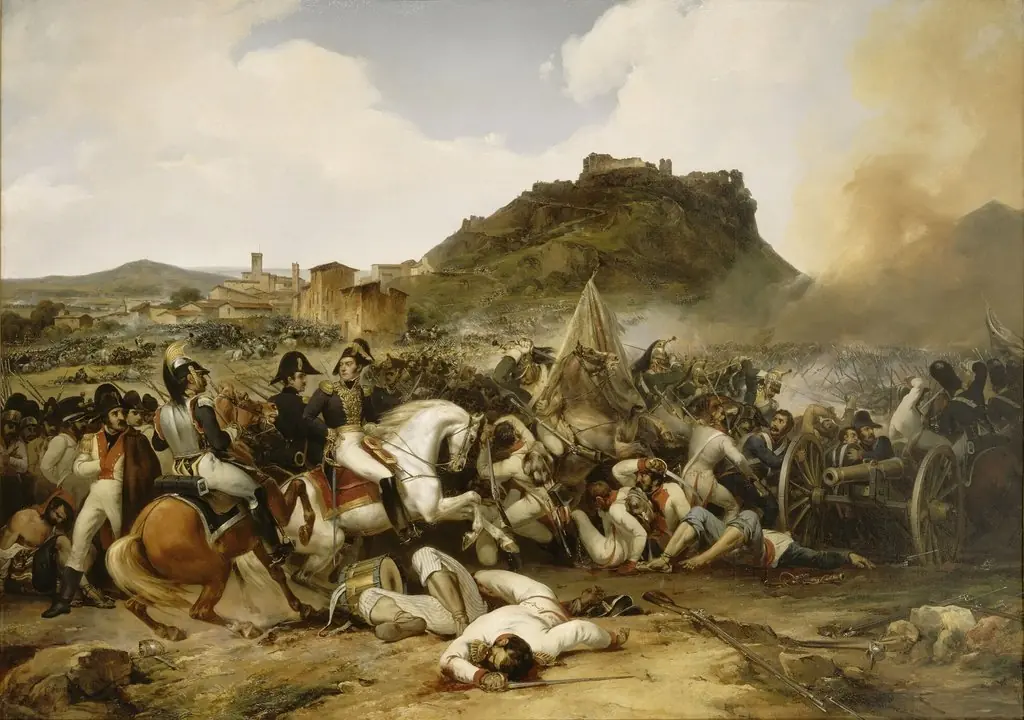 Battle of Castalla, July 21, 1812
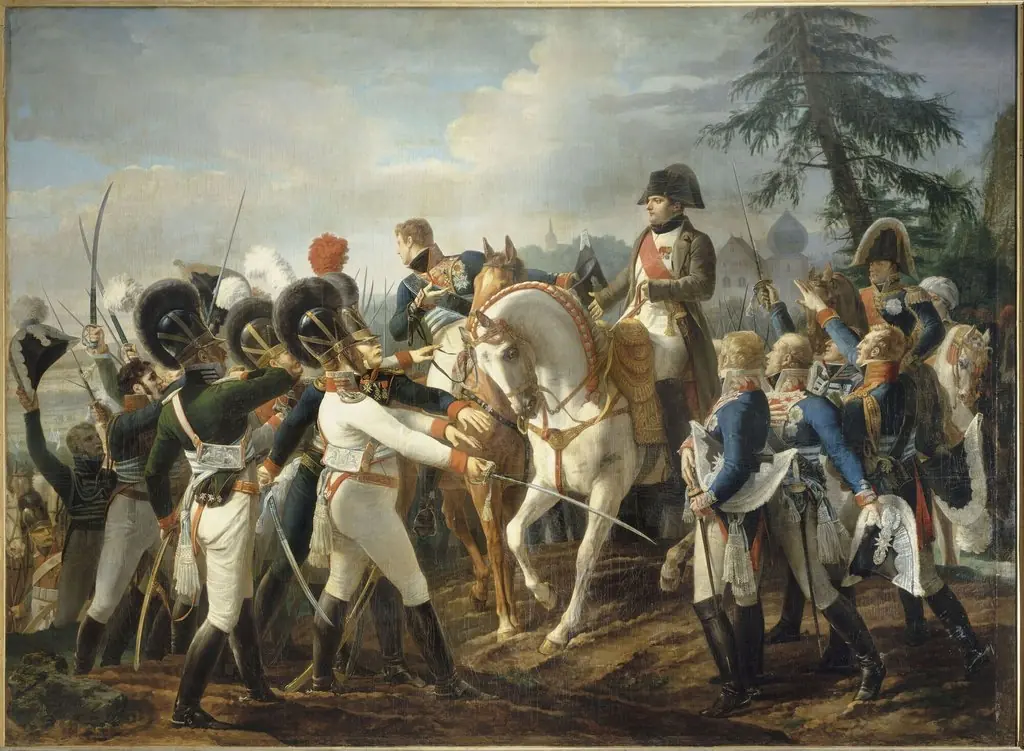 Napoléon harangue les troupes bavaroises et wurtembourgeoises à Abensberg, 20 avril 1809
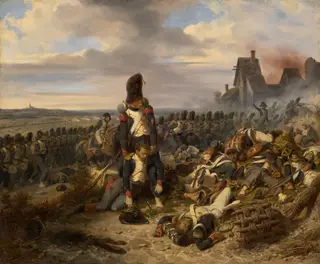 Battle Scene
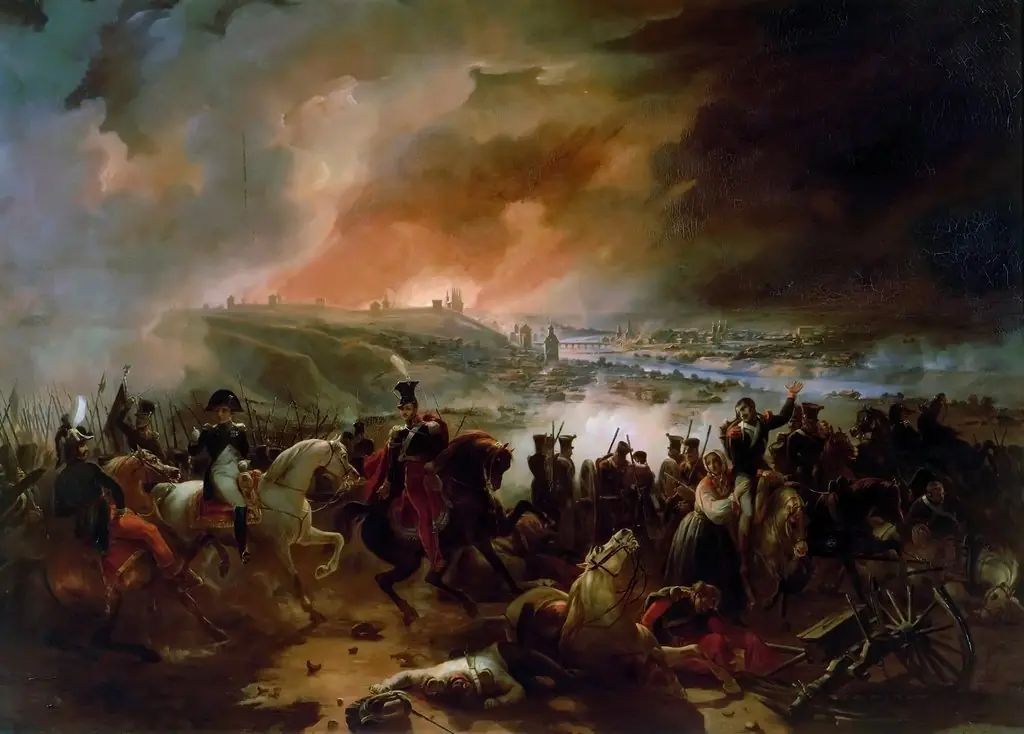 The Battle of Smolensk, 17th August 1812
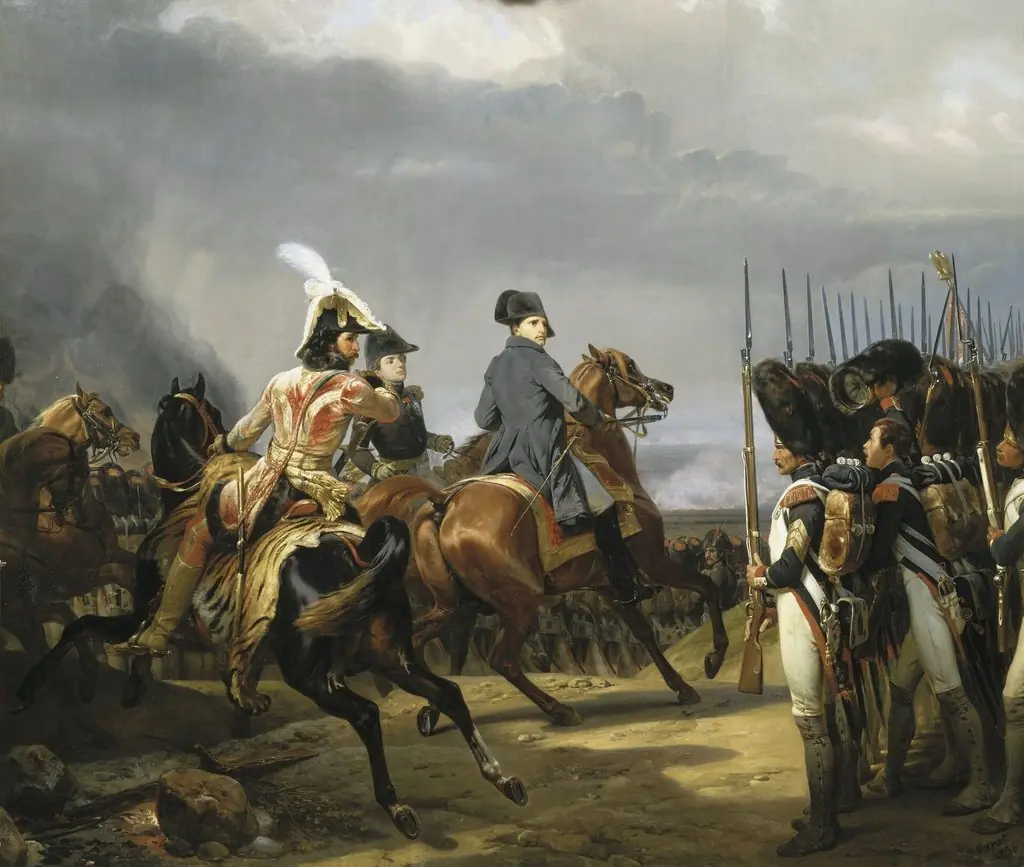 The battle of Jena, October 14, 1806
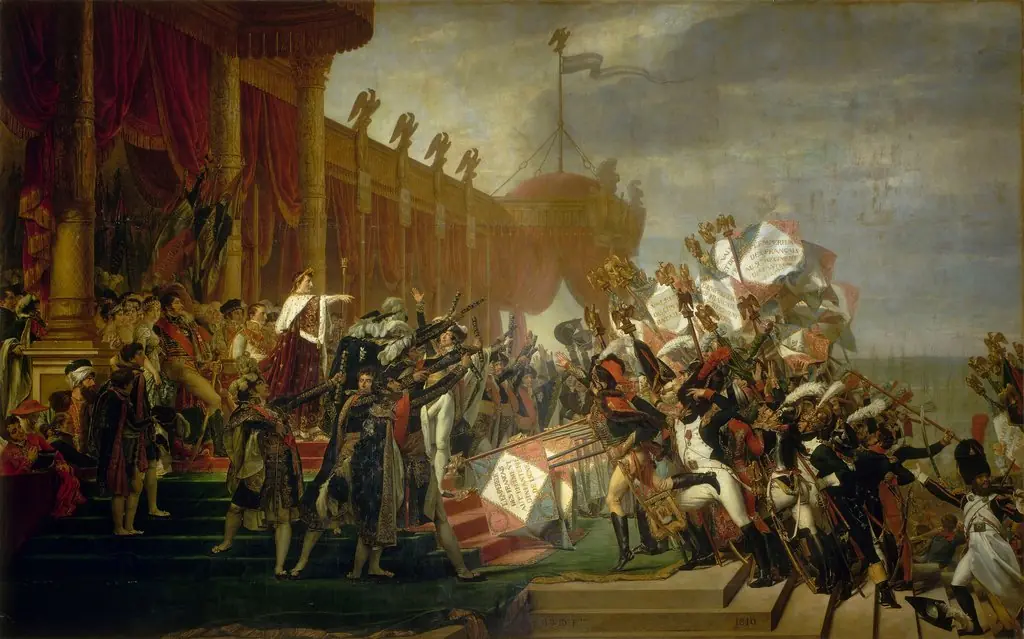 The Distribution of the Eagle Standards
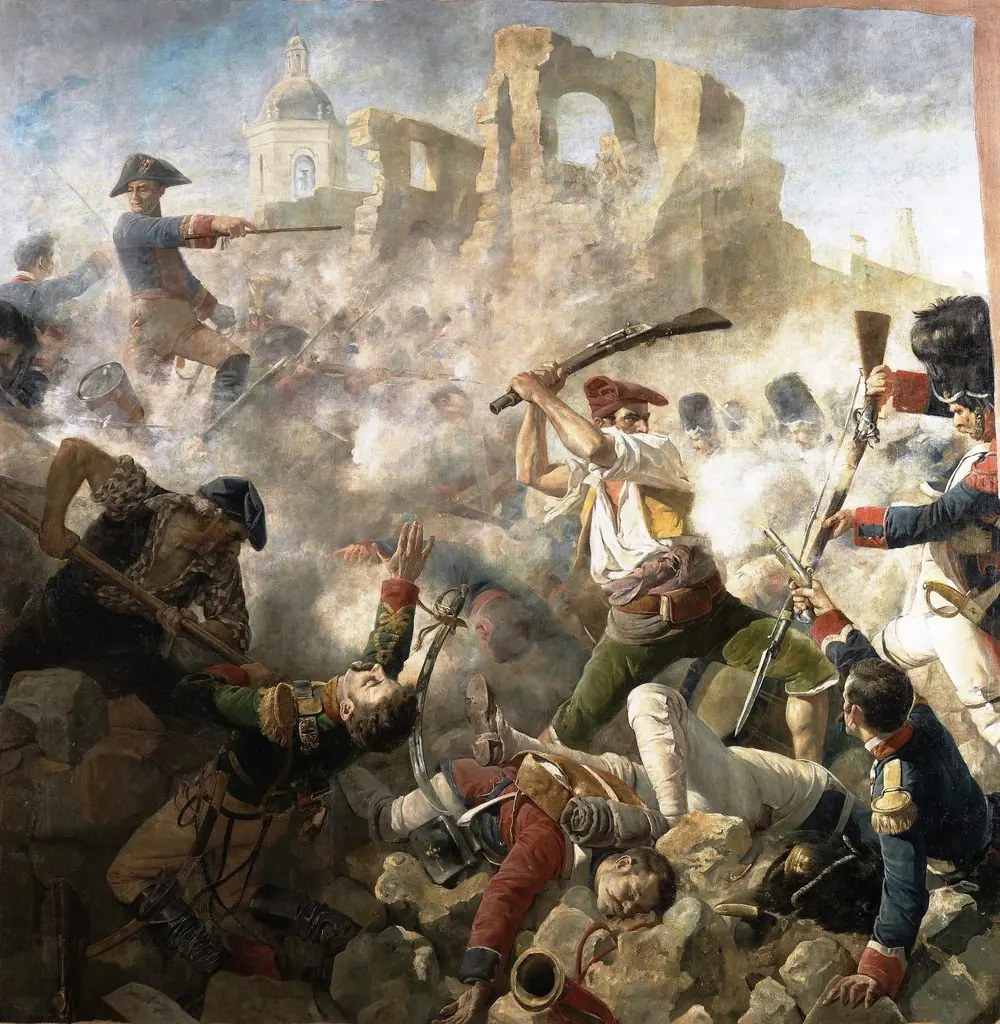 El gran día de Gerona (19 septiembre de 1809)
 Battle Scene