Artwork
The Distribution of the Eagle Standards
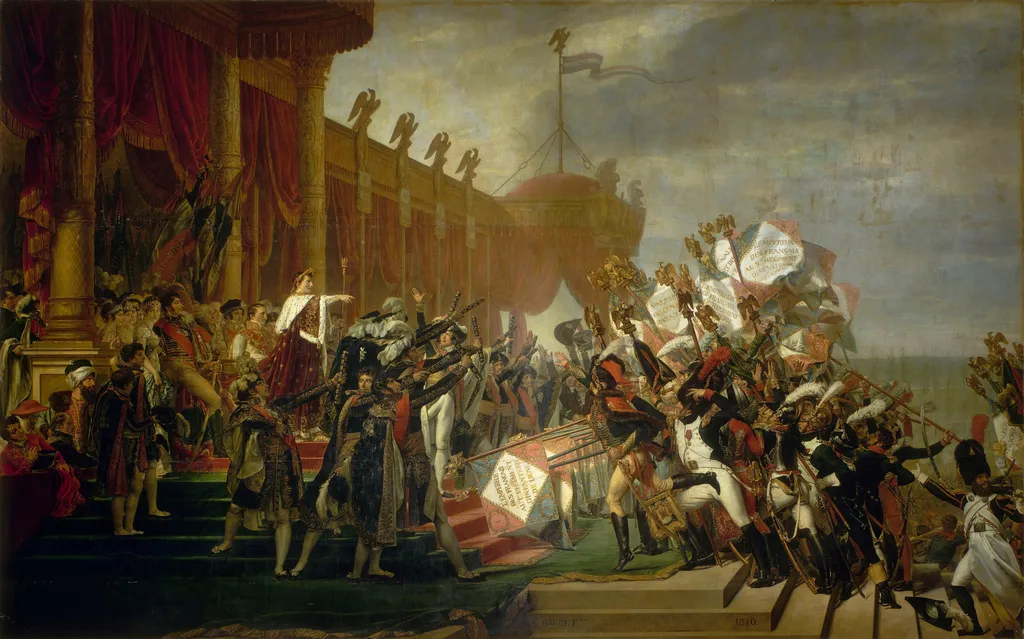
The Distribution of the Eagle Standards is an oil painting by the Neoclassicist artist Jacques-Louis David. It dates from 1810 and is held in the collection of the Palace of Versailles.
About this work
Technique & Style
David employed a dynamic spatial organization, contrasting a tranquil, solemn left side with a pyramidal, energetic right side.
Executed in oil paint between 1805 and 1810, this monumental history painting measures 610 by 931 centimeters. The work exemplifies the Neoclassical style, characterized by a composition heavily influenced by the friezes on Trajan's Column and the earlier Oath of the Horatii. David employed a dynamic spatial organization, contrasting a tranquil, solemn left side with a pyramidal, energetic right side.
Although the upper section appears empty due to the removal of an allegorical winged figure of Victory to satisfy Napoleon's demand for historical realism, the lighting strategically focuses on the Emperor. The artist adjusted the composition to reflect political shifts, notably omitting Joséphine and repositioning former republican banners behind the throne to display battle names like Lodi and Rivoli, while a soldier in the foreground carries a rolled flag inscribed with 'République'.
History & Provenance
Jacques-Louis David received an imperial commission in 1805 to produce four monumental canvases depicting Napoleonic coronation ceremonies, including this work. Although he began studies by June 1805, the painting was not completed until 1810. It was first exhibited at the Salon of 1810, which opened on 5 November at the Louvre.
The work originally served as propaganda for the Tuileries Palace before entering the collection of the Palace of Versailles in 1837, where it remains in the Salle du Sacre. During its creation Napoleon intervened in the composition, requesting the removal of a winged Victory figure to ensure historical accuracy and the exclusion of Empress Joséphine following their 1809 divorce. The work is held in the Musée national des châteaux de Versailles et de Trianon under the inventory numbers MV 2278, INV 3700, and MR 1438.
Context
Commissioned as part of a propagandistic series illustrating Napoleon's coronation, this 1810 work marks a shift in Jacques-Louis David's approach from the critical ideology present in his earlier Consecration to outright apotheosis of the regime. Scholars identify the composition as a militant revival of the artist's Oath of the Horatii, utilizing the classical adlocutio gesture and drawing structural inspiration from Trajan's Column to evoke Roman imperial ethos. The painting's historical narrative was heavily manipulated by Napoleon; allegorical figures of Victory were removed to ensure realism, while Empress Joséphine was erased following their 1809 divorce, creating compositional gaps.
Furthermore, the placement of old Republican flags behind the throne and the removal of the word 'Republic' from imperial titles visually cemented the transition from republic to empire. Exhibited at the 1810 Salon, the work stands as a definitive example of Neoclassical art serving state power.
Legacy
The Distribution of the Eagle Standards became a key reference for Neoclassical propaganda after its Salon debut in 1810. The canvas entered the Musée national des châteaux de Versailles, where it has been displayed in the Salle du Sacre alongside David's Sacre. Contemporary scholars note its role as a shift from David's critical stance to an explicit apologia for the Empire, using ancient Roman motifs to legitimize Napoleonic authority.
The work's composition, studied in later oil sketches, continues to inform analyses of military symbolism and state ceremony, and its enduring presence in museum displays and scholarly literature underscores its lasting impact on the perception of Napoleonic ritual.
Overview
Jacques-Louis David's 1810 oil painting, The Distribution of the Eagle Standards, commemorates a pivotal military ceremony from 1804. This grand composition depicts Napoleon Bonaparte, newly crowned Emperor of the French, presiding over an assembly where new regimental standards were presented. The artwork, a large-scale oil on canvas, captures a moment designed to reinforce loyalty and imperial authority, featuring a dense crowd of figures, some on horseback, amidst a formal setting with architectural elements and draped fabrics.
Subject & Meaning
The painting illustrates the "Oath of the army made to the emperor after the distribution of the eagles at the field of Mars" on December 5, 1804. Napoleon orchestrated this event to revive the martial spirit and symbolism of the Roman Empire, where legions carried eagle standards. By distributing these new "eagles" to his regiments, he sought to cement the army's allegiance to his imperial rule and visually connect his regime to a powerful historical lineage of military might and loyalty.
Own this work as a print
Artist & collection
Artist
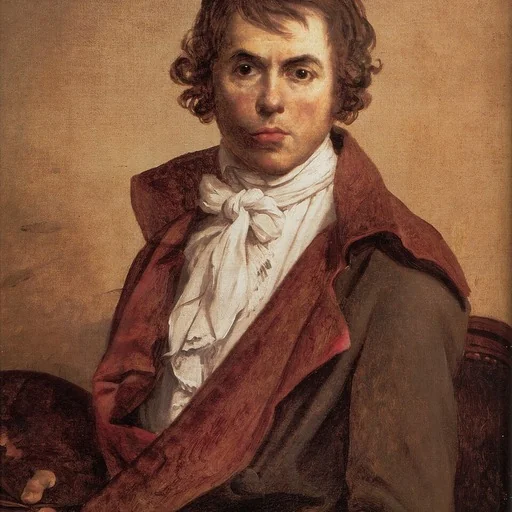
Jacques-Louis David was born in Paris on 30 August 1748 into a bourgeois family; his father died in a duel when the boy was nine, and a maternal uncle guided his education.

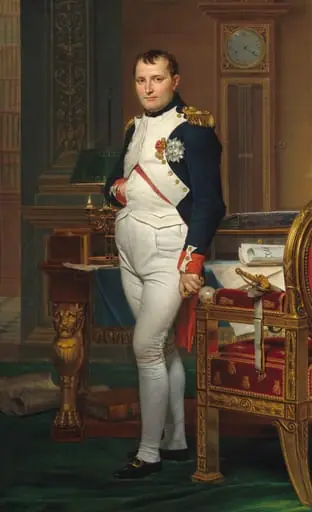 The Emperor Napoleon in His Study at the Tuileries
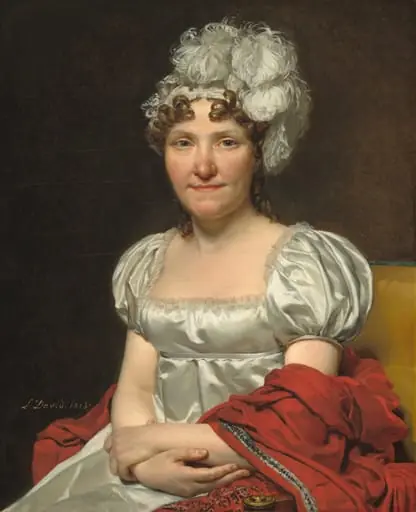 Madame David
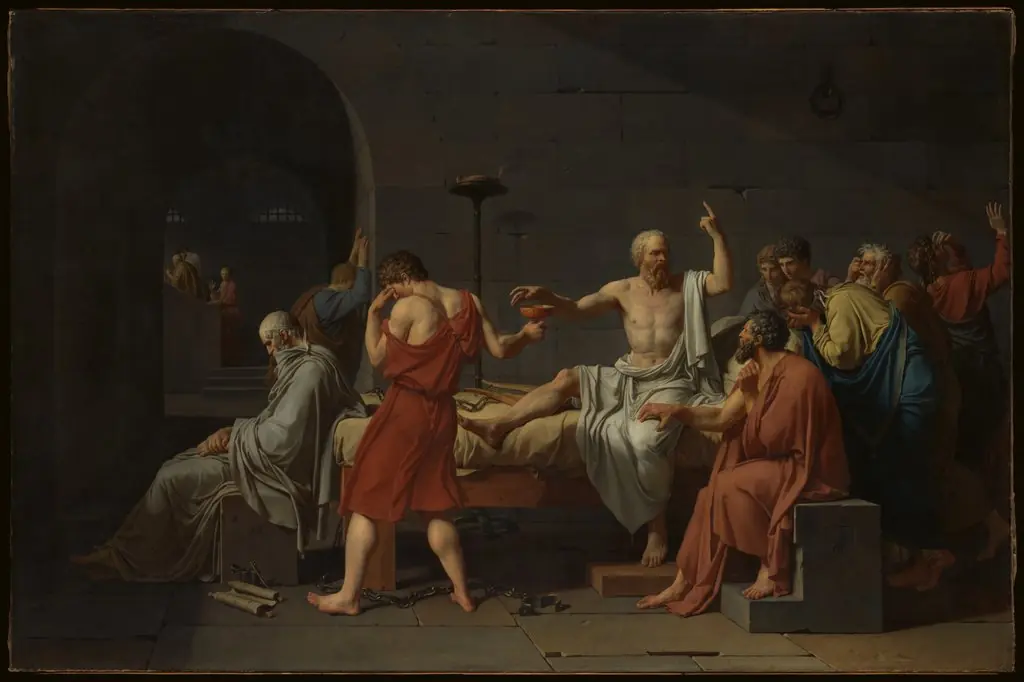 The Death of Socrates
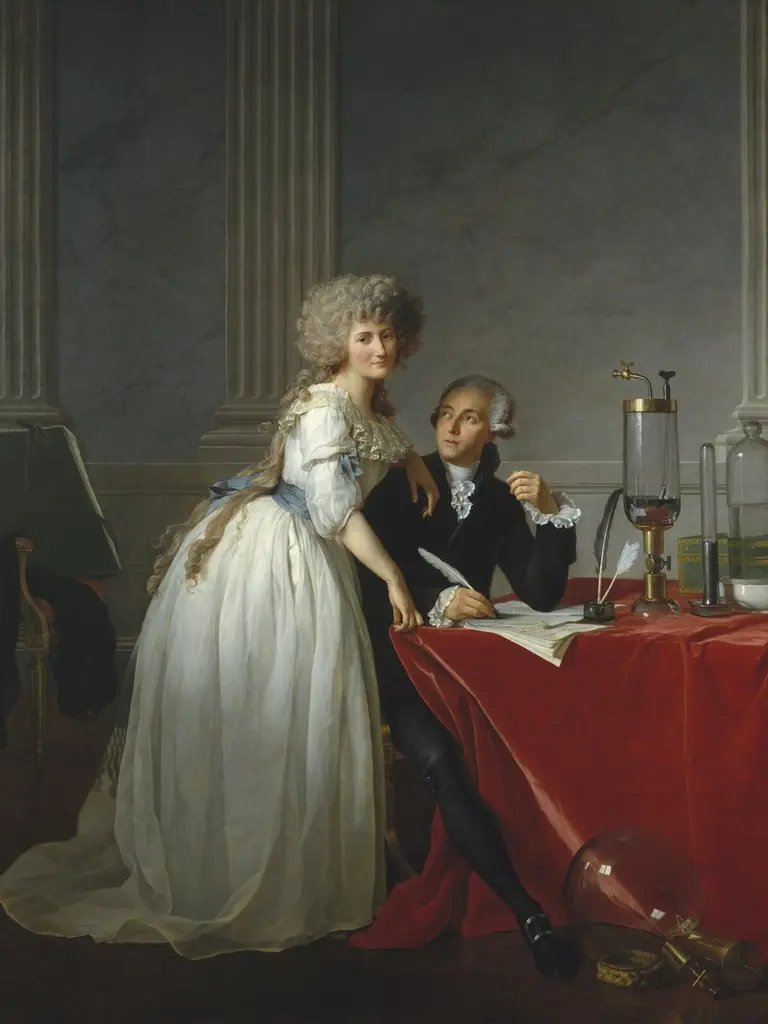 Portrait of Antoine-Laurent Lavoisier and his wife
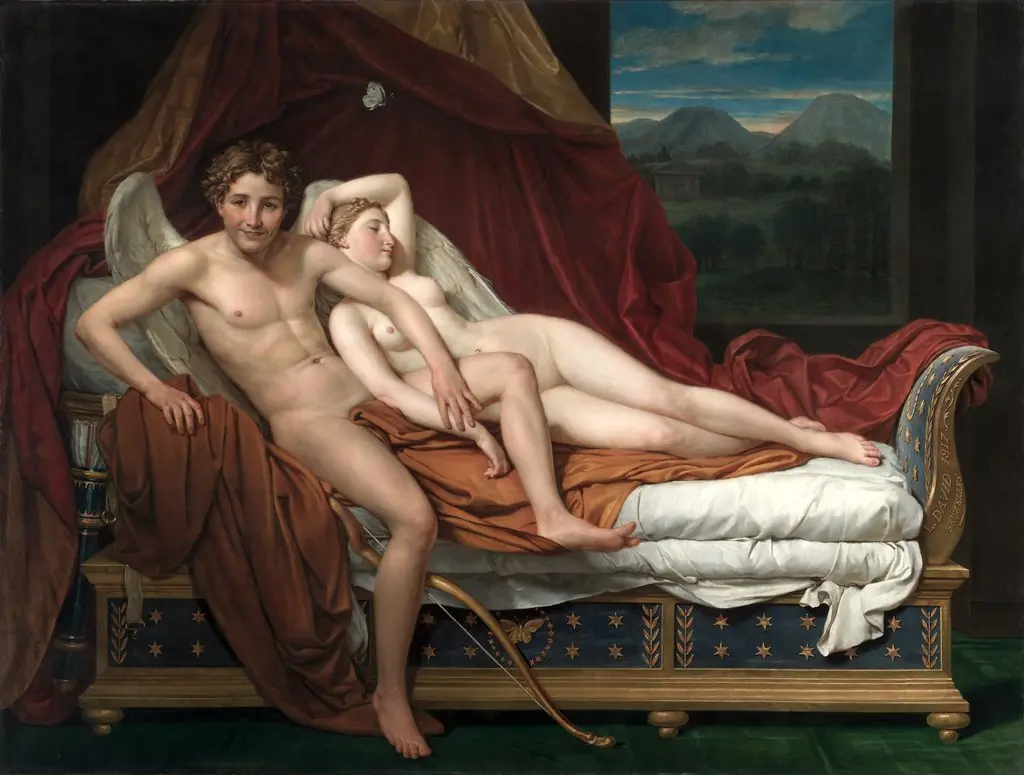 Cupid and Psyche
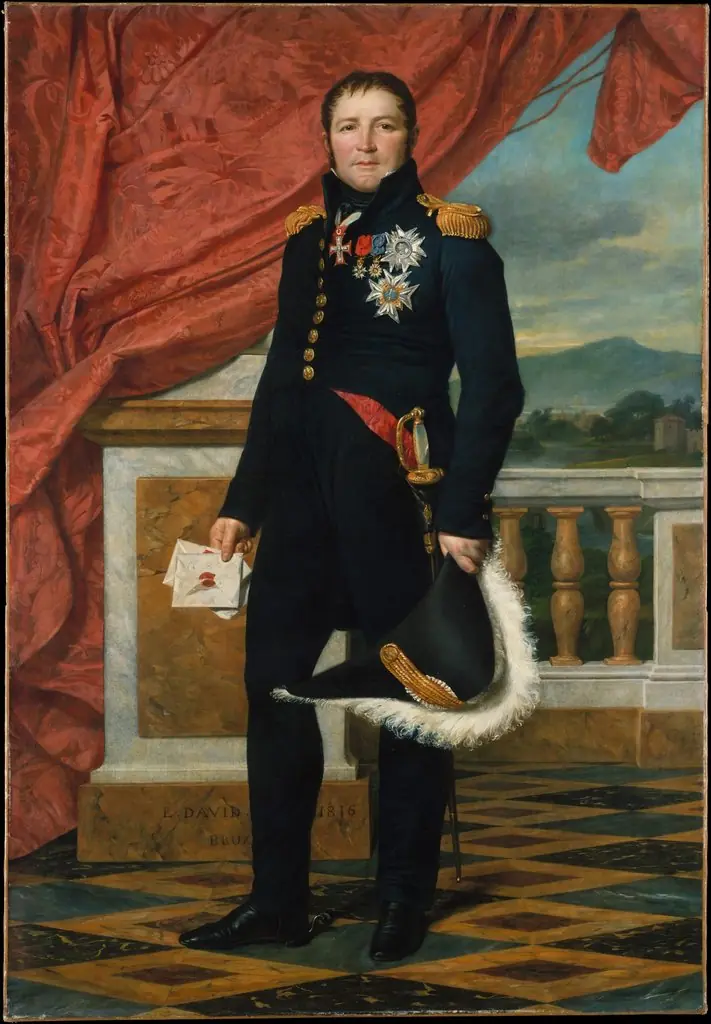 General Étienne-Maurice Gérard (1773–1852), Marshal of France
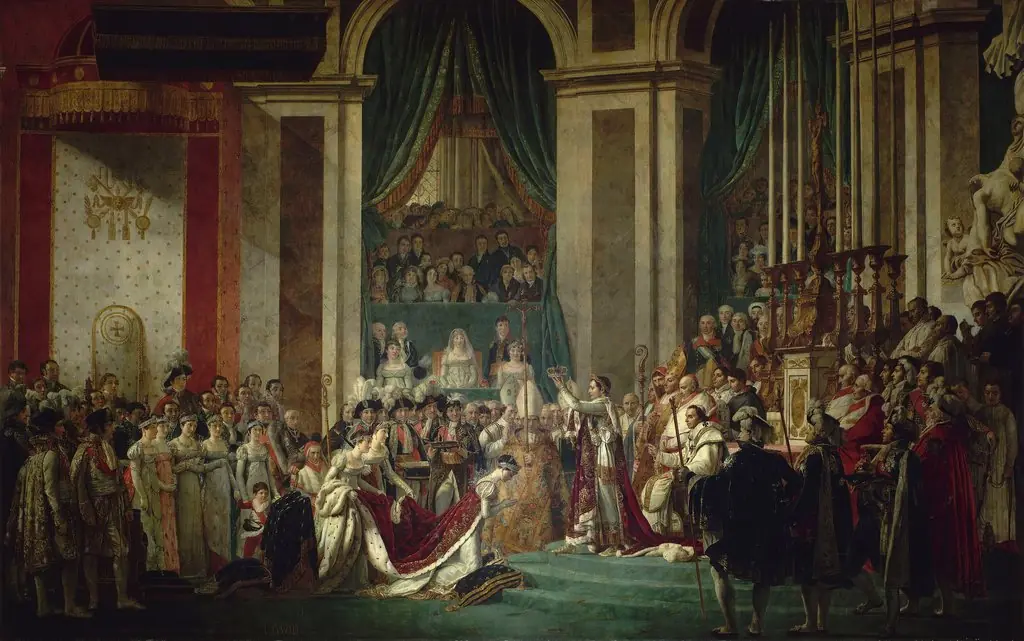 Coronation of Emperor Napoleon I and Coronation of the Empress Josephine
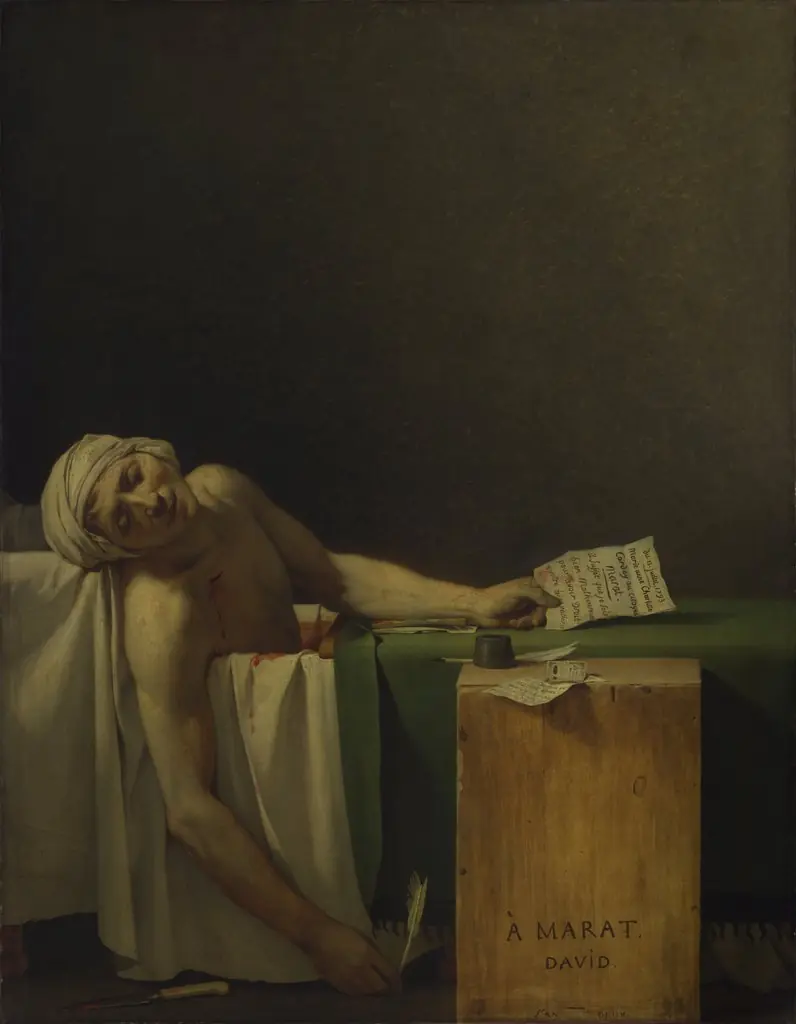 The Death of Marat
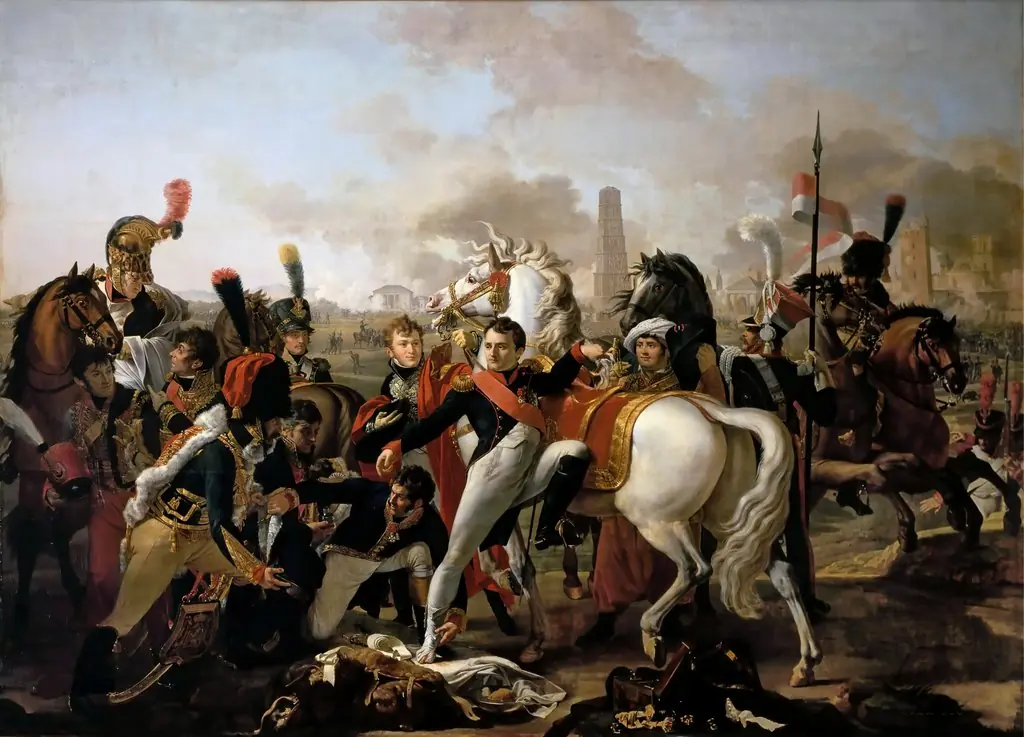
- Napoleon dismounting with an injured foot at Regensburg, aided by the Surgeon, Yvan, April 23, 1809
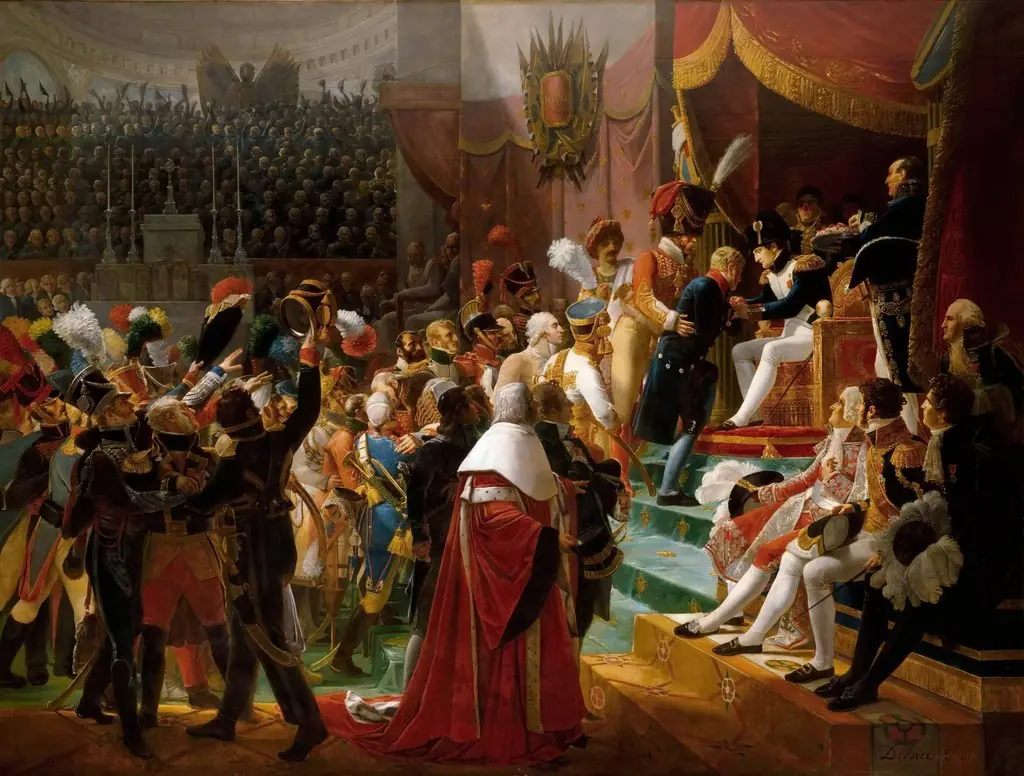 First distribution of the decorations of the Legion of Honor, made by Bonaparte, in the church of the imperial hotel of Invalides, July 14, 1804
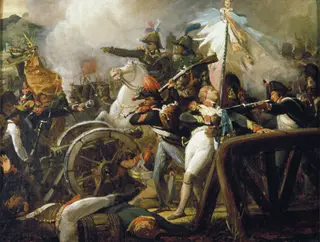 Battle on a Bridge
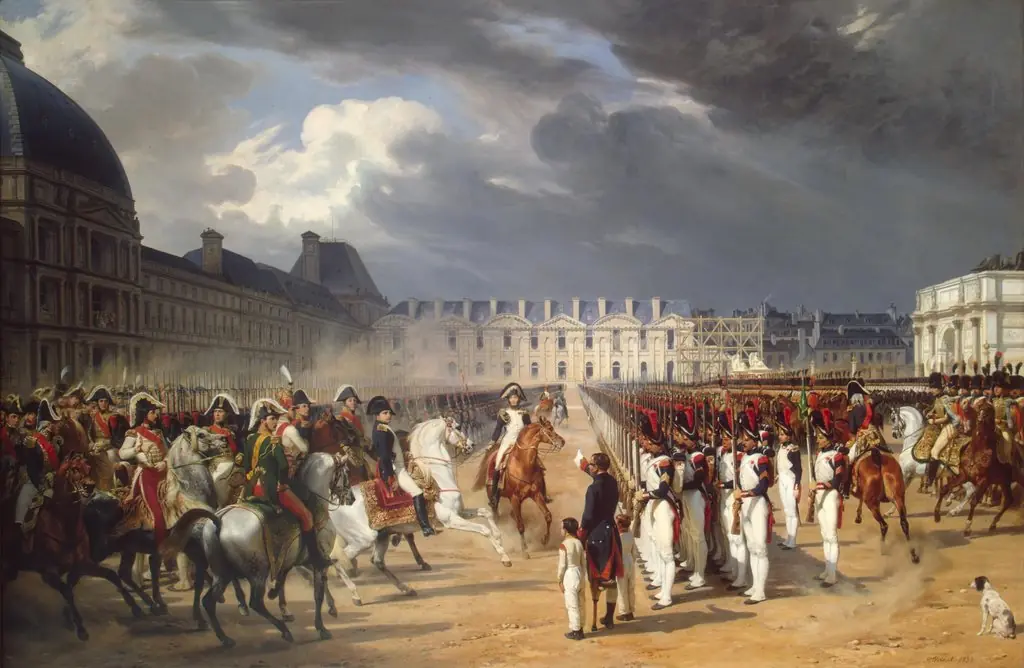 Invalid handing a petition to Napoleon at the parade in the court of the Tuileries Palace
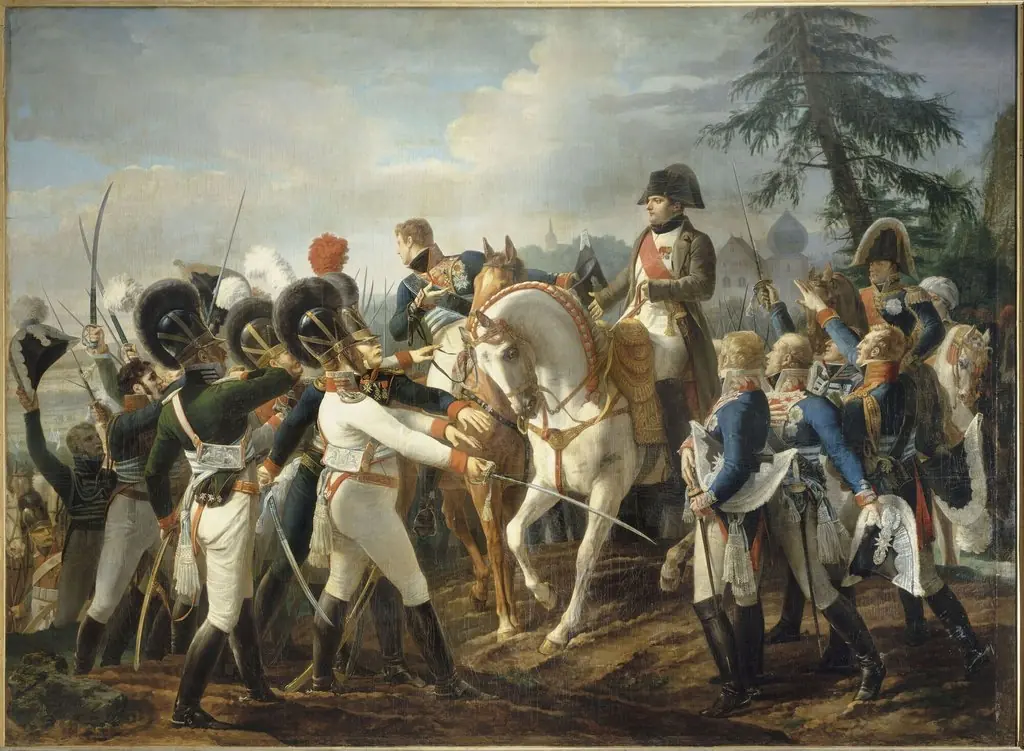 Napoléon harangue les troupes bavaroises et wurtembourgeoises à Abensberg, 20 avril 1809
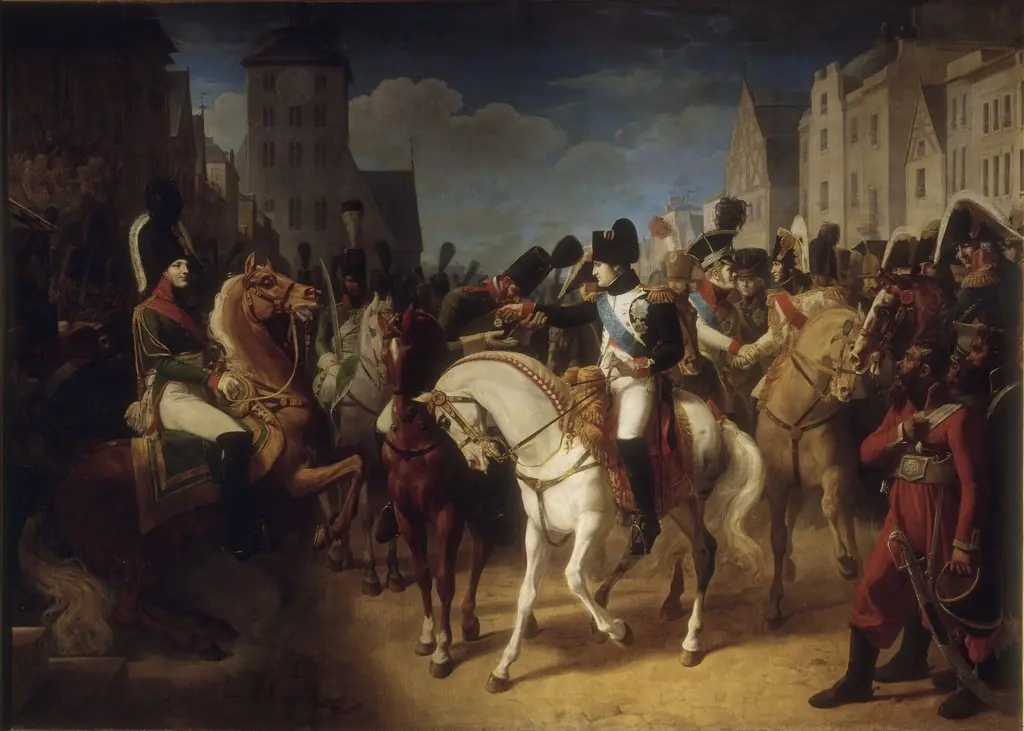 Napoleon I decorated a soldier of the Russian army in Tilsitt with the cross of the Legion of Honor
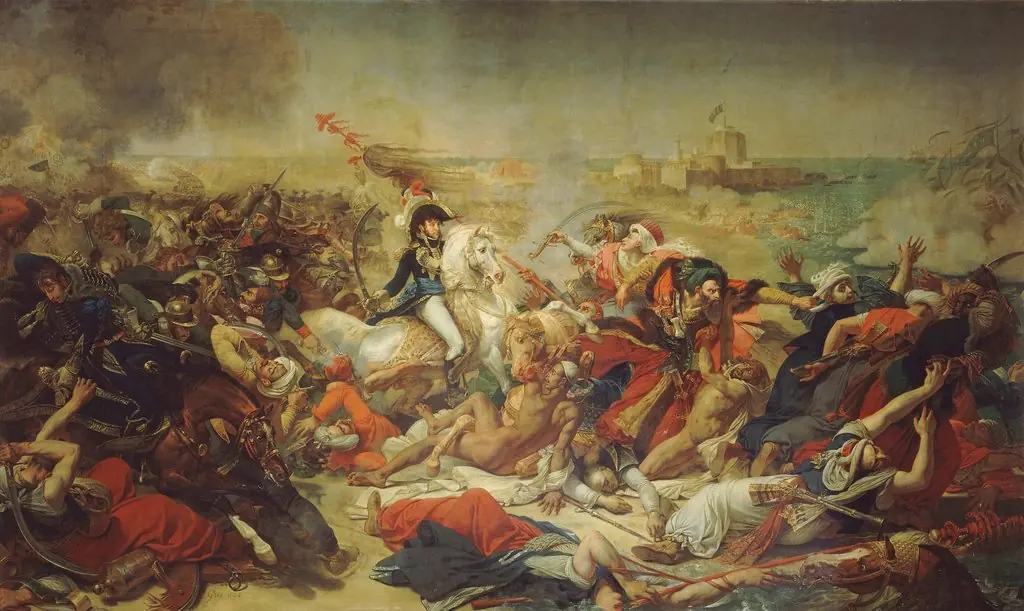 Bataille d'Aboukir, 25 Juillet 1799
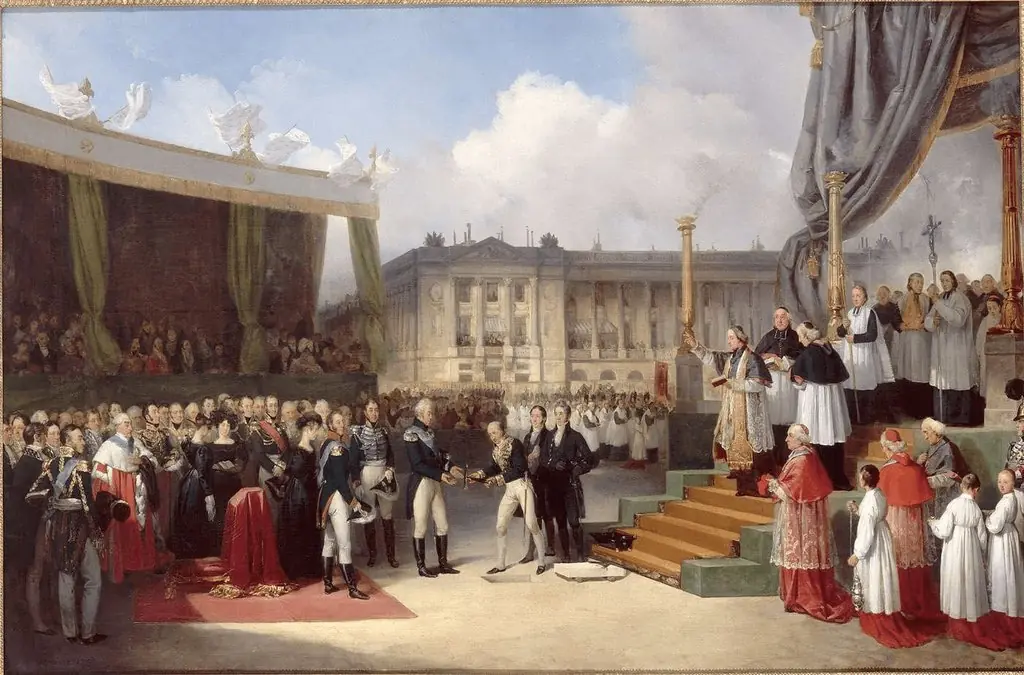 Inauguration du monument à la mémoire de Louis XVI par Charles X, place de la Concorde, 3 mai 1826
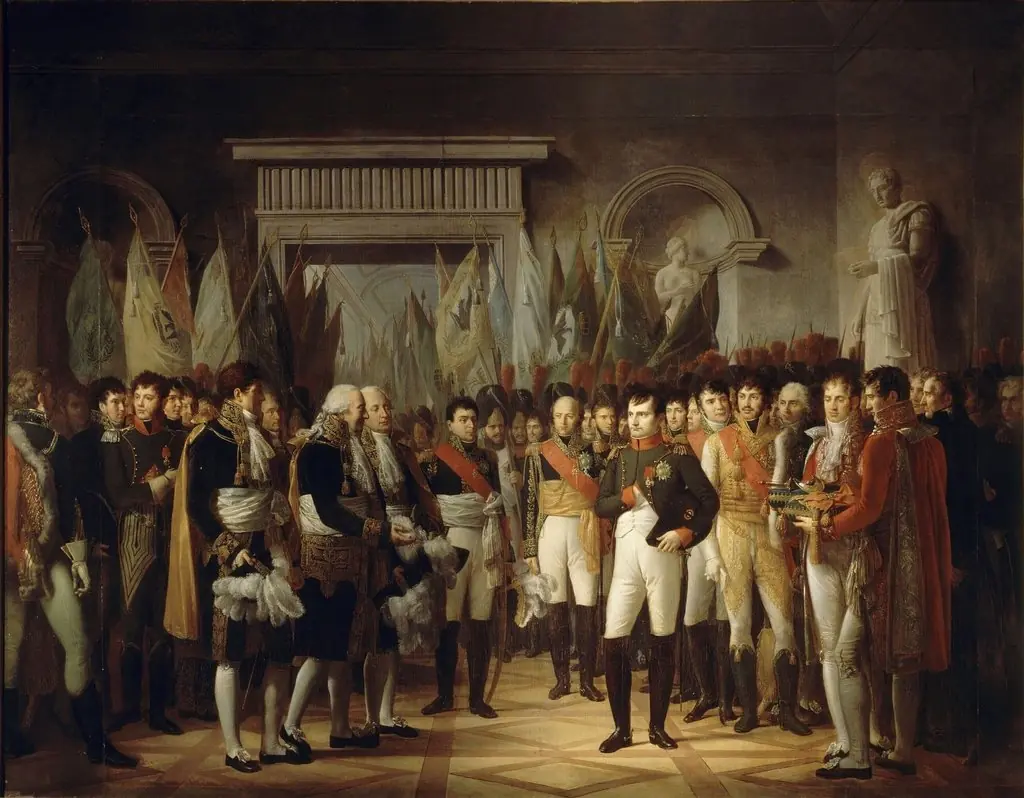 The Emperor receiving the deputies of the Conservative Senate in Berlin at the royal palace, 19 November 1806
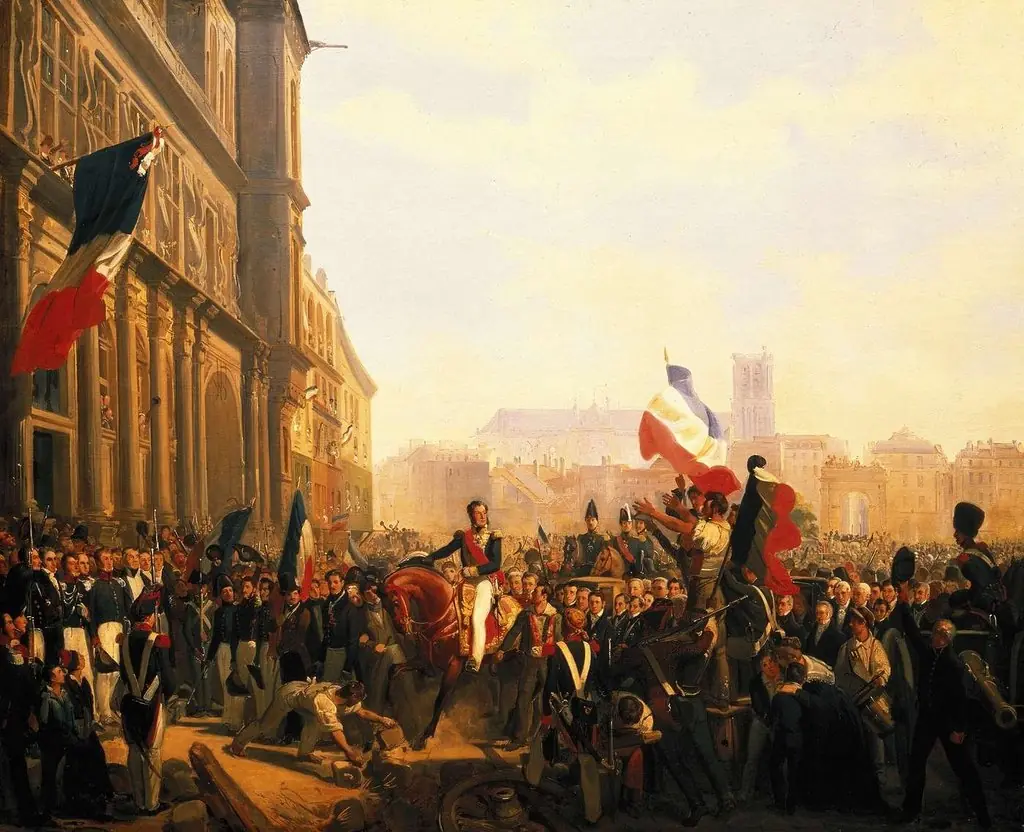 Louis-Philippe, duc d'Orléans, lieutenant général du royaume, arrive à l'Hôtel de ville de Paris, 31 juillet 1830
 Attentat de Fieschi. Revue de la Garde nationale, 28 juillet 1835