Artwork
El gran día de Gerona (19 septiembre de 1809)
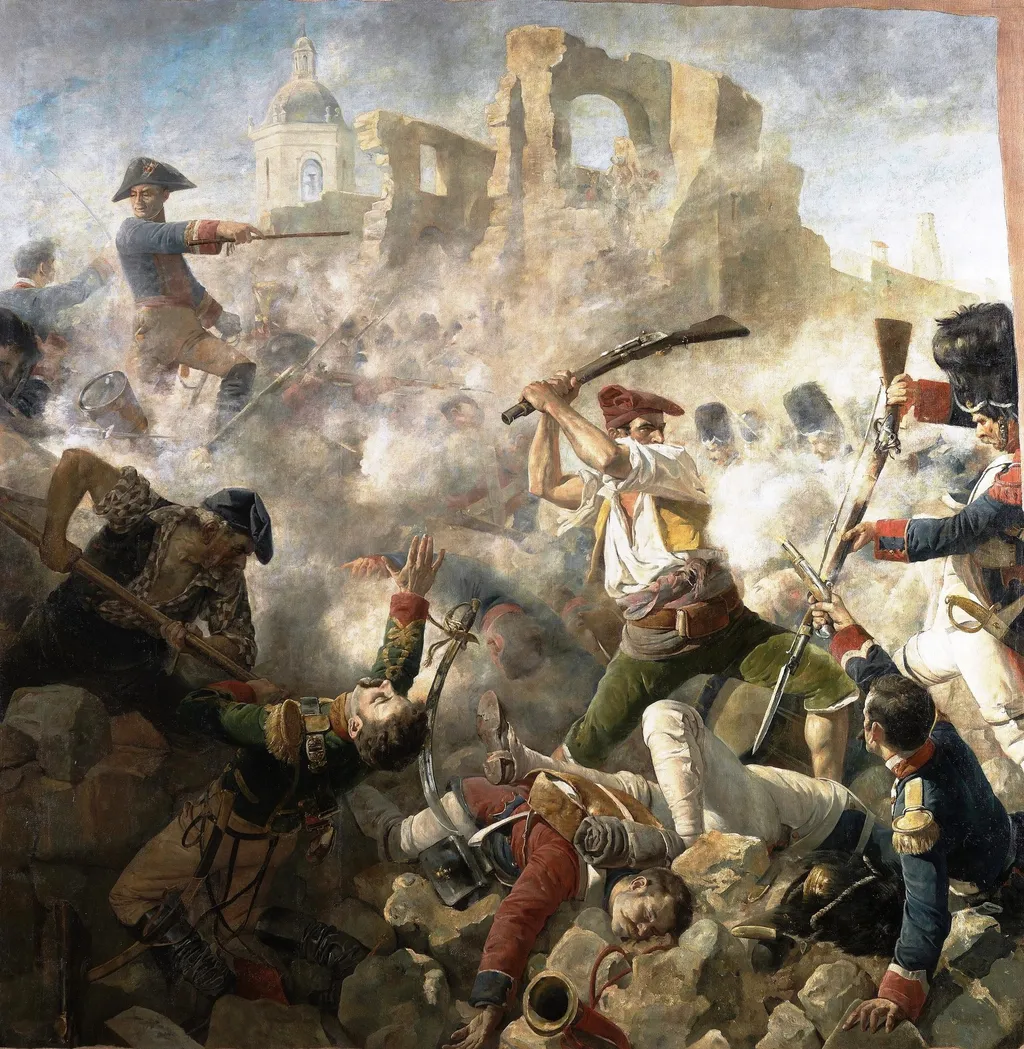
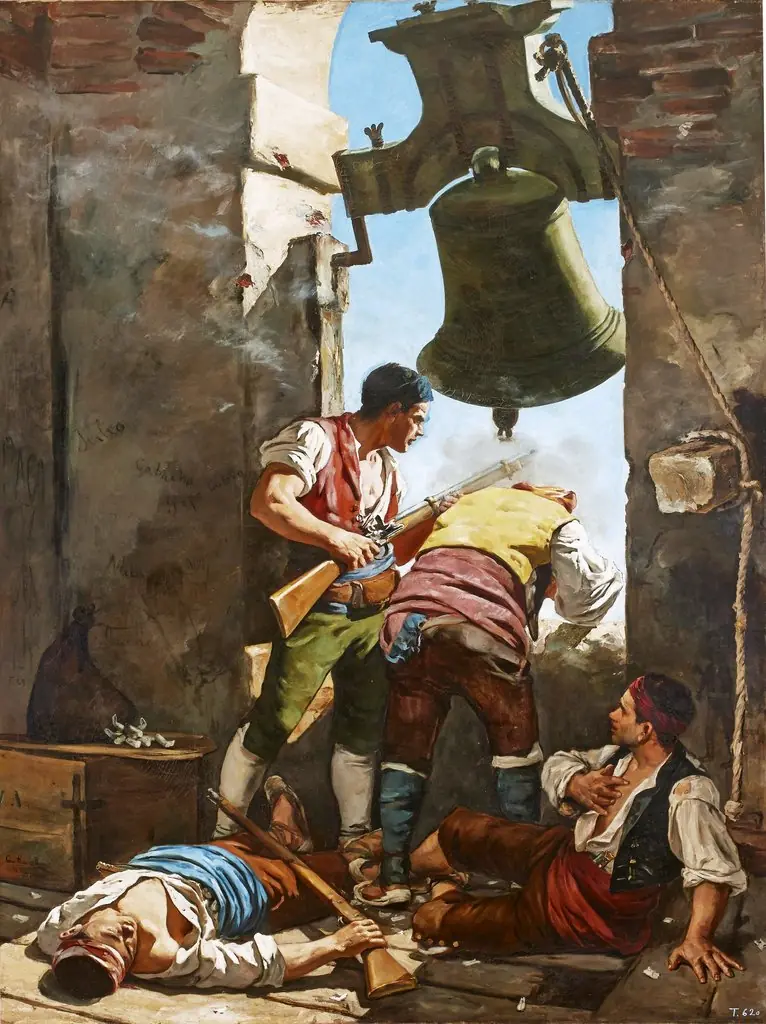
El gran día de Gerona (19 septiembre de 1809) is an oil painting by the Post-Impressionist artist César Álvarez Dumont. It dates from 1896 and is held in the collection of the Museo del Prado.
About this work
Technique & Style
Visually, the composition depicts specific martial elements, including firearms and sabers, reflecting its subject matter of the Siege of Girona.
El gran día de Gerona (19 septiembre de 1809) is an oil painting executed on canvas by César Álvarez Dumont in 1890. The work measures 306 cm in height and 303 cm in width, classifying it as a large-scale historical canvas. Visually, the composition depicts specific martial elements, including firearms and sabers, reflecting its subject matter of the Siege of Girona. The piece is currently held in the collection of the Museo del Prado.
History & Provenance
The painting El gran día de Gerona (19 septiembre de 1809) was created by César Álvarez Dumont in 1890. Executed in oil on canvas, the work measures 306 cm in height and 303 cm in width. It is currently held in the collection of the Museo del Prado.
The painting El gran día de Gerona (19 septiembre de 1809) by César Álvarez Dumont is held in the collection of the Museo del Prado in Madrid. Created in 1890, the work is executed in oil on canvas and measures 306 cm in height by 303 cm in width. The provided sources identify the museum as the current location of the artwork but do not supply a specific inventory or accession number for the piece. Furthermore, the available documentation contains no details regarding the painting's exhibition history or past display venues.
Context
El gran día de Gerona, painted in 1890 by César Álvarez Dumont, portrays the dramatic aftermath of the 1809 Siege of Girona during the Peninsular War, reflecting 19th-century Spanish historical interests. The work, housed in the Museo del Prado, was created using oil on canvas and measures 306 by 303 centimeters. Its depiction of firearms and sabers underscores the military context of the conflict, aligning with contemporary academic interest in Spanish military history and 19th-century European battle painting.
Scholarship emphasizes its role within Álvarez Dumont's oeuvre as a narrative-driven historical scene, situated amid broader European trends of romanticized war imagery and national identity formation in art.
Legacy
César Álvarez Dumont’s El gran día de Gerona (19 septiembre de 1809) (1890) became a touchstone for Spanish historical painting at the close of the 19th century. Its large scale, 306 by 303 centimeters, and dramatic depiction of resistance during the Peninsular War reinforced the work’s prominence within the Museo del Prado’s collection, where it has been housed since its completion.
The painting’s legacy lies in its role as a visual commemoration of national resilience, often invoked in exhibitions exploring 19th-century Spanish patriotism. While not as frequently reproduced as works by Goya or Velázquez, it remains a reference point for scholars examining the romanticized portrayal of military heroism in late academic art.
Overview
César Álvarez Dumont’s oil on canvas, completed in 1896, portrays the tumult of the 19 September 1809 clash near Girona. The composition captures a dense melee of infantry in period dress, their weapons, muskets and sabres, caught mid‑action amid billowing smoke and a fragmented architectural backdrop.
Subject & Meaning
The work focuses on the ferocity of close‑quarter combat, emphasizing the chaos of a 19th‑century battlefield. Central figures brandish swords and fire rifles, while comrades tumble around them, suggesting both the heroism and the disorder inherent in the historic encounter.
Own this work as a print
Artist & collection
Artist
César Álvarez Dumont (1866–1945) was an artist, born in Vila Real de Santo António.

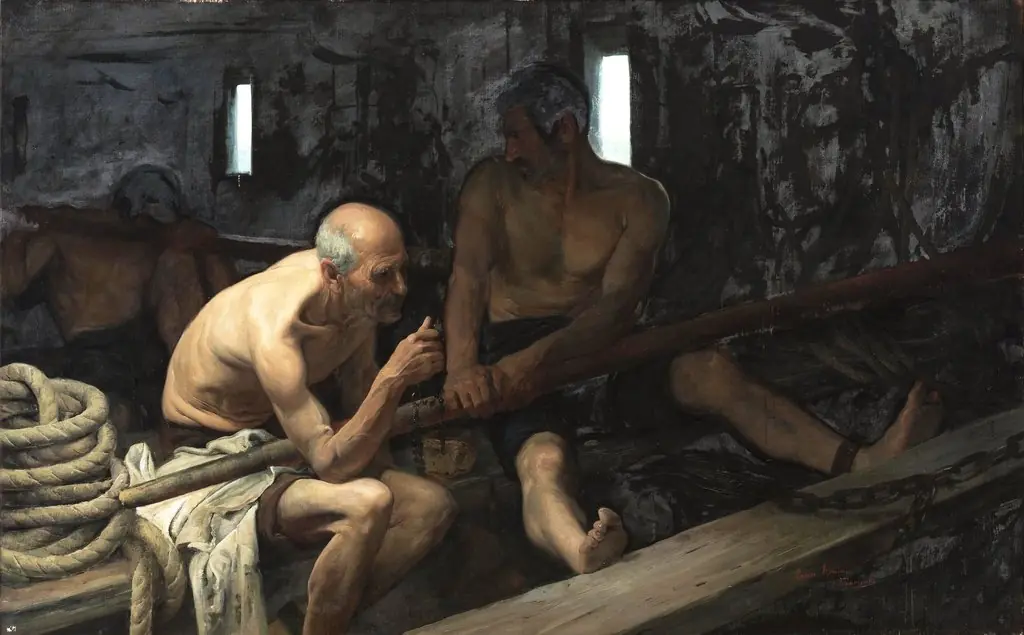
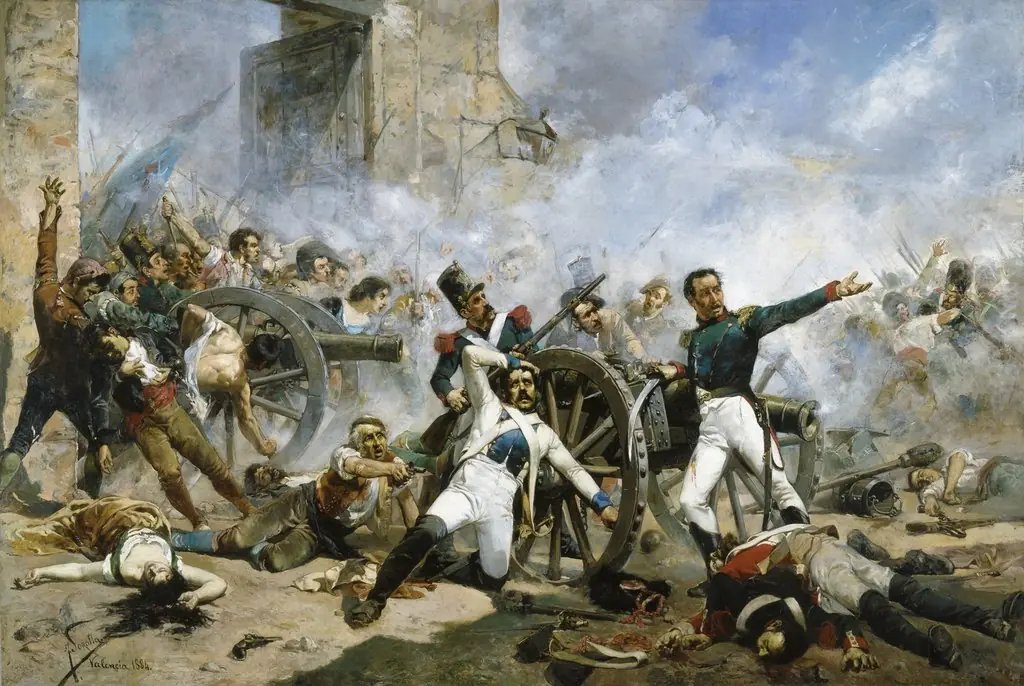
- The death of Pedro Velarde y Santillán during the defence of the Monteleon Artillery Barracks.
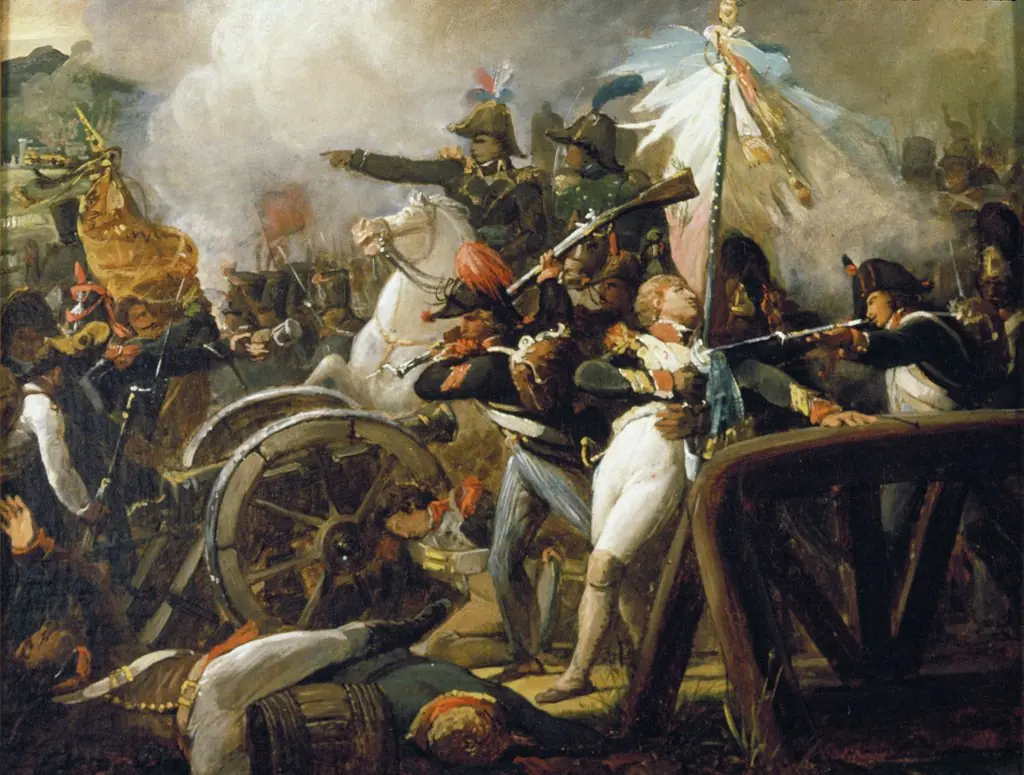 Battle on a Bridge
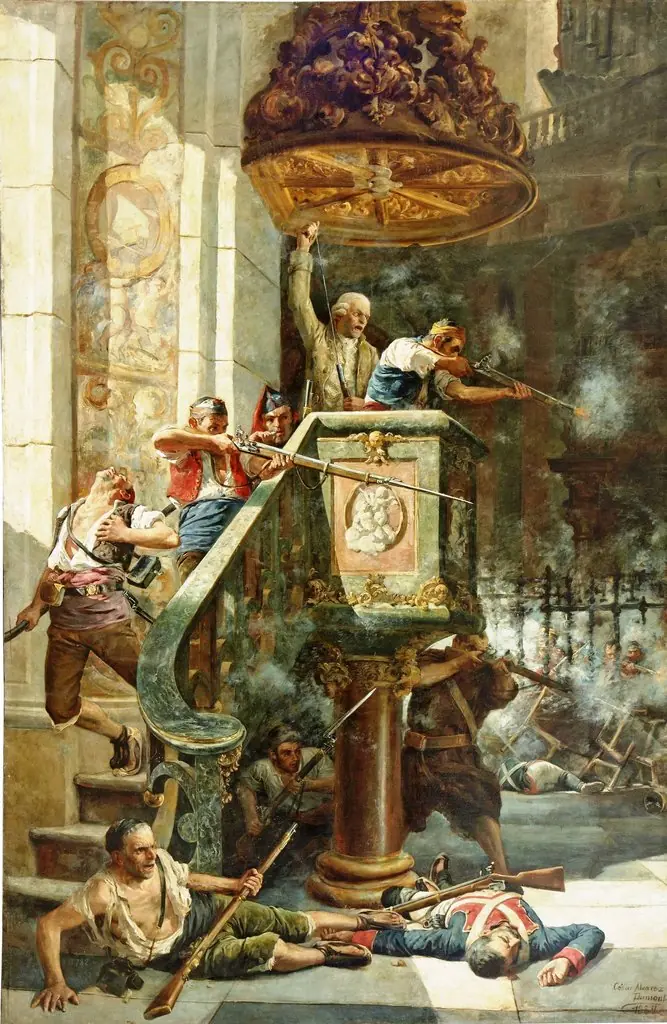
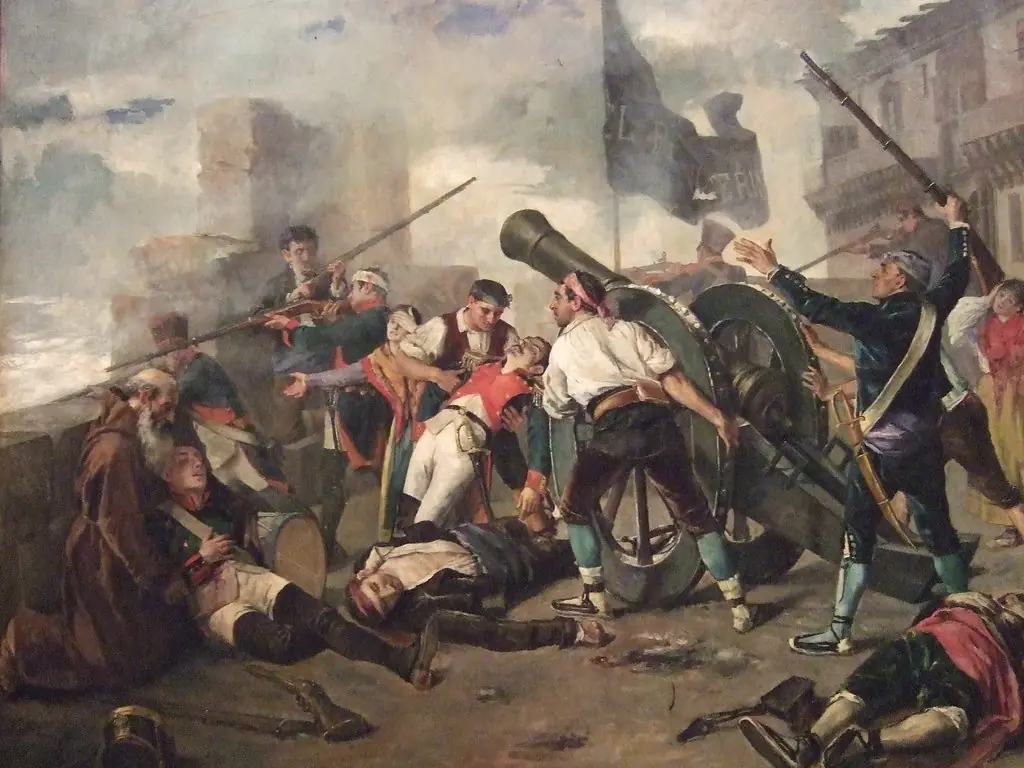 El Pilar no se rinde
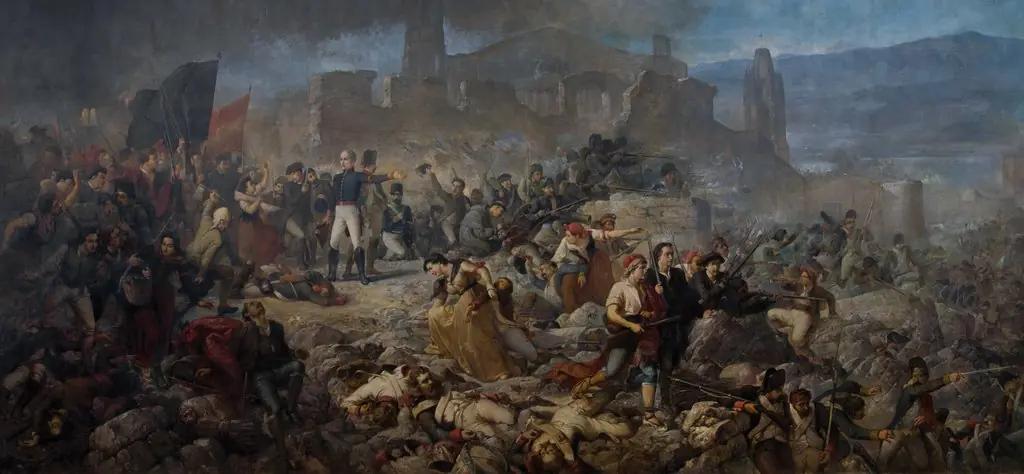 The Great Day of Girona
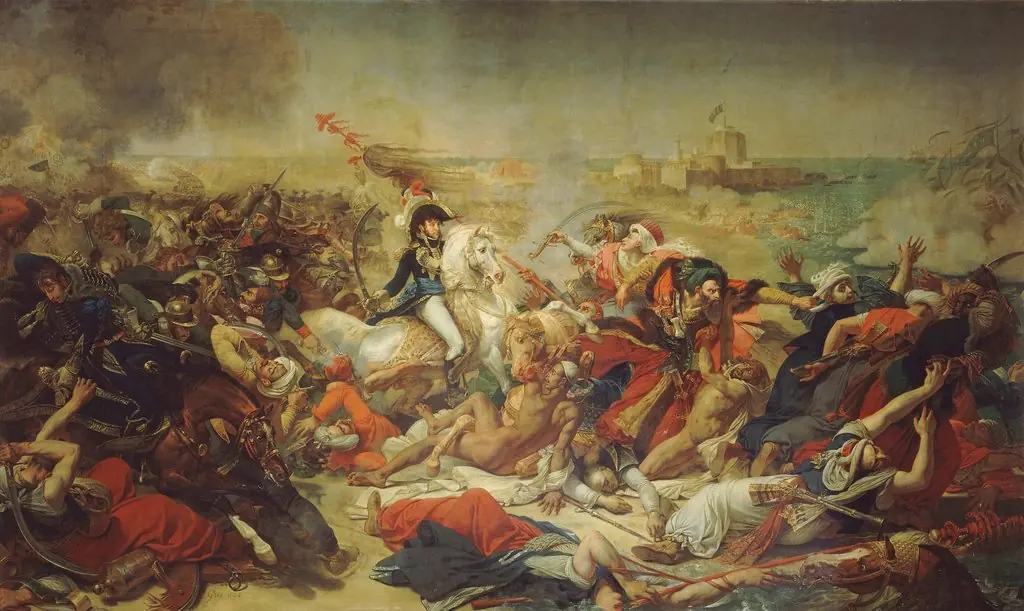 Bataille d'Aboukir, 25 Juillet 1799
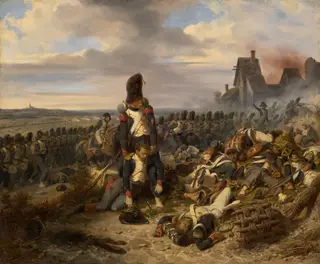 Battle Scene
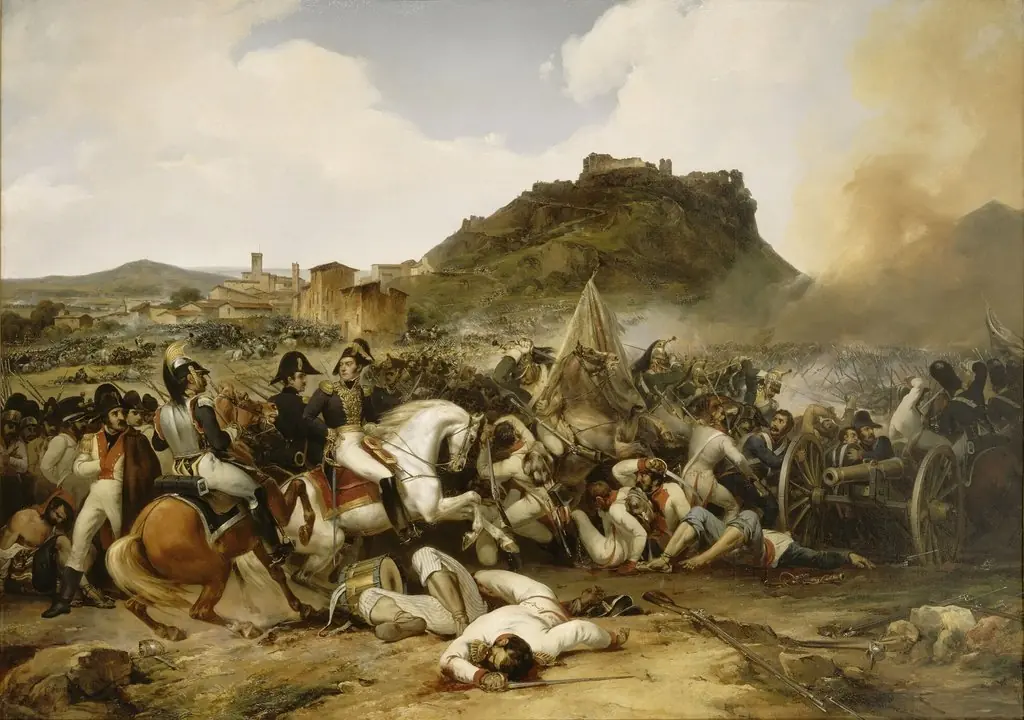 Battle of Castalla, July 21, 1812
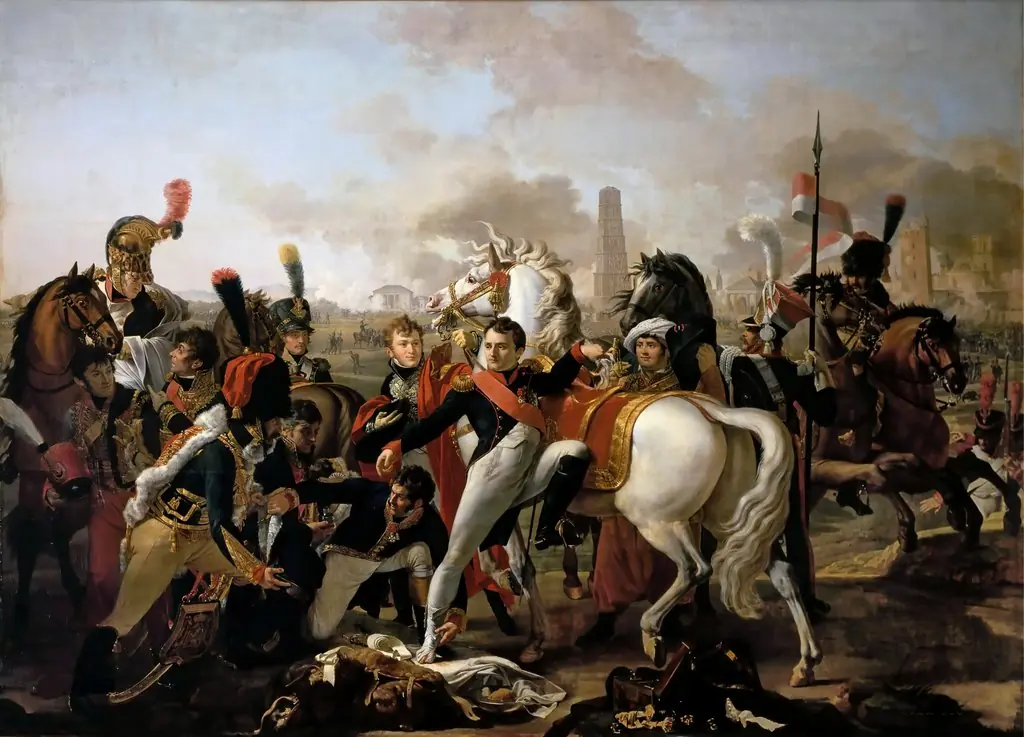 Napoleon dismounting with an injured foot at Regensburg, aided by the Surgeon, Yvan, April 23, 1809
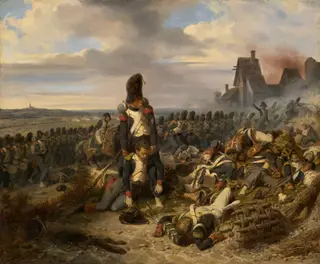 Battle Scene
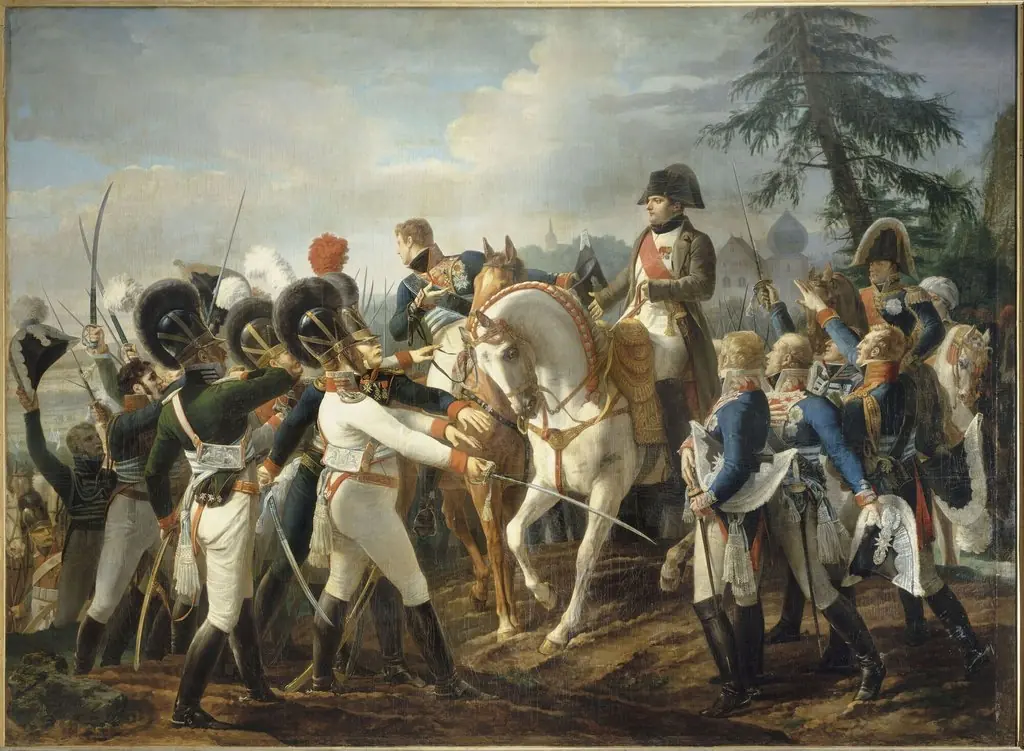 Napoléon harangue les troupes bavaroises et wurtembourgeoises à Abensberg, 20 avril 1809
 The Death of General Colbert
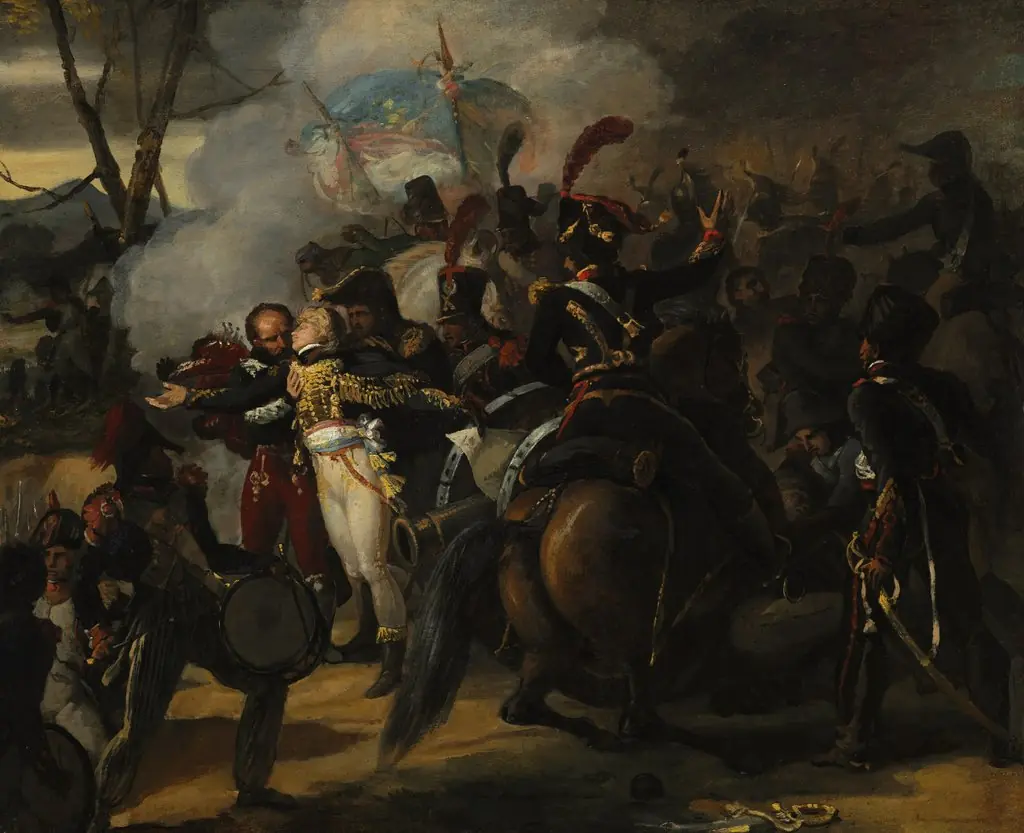 The Death of General Colbert