Artwork
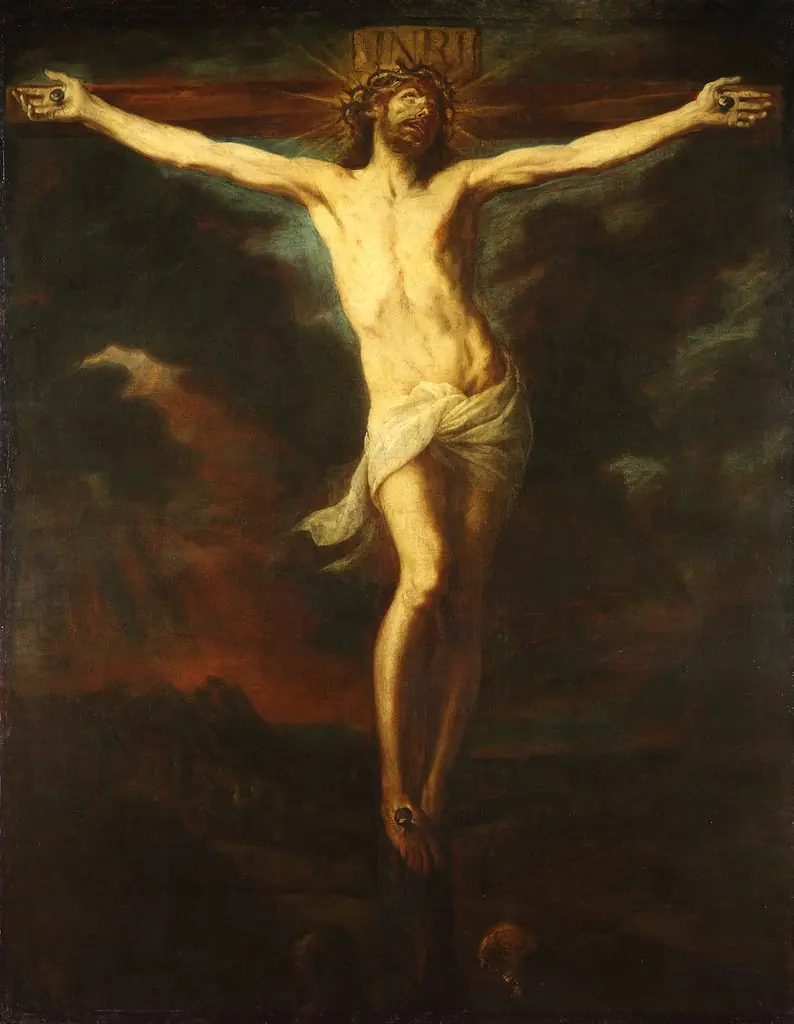
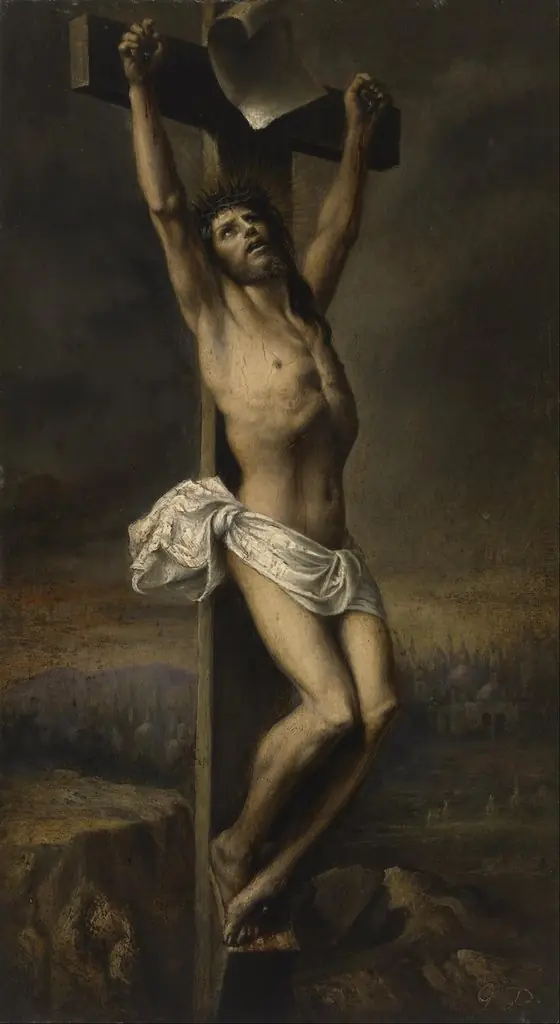
Christ on the Cross (after Van Dyck)
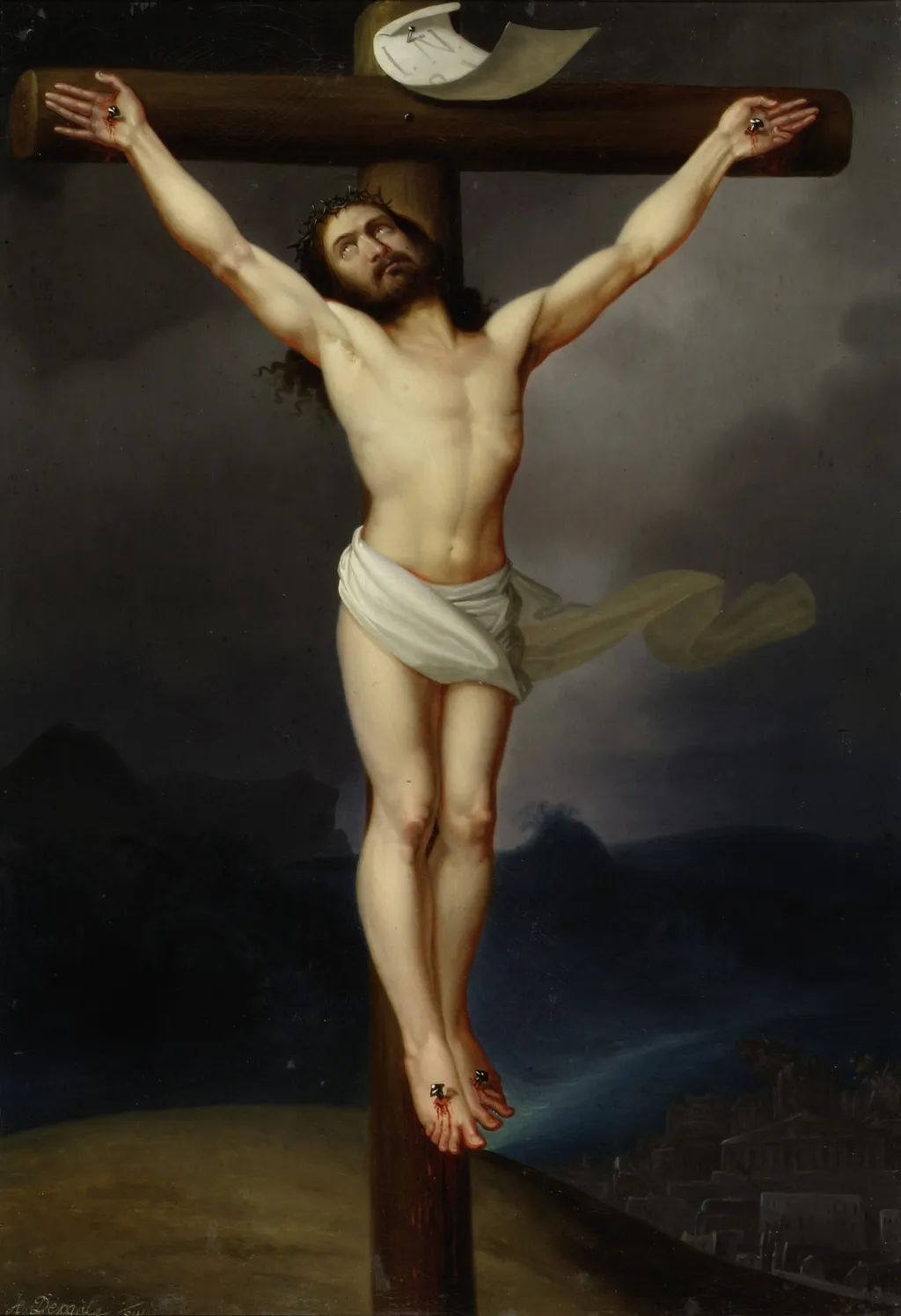
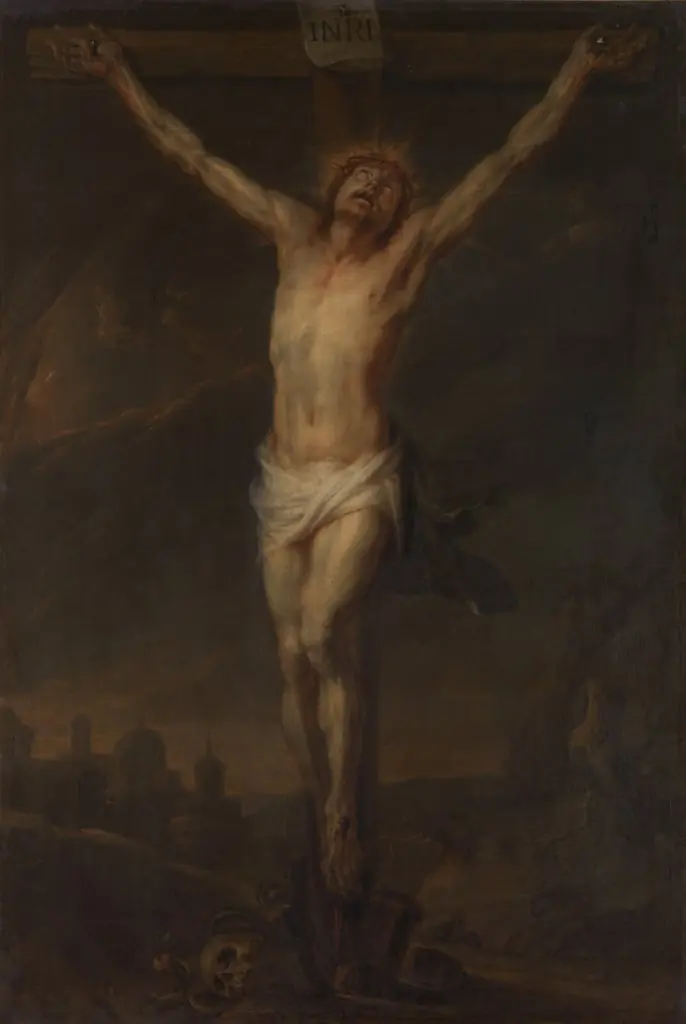
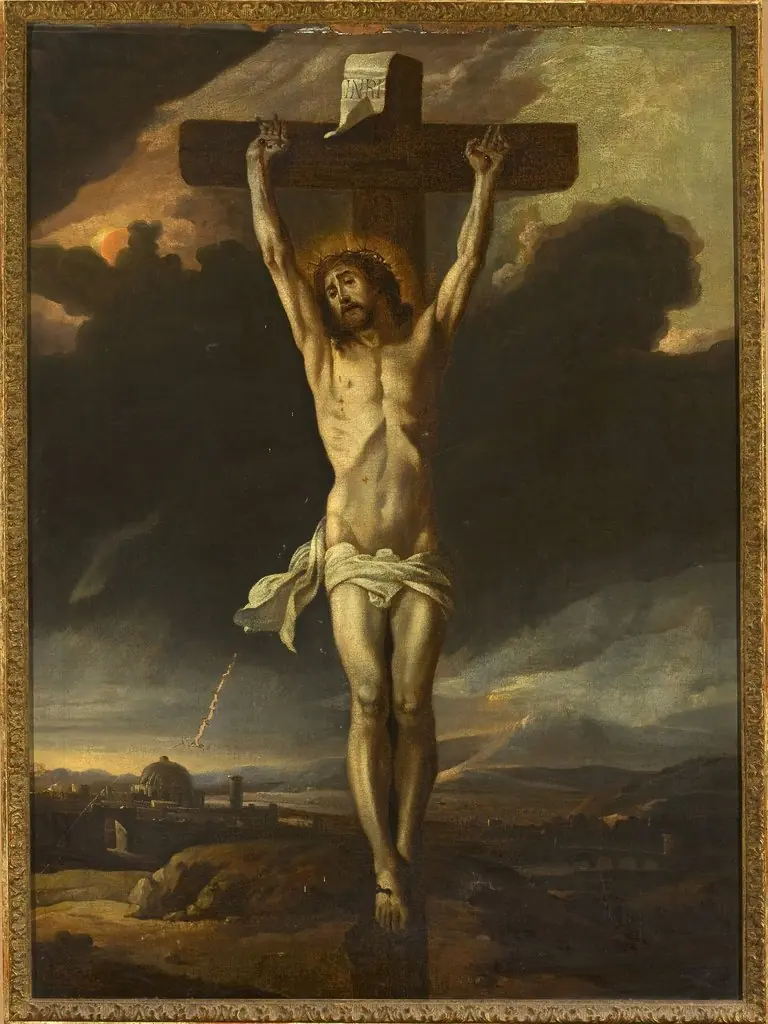
Christ on the Cross (after Van Dyck) is an oil painting by the Biedermeier artist Anton Depauly. It dates from 1841 and is held in the collection of the Belvedere.
About this work
Subject & Meaning
As a piece of religious art, the image focuses entirely on the figure of Jesus on the cross, adhering to traditional iconography associated with the Passion.
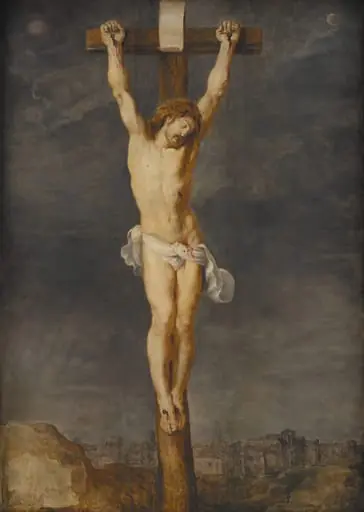
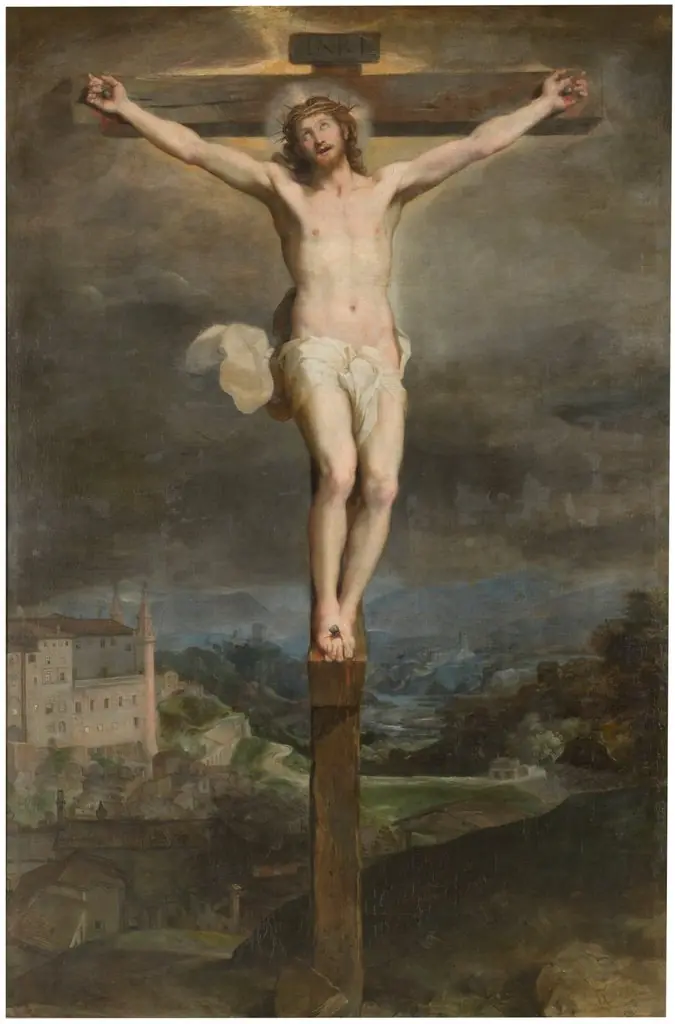
The work depicts the crucifixion of Jesus Christ, serving as a representation of the central event in Christian soteriology. As a piece of religious art, the image focuses entirely on the figure of Jesus on the cross, adhering to traditional iconography associated with the Passion. The painting is identified as a later version based on an earlier composition titled Christ on the Cross, suggesting it replicates the theological and visual themes of that prototype.
Created in the mid-19th century, the piece functions as a devotional object intended to evoke contemplation of Christ's sacrifice.
Technique & Style
Anton Depauly worked in oil paint on canvas to create his 1841 interpretation of the crucifixion, rendering the figure with the dramatic chiaroscuro and compositional balance characteristic of Van Dyck's baroque style. The work maintains a restrained palette and meticulous brushwork that emphasize the emotional gravity of the scene while preserving the formal conventions of religious painting.
History & Provenance
A 19th-century oil painting on canvas depicting Christ on the Cross, created by Anton Depauly in 1841. It forms part of the religious art collection at the Belvedere, Kunsthistorisches Museum in Vienna, where it remains on public view. The work is based on a composition by the Flemish Baroque master Anthony van Dyck, though Depauly developed his own interpretation of the subject.
The painting was produced during a period when academic artists often engaged with Old Master models to demonstrate technical mastery and theological engagement. Its dimensions are 94.3 cm in height and 65.7 cm in width, consistent with mid-century devotional works intended for devotional display rather than monumental scale.
The provenance and institutional history of the piece are documented through its inclusion in the Belvedere’s collection, a public museum with a long-standing focus on Central European religious and historical art. The work has been part of the museum’s holdings since at least the late 20th century, cataloged under the title Christ on the Cross (after Van Dyck) and attributed to Depauly as a faithful reinterpretation of the van Dyckian compositional tradition.
The painting’s creation reflects the 19th-century European practice of reimagining canonical subjects through the lens of artistic lineage, particularly the influence of van Dyck on Catholic European art education. Its execution in oil on canvas aligns with standard practices of the period for devotional imagery intended for ecclesiastical or institutional contexts. The work was likely produced for didactic or devotional purposes within an Austrian cultural milieu that valued the preservation and reworking of sacred visual traditions.
Depauly, an Austrian academic painter active in the mid-1800s, specialized in religious subjects rendered with a blend of technical precision and sentimental realism, often drawing on Old Master precedents to meet institutional expectations of piety and artistic rigor. The painting’s formal qualities, its restrained palette, centralized composition, and emphasis on Christ’s suffering, reflect the broader 19th-century Catholic revival in visual art, particularly in Austro-Hungarian contexts where ecclesiastical patronage and museum collecting intersected.
Overview
Anton Depauly, a Bohemian painter active in the Austrian Empire, completed the oil painting Christ on the Cross (after Van Dyck) in 1841. Executed during the Biedermeier era, the work belongs to the religious genre and is part of the permanent collection of Vienna’s Kunsthistorisches Museum.
Own this work as a print
Artist & collection
Artist
Anton Felix Depauly (30 April 1801 – 27 April 1866) was a Bohemian-born painter of the Austrian Empire, known primarily for his portraits and historical paintings.