Artwork
Christ on the Cross
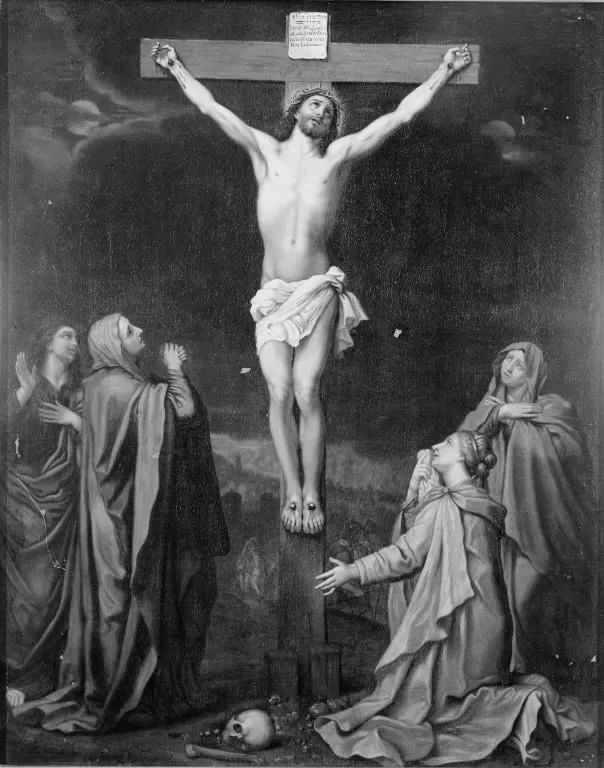
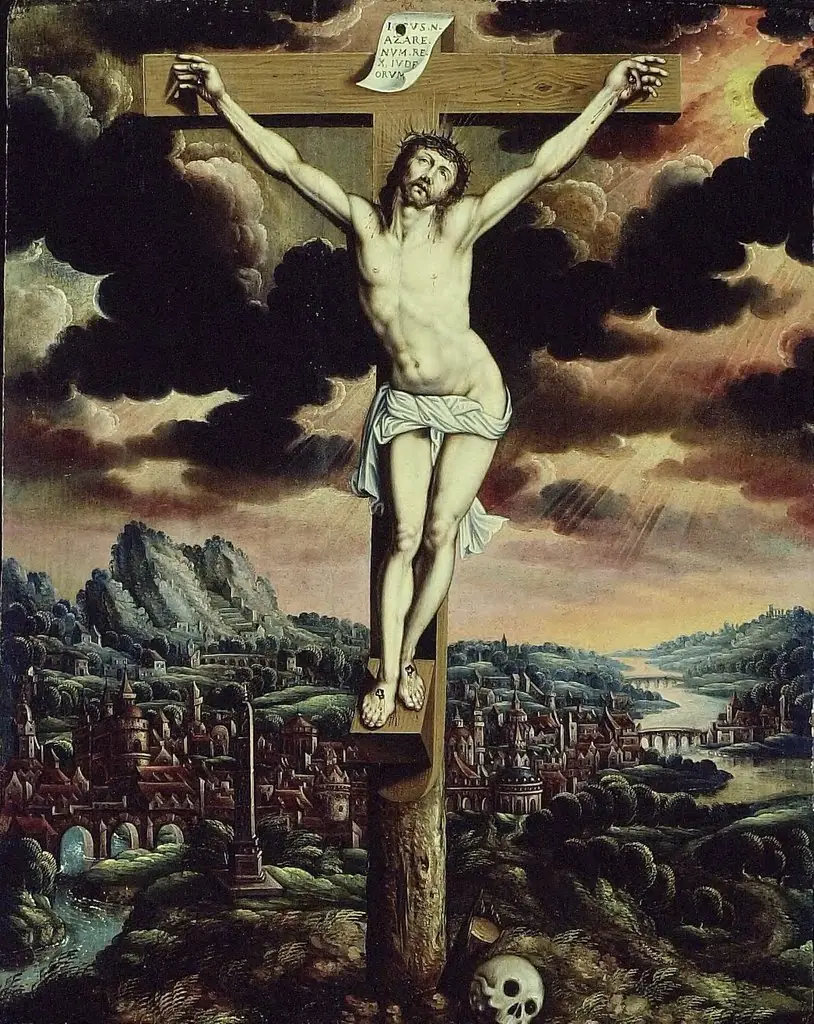
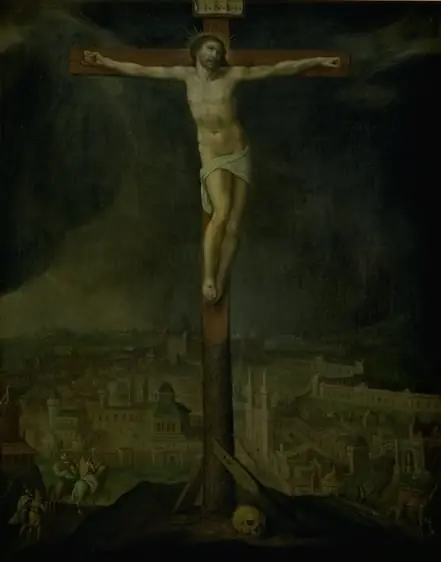
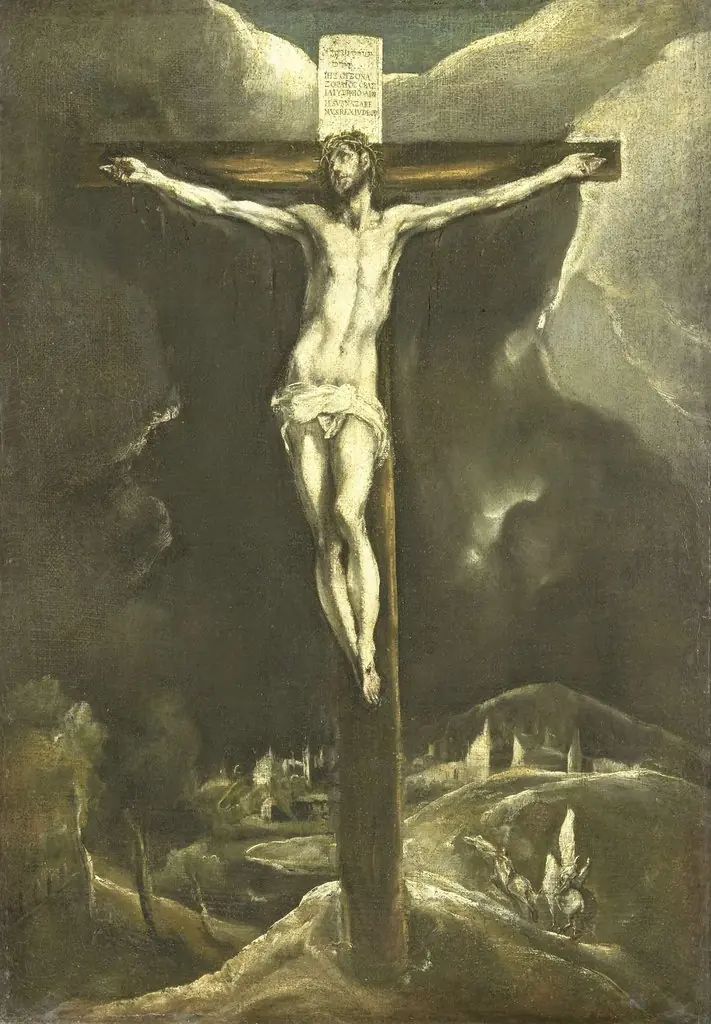
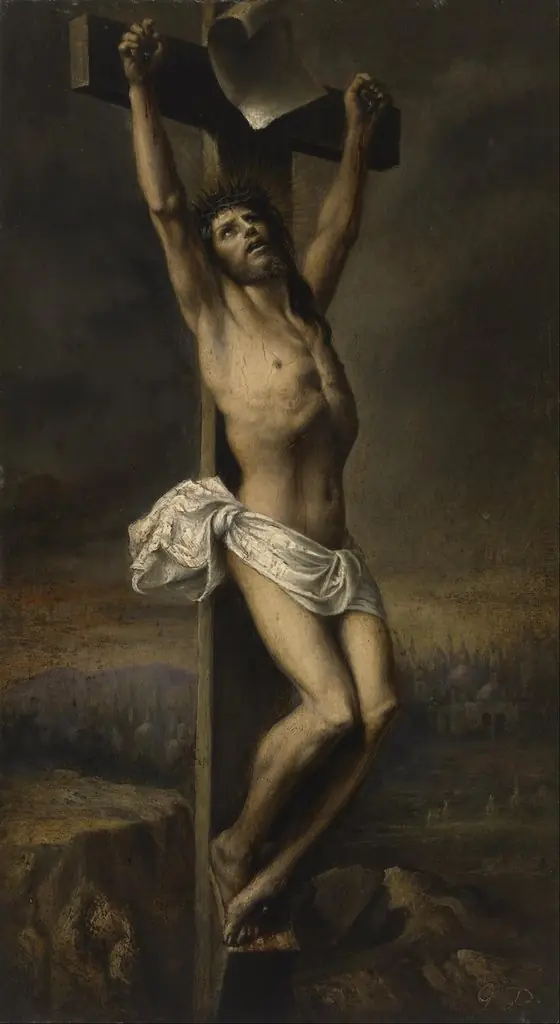
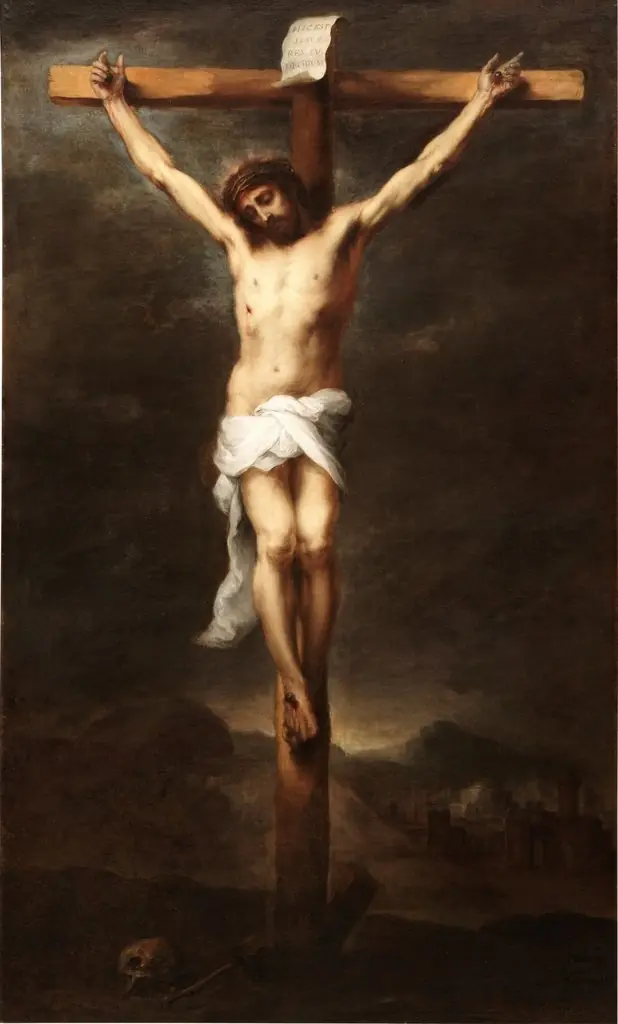
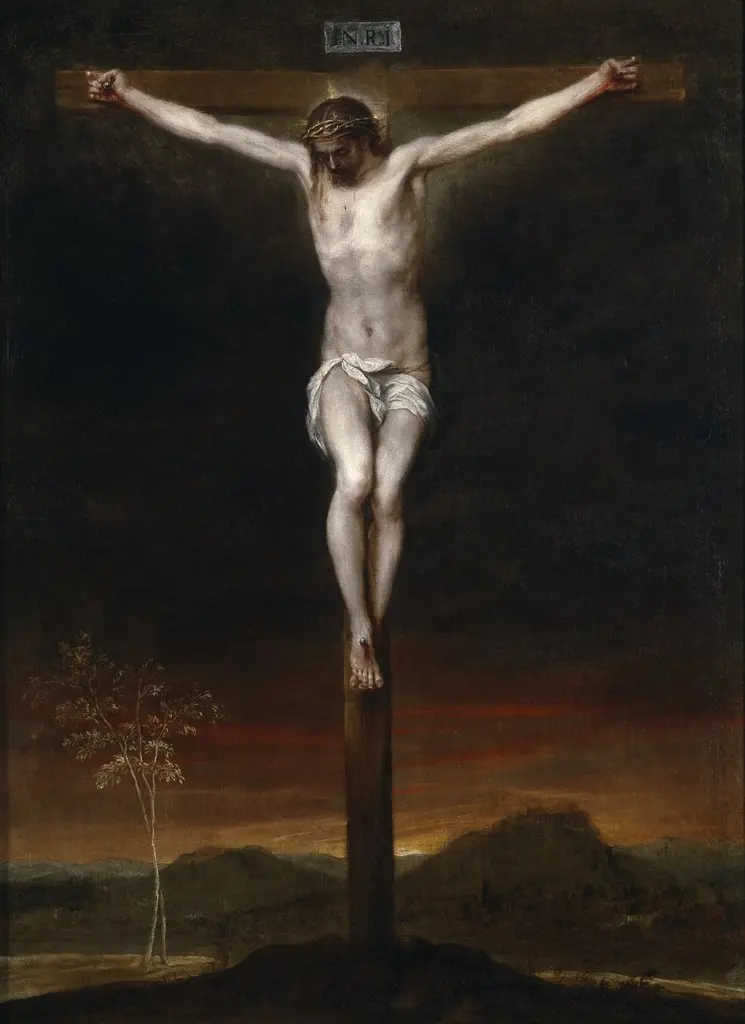
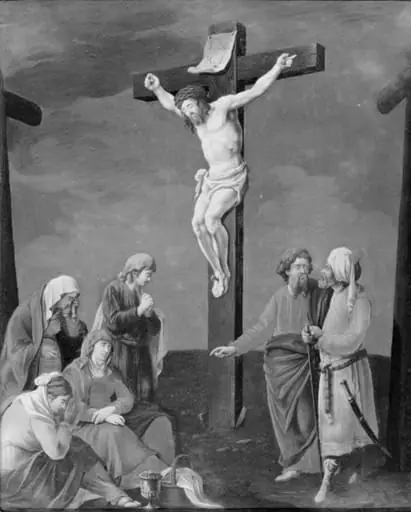
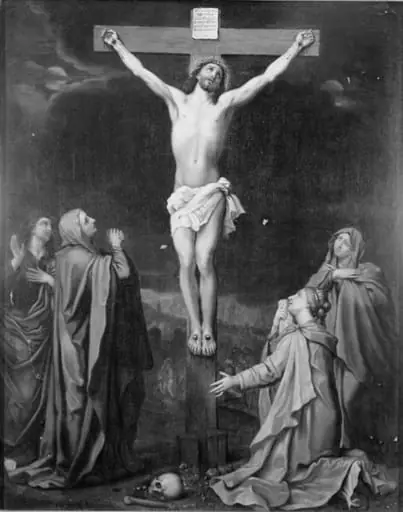
Christ on the Cross is an oil painting by the Mannerist artist Agostino Carracci. It dates from 1594 and is held in the collection of the Statens Museum for Kunst.
About this work
Subject & Meaning
This stark presentation reinforces the gravity of the moment, aligning with Counter-Reformation devotional aims to evoke emotional and spiritual contemplation.
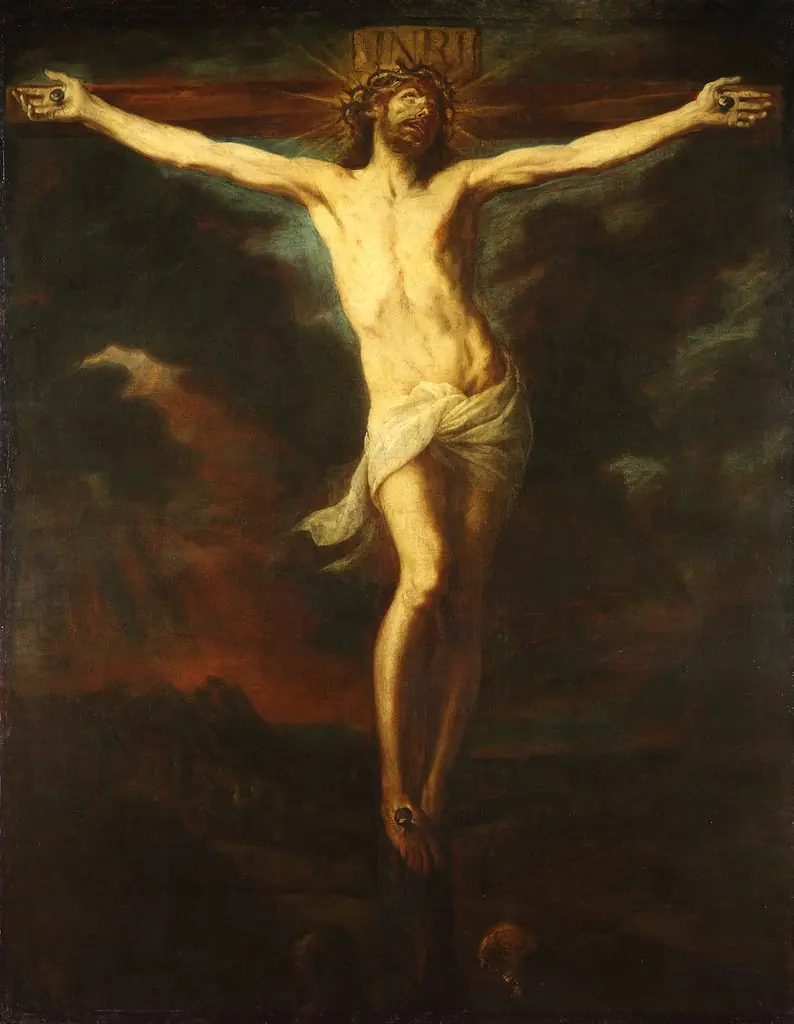
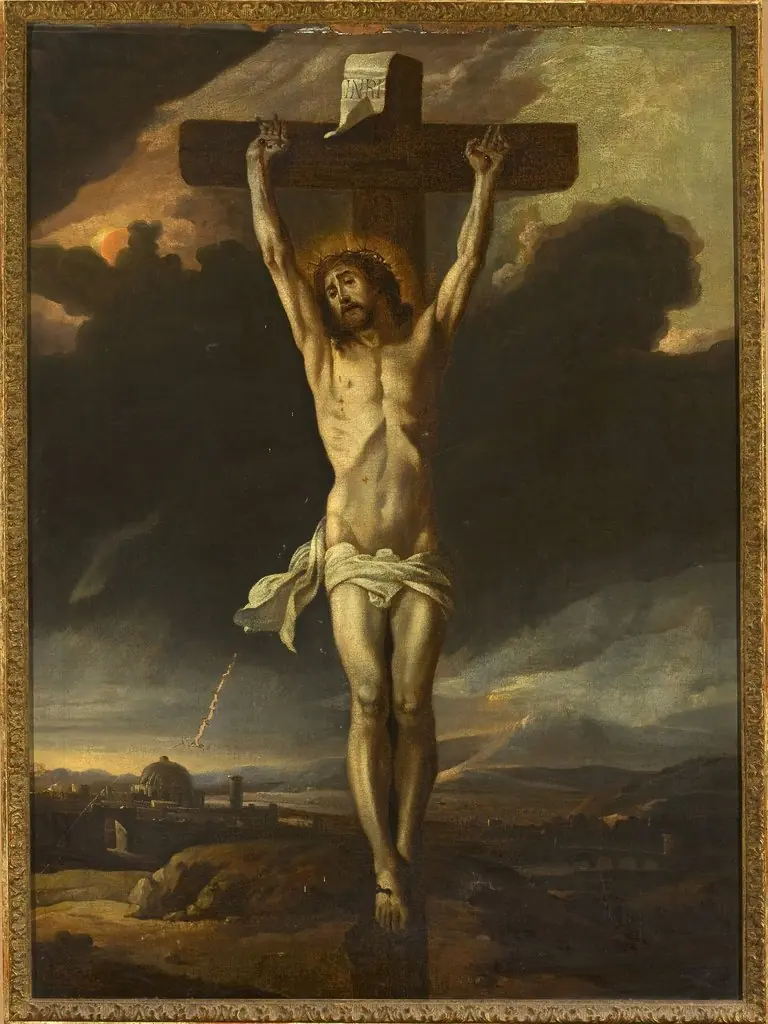
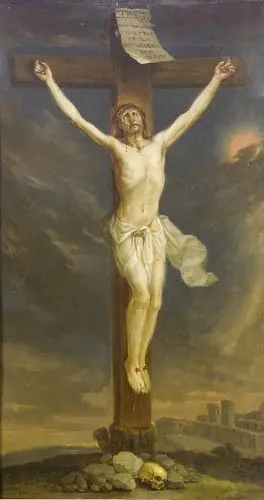
The painting depicts the Crucifixion of Jesus, a central subject in Christian iconography. Christ is shown nailed to a cross, his body suspended in a moment of suffering and sacrifice. Blood flows from wounds on his hands and feet, emphasizing the physical agony of the crucifixion while underscoring its theological significance as an act of atonement for humanity’s sins.
The composition centers on Christ’s figure against a dark background, drawing attention to his vulnerable, outstretched body. This stark presentation reinforces the gravity of the moment, aligning with Counter-Reformation devotional aims to evoke emotional and spiritual contemplation.
Technique & Style
Agostino Carracci rendered Christ on the Cross in oil paint on canvas, a technique typical of late Renaissance religious works. The painting measures 900 cm by 710 cm and depicts the crucifixion of Jesus, emphasizing dramatic chiaroscuro and contorted musculature characteristic of Carracci’s style. Its handling reflects careful preparation of the canvas support, though prolonged exposure to light has slightly dulled the surface pigments. The composition balances anatomical precision with emotional intensity, aligning with the religious genre conventions of the period.
The work’s material execution showcases oil paint layered to create depth in the figure’s drapery and flesh tones, while the canvas substrate provides a sturdy foundation for the large-scale format.
History & Provenance
Christ on the Cross is an oil painting on canvas by Agostino Carracci dated 1587. The work entered the collection of the Statens Museum for Kunst in Copenhagen, where it remains held, and depicts the crucifixion of Jesus. Measuring 900 cm in height and 710 cm in width, it is classified as a religious painting.
No further details about its commission, early ownership, or acquisition history by the museum are documented in the available sources.
The painting Christ on the Cross by Agostino Carracci is held in the collection of the Statens Museum for Kunst. Created in 1587, the work depicts the crucifixion of Jesus Christ and is executed in oil on canvas.
While the artwork's current location and creation date are documented, the provided records do not contain specific inventory accession numbers or details regarding its exhibition history.
Overview
Agostino Carracci’s 1594 oil on canvas, Christ on the Cross, presents a solemn crucifixion scene rendered in the late‑Mannerist idiom. The central figure of the crucified Christ is flanked by three grieving women, their faces turned upward in lament. A turbulent sky looms behind the cross, while a stark, rocky ground anchors the composition.
Context
At the close of the 16th century, Carracci was instrumental in founding the Accademia degli Incamminati, an institution that advocated a return to naturalistic observation over the artificiality of prevailing Mannerism. Christ on the Cross illustrates his transitional position, blending the stylized elegance of the period with emerging realist tendencies that would shape Baroque art.
Artist & collection

Artist
Agostino Carracci ( kə-RAH-chee, UK also kə-RATCH-ee, Italian: ; also Caracci; 16 August 1557 – 22 March 1602) was an Italian painter, printmaker, tapestry designer, and art teacher.