Artwork
Joseph’s Triumph in Egypt
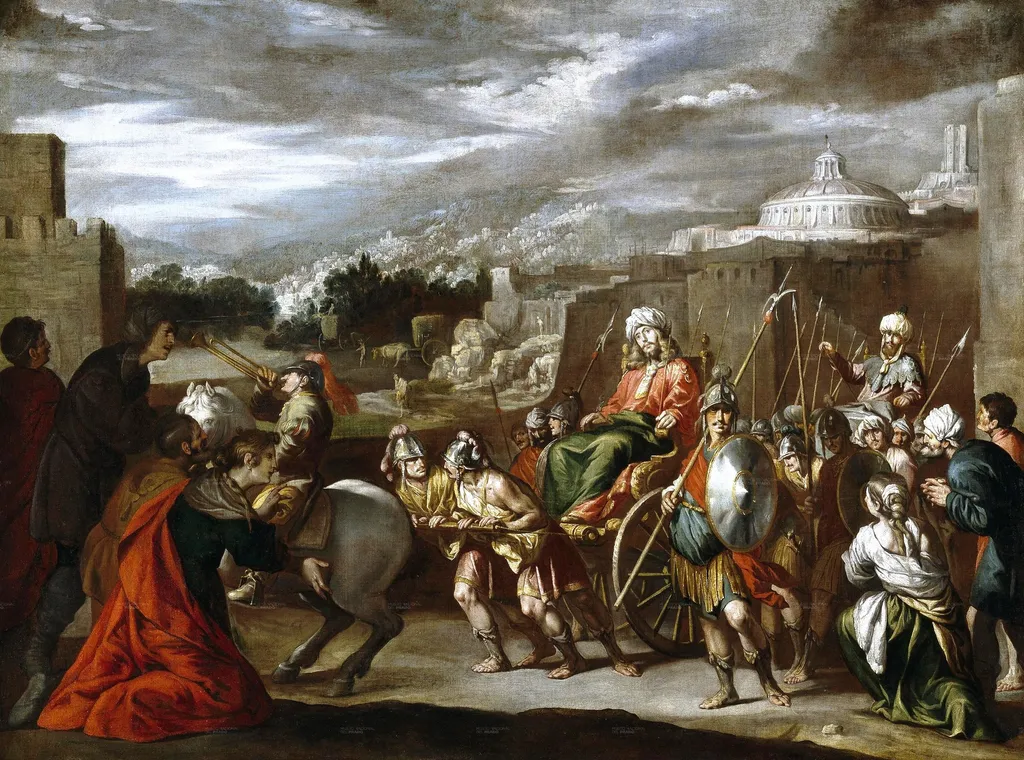
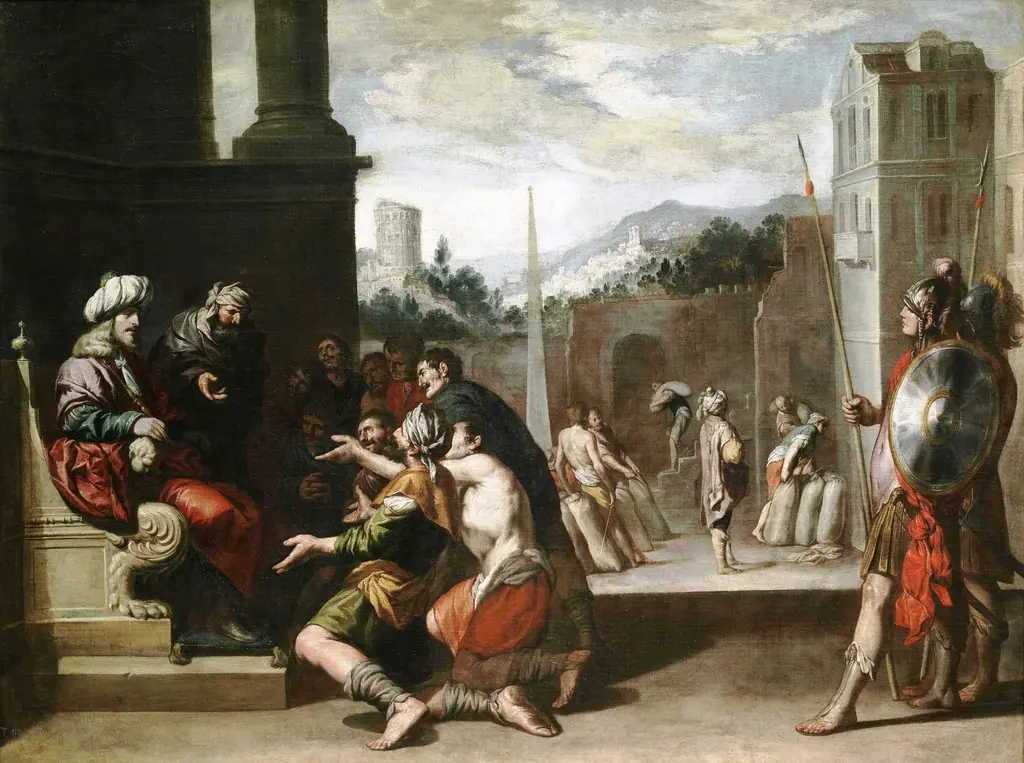
Joseph’s Triumph in Egypt is an oil painting by the Early Baroque Italian artist Antonio del Castillo y Saavedra. It dates from 1655 and is held in the collection of the Museo del Prado.
About this work
Subject & Meaning
As a work of religious art created in 1655, it illustrates the moment of Joseph's elevation and victory.
The painting depicts a religious scene centered on the biblical narrative of Joseph's triumph in Egypt. As a work of religious art created in 1655, it illustrates the moment of Joseph's elevation and victory. The composition includes specific iconographic elements, most notably the depiction of a natural trumpet, which serves as a symbolic instrument within the visual narrative.
This object likely signifies the proclamation of Joseph's success or divine favor. The artwork, executed in oil on canvas, functions as a visual representation of this scriptural event, focusing on the themes of triumph and divine intervention within the story.
Technique & Style
Joseph's Triumph in Egypt is an oil painting executed on canvas, measuring 109 cm in height by 145 cm in width. Created in 1655 by Antonio del Castillo y Saavedra, the work belongs to the religious genre, consistent with the artist's broader practice. The use of oil on canvas was standard for Spanish Baroque painting of this period, allowing for rich color saturation and detailed figural composition.
The painting's substantial dimensions suggest it was likely conceived as a significant devotional or narrative work, suited for display in a religious setting.
History & Provenance
Antonio del Castillo y Saavedra created Joseph’s Triumph in Egypt in 1655 as an oil painting on canvas. The work entered the collection of the Museo del Prado and was later associated with the Museo de la Trinidad, where it remains documented in the museum’s holdings.
The painting’s creation is precisely dated to 1655, reflecting its commission during the artist’s mature period in Madrid. Its dimensions measure 109 cm by 145 cm, consistent with contemporary religious compositions intended for devotional display in Spanish ecclesiastical contexts.
Provenance records indicate the artwork’s long-standing presence in institutional collections, with documented transfers linked to religious institutions in Castile. Its stylistic and technical attributes align with 17th-century Spanish Baroque practices, particularly in the rendering of narrative biblical scenes using naturalistic symbolism such as the trumpet as a motif of divine announcement.
Overview
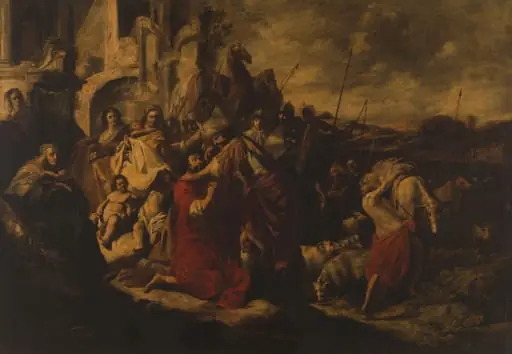
Antonio del Castillo y Saavedra’s oil on canvas, dated 1655, portrays a bustling tableau titled Joseph’s Triumph in Egypt. The composition is anchored by a central rider who lifts a curved natural trumpet, while a cannon is being advanced nearby. To the left, a kneeling figure in red attends a woman in dark robes, surrounded by anxious onlookers.
On the right, armored soldiers equipped with spears and shields form a defensive line, all set against a storm‑clouded skyline and a distant cityscape of domes and ruins.
Context
The work belongs to the Spanish Baroque period, a time when religious subjects were often depicted with theatrical intensity. The inclusion of military elements alongside biblical figures reflects contemporary concerns about authority, order, and divine providence in a Spain marked by political and religious upheaval.
Own this work as a print
Artist & collection
Artist
Antonio del Castillo y Saavedra
Antonio del Castillo y Saavedra (1616–1668) was an artist, born in Córdoba.

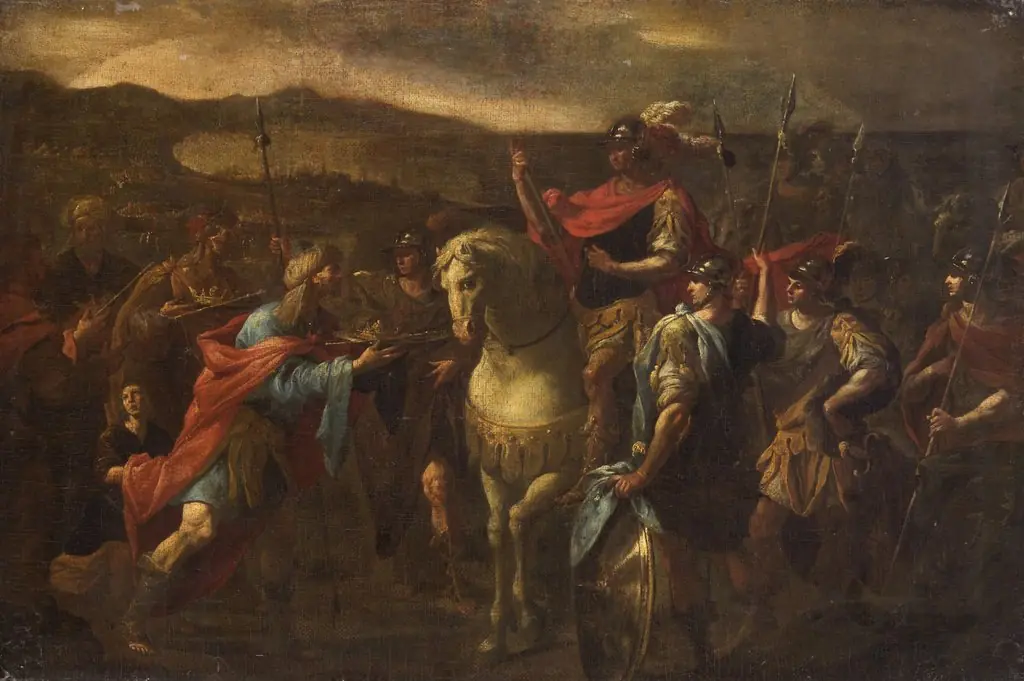 Indische Könige huldigen Alexander dem Großen
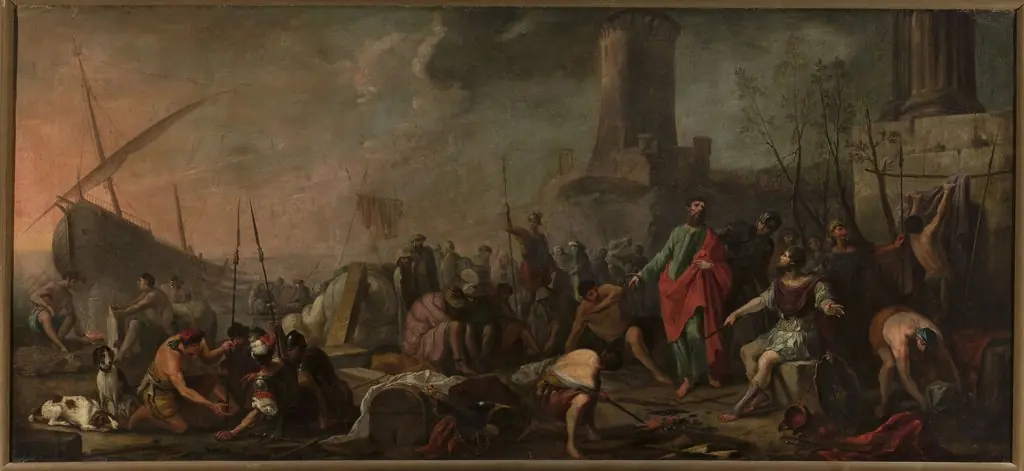 St. Paul on Malta
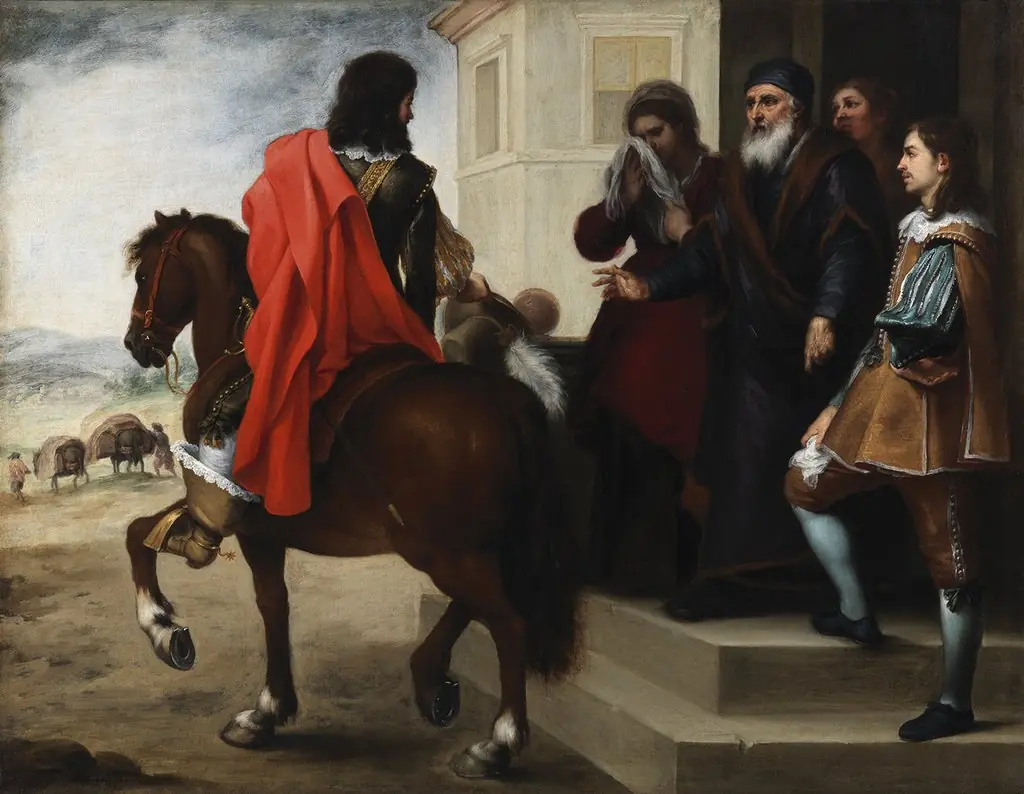 The Departure of the Prodigal Son
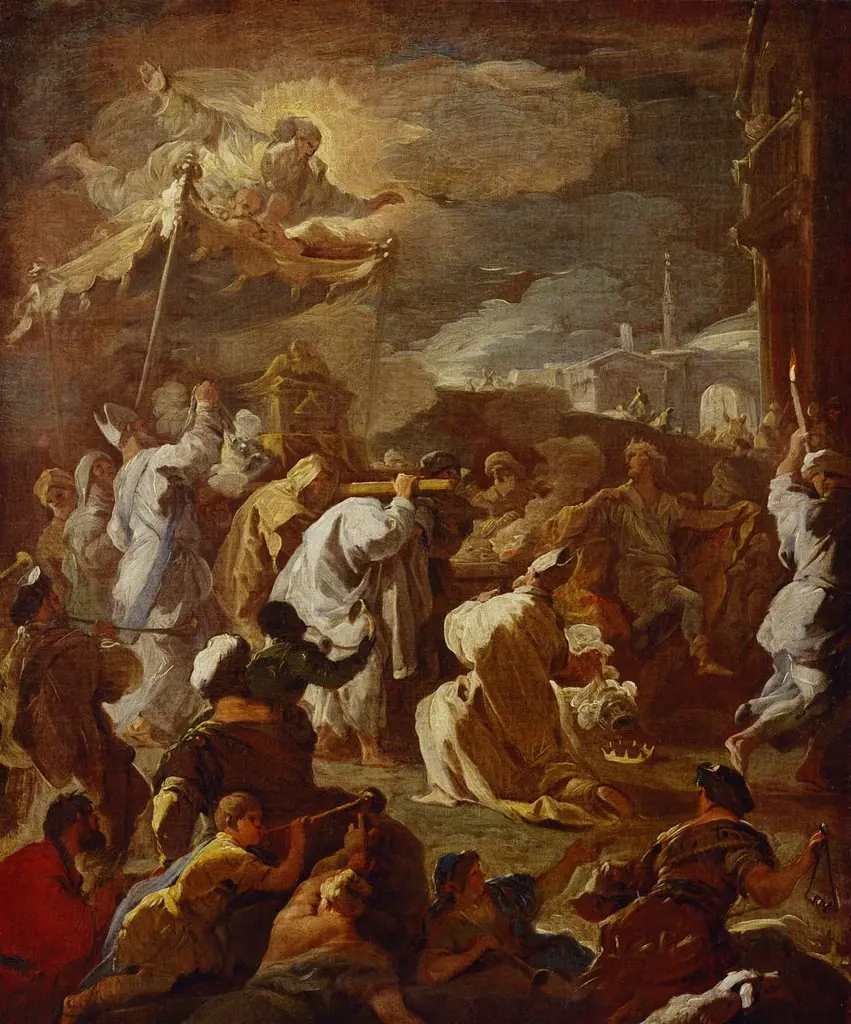 Transfer of the Ark of the Covenant by David
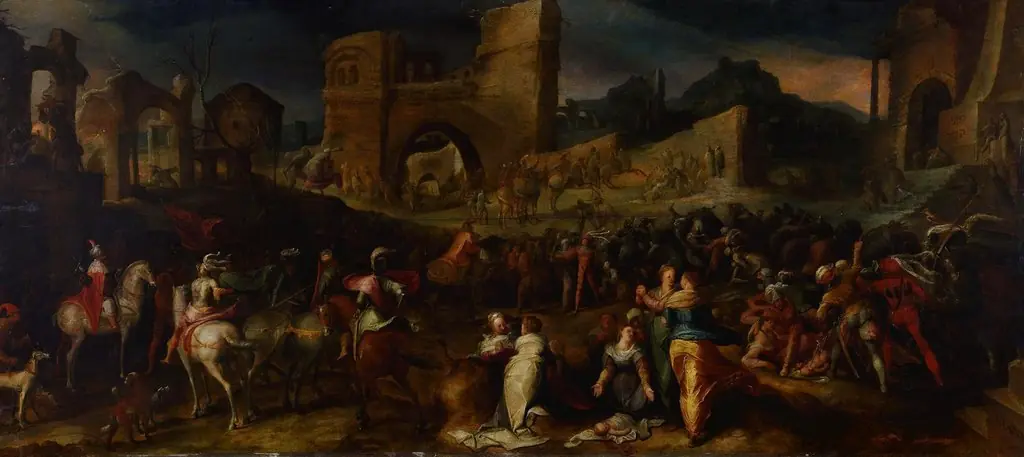 The Massacre of the Innocents
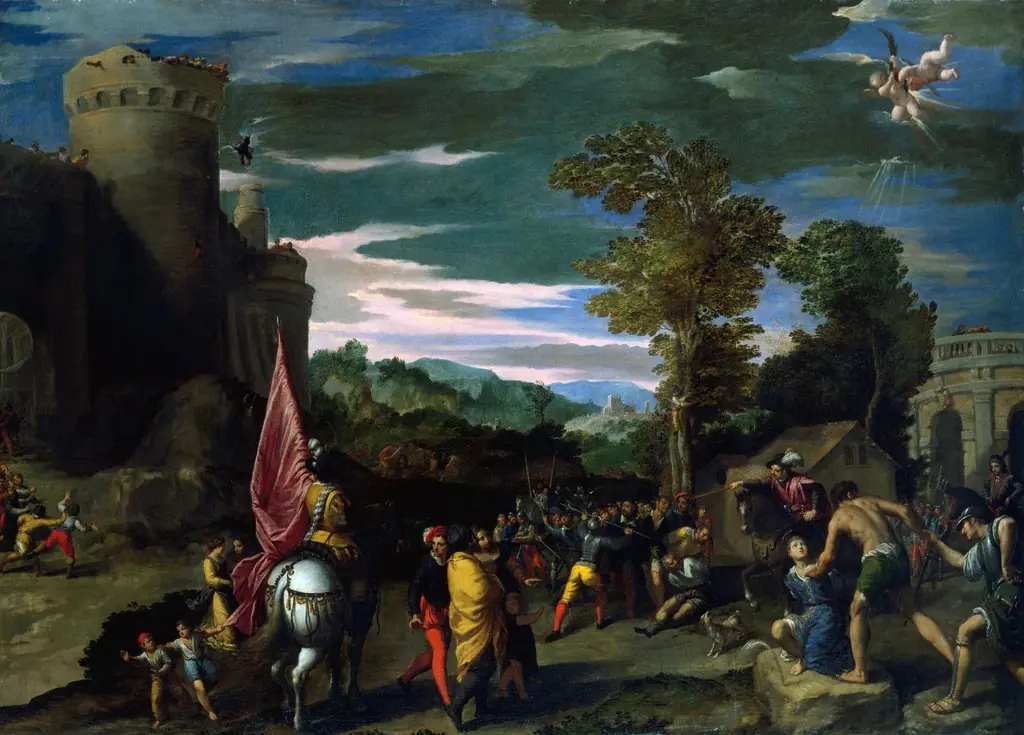 Martyrdom of Saint Venantius of Camerino
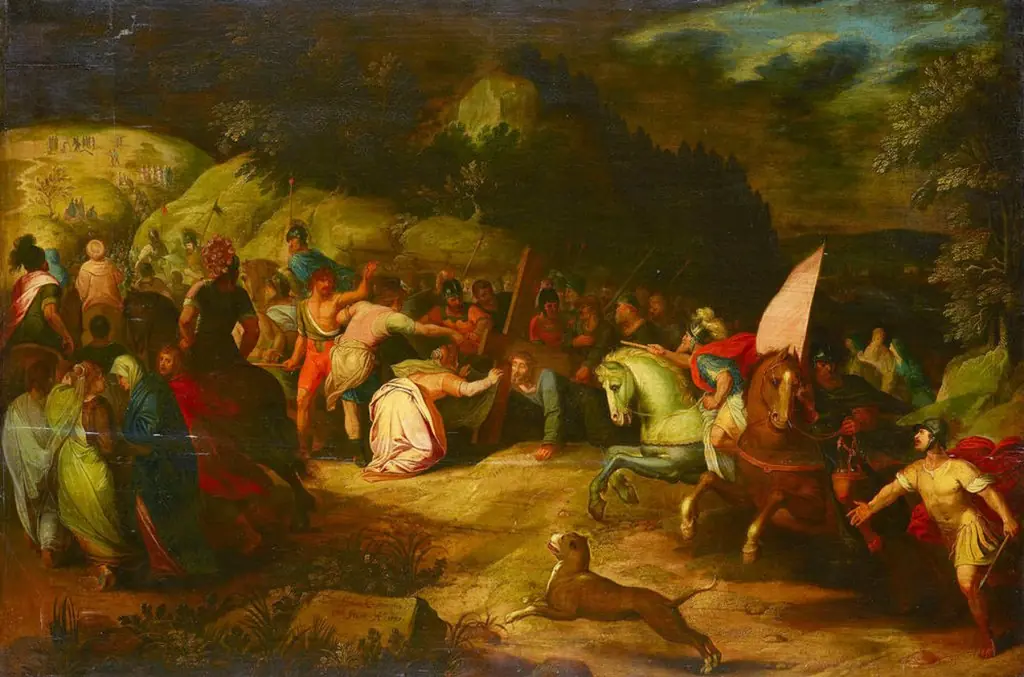 Christ collapsing under the cross on his way to Golgotha
 Adoration of the Magi
 The Meeting of Jacob and Esau