Artwork
An Officer on horseback and four foot Soldiers
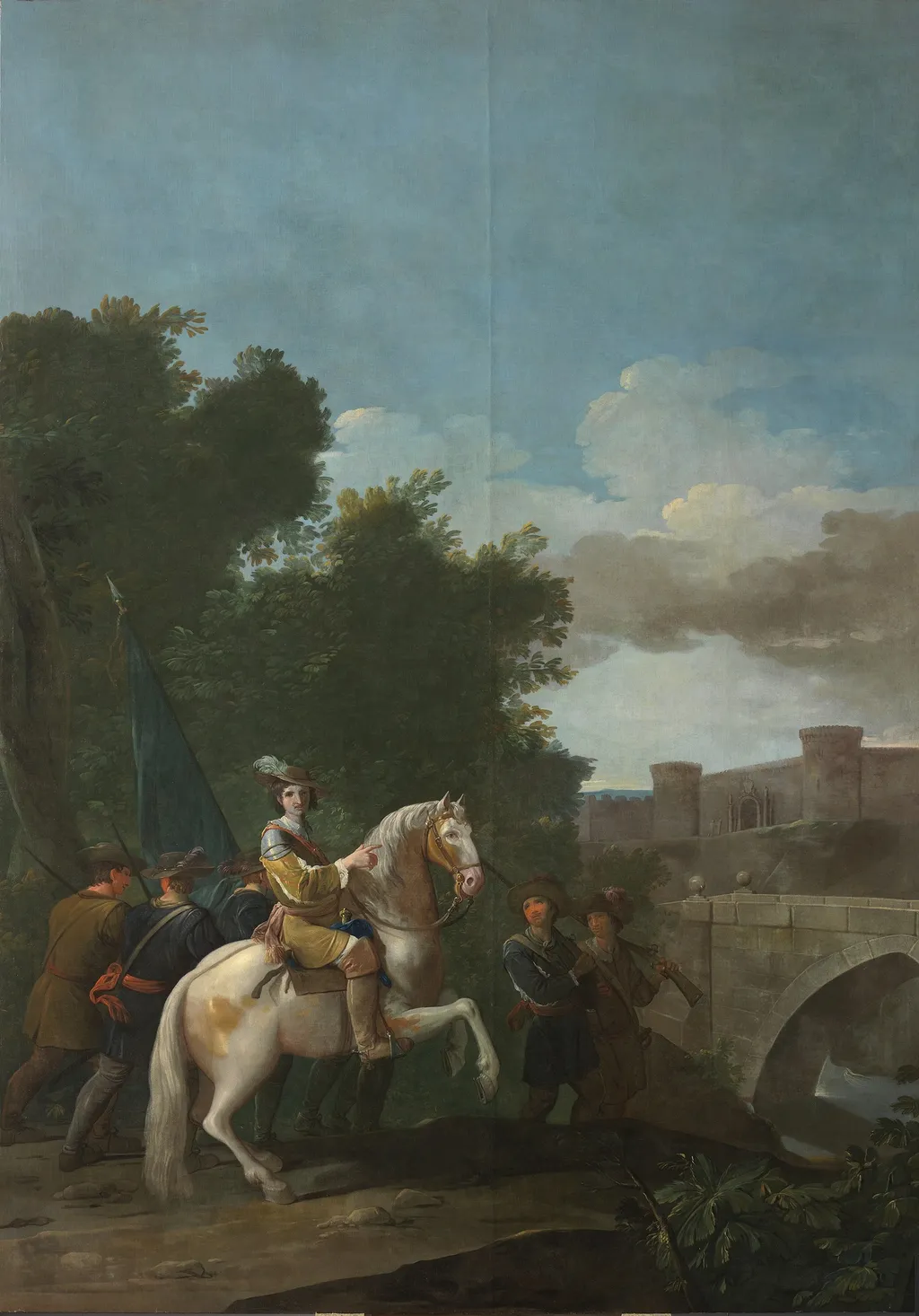
An Officer on horseback and four foot Soldiers is an oil painting by the Rococo painting artist Antonio González Velázquez. It dates from 1788 and is held in the collection of the Museo del Prado.
About this work
Technique & Style
Stylistically, the painting belongs to the equestrian portrait genre, depicting a mounted officer accompanied by four foot soldiers.
The work is executed in oil paint on canvas, measuring 275 cm in height and 195 cm in width. Stylistically, the painting belongs to the equestrian portrait genre, depicting a mounted officer accompanied by four foot soldiers. The composition emphasizes the rider’s elevated position, using the horse as a framing device to assert rank and authority.
The handling of the oil medium suggests a smooth, refined finish typical of eighteenth-century Spanish academic practice, with careful attention to the depiction of military attire and accoutrements.
The scene’s formal qualities reflect the conventions of official portraiture of the period, where clarity of hierarchy and disciplined arrangement of figures serve to underscore the subject’s status.
History & Provenance
The painting titled An Officer on horseback and four foot Soldiers was created by Antonio González Velázquez in 1776. Executed in oil on canvas, the work measures 275 cm in height and 195 cm in width. It is classified as an equestrian portrait depicting a mounted officer accompanied by four foot soldiers and a shotgun. The artwork is currently held in the collection of the Museo del Prado.
Legacy
Antonio González Velázquez's 1776 portrait of a mounted officer with four foot soldiers emerged within the Spanish military portrait tradition of the late 18th century, a genre that emphasized rank and hierarchy through formalized poses and uniform details. The composition, documented in the Museo del Prado's collection, influenced subsequent equestrian portraiture by establishing a standardized approach to depicting mounted officers amidst subordinate infantry, a visual language later echoed in military commemorations across Europe. Its presence in the Prado's holdings ensured continued scholarly attention to Velázquez's role in shaping Spanish martial imagery, reinforcing his reputation as a pivotal figure in the evolution of institutional portraiture during the Bourbon era.
Overview
Antonio González Velázquez’s oil painting An Officer on Horseback and Four Foot Soldiers, executed in 1788, is part of the Prado Museum’s collection. The work presents a mounted officer in a bright yellow jacket beside a light‑coloured horse, flanked by four infantrymen in dark uniforms. A stone bridge, a distant castle wall and a tranquil river complete the landscape under a clear blue sky.
Subject & Meaning
The central figure, poised on the horse, commands the attention of the surrounding soldiers, whose stances and gazes convey disciplined readiness rather than celebration. The composition suggests a moment of military inspection or a ceremonial procession, emphasizing hierarchy and order within an 18th‑century Spanish regiment.
Context
The painting belongs to a broader tradition of Spanish military portraiture that documented the appearance and regalia of officers and troops during the reign of Charles III. It provides visual evidence of contemporary uniform design, equipment such as shotguns and pole weapons, and the architectural features of bridges and fortifications used in the era’s landscape.
Own this work as a print
Artist & collection
Artist
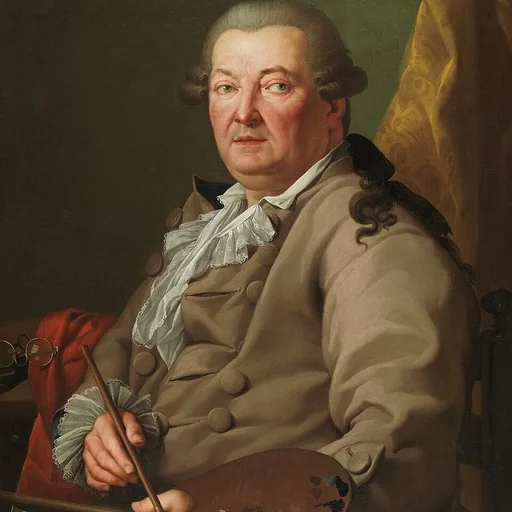
Antonio González Velázquez (1723–1793) was an artist, born in Madrid.

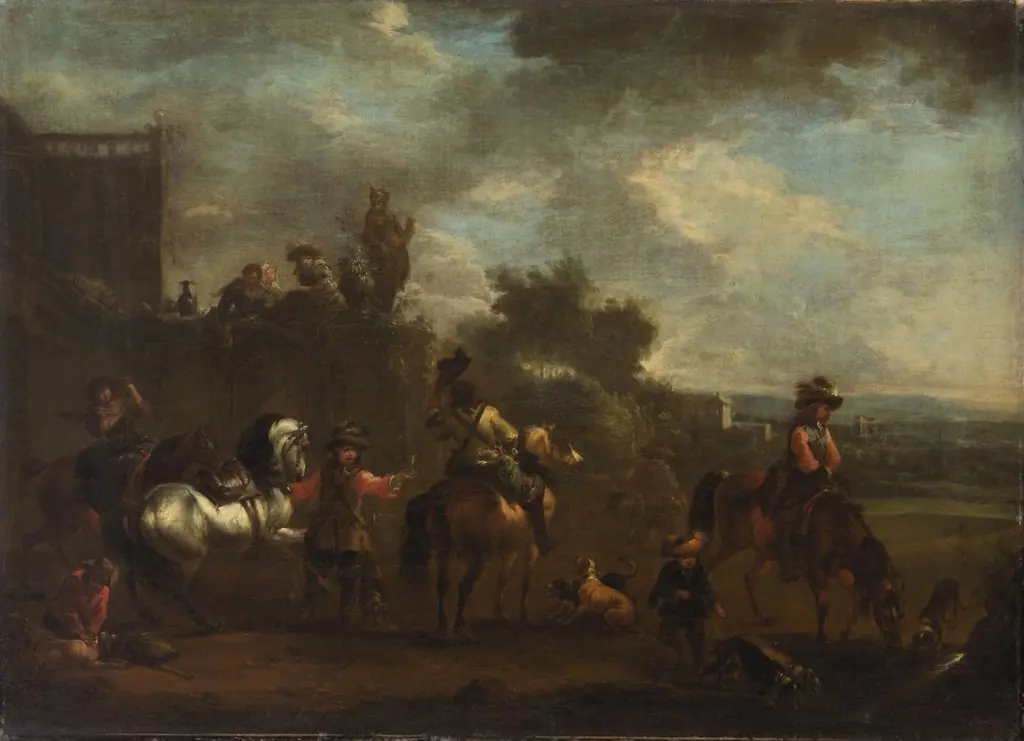 Ausritt zur Jagd
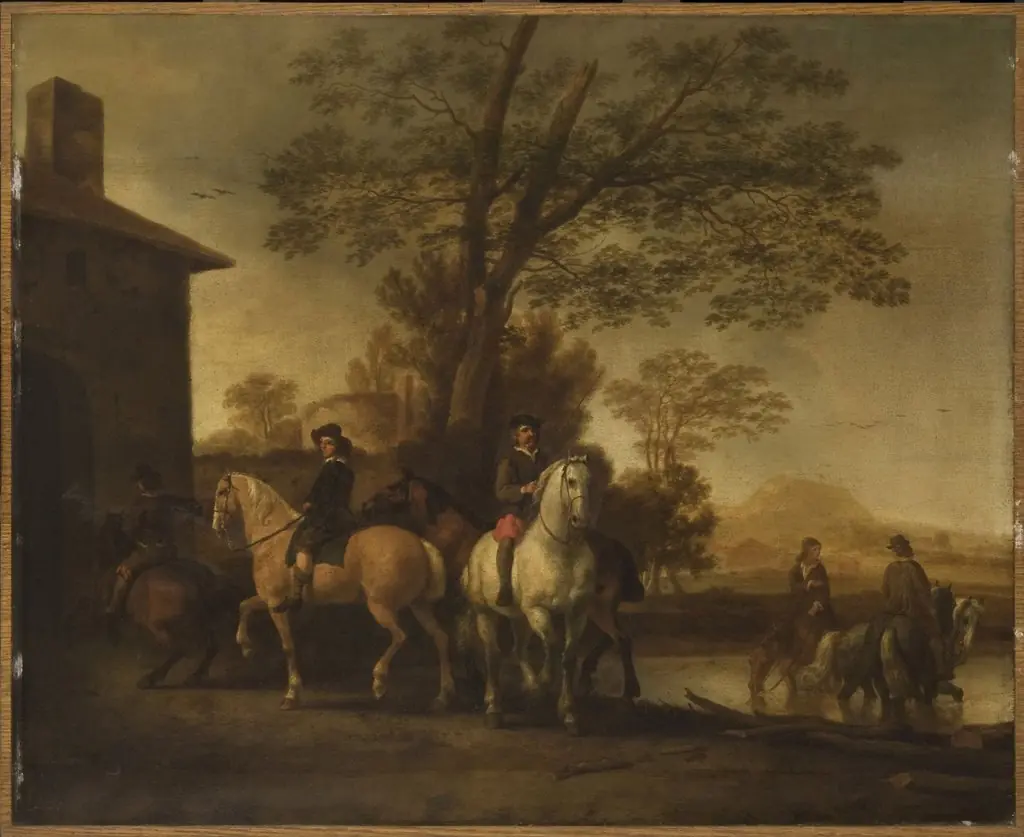 Horsemen Watering Their Horses
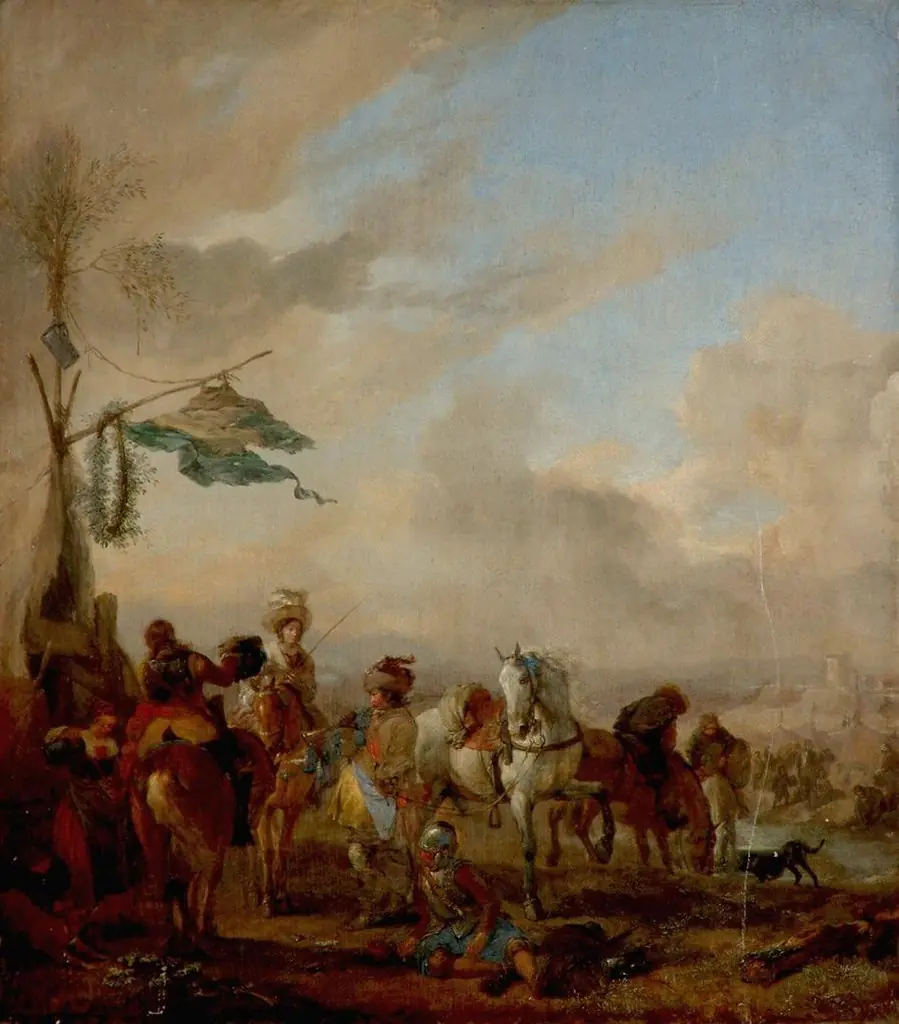 Trumpeters at the Camp
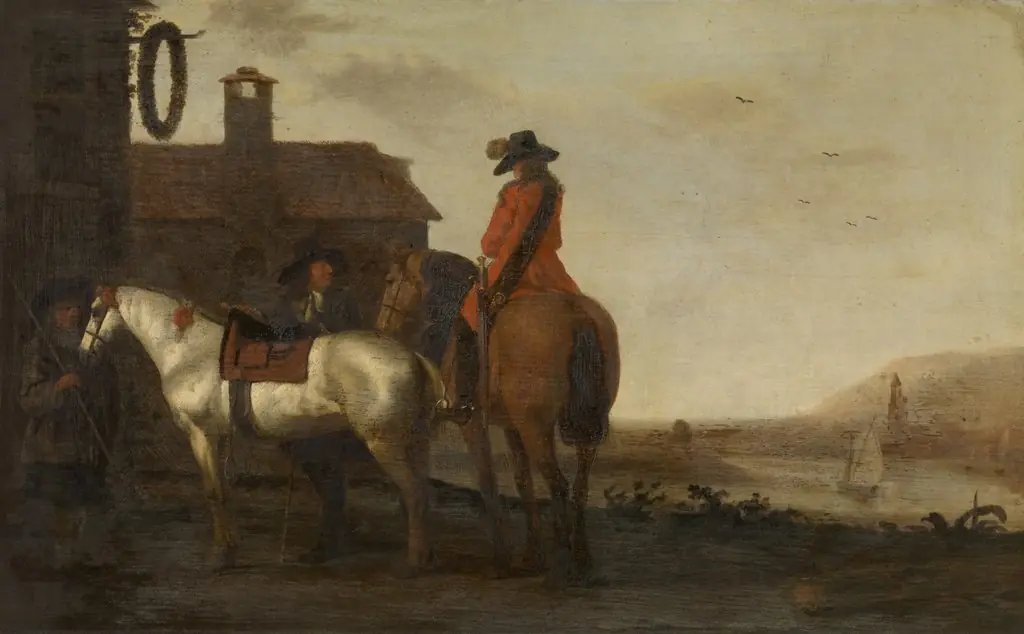 Stopping Place for Horsemen and Horses
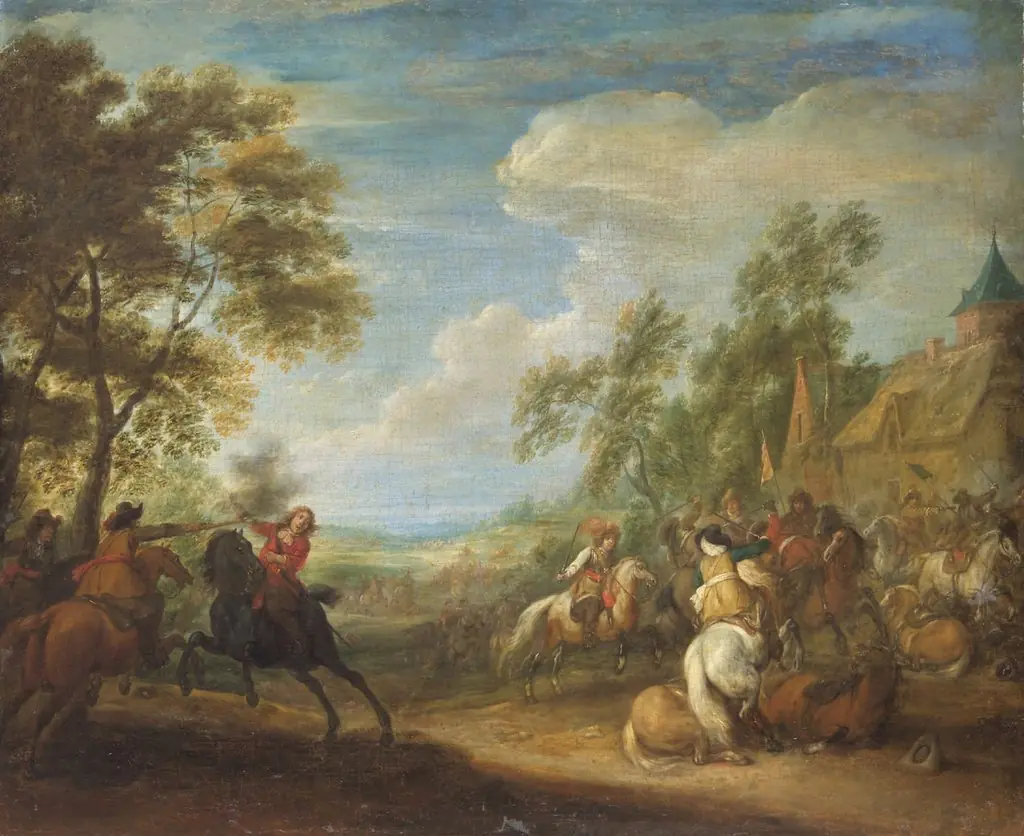 Reitergefecht
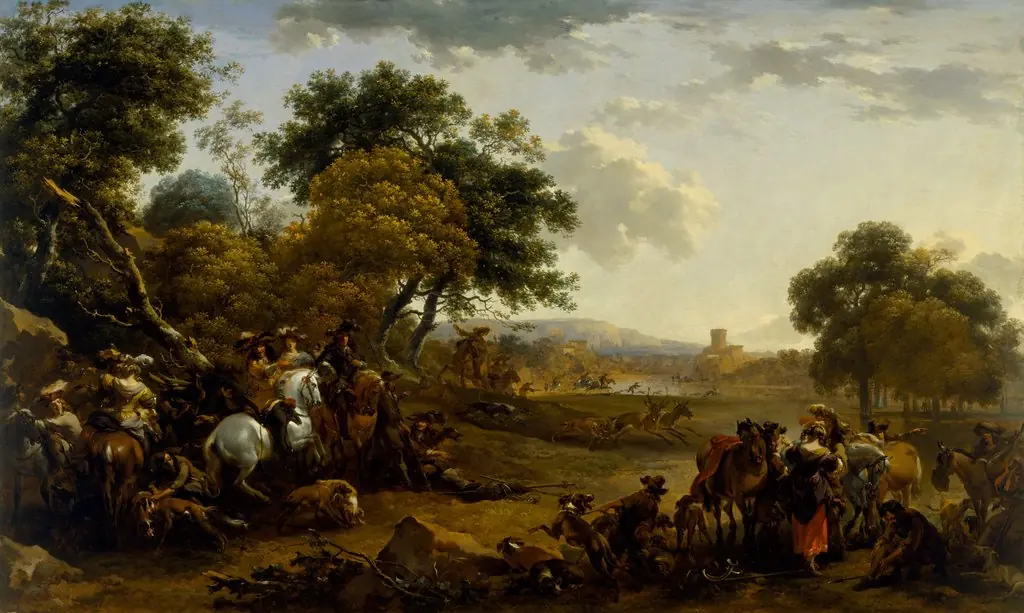 Landscape with a Hunting Party
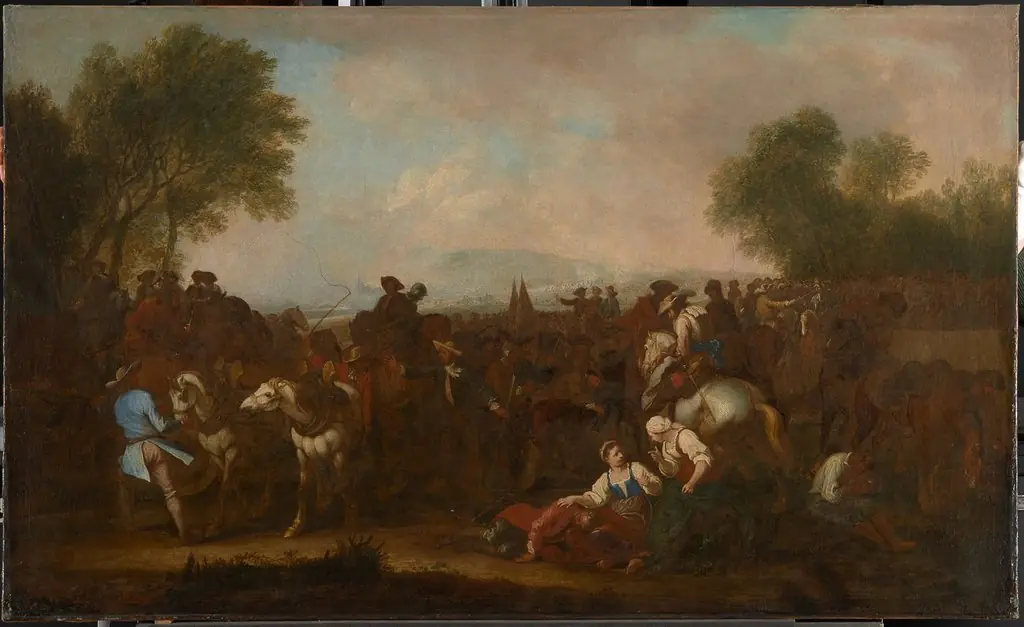 Reiterszene
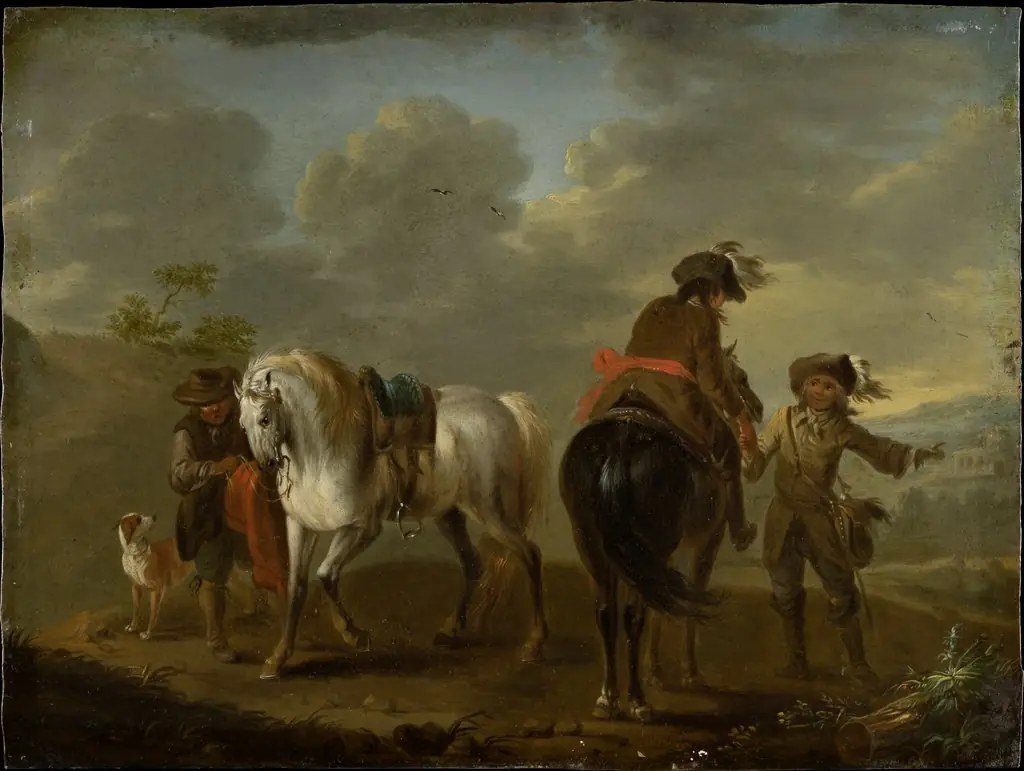 Landscape with Riders
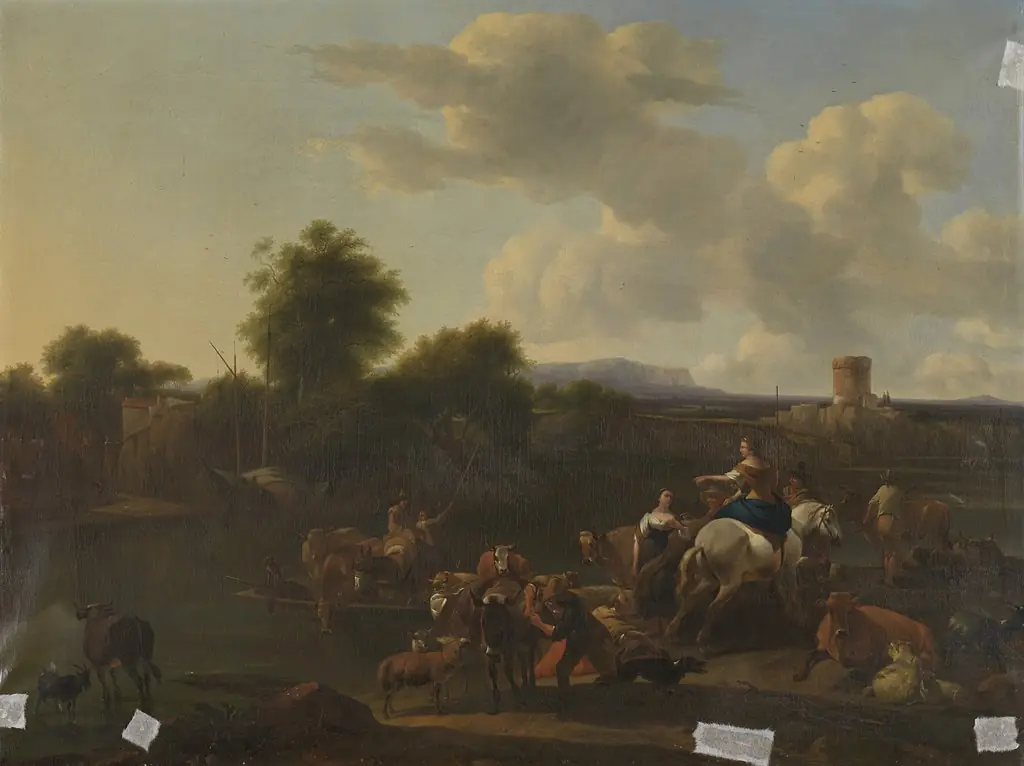 The cattle ferry
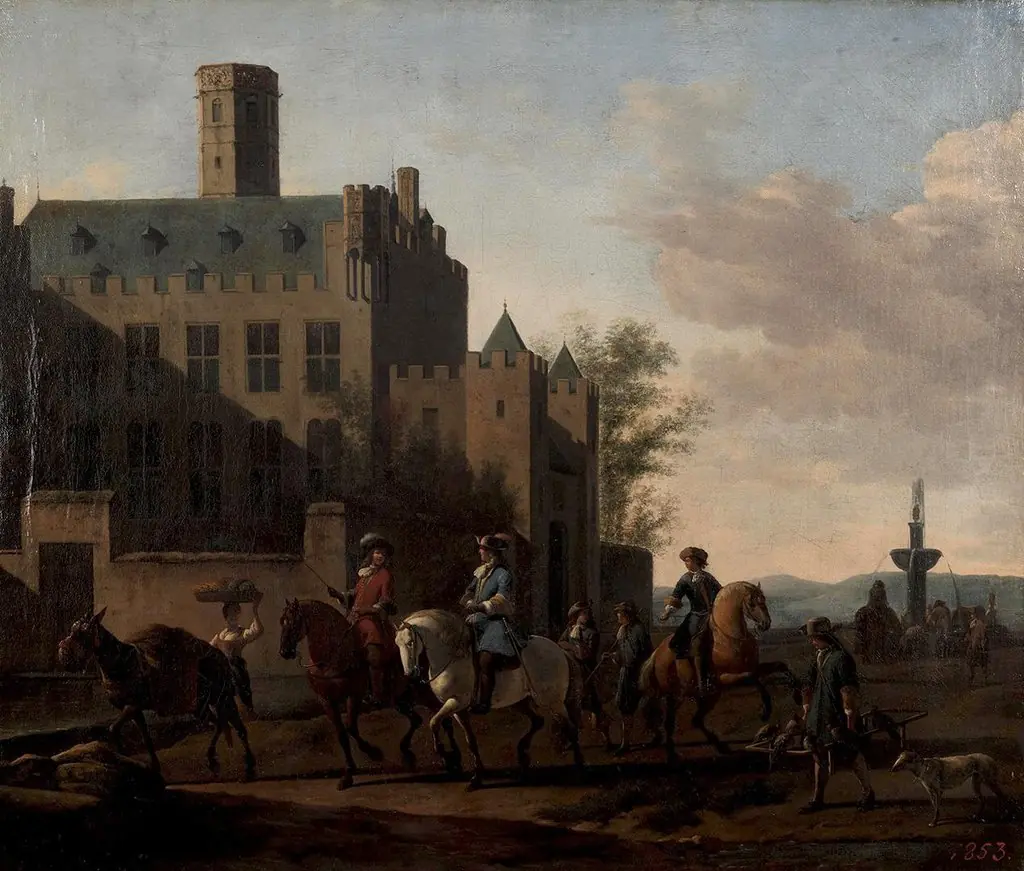 Leaving for the Hunt
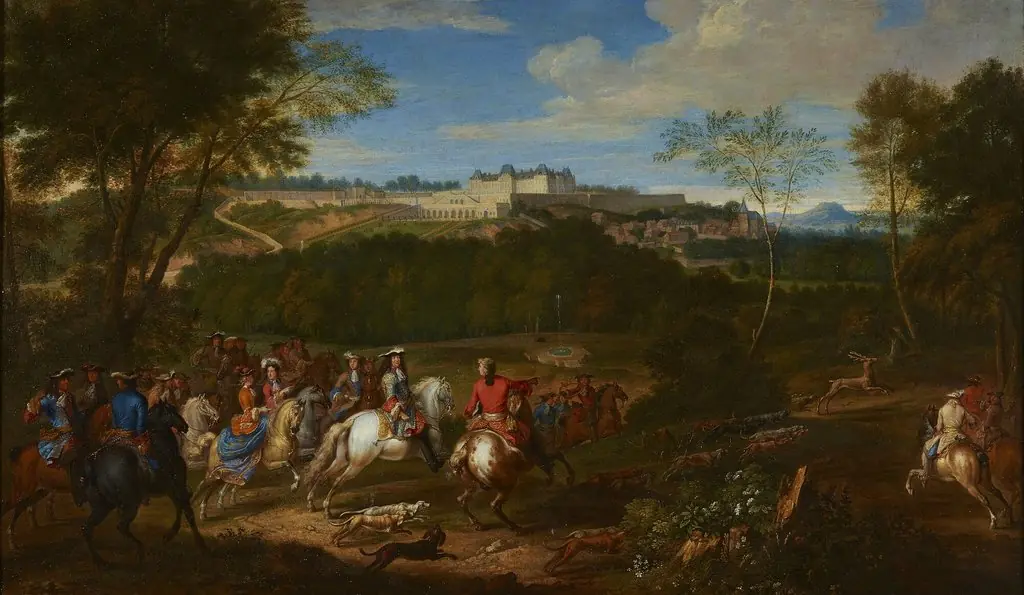 Louis XIV and his Court hunting in view of the castle of Meudon.
- A Cavalry Engagement