Artwork
Portrait of a Seated Woman
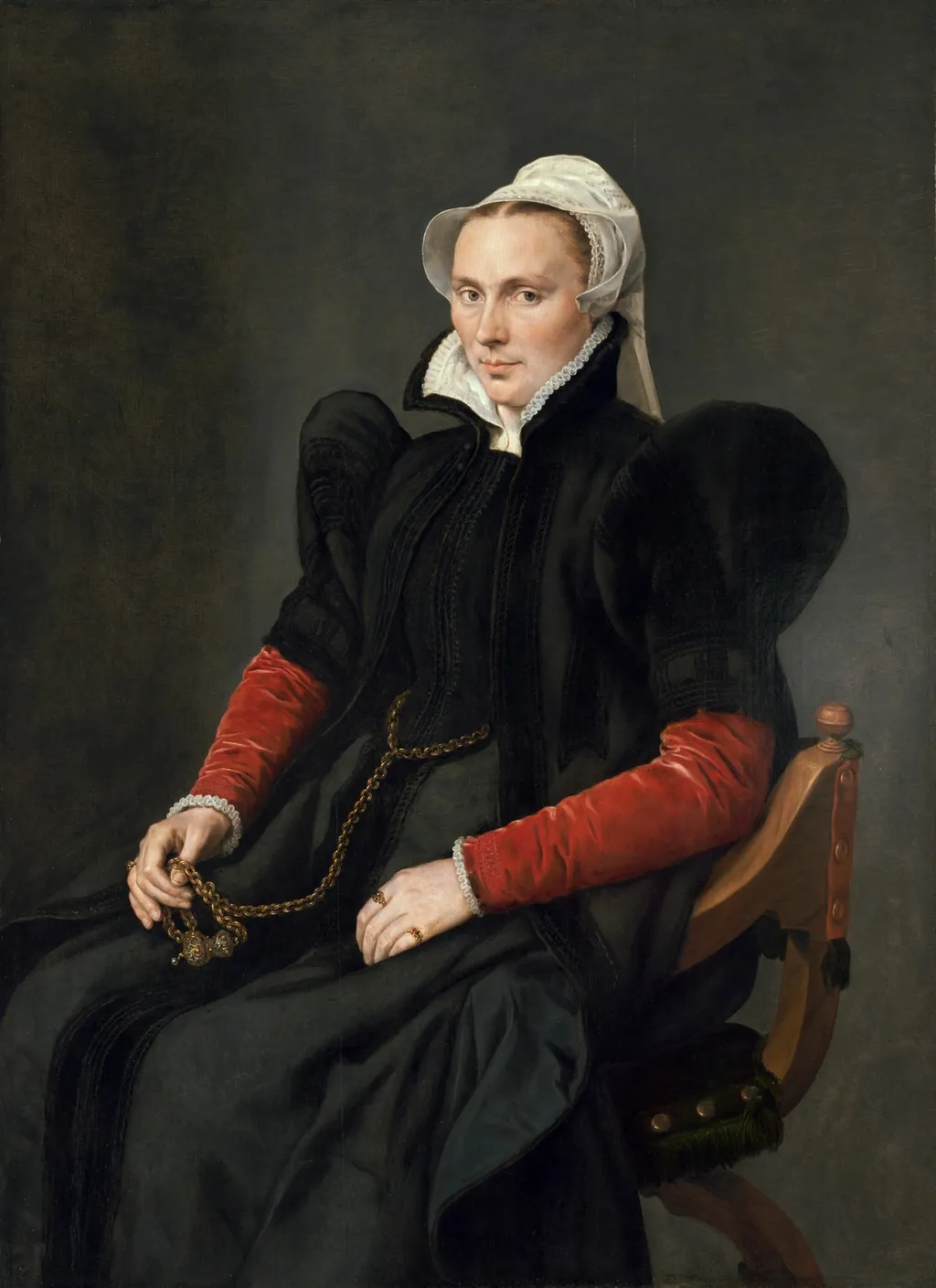
Portrait of a Seated Woman is an oil painting by the Mannerist artist Antonis Mor. It dates from 1565 and is held in the collection of the Art Institute of Chicago.
About this work
Subject & Meaning
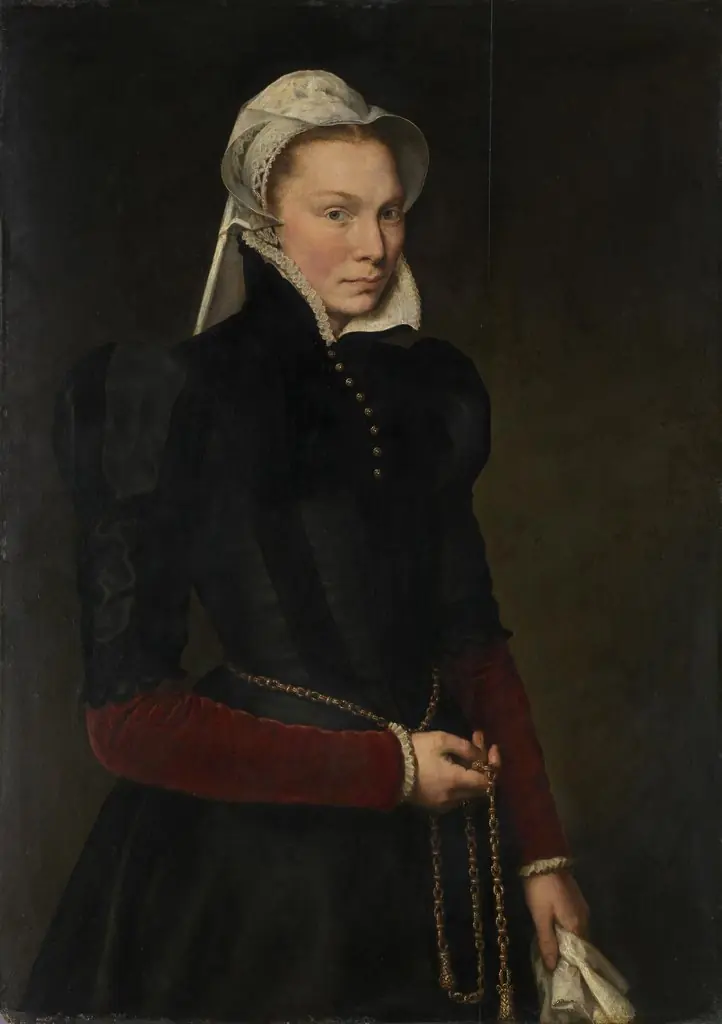
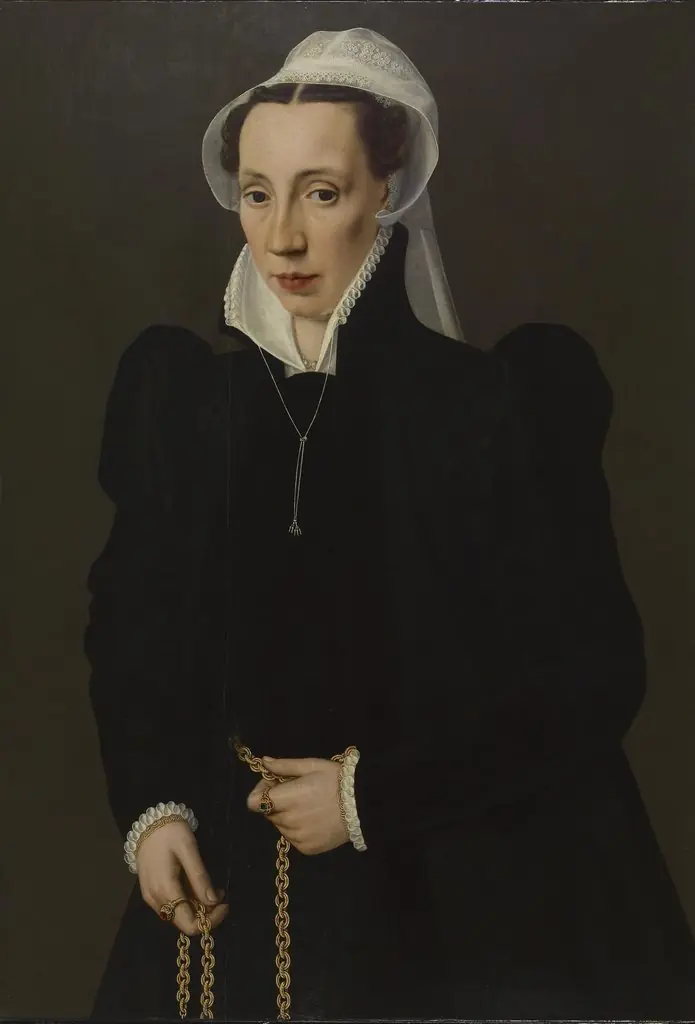
In her right hand she holds a gold chain with a pendant, resting in her lap, while her left hand, adorned with rings, rests on her thigh.
The sitter is an unidentified woman depicted in a three-quarter-length seated pose, facing slightly left. She wears the fashionable attire of Flemish women in the mid-1560s: a black dress with voluminous shoulders, a high starched white ruffled collar, and a translucent white cap with lace edging that covers her hair. Red velvet sleeves with white lace cuffs emerge from the black bodice. In her right hand she holds a gold chain with a pendant, resting in her lap, while her left hand, adorned with rings, rests on her thigh. The WGA source notes that she faces left and has a little dog on her lap, a symbol of marital faithfulness, confirming this portrait as one of a pair with her husband's pendant. The Art Institute identifies her as likely belonging to the merchant elite of Antwerp, and Mor's use of the seated three-quarter-length format was specifically employed for sitters who did not belong to the nobility, making them appear more approachable than the full-length standing poses reserved for aristocratic patrons. The restrained presentation, with its emphasis on practical rather than ostentatious display, suggests themes of piety, social standing, and quiet dignity appropriate to her station.
Technique & Style
The painting is executed in oil on panel, mounted on aluminum sheet for conservation. Mor's technique demonstrates his characteristic precision in rendering costume details with Netherlandish thoroughness. The surface shows smooth, refined brushwork with careful attention to textile textures, particularly the sheen of velvet and the crispness of lace. Light falls from the left, illuminating her face, collar, and hands, while shadows model the folds of fabric. The palette is dominated by black, deep red, white, and warm brown, with a plain dark gray-brown background that isolates the figure and draws attention to her face and attire. The finish is polished and detailed. The controlled lighting and meticulous fabric rendering exemplify the international court portrait style that Mor defined, while the formal pose and restrained color range reinforce a sense of austerity and focus on the sitter's character. The wooden chair with its curved back, visible finial, and green upholstered seat with fringe provides a functional, non-ornate setting that mirrors the overall impression of practicality in the work.
History & Provenance
The painting was created around 1565, during Mor's mature period when he had returned to the Netherlands from the Spanish court and focused increasingly on portraits of citizens, especially merchants and their wives in Antwerp. The provenance is well documented: Sir Richard Worsley, Bart. (d. 1805), owned it at Appuldurcombe, Isle of Wight, by 1804, as pendant to a Portrait of a Seated Man. It descended to his niece Henrietta Anna Maria Charlotte Bridgeman, who in 1806 married Charles, 2nd Baron Yarborough (later Earl of Yarborough), at Brocklesby Park, Lincolnshire, and London. It then descended to Charles, 4th Earl of Yarborough. Robert Langton Douglas of London later owned it, followed by Knoedler, New York, in October 1916. Andrew W. Mellon of Pittsburgh acquired it from July to December 1918, after which it returned to Knoedler in 1918. J. Horace Harding (d. 1929) of New York purchased it in 1925 and lent it to an exhibition in London in 1927. After Harding's death, his estate retained it, with Knoedler handling it from September to December 1937. It was sold at Parke-Bernet Galleries, New York, on March 1, 1941, as lot 57, to Knoedler as agent for the Art Institute of Chicago, which acquired it through the Edward E. Ayer Fund with the reference number 1941.29. The work remains on view at the Art Institute.
Context
Antonis Mor, also known as Anthonis Mor van Dashorst and Antonio Moro, was born in Utrecht between 1516 and 1520 and trained under Jan van Scorel. He became court painter to Philip II of Spain and worked for courts across Portugal, Spain, and the Netherlands. His formal style for court portraits, largely based on Titian, was extremely influential on court painters across Europe, especially in the Iberian Peninsula, where it created a tradition that led to Diego Velázquez. Mor's approach was largely determined by his patrons and commissions; as one scholar notes, observation was more important than imagination in his work. The Portrait of a Seated Woman belongs to his later period, after his return from the Spanish court around 1561, when he shifted focus to Antwerp's merchant class. This kind of bourgeois portrait, made popular by Mor, was soon adopted by Antwerp painters and was more fully developed in the seventeenth century, especially in Holland. The painting is catalogued in Northern European and Spanish Paintings before 1600 in the Art Institute of Chicago: A Catalogue of the Collection (Yale University Press, 2008, pp. 260-64), authored by Martha Wolff, Susan Frances Jones, Richard G. Mann and Judith Berg Sobré, with contributions by Ilse Hecht, Peter Klein, Cynthia Kuniej Berry, and Larry Silver.
Legacy
The Portrait of a Seated Woman endures as a significant example of Mor's influence on European portraiture. His template for aristocratic and bourgeois portraiture influenced painters across Europe for generations, with particular impact in Spain and the Netherlands. The painting's pendant pair structure, with the husband's portrait now in the North Carolina Museum of Art, exemplifies the marital portrait tradition that became standard in Netherlandish and later Dutch art. The work's afterlife in scholarship is anchored by its inclusion in the authoritative Art Institute of Chicago catalogue, and it continues to be studied as a prime example of how Mor adapted courtly conventions for non-aristocratic sitters, thereby expanding the social range of formal portraiture. Its current display at the Art Institute of Chicago ensures its continued visibility and role in public understanding of sixteenth-century Netherlandish painting.
Own this work as a print
Artist & collection
Artist
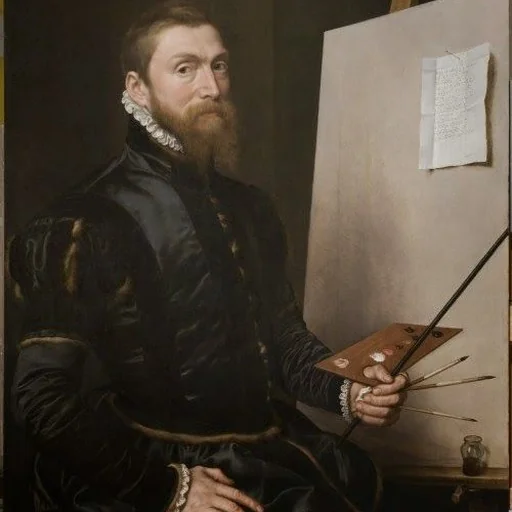
Anthonis Mor, also known as Anthonis Mor van Dashorst and Antonio Moro (c. 1517 – 1577), was a Netherlandish portrait painter, much in demand by the courts of Europe. He has also been referred to as Antoon, Anthonius,…

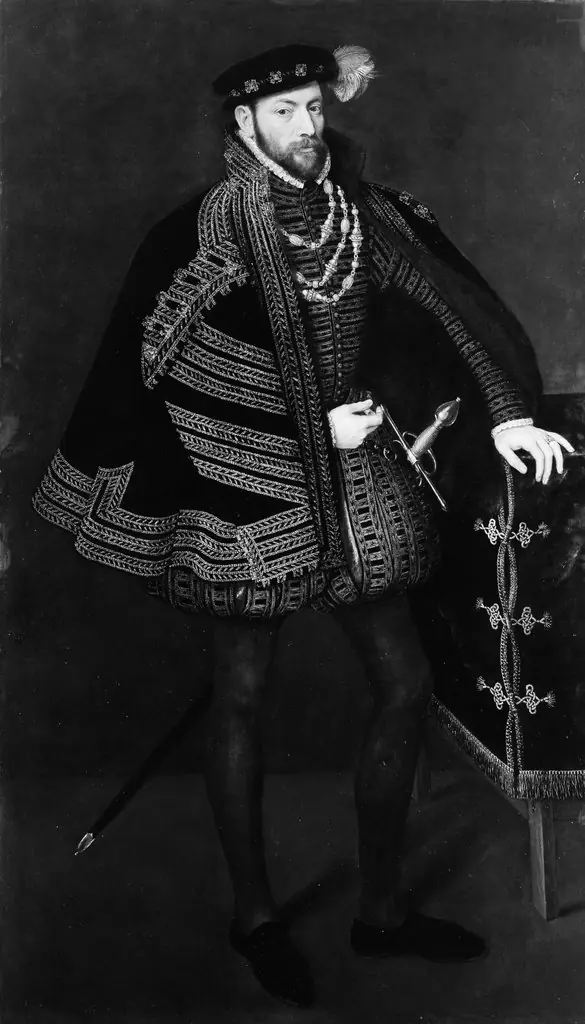 Portrait of a Man, Possibly Ottavio Farnese (1524–1586), Duke of Parma and Piacenza
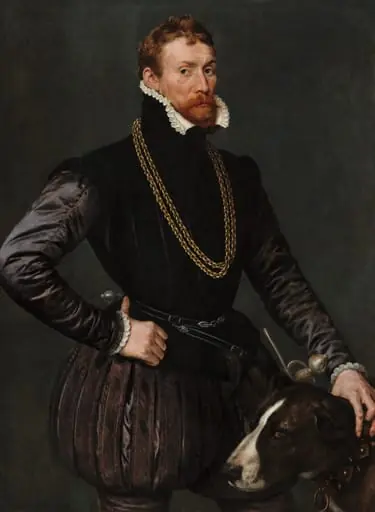 Portrait of a Gentleman
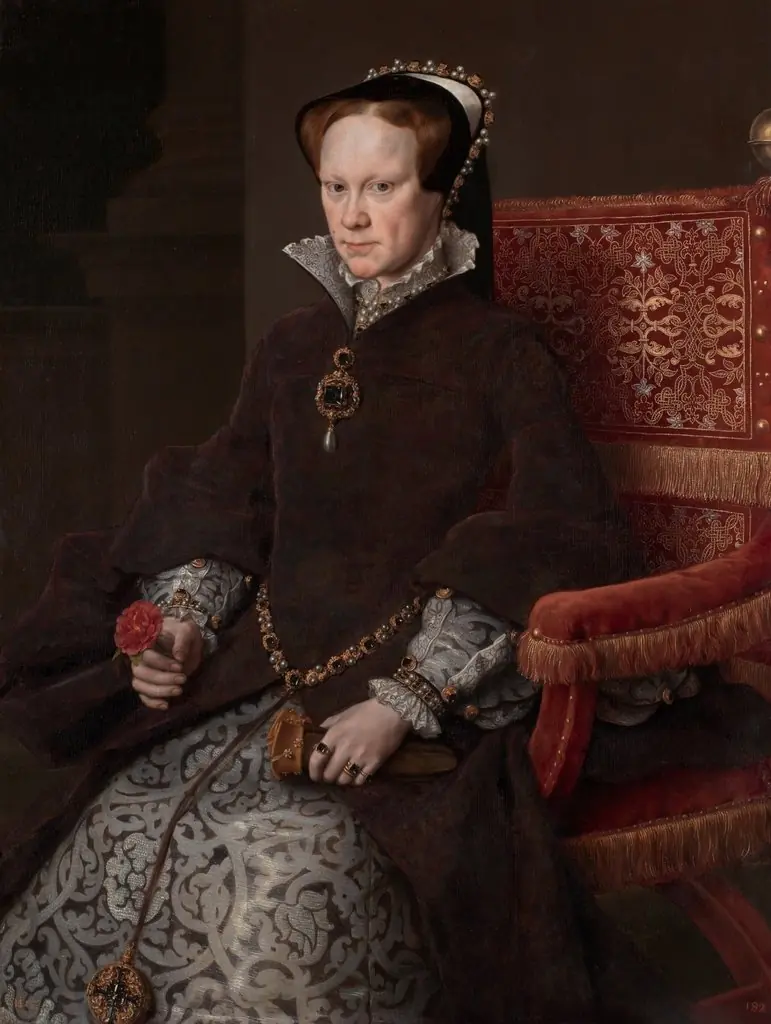 Portrait of Mary Tudor
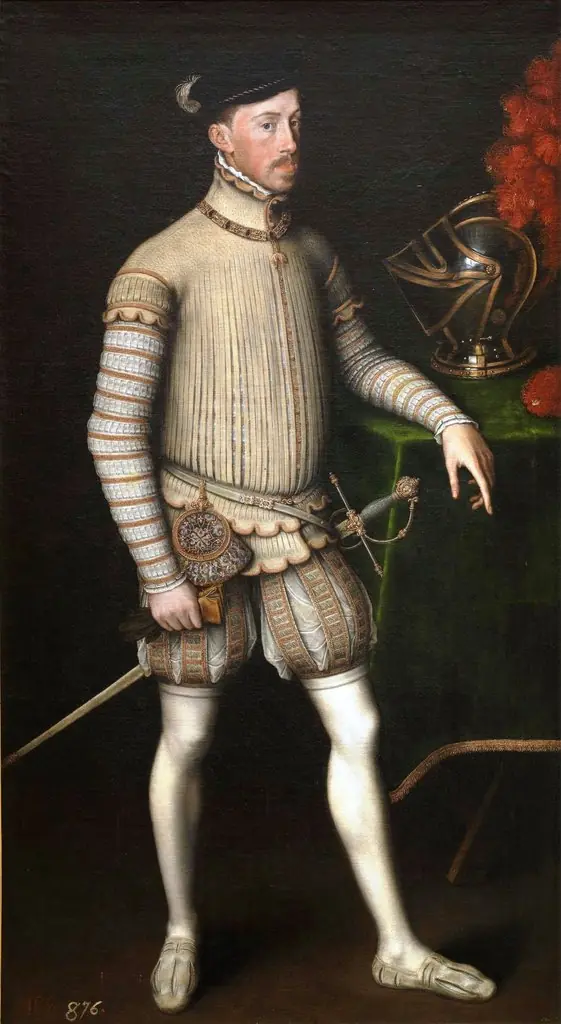 Emperor Maximilian II
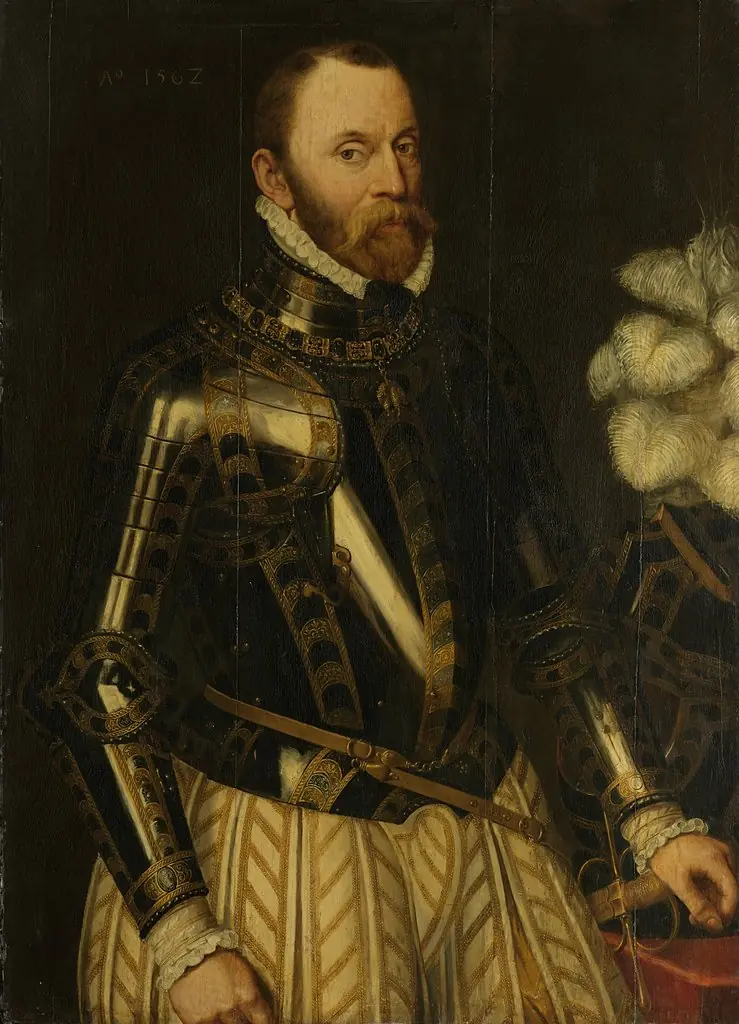 Philippe de Montmorency
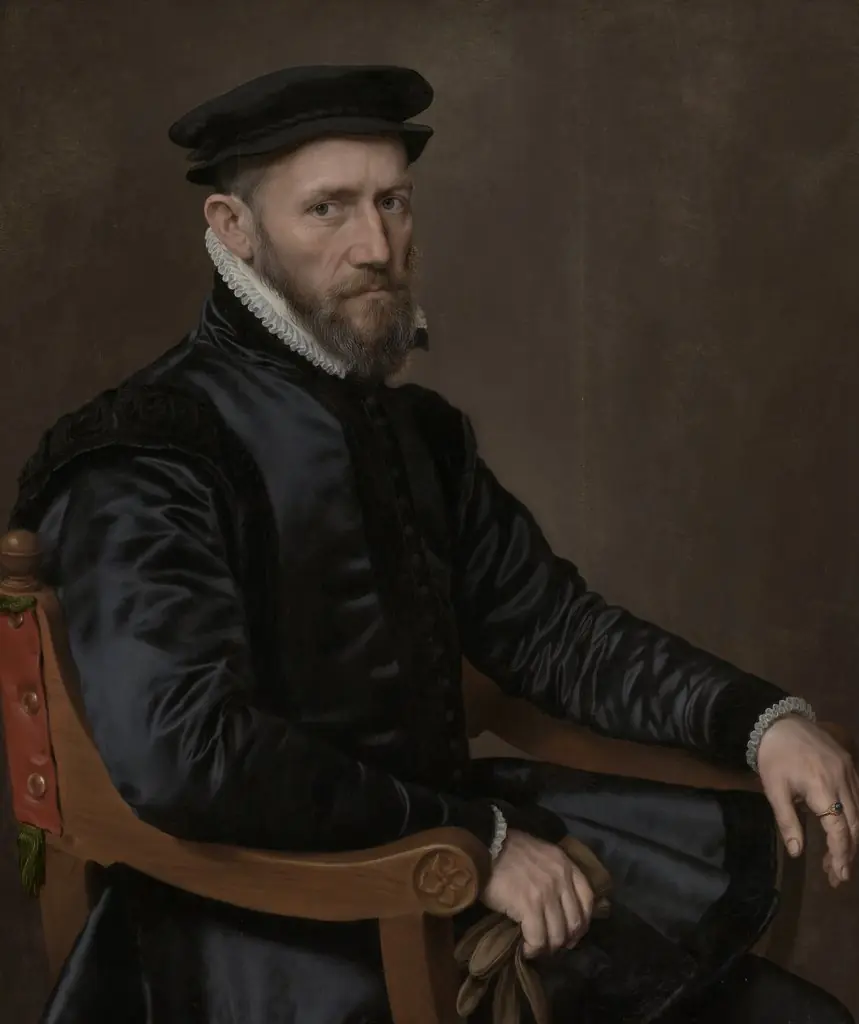 Portrait of Sir Thomas Gresham, pendant to portrait of Anne Fernely
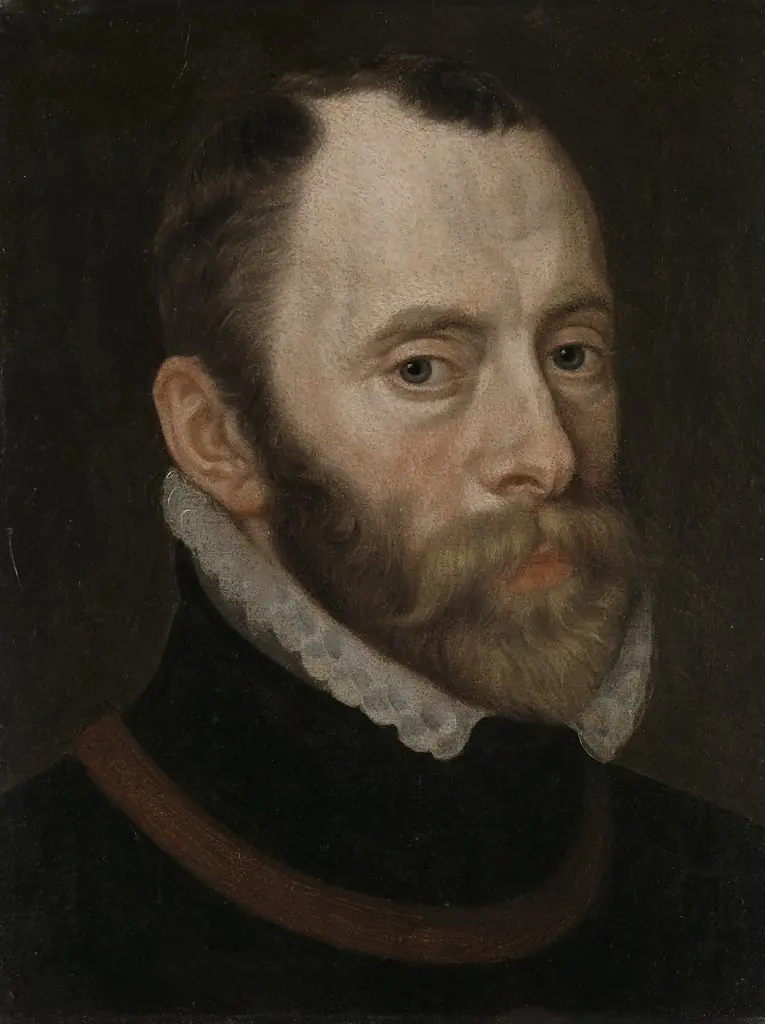 Portrait of Philippe de Montmorency, Count of Hoorne, Admiral of the Netherlands, Member of the Council of State
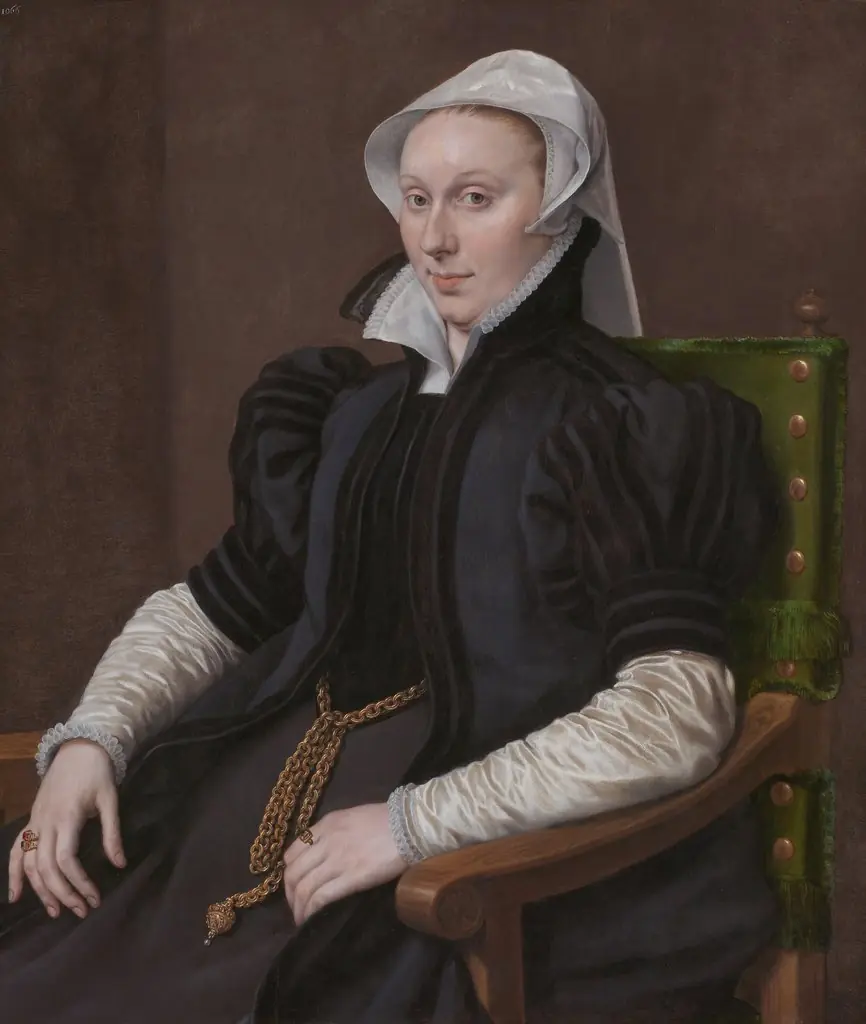 Portrait of Anne Fernely, pendant to Sir Thomas Gresham