Artwork
Crested Coat of Arms [reverse]
![Crested Coat of Arms [reverse], oil, 1543](https://artifactworldgallery.com/img/crested-coat-of-arms-reverse--635f462b0f763a94-w1024.webp)
Crested Coat of Arms [reverse] is an oil painting. It dates from 1543 and is held in the collection of the National Gallery of Art. The work presents a heraldic shield bearing a crest, set against a uniformly dark field.
- Inscription
- Inscribed:across top on banderole: TART SVIS VENV; across bottom on banderole: Ac(?) DE HONDECOVTRE 1543; center, coat-of-arms and crest
About this work
Technique & Style
The painting is executed in oil on a wooden panel, measuring 25.6 cm in height and 20.1 cm in width. It reflects the Antwerp panel-painting tradition of the mid-sixteenth century, with precise detail and smooth modeling. The composition centers on a heraldic device, a crested coat of arms, rendered with crisp linework, the work functioning as the reverse of a portrait panel.
History & Provenance
It was acquired by the dealer Hermann Ball in Berlin and handled by the Schaeffer Gallery there.
Created in 1543 by an Antwerp artist and later catalogued in sales as a work by Joos van Cleve, the panel passed from Sir John Frechville Ramsden, 6th Baronet, to a sale at Christie's, London, on 11 July 1930. It was acquired by the dealer Hermann Ball in Berlin and handled by the Schaeffer Gallery there. By 1937 it belonged to Adolph Caspar Miller in Washington, D.C., who exhibited it at the Phillips Memorial Gallery that year, in 'Paintings and Sculpture Owned in Washington,' catalogued as number 2 and then attributed to Ambrosius Benson. Miller bequeathed the panel to the National Gallery of Art in 1952, where it remains.
Legacy
The painting was owned by the Schaeffer Gallery in Berlin by 1930, and subsequently acquired by Adolph Caspar Miller in Washington by 1937. It entered the National Gallery of Art collection through the bequest of Miller in 1952. Its provenance reflects a documented chain of ownership involving Christie's sale in 1930, the intermediary dealer Hermann Ball, and direct purchase by the Millers, establishing its presence in European and American collections during the early 20th century.
The work's later influence and legacy are evidenced by its inclusion in the Phillips Memorial Gallery's 1937 catalog and its enduring presence in the National Gallery of Art's collection, where it remains part of the institutional holdings as of the latest available records.
Overview
The work presents a heraldic shield bearing a crest, set against a uniformly dark field. Executed in oil paint on a wooden panel, the composition emphasizes the emblem’s form and coloration without surrounding narrative elements.
Subject & Meaning
The central motif is a traditional coat of arms, a visual identifier of lineage or authority. By isolating the device on a plain background, the artist draws attention to the symbols and colors that convey the family's status and affiliations.
Artist & collection

 Coat of Arms of Adriana Perez
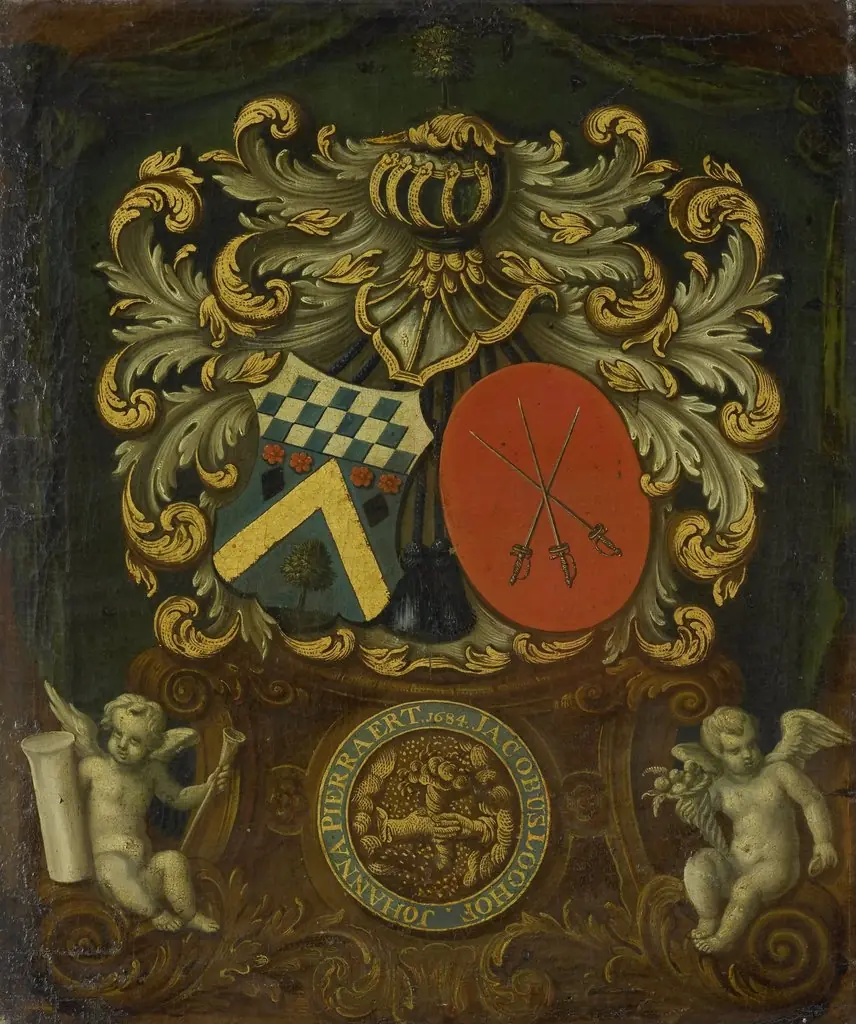 The family shields of Jacobus Loohoff and Johanna Pierraert, 1684
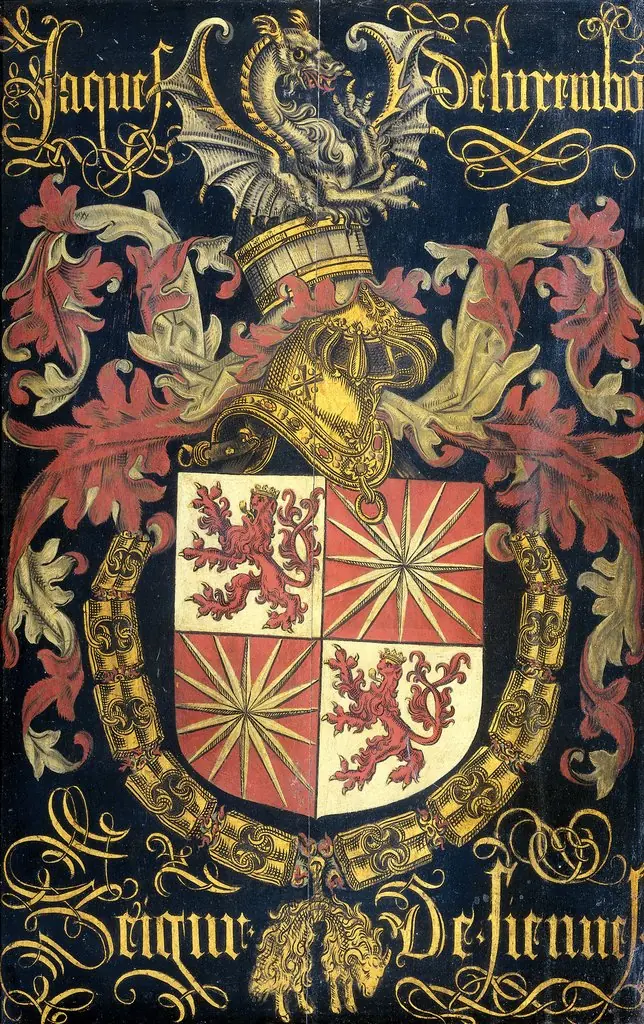 Shield of Jacob of Luxemburg (after 1441-1488), Lord of Fiennes, in his capacity as knight of the Order of the Golden Fleece
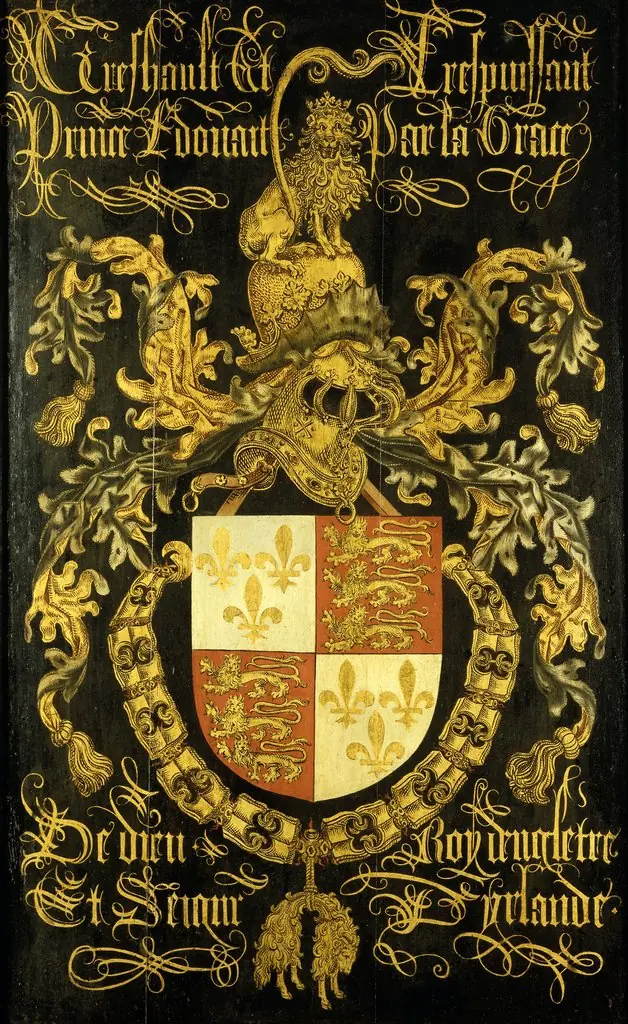 Shield of Edward IV (1442-1483), king of England, in his capacity as knight in the Order of the Golden Fleece
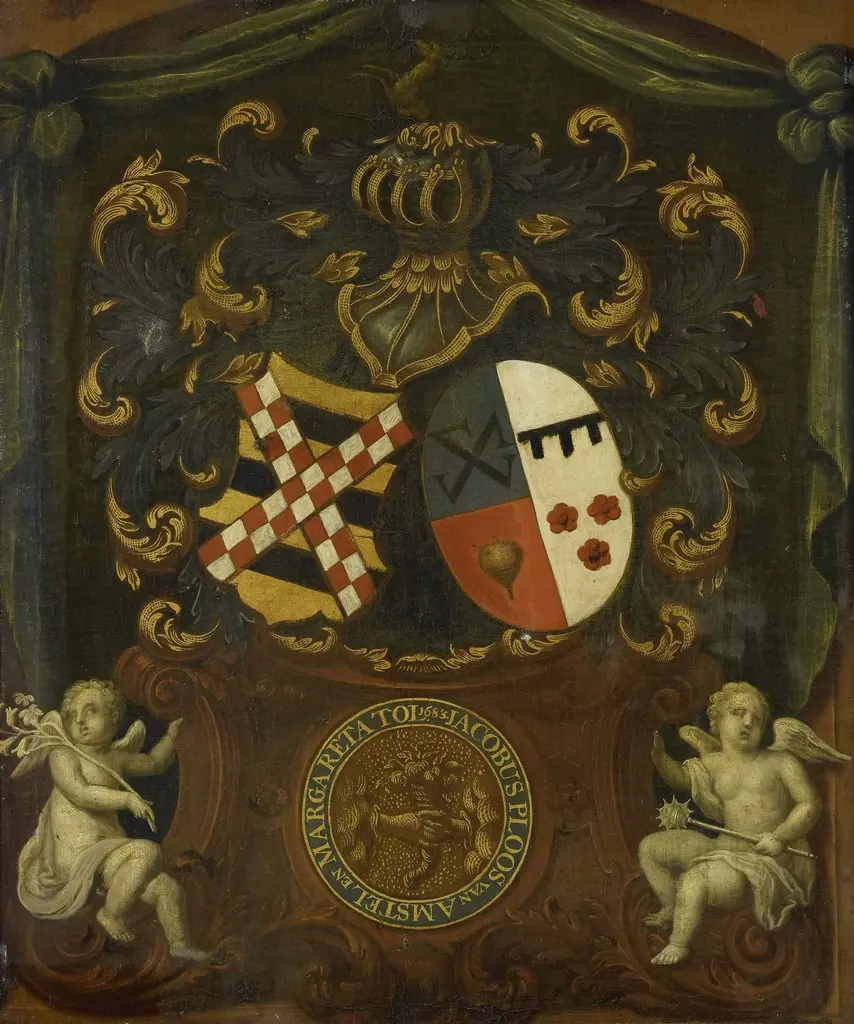 The family shields of Jacob Ploos van Amstel and Margareta Tol
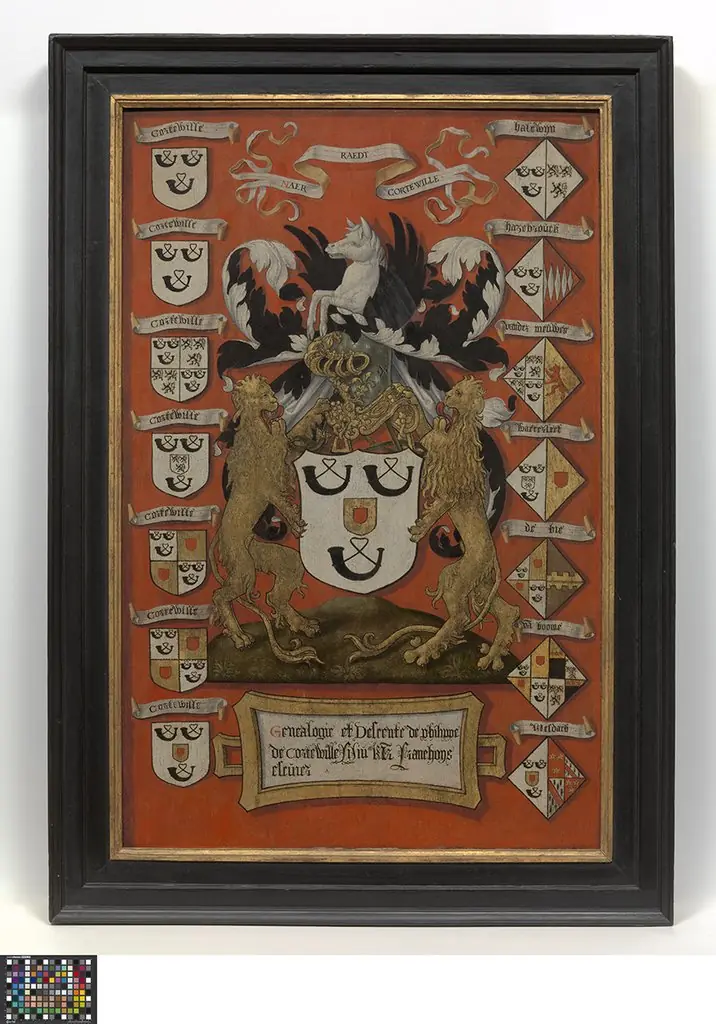 Pedigree of Filips de Cortewille
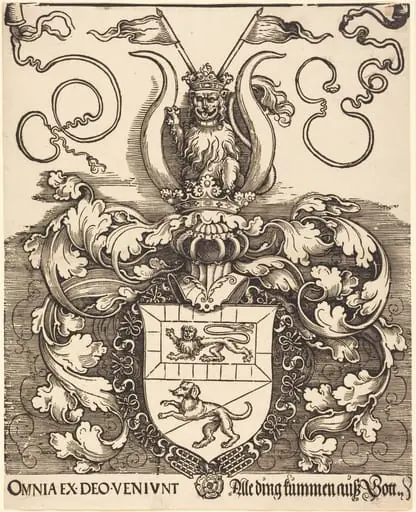 Coat of Arms of Lorenz Staiber
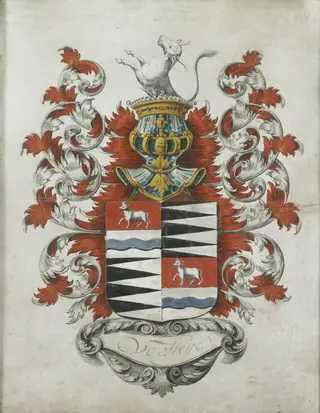 Het wapen Verheye
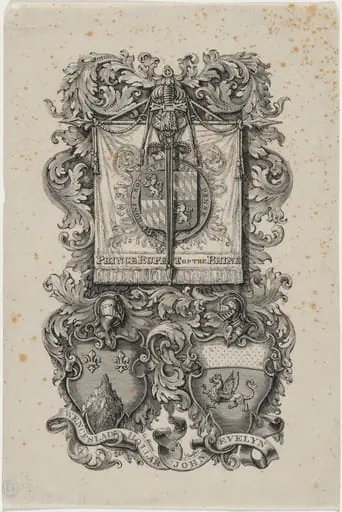 Coat of Arms of Prince Rupert, Hollar and Evelyn
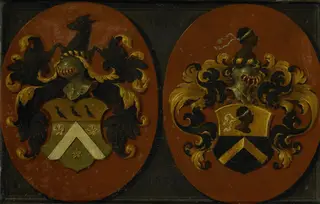 Wapenbord met de wapens van Boudaen en Fourmenois, 1623 (het wapen van Fourmenois omgewend)
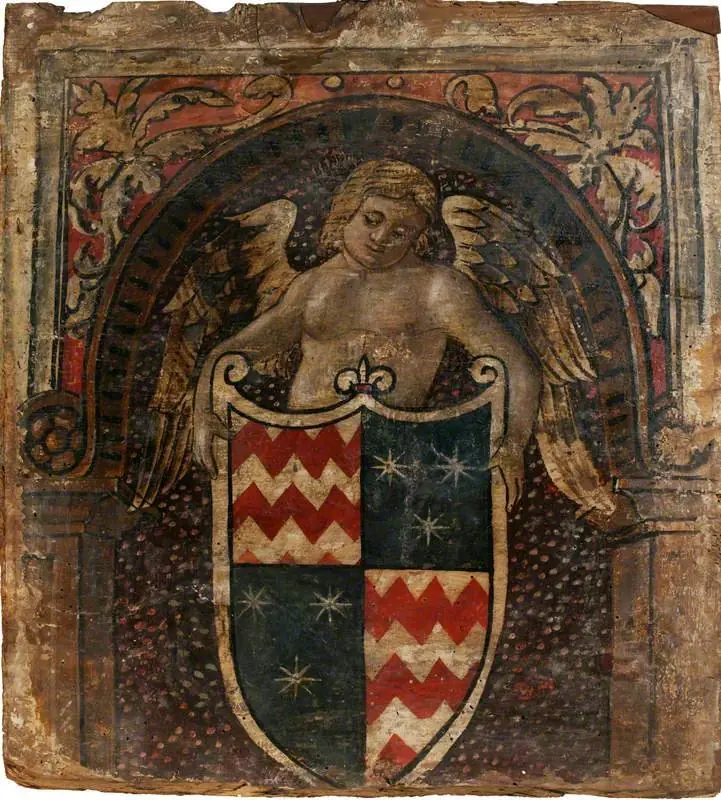 A Cupid with a Coat of Arms (one of 29 painted panels from a frieze)