Artwork
Wapenbord met de wapens van Boudaen en Fourmenois, 1623 (het wapen van Fourmenois omgewend)
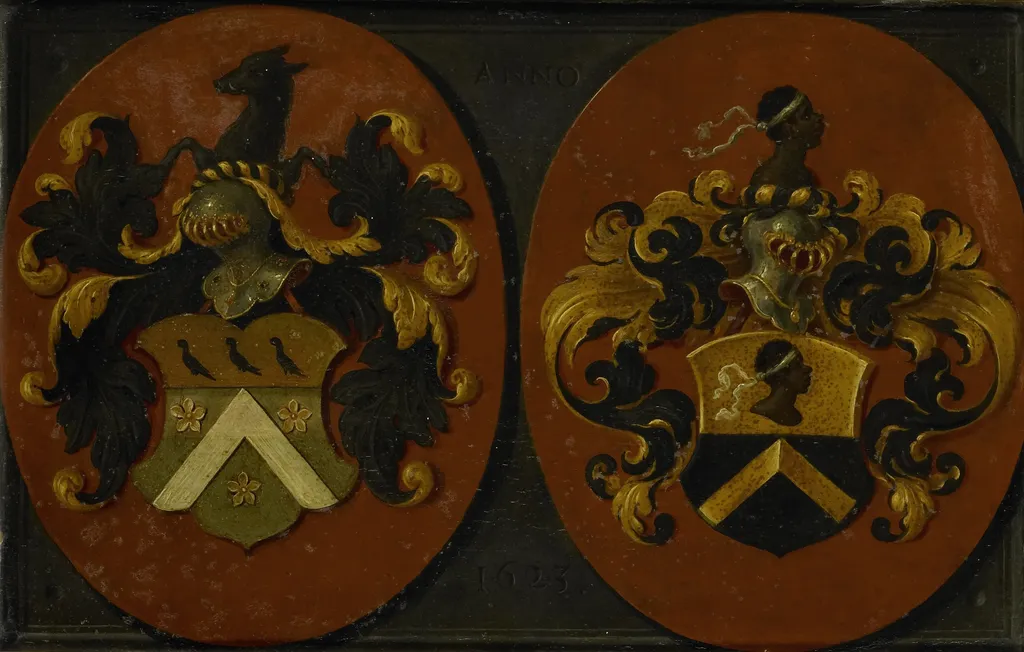
Wapenbord met de wapens van Boudaen en Fourmenois, 1623 (het wapen van Fourmenois omgewend) is an oil painting by the Early Baroque Italian artist Unknown. It dates from 1623 and is held in the collection of the Rijksmuseum. The work is a copper plate dated 1623 that displays two oval heraldic shields.
About this work
Subject & Meaning
Its meaning lies in the formal documentation of dynastic ties through the deliberate arrangement and orientation of the Boudaen and Fourmenois arms.
The work is a heraldic panel bearing the combined coats of arms of the Boudaen and Fourmenois families, dated 1623. As a piece of heraldic art, it functions as a visual record of lineage, alliance, or marriage between two named lineages rather than a narrative or devotional subject.
The title specifies that the Fourmenois arms are reversed (omgewend), a heraldic convention typically indicating a specific genealogical relationship, such as a maternal line or a particular marital connection, in which the marshalling of the shield conveys the precise nature of the union between the two families.
Painted in oil on copper, the panel belongs to the genre of heraldic art and was held in the collection associated with Jacob de Witte van Citters before entering the Rijksmuseum. Its meaning lies in the formal documentation of dynastic ties through the deliberate arrangement and orientation of the Boudaen and Fourmenois arms.
Technique & Style
Created in 1623, this heraldic painting is executed in oil paint on a copper support. The work functions as a coat of arms board, displaying the combined arms of the Boudaen and Fourmenois families, with the latter's shield depicted in a reversed orientation. As a piece of heraldic art, its formal composition is defined by the specific arrangement of these genealogical symbols rather than narrative scenery.
The choice of copper as a substrate was a known practice for small-scale, detailed works during this period, providing a smooth, rigid surface for the oil medium.
History & Provenance
Created in 1623, this heraldic painting on copper depicts the coats of arms of Boudaen and Fourmenois, with the Fourmenois arms reversed. The work is executed in oil paint on a copper support. It was subsequently owned by Jacob de Witte van Citters before entering the collection of the Rijksmuseum.
The work is held in the collection of the Rijksmuseum, Amsterdam. It is recorded under the accession number BK-17114 in the museum’s holdings.
The painting has been included in at least one exhibition: in 1976 it was shown in the Rijksmuseum’s presentation Heraldiek in Nederland (Heraldry in the Netherlands).
Context
Created in 1623, this anonymous work exemplifies the tradition of Dutch heraldic art on copper, a specialized medium favored for its durability and fine detail. The painting serves as a historical record of the alliance between the Boudaen and Fourmenois families, distinguished by the specific heraldic convention of reversing the Fourmenois arms. Currently held in the Rijksmuseum collection, the piece reflects the broader 17th-century practice of commissioning such emblems to assert lineage and social standing.
As an unsigned production, it remains a representative example of the genre rather than a work attributed to a specific master, illustrating the functional role of art in documenting aristocratic identity during the Dutch Golden Age.
Legacy
The painting's survival in the Rijksmuseum collection and its classification as heraldic art reflect its enduring significance in Dutch heraldic traditions. Its attribution to an anonymous artist and preservation on copper have contributed to scholarly interest in early 17th-century civic symbolism, though specific later influences on contemporary art remain unrecorded in the cited sources.
Overview
The work is a copper plate dated 1623 that displays two oval heraldic shields. Each shield bears a distinct composition and color scheme, set against a uniform brown ground. The left shield combines green and gold fields with a white chevron‑like form and a central flower, framed by black and gold foliage. The right shield presents a gold and black field topped with a stylized head silhouette.
Artist & collection









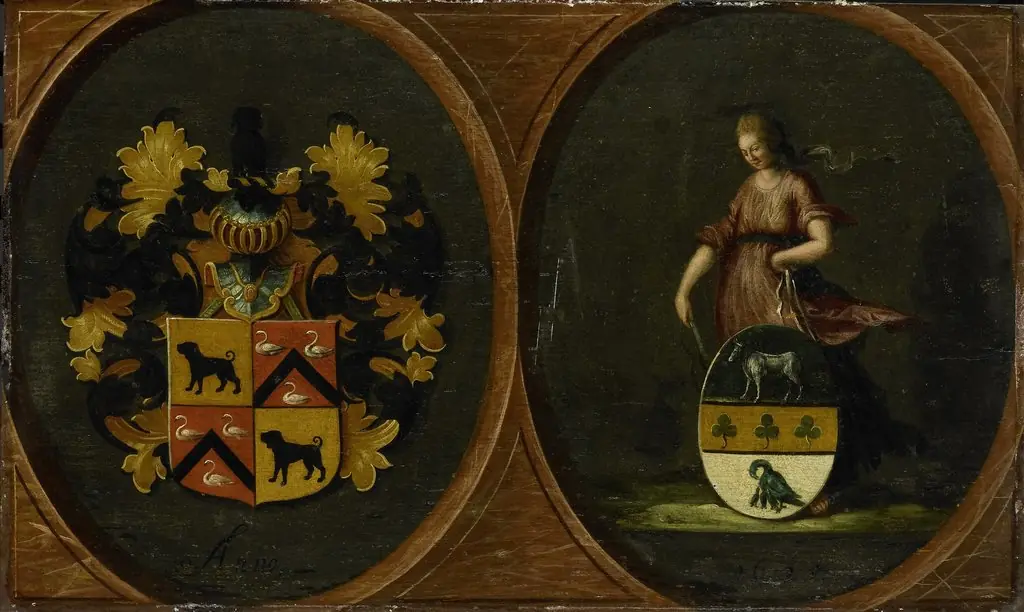 Heraldic panel with family shields of the couple Hortensia del Prado and second husband Peter Courten, 1625
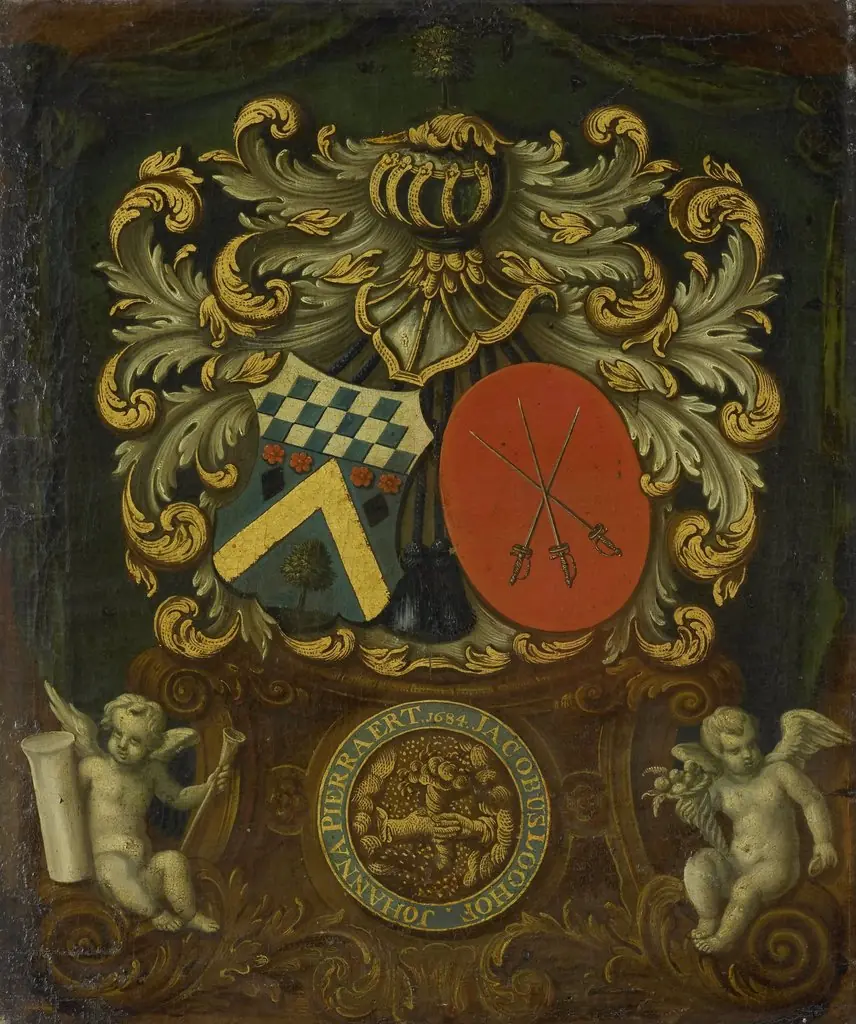 The family shields of Jacobus Loohoff and Johanna Pierraert, 1684
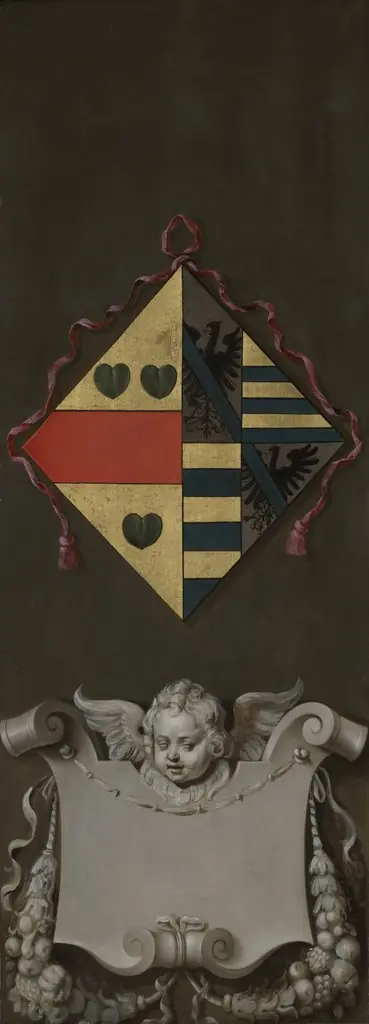 Coat of Arms of Adriana Perez
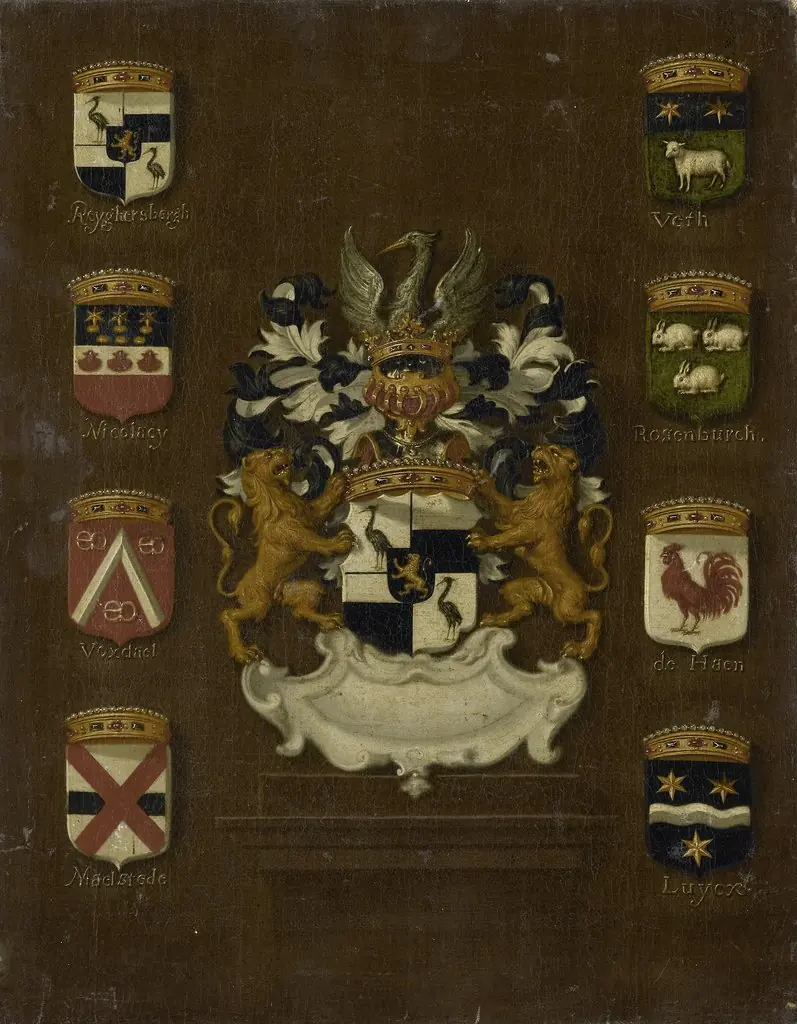 Coat of Arms of Jan van Reyersbergh with its eight quarterings
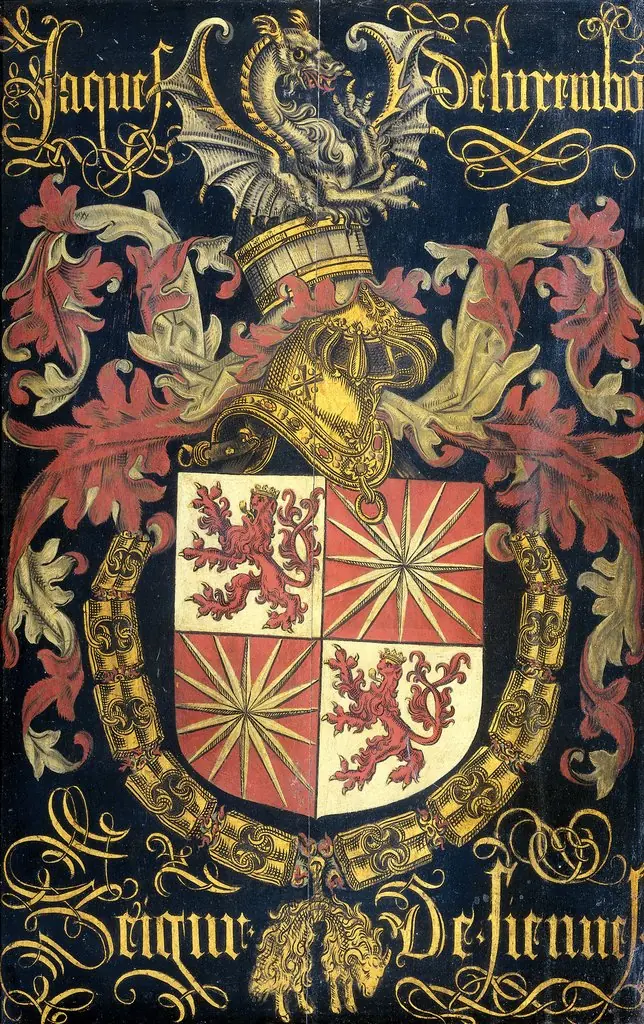 Shield of Jacob of Luxemburg (after 1441-1488), Lord of Fiennes, in his capacity as knight of the Order of the Golden Fleece
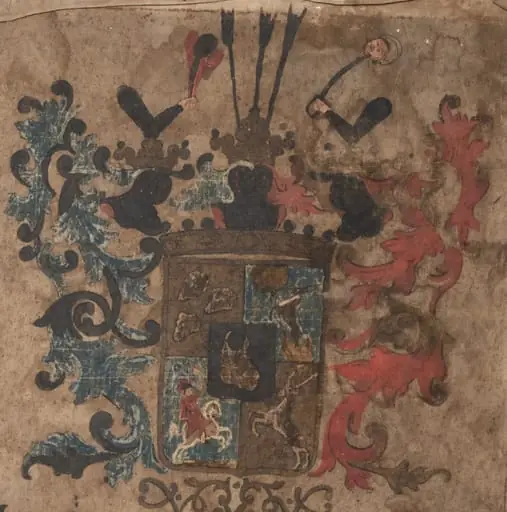 Blazonul funerar al contelul Miklós Wass din Țaga
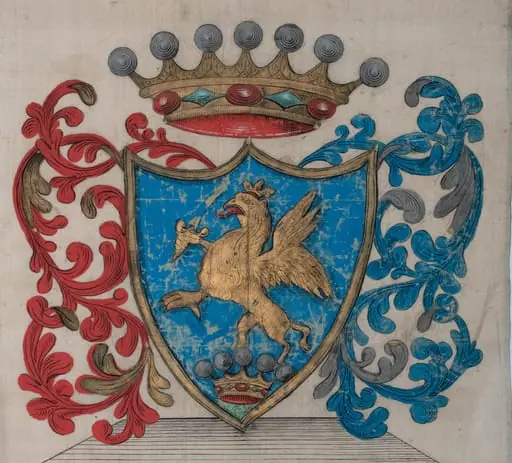 Blazonul funerar a văduvei baronului László Kemény din Mănăstireni, născută baronesa Ágnes Bánffy de Losontz
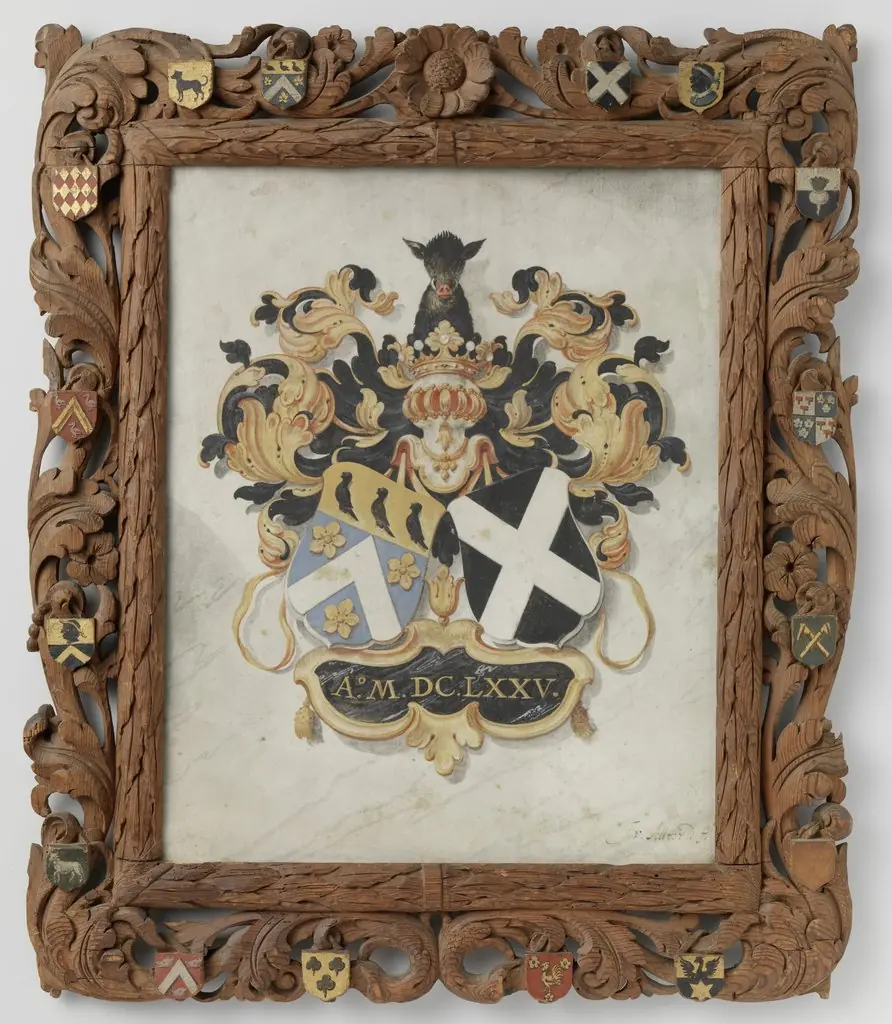 The family shields of Jan Boudaen Courten and Anna Maria Hoeufft
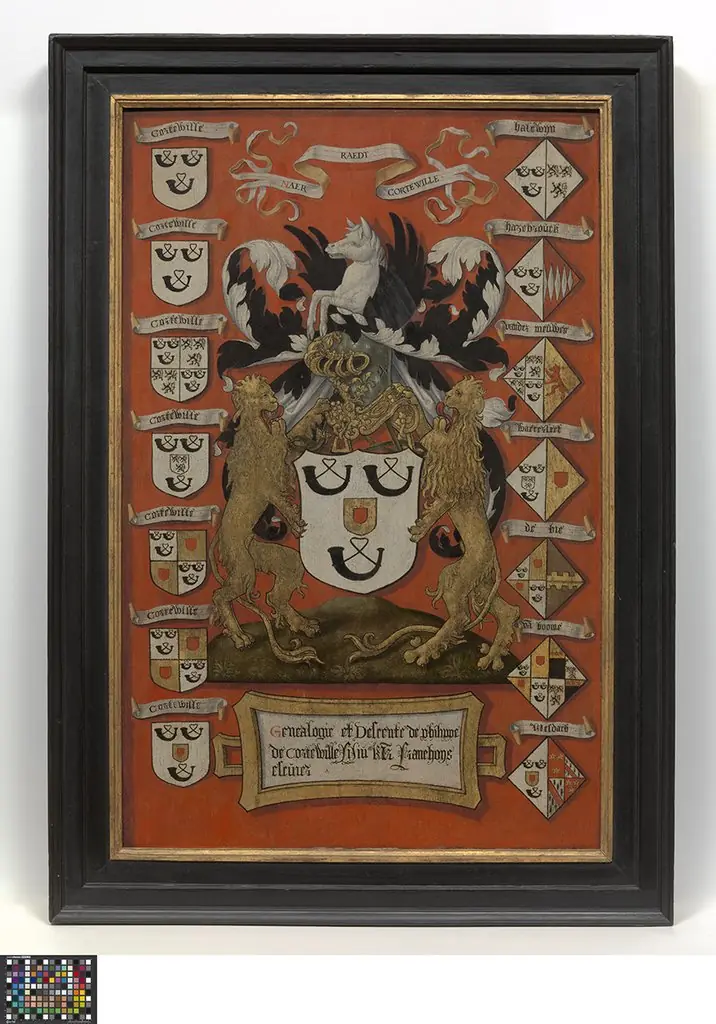 Pedigree of Filips de Cortewille
![Crested Coat of Arms [reverse], by Antwerp 16th Century](https://artifactworldgallery.com/img/antwerp-16th-century--crested-coat-of-arms-reverse--635f462b0f763a94-w320.webp) Crested Coat of Arms [reverse]
Crested Coat of Arms [reverse]