Artwork
Still Life with Flowers
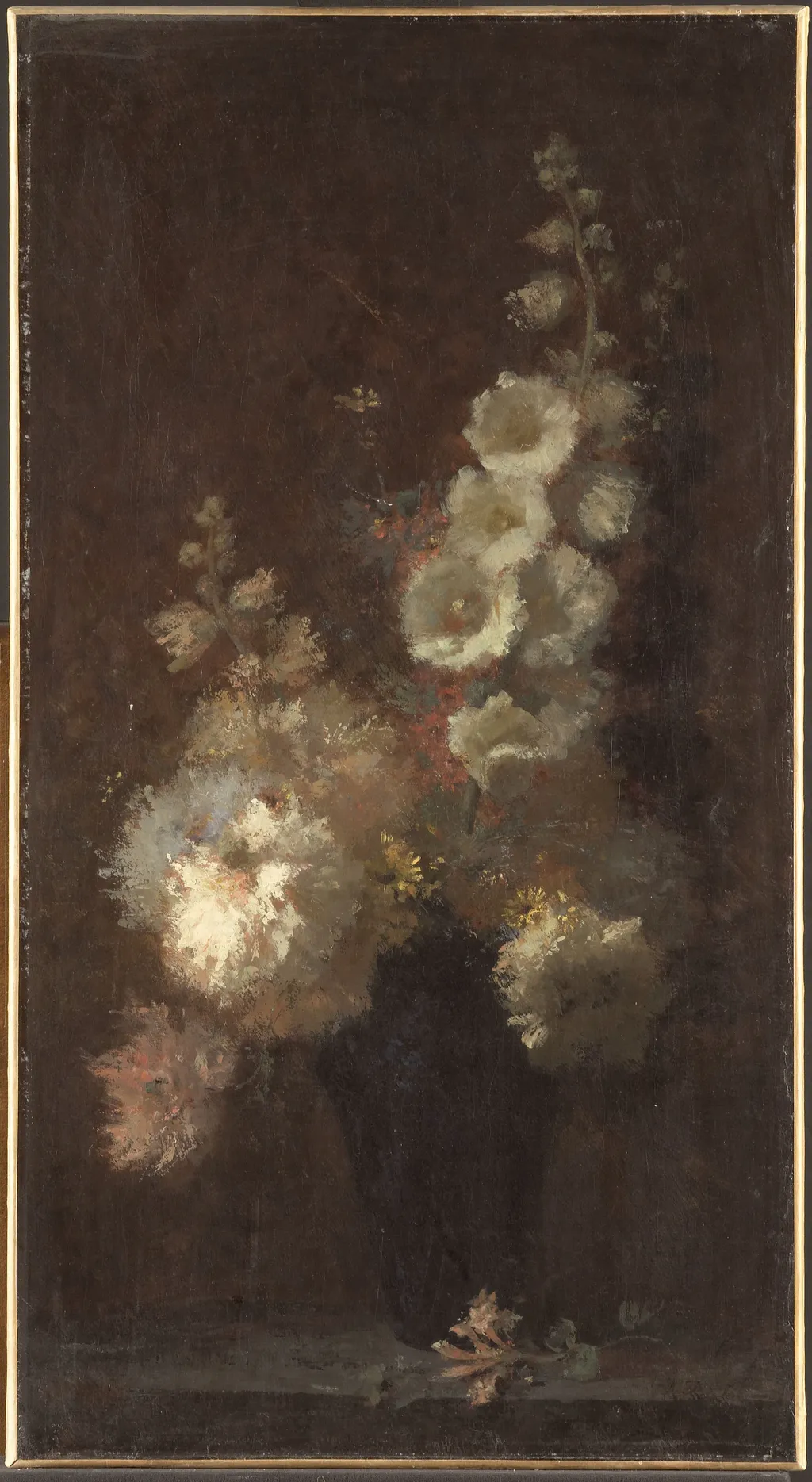
Still Life with Flowers is an oil painting by the Realist artist Auguste Jouve. It dates from 1870 and is held in the collection of the Rijksmuseum.
About this work
Subject & Meaning
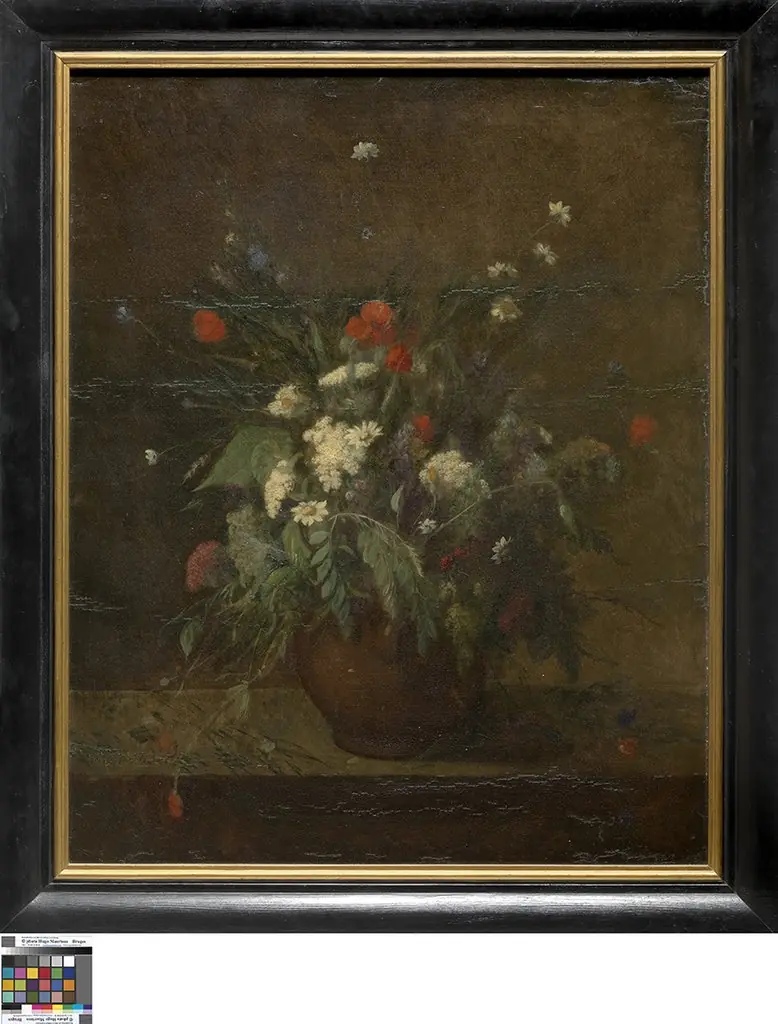
The painting is a still life depicting flowers, executed in oil on canvas.
The painting is a still life depicting flowers, executed in oil on canvas. As a still life, the work belongs to a genre devoted to the careful arrangement and observation of cut blooms, traditionally associated in Western art with meditations on beauty, transience, and the natural cycle of growth and decay.
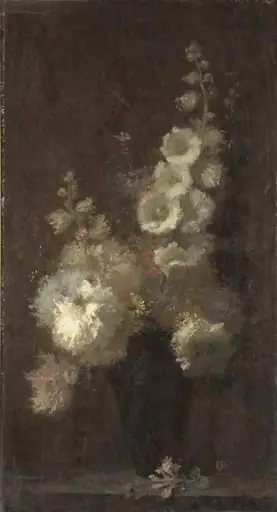
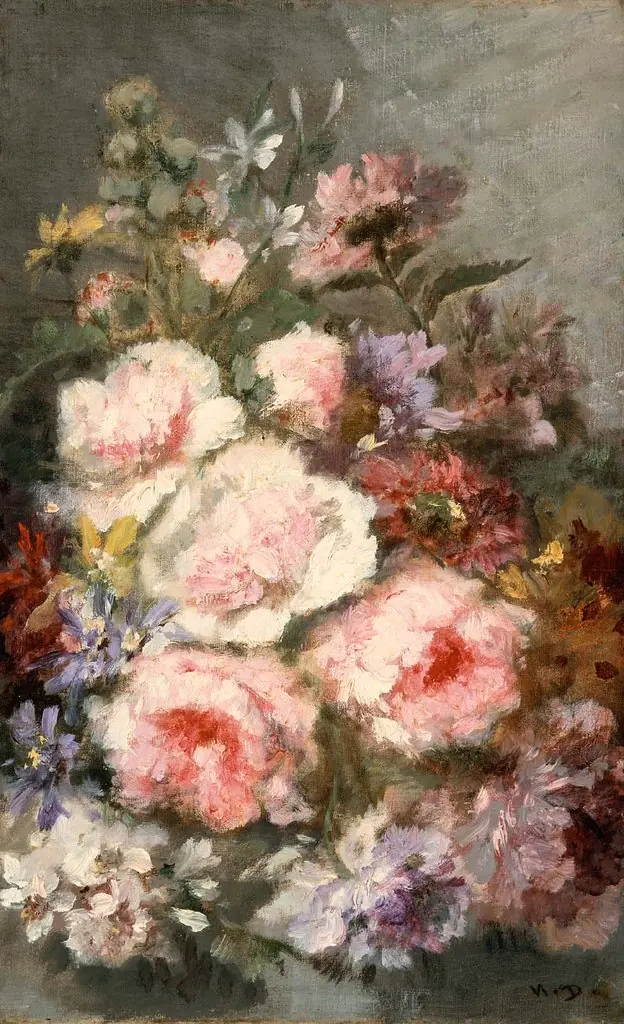
Rendered in a tall, vertical format, the composition isolates the floral subject against an unadorned ground, directing attention to the forms, colors, and textures of the petals and foliage. Such vertical flower pieces, common in nineteenth-century European practice, elevated the bouquet into a vehicle for both decorative display and symbolic resonance, often evoking themes of fragility and the fleeting nature of life.
Technique & Style
Still Life with Flowers is an oil painting on canvas executed by Auguste Jouve in 1870. The work belongs to the still‑life genre, depicting a bouquet of flowers rendered in oil paint. The canvas measures 116 cm in height and 64 cm in width.
The artist’s handling of the medium is typical of the period, though specific details of brushwork or surface condition are not recorded in the sources. It is held in the Rijksmuseum collection.
History & Provenance
Still Life with Flowers is an oil-on-canvas painting created by Auguste Jouve in 1870. The work measures 116 cm in height and 64 cm in width. It was commissioned by or originally belonged to Maria Catharina barones van Pallandt. The painting is currently held in the collection of the Rijksmuseum.
The painting Still Life with Flowers by Auguste Jouve is held in the collection of the Rijksmuseum. Created in 1870, the oil-on-canvas work measures 116 cm in height and 64 cm in width. Historical records indicate the piece was once owned by Maria Catharina, Baroness van Pallandt, before entering the museum's holdings. The provided sources do not list specific inventory numbers or detail any public exhibitions for this artwork.
Legacy
The painting's enduring reputation stems from its precise botanical detail and compositional balance, influencing subsequent still-life practitioners who valued its realistic rendering of floral arrangements. Contemporary scholarship notes its role in shaping French decorative arts aesthetics during the late 19th century, particularly through its display at the Rijksmuseum where it remains part of the permanent collection. Its provenance through the van Pallandt family further established its significance within Dutch aristocratic circles.
Overview
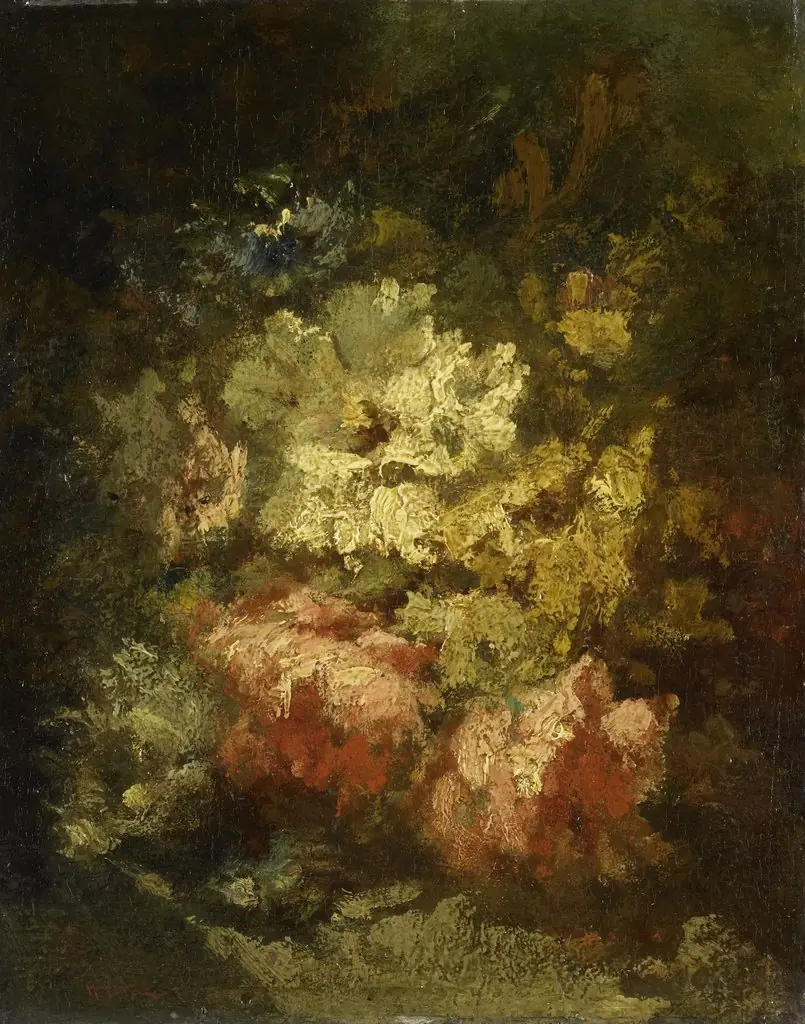
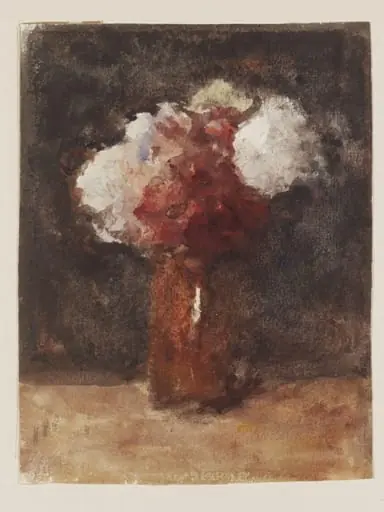
Auguste Jouve’s 1870 oil painting titled Still Life with Flowers presents a solitary floral arrangement against a deep, almost black backdrop. The composition is dominated by loosely rendered blossoms in soft whites and pale yellows, interspersed with touches of red and green foliage. The work resides in the collection of the Rijksmuseum, where it is displayed as an example of late‑19th‑century still‑life practice.
Context
The late 19th century saw a resurgence of interest in still‑life subjects, with many artists exploring new ways to render texture and light. Jouve’s approach reflects contemporary experiments with materiality, aligning his work with broader movements that emphasized painterly surface and the physicality of oil as a medium, rather than strict academic realism.
Artist & collection