Artwork
The Ravine in June
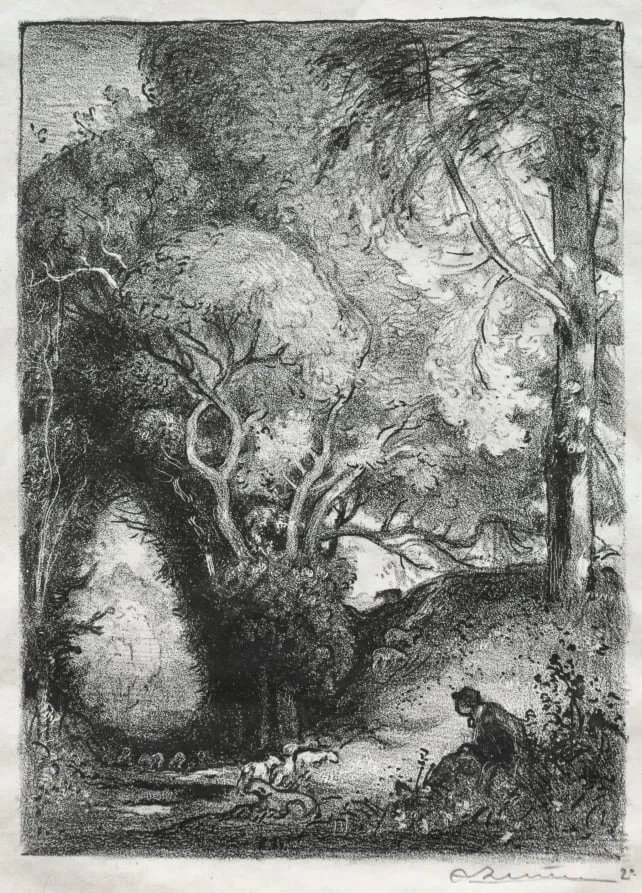
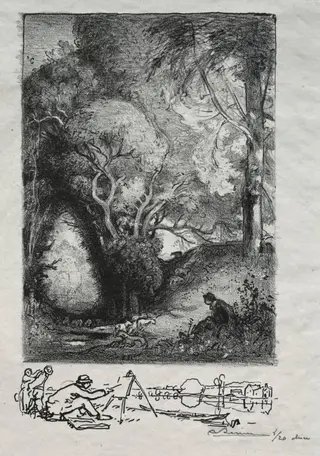
The Ravine in June is a print by the Impressionist artist Auguste Louis Lepère. It dates from 1894 and is held in the collection of the Cleveland Museum of Art.
- Accession no.
- 1941.496
- Credit line
- Gift of Lewis B. Williams
About this work
Overview
Created in 1894, The Ravine in June is a print by French artist Auguste Louis Lepère, who was instrumental in the late‑19th‑century revival of wood engraving across Europe. The work belongs to the collection of the Cleveland Museum of Art.
Subject & Meaning
The image depicts a verdant ravine during the month of June, surrounded by mature trees and dense foliage. Sunlight filters through the canopy, casting a pattern of light and shadow that emphasizes the depth of the gorge and the vitality of the natural setting.
Technique & Style
Lepère employed wood engraving techniques, using fine lines and varied tones to render the landscape’s textures. The composition reflects Impressionist concerns with transient light effects, while the expressive handling of line conveys a sense of movement within the scene.
History & Provenance
Since its creation, the print has remained in the public domain of museum collections, eventually entering the holdings of the Cleveland Museum of Art, where it is displayed as part of the institution’s European prints and drawings department.
Artist & collection

Artist
Louis-Auguste Lepère (30 November 1849 – 20 November 1918) was a French painter and etcher. Lepère is also considered a leader in the creative revival of wood engraving in Europe.

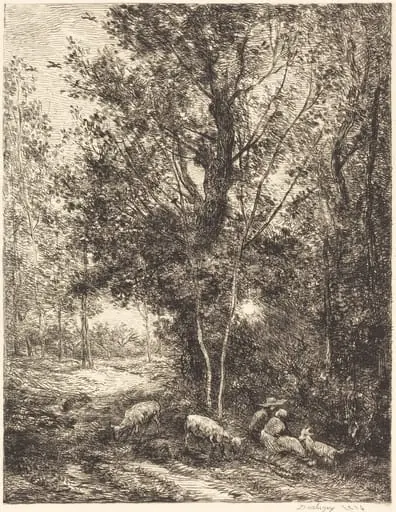 Shepherd and Shepherdess (Le Berger et la bergere)
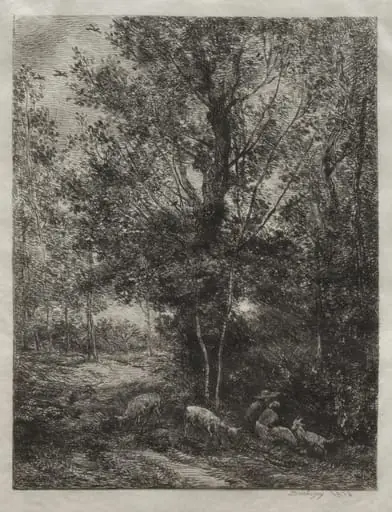 The Shepherd and the Shepherdess
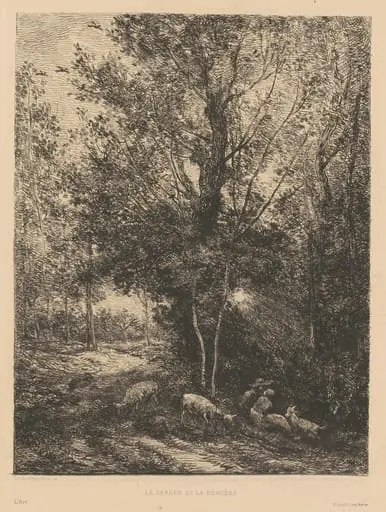 Le Berger et La Bergre
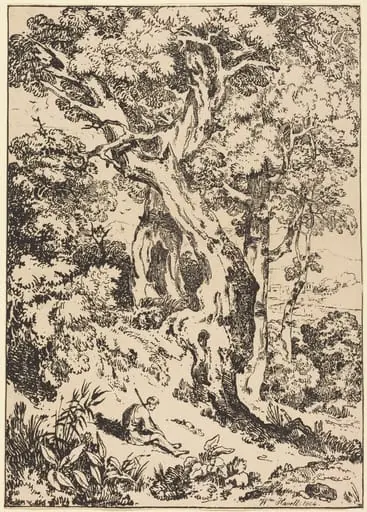 Study of Trees and Shrubs with Seated Figure
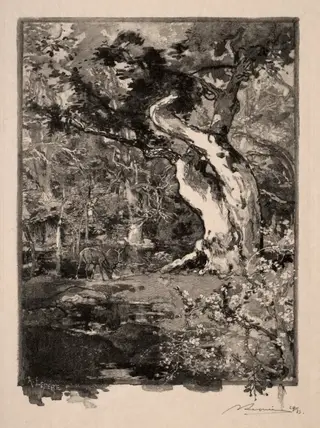 Le Clovis, Plateau de Bellecroix
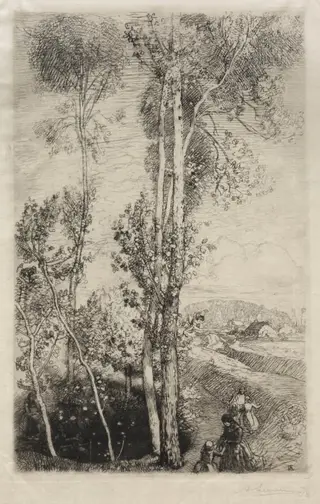 La Petite Mare
![Forest on Lago Maggiore [Foresta sul Lago Maggiore], by Giberto Borromeo](https://artifactworldgallery.com/img/giberto-borromeo--forest-on-lago-maggiore-foresta-sul-lago-maggiore--6d25270befdb299f-w320.webp) Forest on Lago Maggiore [Foresta sul Lago Maggiore]
Forest on Lago Maggiore [Foresta sul Lago Maggiore] The Reader: The Lecture under the Trees
 Wooded Landscape beside a River
 The Goatherd Girl
 Back of the Mills
- La Ravine en juin