Artwork
Tomb of the Virgin, Jerusalem
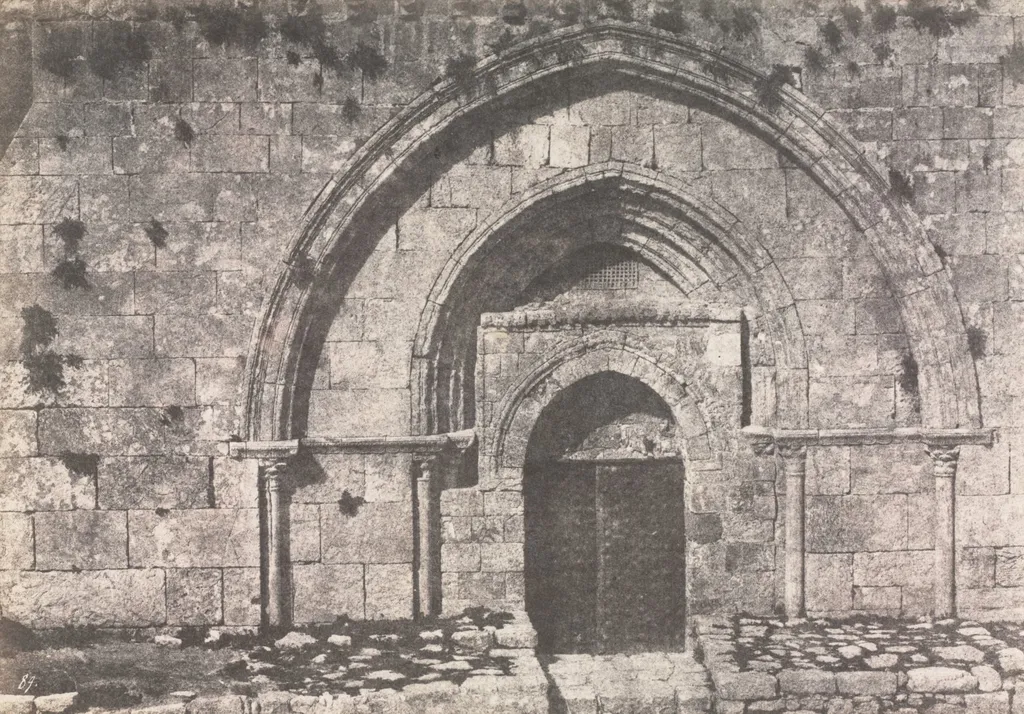
Tomb of the Virgin, Jerusalem is a photography by the Impressionist artist Auguste Salzmann. It dates from 1854 and is held in the collection of the Cleveland Museum of Art.
- Accession no.
- 1996.10
- Credit line
- John L. Severance Fund
About this work
Overview
This 1854 photograph by Auguste Salzmann captures a detailed view of the doorway to the Tomb of the Virgin in Jerusalem, focusing on its architectural elements and texture.
Technique & Style
Salzmann's image is characterized by its extreme close-up composition, omitting the surrounding building and context to emphasize the abstract qualities of the stone surface.
History & Provenance
The photograph was commissioned by the French Ministry of Public Instruction to support the theories of antiquarian Louis Félicien de Saulcy regarding the dating of ancient ruins in Jerusalem.
Context
Salzmann's approach differed from that of his contemporaries, who typically documented entire buildings; instead, he used a focused, detail-oriented method to substantiate specific historical arguments.
Artist & collection
Artist
Auguste Salzmann (1824–1872) was a French archaeologist, painter, and pioneer in the field of archaeological photography.

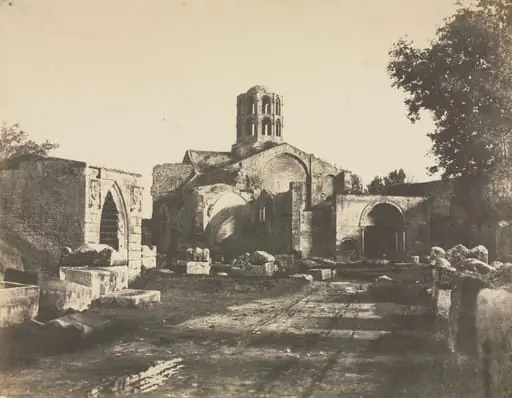 Saint-Honorat, Prés d'Arles
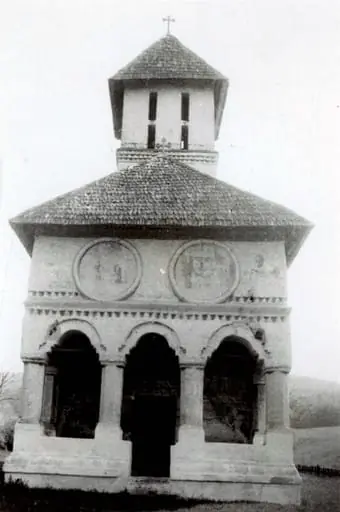 Biserica (monument istoric) din satul Scoica, comuna Andreești, județul Gorj (1990)
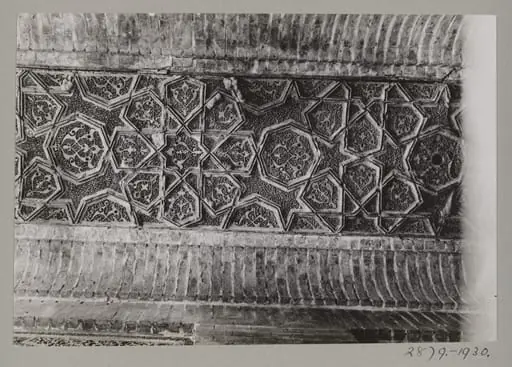 Geometric composition on vaulting, Abbasid Palace in Citadel, Baghdad
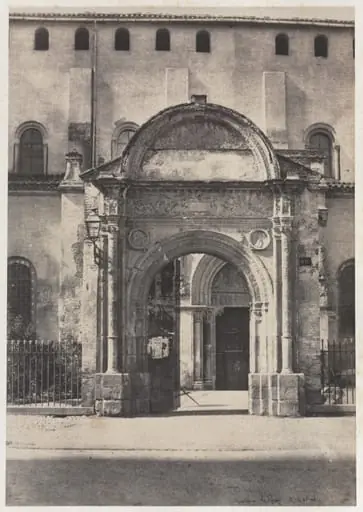 Porte Bachelier, Eglise Saint-Sernin, Toulouse (Haute-Garonne)
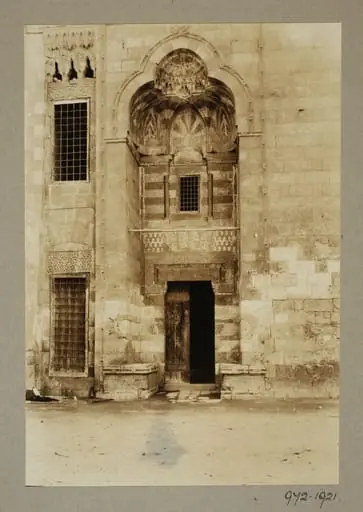 Entrance portal of the mosque of Qadi Yahya Zayn al-Din (Habbaniyya), Cairo
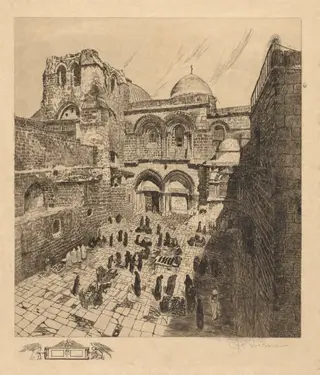 Grand Canal, Venice
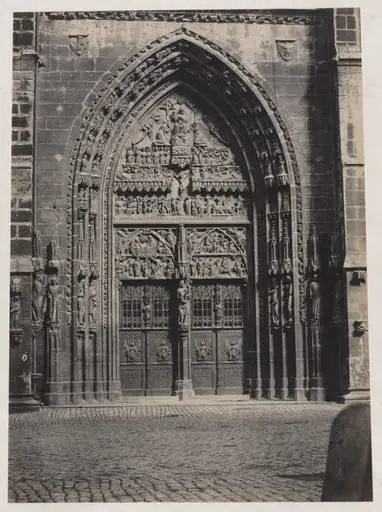 Entrance, St. Lorenz Cathedral, Nuremberg
 Untitled
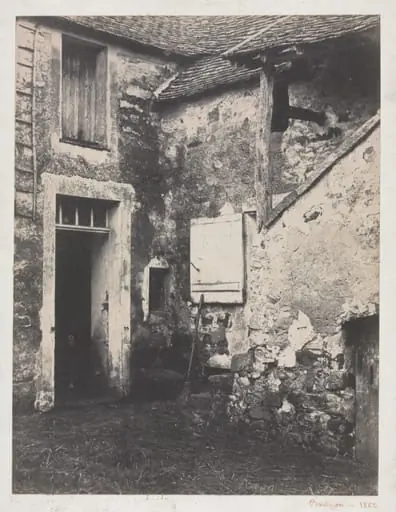 Farmyard