Artwork
The Sanctuary of Hercules
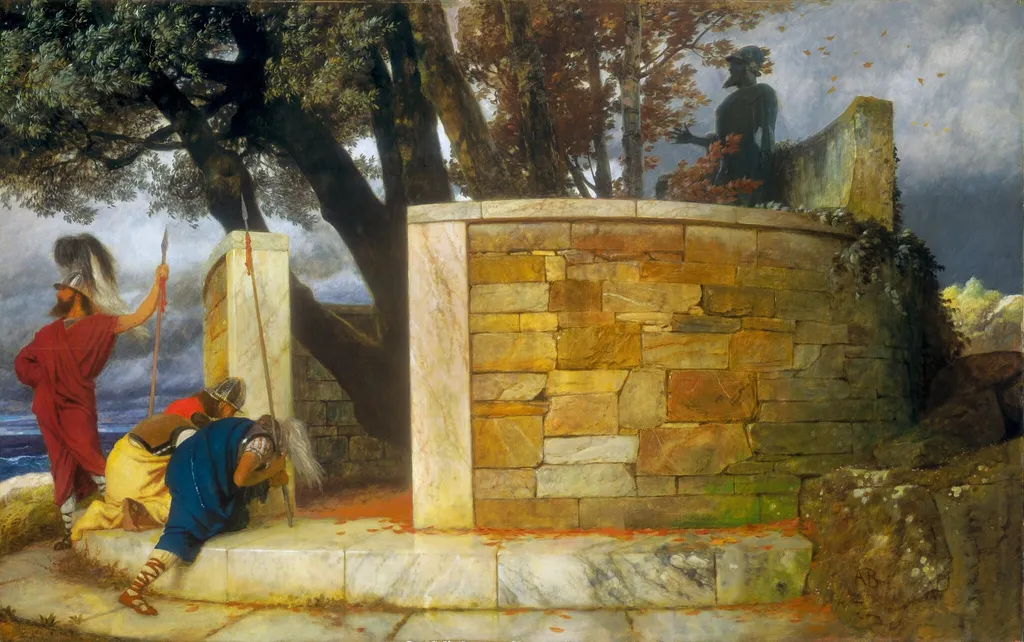
The Sanctuary of Hercules is an oil painting by the Impressionist artist Arnold Böcklin. It dates from 1884 and is held in the collection of the National Gallery of Art.
- Inscription
- Inscribed:lower right: AB
About this work
Subject & Meaning
Sunlight pierces through an approaching storm to illuminate the figures and the luminescent stonework, while wind agitates the helmet plumes and trees.
The painting depicts three soldiers kneeling reverently on the steps of a circular stone shrine dedicated to the Greek hero Heracles, while a fourth soldier in a red cloak stands guard. Inside the sanctuary's polished marble walls lies a sacred grove containing a statue of the protector hero, partially obscured by shadow. Sunlight pierces through an approaching storm to illuminate the figures and the luminescent stonework, while wind agitates the helmet plumes and trees.
Although the scene suggests archaeological realism, the specific lighting and color palette generate a mysterious, romantic atmosphere. The work belongs to a series in which the artist imagined holy and enigmatic mythological sites, blending naturalistic detail with symbolic mood.
Technique & Style
The Sanctuary of Hercules is an oil painting on wood panel executed by Arnold Böcklin in 1884, measuring 113.8 cm in height and 180.5 cm in width.
The composition emphasizes a dressed stone wall, trimmed with polished marble, which Böcklin rendered with a luminescent quality under sunlight piercing an approaching storm. Three kneeling soldiers occupy the foreground steps of the shrine, while a fourth stands guard in a red cloak and plumed helmet. The circular stone structure encloses a sacred grove and a statue of Hercules, shrouded in shadow.
The handling balances naturalistic detail with symbolic atmosphere, using light and color to evoke mystery rather than strict archaeological reconstruction. The panel’s wood support and oil medium were chosen to achieve both precision in texture and an intensified luminosity in the marble surfaces.
History & Provenance
Created in 1884 by Arnold Böcklin, The Sanctuary of Hercules is an oil painting on wood panel. The work entered the collection of Dr. Carl Steinbart in Berlin by 1885, having been acquired through the Kunsthandlung Fritz Gurlitt. It subsequently passed to Julie Ginsberg in Berlin by 1897.
By 1904, the painting was owned by Dr. Arthur von Weinberg of Frankfurt-am-Main. Upon his death, it was inherited by his adopted daughters, Charlotte Frederike, Princess Ferdinand Lobkowicz, and Marie Elisabeth, Gräfin von Spreti. The work presumably passed by inheritance to Marie Elisabeth's daughter, Alexandra-Beatrix Scherping, at Schloss Pähl, Bavaria.
It was held by Galerie Bruno Meissner in Zurich by 1975 before being purchased by the National Gallery of Art in Washington, D.C., in 1976.
The Sanctuary of Hercules is held by the National Gallery of Art in Washington, D.C. Its accession number is not provided in the sources. The painting entered the collection in 1976 after being purchased from Galerie Bruno Meissner in Zurich in 1975. It was previously owned by Dr. Arthur von Weinberg, his adopted daughters Charlotte Frederike, Princess Ferdinand Lobkowicz, and Marie Elisabeth, Gräfin von Spreti, and their descendants including Alexandra-Beatrix Scherping.
The work was exhibited in Berlin in 1897 as part of a loan from Julie Ginsberg. The National Gallery of Art is the current owner, as documented in its collection records and provenance history.
Context
The Sanctuary of Hercules (1884) by Arnold Böcklin is a symbolist oil on wood painting depicting three soldiers kneeling before a shrine to the Greek hero Heracles, with a fourth soldier standing guard amid a storm-lit sacred grove. The work features a circular stone shrine adorned with polished marble, noted for its luminous quality, and forms part of Böcklin's series of mythological sites imagined as sacred spaces. Its provenance traces from Dr. Carl Steinbart in Berlin by 1885 through several private collectors before its 1976 acquisition by the National Gallery of Art in Washington, D.C.
Legacy
The Sanctuary of Hercules exerted influence through its symbolic treatment of mythic sites, inspiring later artists who explored sacred spaces with atmospheric lighting and architectural detail. Its reputation grew following acquisitions by major institutions, notably the National Gallery of Art in Washington, D.C., where it remains on view. The painting’s luminous stonework and dramatic storm-lit composition have been cited in scholarly discussions of Symbolist approaches to mythological subjects, particularly in German and Swiss art circles of the late 19th and early 20th centuries.
Its provenance, including ownership by Bruno Meissner and subsequent purchase by the National Gallery of Art in 1976, contributed to its documented legacy within museum collections.
Overview
Arnold Böcklin’s 1884 oil on wood, titled The Sanctuary of Hercules, portrays a quiet, mythic shrine perched on stone steps. Three soldiers kneel before a circular altar while a fourth stands watch, their forms bathed in a fleeting shaft of light that breaks through an approaching storm. The composition balances the solidity of the marble‑trimmed wall with the ethereal glow of the sky beyond.
Own this work as a print
Artist & collection
Artist
Arnold Böcklin spent most of his life in Italy, where the wild coastline and ancient ruins got under his skin.

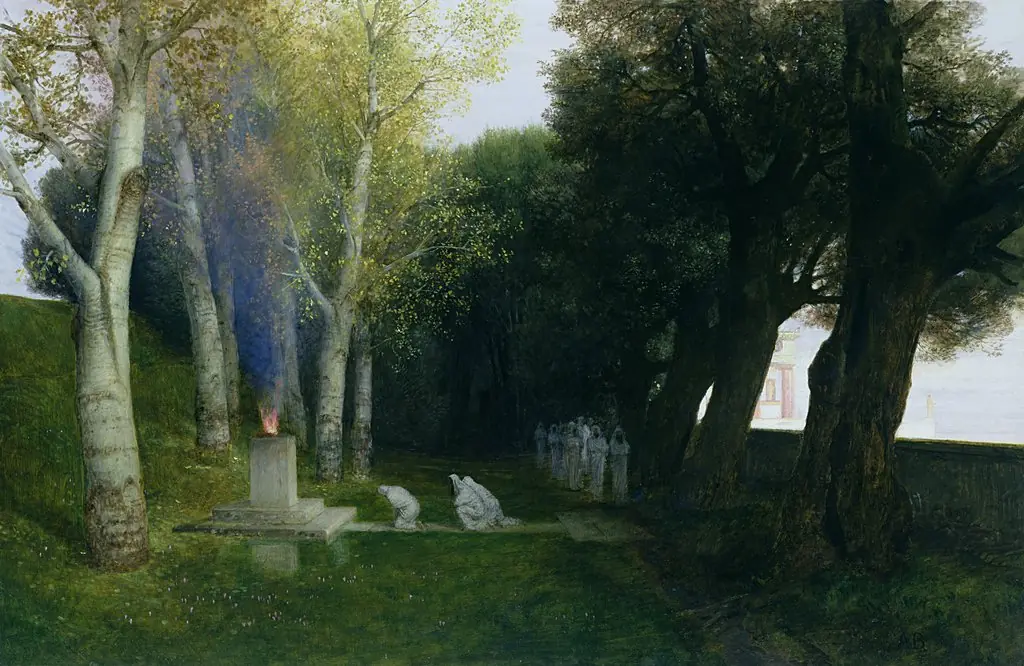
- Sacred grove (II)
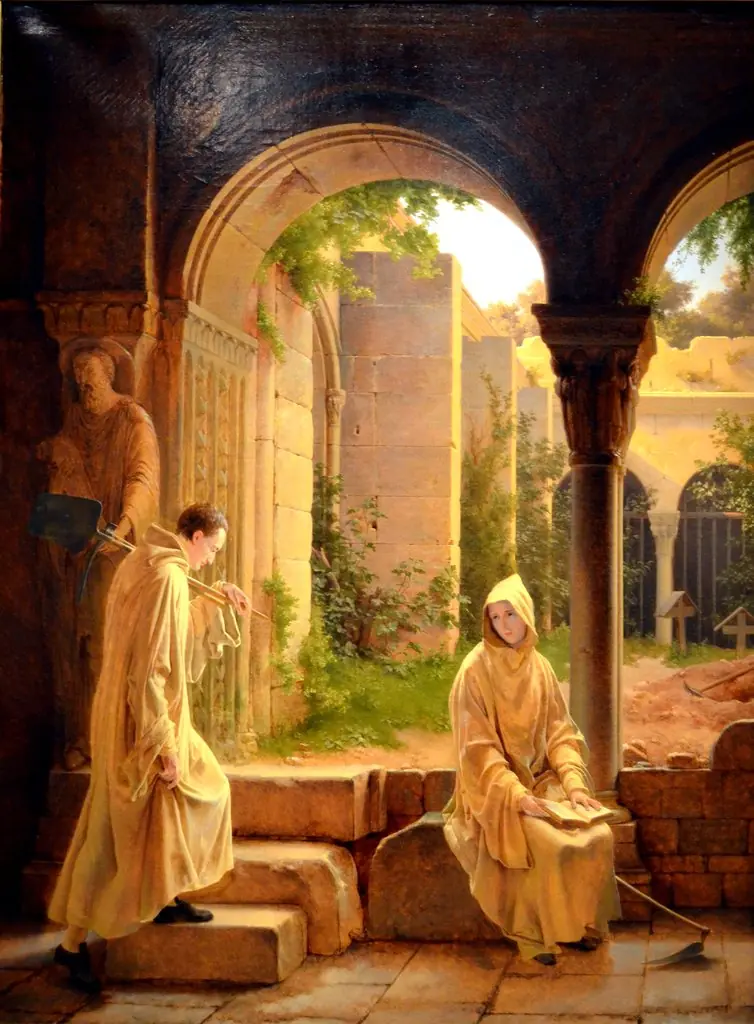 Comminges and Adelaide in the Trappist Monastery
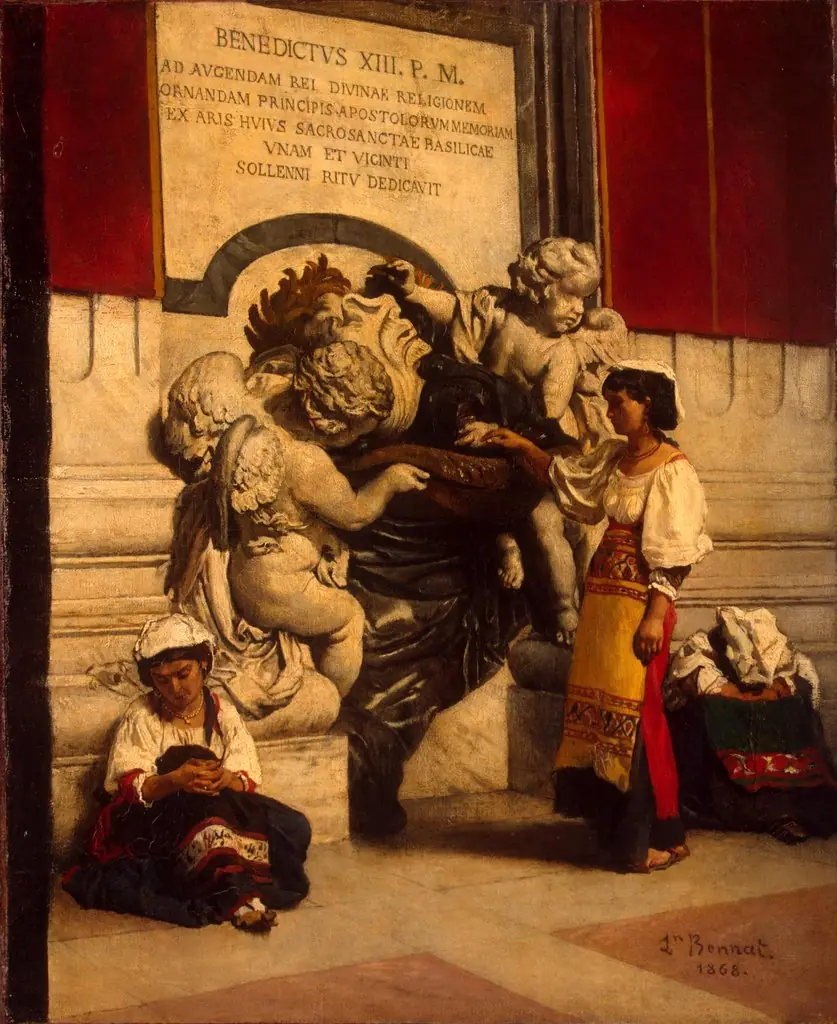 Holy Water Font by St Peter's Basilica in Rome
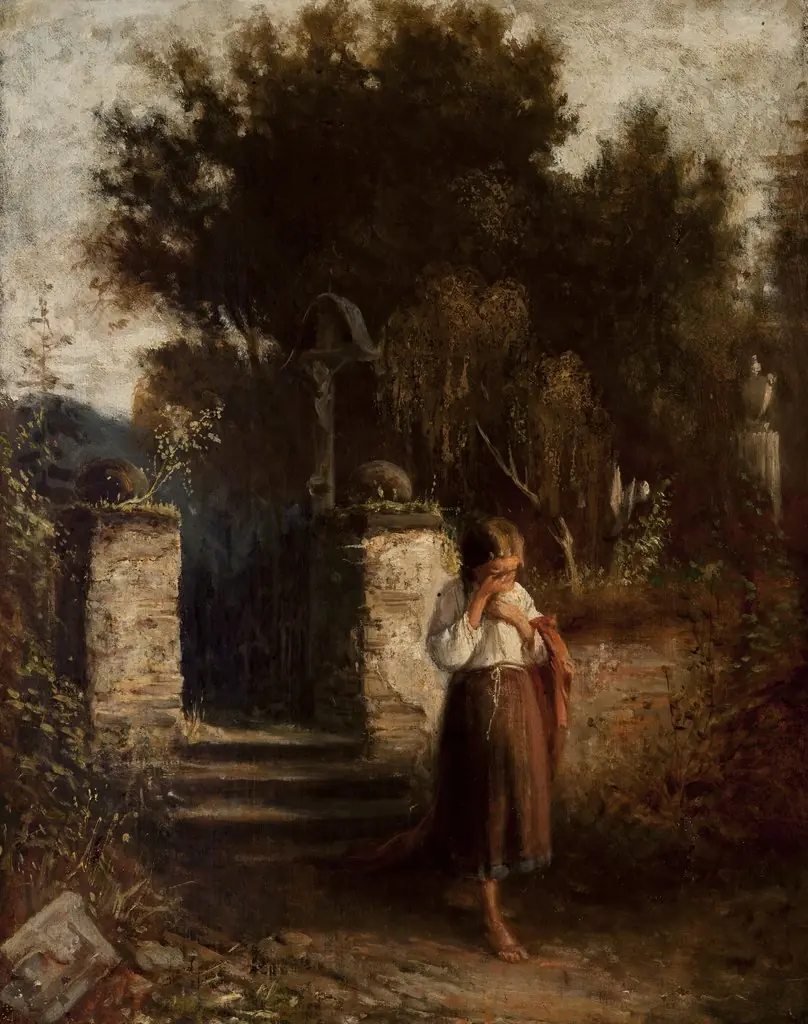 Orphan
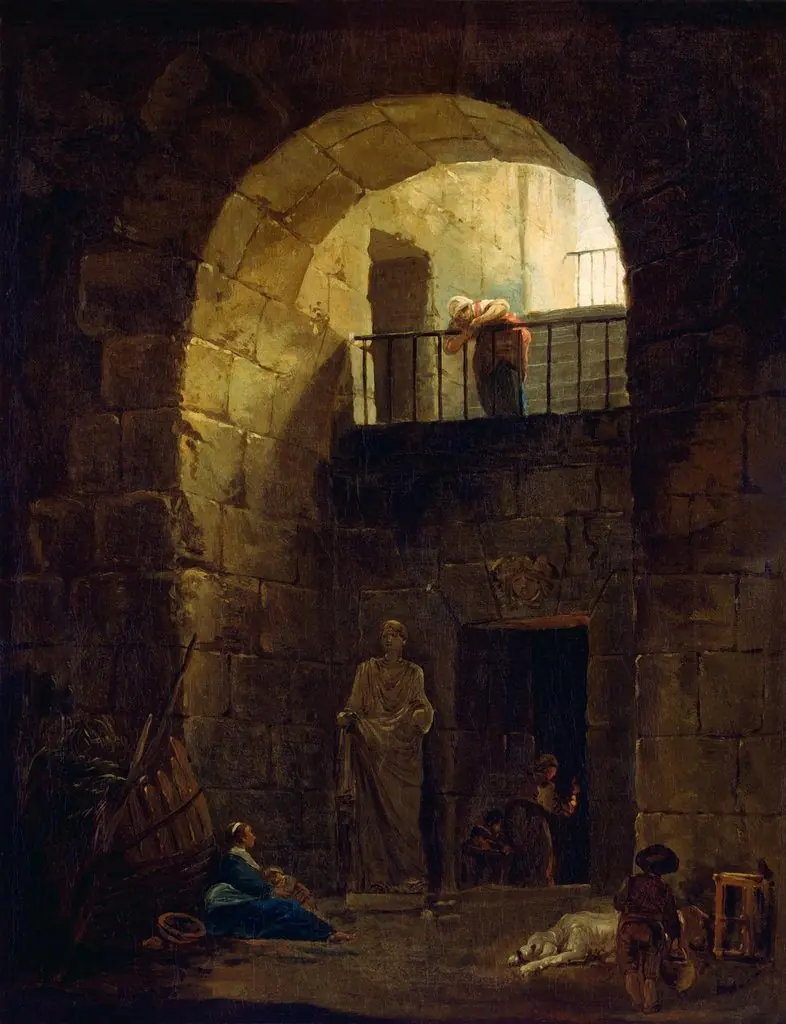 Neglected Statue
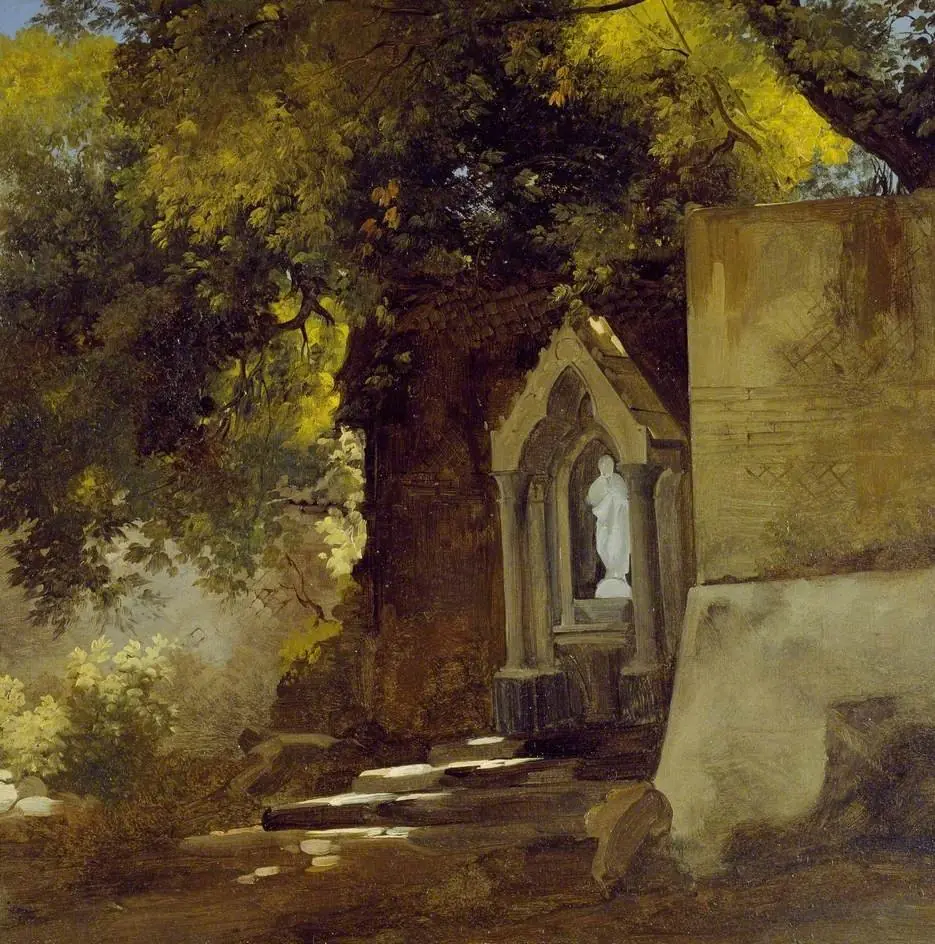 A Wayside Shrine
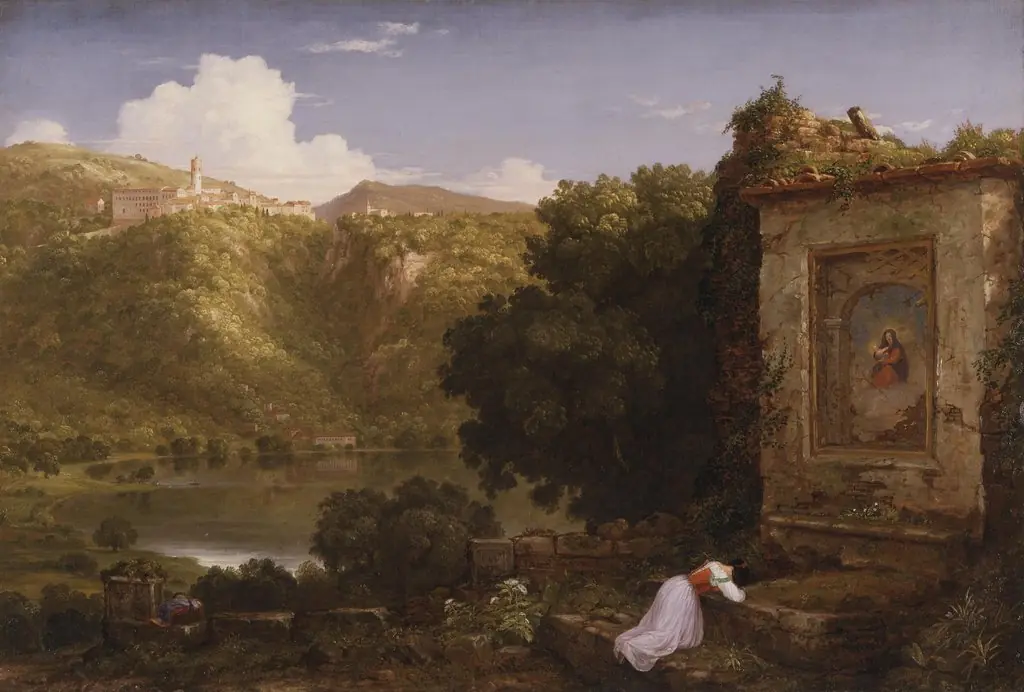 II Penseroso
 Bag kunstnerens have på Farimagsvej ved St. Jørgens Sø
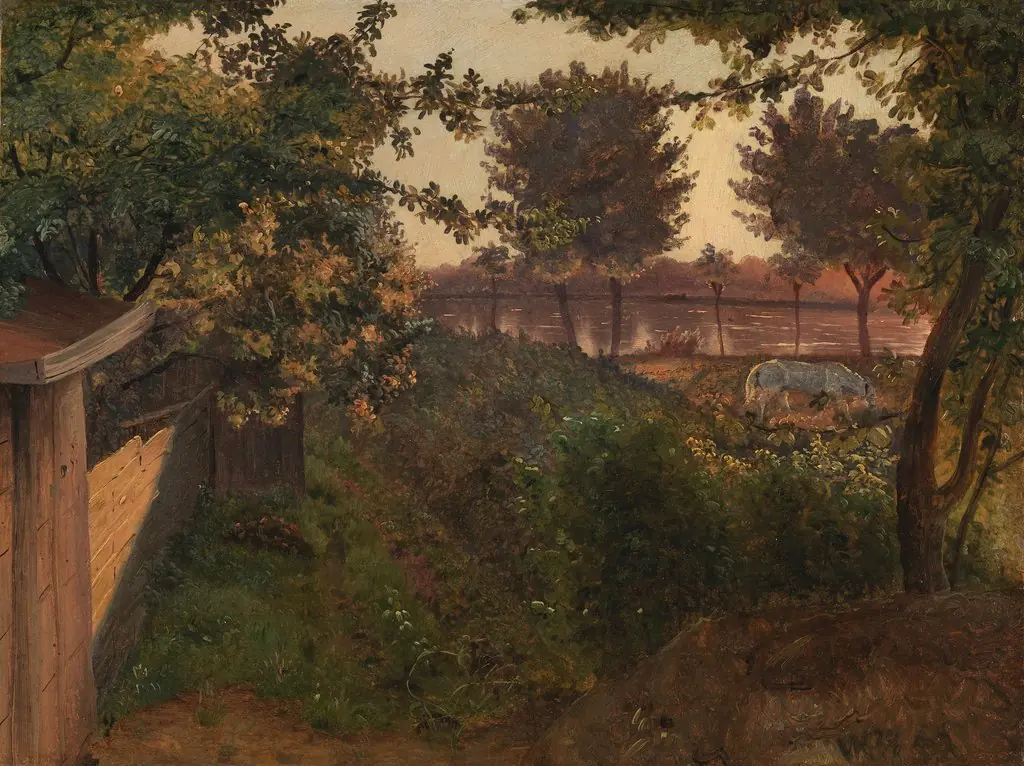 Bag kunstnerens have på Farimagsvej ved St. Jørgens Sø
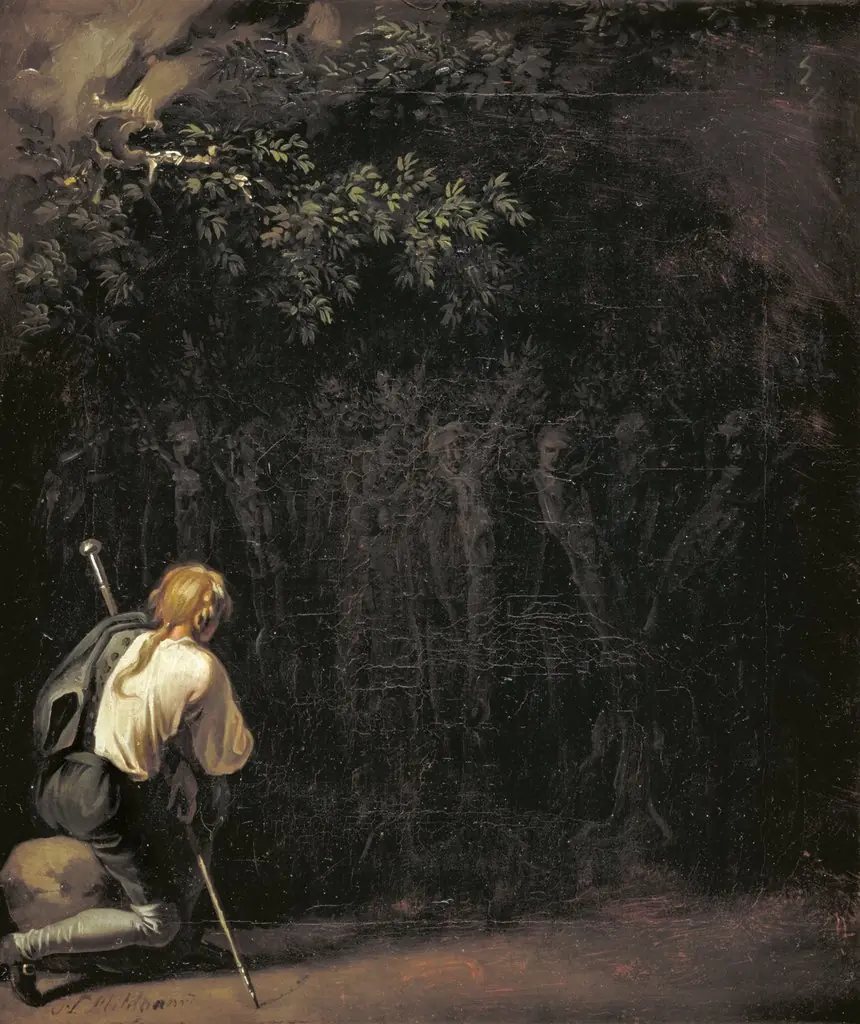 The Prayers of the Potuans at the Feast of the Unfathomable God
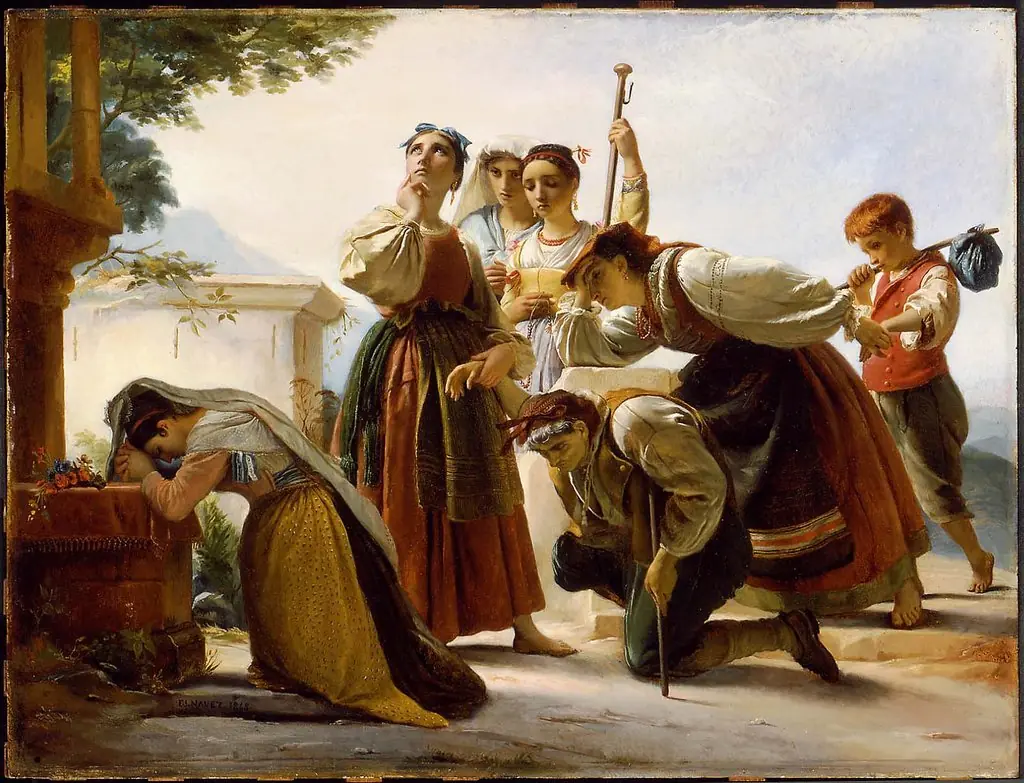 Pilgrimage in the Roman Campagna
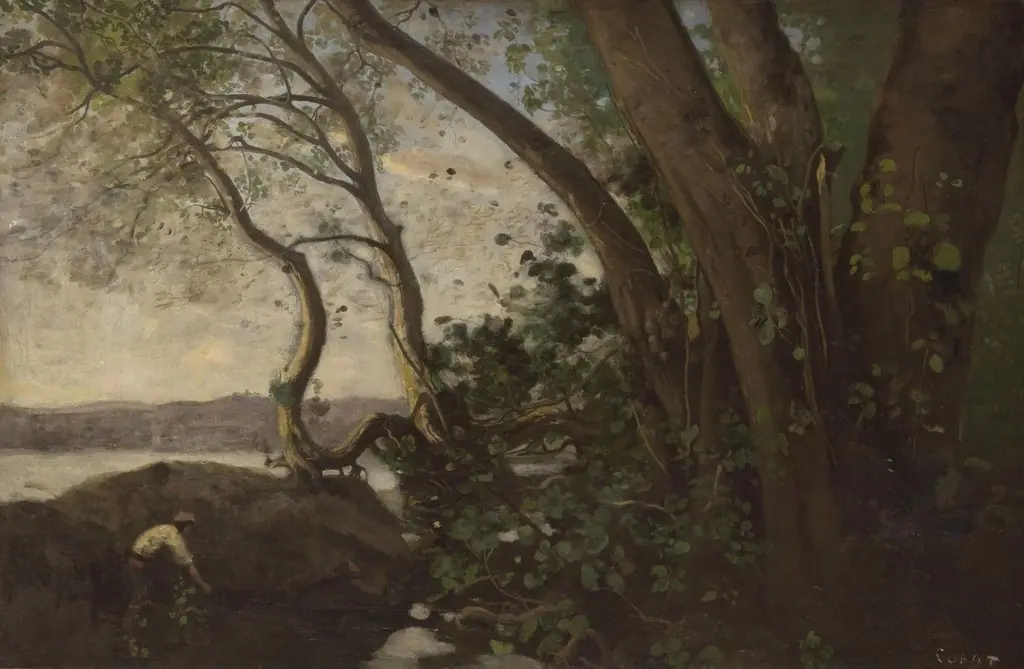 Edge of Lake Nemi