Artwork
Peisaj de țară
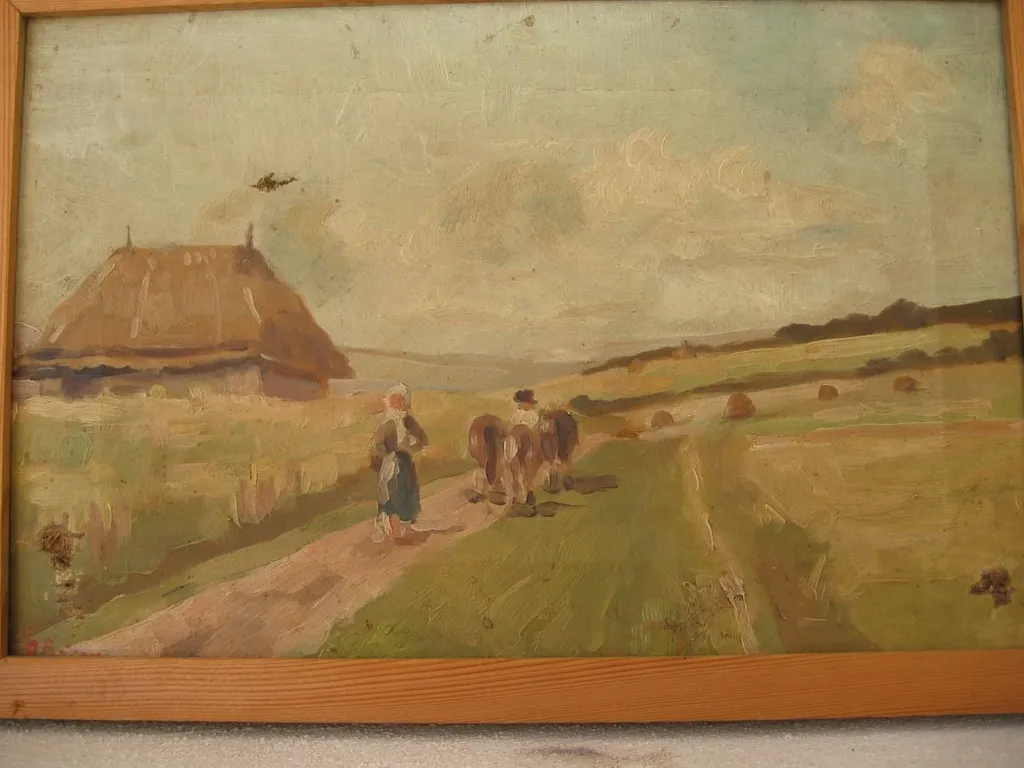
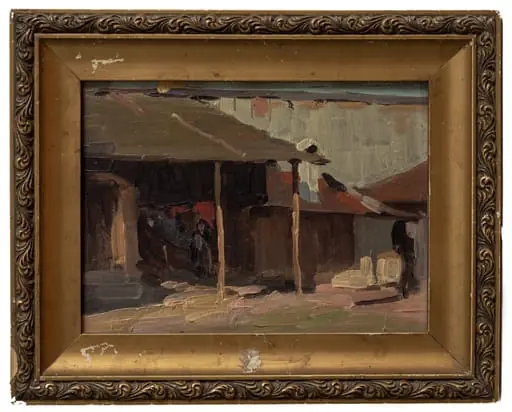
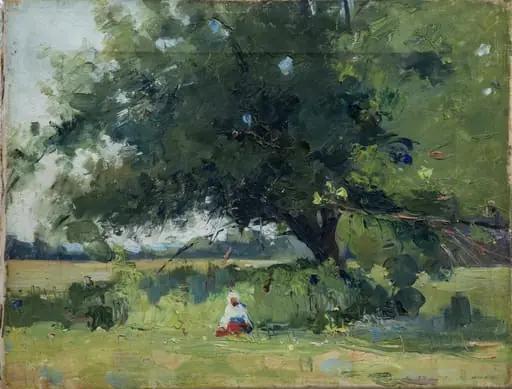
Peisaj de țară is a print by Aurel Băeșu. It dates from 1922 and is held in the collection of the Neamț National Museum Complex.
About this work
Overview
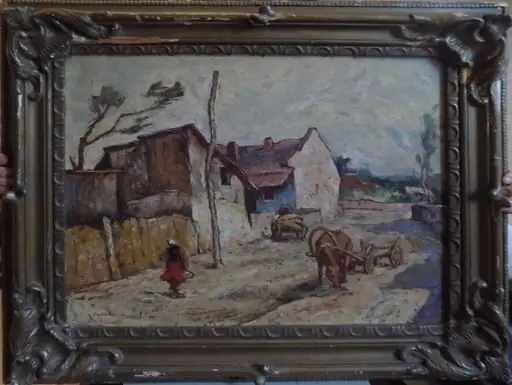
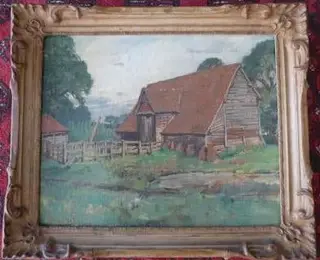
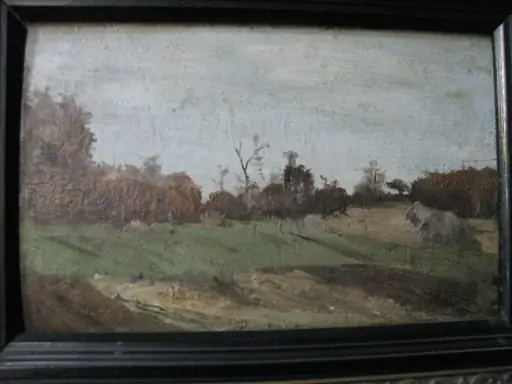
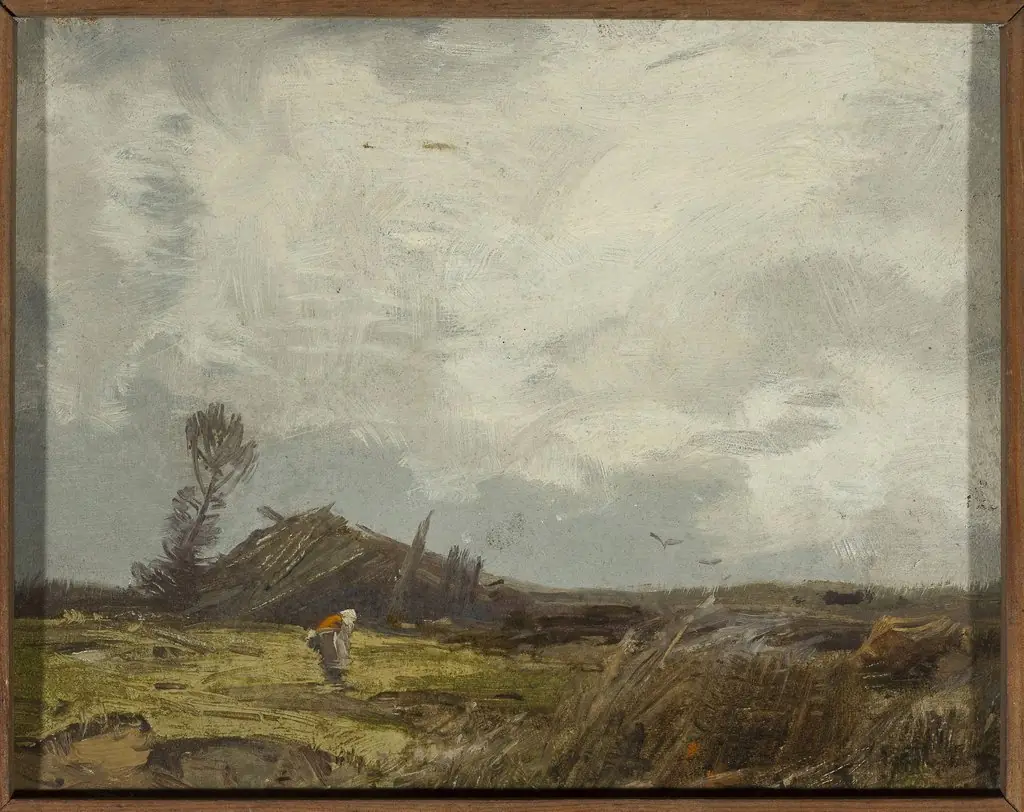
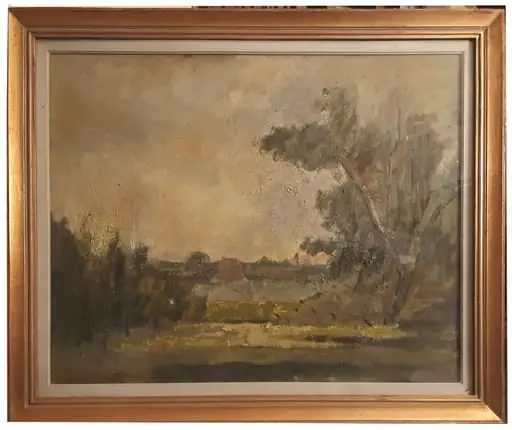
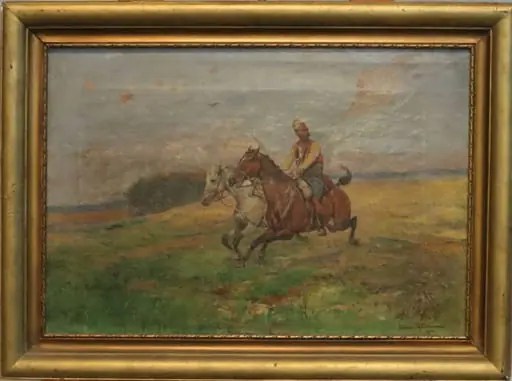
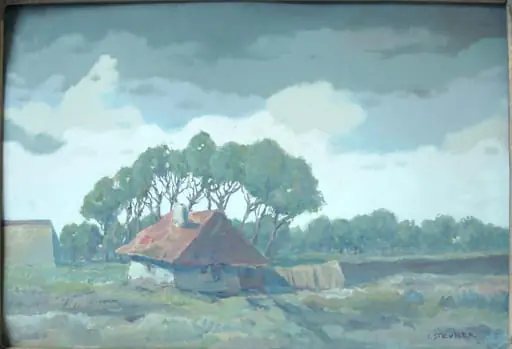
Created circa 1922, Peisaj de țară is an oil painting by Romanian artist Aurel Băeșu (1896–1949). The work depicts a tranquil rural landscape, featuring a dirt track winding through a grassy field, a modest thatched house, and a small group of figures guiding horses. It is part of the collection of the Museum of Ethnography.
Subject & Meaning
The composition presents a solitary traveler in dark attire moving ahead of two companions who lead horses, suggesting a moment of everyday labor in the countryside. The modest architecture and scattered hay bales convey the simplicity of agrarian life, while the muted palette emphasizes the quiet, unhurried atmosphere of the scene.
Technique & Style
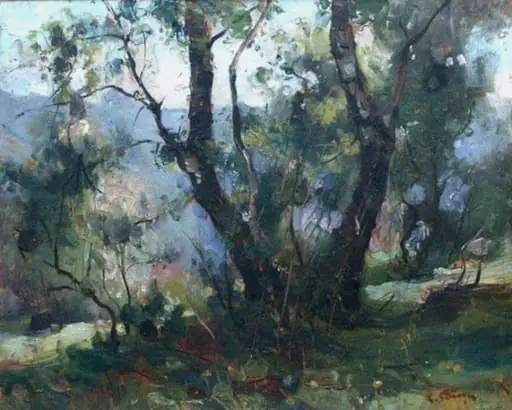
Băeșu employs a loose, impasto application of paint, allowing thick, visible brushstrokes to build a textured surface. The color scheme relies on earthy greens, browns, and soft blues, avoiding sharp outlines and reinforcing an impressionistic treatment of light and atmosphere.
History & Provenance
Influenced by the Romanian Impressionist Nicolae Grigorescu, Băeșu produced this work during the early 1920s, a period when he was active in landscape painting. The painting entered the Museum of Ethnography’s holdings, where it remains displayed as an example of Romanian impressionist rural scenes.
Artist & collection
Artist
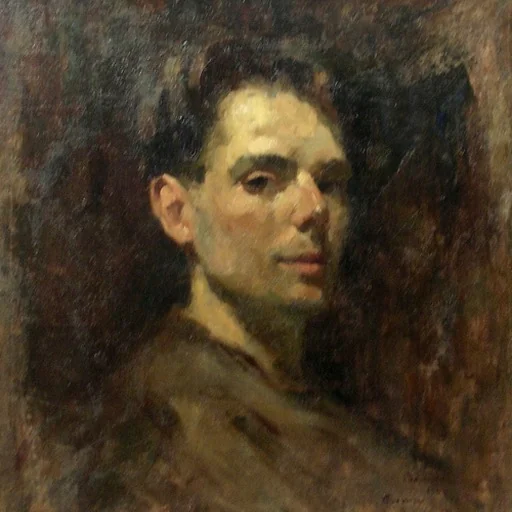
Aurel Băeșu (26 May 1896 – 24 August 1928) was a Romanian Impressionist landscape and portrait painter. Many of his works show the influence of Nicolae Grigorescu; an influence that was common among painters of his generation.