Artwork
De Poolse Muts
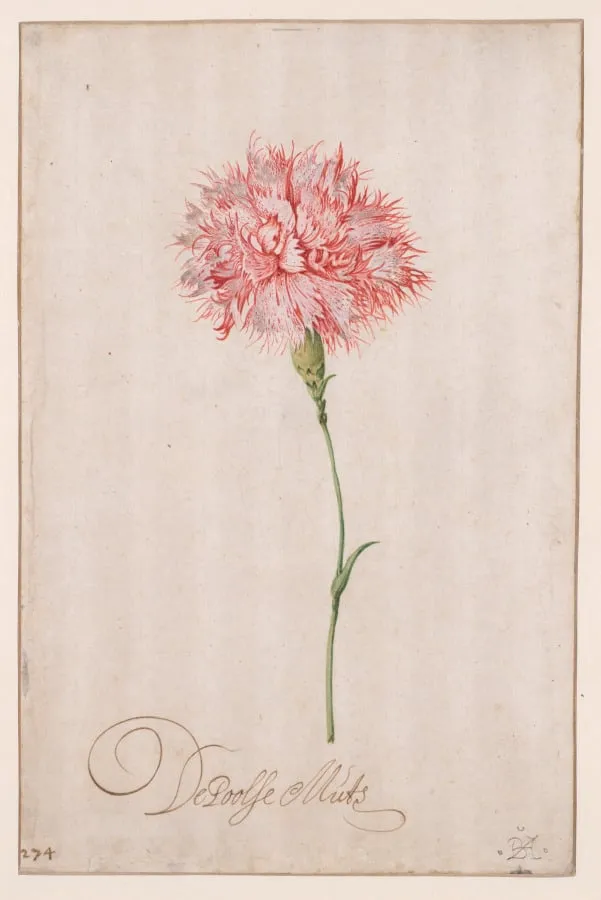
De Poolse Muts is a drawing by the Baroque artist Balthasar van der Ast. It dates from 1625 and is held in the collection of the Cleveland Museum of Art.
- Accession no.
- 2019.1
- Credit line
- John L. Severance Fund
About this work
Overview
De Poolse Muts is a drawing by Balthasar van der Ast, a Dutch still-life painter active around the early 17th century.
Subject & Meaning
The drawing depicts a single pink carnation, labeled 'The Polish Cap', suggesting the flower's exotic origin. The inscription may indicate that the flower was perceived as coming from a distant land.
Technique & Style
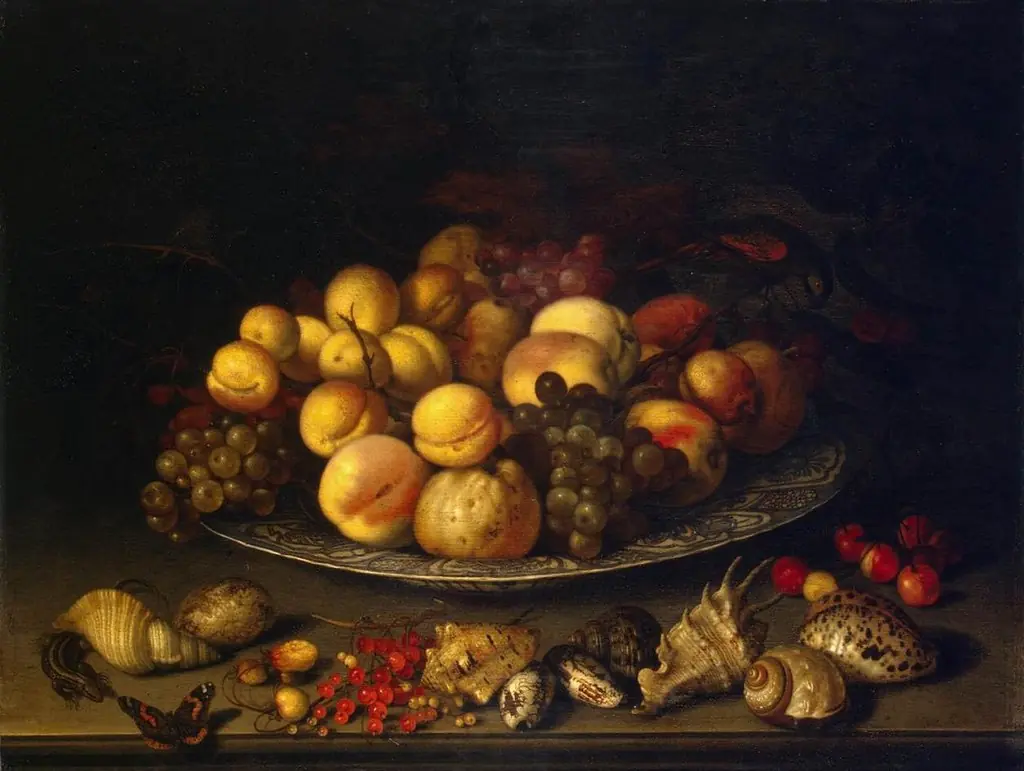
Rendered with precise, delicate lines, the drawing showcases Van der Ast's attention to detail. The use of chiaroscuro, a technique that utilizes light and shadow, adds depth and realism to the simple subject.
History & Provenance
The drawing is a study for larger floral compositions, demonstrating Van der Ast's working method. Such botanical studies were likely used as references for more elaborate paintings.
Artist & collection
Artist
Balthasar van der Ast (Middelburg, 1593/94 – Delft, 7 March 1657) was a Dutch Golden Age painter who specialized in still lifes of flowers and fruit, as well as painting a number of remarkable shell still lifes; he is…

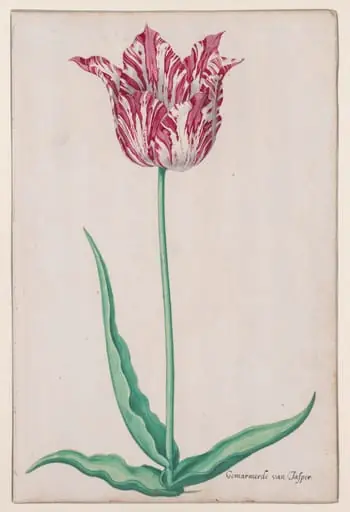 Study of a Tulip (Gemarmerde van Jasper)
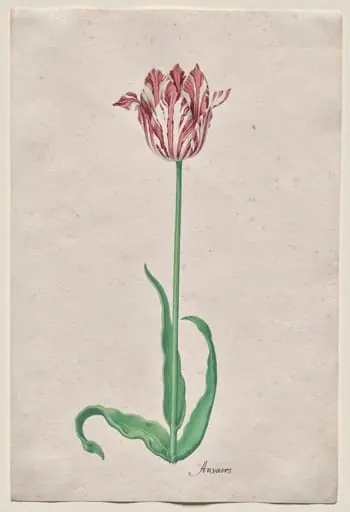 Study of a Tulip (Anvaers)
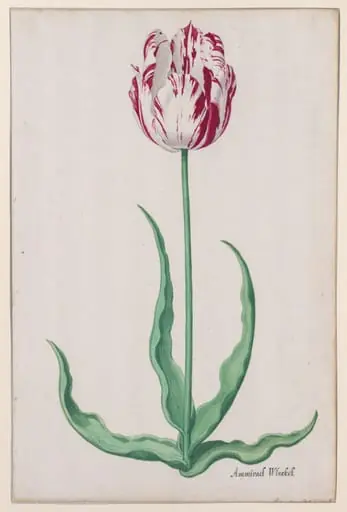 Study of a Tulip (Ammirael Winckel)
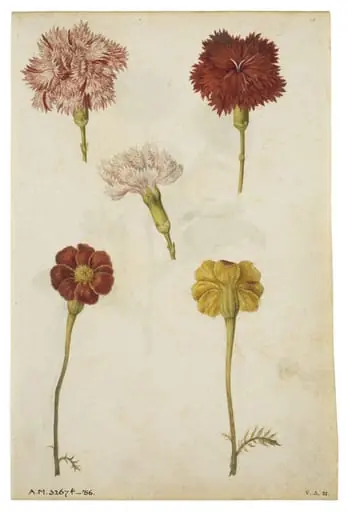 Clove pinks and marigold; Marigold
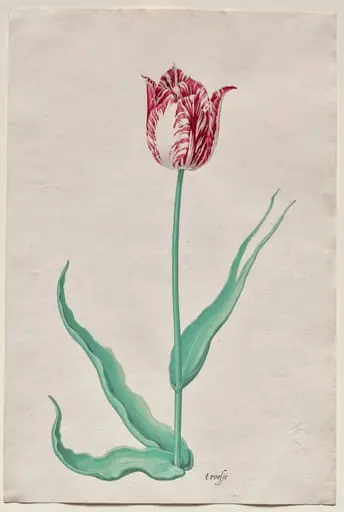 Study of a Tulip ('t roosje)
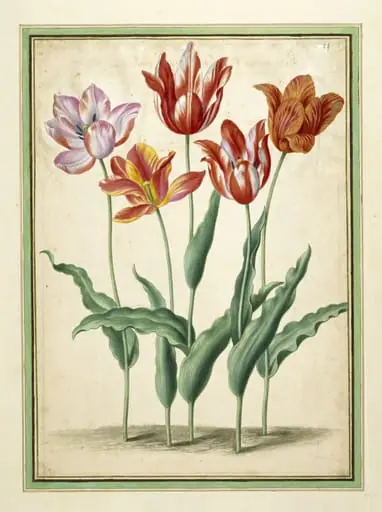 Tulips
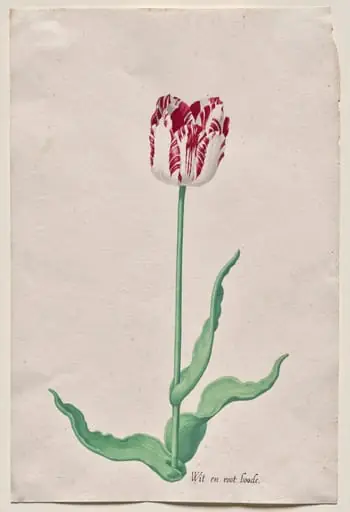 Study of a Tulip (Wit en root boode)
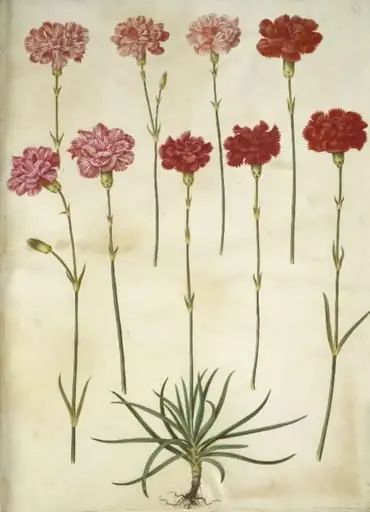 Dianthus caryophyllus (have-nellike)
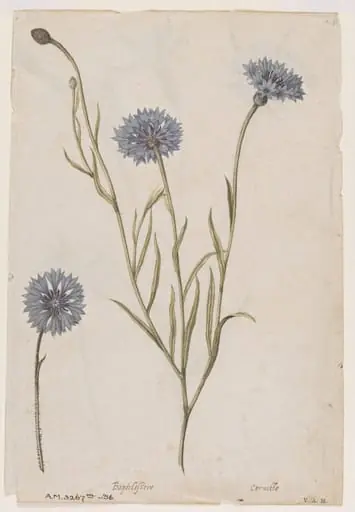 Cornflower; Corn cockle
 Simulacrum Scenographicum Celeberrimi Horti Itzsteinensis