Artwork
Willem van der Helm (ca 1625-75). Municipal architect of Leiden, with his wife Belytgen Cornelisdr van de Schelt and their son Leendert
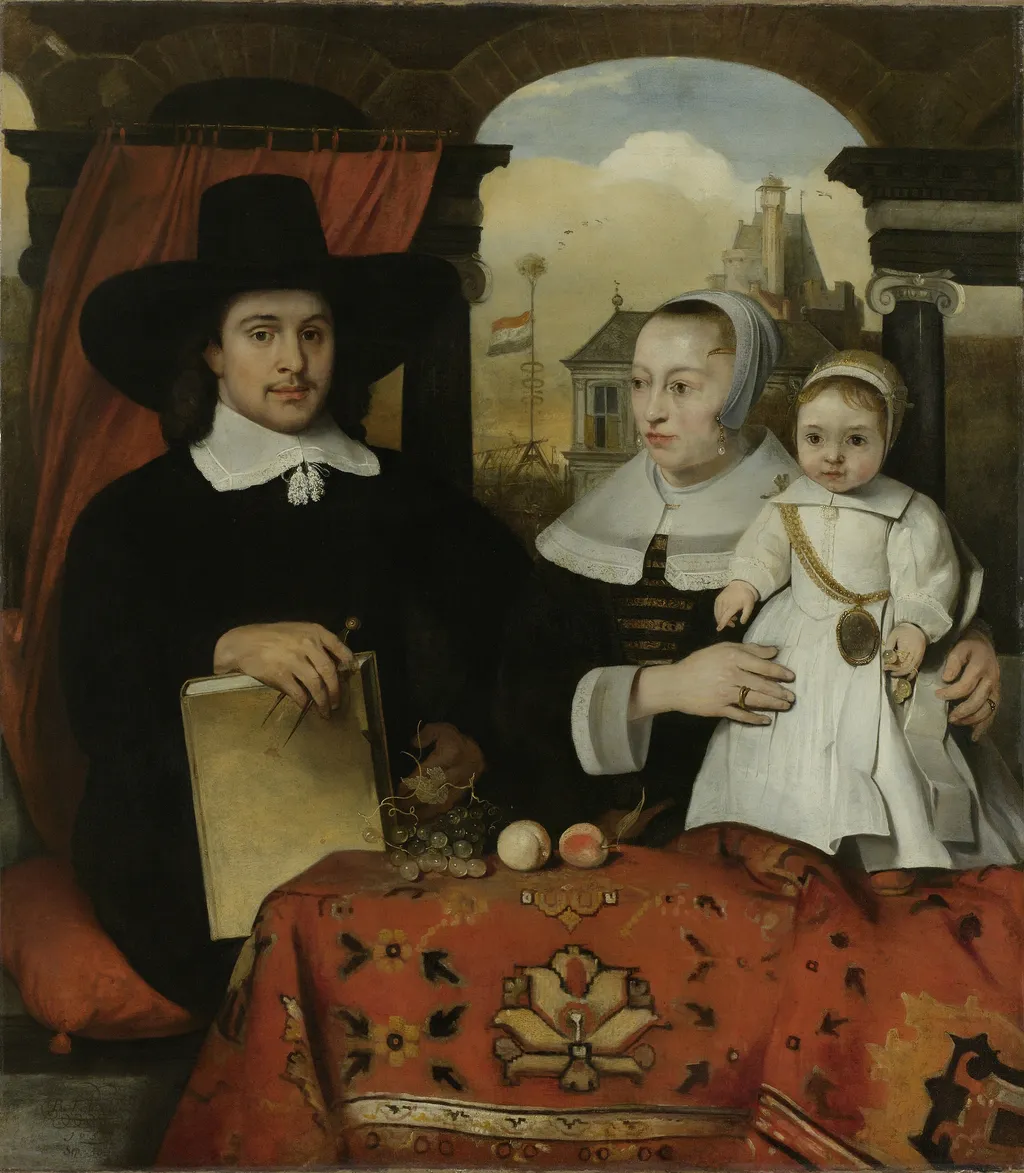
Willem van der Helm (ca 1625-75). Municipal architect of Leiden, with his wife Belytgen Cornelisdr van de Schelt and their son Leendert is an oil painting by the Dutch Golden Age artist Barent Fabritius. It dates from 1656 and is held in the collection of the Rijksmuseum.
About this work
Subject & Meaning
The 1656 oil painting by Barent Fabritius presents Willem van der Helm, Leiden’s municipal architect, together with his wife Belytgen Cornelisdr van de Schelt and their son Leendert. The composition includes a view of the Gravensteen, a domestic table carpet, and other household details that signal both familial intimacy and the subject’s civic authority. By positioning the family within an interior that references local architecture, the work functions as a portrait of personal prosperity and professional identity, using visual symbols of stability and lineage to underscore van der Helm’s role in shaping Leiden’s urban landscape.
History & Provenance
The portrait is held in the collection of the Rijksmuseum in Amsterdam, where it is recorded under inventory number SK-C-1945. Executed in 1656 by Barent Fabritius, the oil on canvas measures 148 cm in height and 127.5 cm in width. It has been exhibited at the Rijksmuseum, as documented in the museum’s records, where it remains accessible to the public.
Overview
This oil painting by Dutch artist Barent Fabritius, completed in 1656, portrays Willem van der Helm, the municipal architect of Leiden, alongside his wife Belytgen Cornelisdr van de Schelt and their son Leendert. Created during the Dutch Golden Age, the work offers a glimpse into a prominent family's life. It is currently housed in the collection of the Rijksmuseum.
Technique & Style
Executed in oil paint, this work demonstrates the artistic practices prevalent in the Dutch Golden Age.
Executed in oil paint, this work demonstrates the artistic practices prevalent in the Dutch Golden Age. Barent Fabritius, whose training included working alongside his brothers and potentially Rembrandt, employed a compositional structure that places the family prominently in the foreground. Detailed rendering of their attire, such as the man's black coat and the woman's white head covering, alongside the richly patterned table covering and specific objects, contributes to the painting's realistic portrayal.
Own this work as a print
Artist & collection
Artist
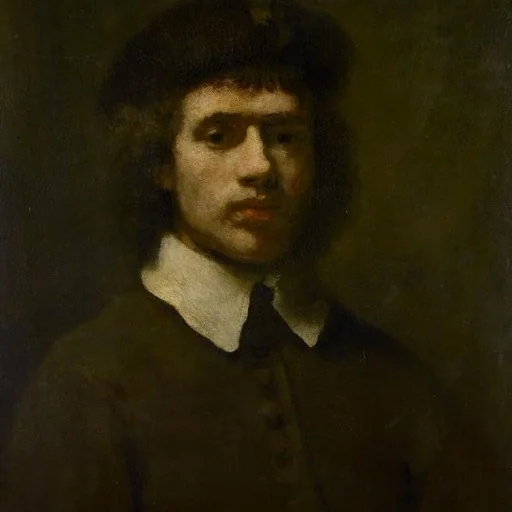
Barent or Bernard Pietersz Fabritius (or Fabricius) (bapt. 16 November 1624 – bur. 20 October 1673), was a Dutch painter. Fabritius was born at Middenbeemster, North Holland, the son of Pieter Carelsz. Fabritius. He…

 The Van Moerkerken Family
 A Dutch Family Group
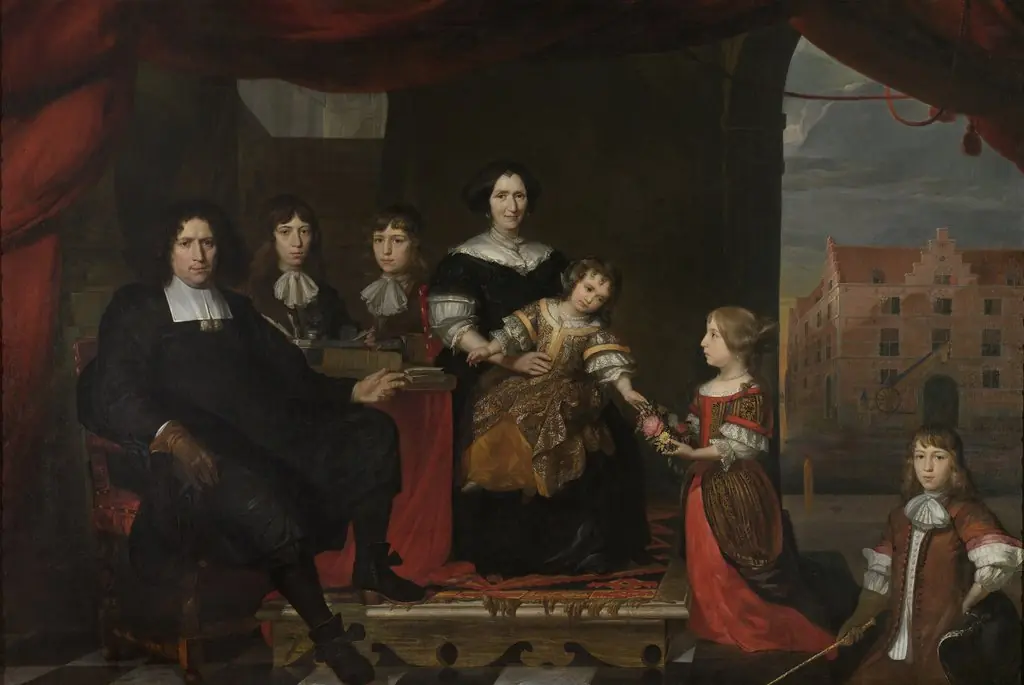 Reyer Reyersz van der Burch (1630-95), ammunition officer attached to the arsenal of the states-general, Delft, with his wife Geertruid Graswinckel and their children
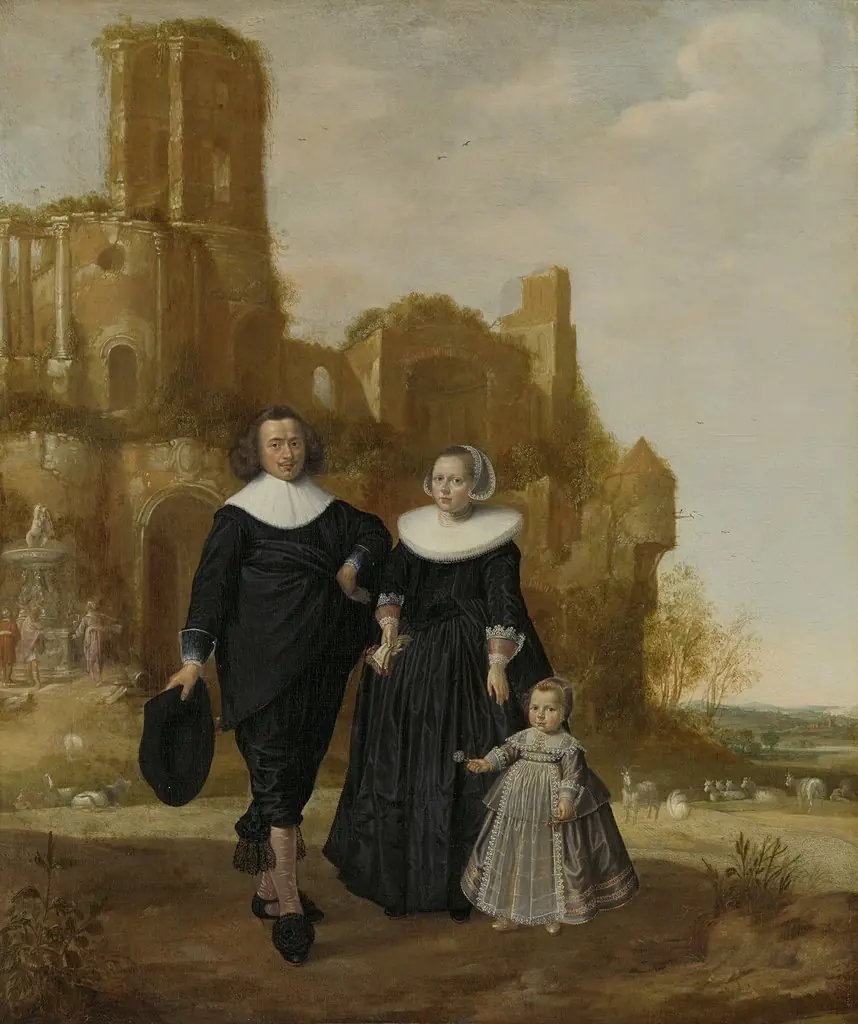 Portrait of a couple with their child in a landscape
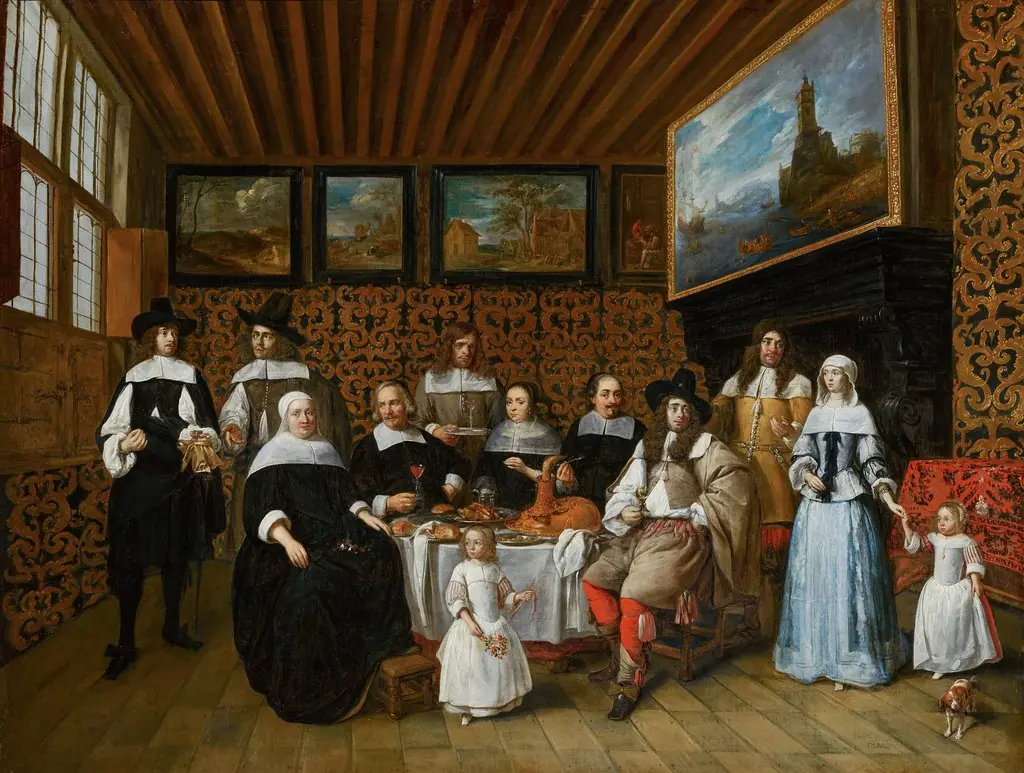 Family Portrait
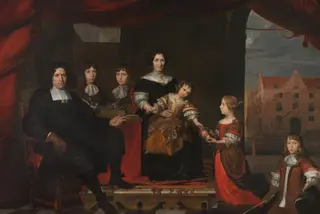 Reyer Reyersz van der Burch (1630-1695), Ammunition Officer attached to the Arsenal of the States-General, Delft, with his Wife Geertruid Graswinckel and their Children Frank, Cornelis, Reyer, Maria and Alida
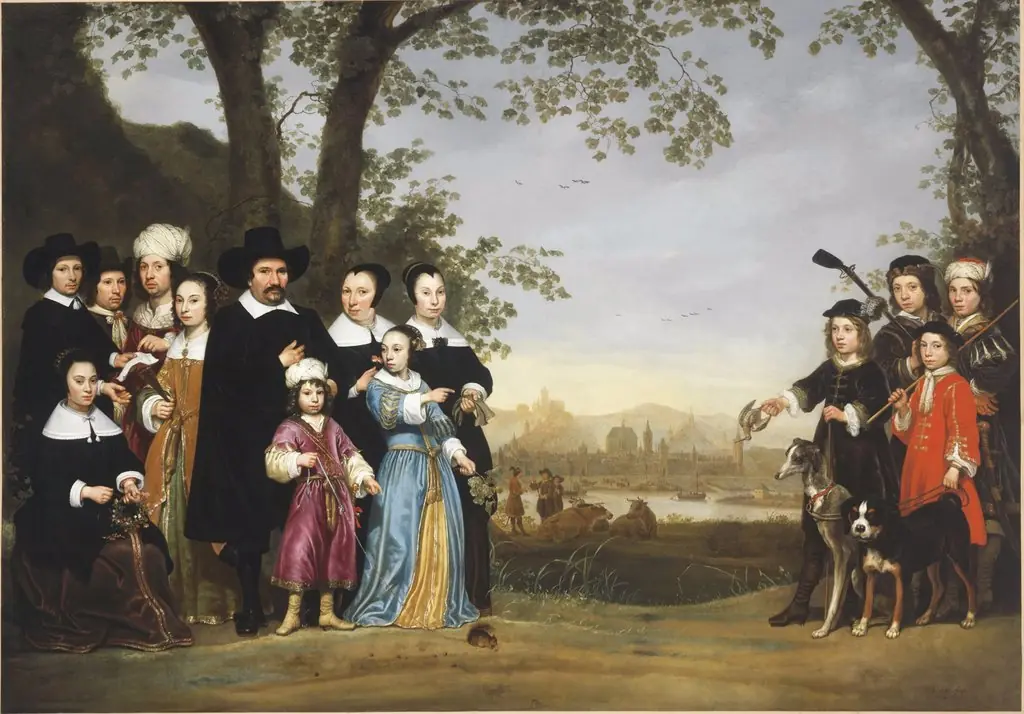 Portrait of the Sam Family
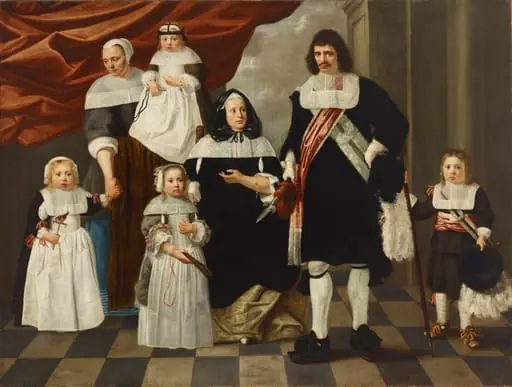 Perhemuotokuva