Artwork
Church interior
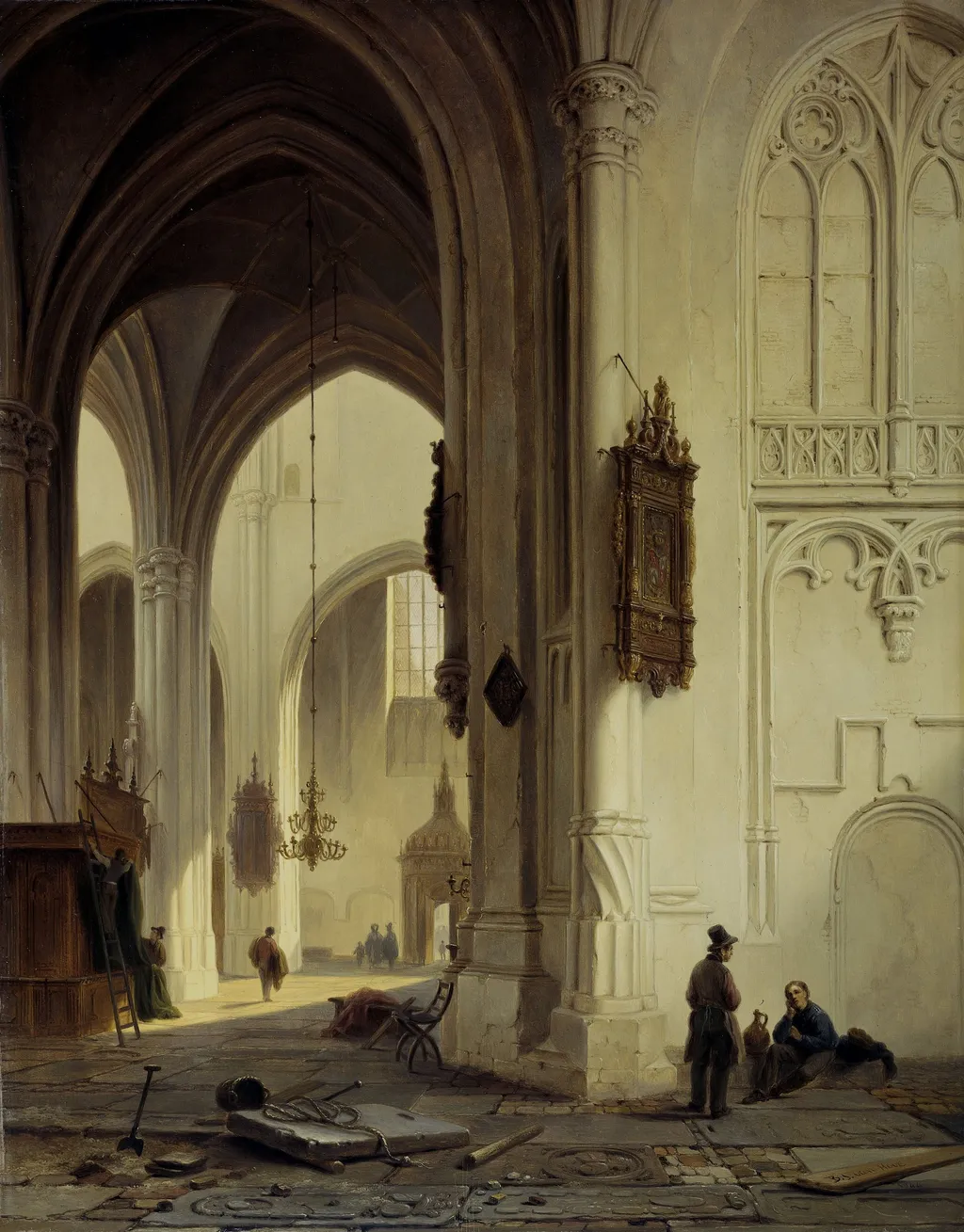
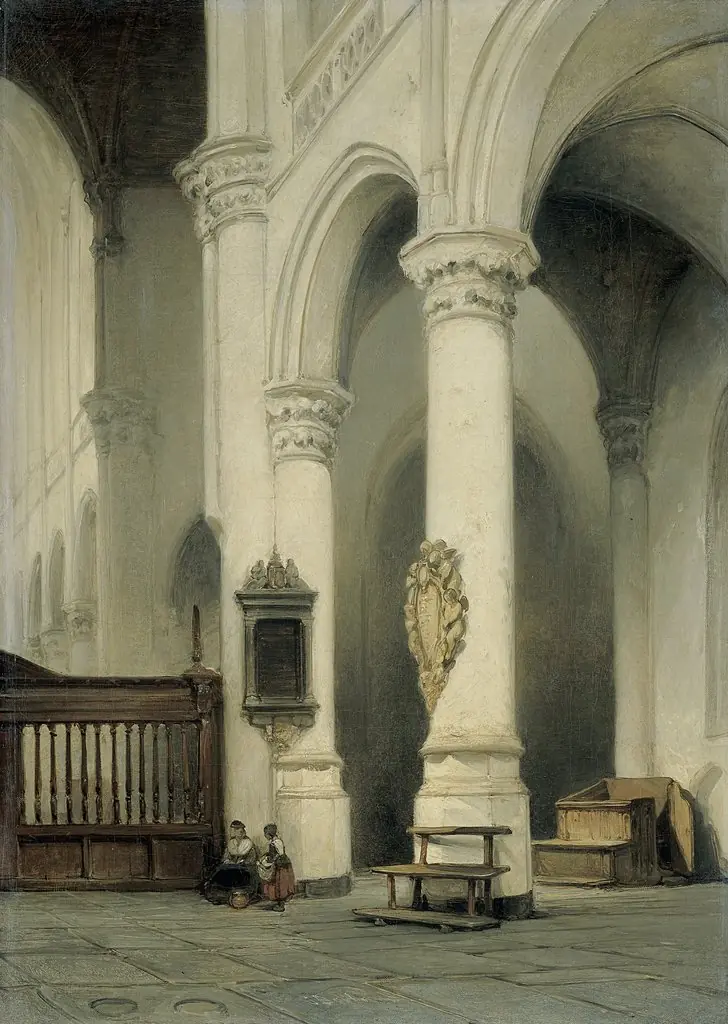
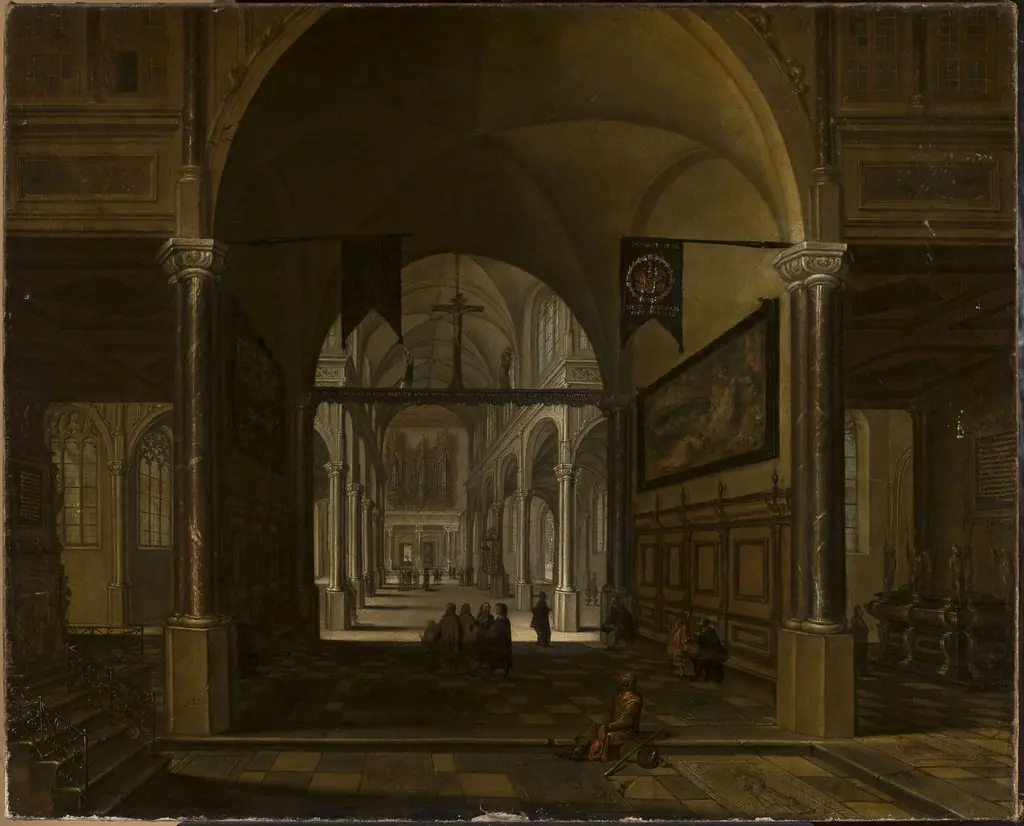
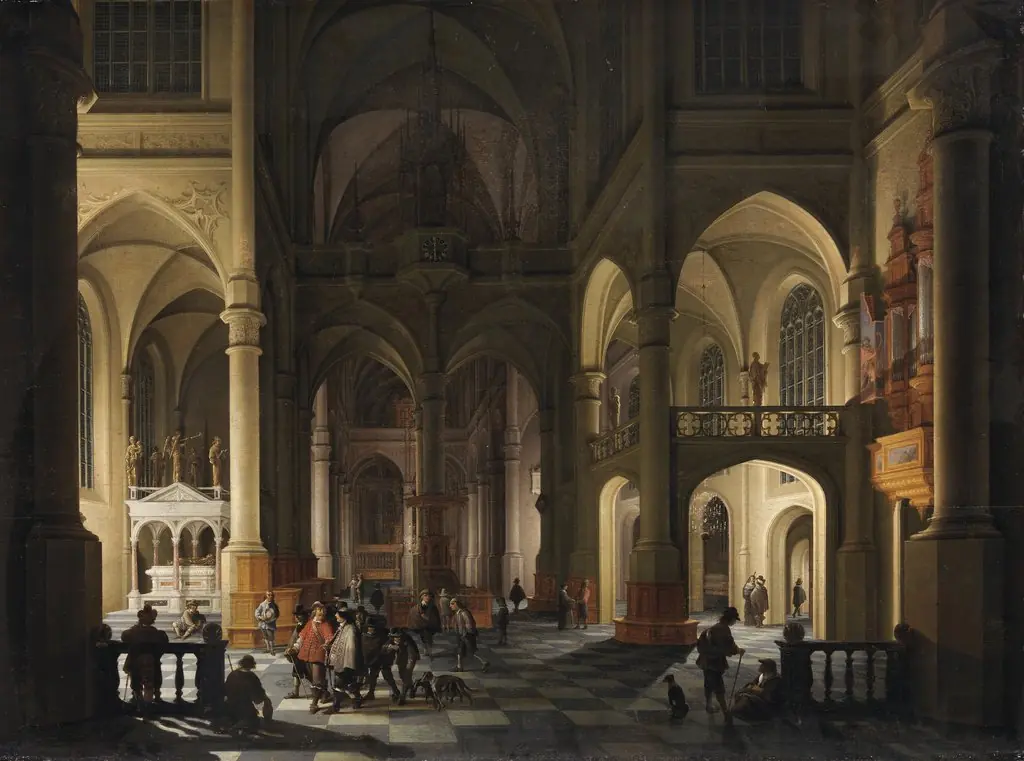
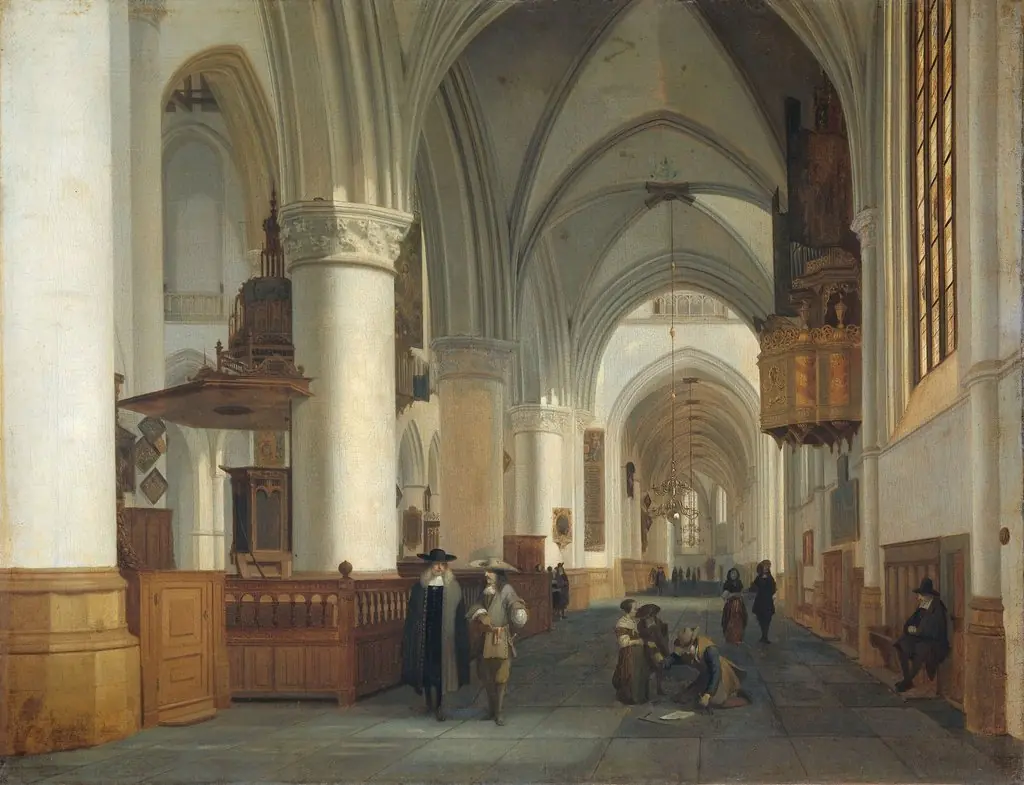
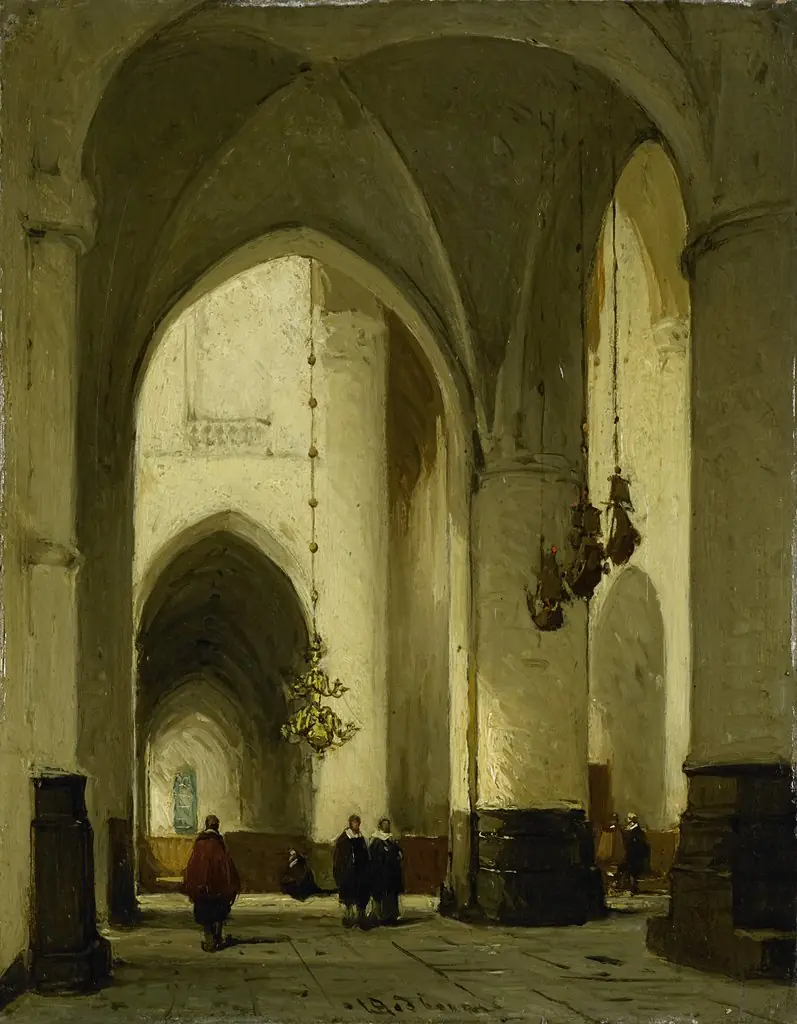
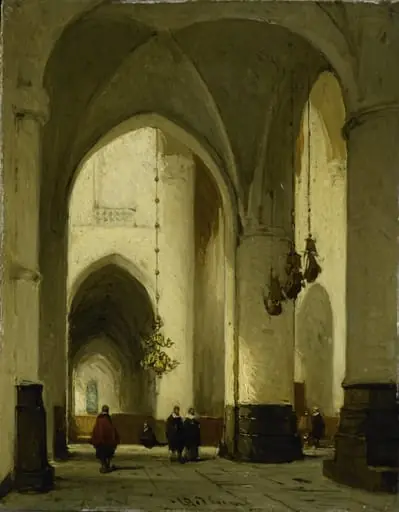
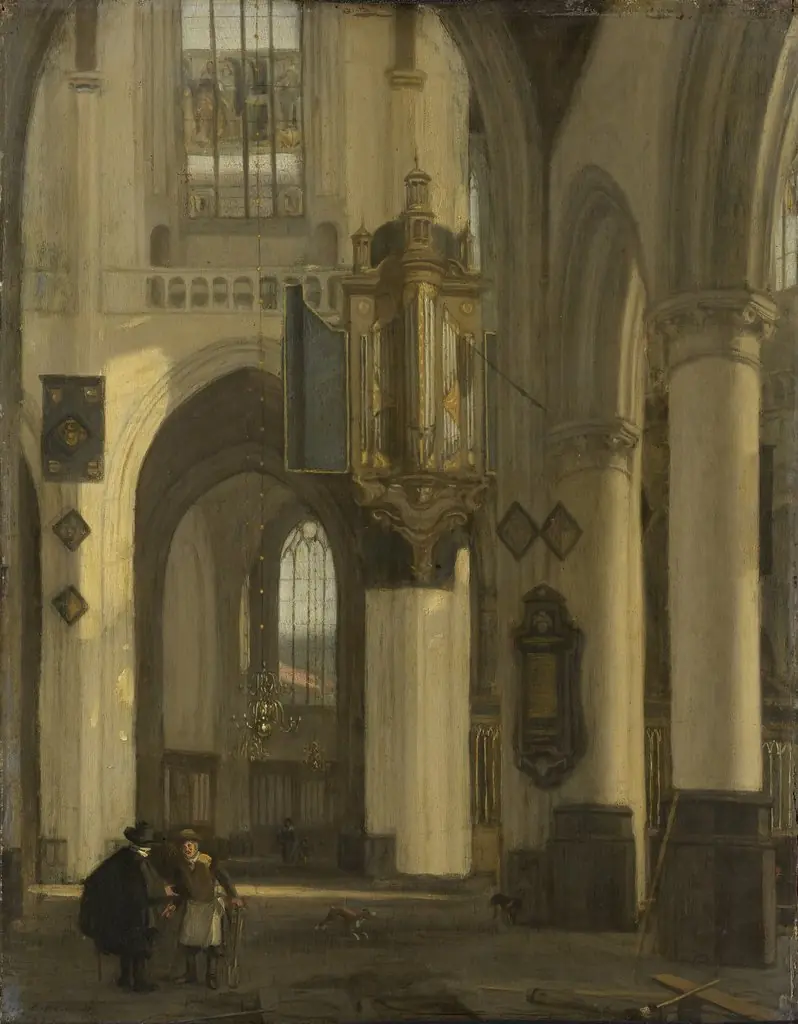
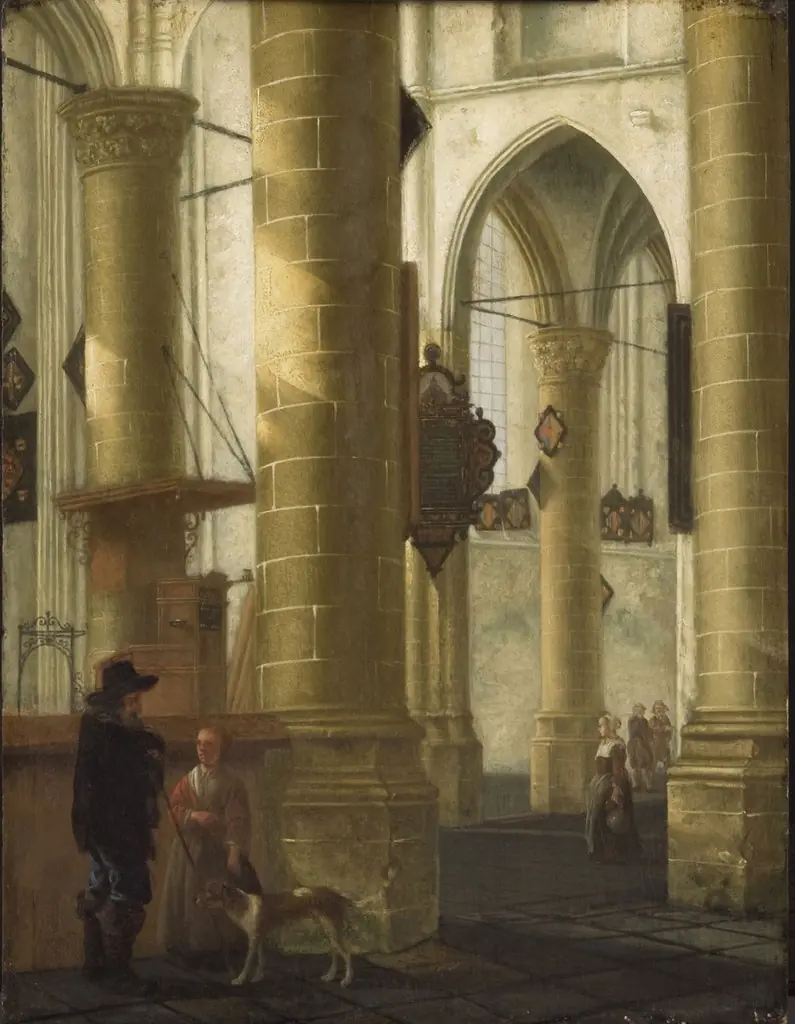
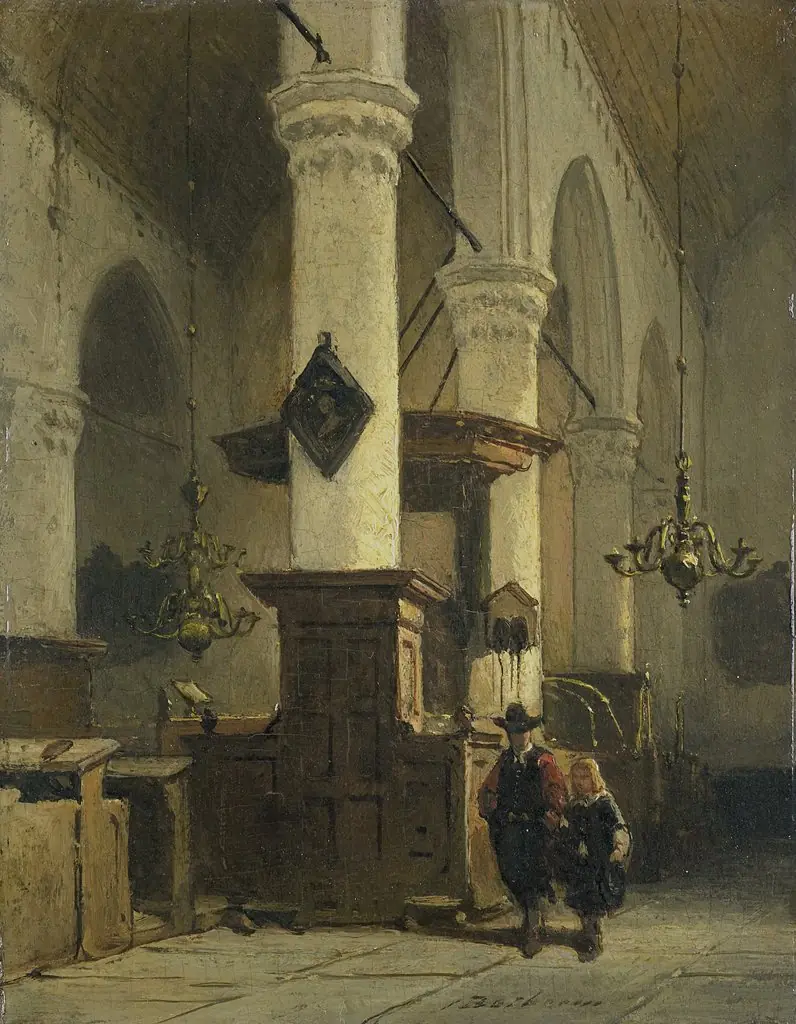
Church interior is an oil painting by Bartholomeus van Hove. It dates from 1844 and is held in the collection of the Rijksmuseum.
About this work
Technique & Style
The medium and support combination reflects the artist's adherence to established 19th-century Dutch painting practices.
Bartholomeus van Hove executed Church interior in 1844 using oil paint applied to a wooden panel support. The work measures 55 cm in height and 42.5 cm in width, adhering to the traditional format for Dutch genre scenes of the period. Stylistically, the painting depicts a detailed church setting populated by figures including men, women, and a child, alongside architectural and funerary elements such as a grave, tombstone, and curtain. The medium and support combination reflects the artist's adherence to established 19th-century Dutch painting practices.
History & Provenance
Church interior is an oil painting by Bartholomeus van Hove, dated 1844. The work was created in the Netherlands, executed in oil paint on panel, and measures 55 by 42.5 centimeters. It is held in the collection of the Rijksmuseum.
The sources do not provide information on the original commissioner, the chain of ownership prior to the museum's acquisition, an inventory number, or any specific exhibition history for this piece.
Overview
Bartholomeus van Hove's 1844 oil painting, Church interior, presents a detailed view within a large ecclesiastical space. This work, executed in oil, features architectural elements alongside figures, including a child, a draped curtain, and a grave marker. The piece is currently housed in the collection of the Rijksmuseum, representing a facet of 19th-century Dutch art.
Subject & Meaning
The painting captures the vastness of a church's interior, characterized by towering stone arches and elevated windows. Scattered figures populate the scene, engaged in quiet activities such as walking, conversing, or resting on the floor. A subtle detail, a small dog curled near a seated woman, enhances the sense of everyday life within the sacred space. The composition evokes a contemplative atmosphere, focusing on human presence amidst grand architecture.
Legacy
Active in The Hague throughout much of the 19th century, Bartholomeus van Hove significantly shaped Dutch painting through his role as an instructor. His pedagogical influence extended to several notable artists, including Johannes Bosboom and Jan Hendrik Weissenbruch, who later achieved prominence. Van Hove's teaching contributed to the stylistic developments seen in the art of his era, impacting a subsequent generation of painters.
Own this work as a print
Artist & collection
Artist
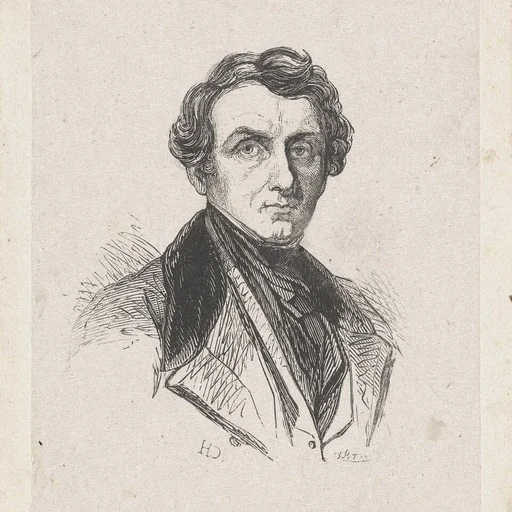
Bartholomeus Johannes van Hove (October 28, 1790 in The Hague – November 8, 1880 in The Hague) was a Dutch painter and the father of Hubertus van Hove.