Artwork
Church Interior
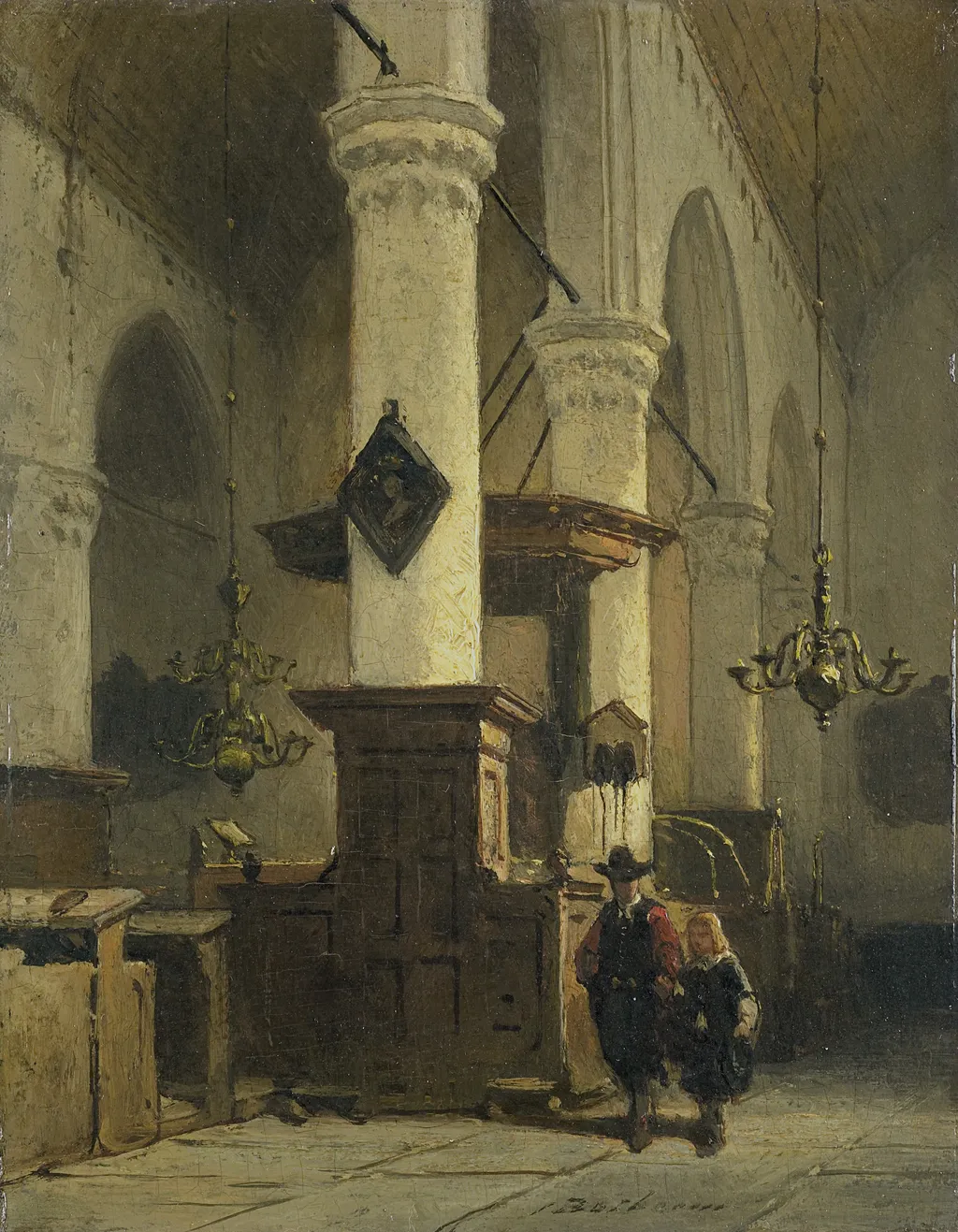
Church Interior is an oil painting by the Dutch Golden Age artist Johannes Bosboom. It dates from 1850 and is held in the collection of the Rijksmuseum.
About this work
Subject & Meaning
The painting depicts a solitary man standing near a pulpit within a modest Dutch church interior, emphasizing the quiet devotion of individual worship.
The painting depicts a solitary man standing near a pulpit within a modest Dutch church interior, emphasizing the quiet devotion of individual worship. Symbolically, the empty pews and plain architecture reflect the Protestant emphasis on simplicity and the spiritual over the material, while the pulpit underscores the centrality of preaching in Reformed worship. The work thus conveys a contemplative reverence, suggesting that sacred meaning resides in the act of faith rather than ornate ritual.
Technique & Style
The work is an oil painting executed on wooden panel, reflecting the Dutch church interior tradition of the mid-19th century. Bosboom's handling emphasizes architectural precision and atmospheric lighting, with fine brushwork delineating structural elements such as the pulpit and nave. The composition balances spatial depth with decorative detail, characteristic of his ecclesiastical subjects.
The painting measures 18.5 cm in height and 14.5 cm in width, consistent with small-scale devotional works of the period.
History & Provenance
Johannes Bosboom created the oil painting Church Interior in 1850. Executed on a panel measuring 18.5 by 14.5 cm, the work was produced in the Netherlands. The painting depicts the interior of a church building, featuring a pulpit and a male figure.
At one point in its history, the artwork was owned by Joannes Barnardus Antonius Maria Westerwoudt. It currently resides in the collection of the Rijksmuseum, where it is cataloged under inventory number SK-A-3078.
Context
Johannes Bosboom emerged as a prominent 19th-century Dutch painter specializing in church interiors, with Church Interior (1850) exemplifying his precise architectural rendering and devotional atmosphere. Associated with the Hague School, his work reflects a Romantic fascination with historical spaces and Dutch Reformed religious heritage. The painting's technical execution in oil on panel demonstrates the meticulous detail characteristic of mid-century Dutch genre painting, while its subject matter aligns with contemporary scholarly interest in the Netherlands' architectural legacy.
Legacy
Johannes Bosboom's Church Interior exerted quiet influence on 19th-century Dutch church painting, particularly in its rendering of interior light and architectural solemnity. The work's meticulous detail and atmospheric perspective informed contemporaries observing sacred space in domestic settings. Its presence in the Rijksmuseum collection cemented Bosboom's reputation as a master of ecclesiastical subjects, a status later echoed in scholarly assessments of his role in the Netherlands' artistic heritage.
Overview
Created circa 1850 by Dutch artist Johannes Bosboom, this oil painting presents a quiet interior of a church. The composition centers on a pulpit flanked by a man and a young boy, both dressed in period clothing. Light filters through high windows, illuminating the stone floor and emphasizing the vaulted space.
Own this work as a print
Artist & collection

Artist
Johannes Bosboom (18 February 1817 – 14 September 1891) was a Dutch painter and watercolorist of the Hague School, known especially for his paintings of church interiors.

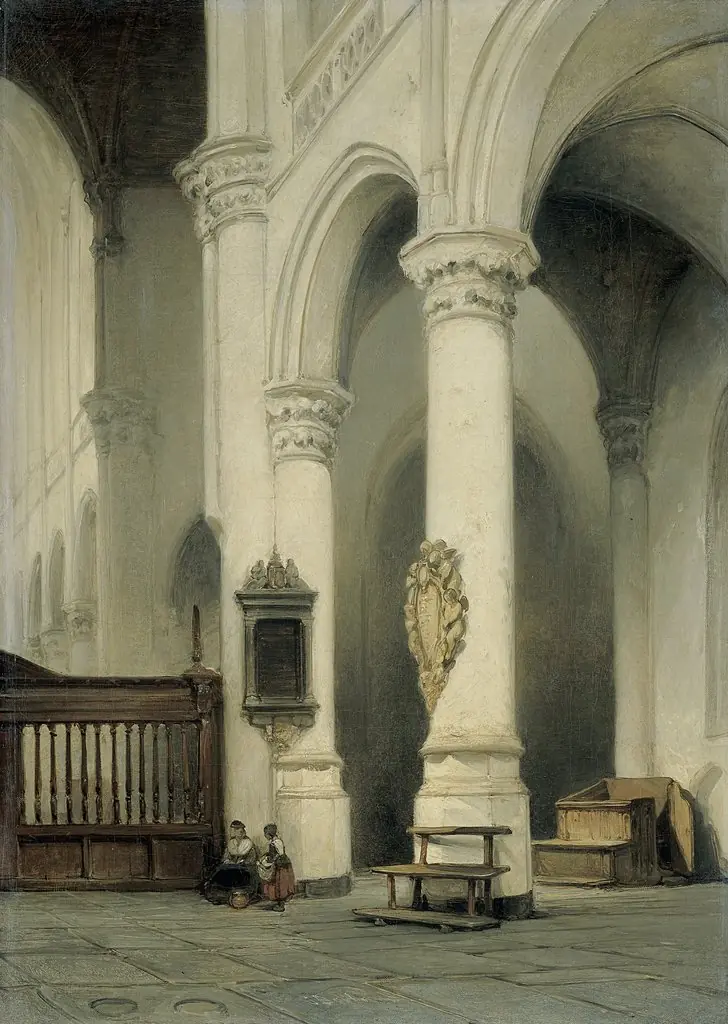
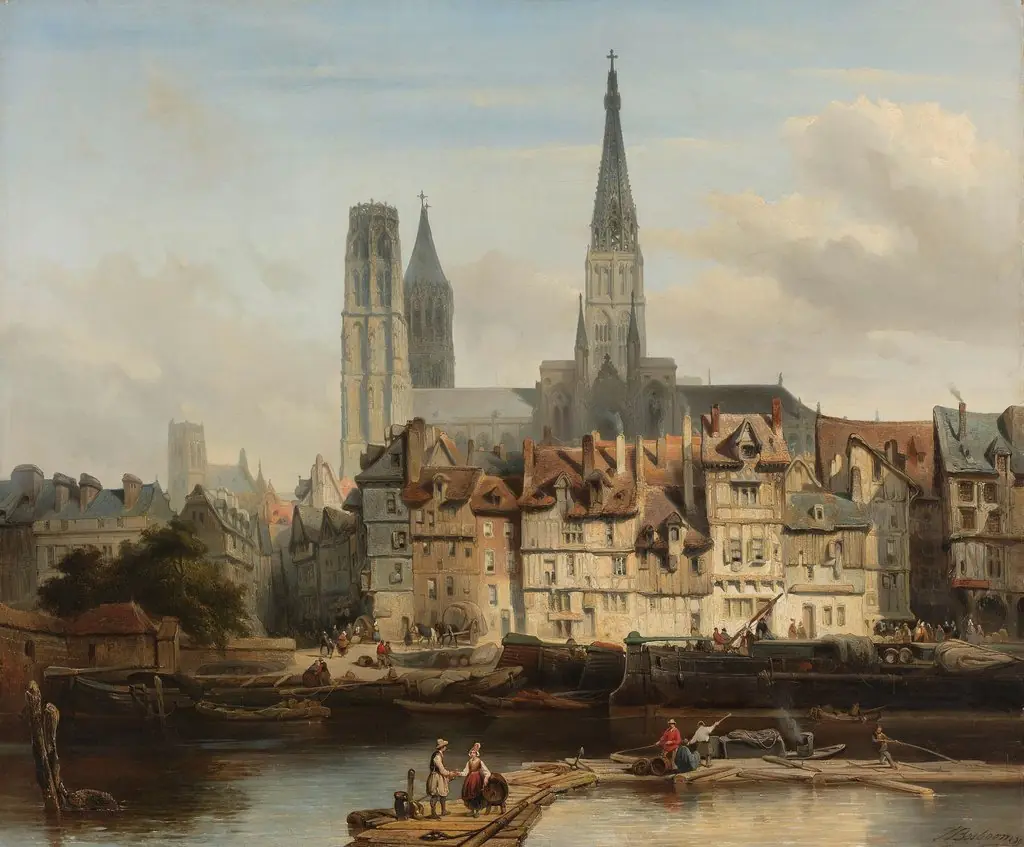
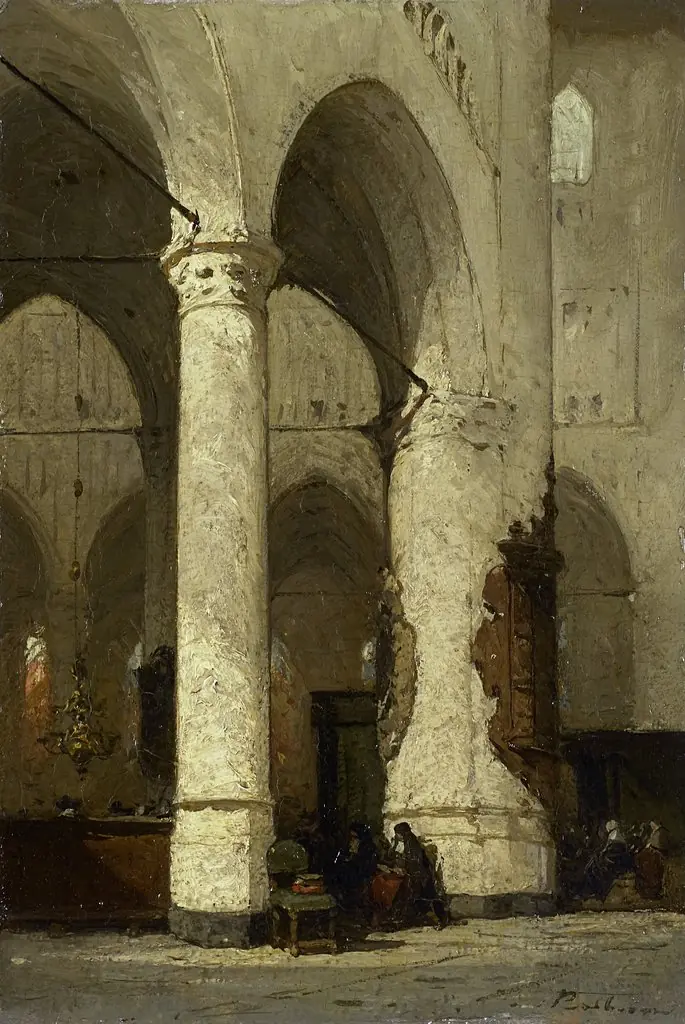
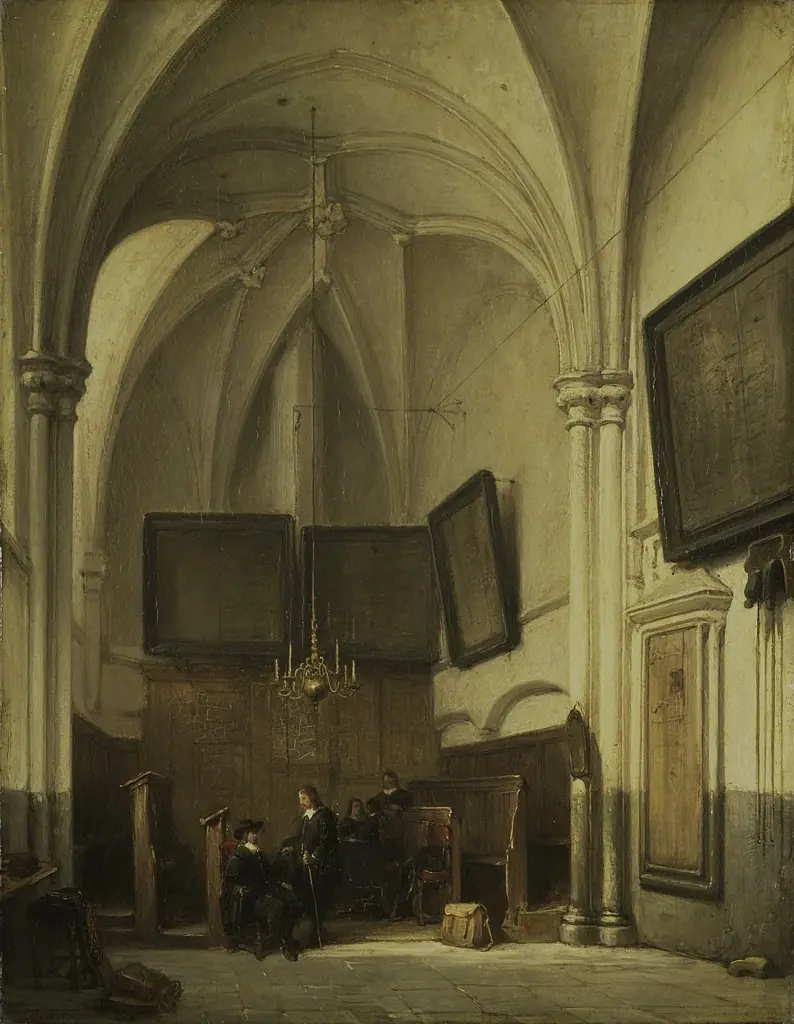
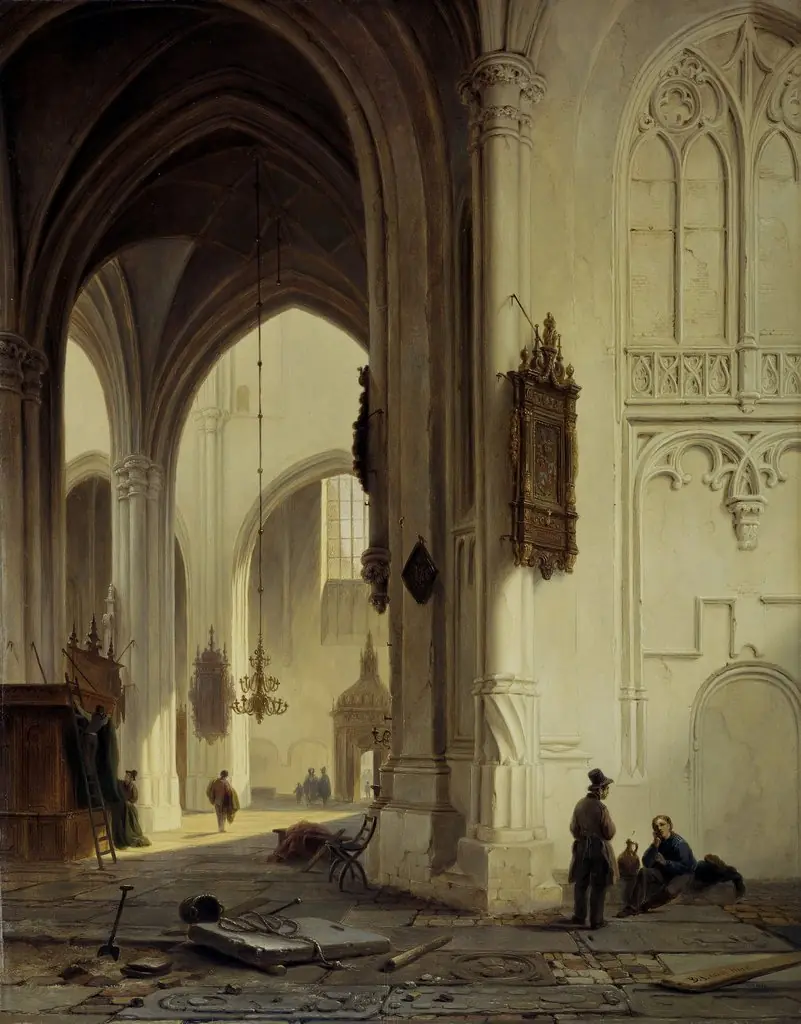
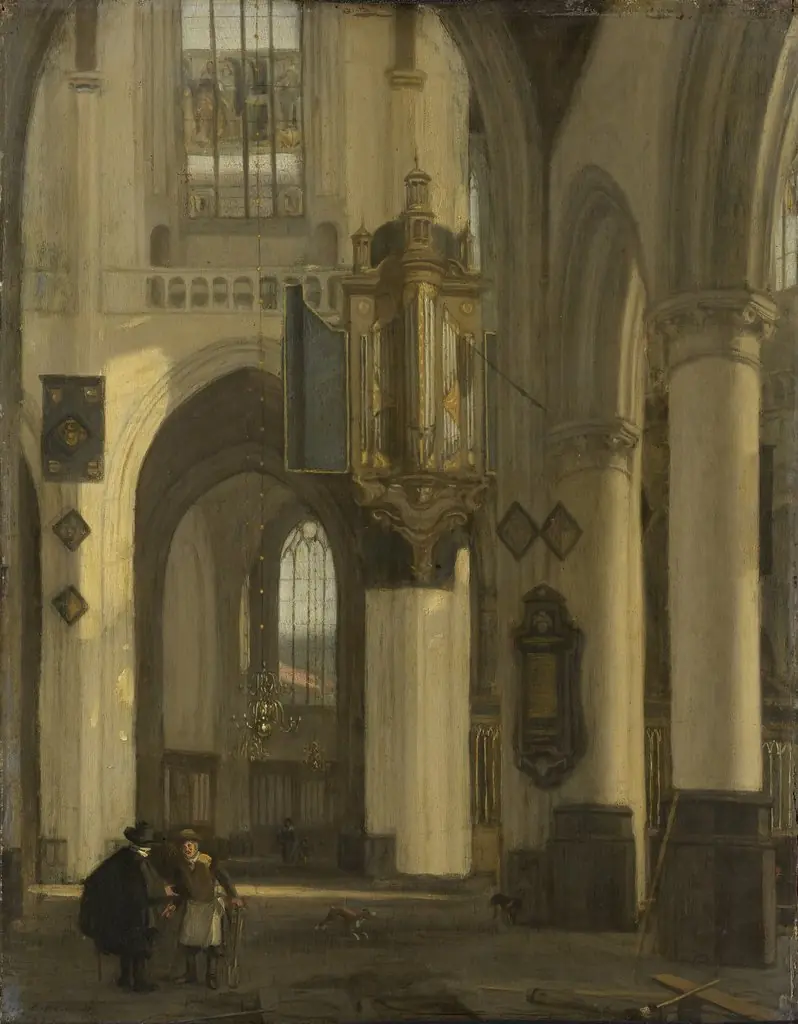 Interior of a Protestant Gothic church with motifs of the Oude and the Nieuwe Kerk in Amsterdam
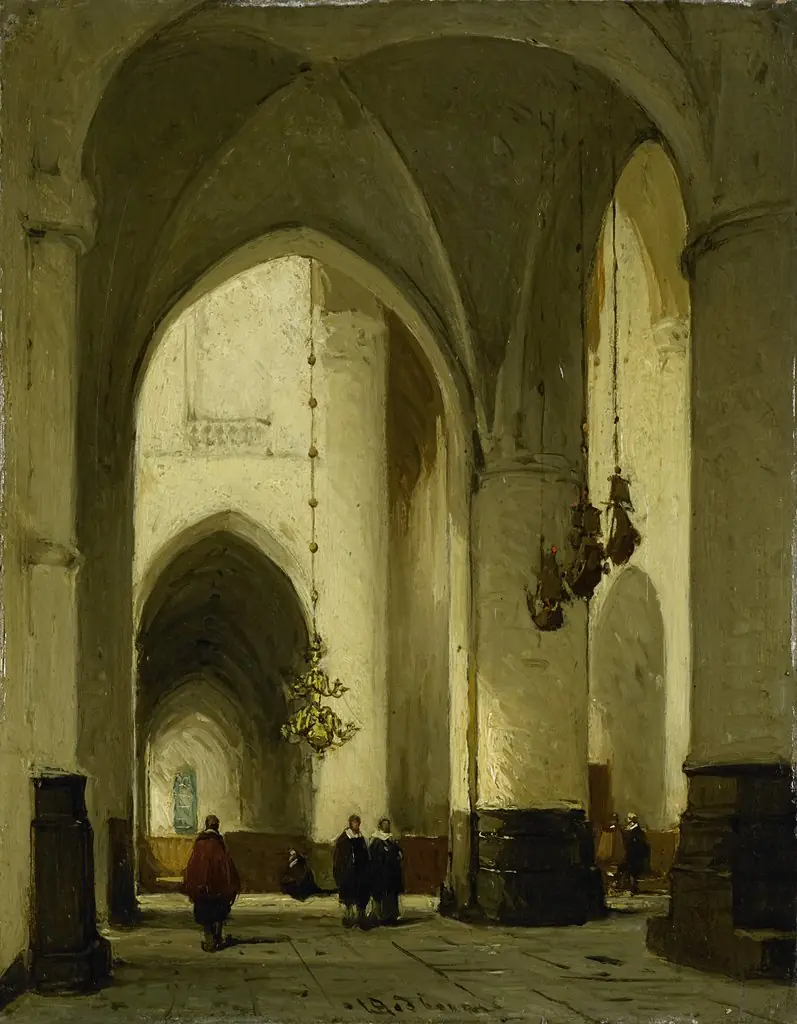
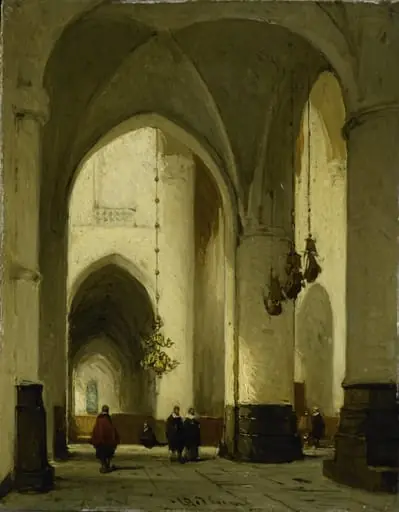 Interior of the Church of St Bavo in Haarlem
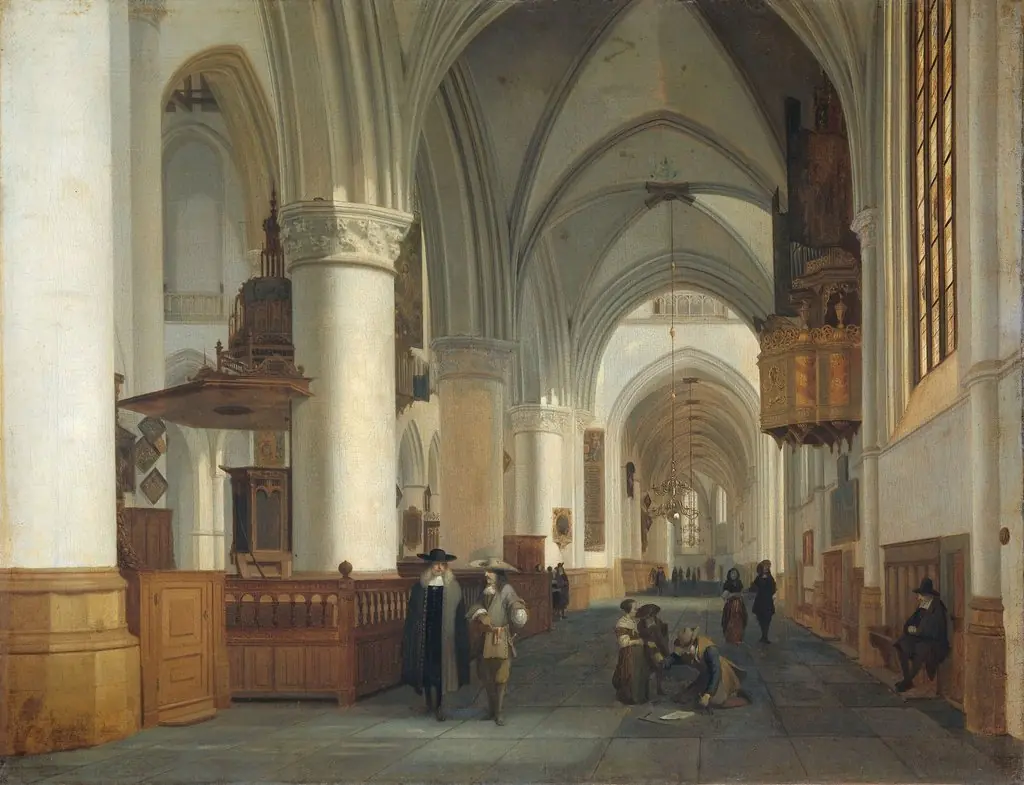 Interior of the church of St. Bavo, Haarlem
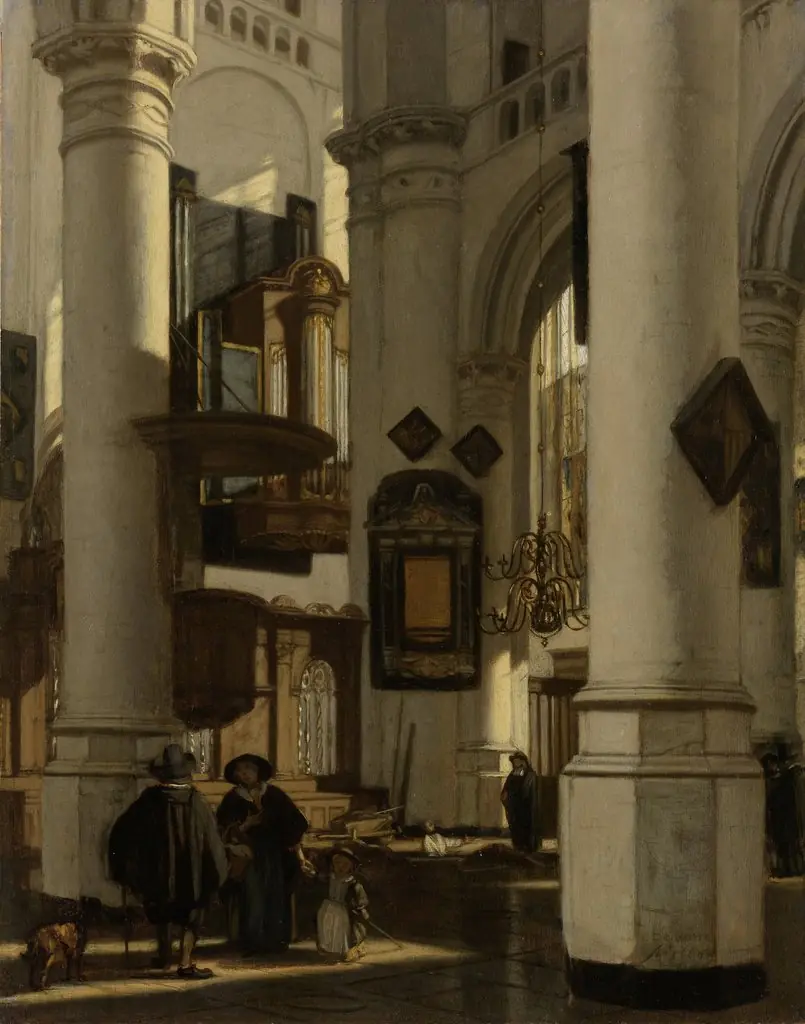 Interior of a Protestant, Gothic Church, with a Gravedigger in the Choir
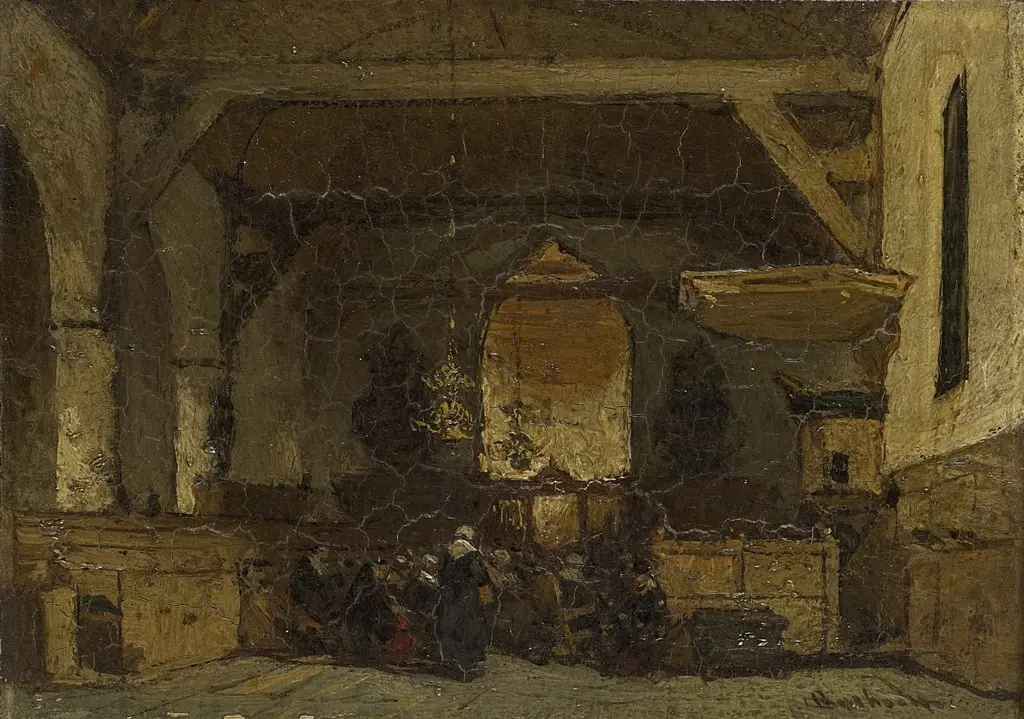
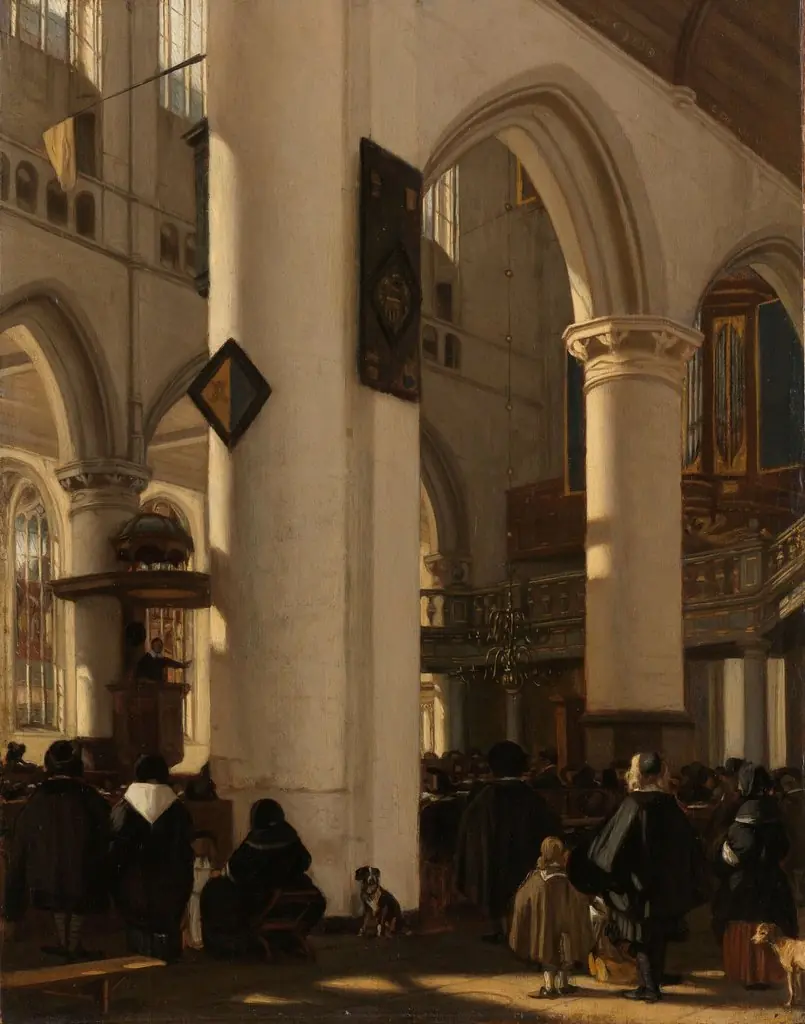 Interior of a Protestant, Gothic Church during a Service
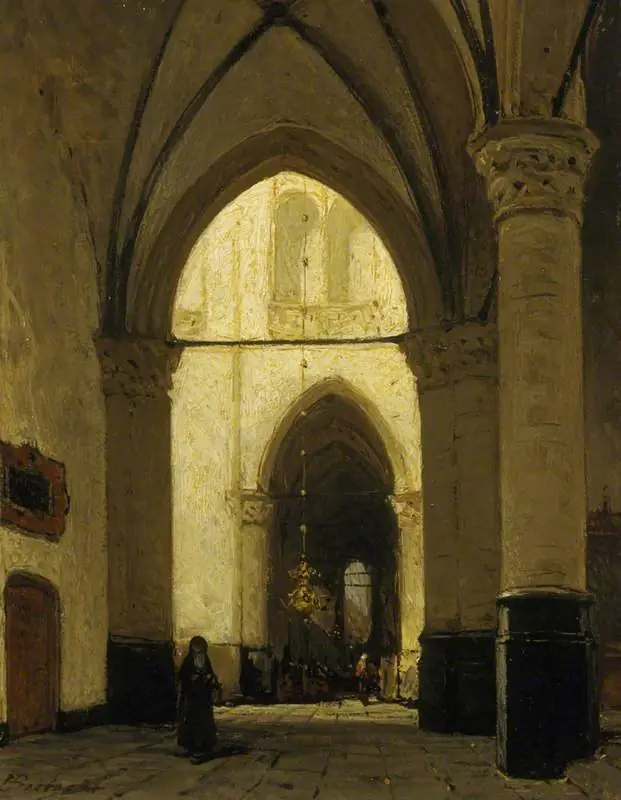 The Interior of Alkmaar Church