Artwork
Gowanus Heights, Brooklyn
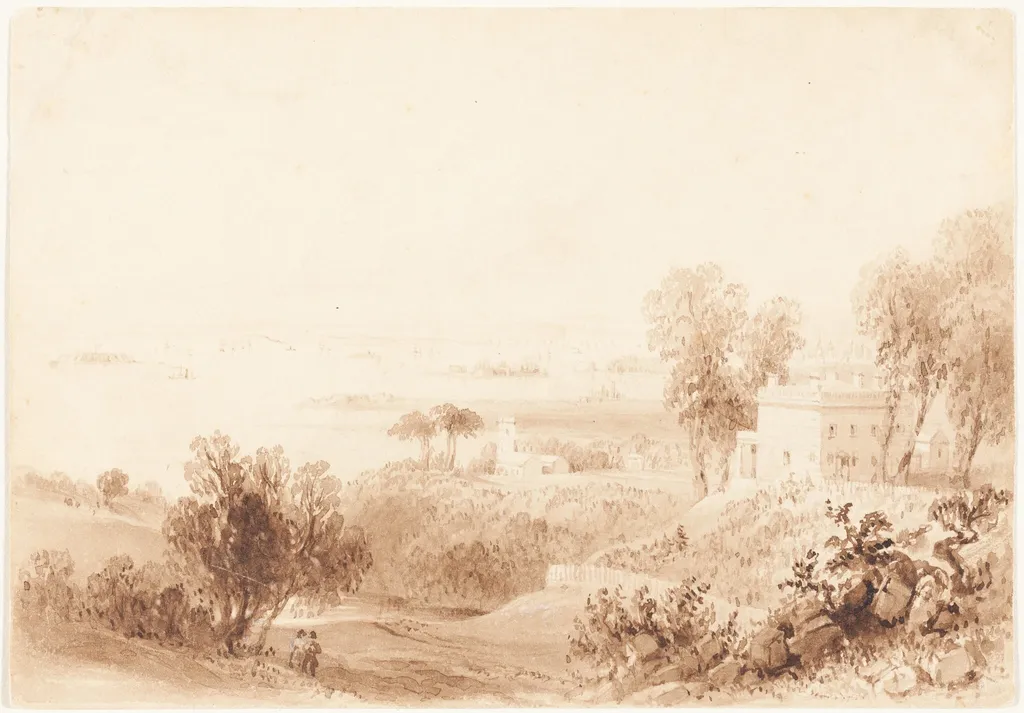
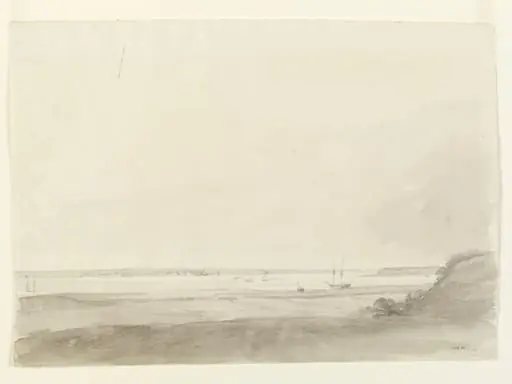
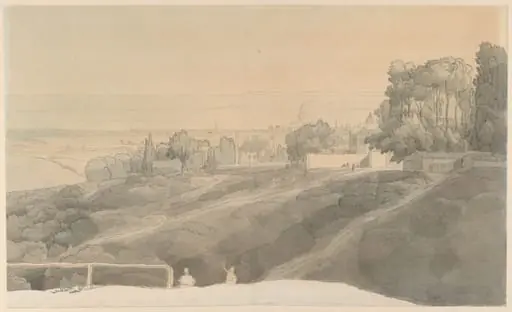
Gowanus Heights, Brooklyn is an ink drawing by the Romanticist artist William Henry Bartlett. It dates from 1836 and is held in the collection of the National Gallery of Art.
- Inscription
- Inscribed:center verso in graphite: New York from Gowanus Bay / about 1840 / (2 illegible lines); lower left verso in graphite: Gowanus Heights, Brooklyn / by Bartlett
About this work
Overview
It depicts a panoramic view of the Heights of Guan, capturing the rural terrain and distant harbor of Brooklyn before its intensive urbanization.
Gowanus Heights, Brooklyn is a sepia-toned landscape drawing by the British artist William Henry Bartlett, created circa 1836 or 1837. Executed in brush and brown ink with brown wash on wove paper, the work measures 12.5 by 17.9 centimeters. It depicts a panoramic view of the Heights of Guan, capturing the rural terrain and distant harbor of Brooklyn before its intensive urbanization. The drawing is unsigned. It is currently held in the National Gallery of Art in Washington, D.C., as part of the John Davis Hatch Collection, accessioned under number 1979.20.6.
Subject & Meaning
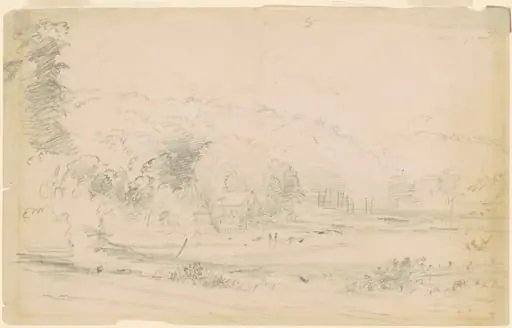
The drawing presents a sweeping prospect from the Gowanus Heights, looking toward the bay and the distant shoreline of Manhattan. A low horizon line allows an expansive sky to dominate the upper two-thirds of the composition. In the foreground, a curving dirt road leads the eye toward two small figures walking together, providing a sense of scale. Dense clusters of trees and shrubs frame the view, while a substantial multi-story building with a columned porch sits atop a rise to the right, signifying domestic settlement. The middle ground features cultivated fields and farm structures, contrasting the agrarian foreground with the faint horizontal bands of water, small vessels, and indistinct buildings in the distance, which together evoke the commercial life of the harbor.
Technique & Style
Bartlett employed a restricted palette of warm brown and tan tones, utilizing brush and brown ink with brown wash on wove paper to create a cohesive sepia effect. He combined loose, fluid washes with more controlled brushwork to delineate architectural and foliate details, the latter rendered with stippled techniques to suggest leafy textures. Depth is achieved through atmospheric perspective, transitioning from dark, saturated browns in the foreground to pale, atmospheric washes in the distance. Light is diffused evenly across the scene, lacking a strong directional source and casting soft shadows. The paper support shows slight aging and foxing, and the work is unsigned, though inscriptions in graphite on the verso identify the view and artist.
History & Provenance
The drawing was created circa 1836 or 1837, likely as a preparatory design for a later steel engraving titled View from Gowanus Heights, Brooklyn, which was engraved by Henry Adlard and issued around 1838. The work's provenance traces to the collector John Davis Hatch, who owned it by 1976. Hatch lent the drawing to the Heim Gallery in London for the 1976 exhibition catalogue 100 American Drawings, where it appeared as number 20. In 1979, Hatch gifted the drawing to the National Gallery of Art. Graphite inscriptions on the center verso read New York from Gowanus Bay and about 1840, with two additional illegible lines, while the lower left verso bears the inscription Gowanus Heights, Brooklyn by Bartlett.
Context
William Henry Bartlett was a prolific British topographical artist known for his extensive travels and depictions of landscapes and city views, which were widely disseminated through steel engravings in travel publications. His work on the American landscape, including views of New York and its environs, catered to a transatlantic audience eager for images of the developing nation. The 1838 engraved version of this view, executed by Henry Adlard, demonstrates how such drawings served as foundational designs for mass reproduction, situating the drawing within the broader commercial and topographical print culture of the 1830s.
Legacy
As a topographical record, the drawing preserves a view of the Gowanus area before its transformation into a heavily industrial and residential zone. The existence of the 1838 Adlard engraving, held in the New York Public Library, underscores the drawing's role in shaping contemporary and historical perceptions of Brooklyn's landscape. Its preservation in the National Gallery of Art and its documentation in John Davis Hatch's 1976 exhibition catalogue have cemented its status as a significant artifact of pre-urban Brooklyn iconography.
Own this work as a print
Artist & collection
Artist
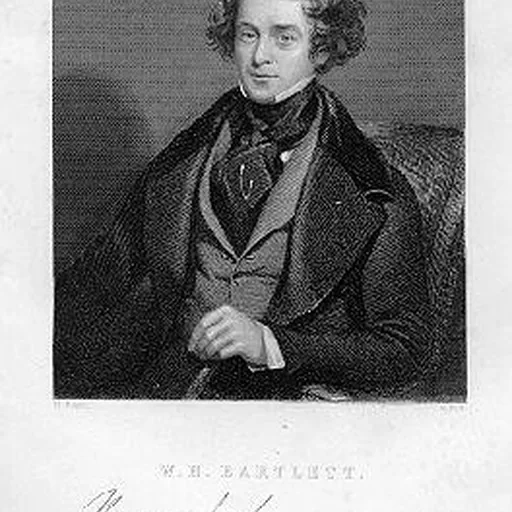
William Henry Bartlett (26 March 1809 – 13 September 1854) was a British artist, best known for his numerous drawings rendered into steel engravings.