Artwork
Saint Thomas Aquinas Aided by Saints Peter and Paul
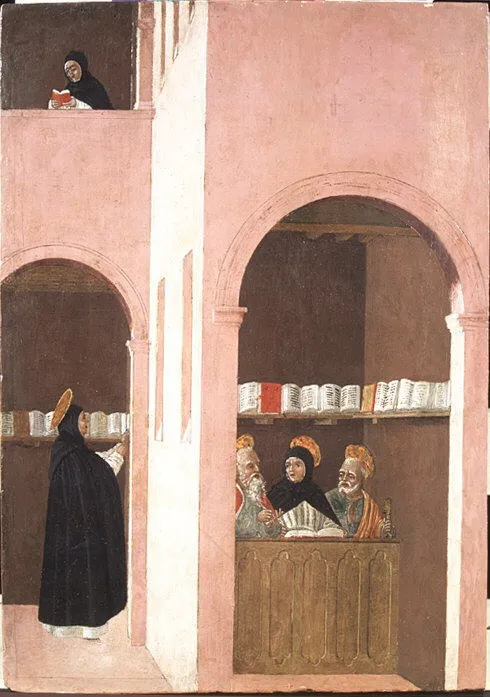
Saint Thomas Aquinas Aided by Saints Peter and Paul is a tempera painting by the Early Renaissance artist Bartolomeo degli Erri. It dates from 1469 and is held in the collection of the Metropolitan Museum of Art.
About this work
Subject & Meaning
The inclusion of the reading figure underscores the importance of scriptural engagement and theological scholarship within the artwork's symbolic framework.
The painting depicts Saint Thomas Aquinas flanked by Saints Peter and Paul within a religious narrative centered on the act of reading. Created in 1469 by Bartolomeo degli Erri, the work presents the theologian engaged in study, supported by the apostolic figures of Peter and Paul. The composition also includes a female figure, contributing to the scene's iconographic complexity.
As a tempera-on-panel work classified as religious art, the piece visually articulates the spiritual and intellectual authority of Aquinas through the presence of these key saints. The depiction emphasizes the transmission of divine knowledge, with the apostles serving as aids to the scholar. The inclusion of the reading figure underscores the importance of scriptural engagement and theological scholarship within the artwork's symbolic framework.
Technique & Style
The work is executed in tempera on panel, a technique characteristic of mid-fifteenth-century Italian devotional painting. Its modest dimensions, 43.2 cm in height by 30.5 cm in width, indicate an intimate scale. The panel support and egg-based tempera medium allowed for the precise linear handling and layered translucency typical of the Modenese tradition to which Bartolomeo degli Erri belonged.
The composition is organized around the central figure of Thomas Aquinas, flanked by Saints Peter and Paul, with the figures rendered against a dark ground that emphasizes their modeling and gestures. The inclusion of a female figure and the motif of reading, as identified in the iconographic record, are integrated through careful spatial arrangement and controlled tonal contrasts.
History & Provenance
The panel painting Saint Thomas Aquinas Aided by Saints Peter and Paul was created in 1469 by Bartolomeo degli Erri in tempera on panel. It measures 43.2 cm in height and 30.5 cm in width and depicts the saint alongside Peter and Paul. It entered the collection of the Metropolitan Museum of Art, where it is presently housed; earlier ownership records are not documented in the available sources, which specify no unique accession number and contain no record of specific exhibitions.
The work remains part of the museum's holdings as an example of religious art from the late fifteenth century.
Overview
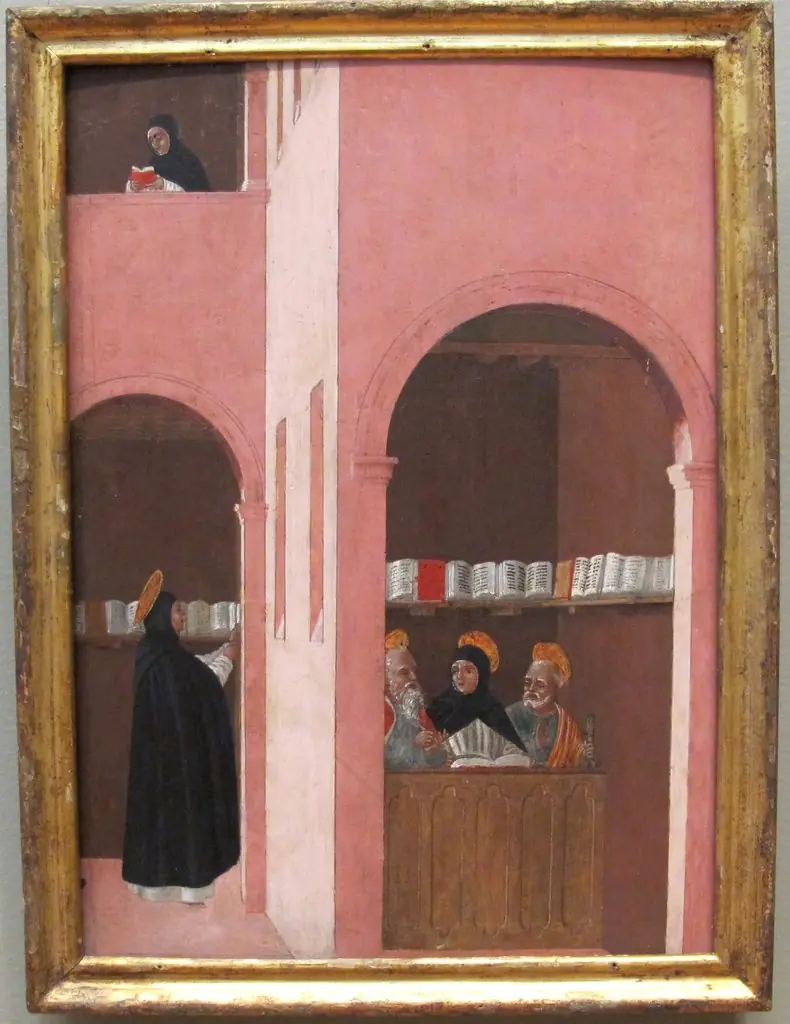
This tempera painting, titled Saint Thomas Aquinas Aided by Saints Peter and Paul, depicts a scholarly setting where three robed men engage with books at a table. The central figure, distinguished by a crown of gold leaves, is likely Saint Thomas Aquinas. The composition also includes a woman in a dark cloak holding a book, and another figure observing from an upper window, all within what appears to be a well-stocked library or study.
Artist & collection
Artist
Bartolomeo degli Erri (1447–1482) was an Italian Gothic painter of the Italian Renaissance.

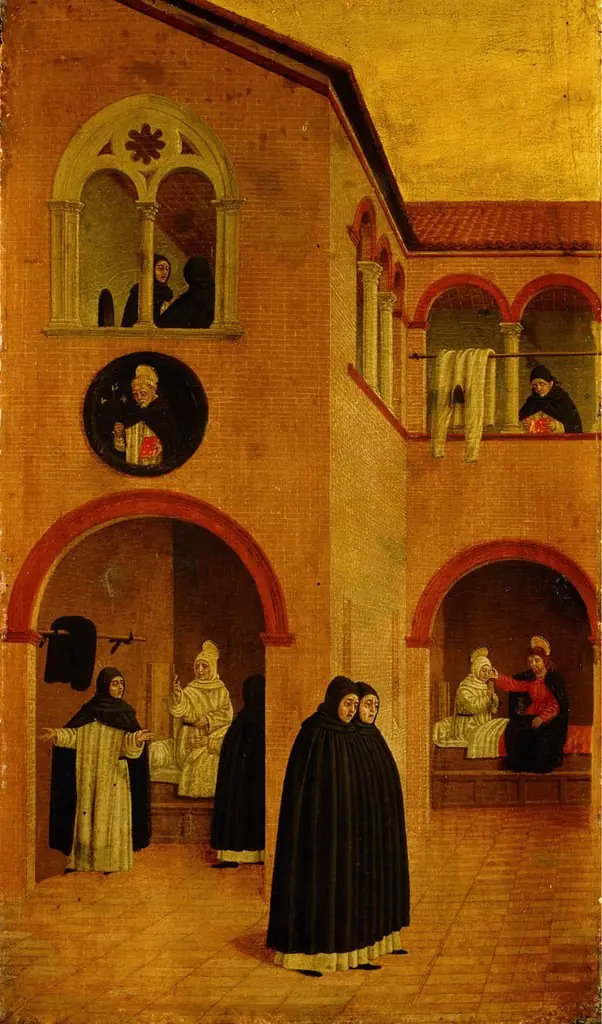 Szene aus dem Leben des Hl. Vinzenz Ferrer: Durch Aufregungen infolge des Schismas erkrankt der Heilige; er wird am Krankenbett vom Heiligen Dominikus besucht und von Christus geheilt
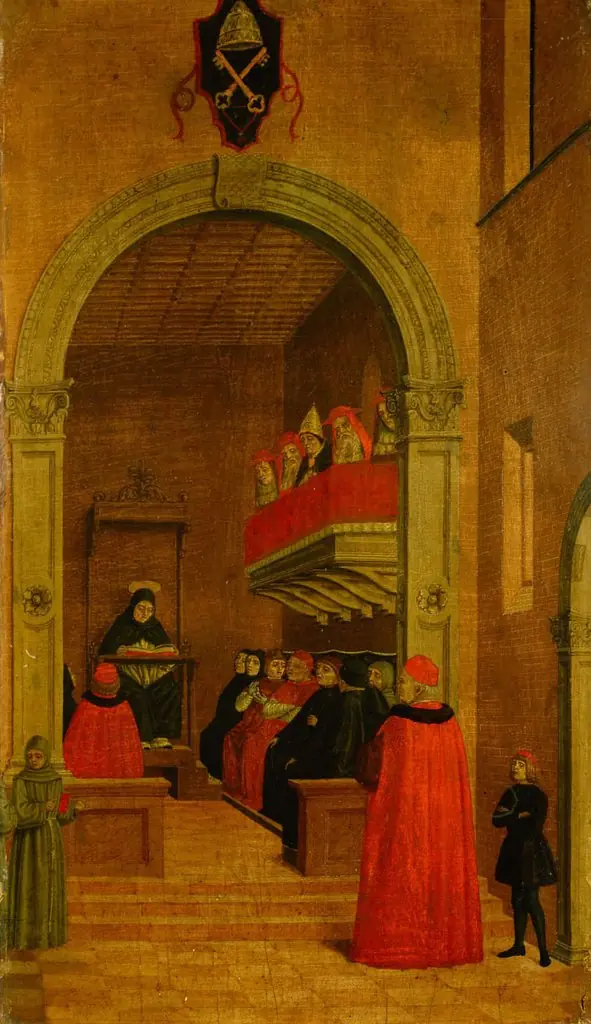 Szene aus dem Leben des Hl. Vinzenz Ferrer: Der Heilige legt in Avignon in Gegenwart des Papstes und der Kardinäle das Wort aus
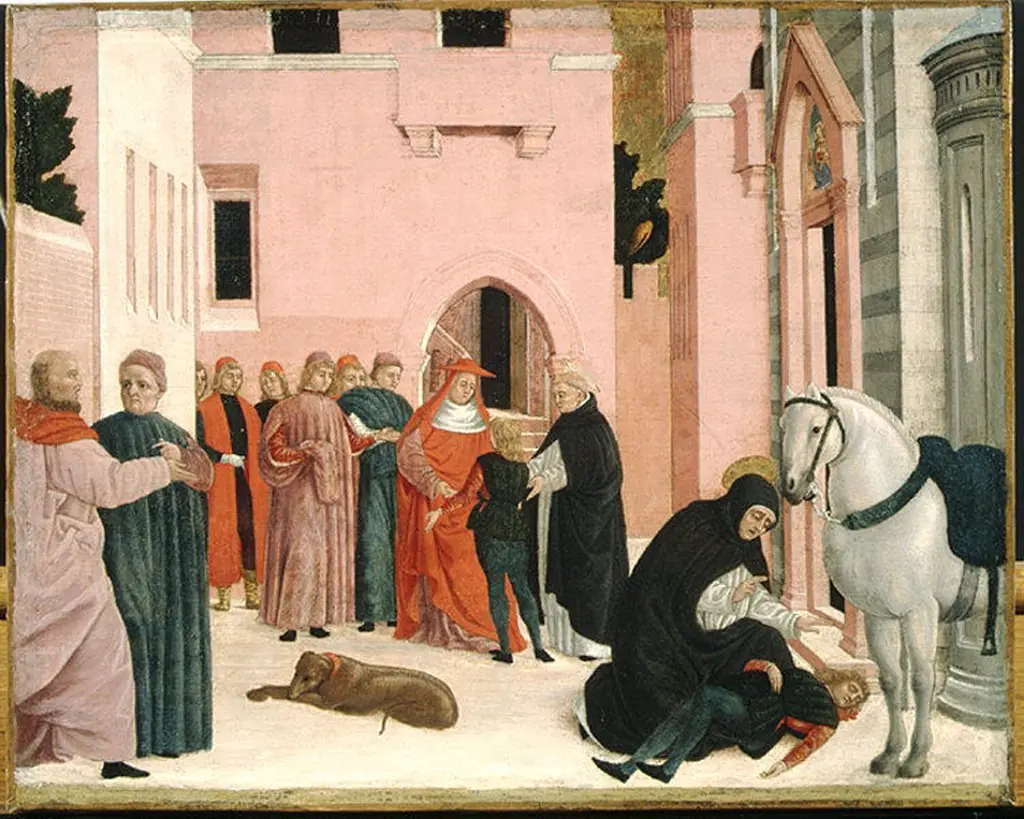
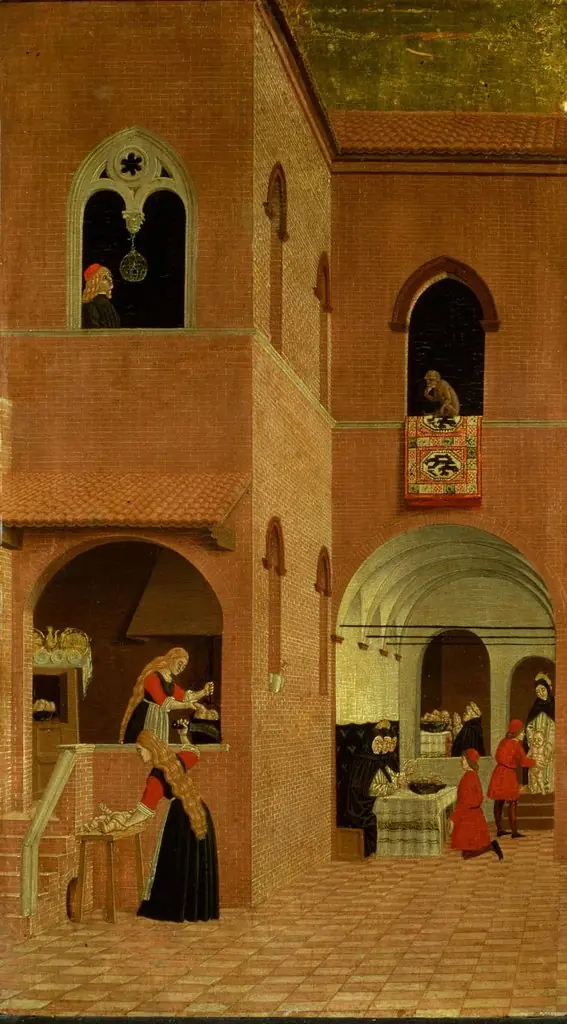 Szene aus dem Leben des Hl. Vinzenz Ferrer: Die Wiedererweckung des von seiner wahnsinnigen Mutter zerstückelten und gebratenen Kindes
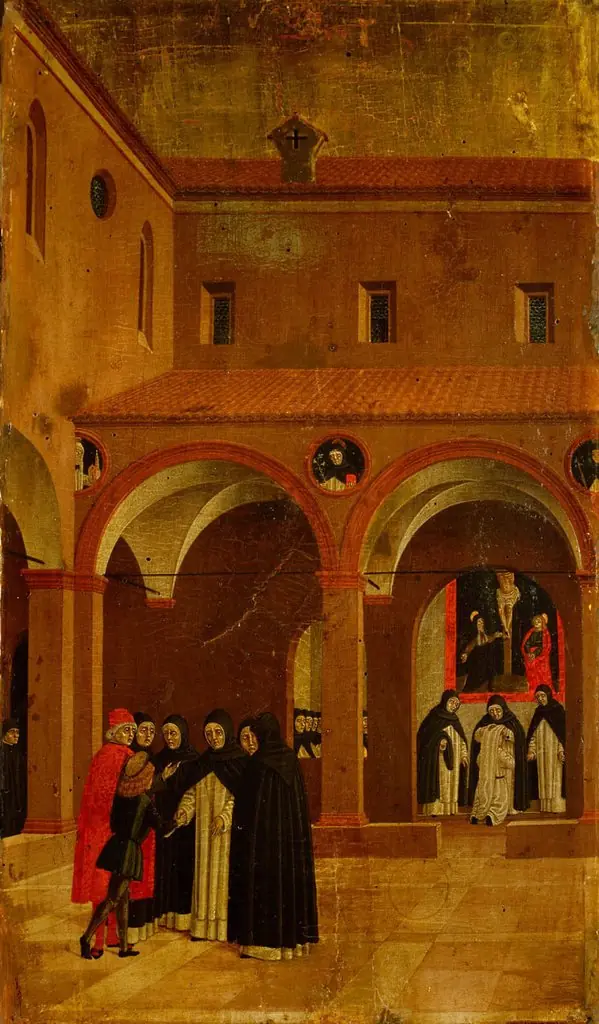 Szene aus dem Leben des Hl. Vinzenz Ferrer: Der Vater führt den Knaben Vinzenz zu den Dominikaners, von denen er drei Tage später eingekleidet wird
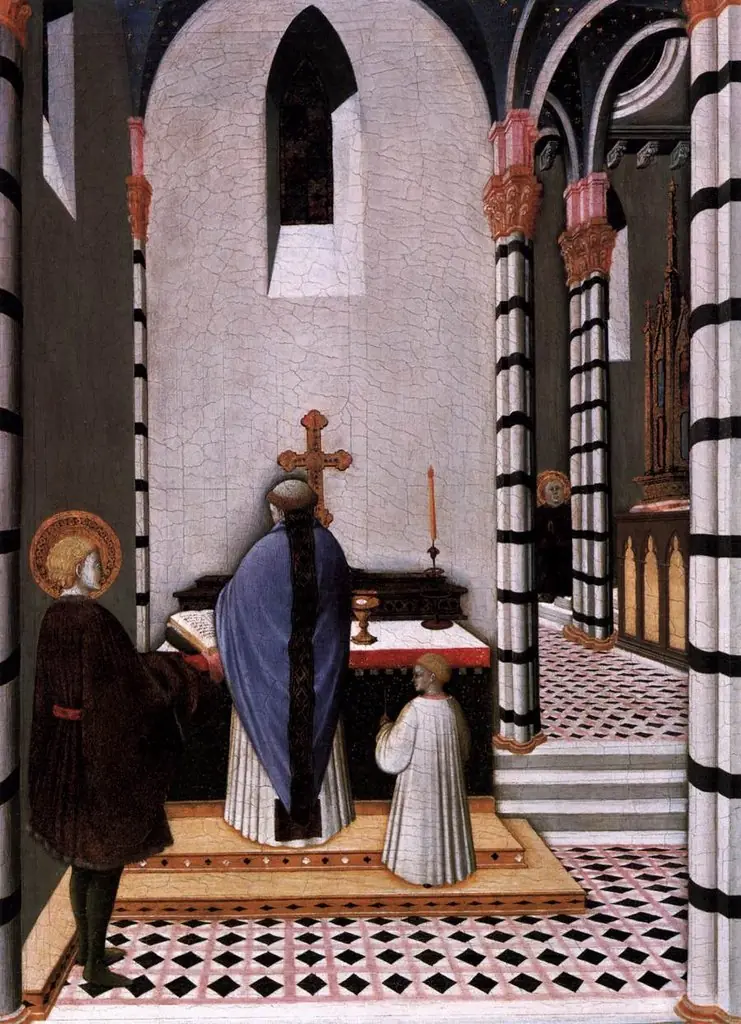 St Anthony at Mass Dedicates His Life to God
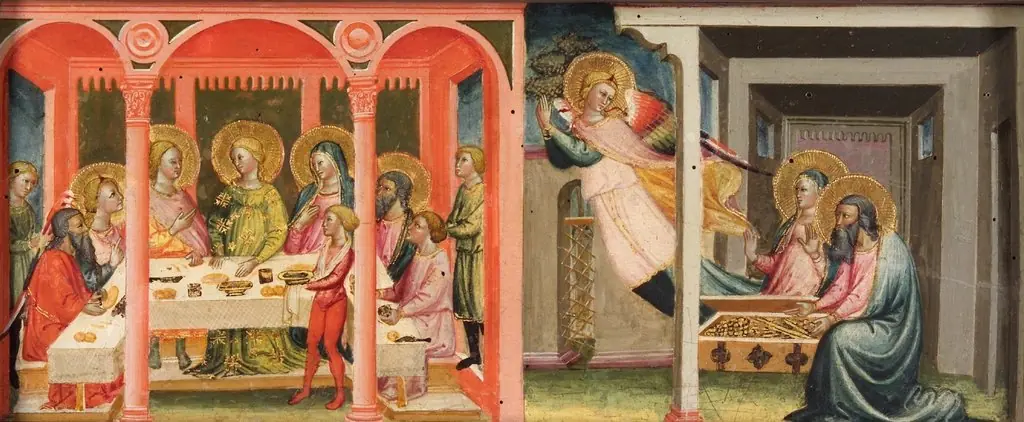 Scenes from the story of Tobias (marriage of Tobias and Sara; the archangel leaves Tobit and Anna)
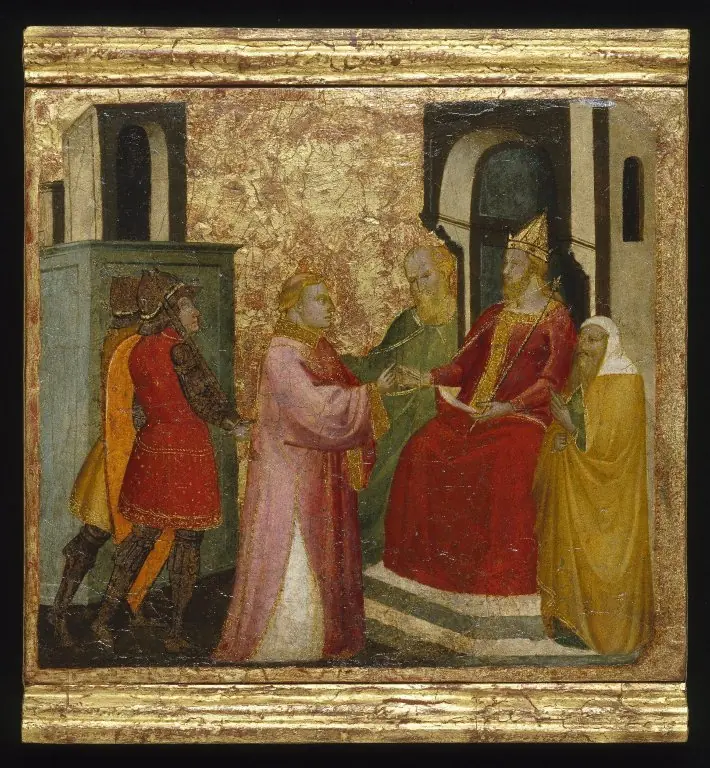 Saint Lawrence Arraigned Before the Prefect Valerianus
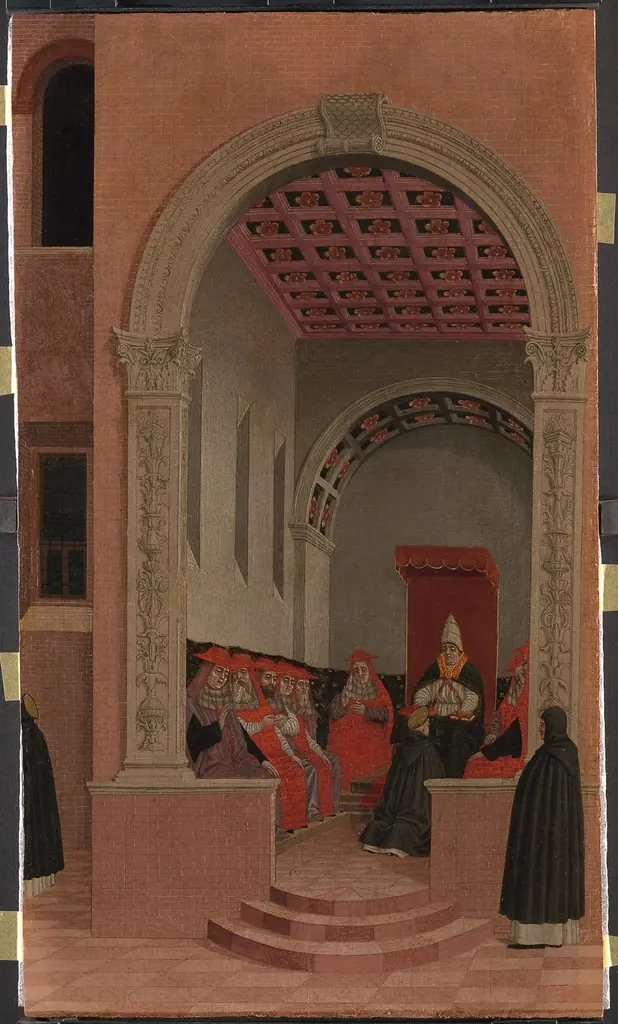 Szene aus dem Leben des Hl. Vinzenz Ferrer: Der Heilige erhält vom Papst die Erlaubnis, das Evangelium überall durch Predigt zu verkünden
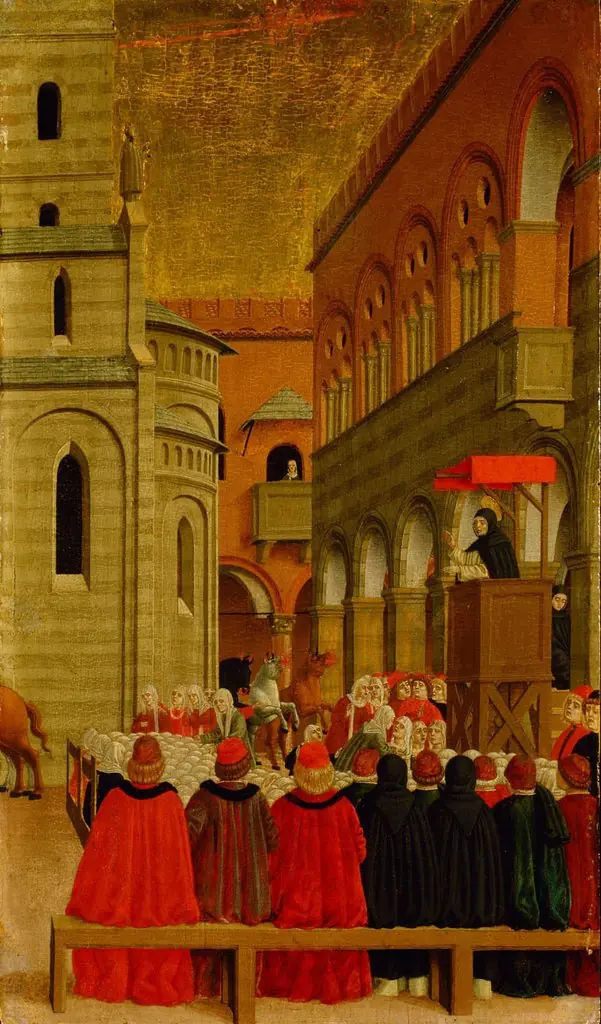 Szene aus dem Leben des Hl. Vinzenz Ferrer: Der Teufel vesucht in Form dreier wilder Pferde die Predigt des Heiligen zu stören
 Saint Augustine's Vision of Saints Jerome and John the Baptist
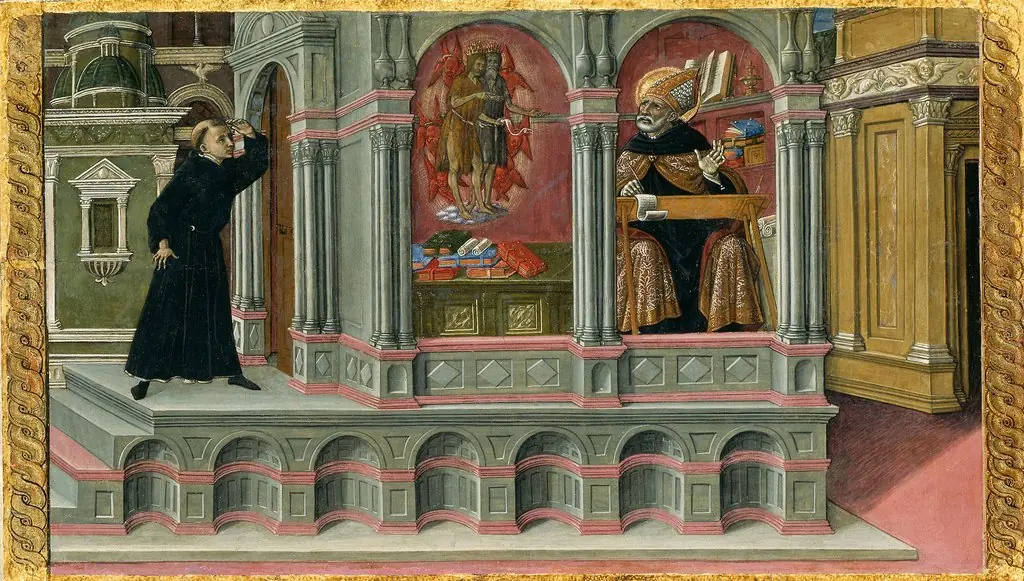 Saint Augustine's Vision of Saints Jerome and John the Baptist